Bald Eagles in Lyme — Year Two
On March 1, the nest was covered with snow.
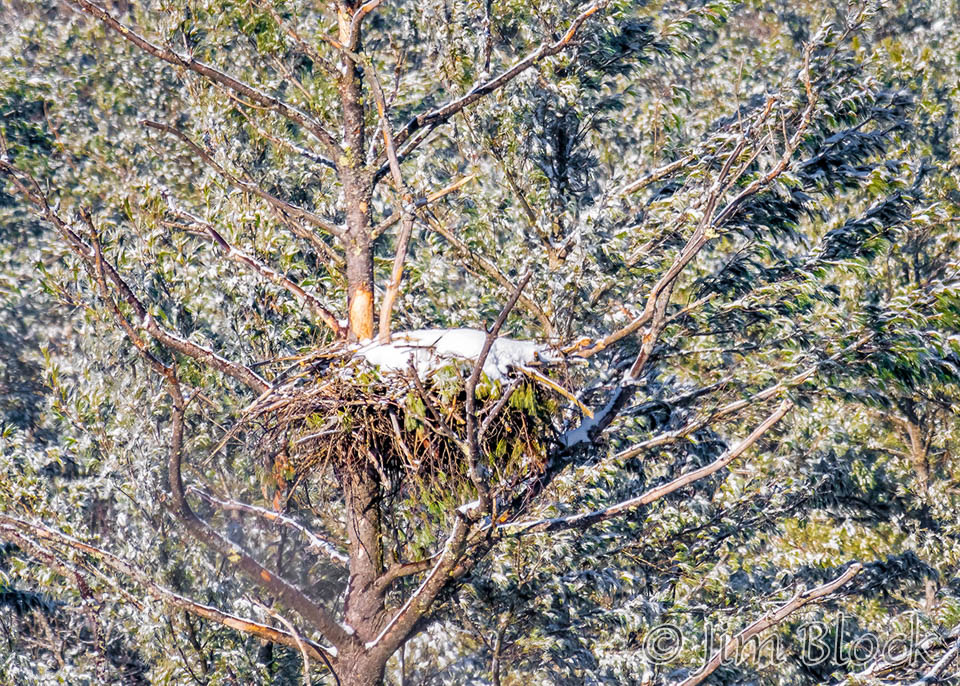
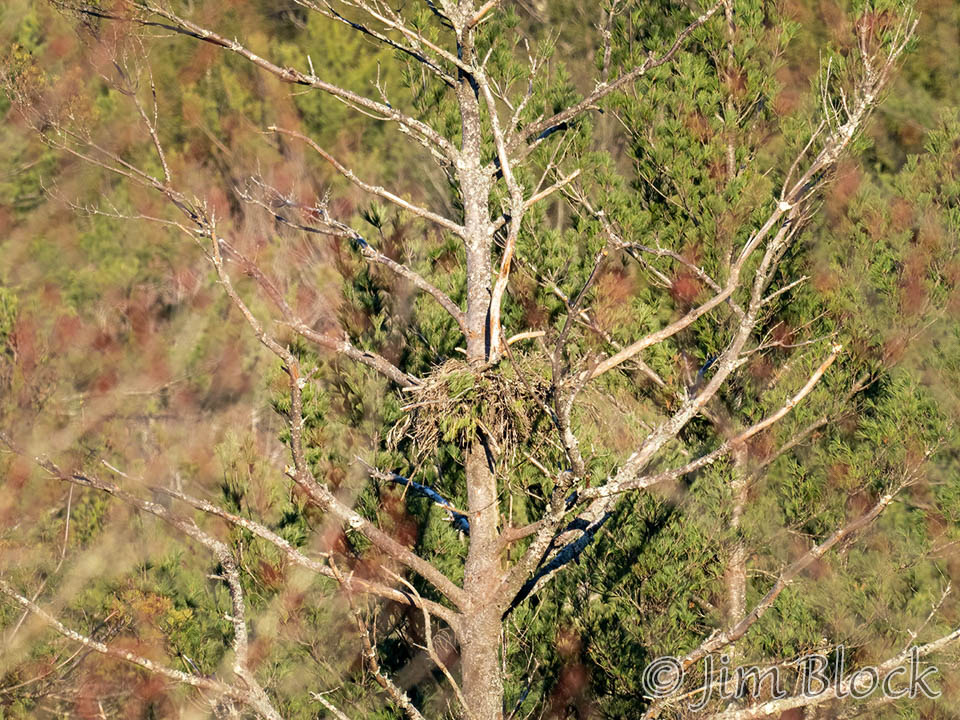
It is interesting to observe the size of nest this spring. For comparison, the photo below was taken early the previous year. The bare part of the trunk that has appeared will remain a common feature in nest photos.
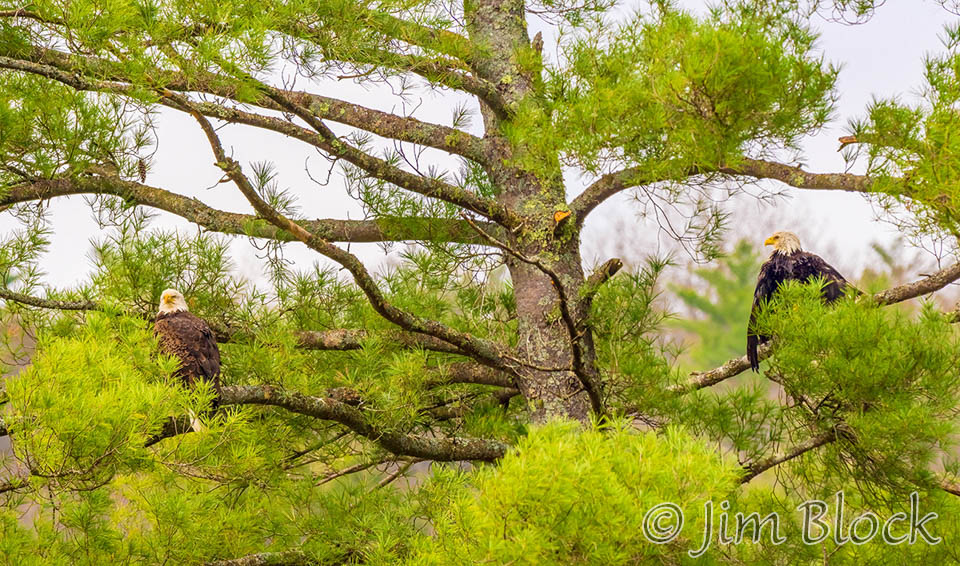
On March 22 one eagle was incubating while the other sat in a nearby tree. The younger eagle has mostly lost the blackish smudge on its face.
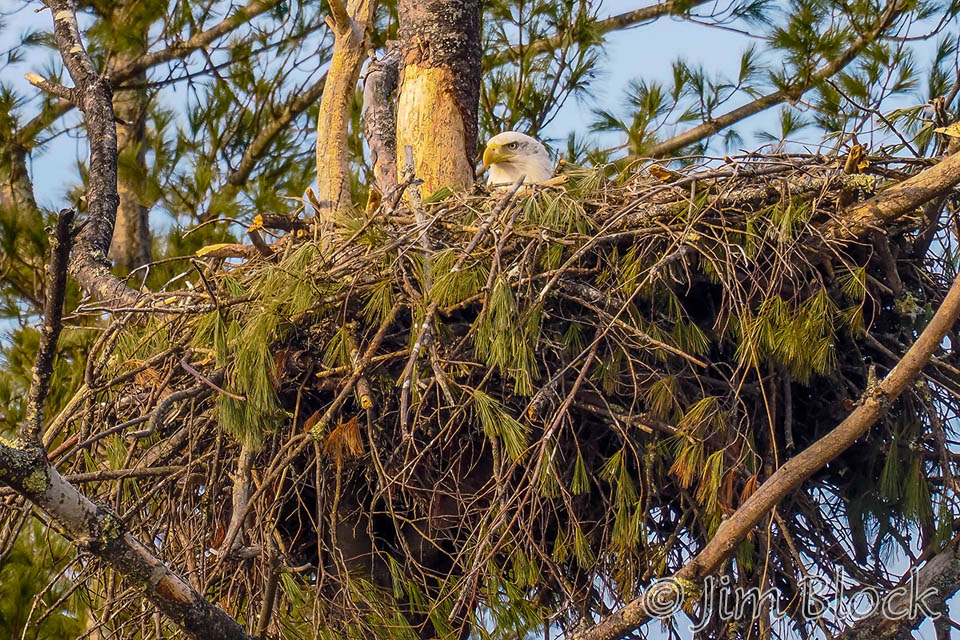
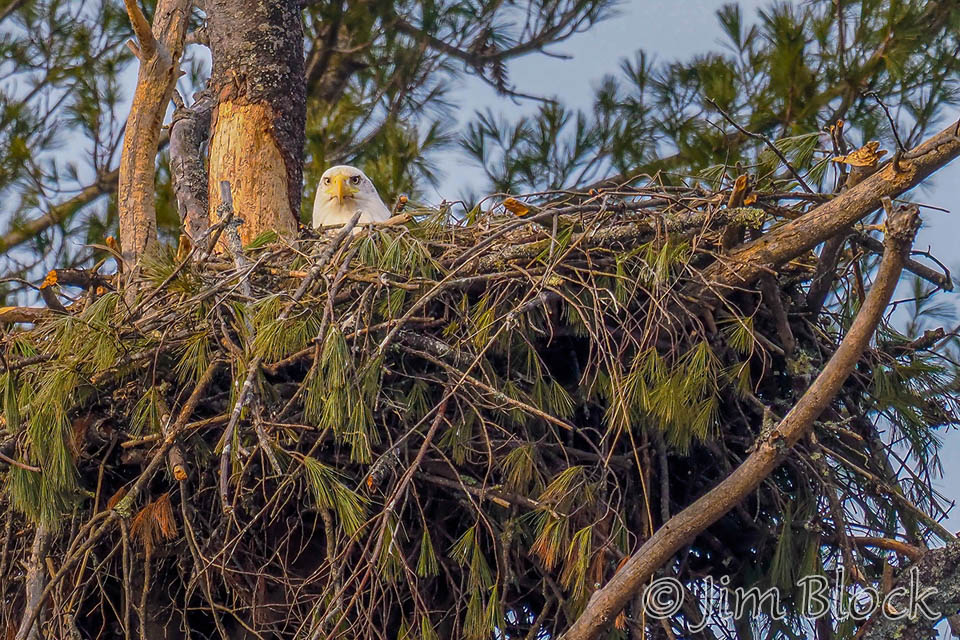
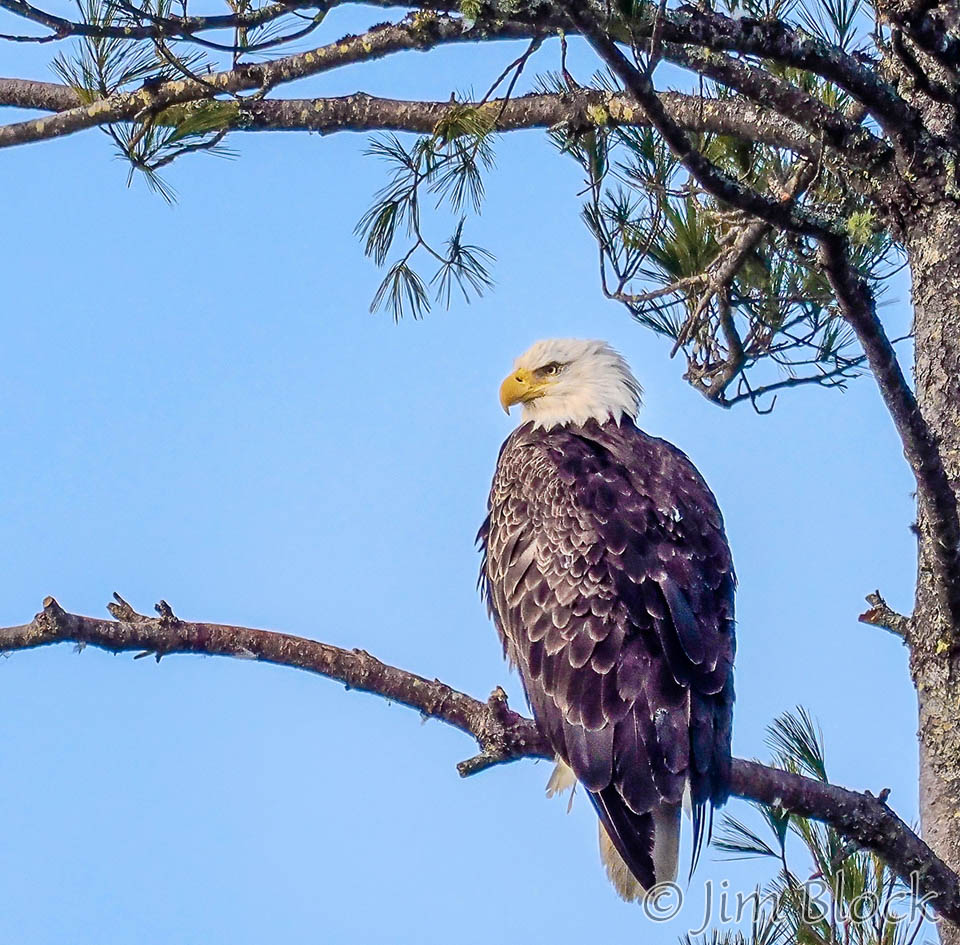
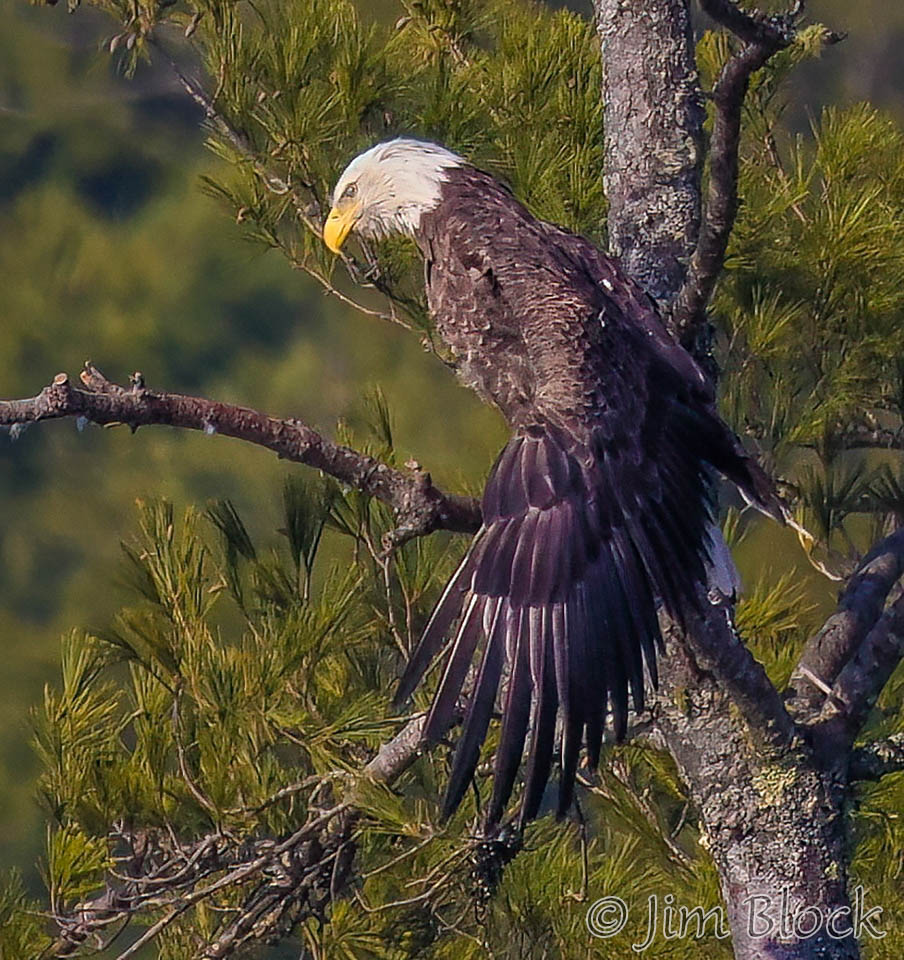
One quick photo from March 29.
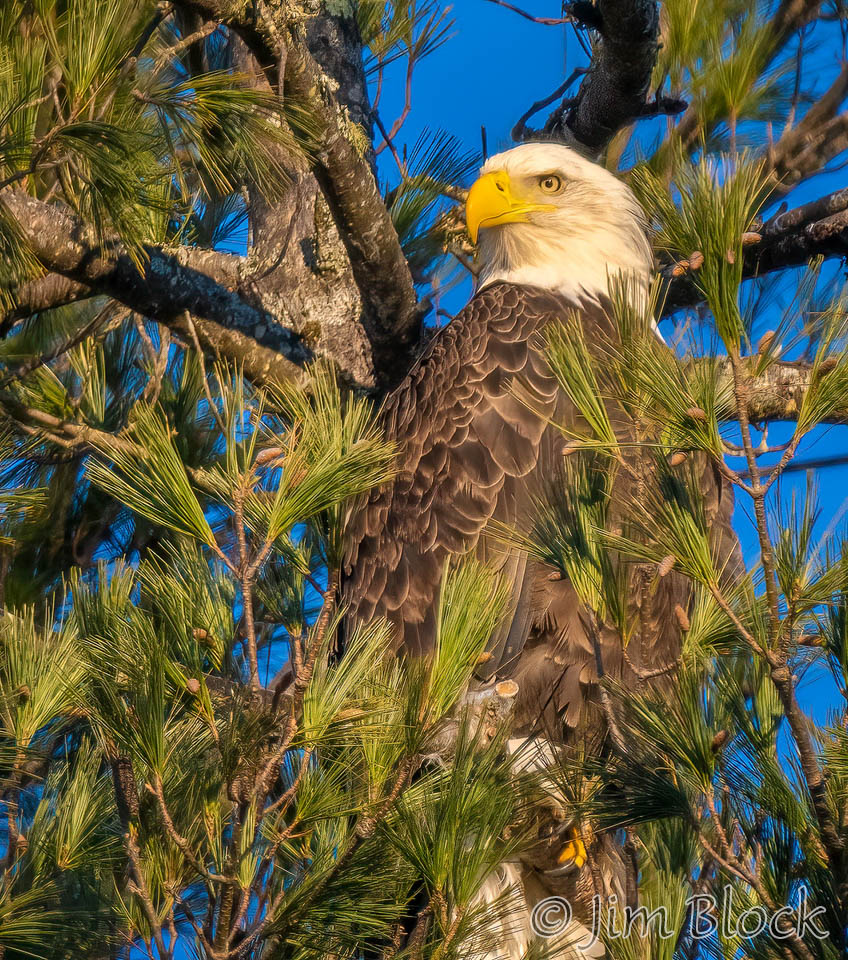
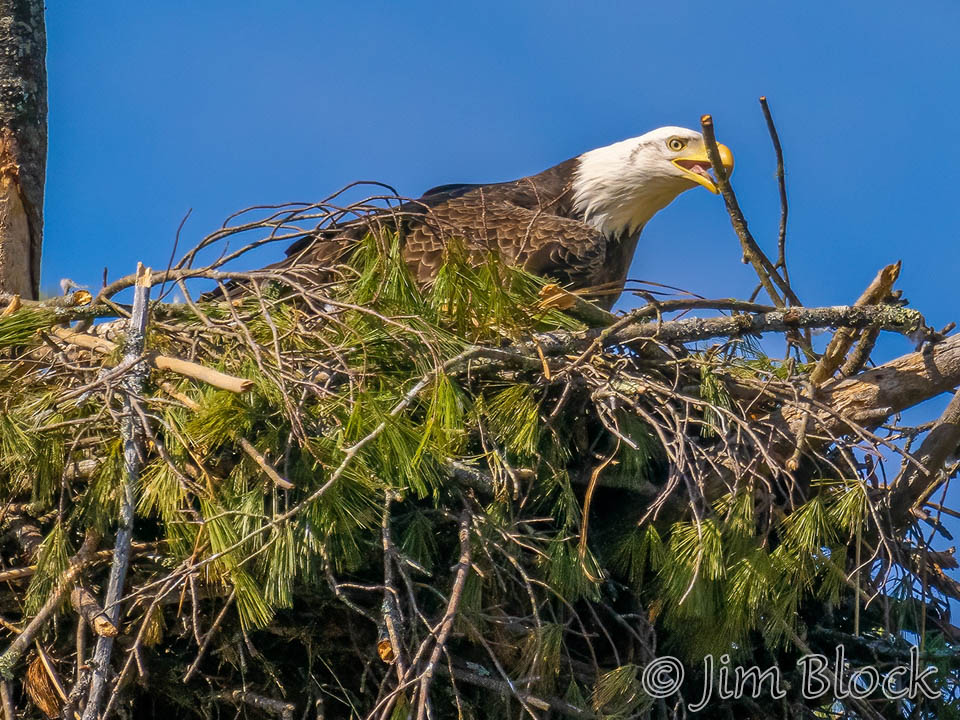
I spent a short time with the eagles on April 3. One was rearranging branches in the nest, presumably while two eggs rested below. The other waited its turn in a nearby tree.
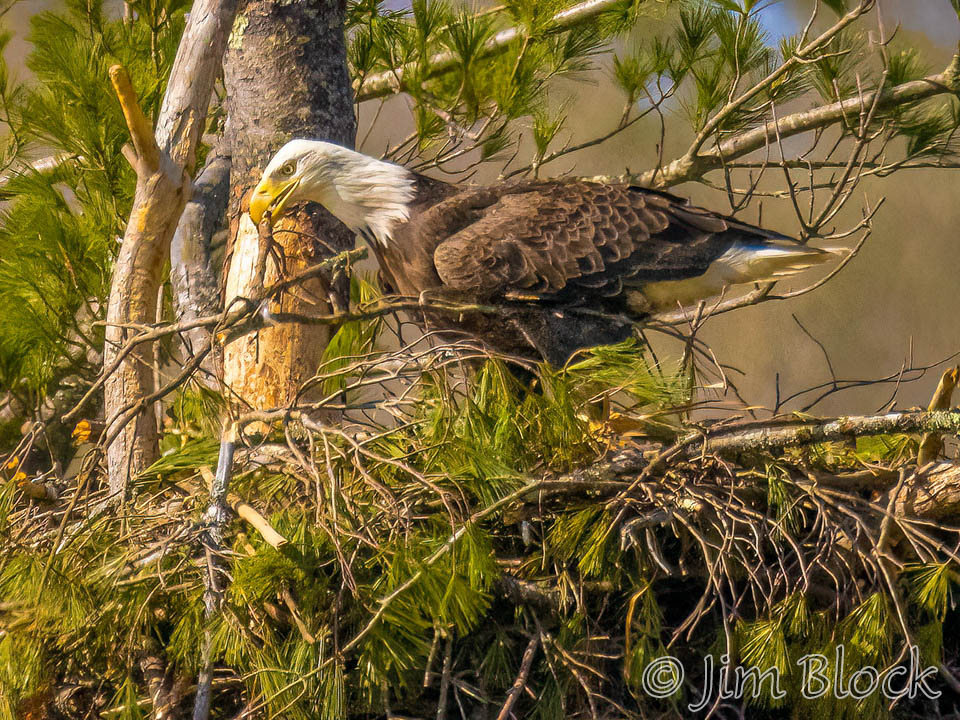
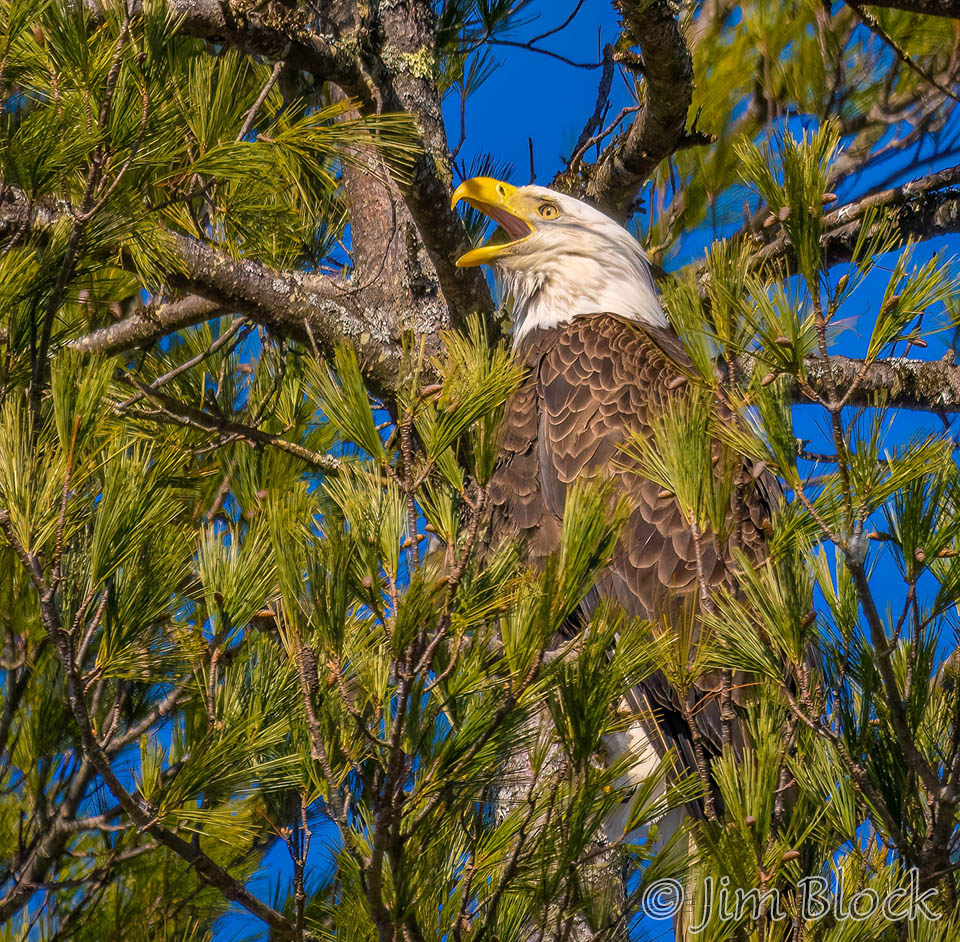
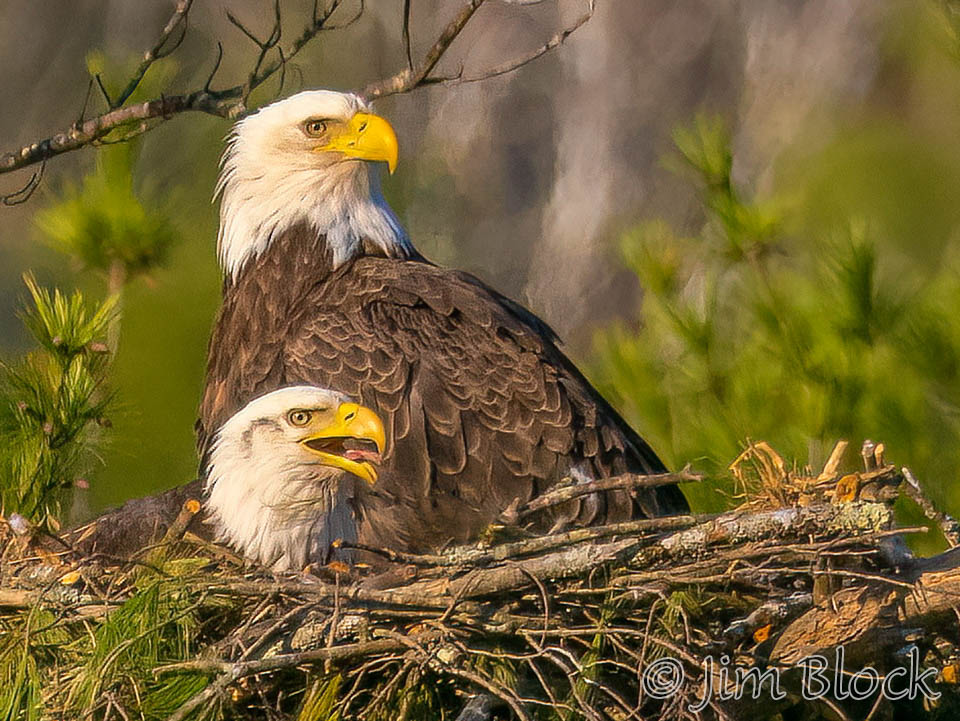
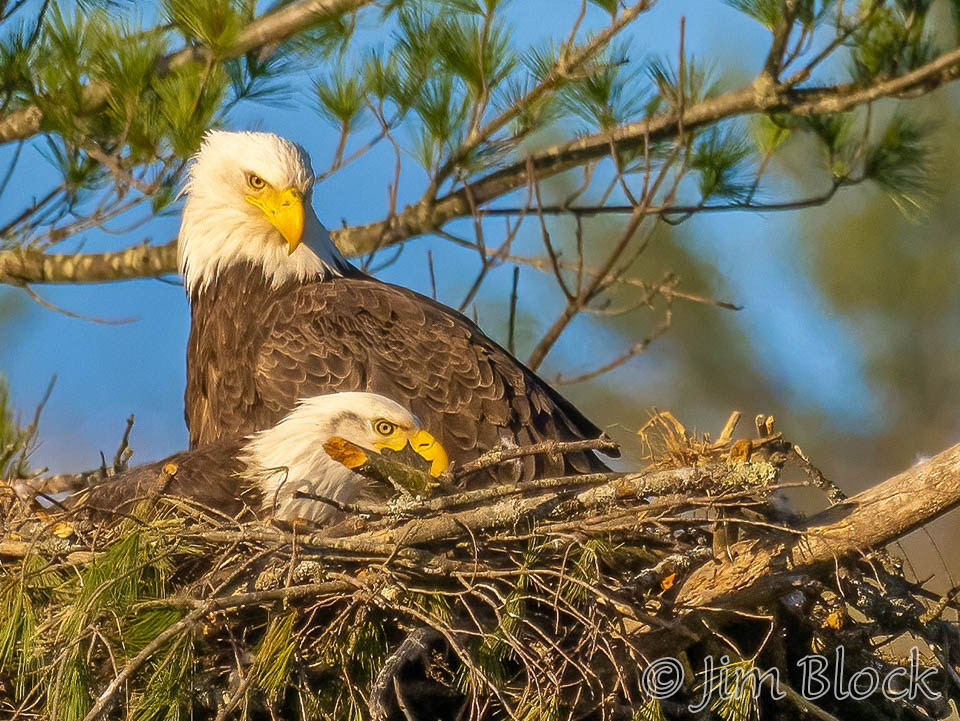
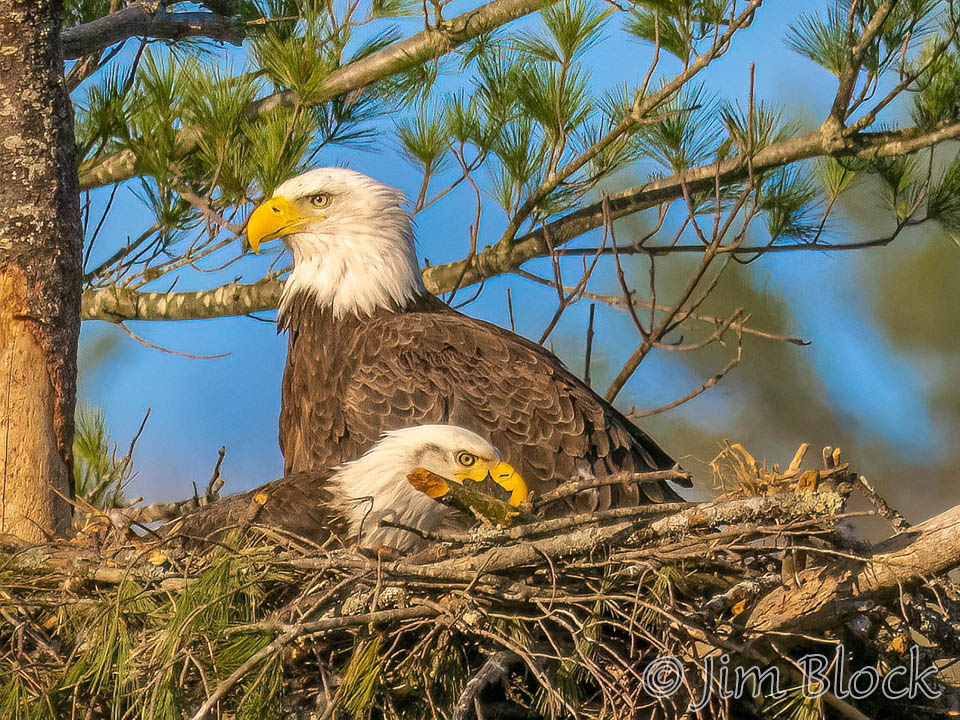
Here are some photos from another very short visit on April 13.
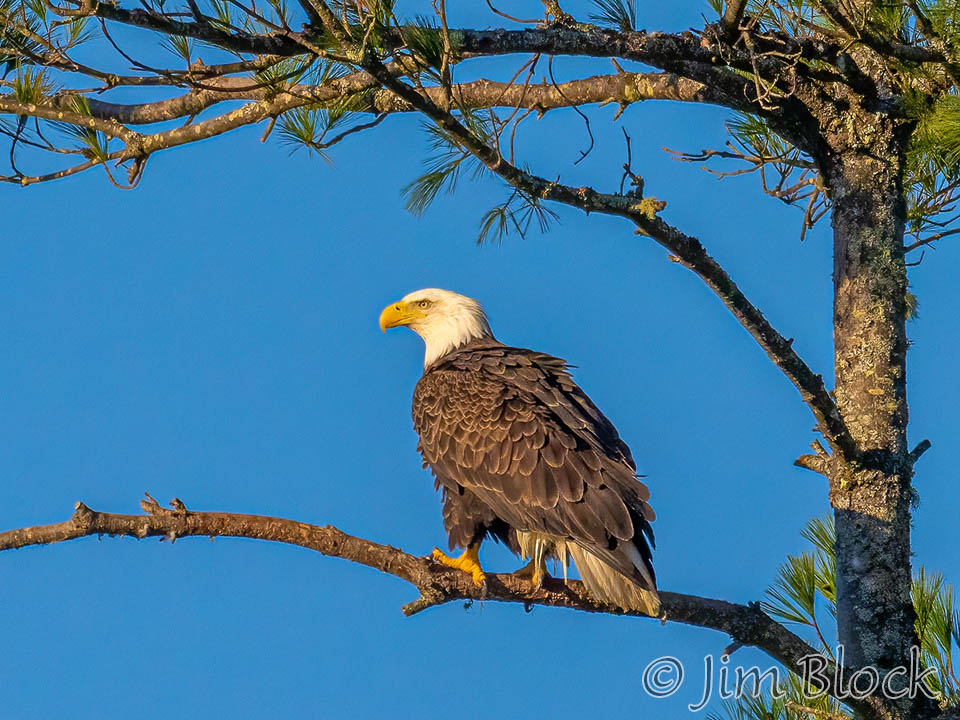
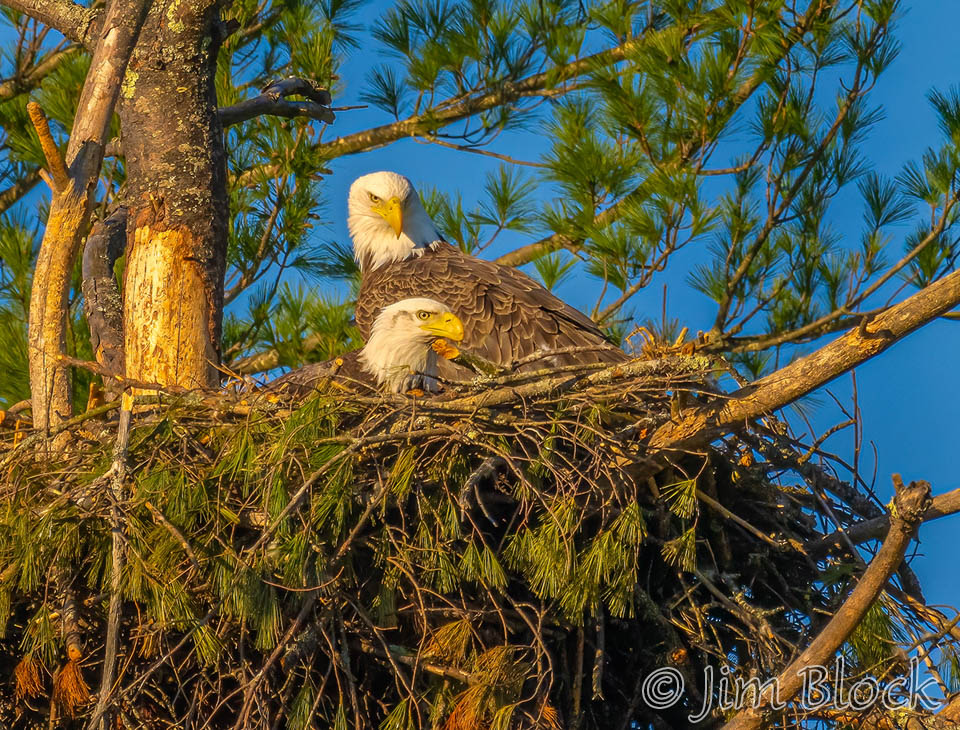
A juvenile bald eagle flew over the area on April 15.
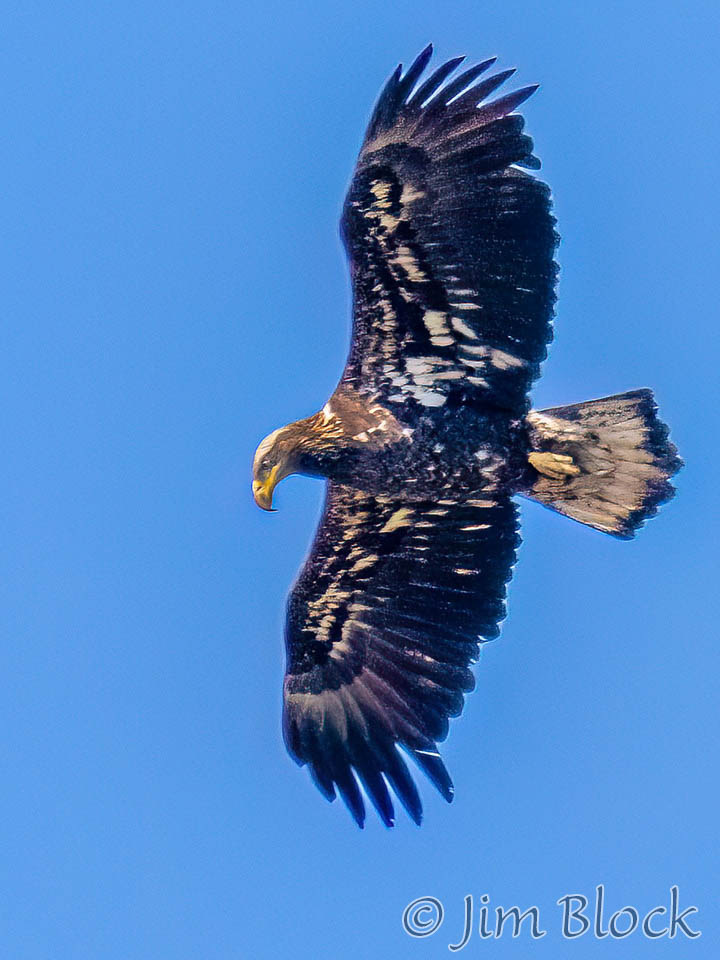
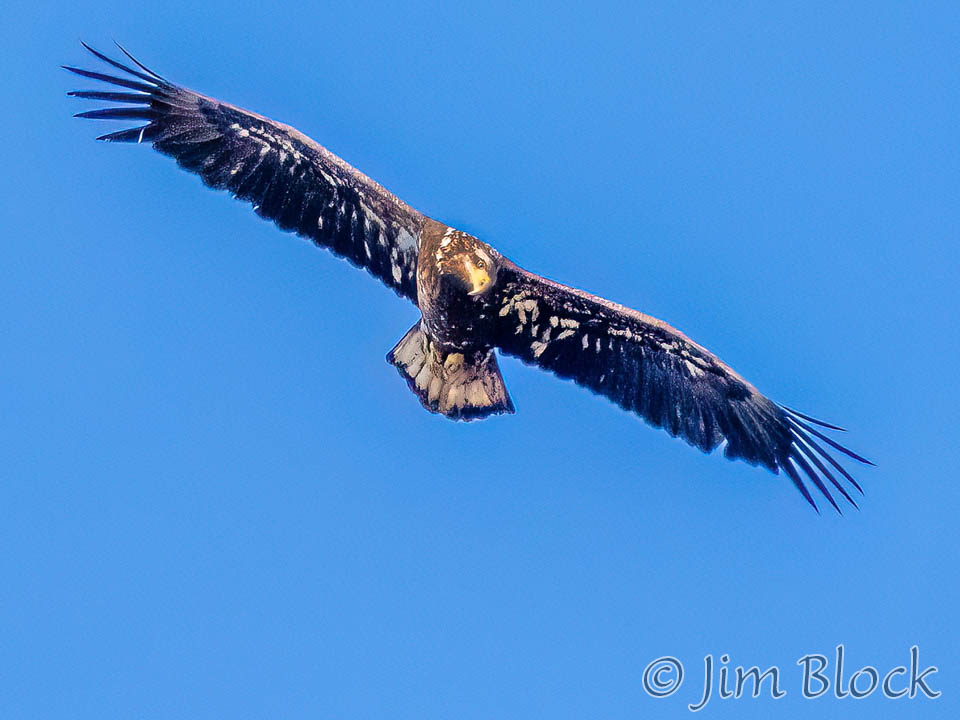
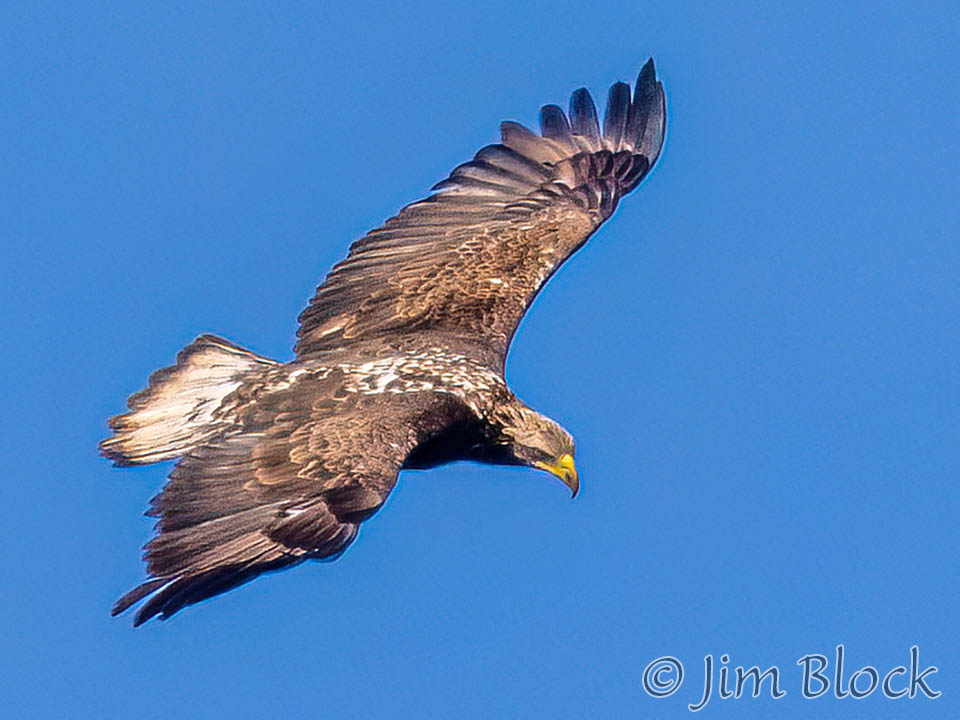
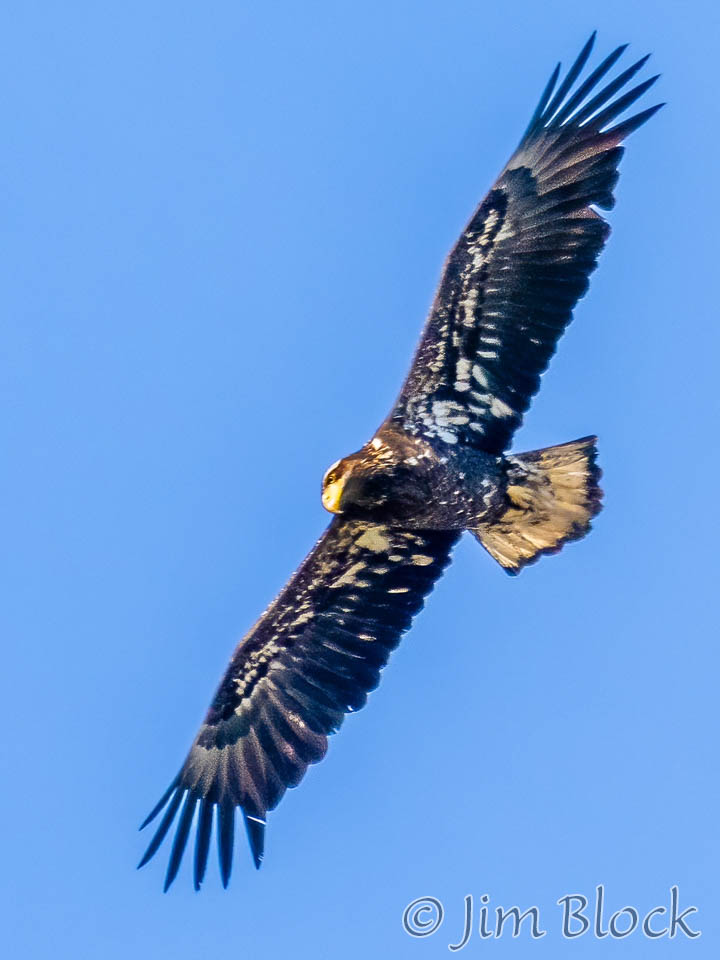
While a parent kept a wary eye on it.
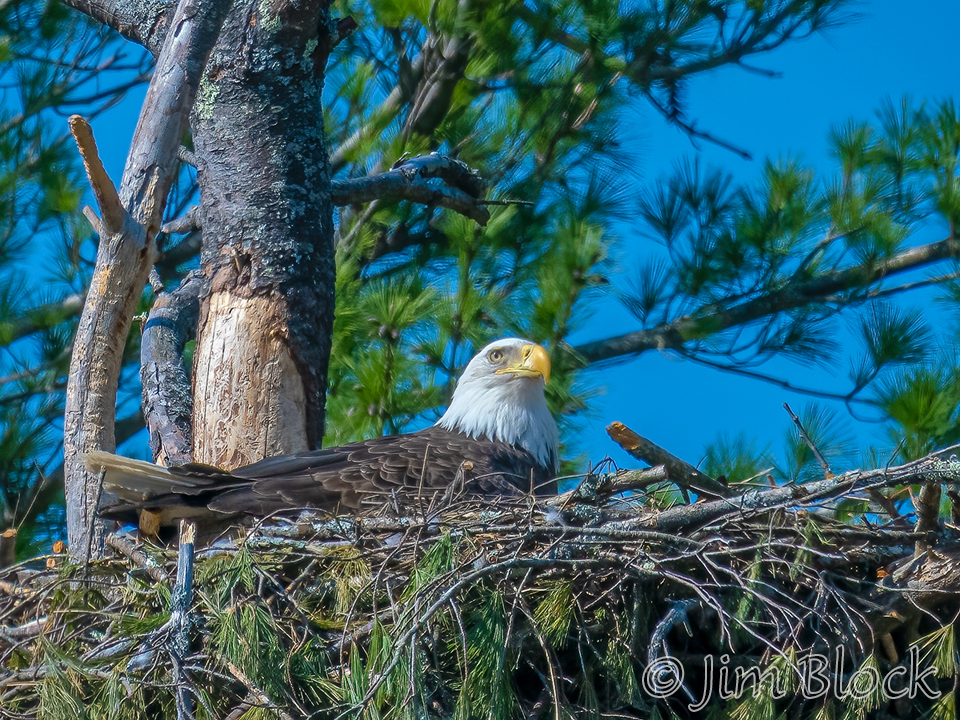
Notice the patterning on the dead nest tree.
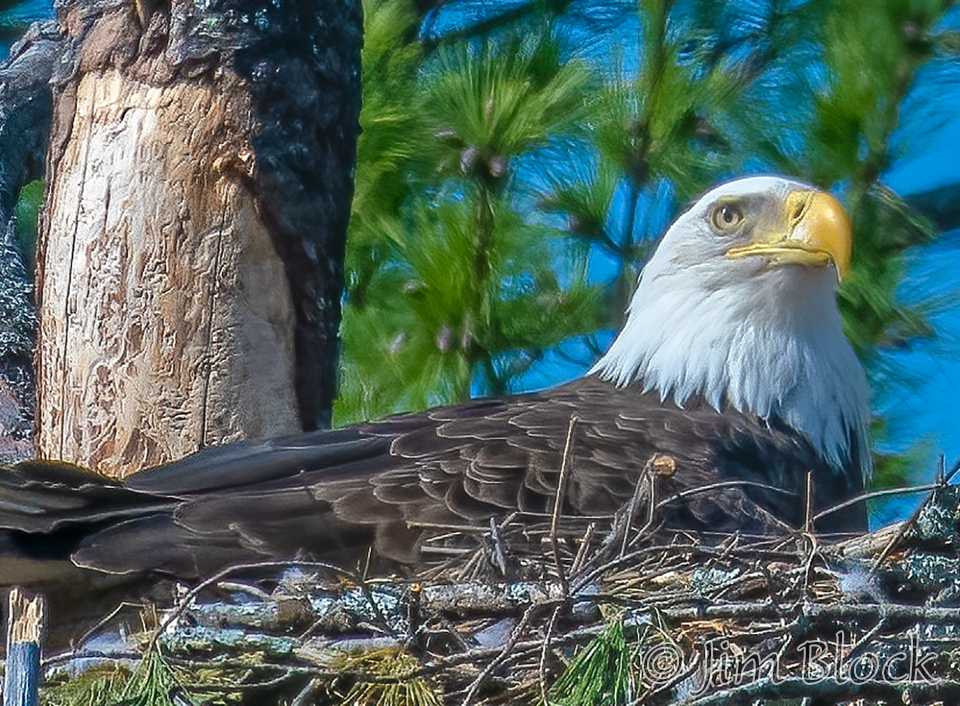
I continued to pay short visits to the eagles during April as I travelled up and down the Upper Valley on both sides of the river photographing ducks and early migrants. These two are from April 21.
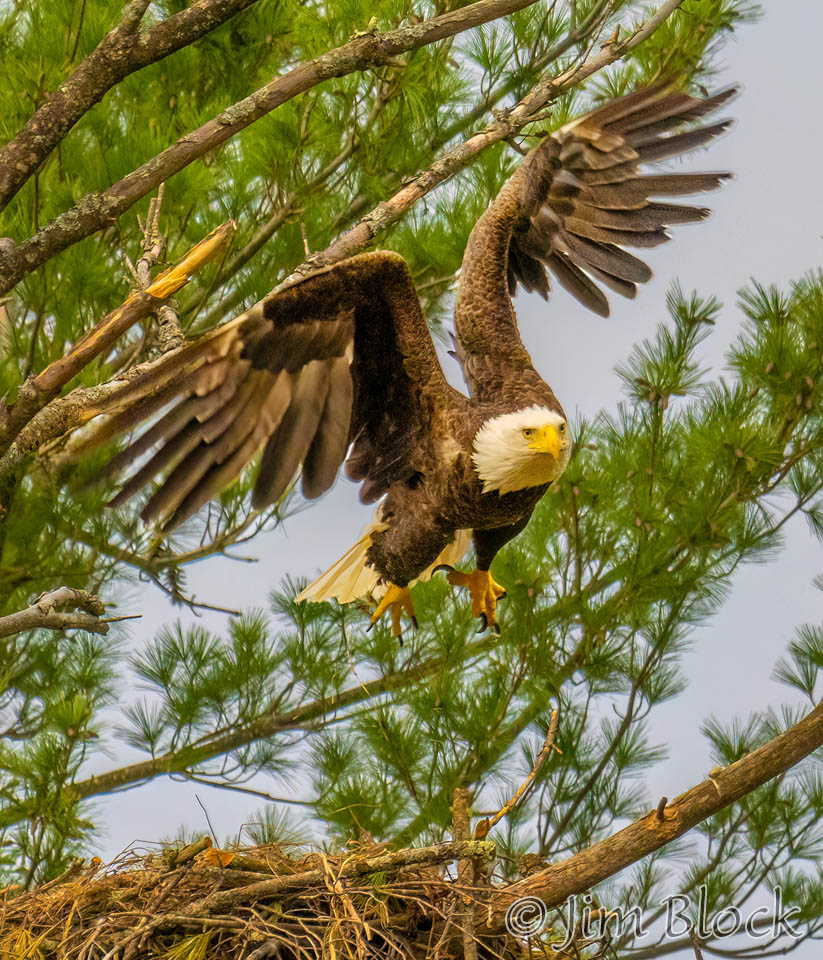
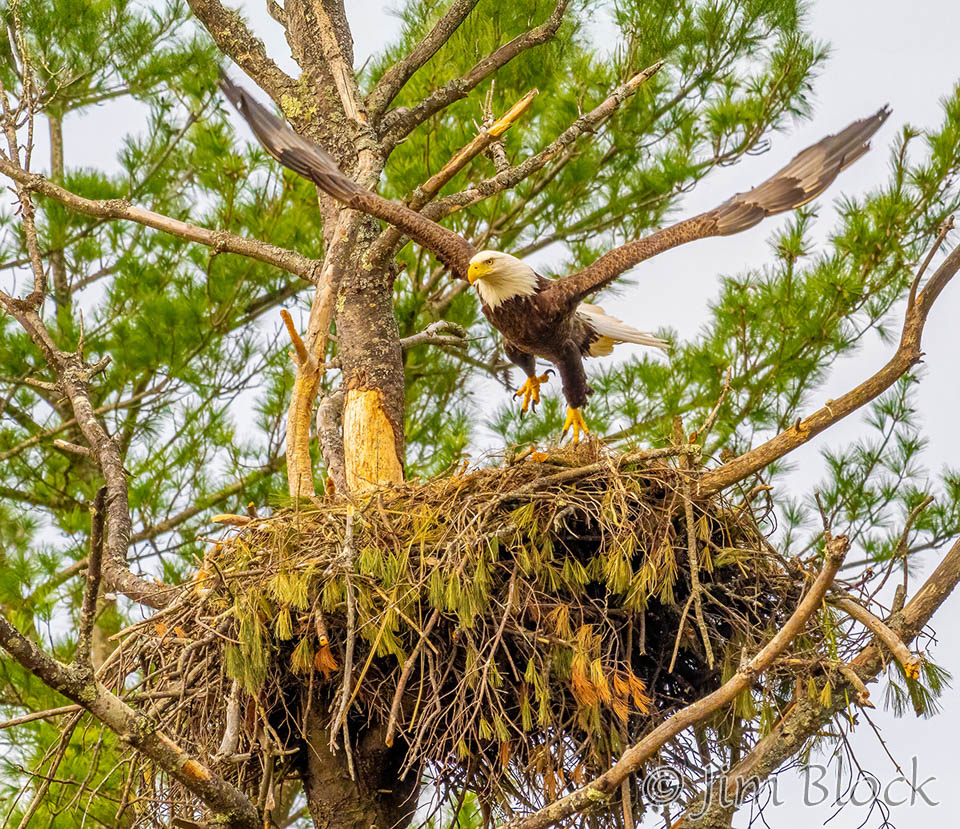
The photos below are from April 22. Note both eagles are in the nest in the second image.
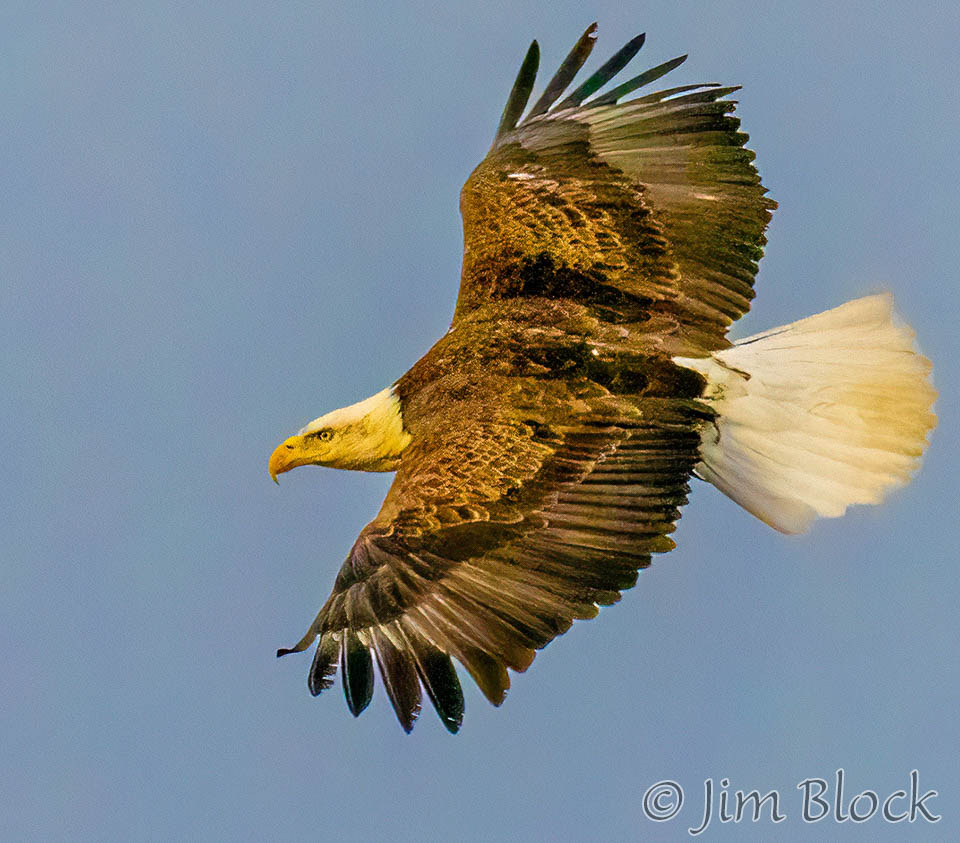
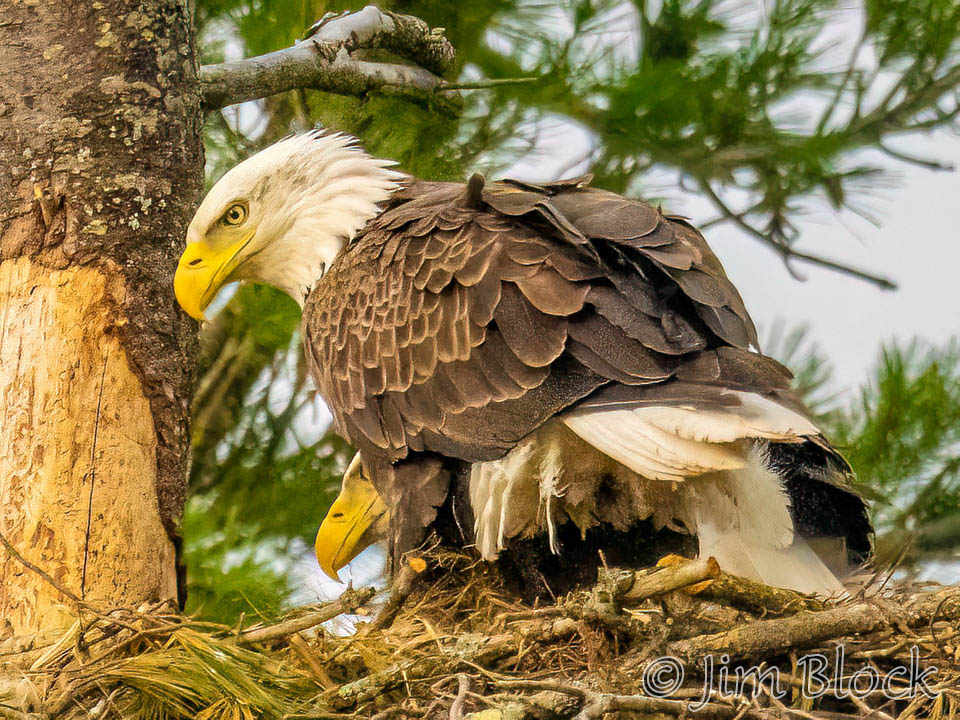
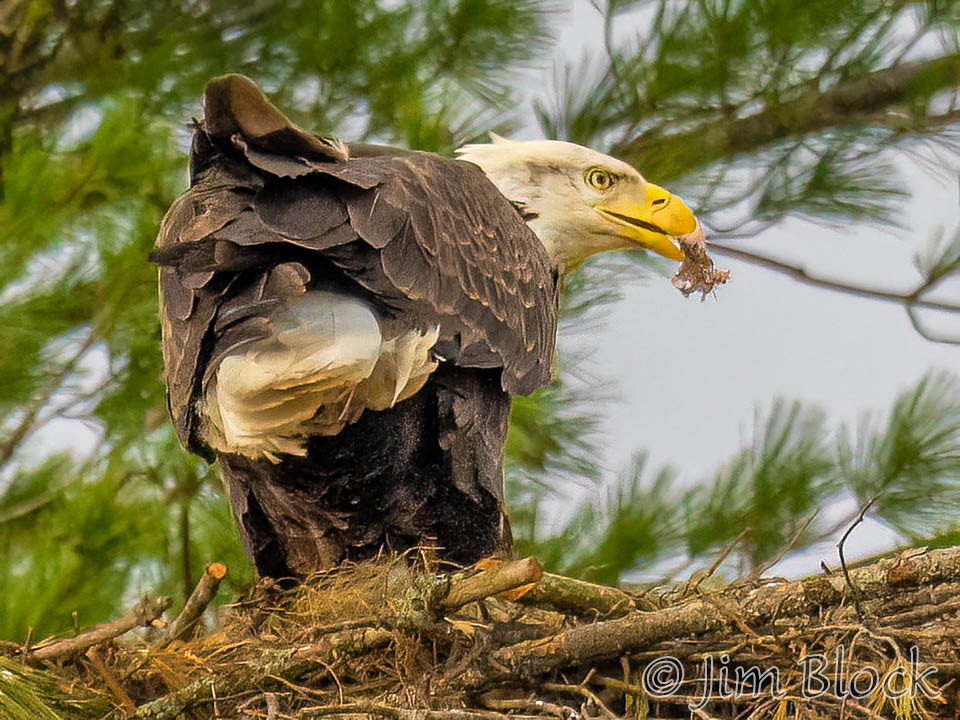
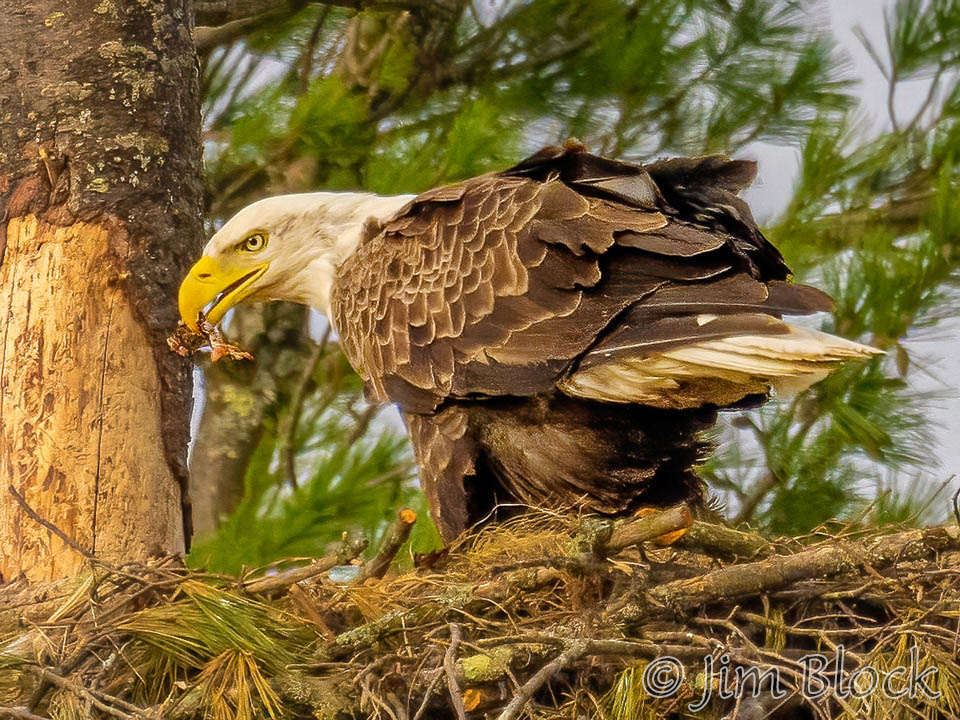
I took these photos during a ten-minute visit mid-morning on April 24.
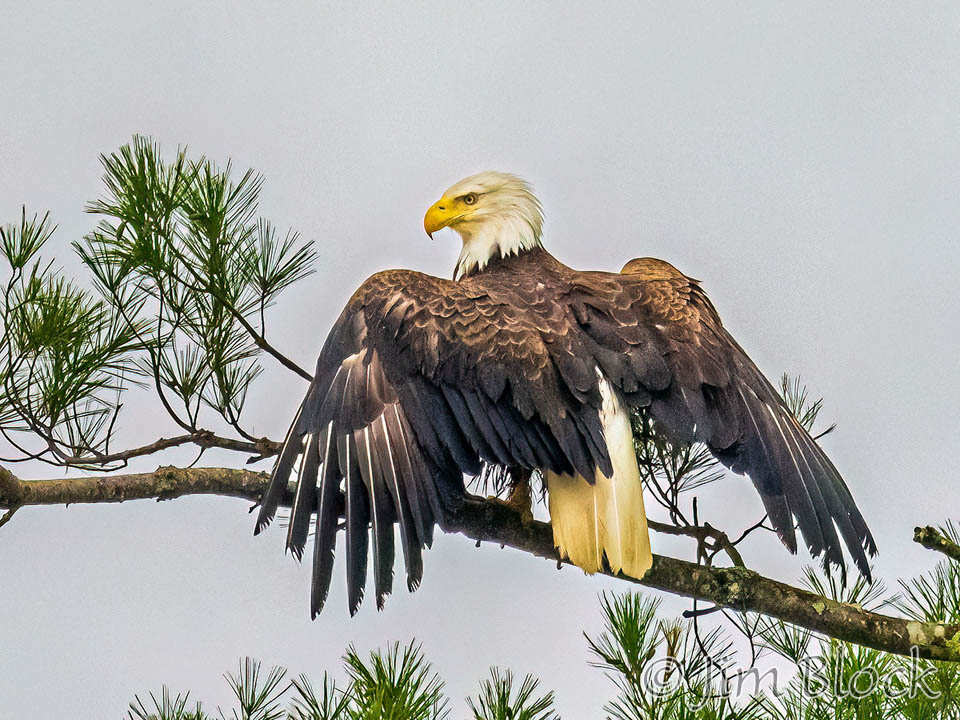
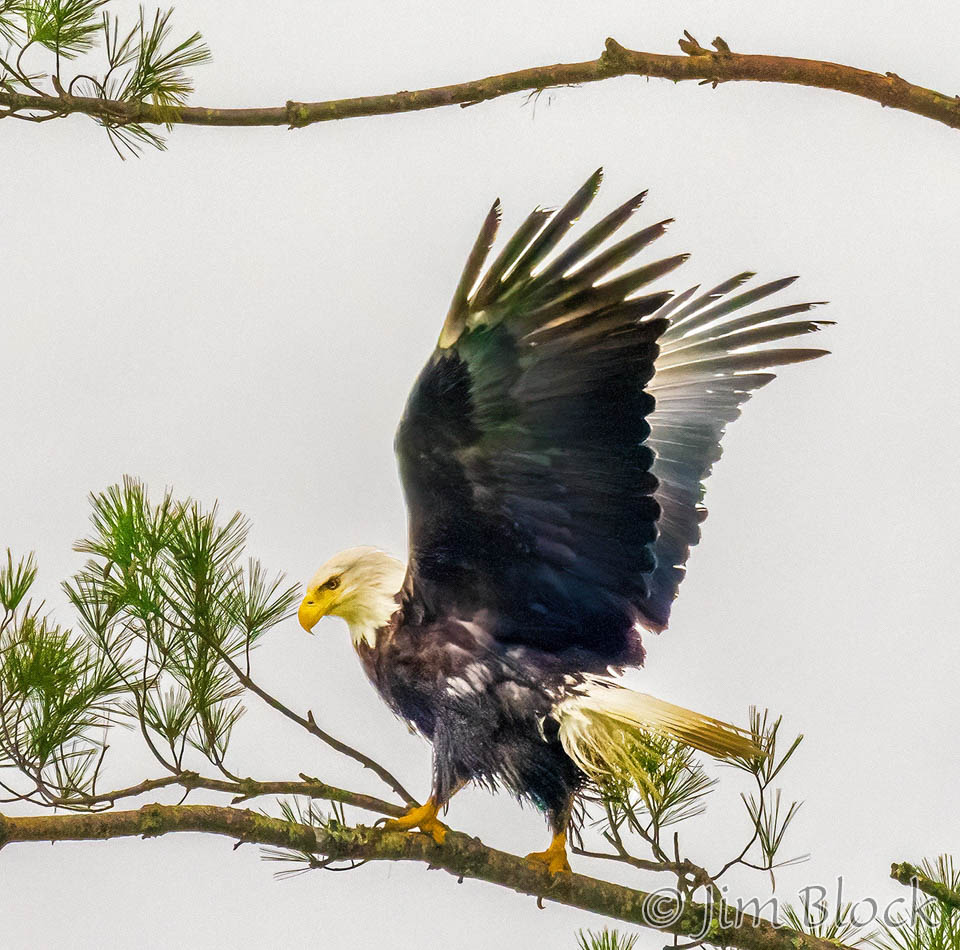
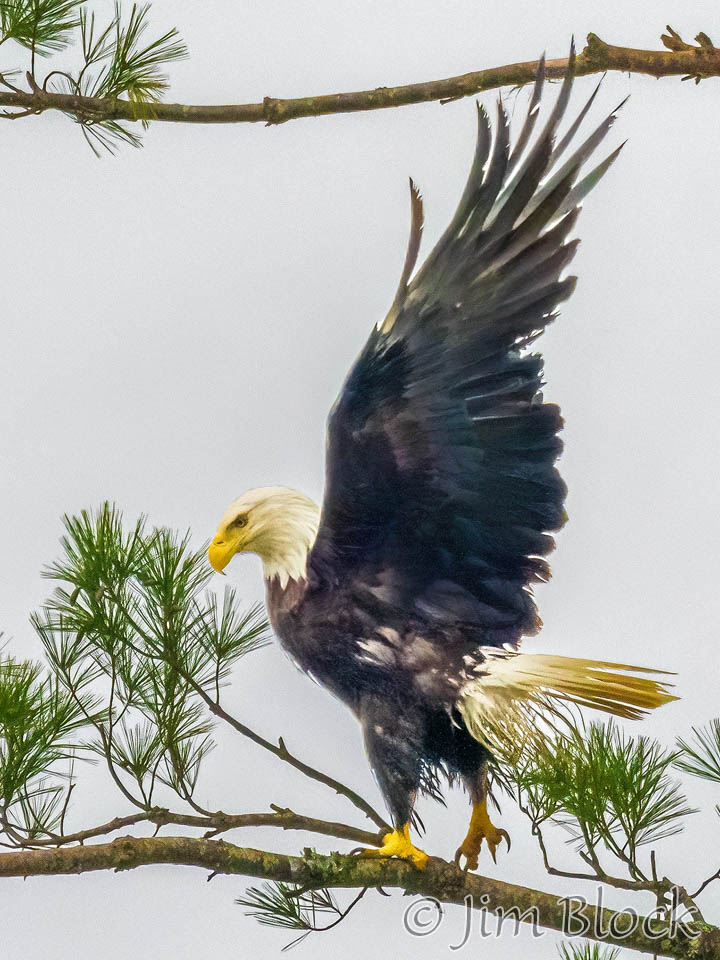
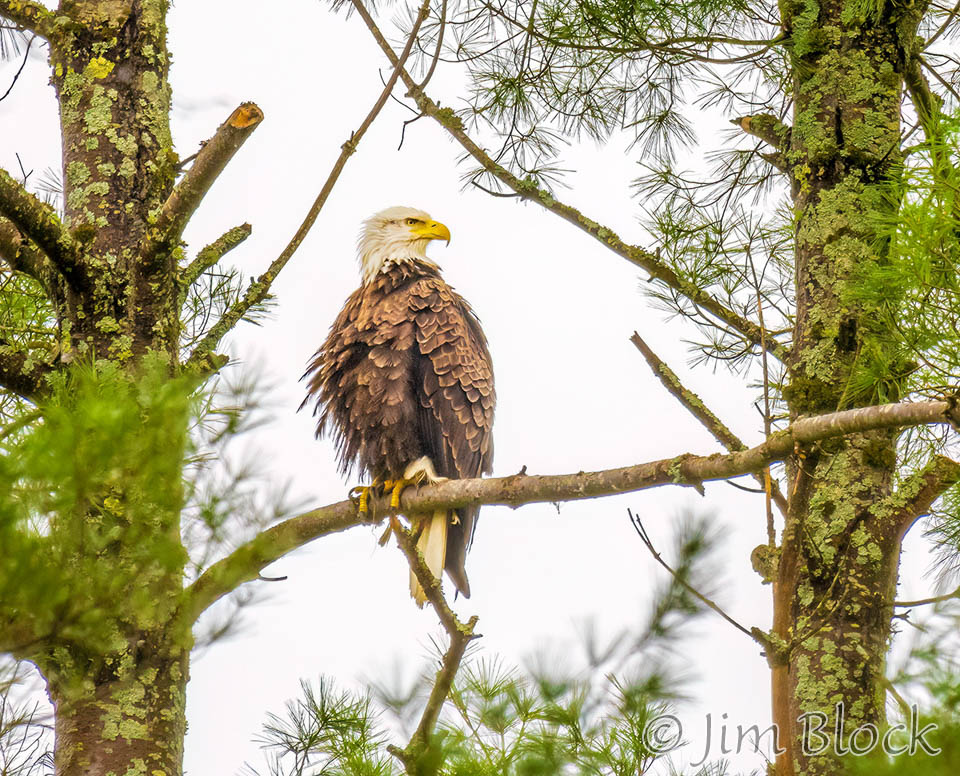
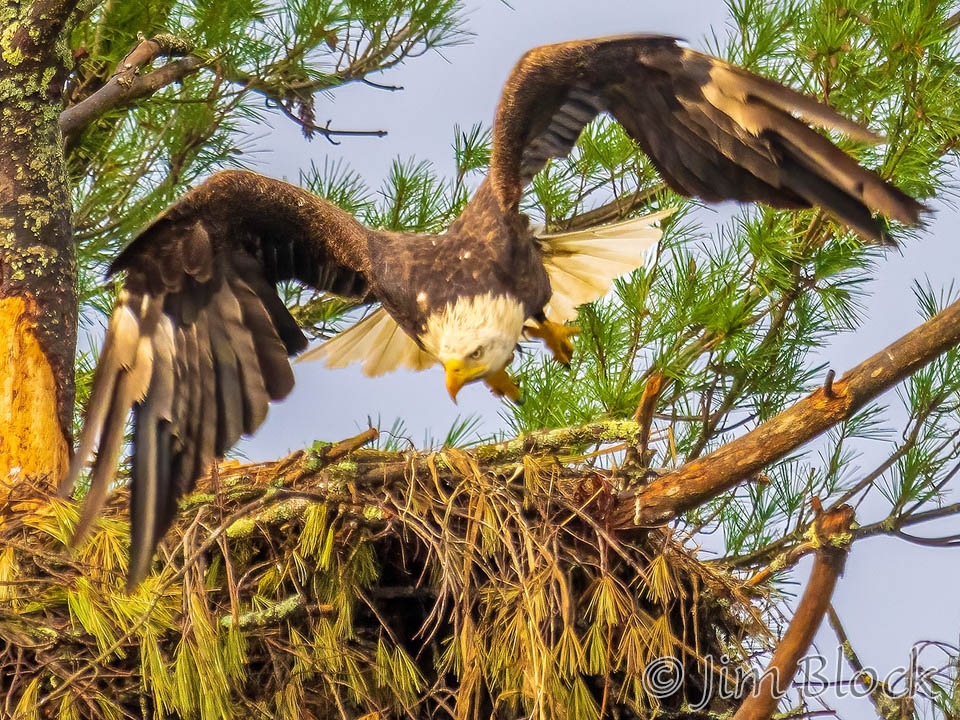
There were ten minutes of nice action on April 25: An eagle left the nest.
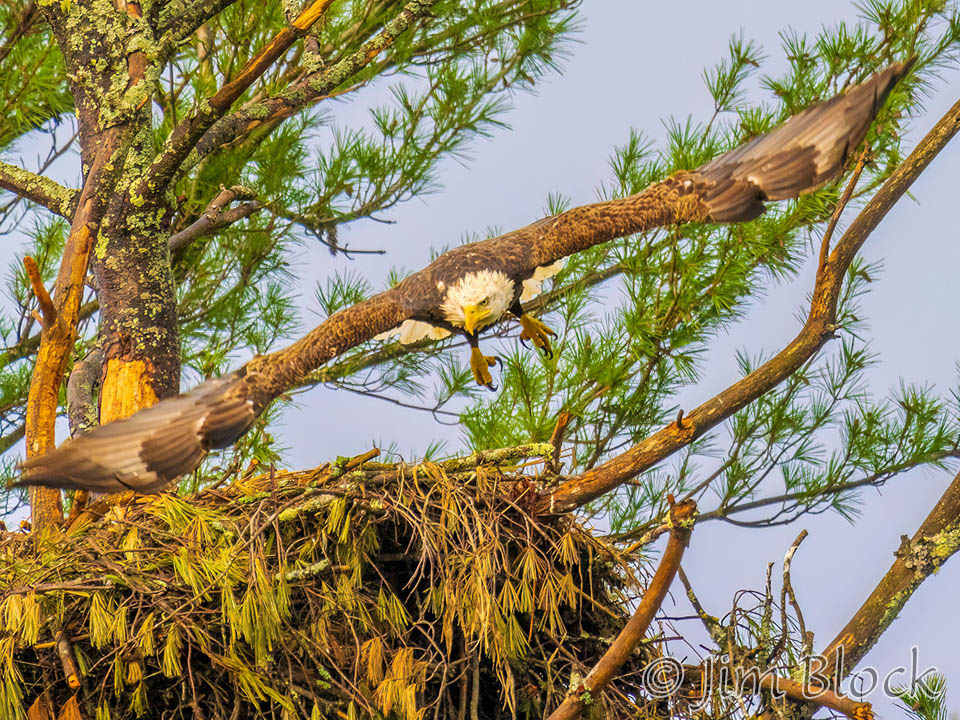
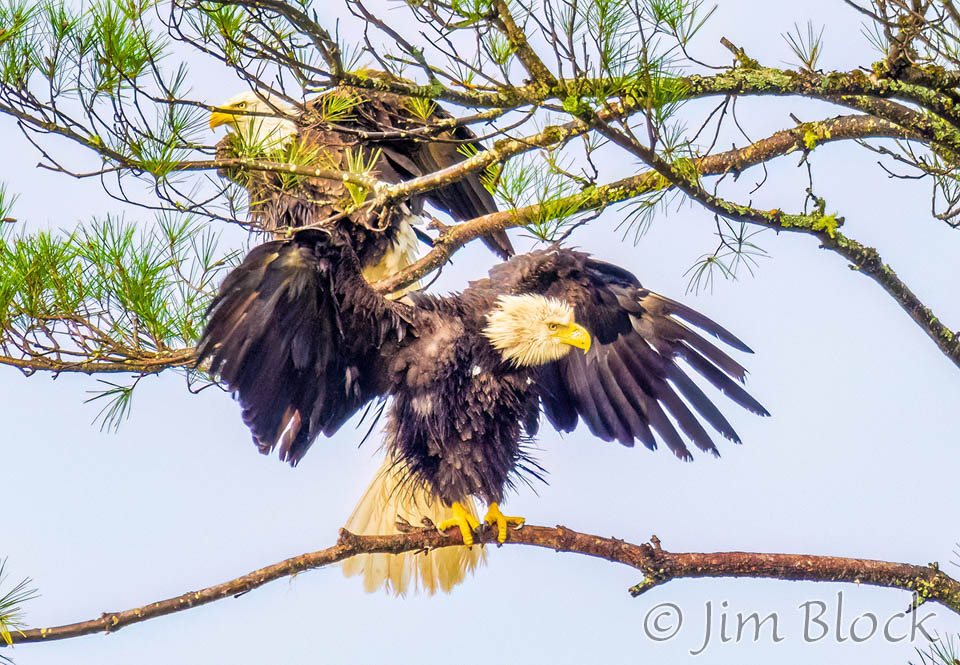
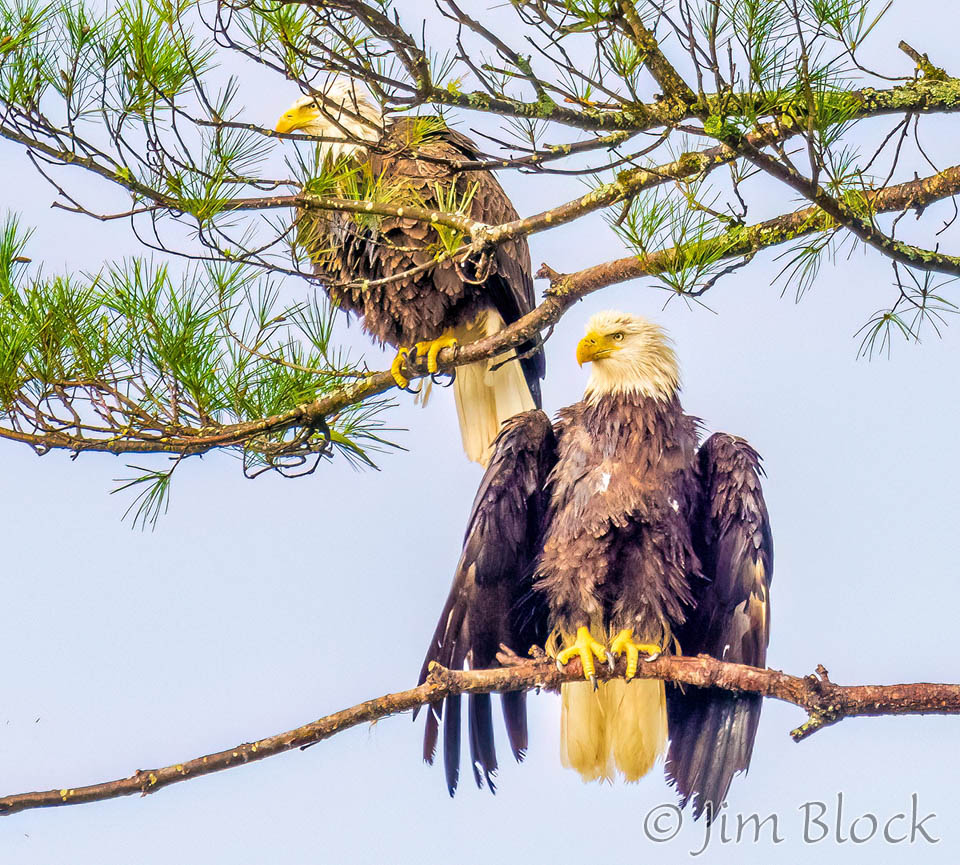
And joined its mate in their favorite tree.
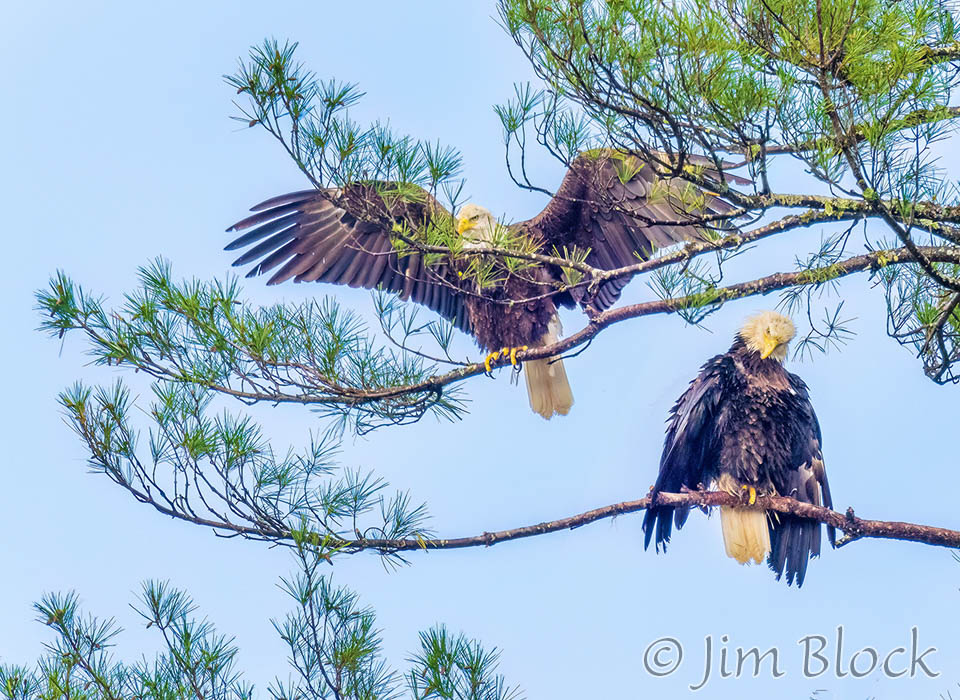
The nest exchange was completed when the second eagle headed to the nest.
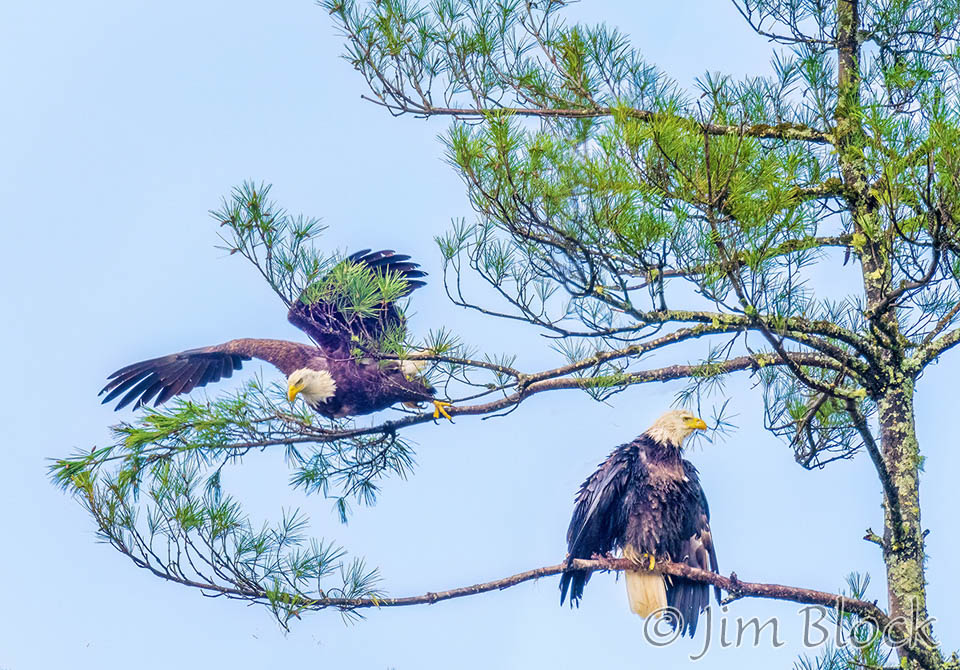
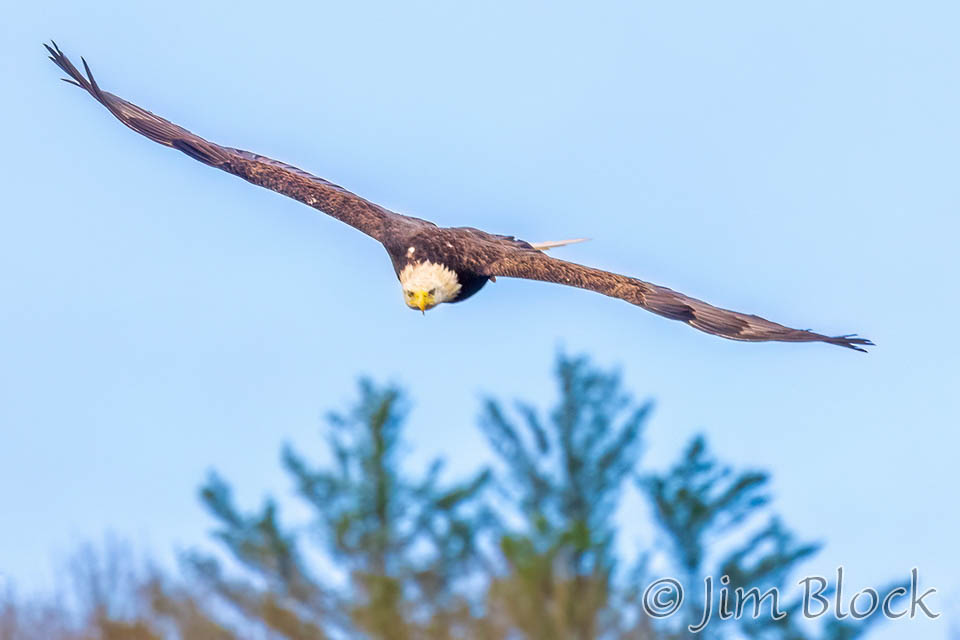
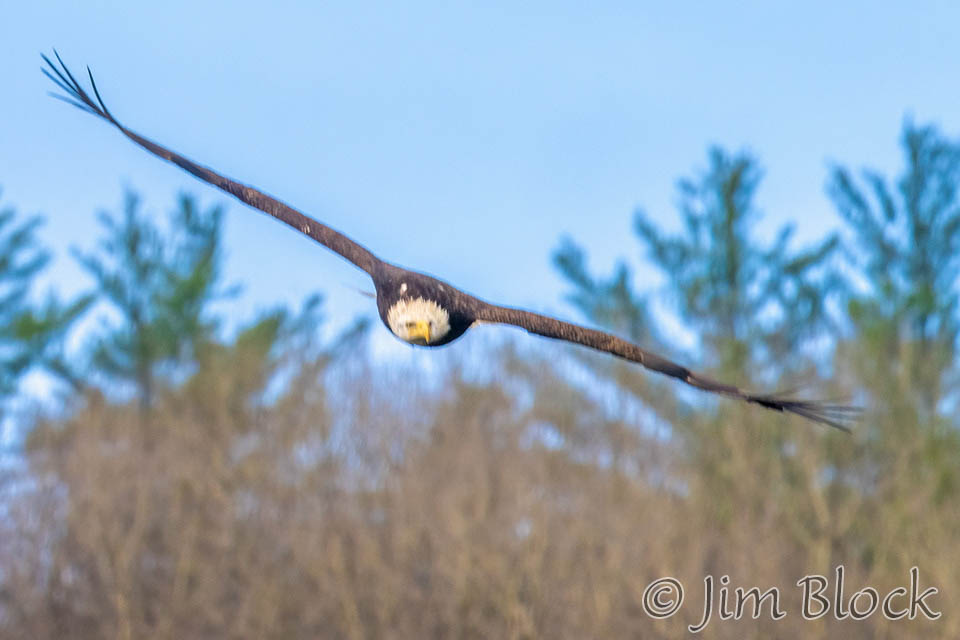
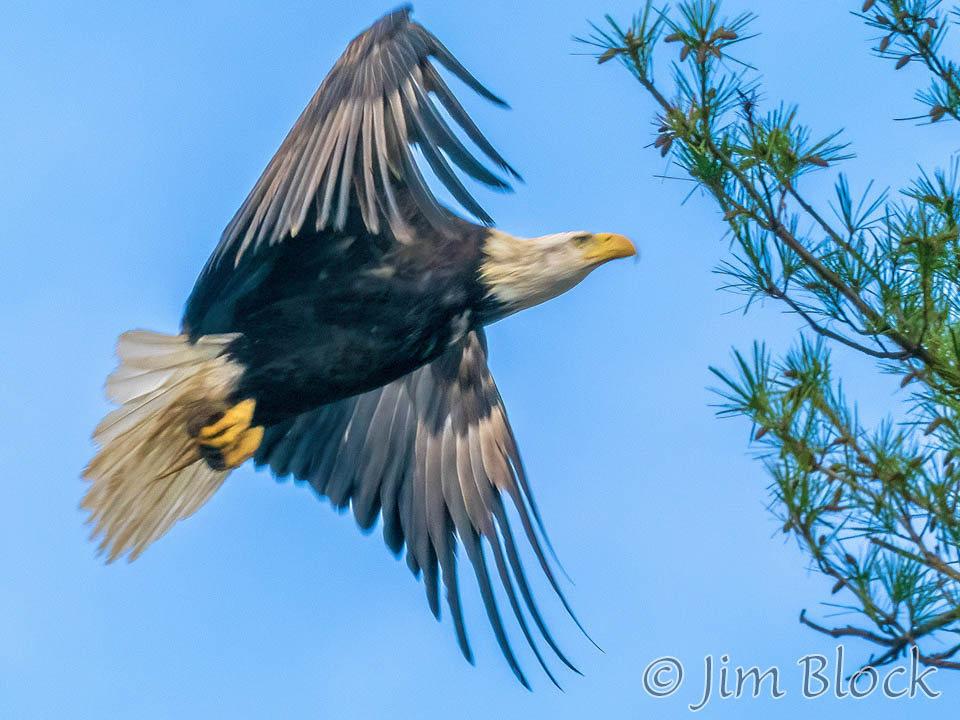
On April 26 I spent thirty minutes with the eagles. They acted like there might have been a hatch!
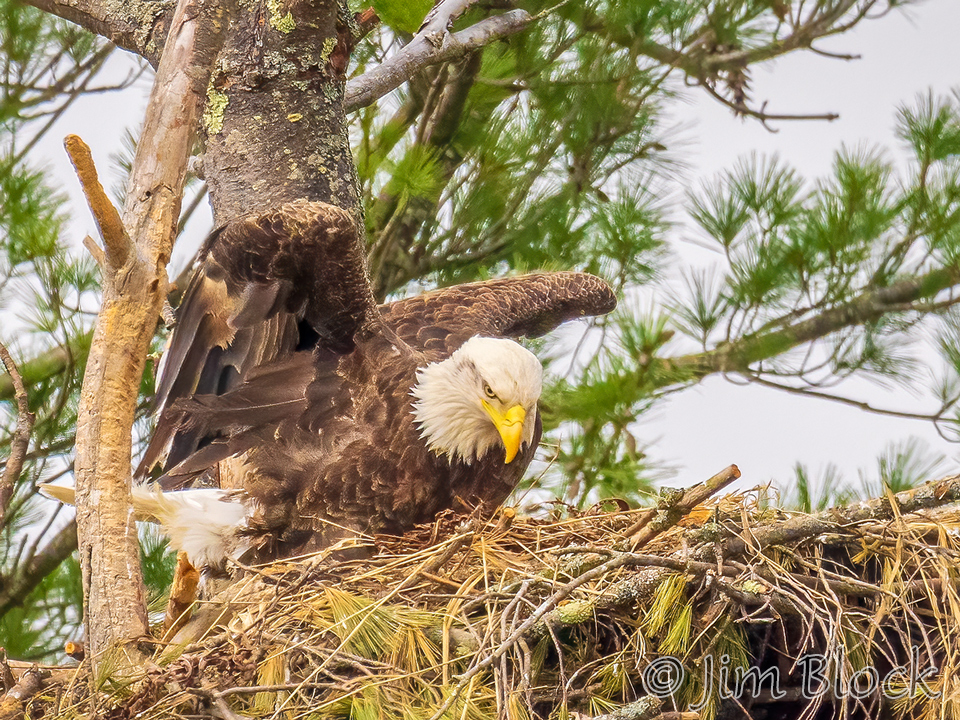
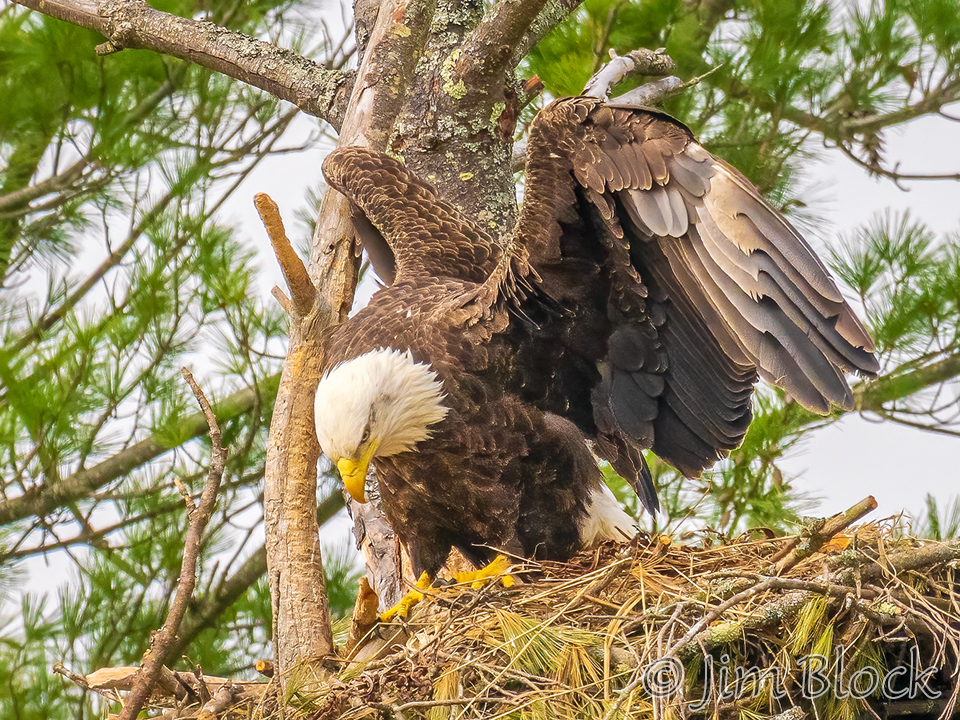
This visit also yielded a nice flight from the nest.
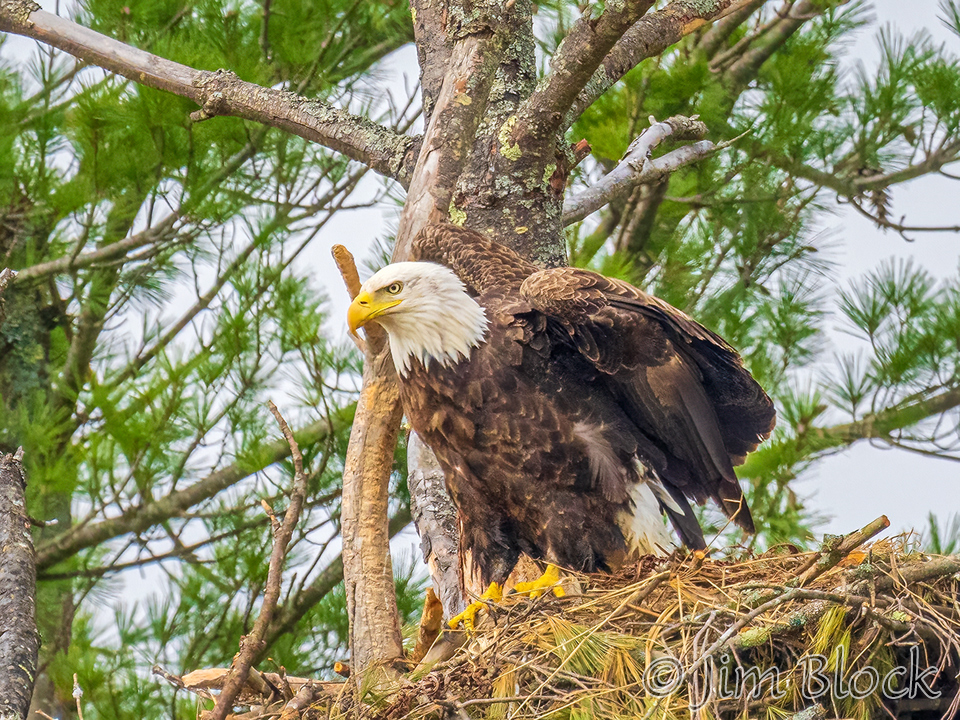
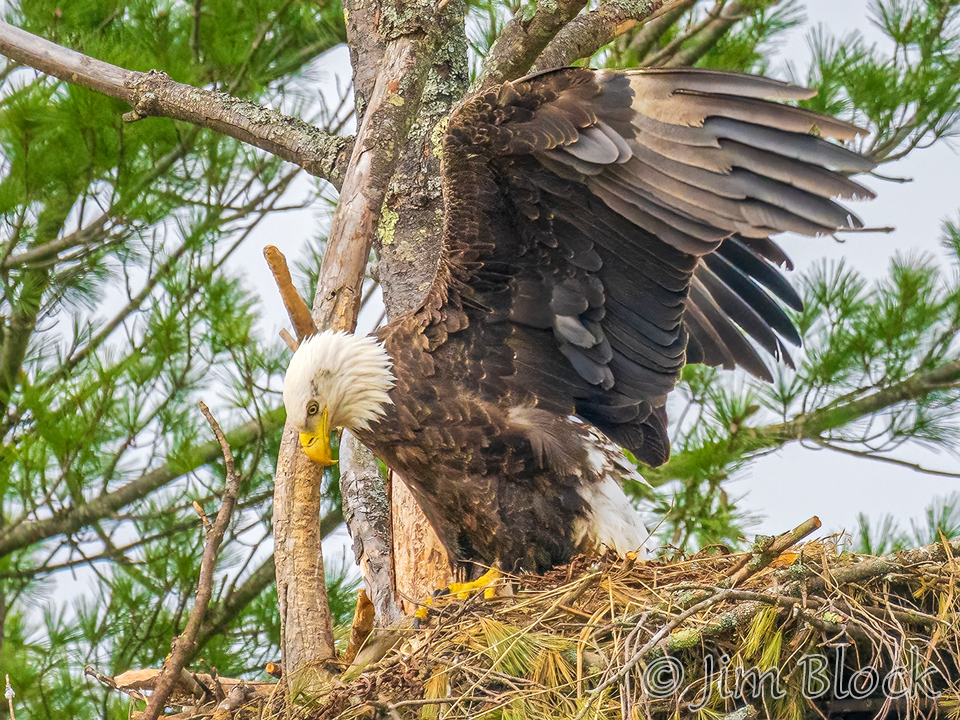
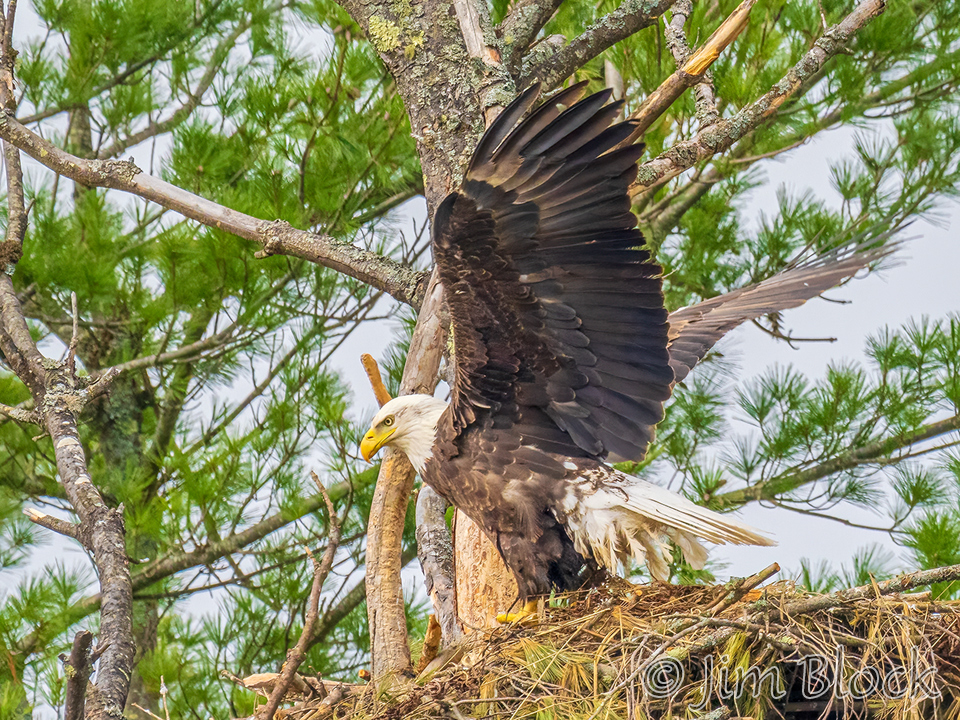
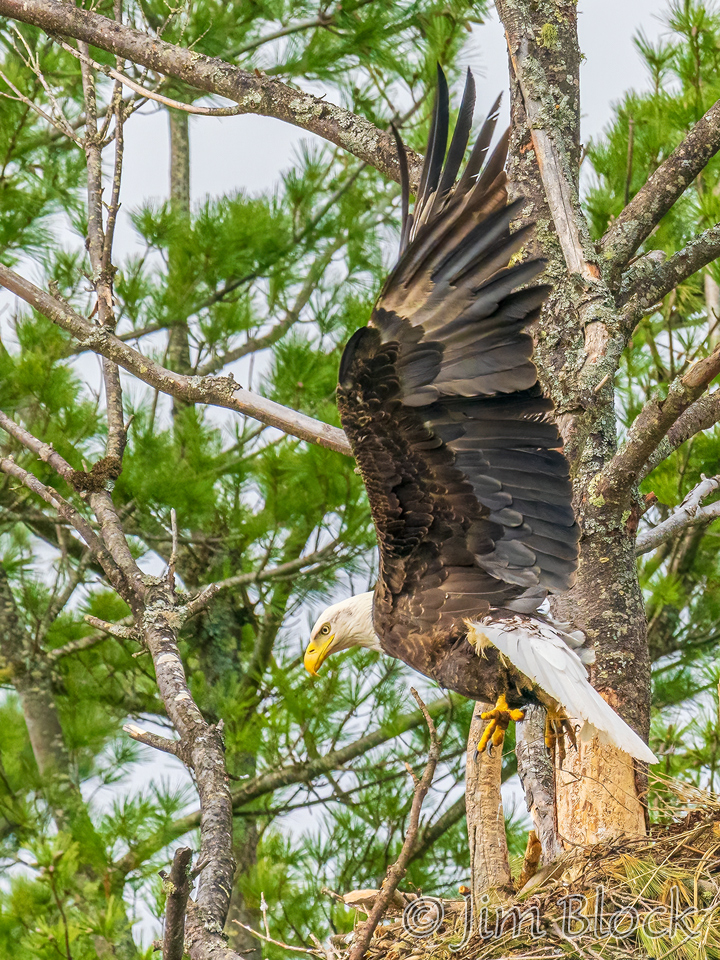
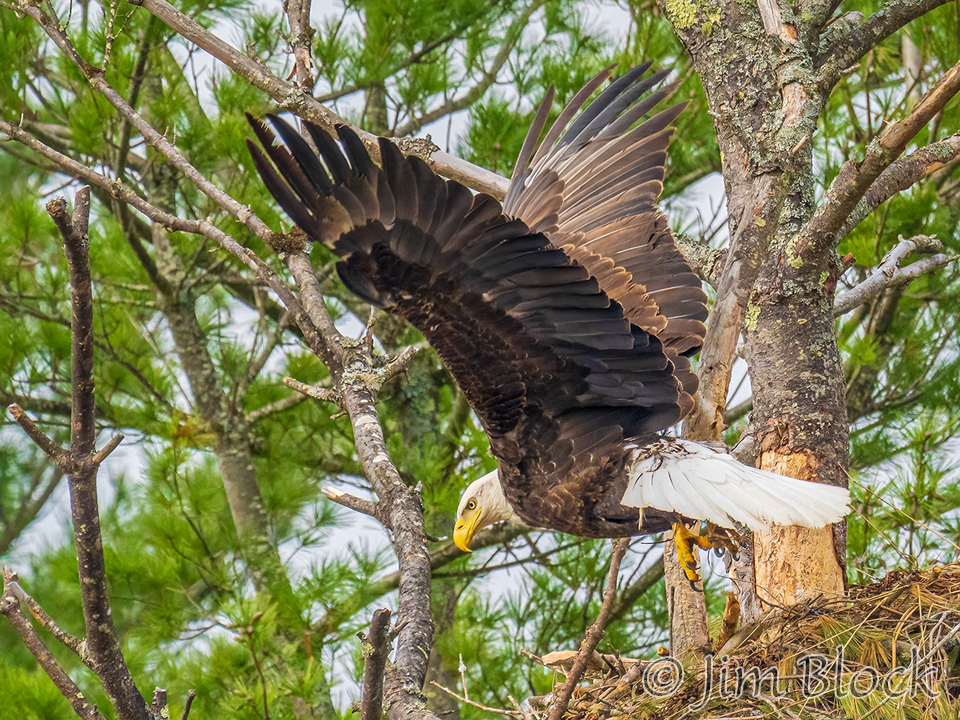
And some photos of them perched nearby.
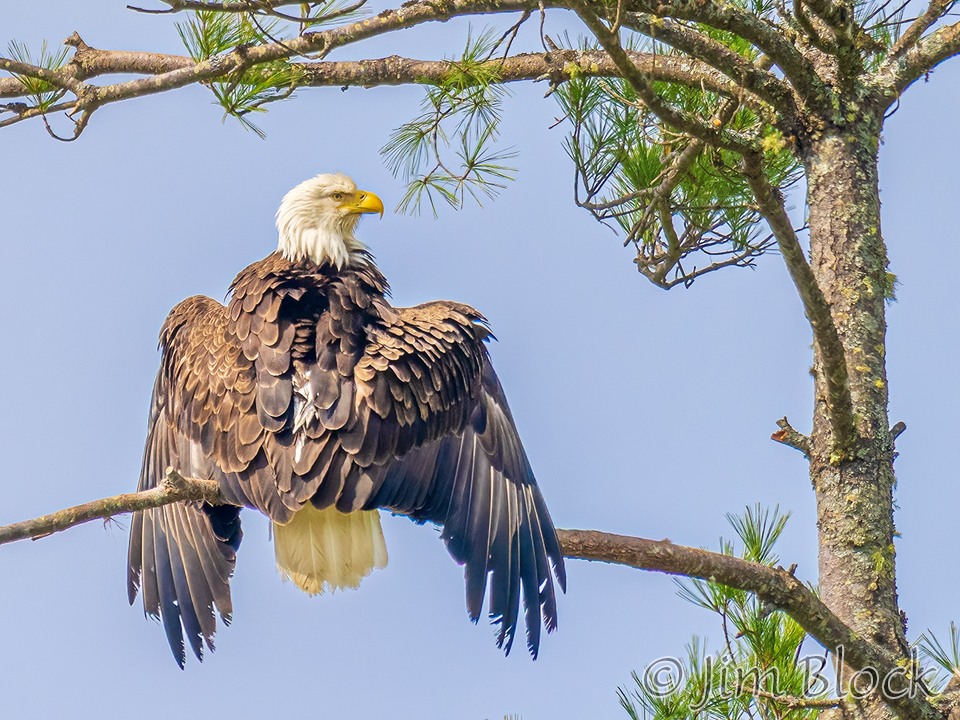
An hour with the eagles on April 27, was very rewarding: Considerable action. A long flight with a fish. And the first good look at an eaglet!!!!
When I arrived at 6:30 a.m. an eagle was sitting peacefully in the nest — but not in an incubating position. The eagle was off to the side and up high.
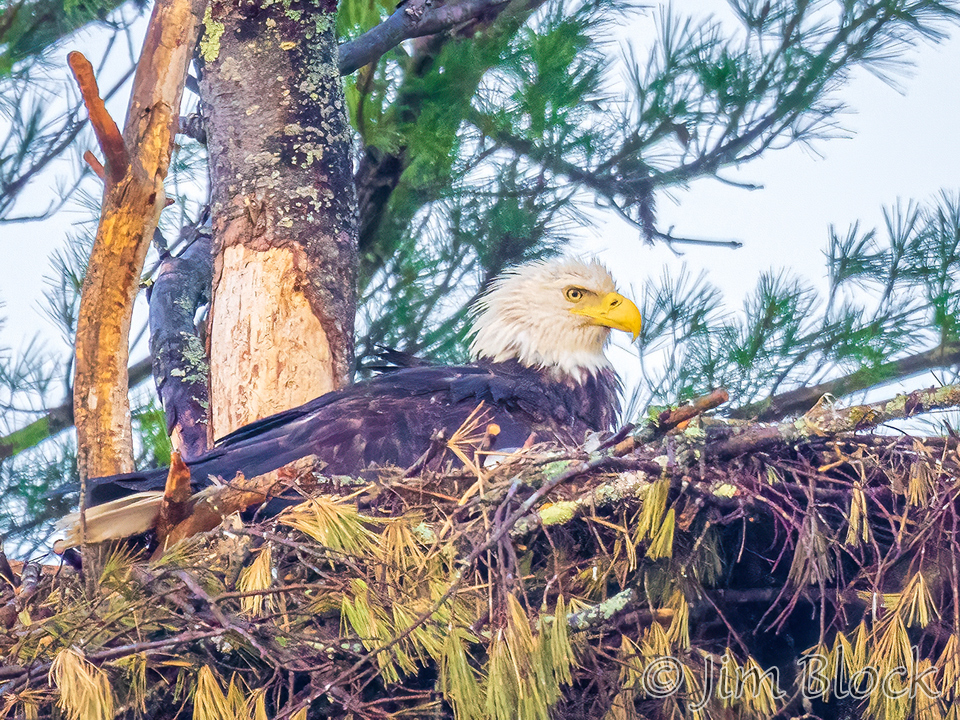
Two minute later the eagle stood up and flew.
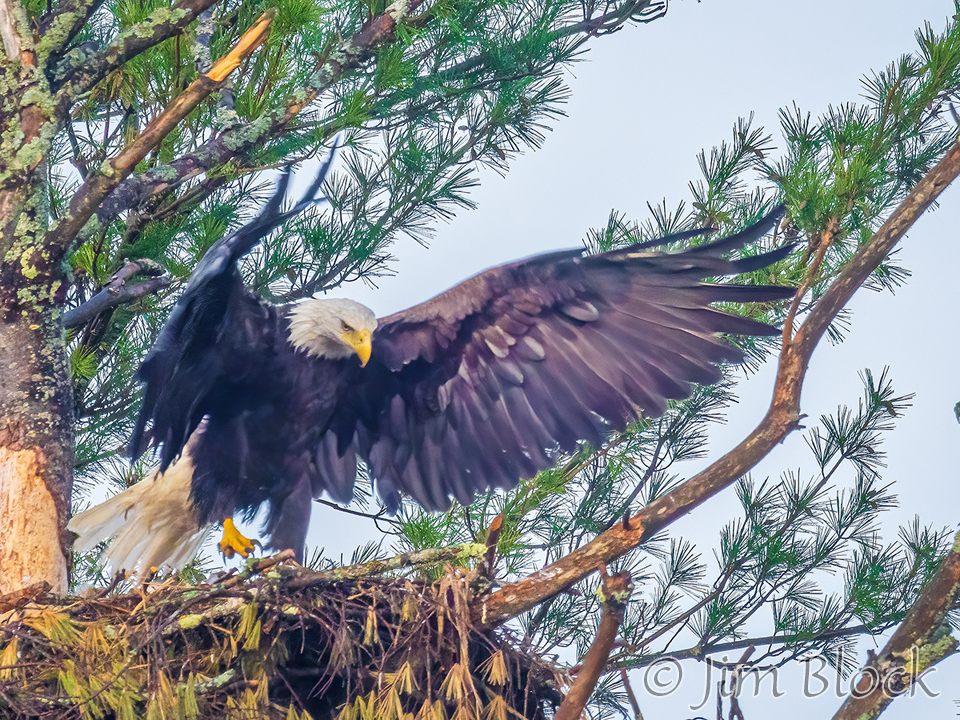
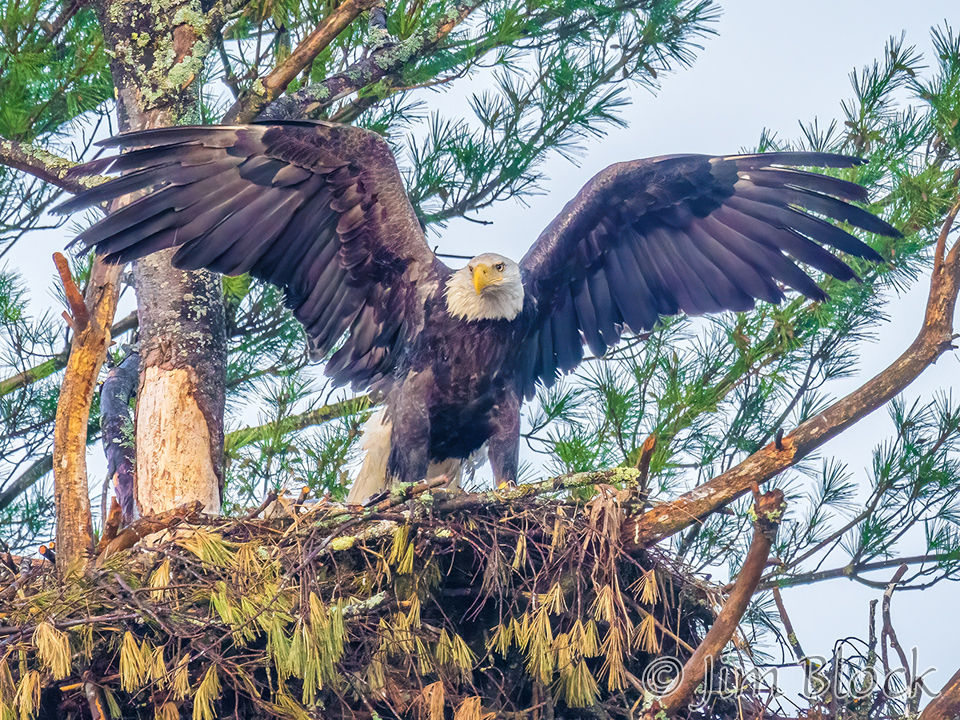
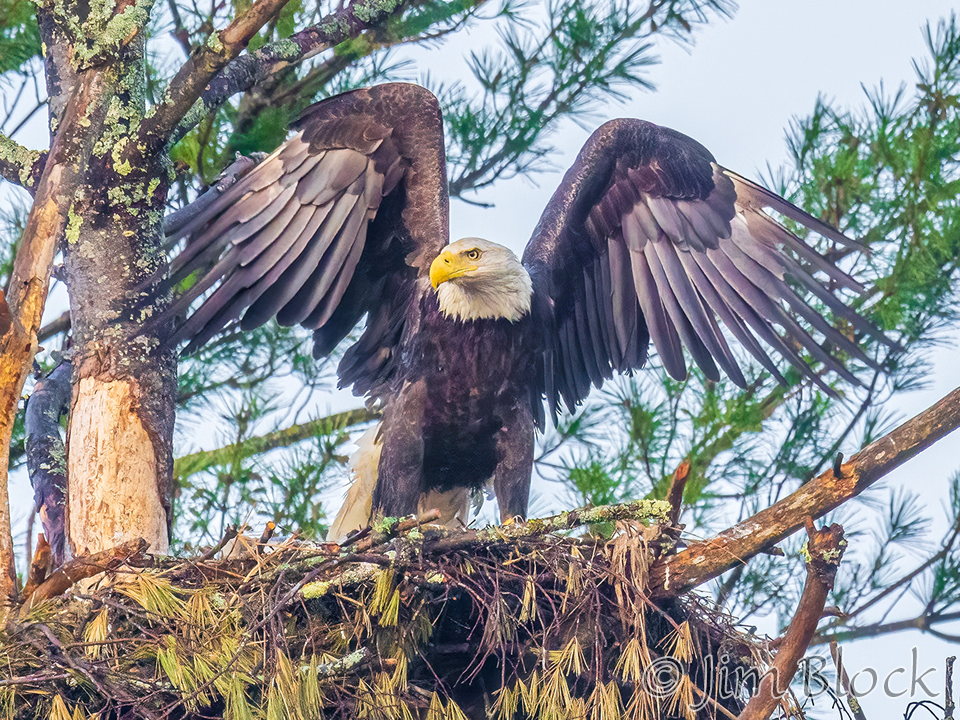
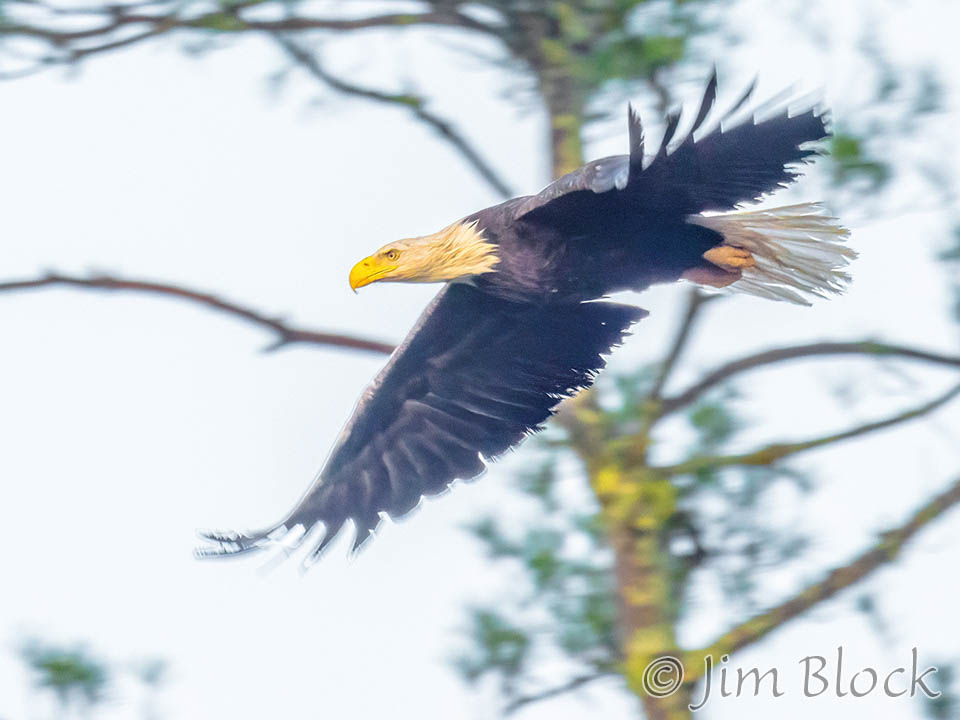
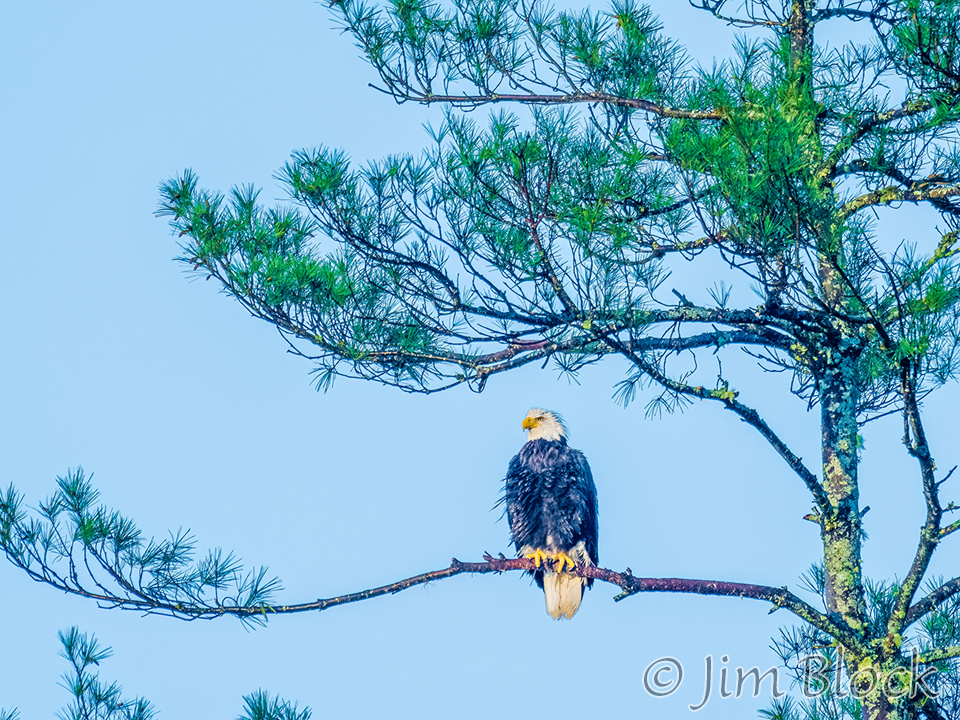
It sat briefly on their favorite branch.
Two minute after leaving the nest, the eagle headed back.
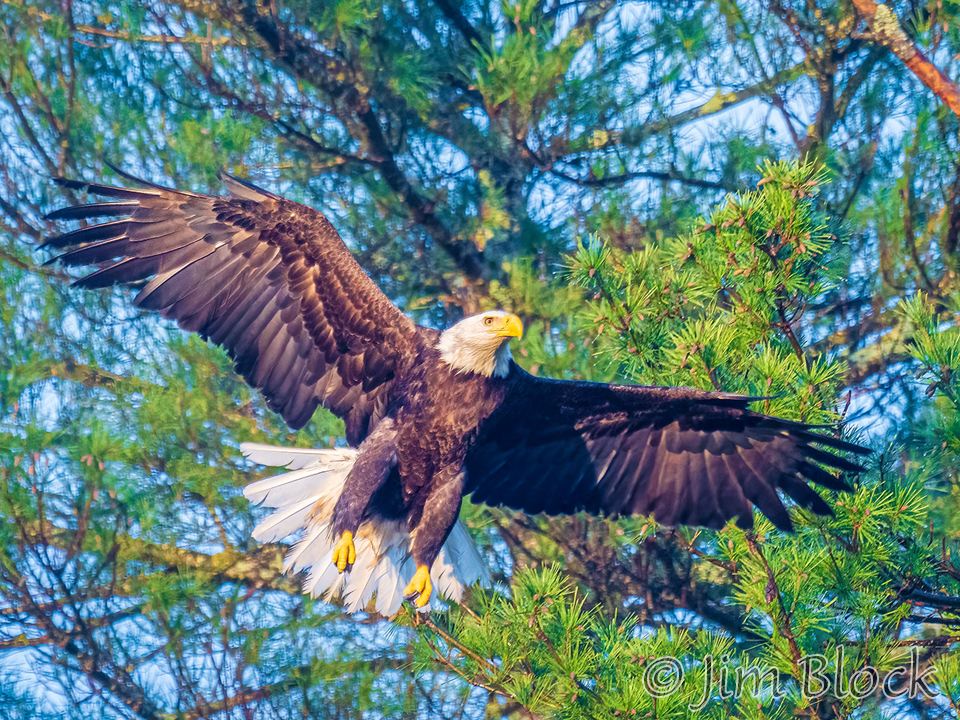
When it landed I got my first look at an eagle chick.
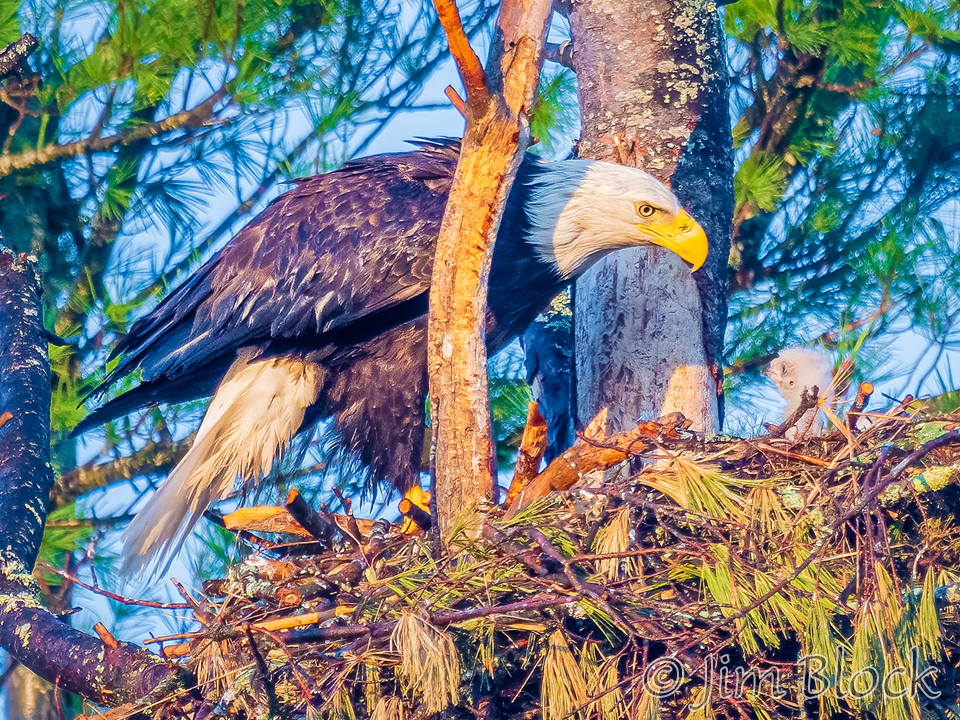
It stayed in the nest for only a minute before flying again to its favorite perch to the south of the nest. Fifteen minutes later the other parent returned. You can see the back of the head and neck of the chick to the left of the eagle’s tail in the second photo.
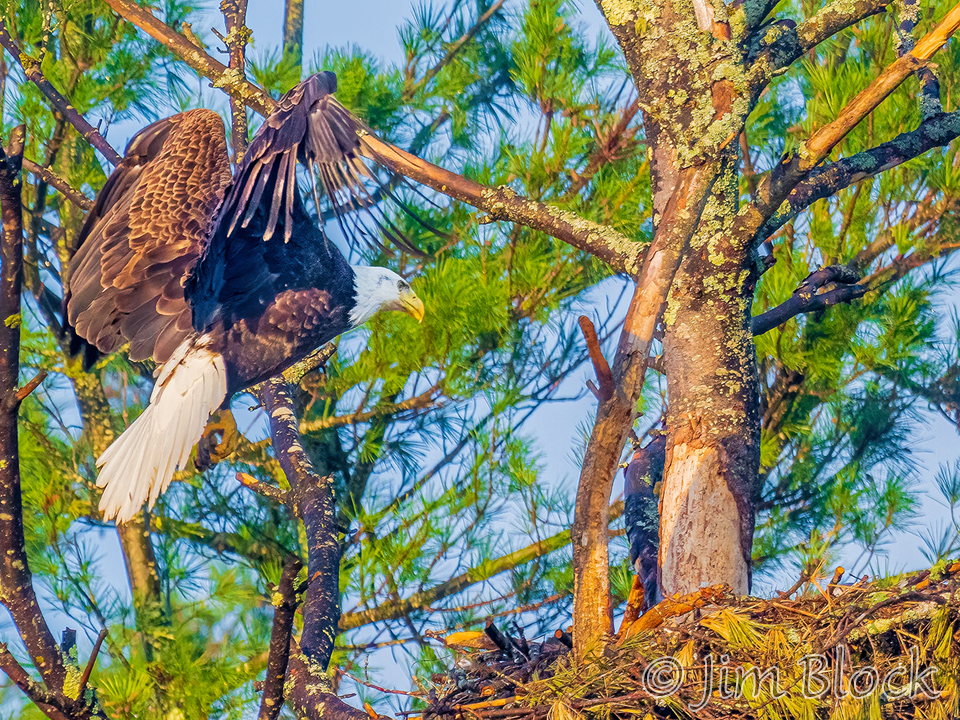
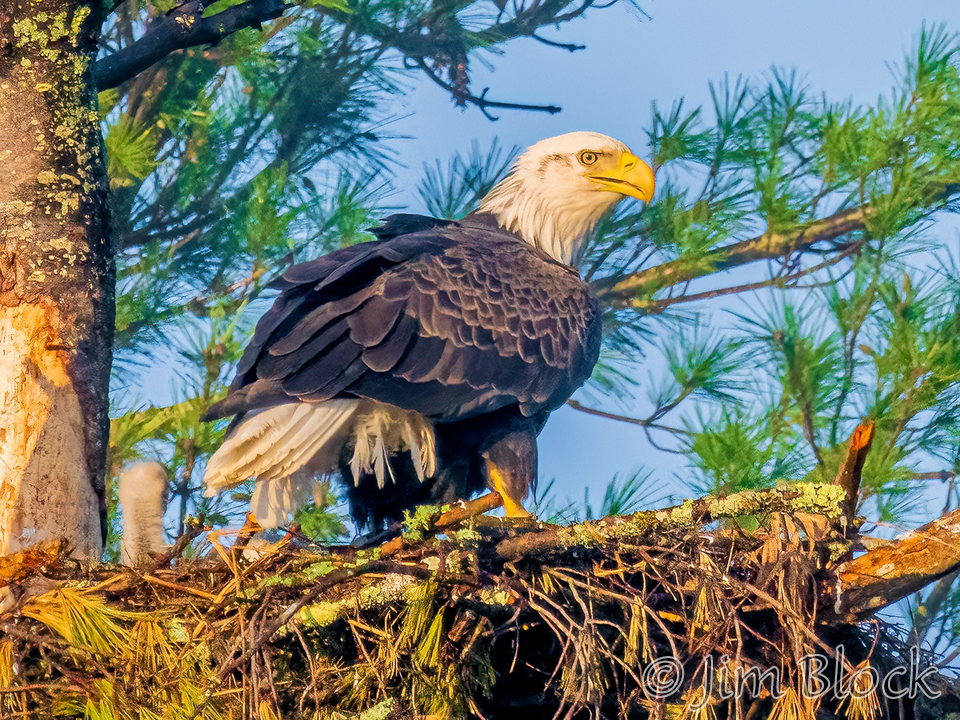
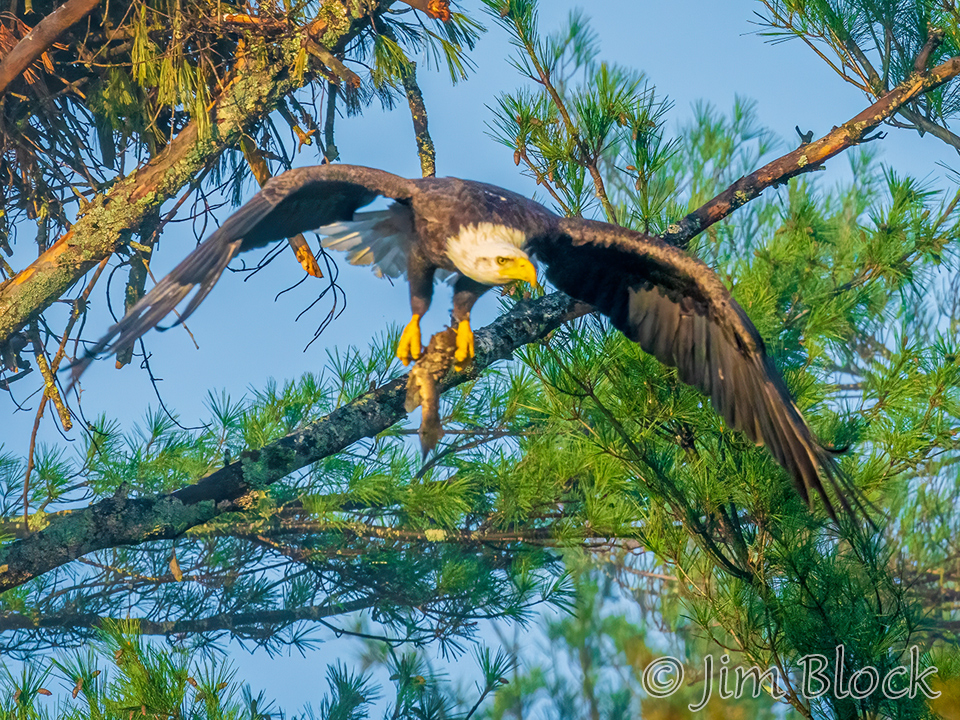
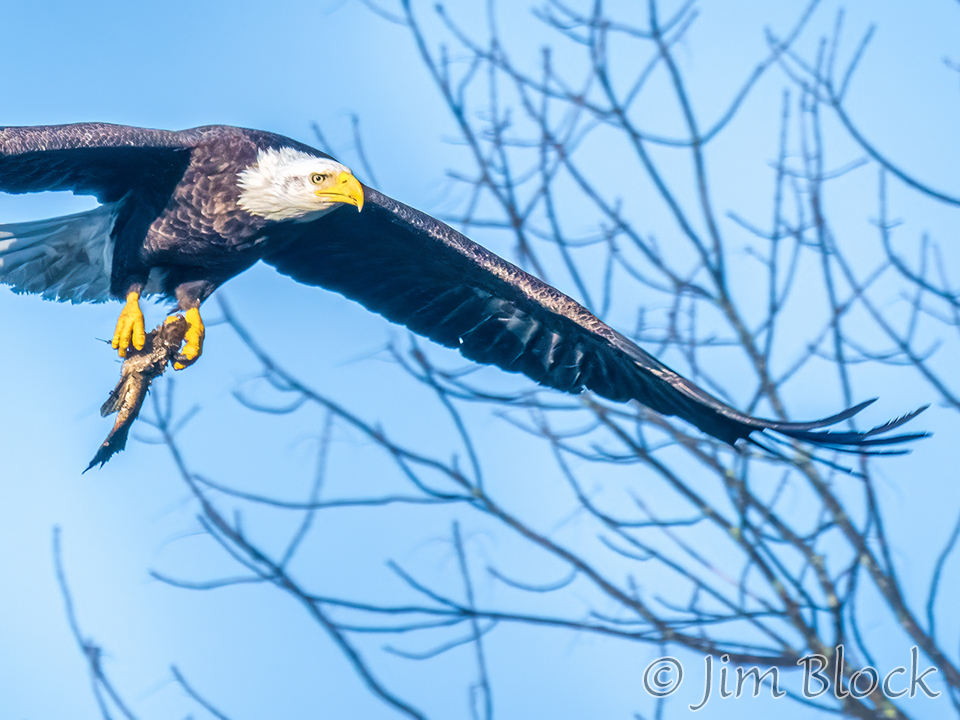
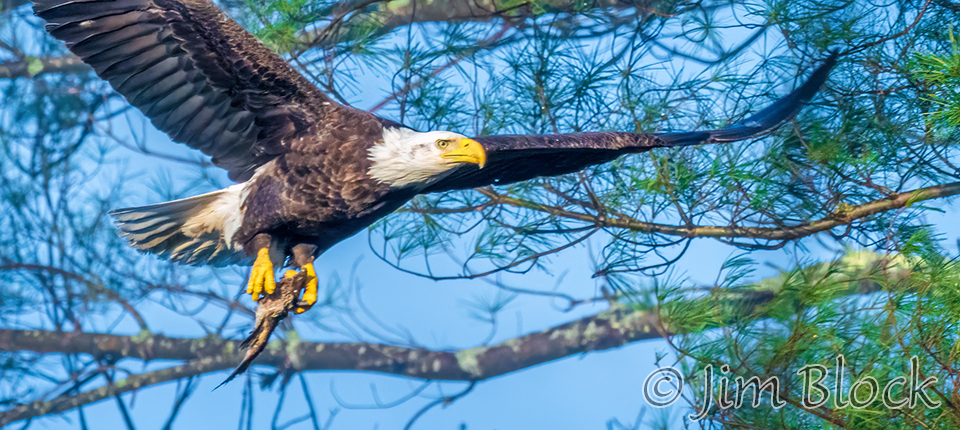
The eagle then picked up a fish in it bill, transferred it to its claws as it was leaving the nest, flew in a big loop, and returned to the nest with the fish.
Here it is launching with the fish in its beak.
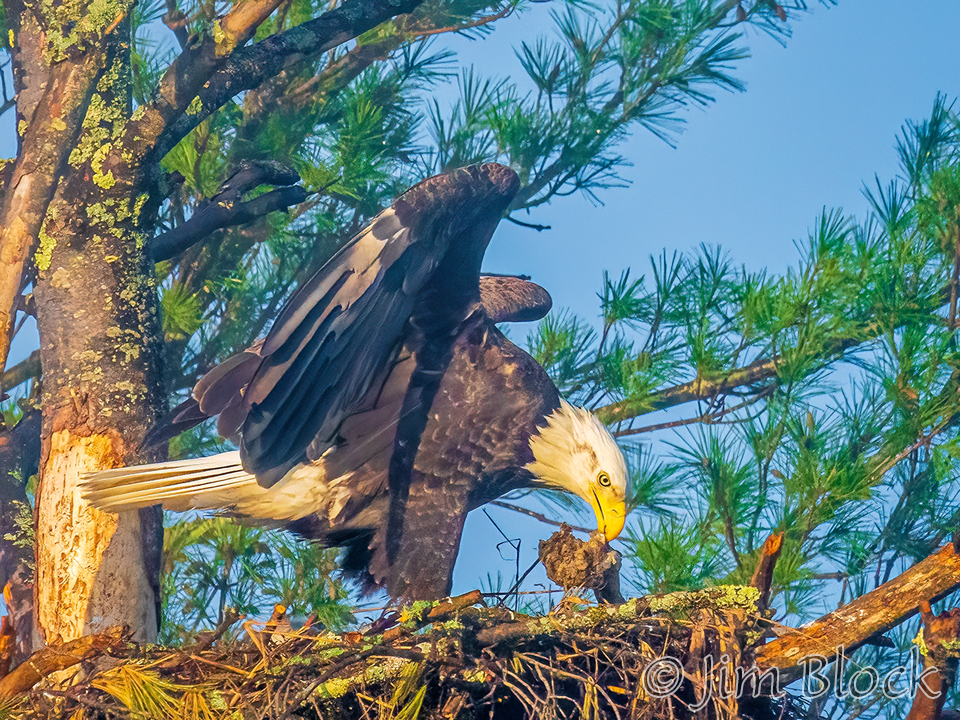
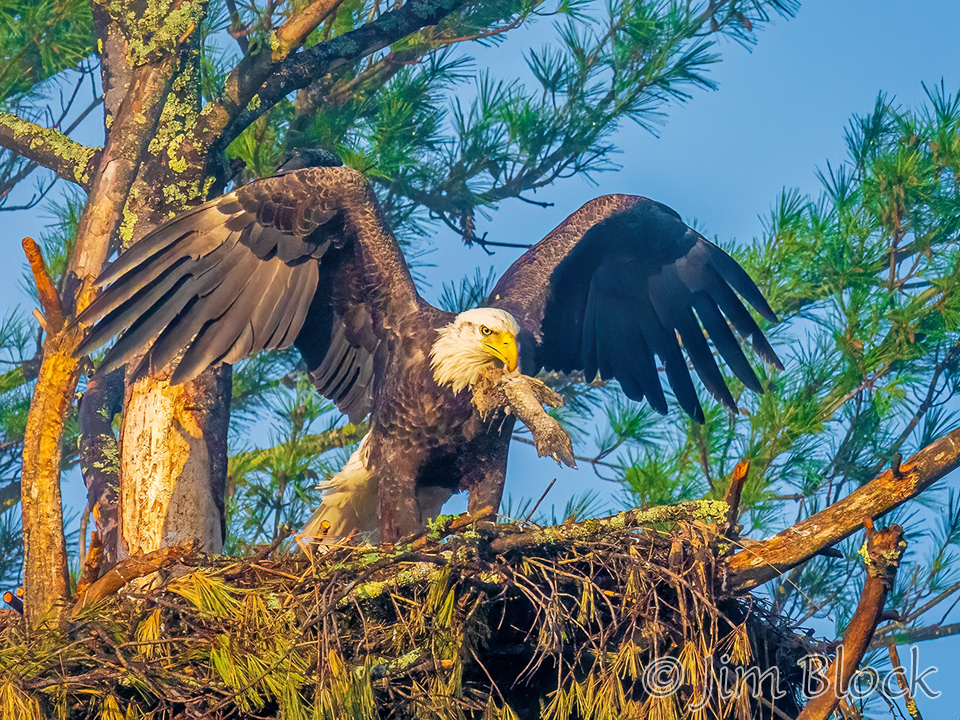
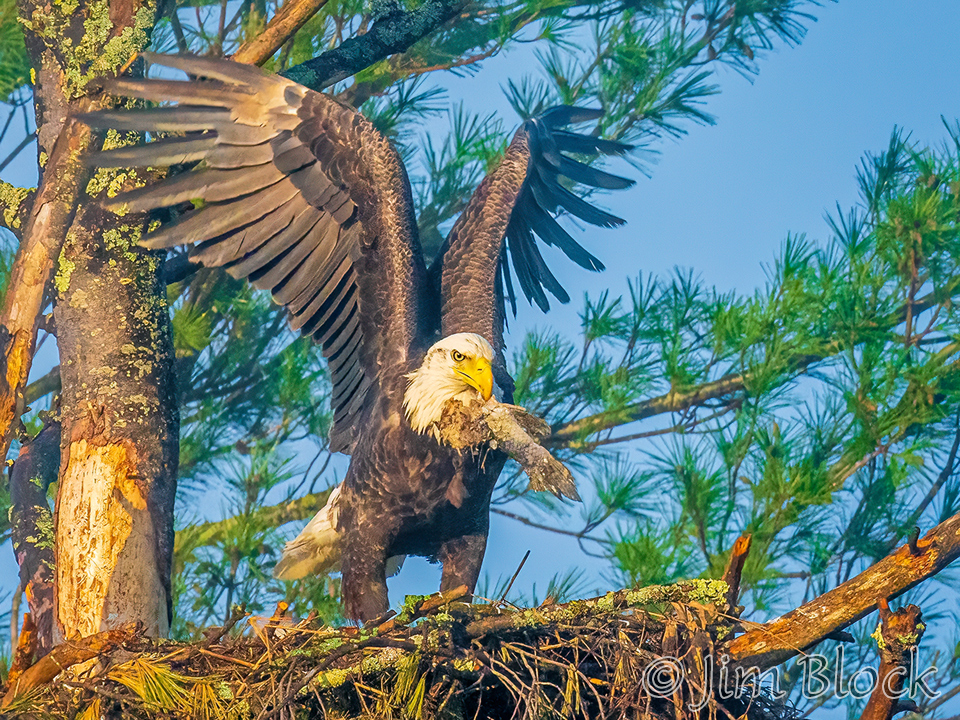
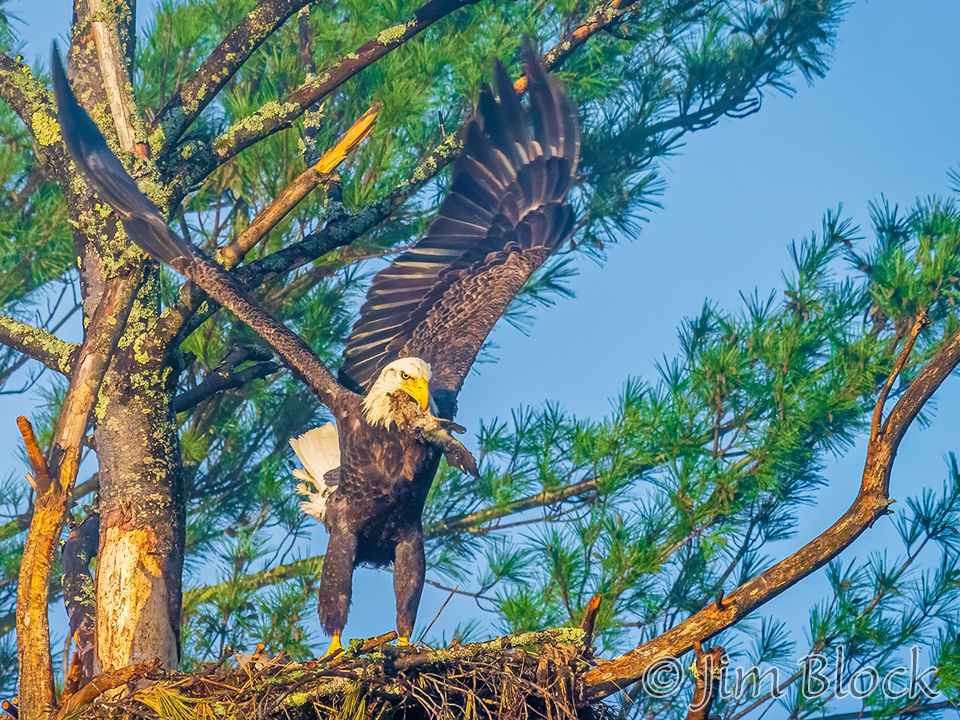
This is not a good photo, but it shows the fish being transferred to eagle’s claws.
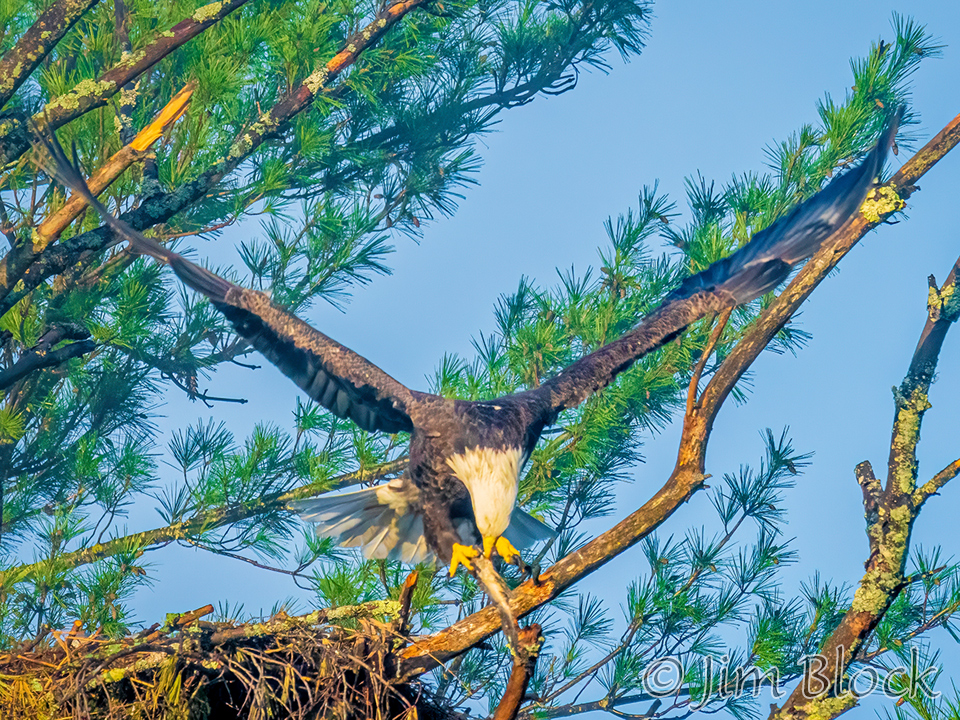
The eagle did a full loop over Post Pond and returned still holding the fish. In the last two photos you can see the eaglet.
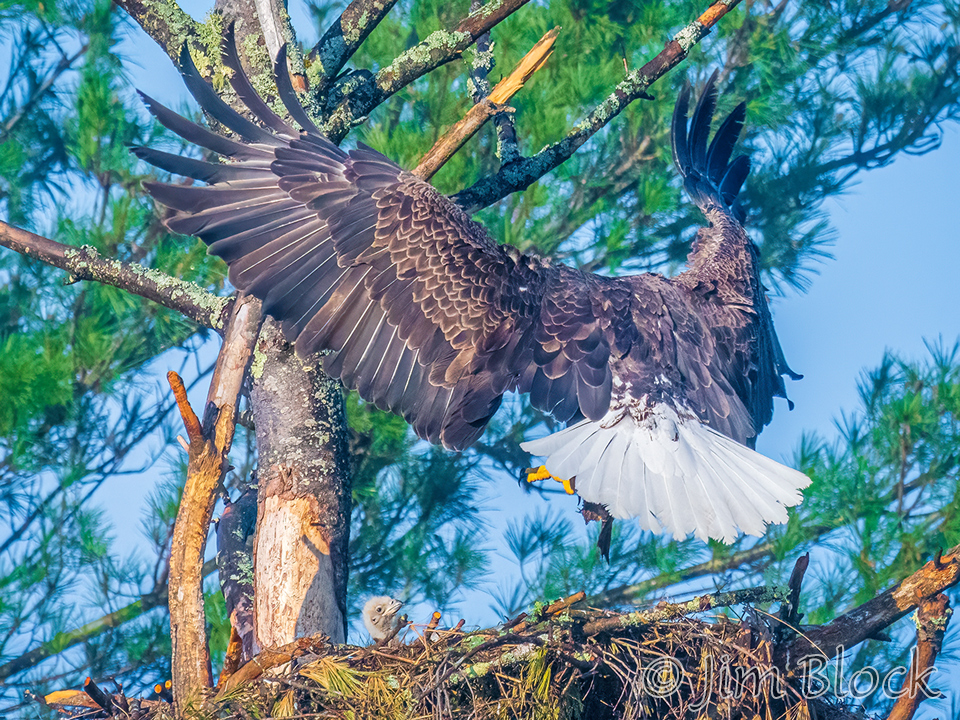
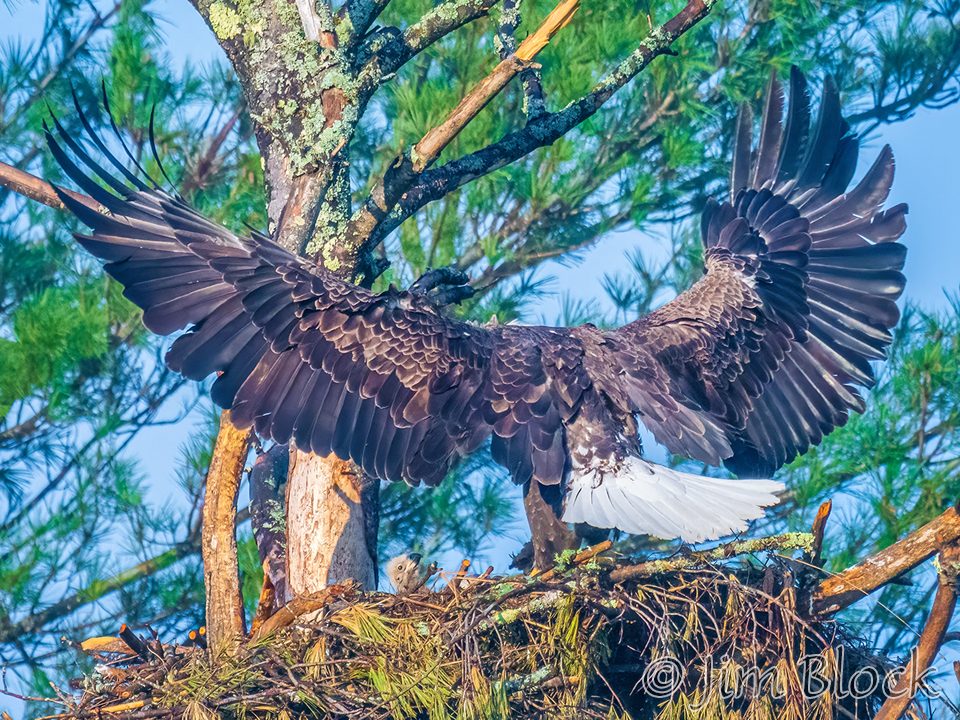
Back in the nest it pulled some prey apart to feed the chick who was now well down in the nest.
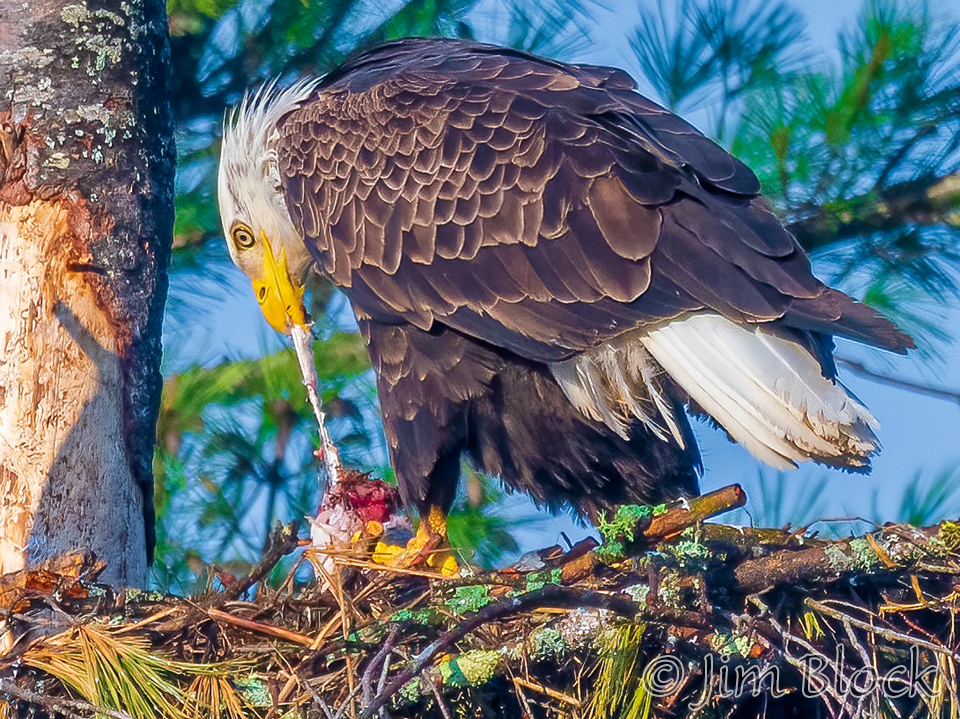
Job done, the eagle relaxed to conclude, for me, a great hour-long visit.
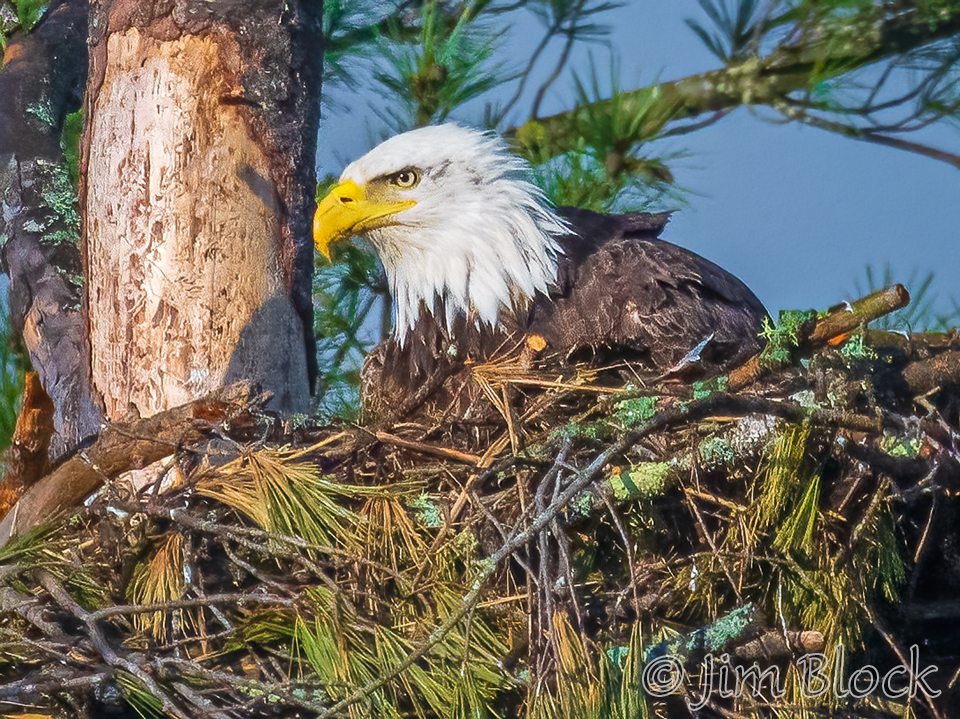
I headed to Orford where I photographed a pair of Red-tailed Hawks. Then over to Stevens Road in Thetford where I photographed American Kestrels mating.
I visited the eagles twice the morning of April 28. When I arrived around 6:30 a.m., it was very foggy. The eagle’s nest is near the top of the tall dead tree just to the right of the center in the photo below.
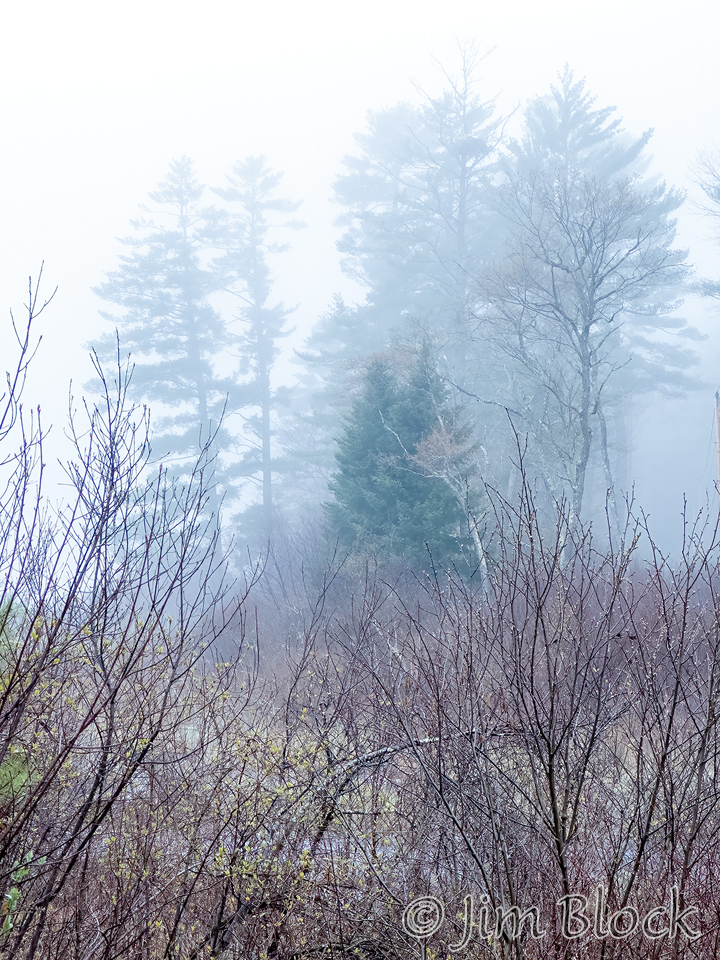
Here is a highly-cropped photo taken with my iPhone that shows, barely, an eagle sitting on their favorite branch at the far left and the nest near the right side.
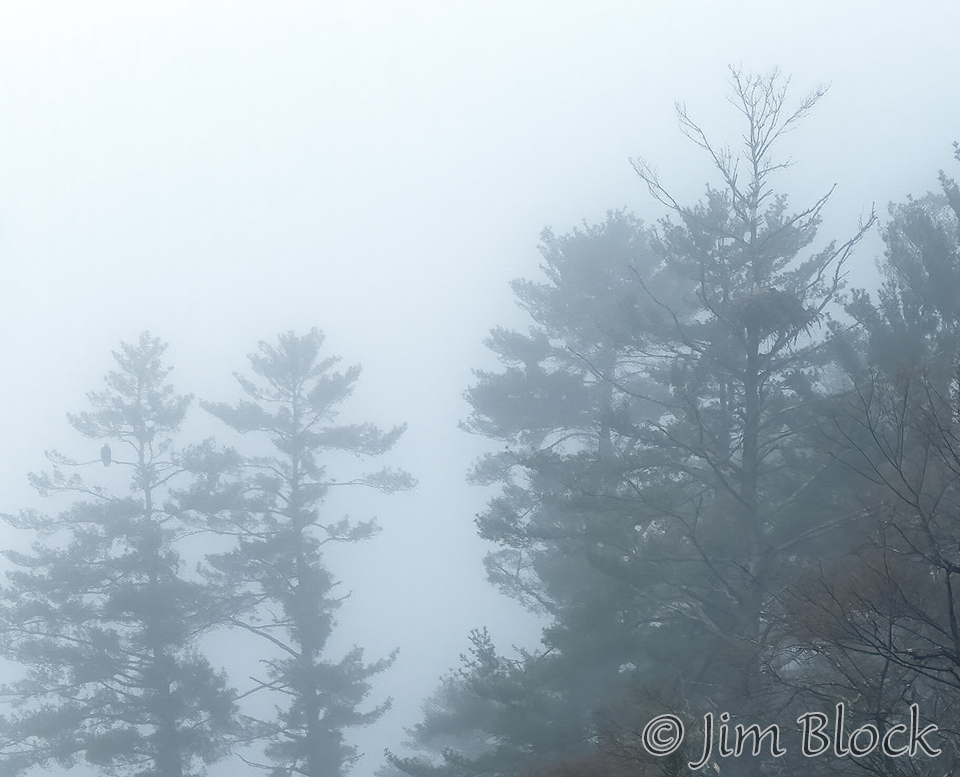
The few photos I got in the fog were not great.
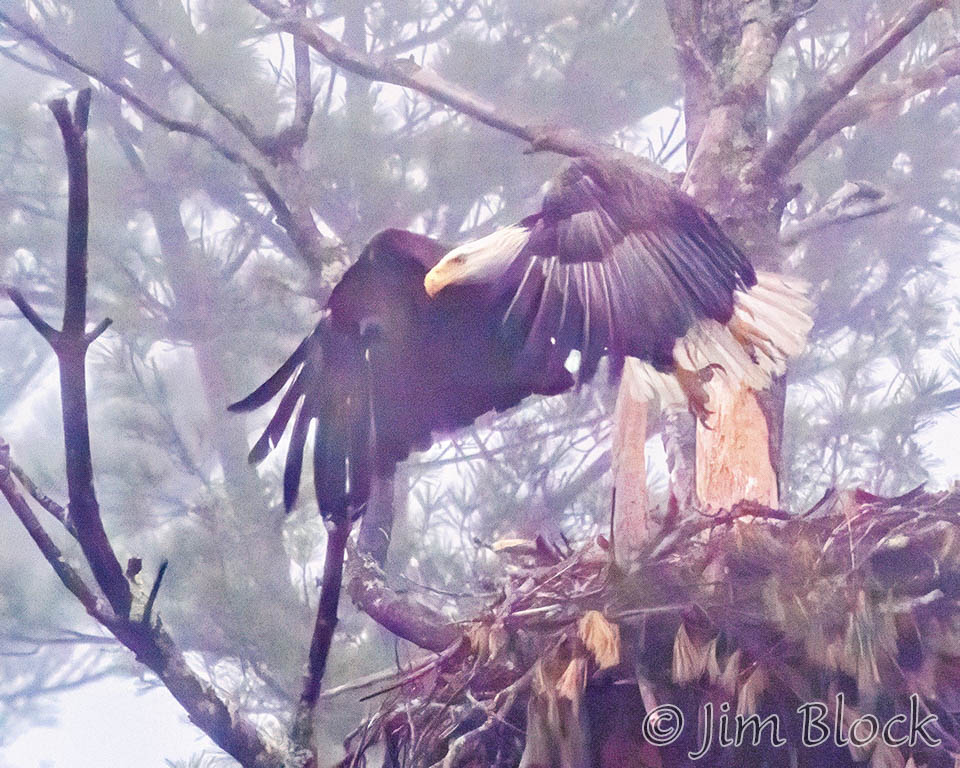
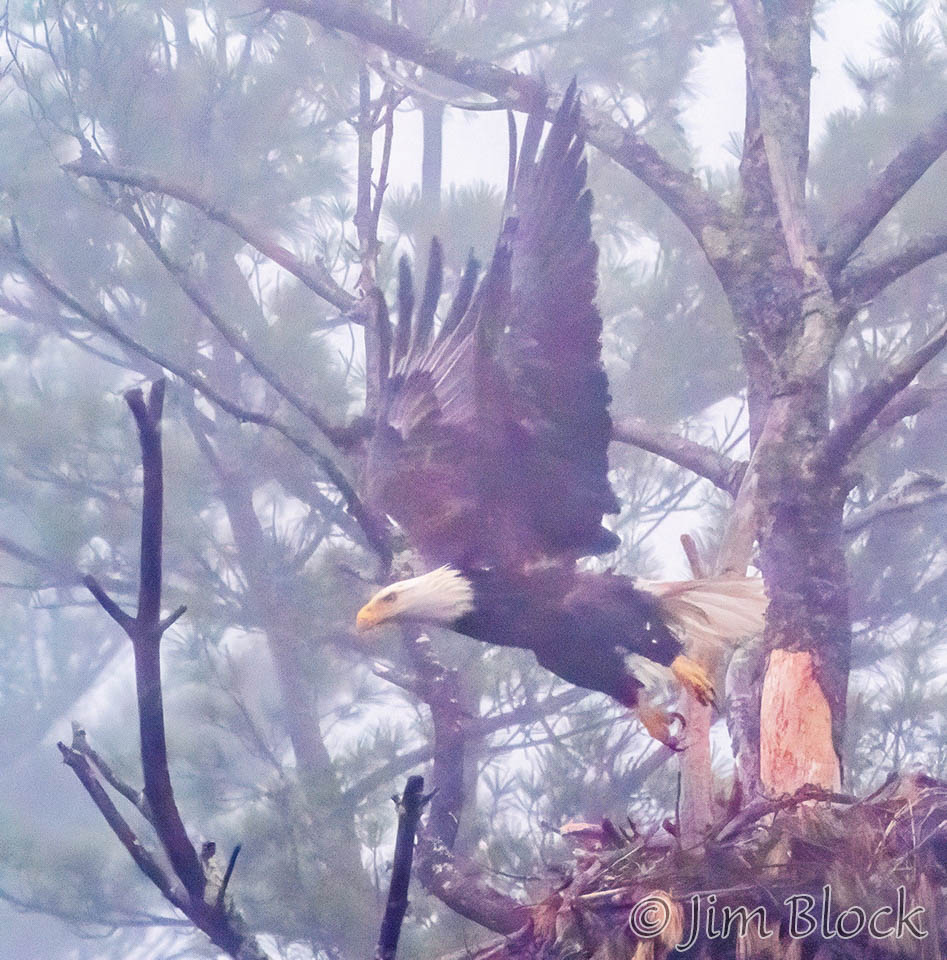
So I only stayed for a few minutes choosing to head to Mill Pond in Etna where I have had great luck with spring migrants at times. But this morning I mostly struck out. So back to the eagles with the fog gone and the sun out.
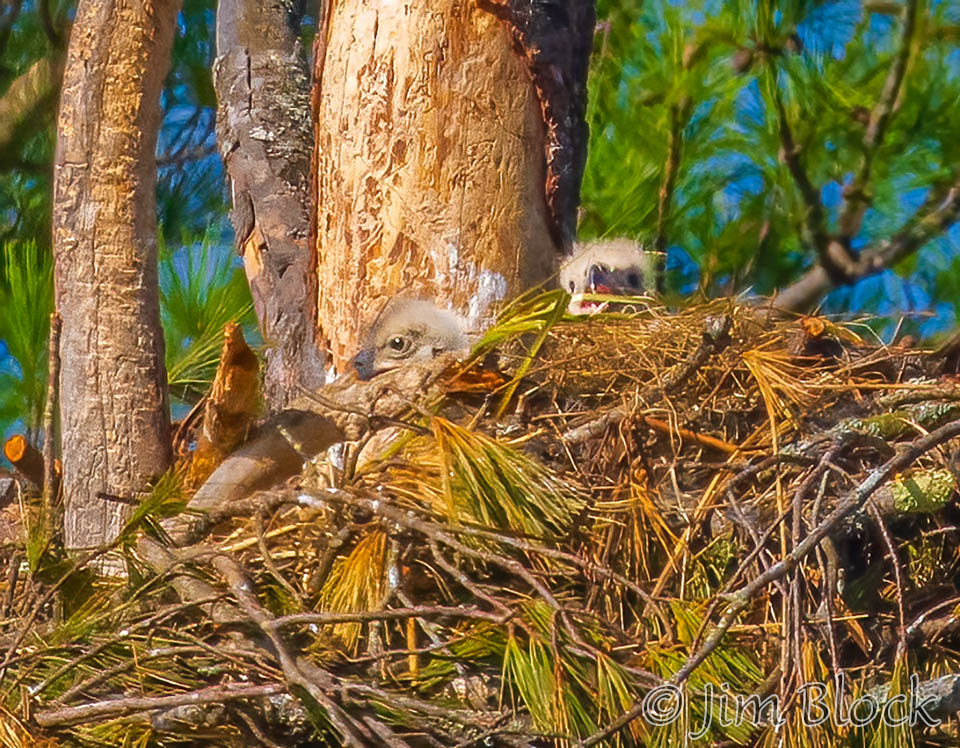
The return trip certainly proved worthwhile. Now there were two chick in view!
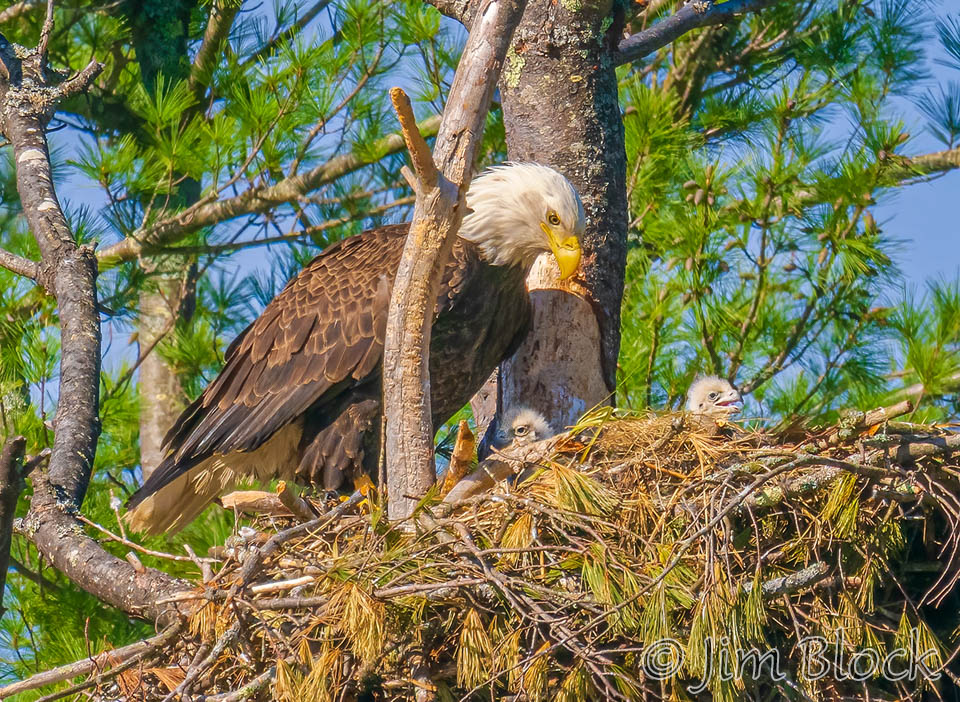
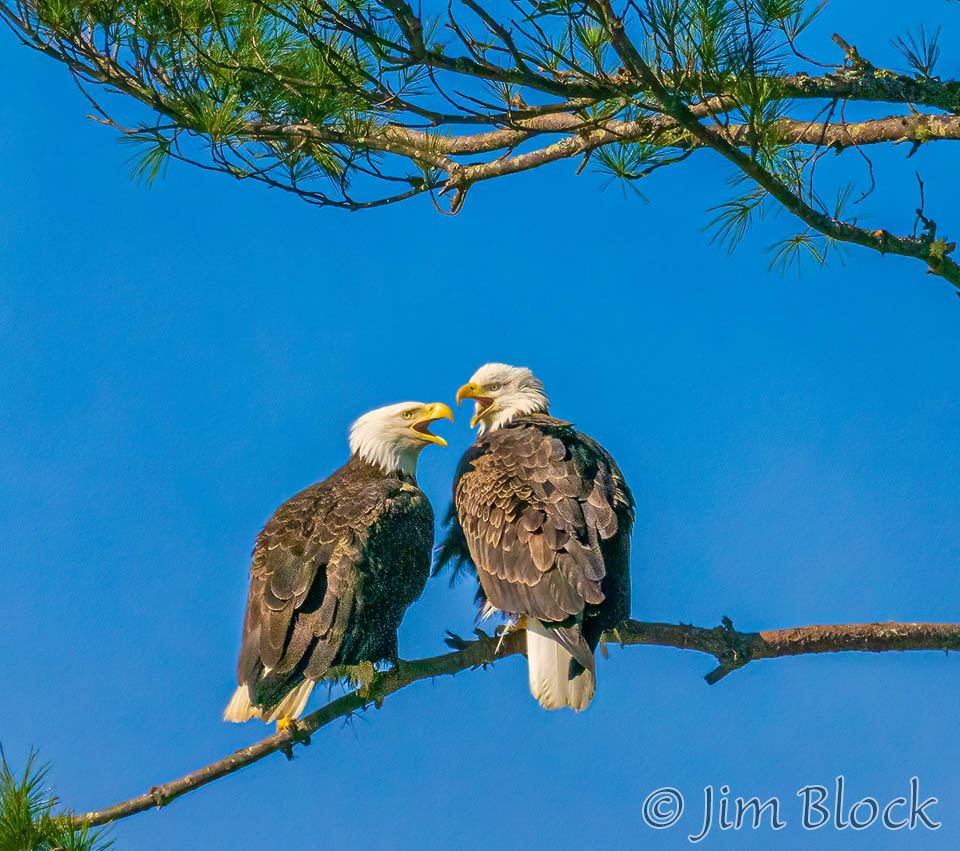
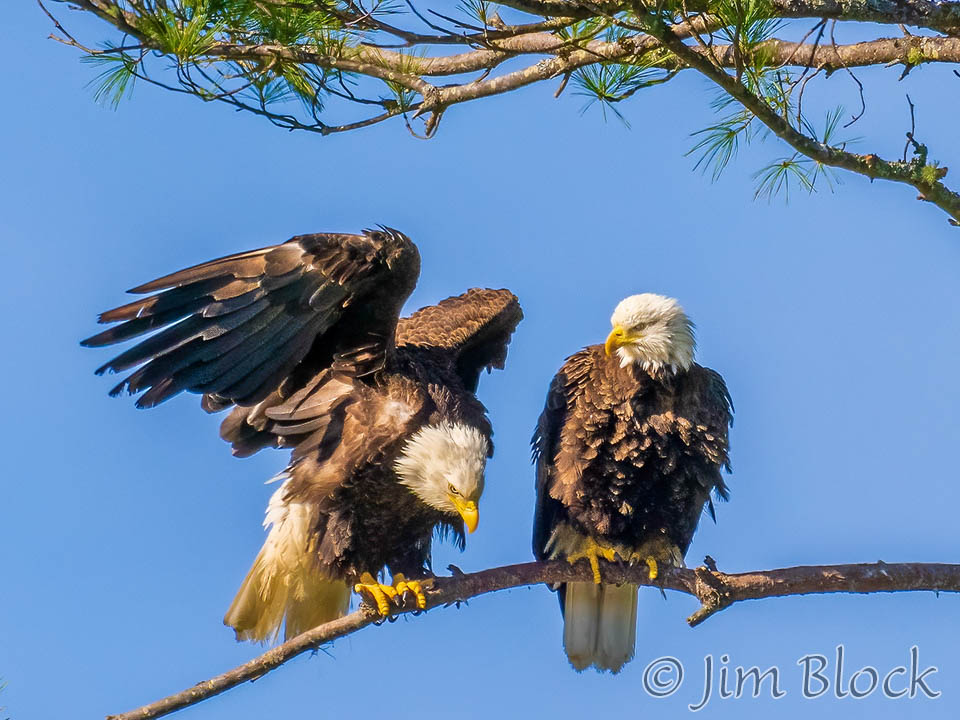
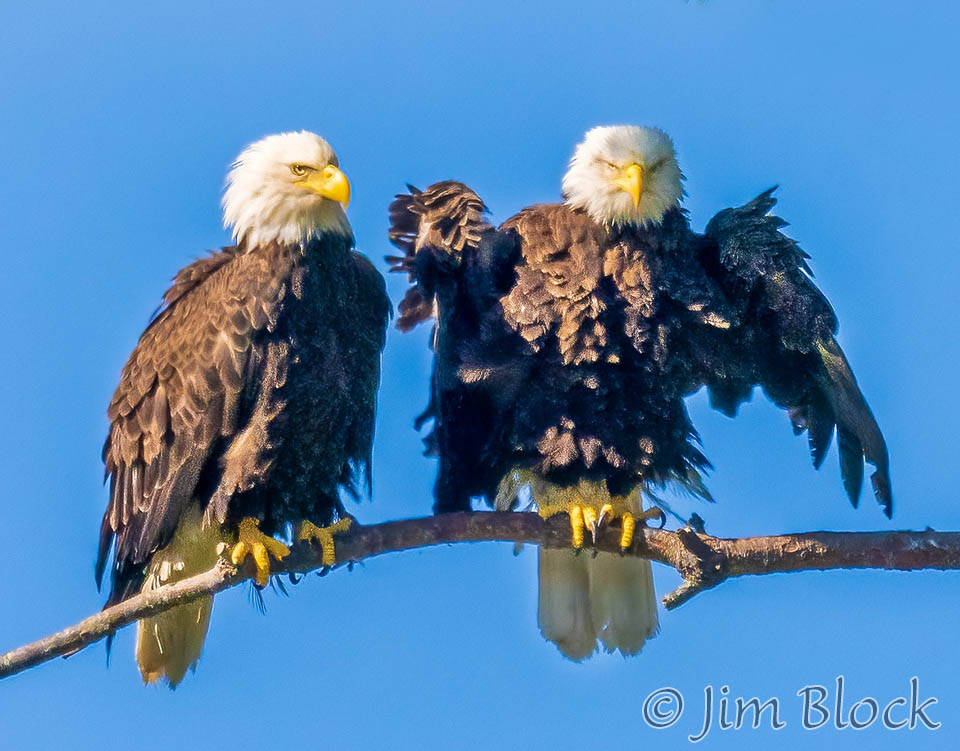
The parents must have been overjoyed at their success. They spent some time on their favorite branch conversing and preening.
Thirty minute later an eagle flew in with a large fish. These chick were going to be well fed.
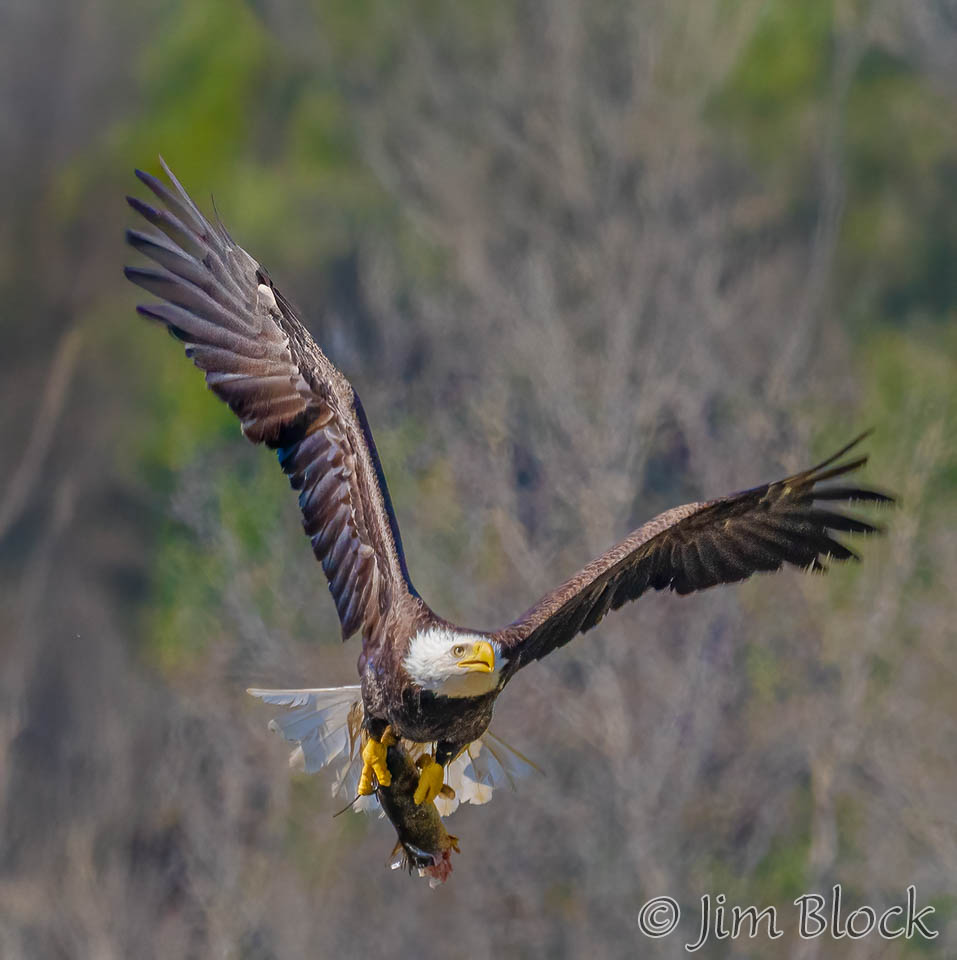
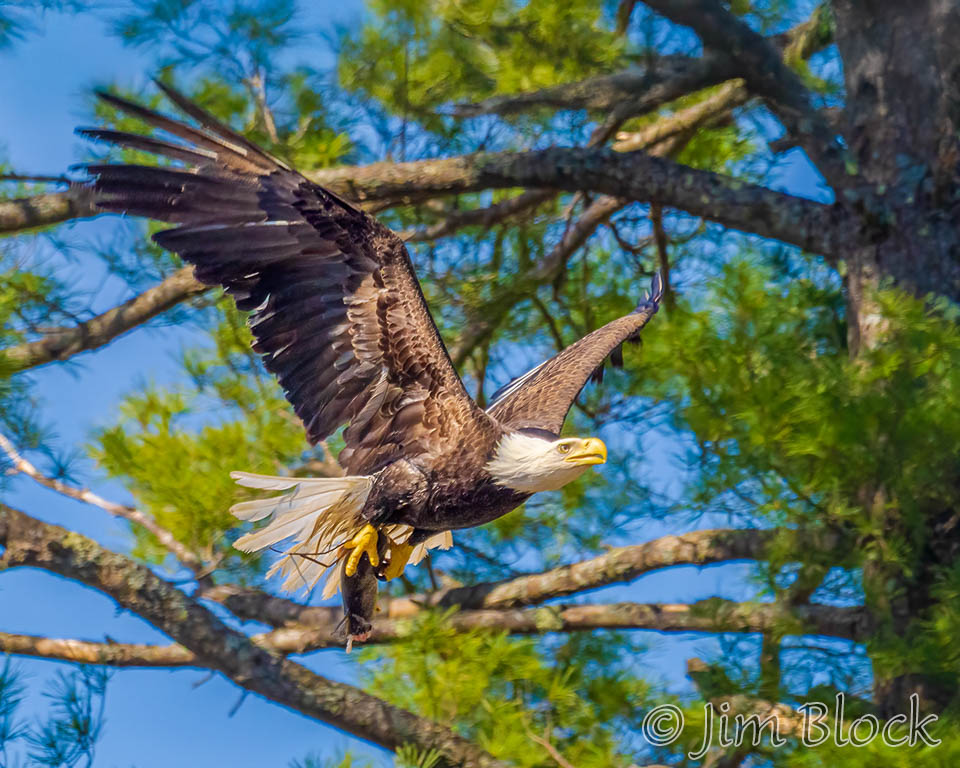
I returned the next day, April 29, and stayed for a bit over an hour. Soon after I arrived an eagle flew from its favorite perch to the nest.
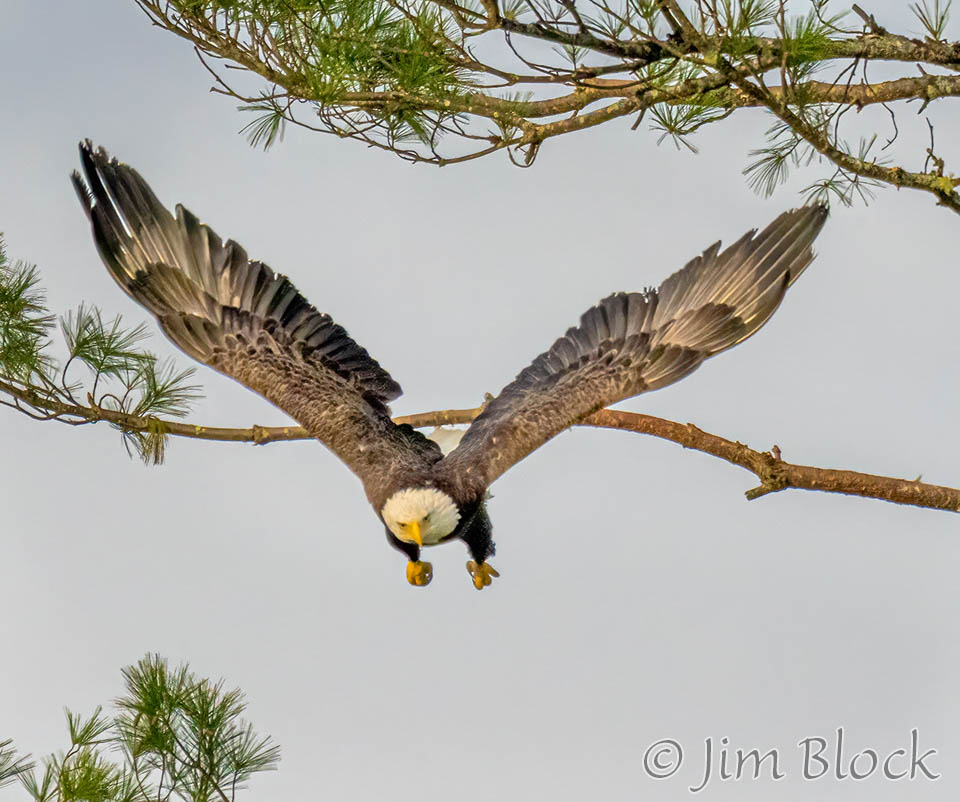
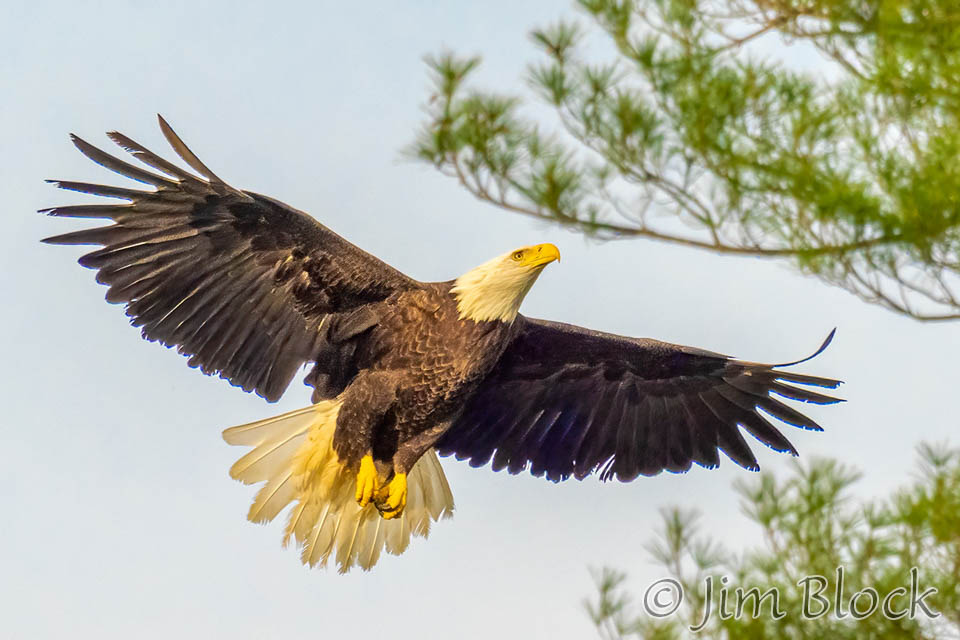
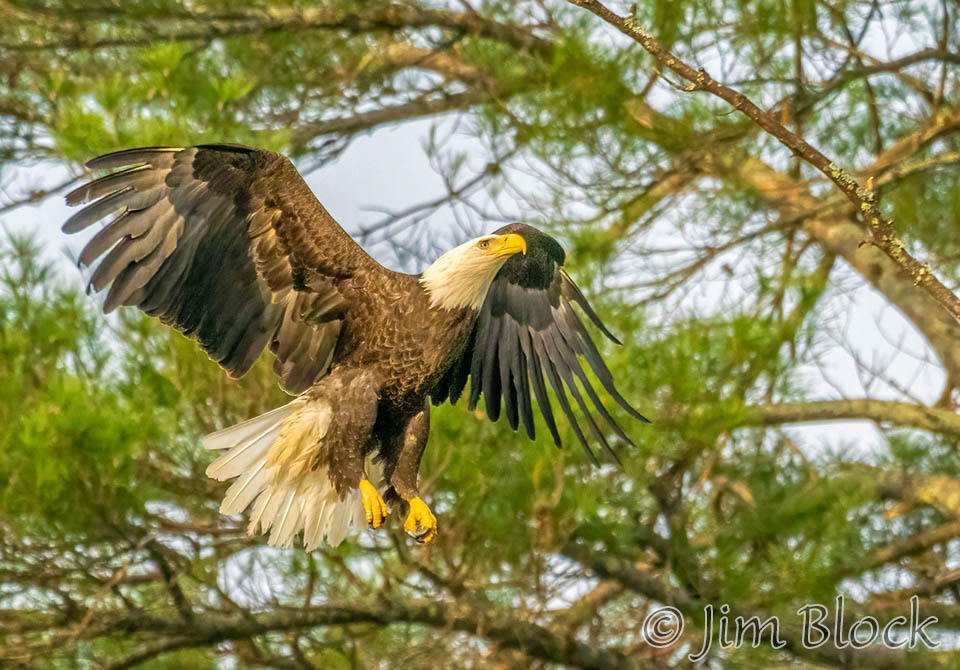
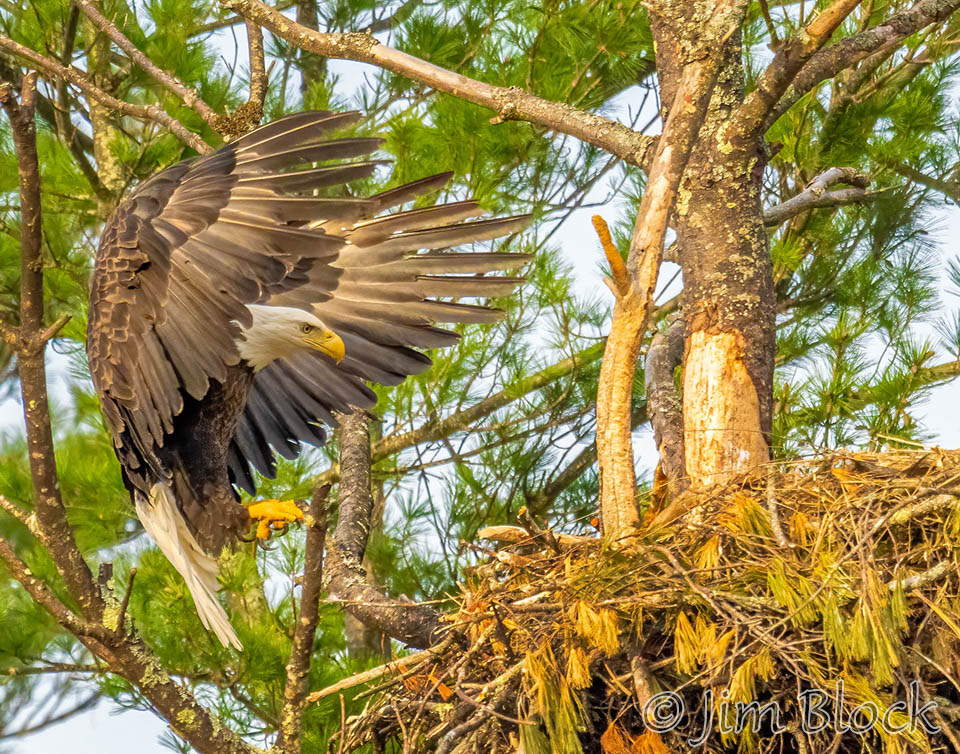
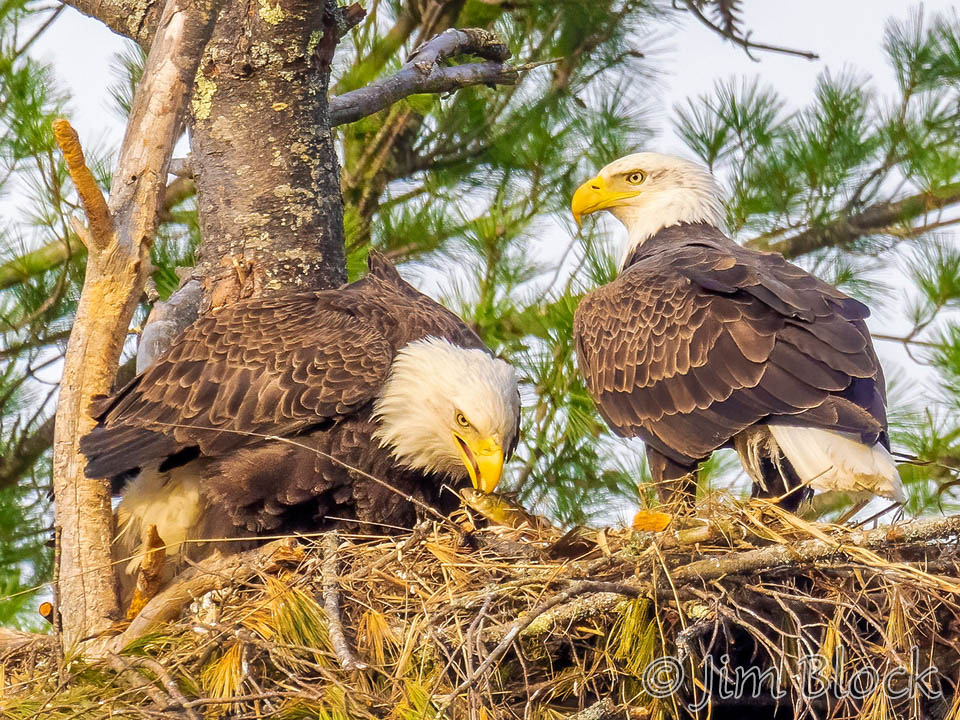
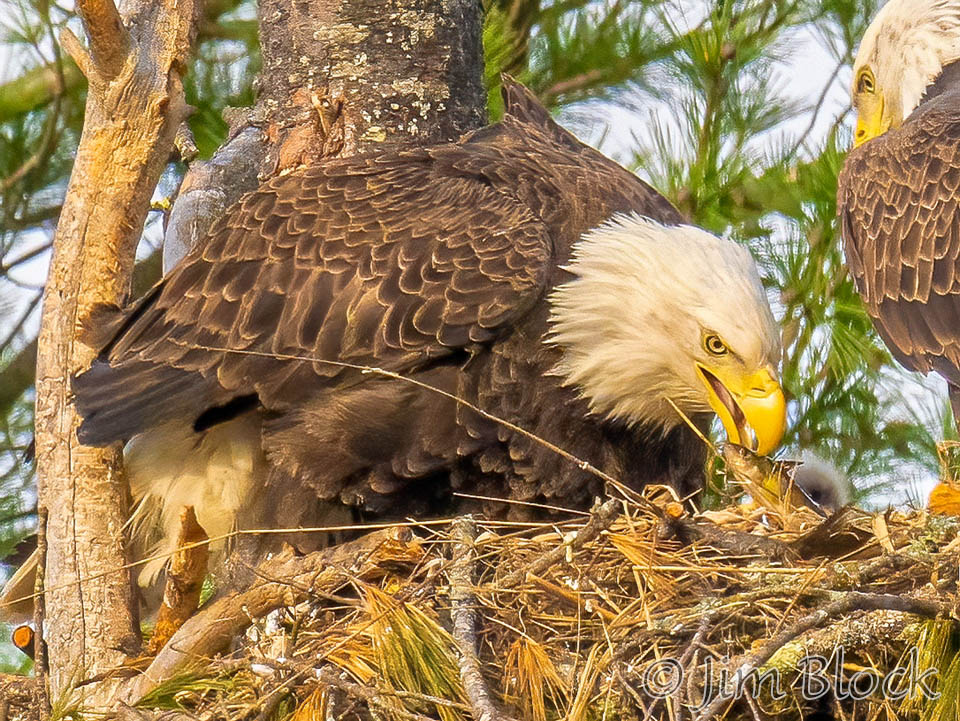
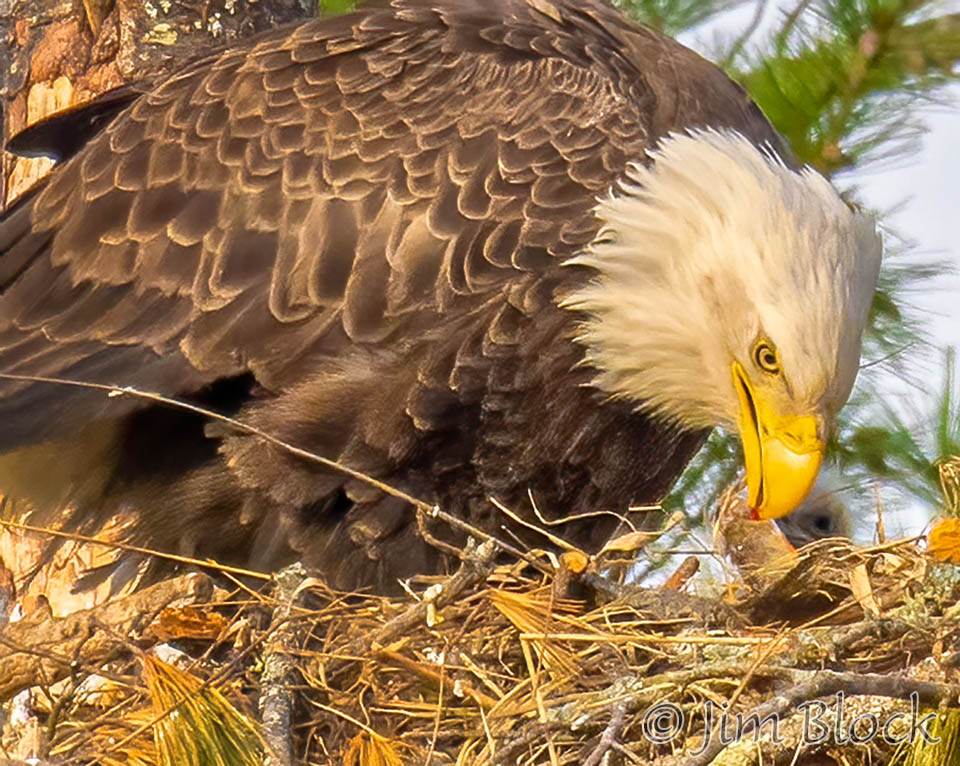
Forty minutes later an eagle landed near the nest holding a small fish in its bill.
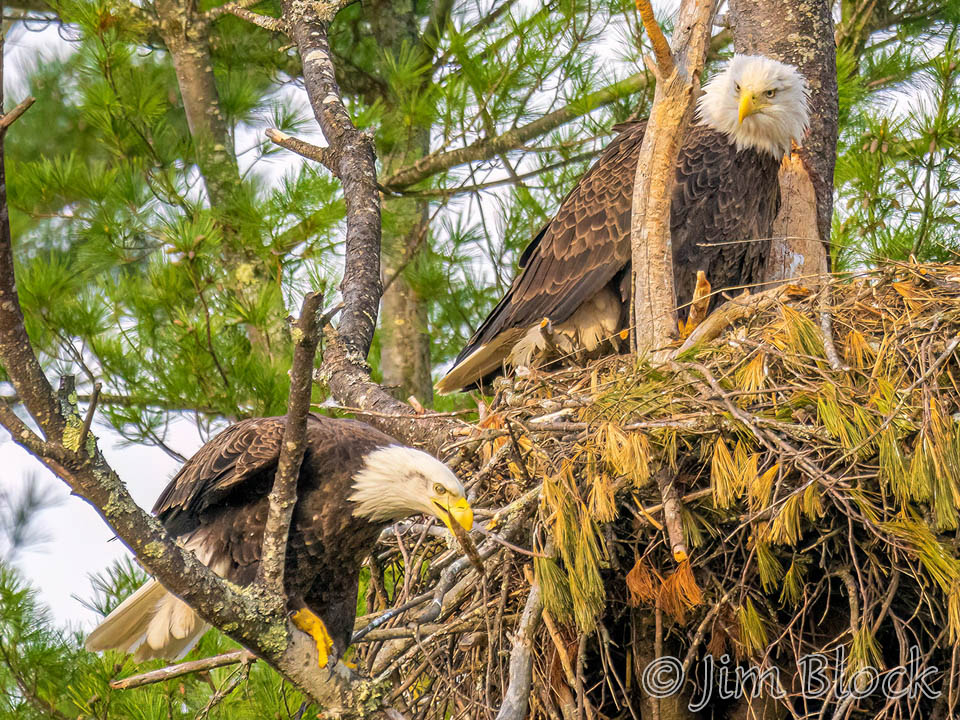
It then flew into the nest and presented it to its mate.
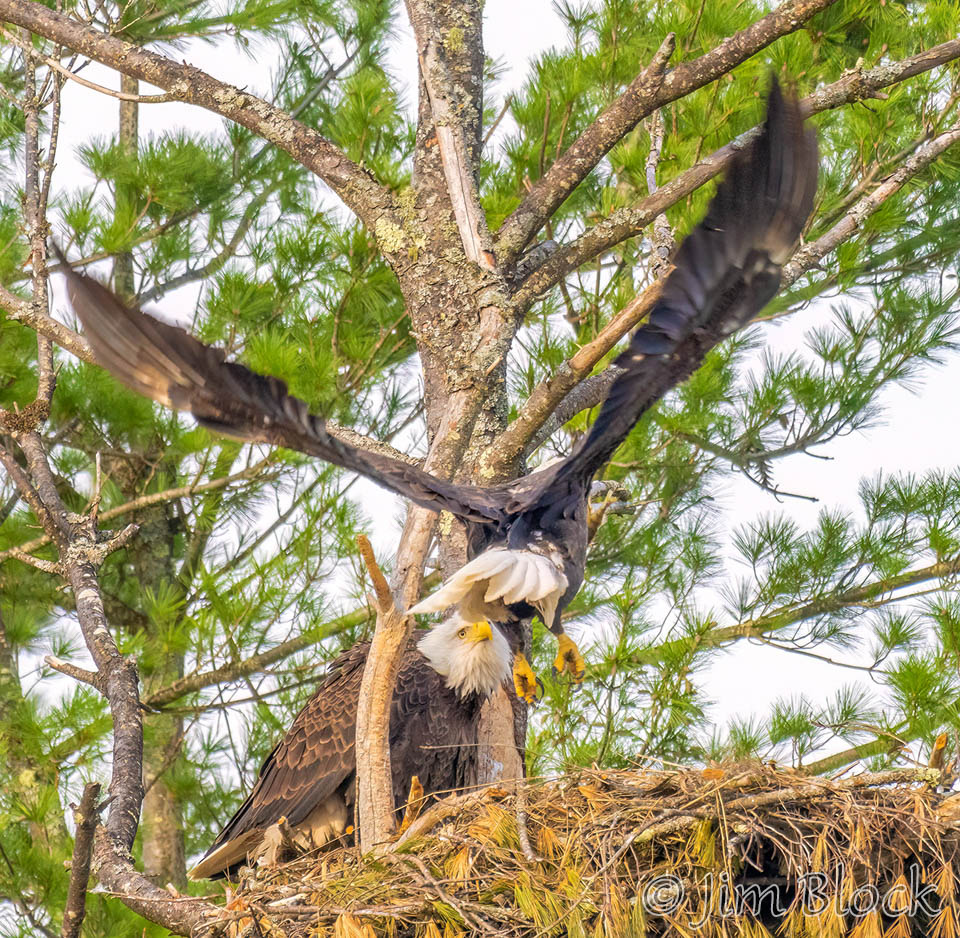
You can see the fish clearly in this sequence.
The eagle that brought the fish soon departed. Perhaps it was going back to try to get a larger one.
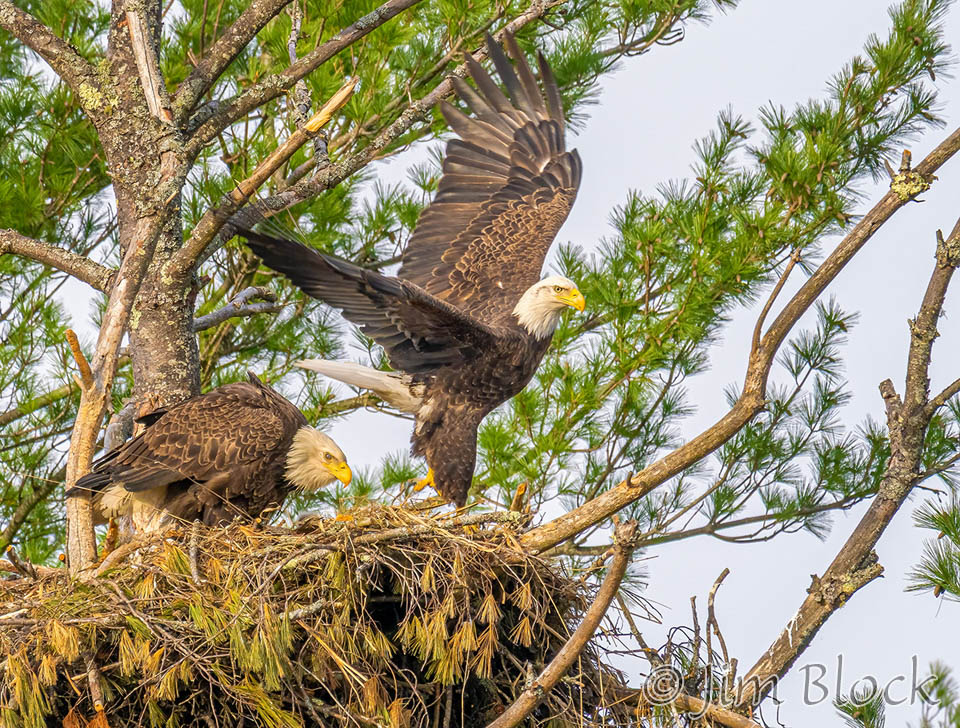
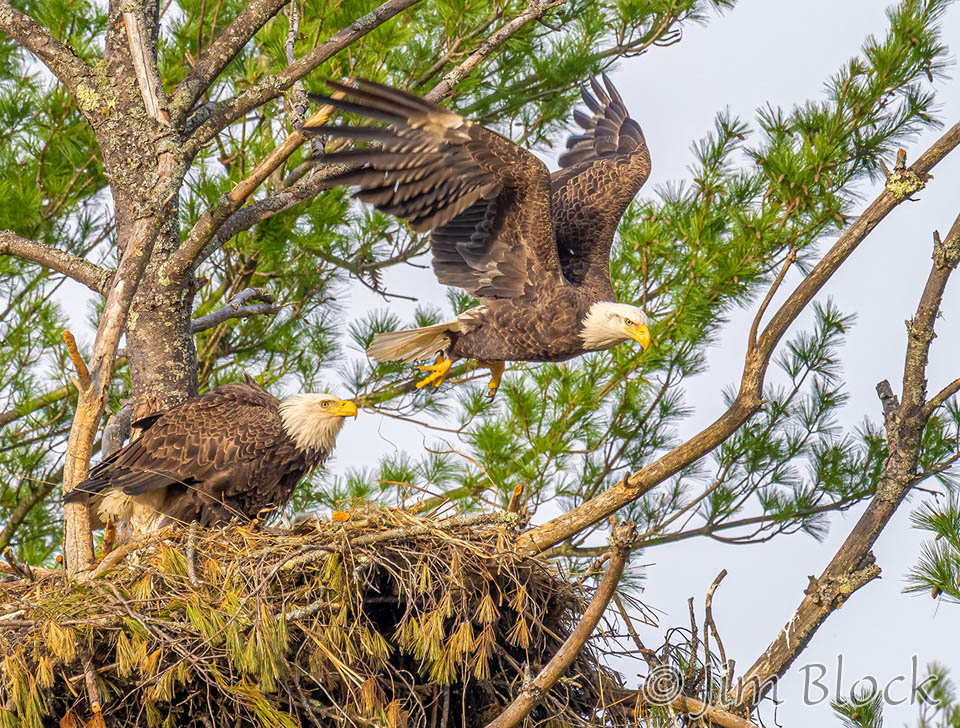
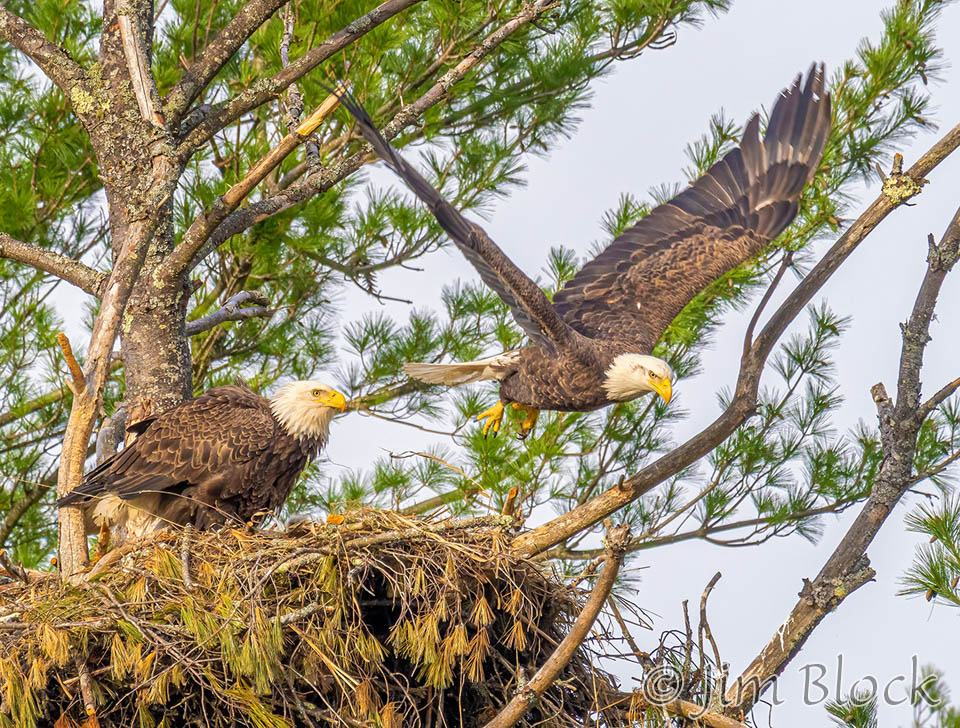
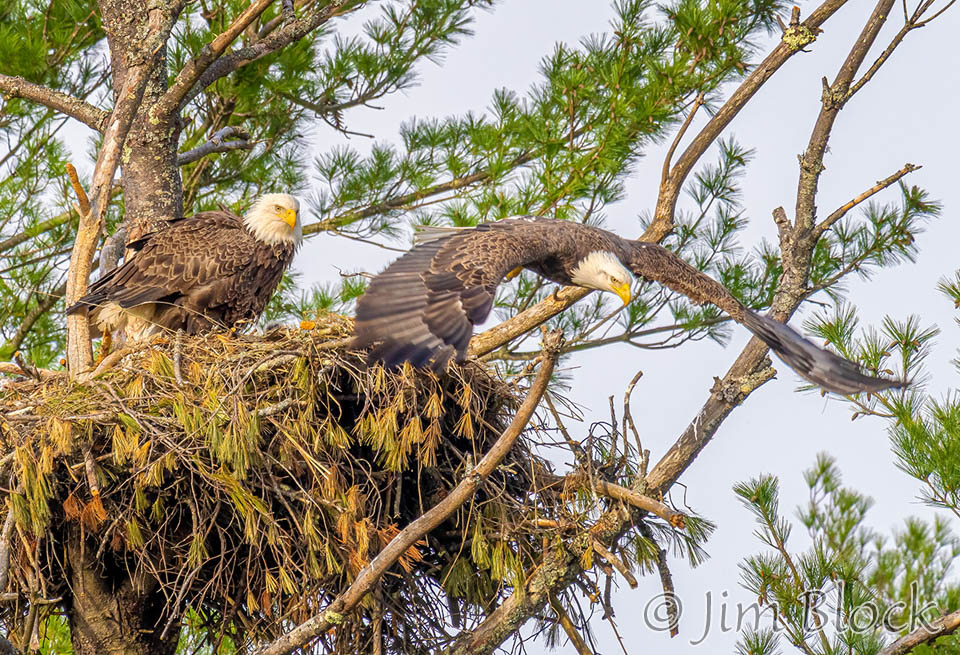
The remaining eagle left the nest six minutes later.
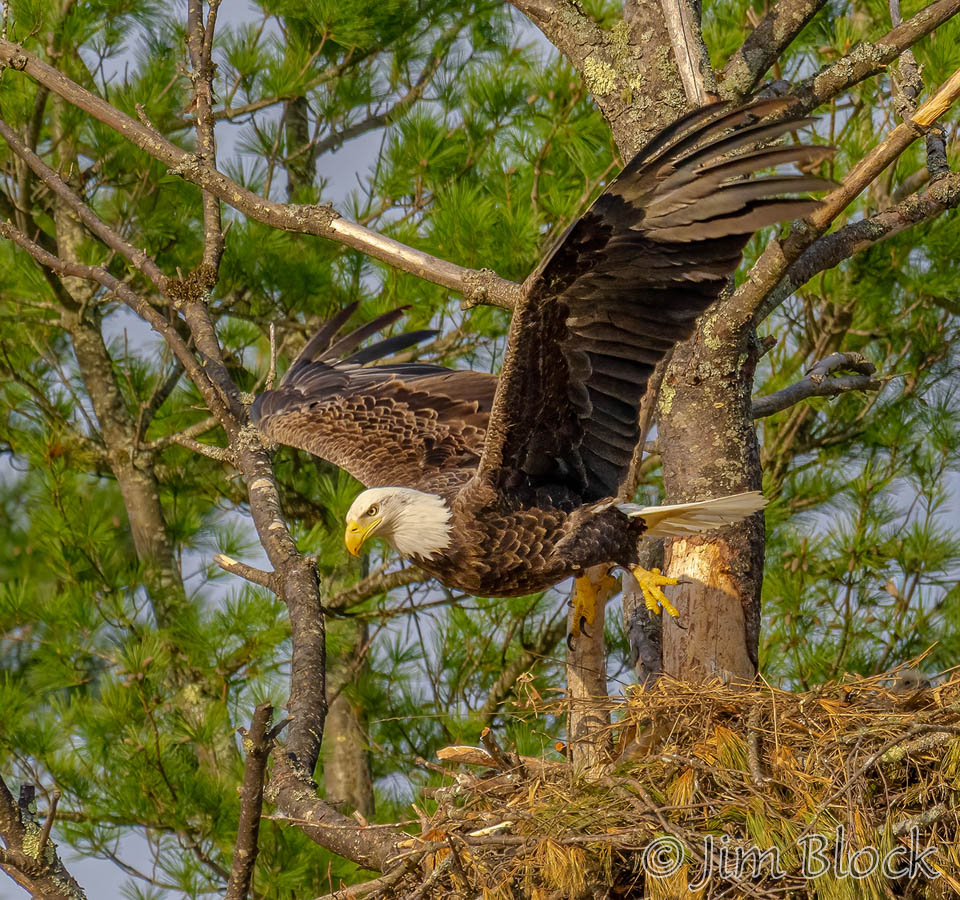
Three minute later one was back feeding a chick.
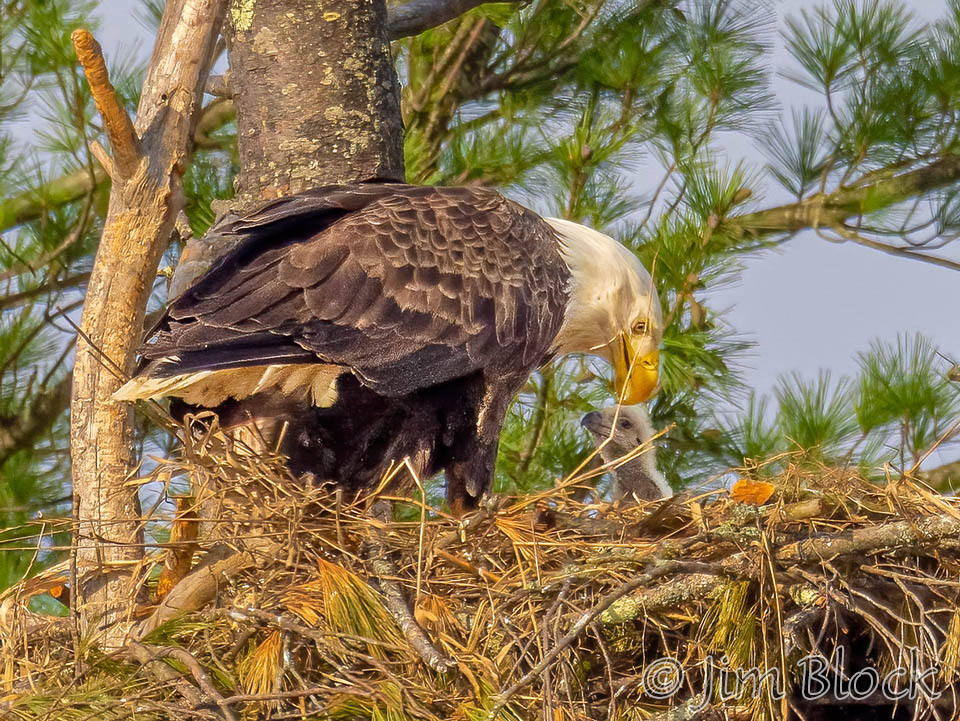
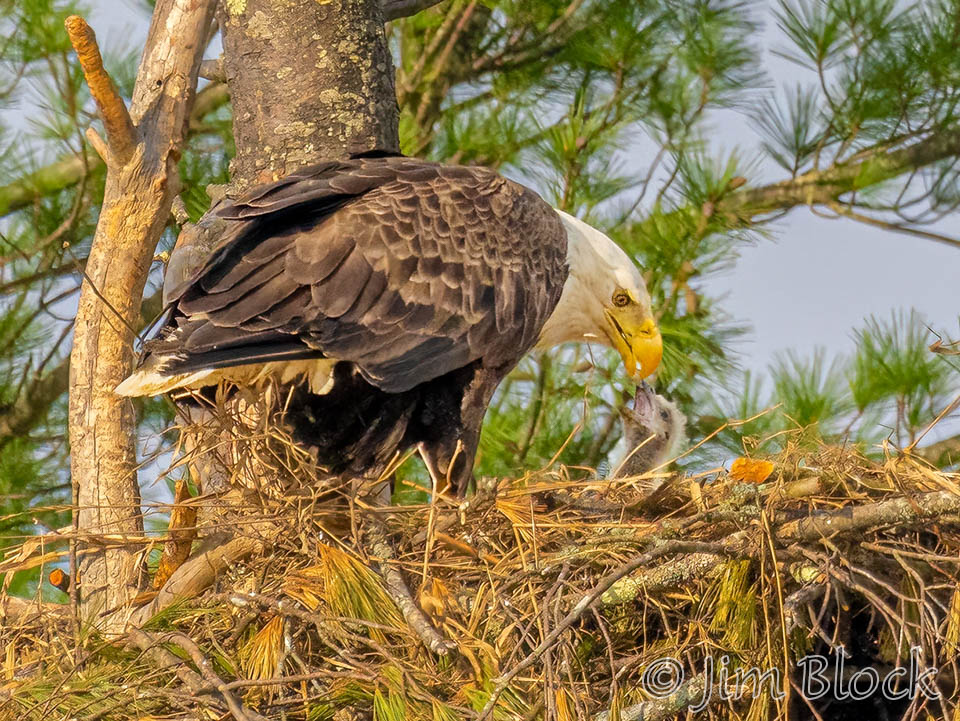
After the feeding the eagle flew to its favorite branch. That branch sure got a lot of use over the years.
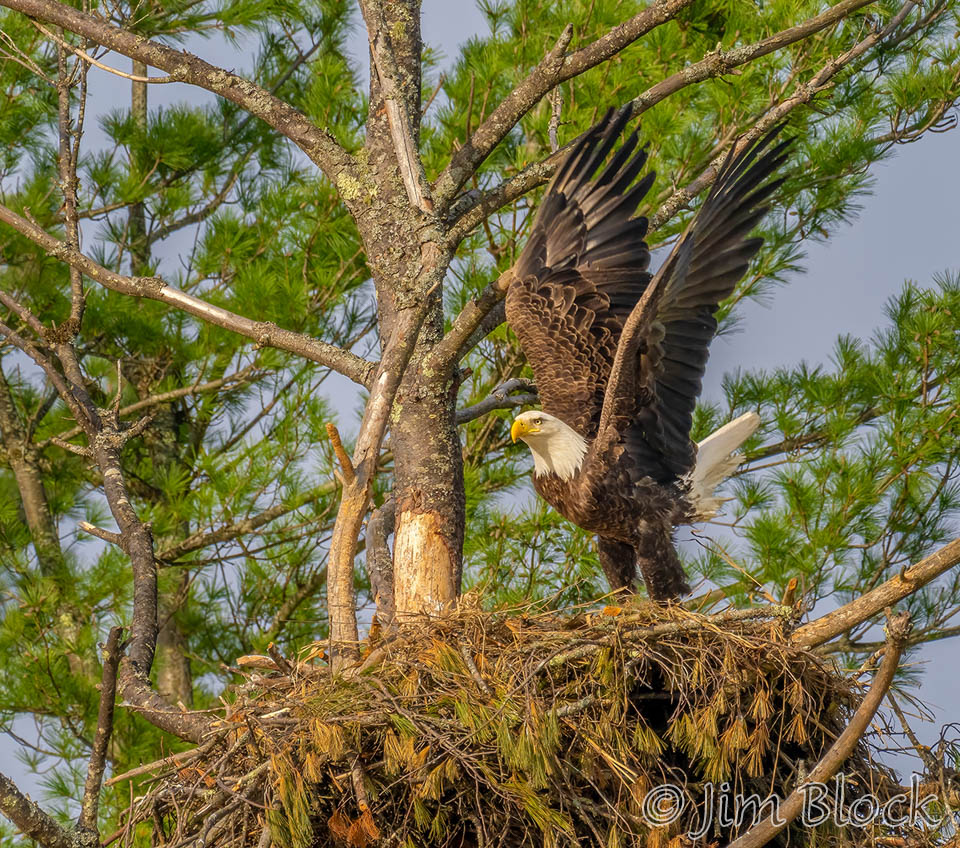
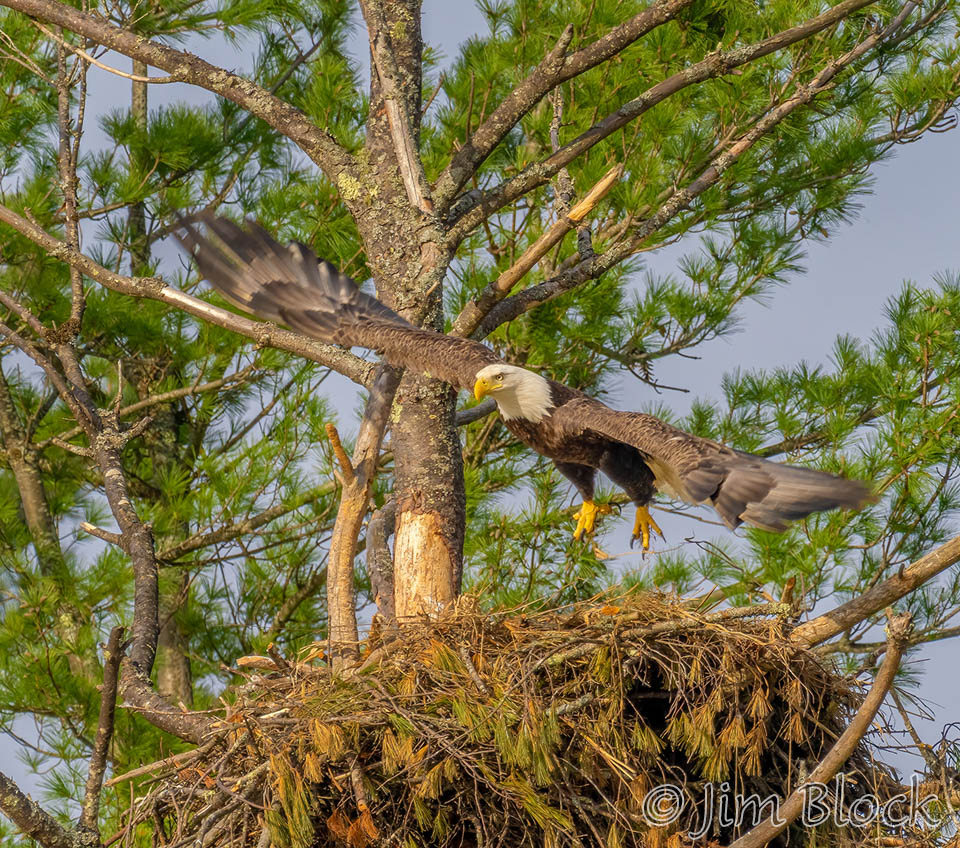
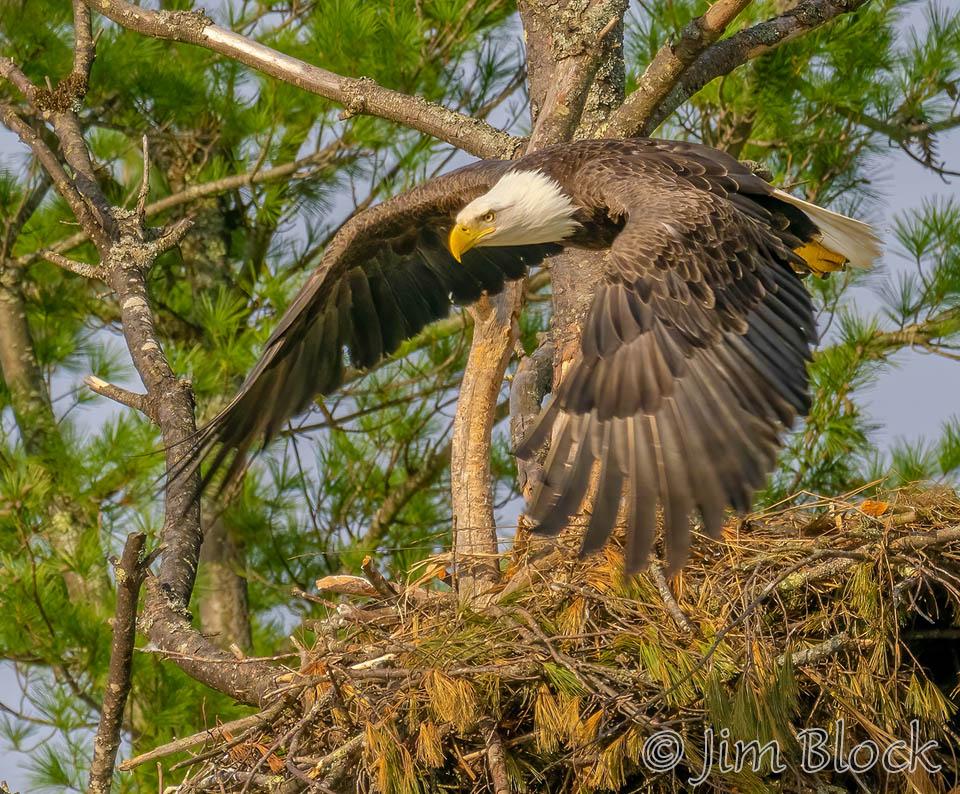
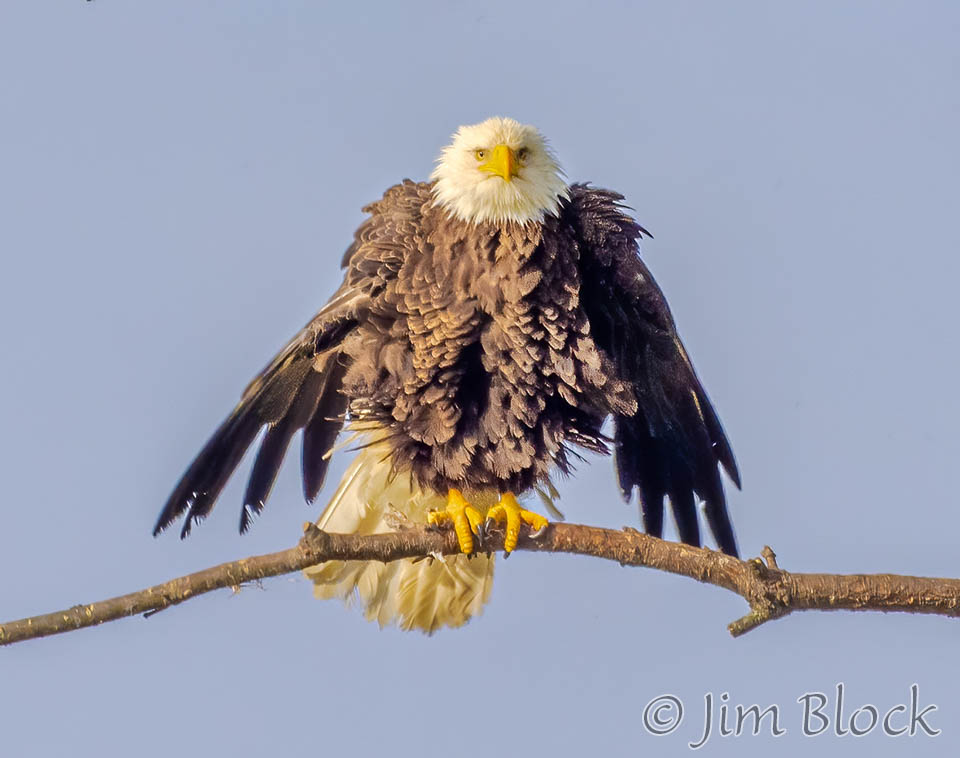
What a great way to spend an hour!
I skipped a day, but was back mid-morning May 1. I spent four cold and mostly-boring hours with the eagles. At least that was my comment at the time in my photo notebook. I brought a rig to attempt to get more elevation to better see into the nest.
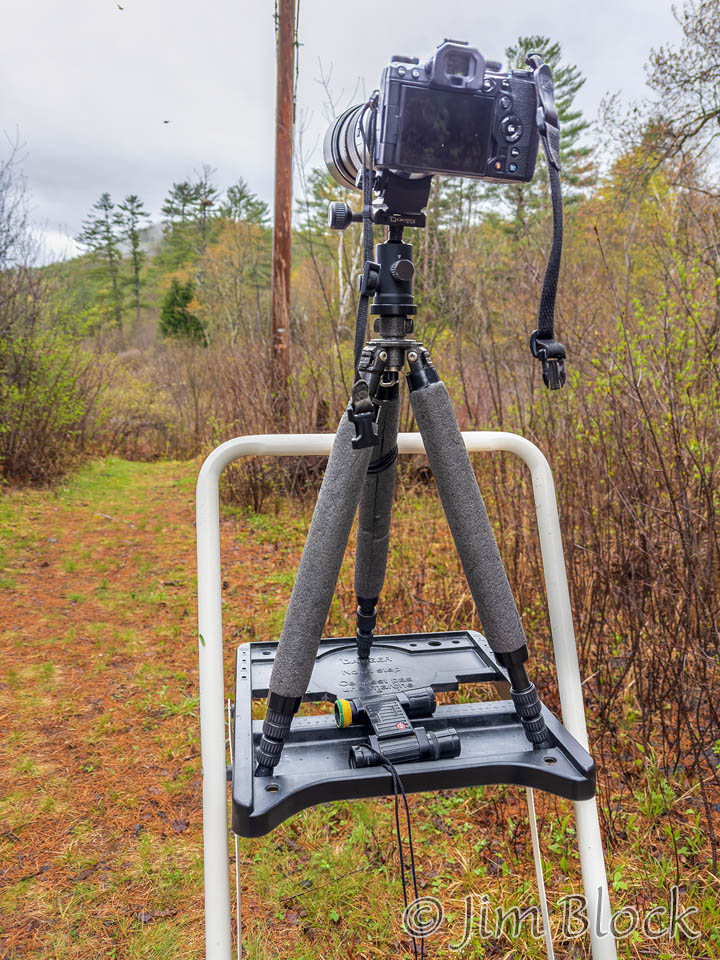
I was there for over an hour. Finally two eagles in the nest but no chick in view.
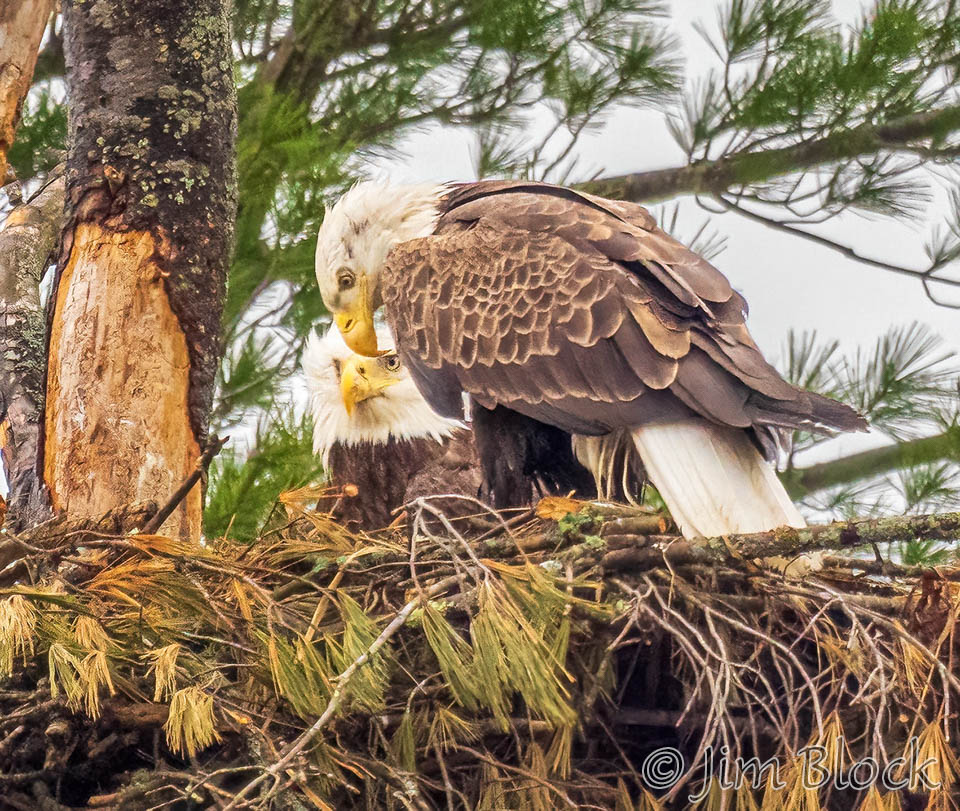
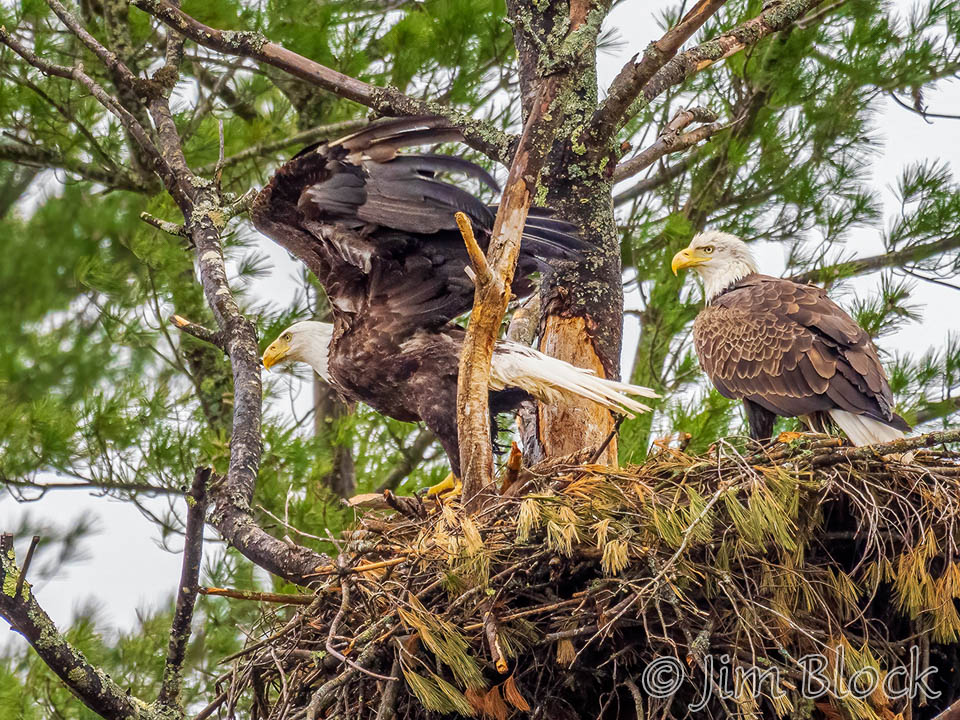
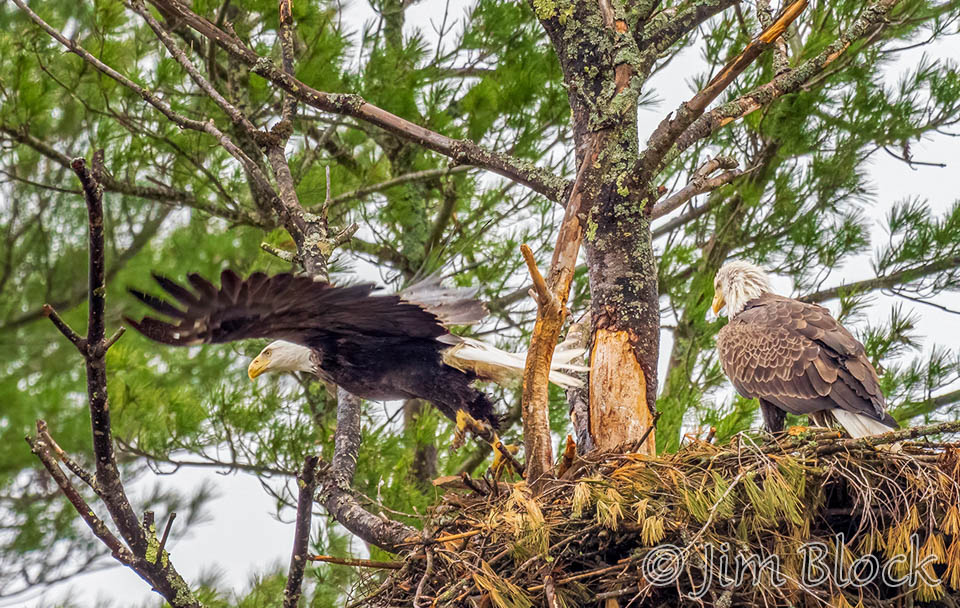
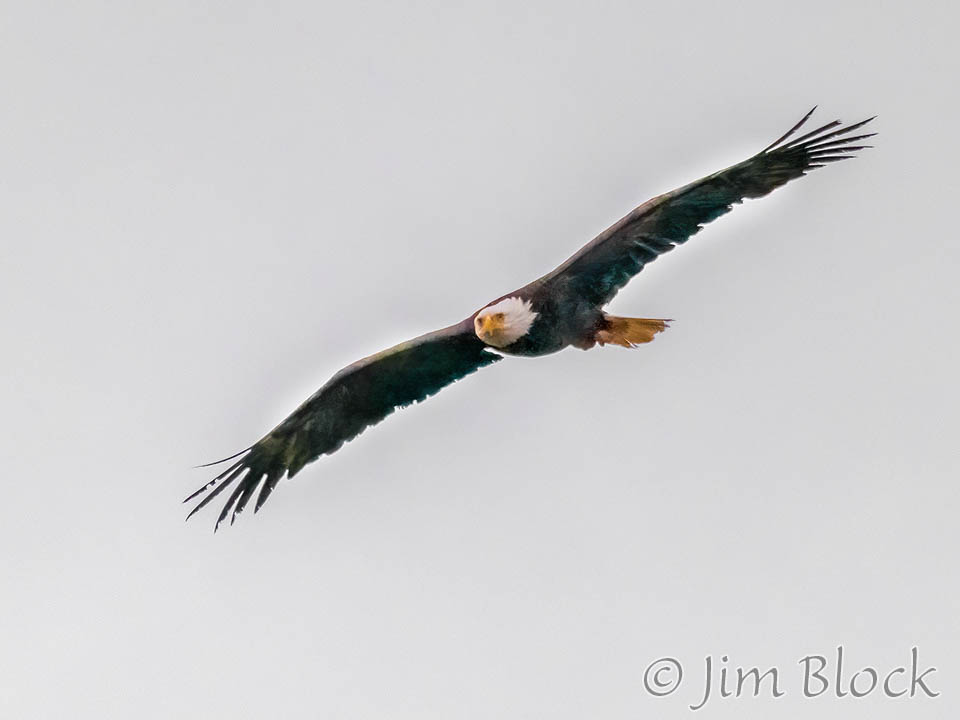
I caught an eagle flying but little else for almost an hour.
Then finally a chick appeared and a parent sitting nicely behind it fed it.
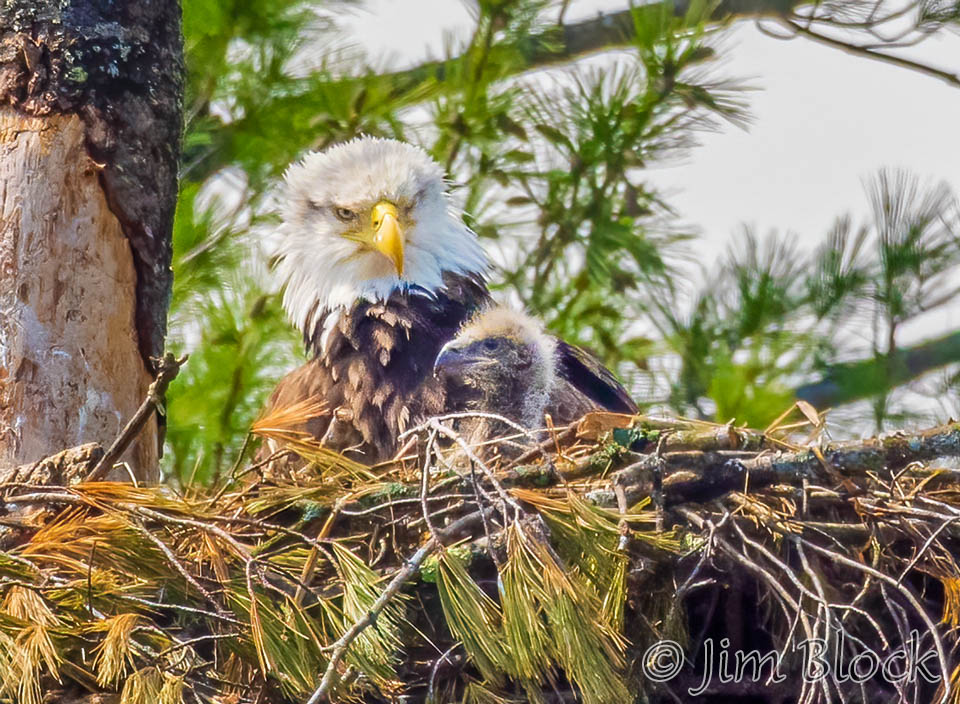
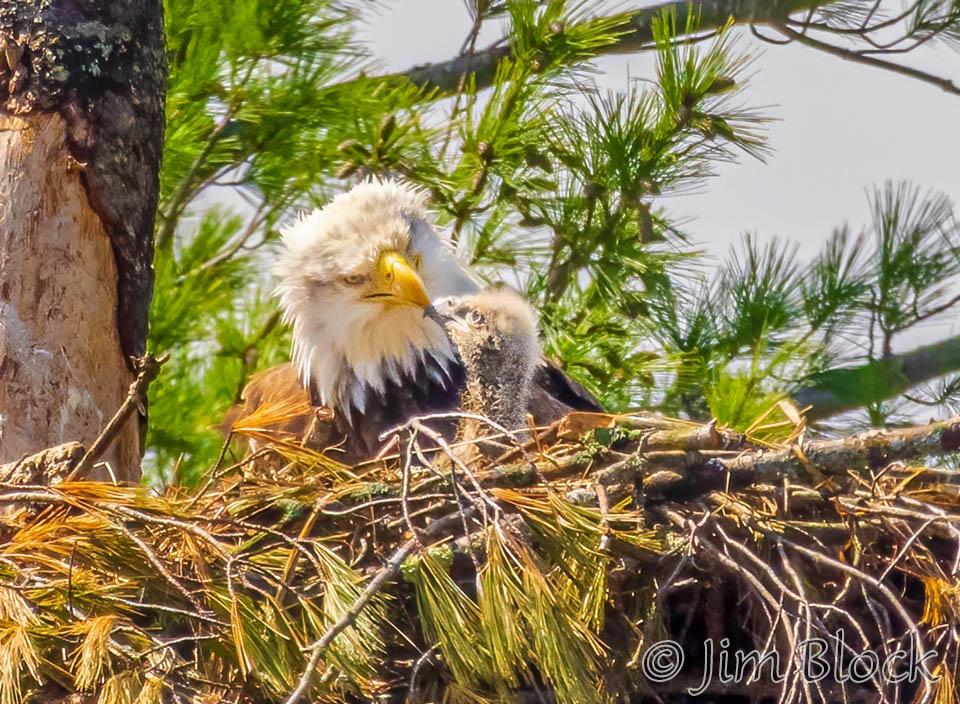
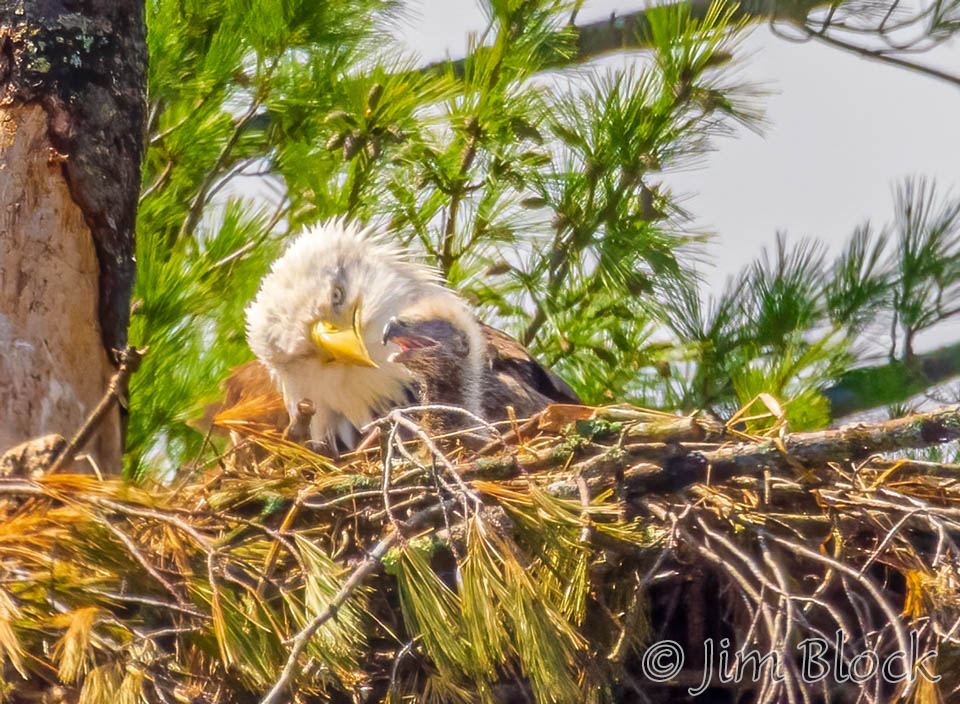
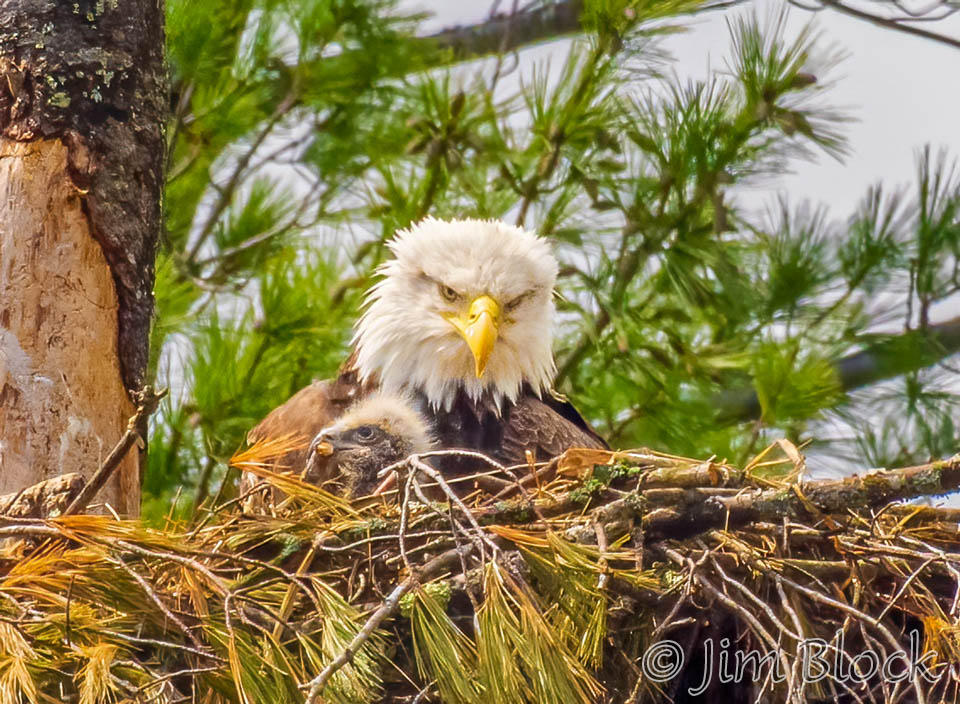
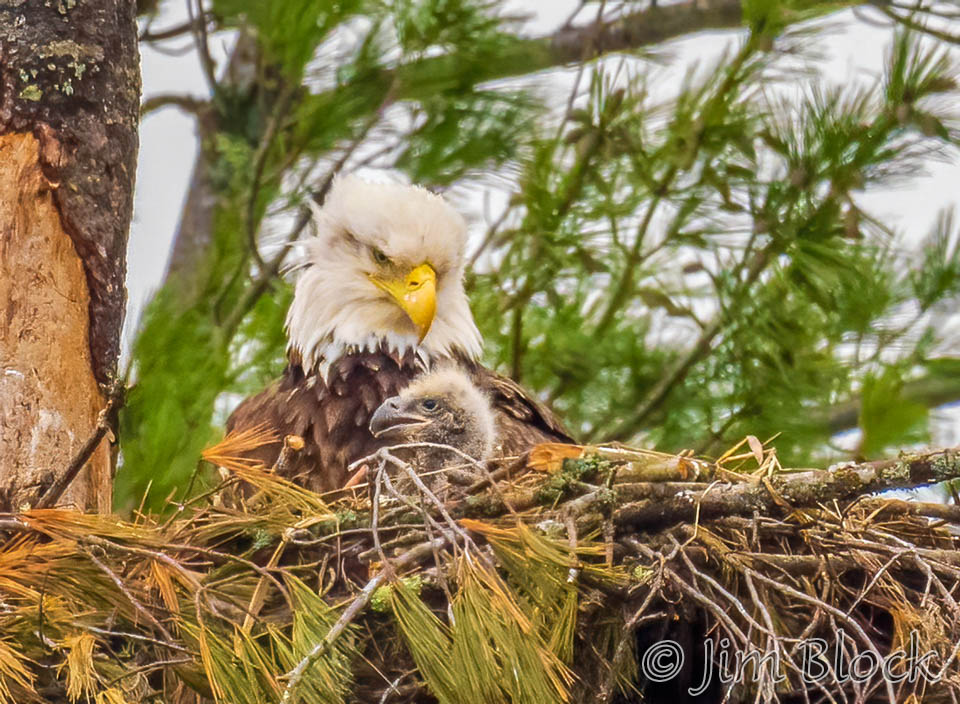
About 5 minutes later I got a brief look at the second chick.
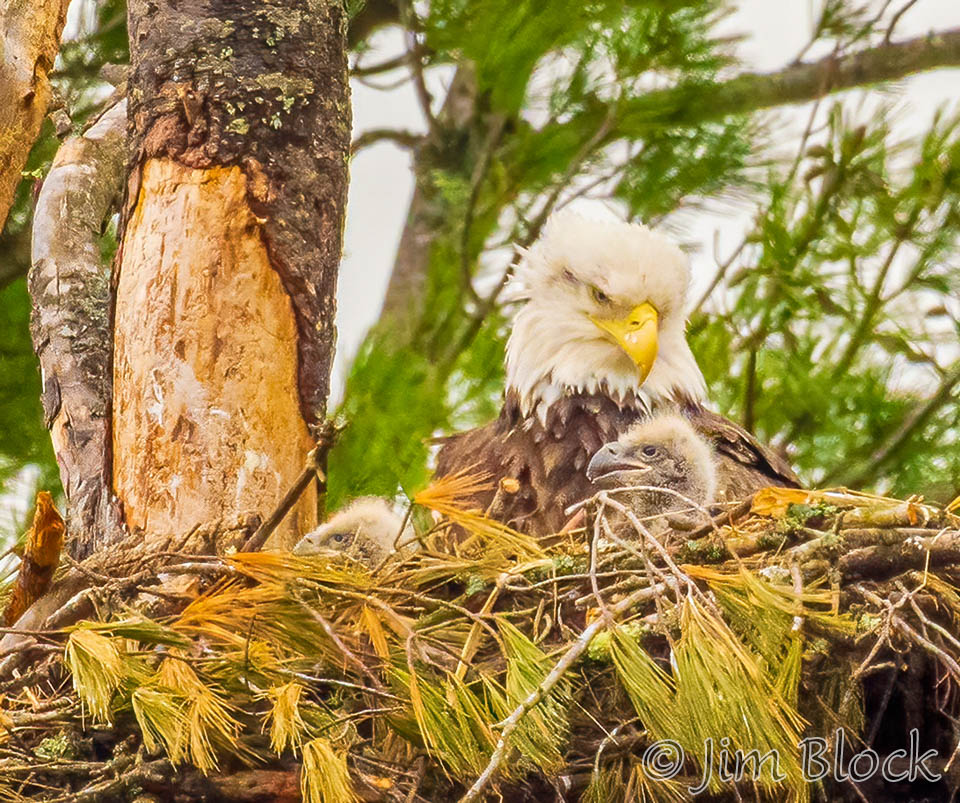
Almost an hour later I shot this photo of a parent and chick. I suspect this is the smaller, and possibly younger, chick.
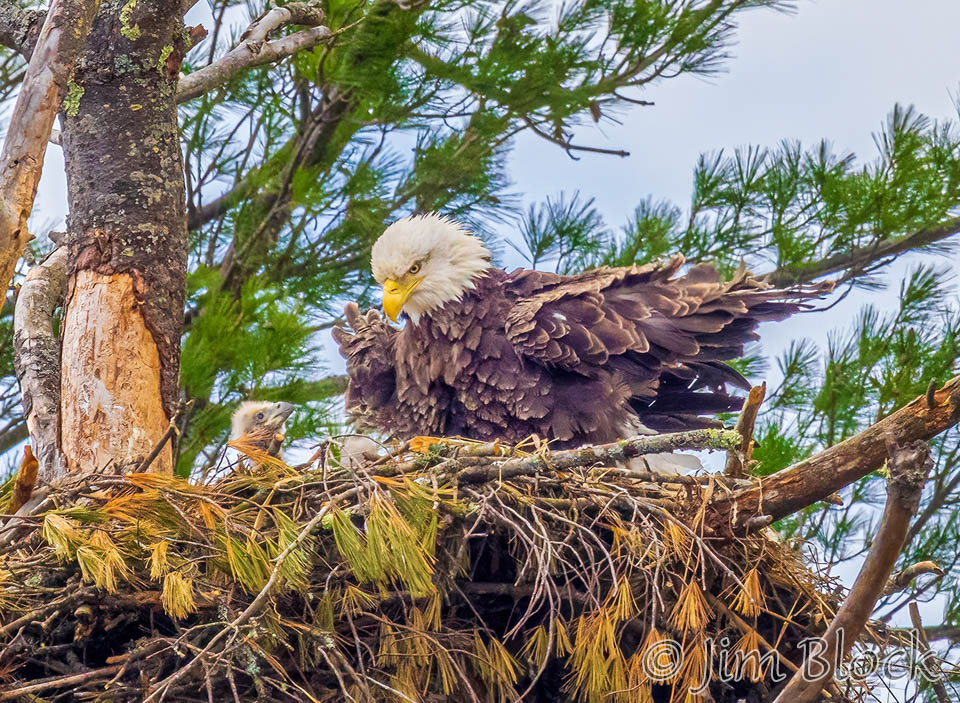
Three and a half hours into the morning, an eagle was flying around.
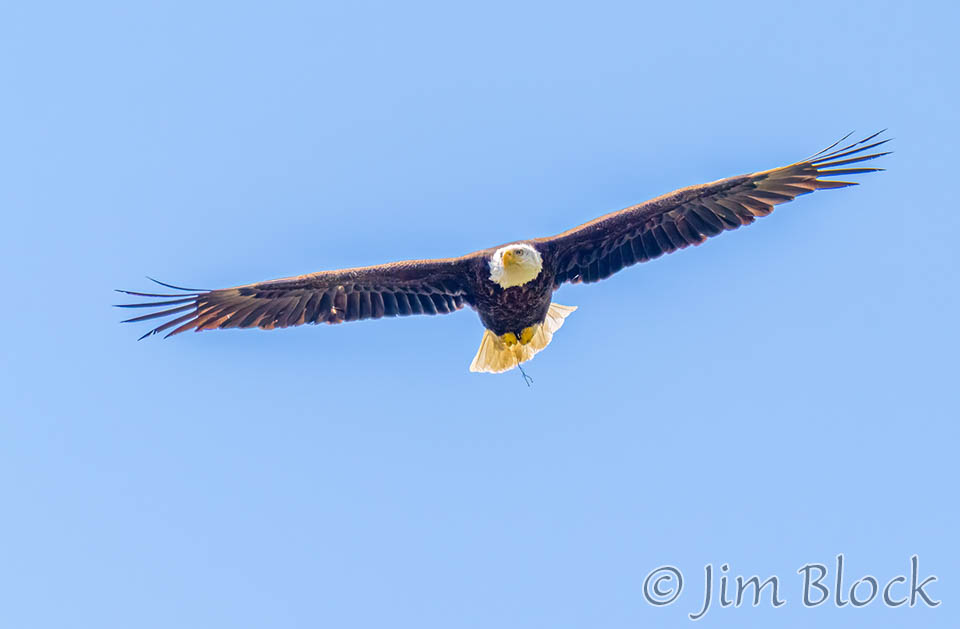
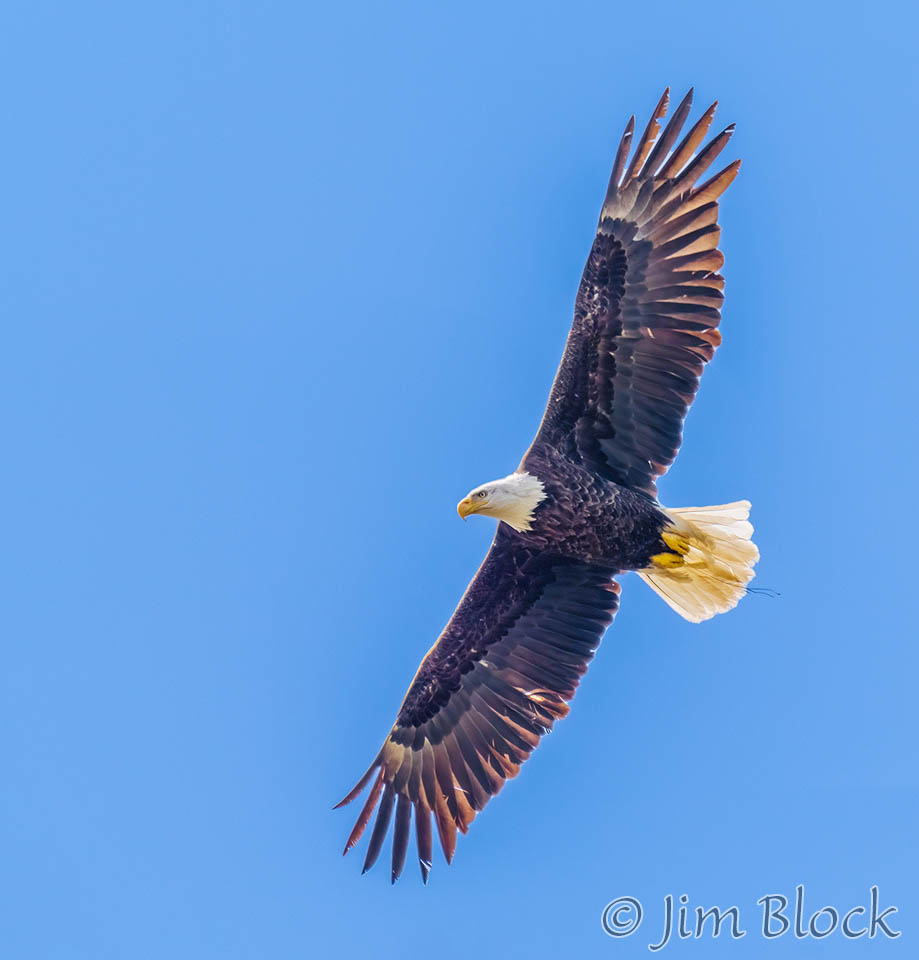
It landed in the nest, and one, then two, chicks appeared.
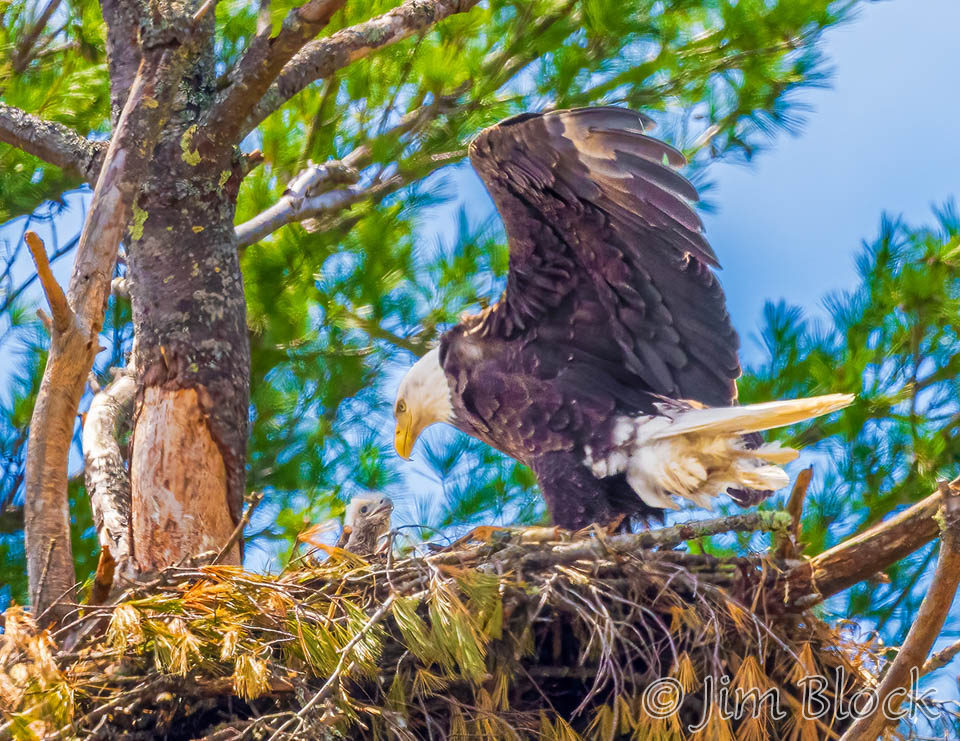
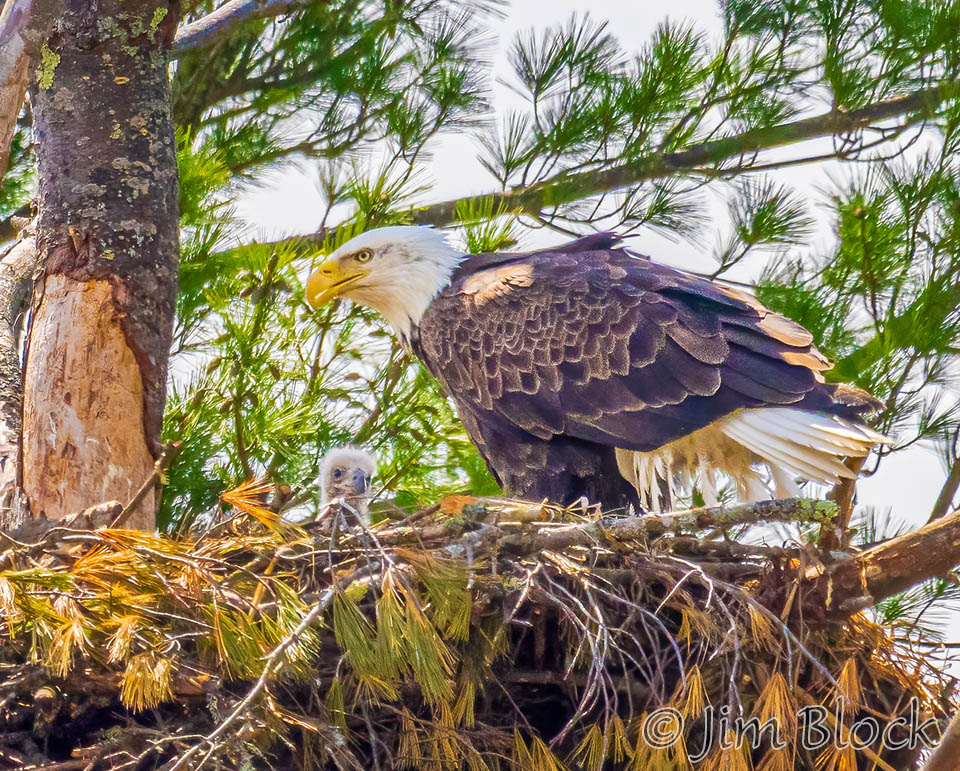
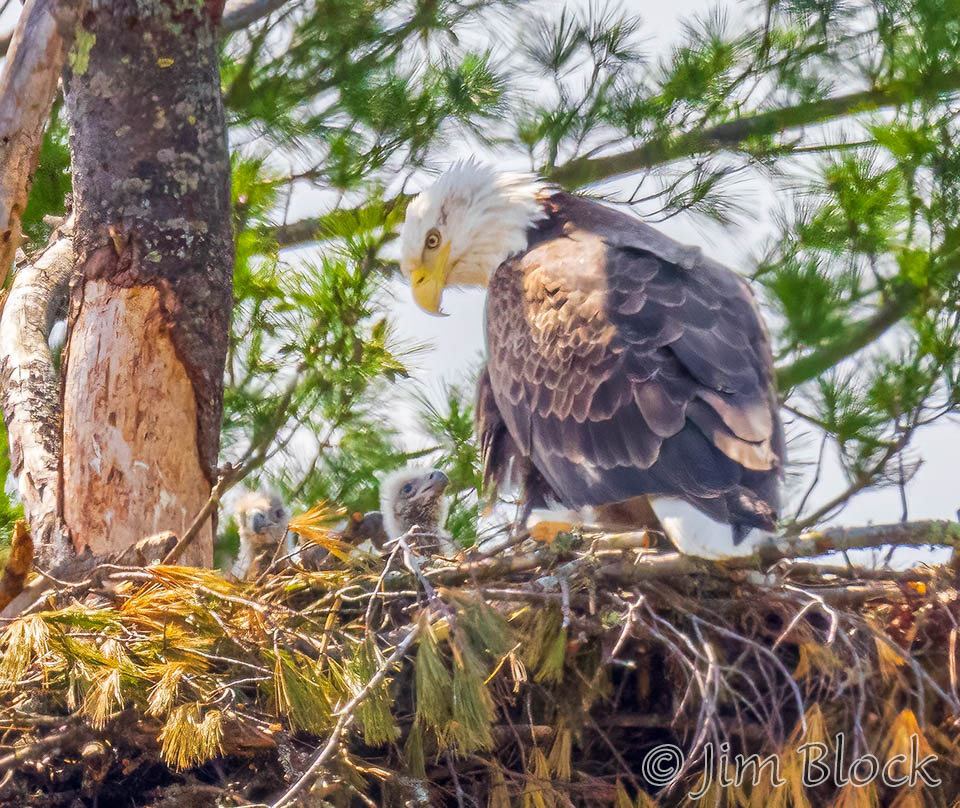
I returned three days later on May 4 for another very cold four-hour vigil. I arrived at 6:20 a.m. to find no eagle or chick in sight.
For the next 100 minutes the most exciting thing that happened was a chick pooping. It is amazing that even at a very young age they know to propel it out of the nest.
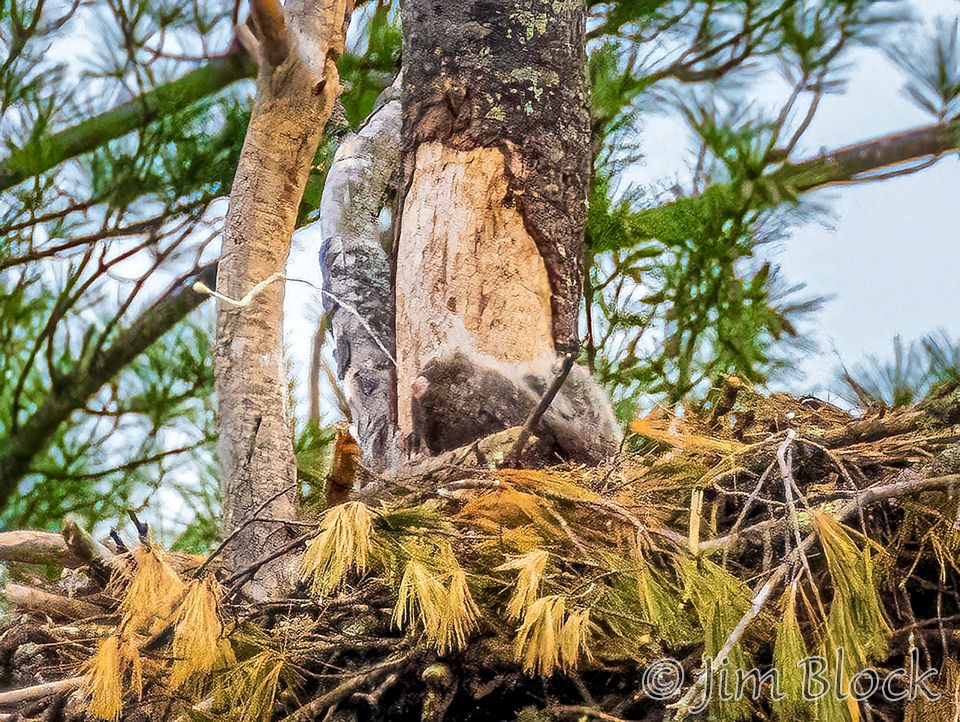
An eagle had returned to their favorite tree and eventually headed toward the nest.
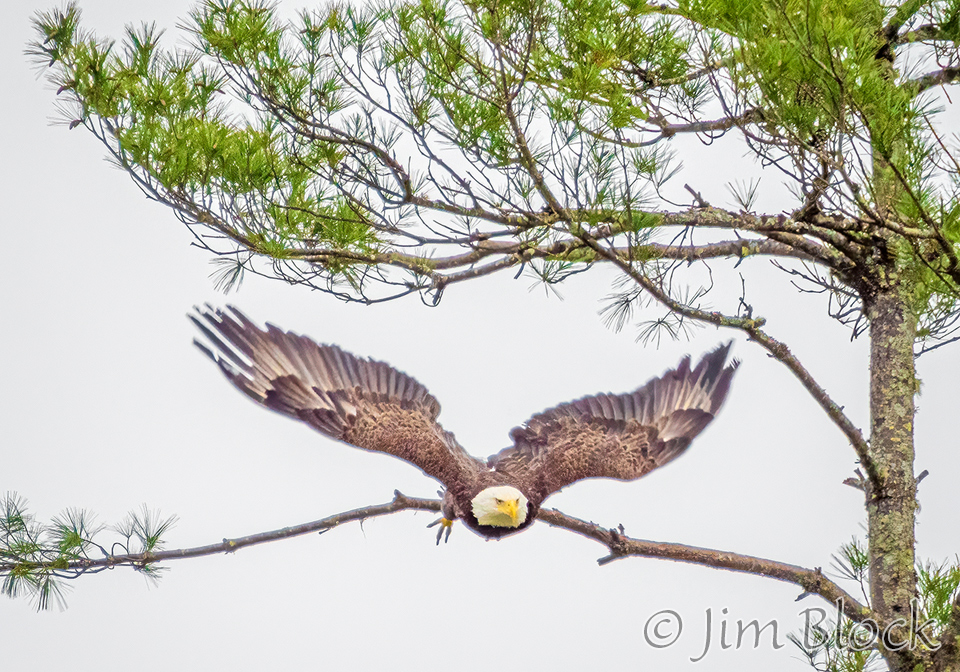
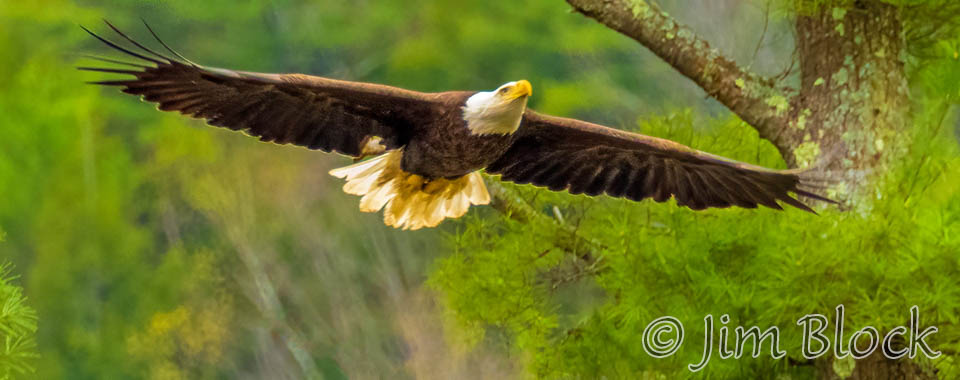
But it did not fly into the nest. Rather it landed at the top of the dead tree that held the nest.
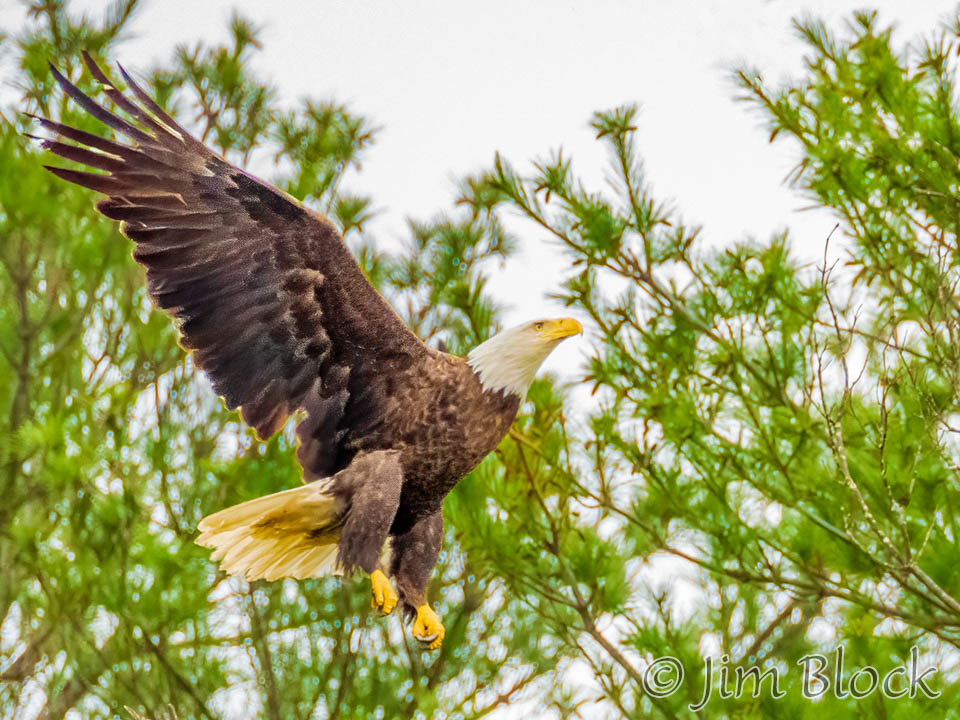
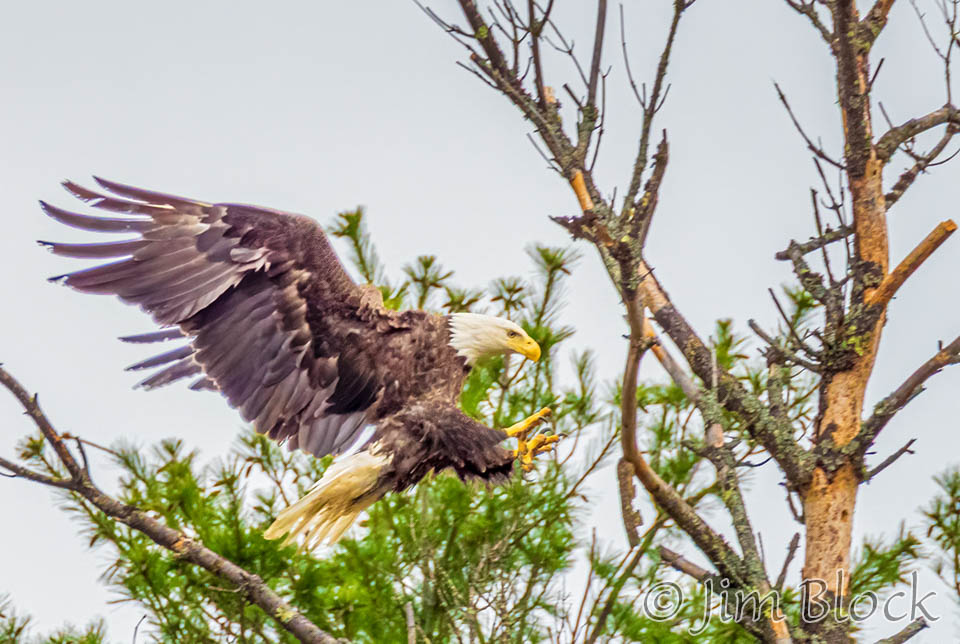
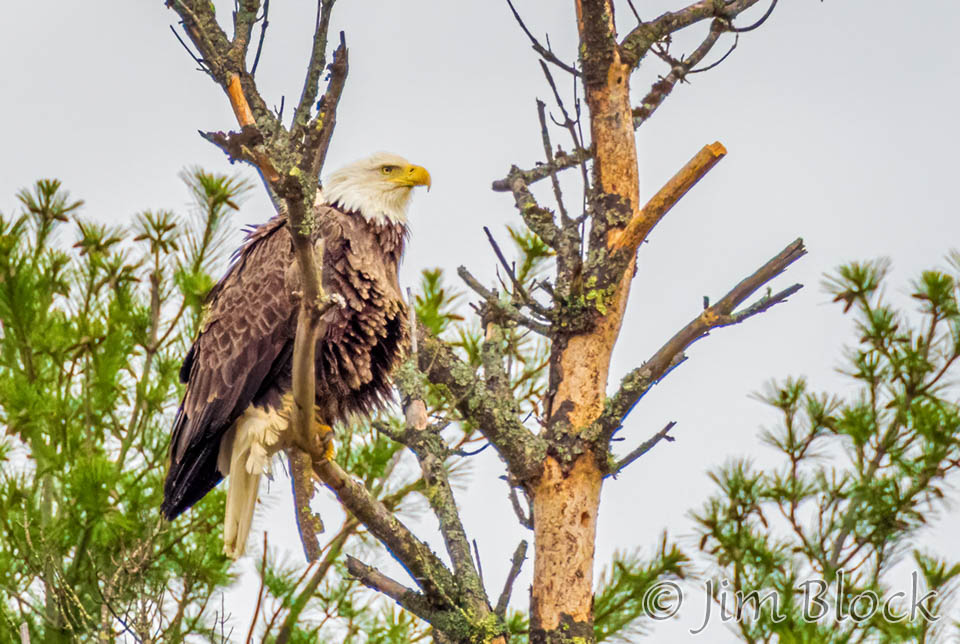
It sat there while one chick yelled for food and stretched its wings.
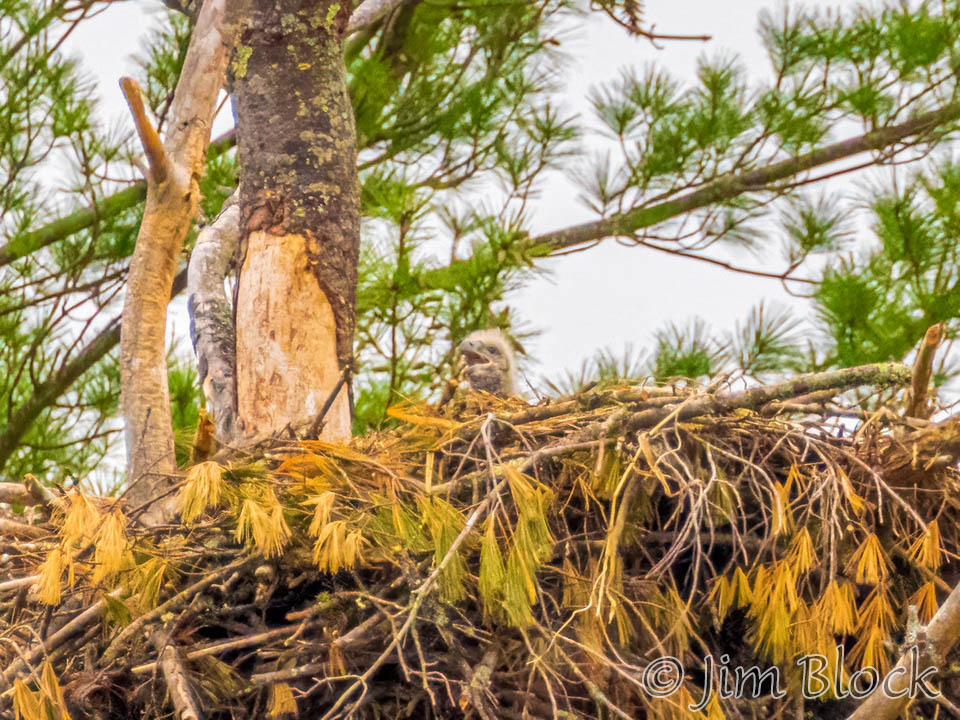
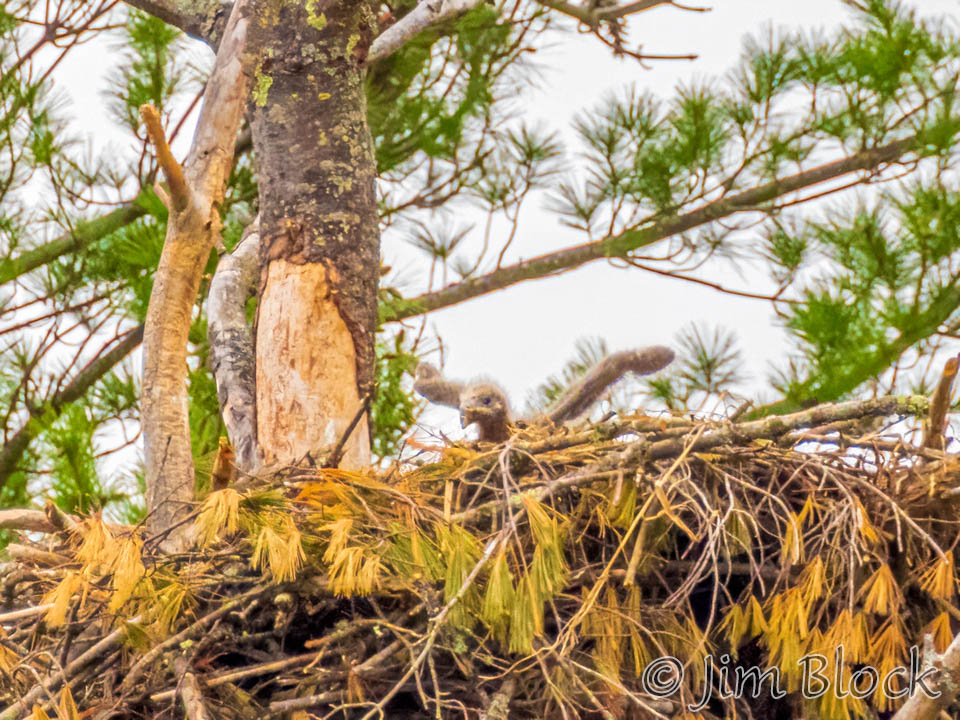
Finally a parent arrived with a fish.
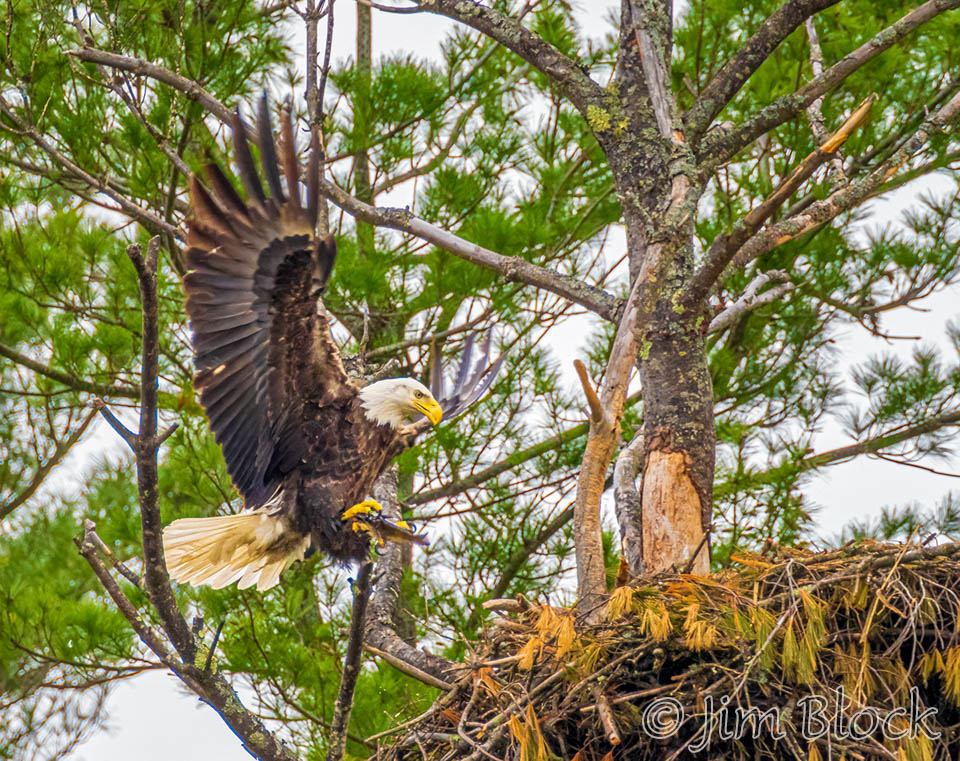
Below is a highly cropped version of that photo which shows the fish a bit better.
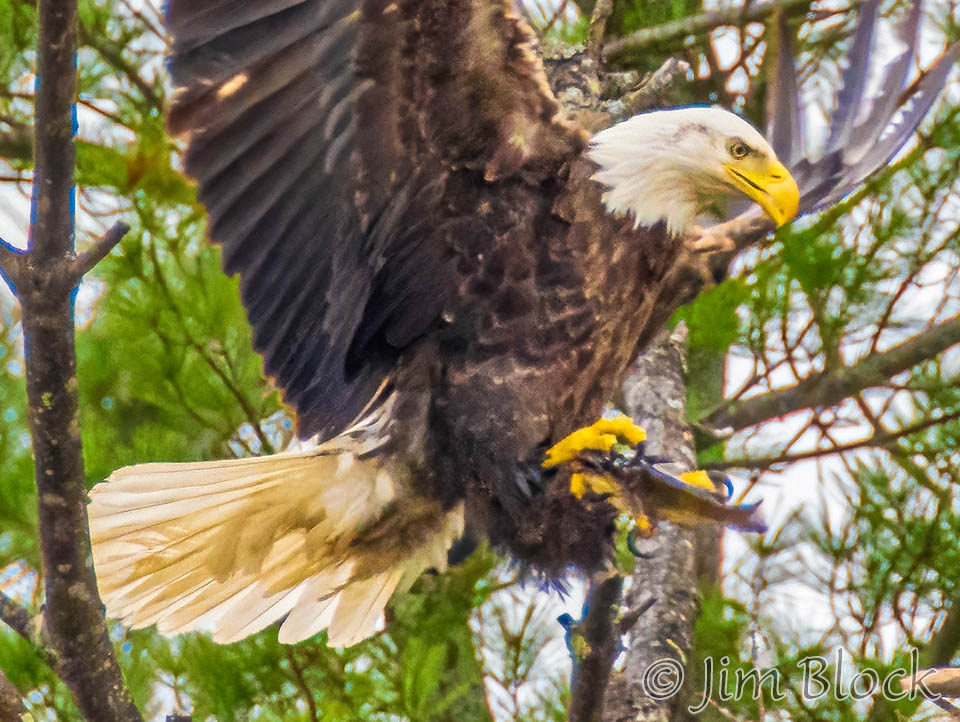
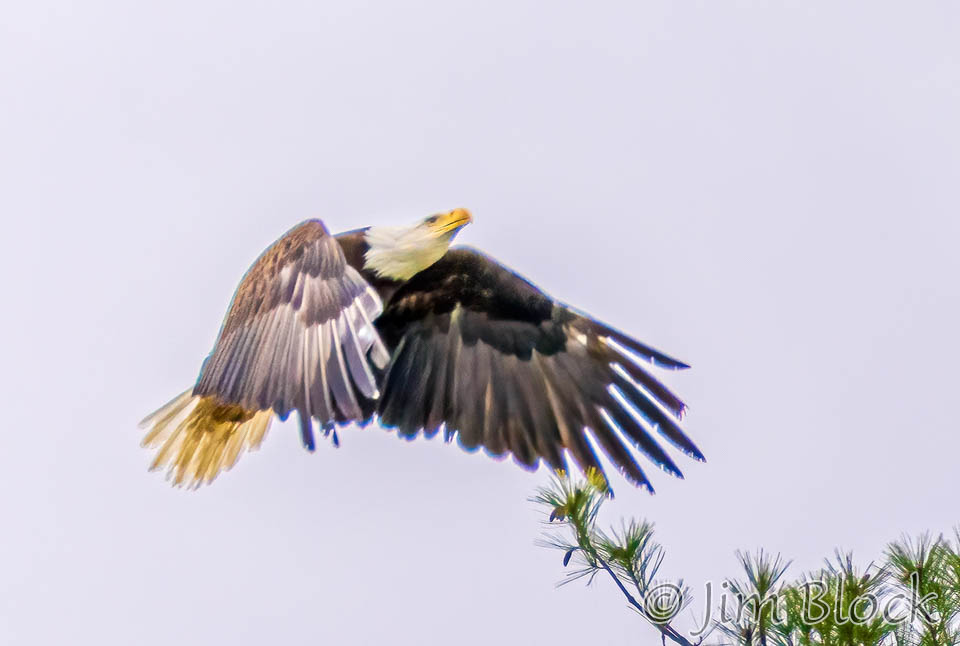
While one eagle was flying around …
.. the chicks were fed.
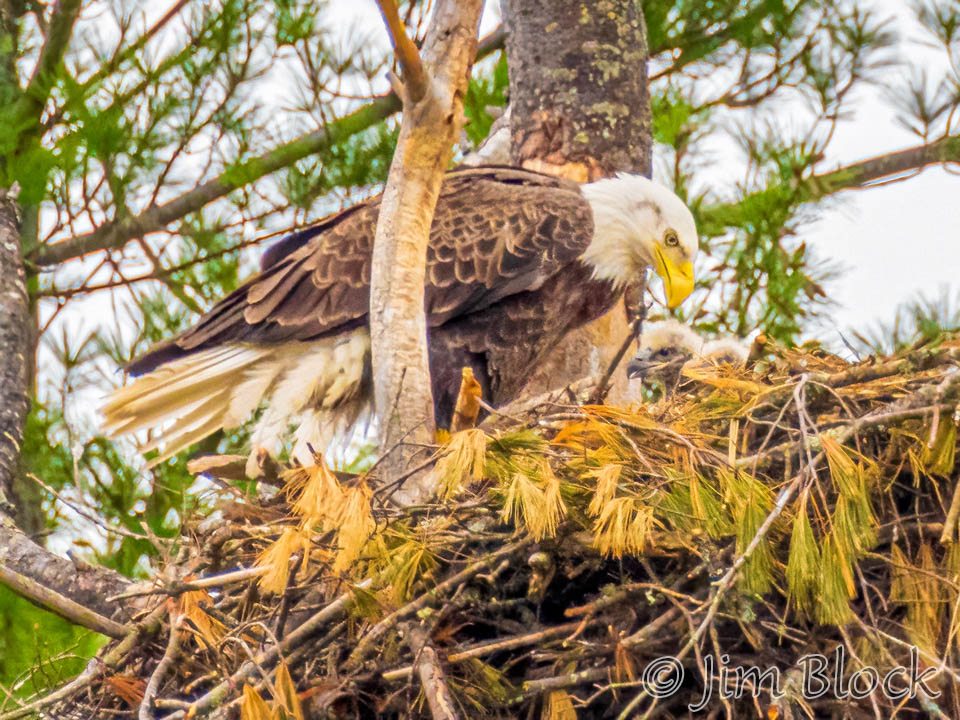
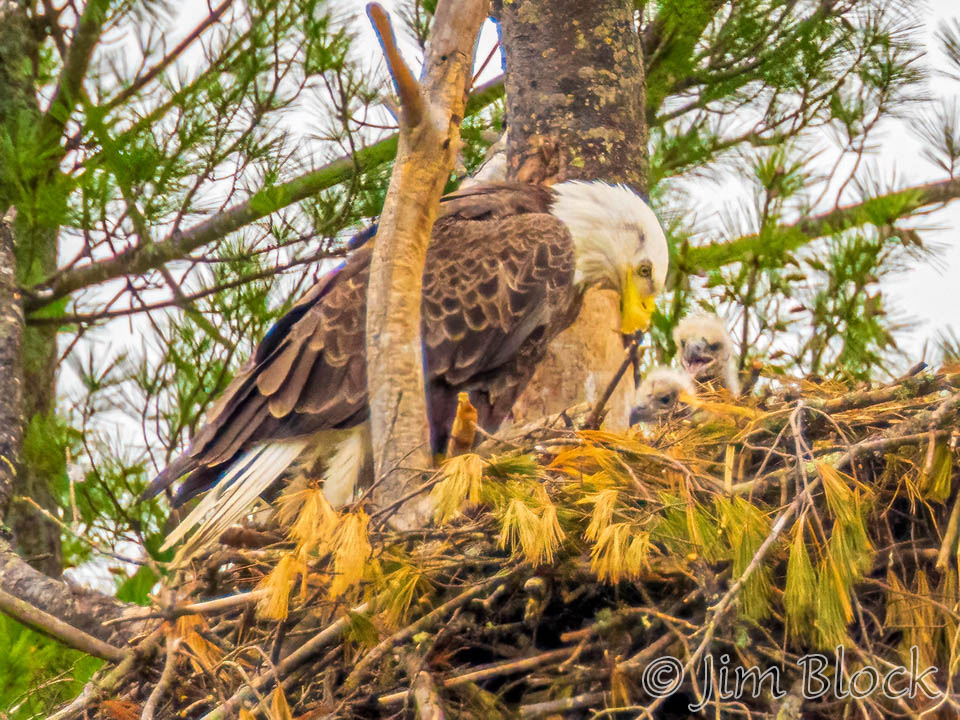
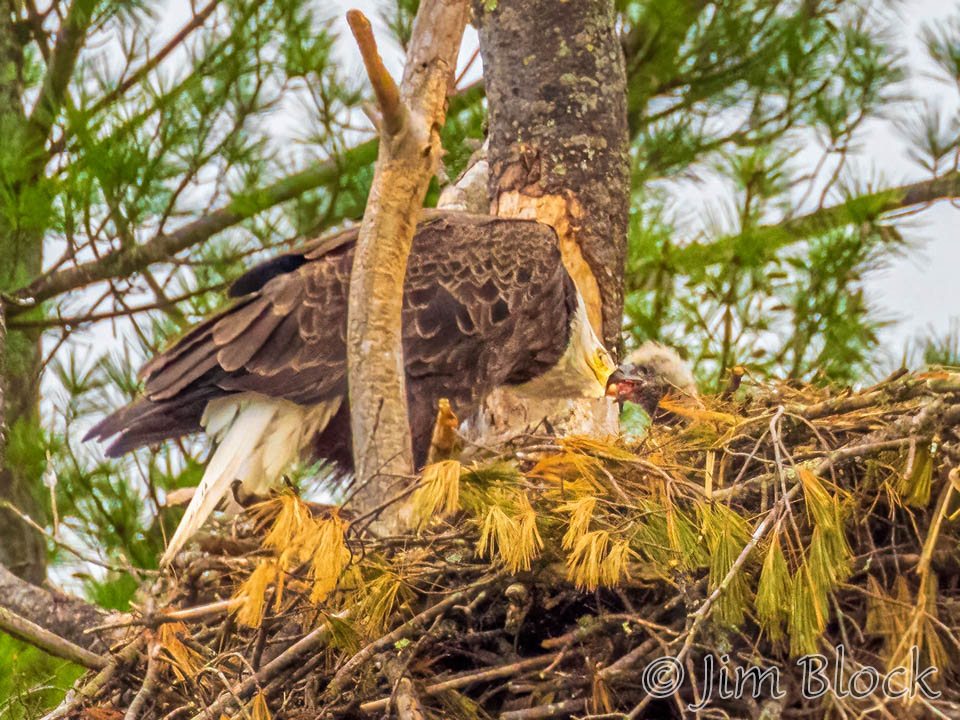
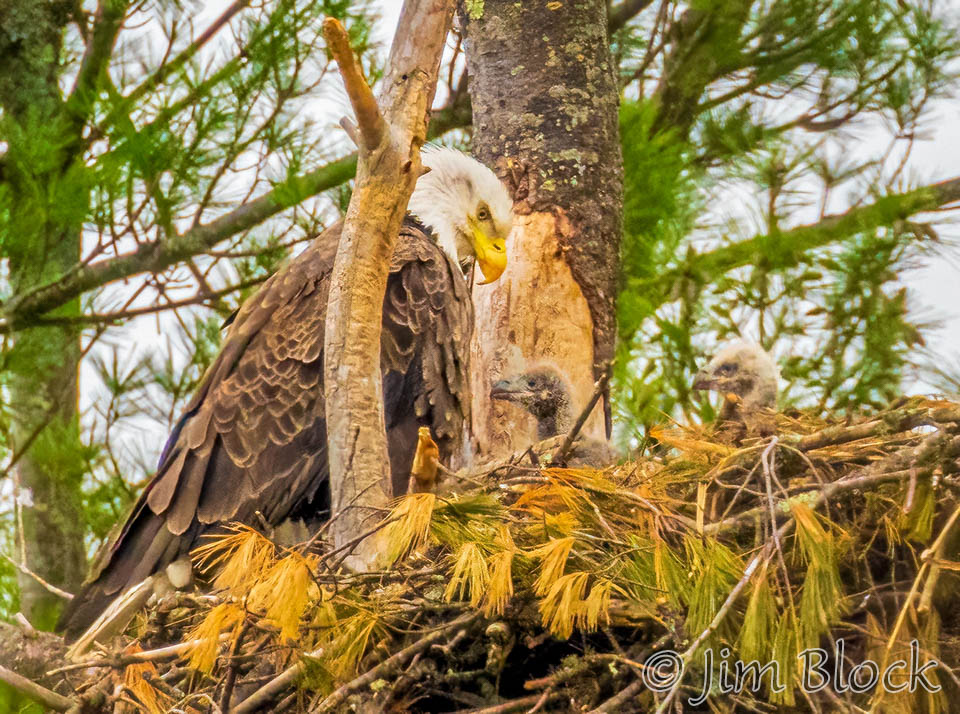
That was the only feeding observed in four hours.
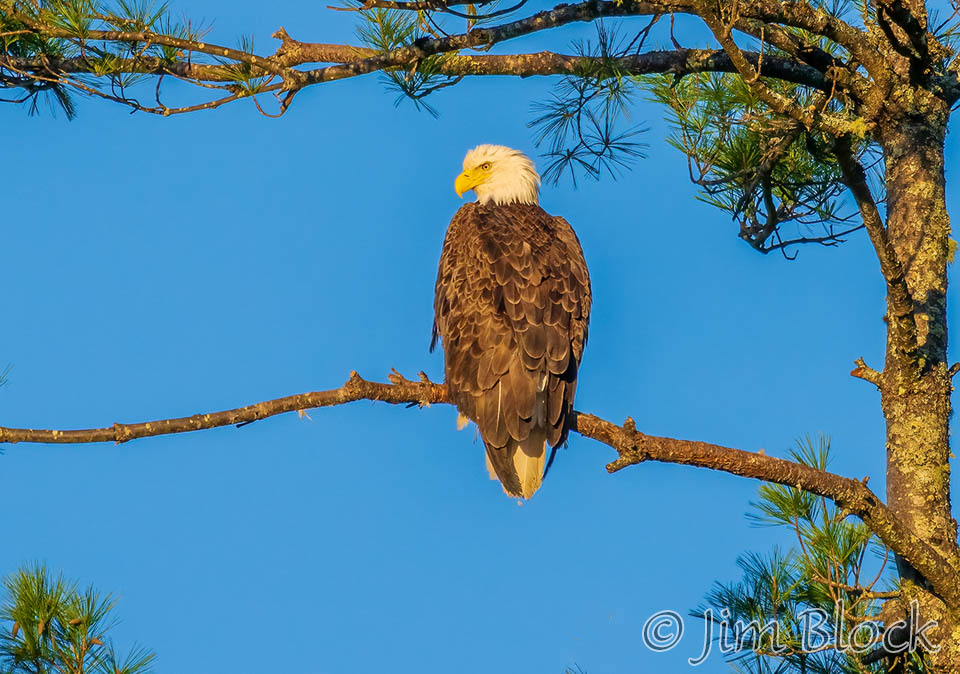
Four days later, on May 8, I was back. I stayed for 100 minutes. One eagle sat in their favorite tree and did not move the whole time.
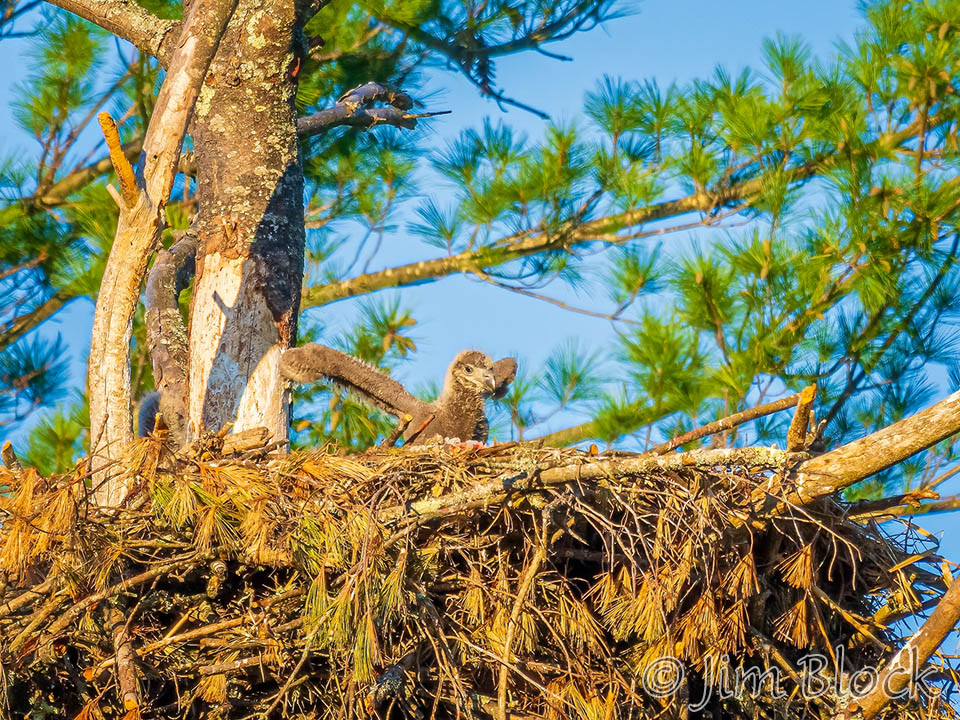
Meanwhile the chicks were active. I believe this is the smaller one.
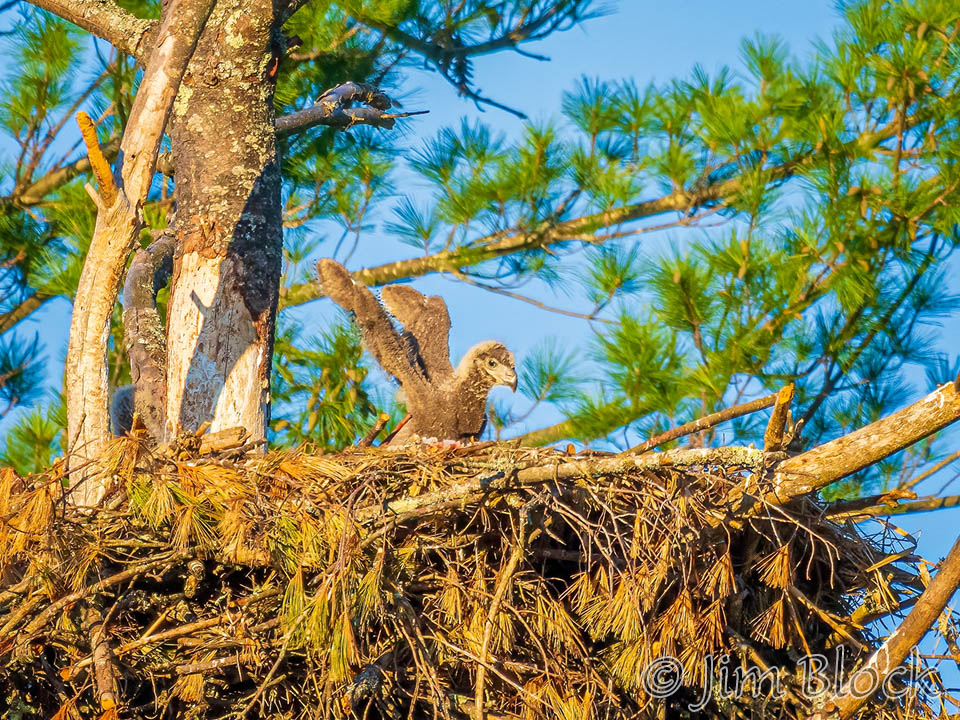
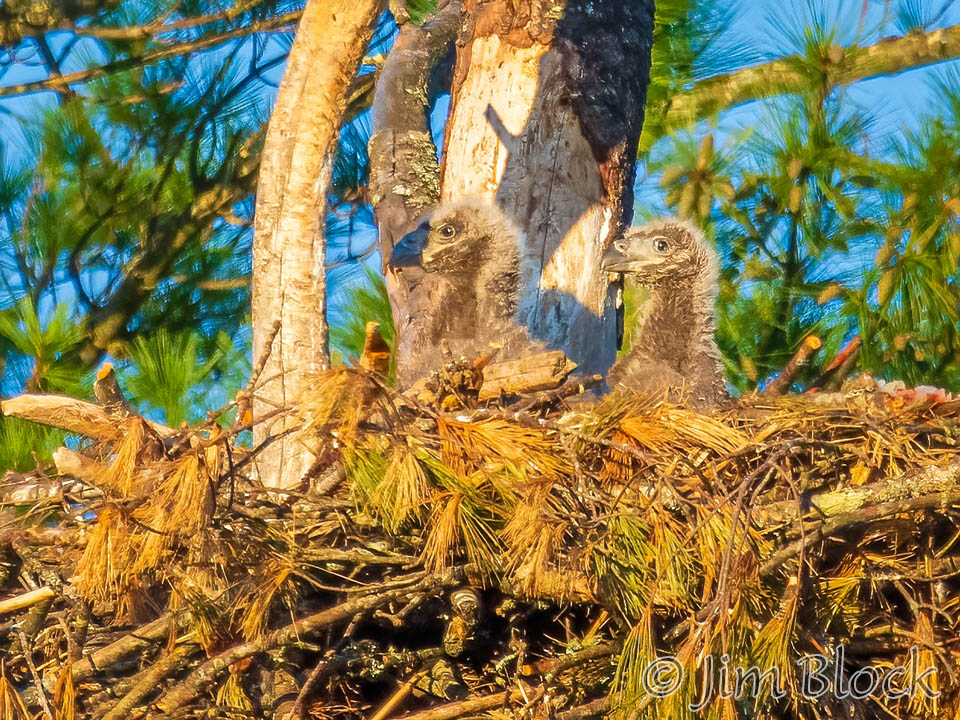
Here is the pair at a peaceful moment.
There were times the larger eaglet seemed aggressive.
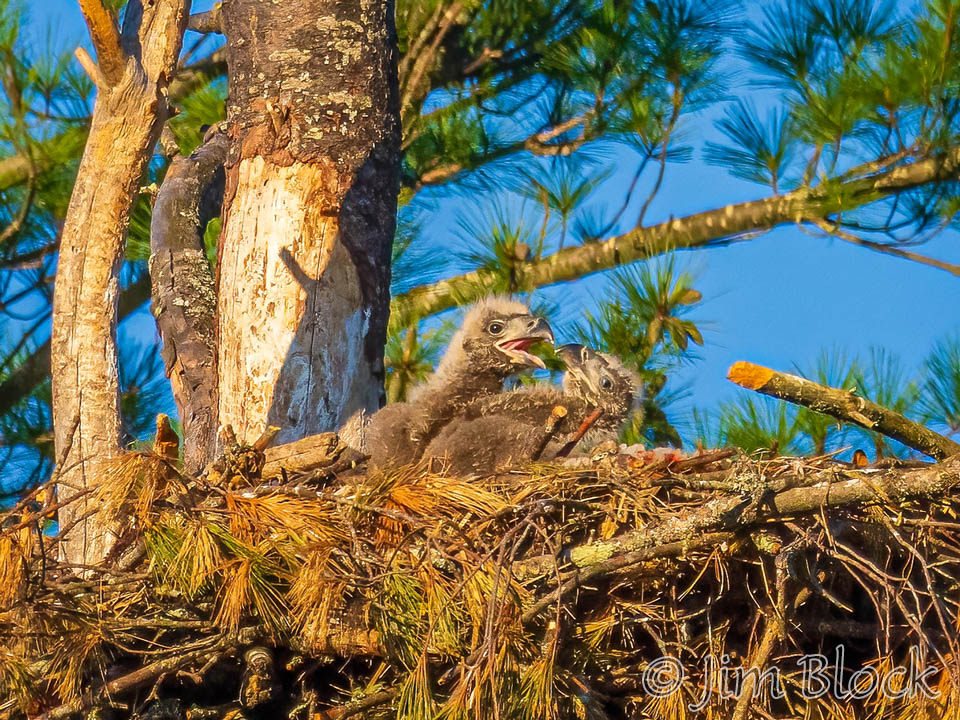
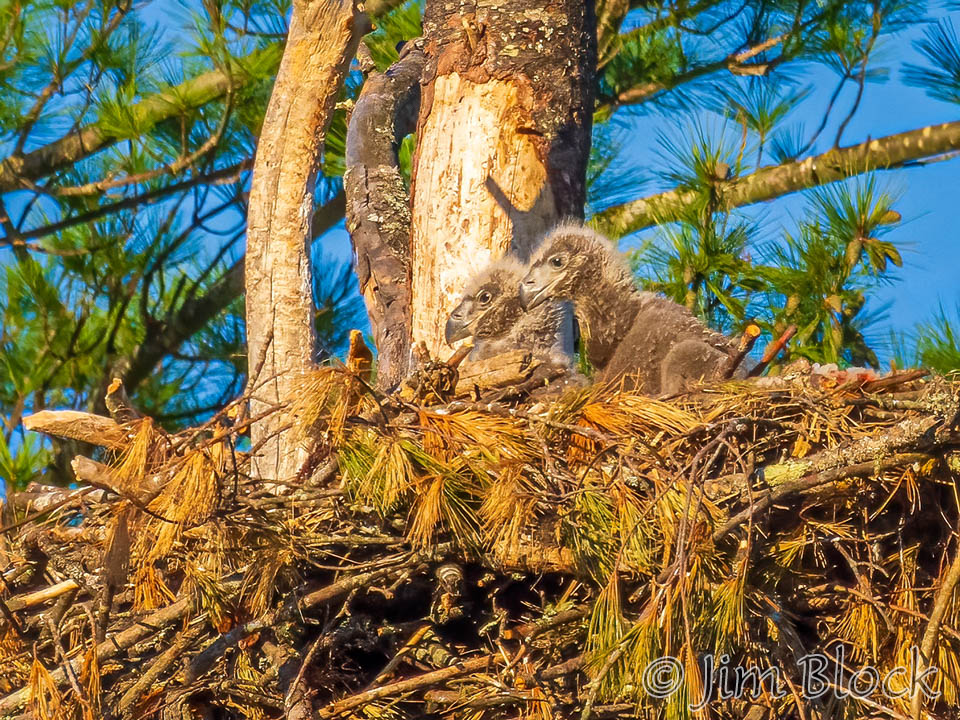
But then peace was restored.
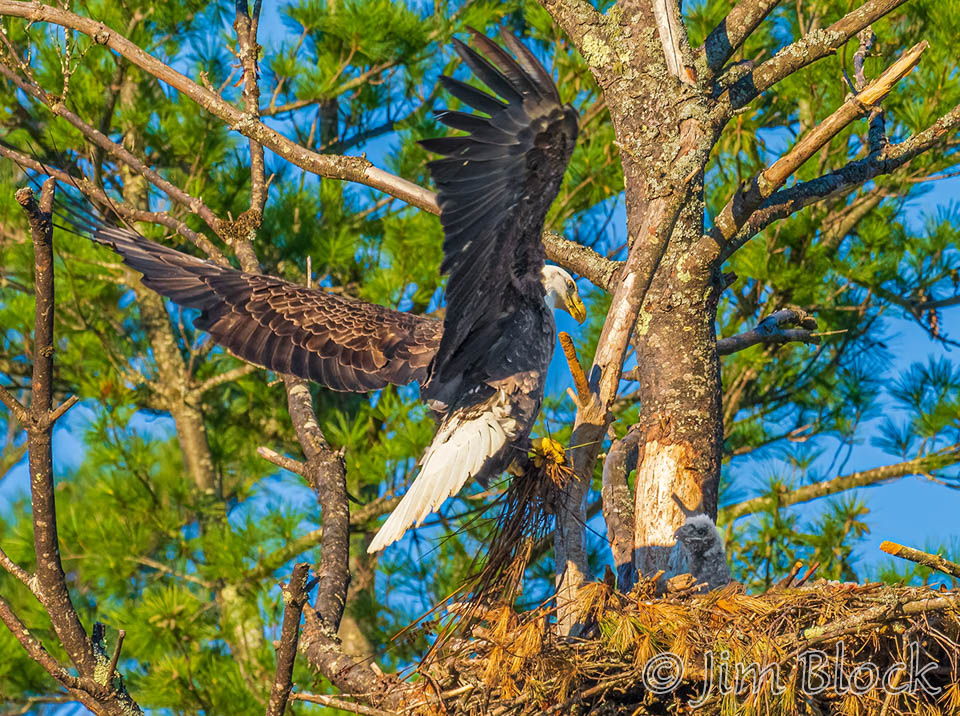
A parent flew in carrying some soft grass to pad the nest.
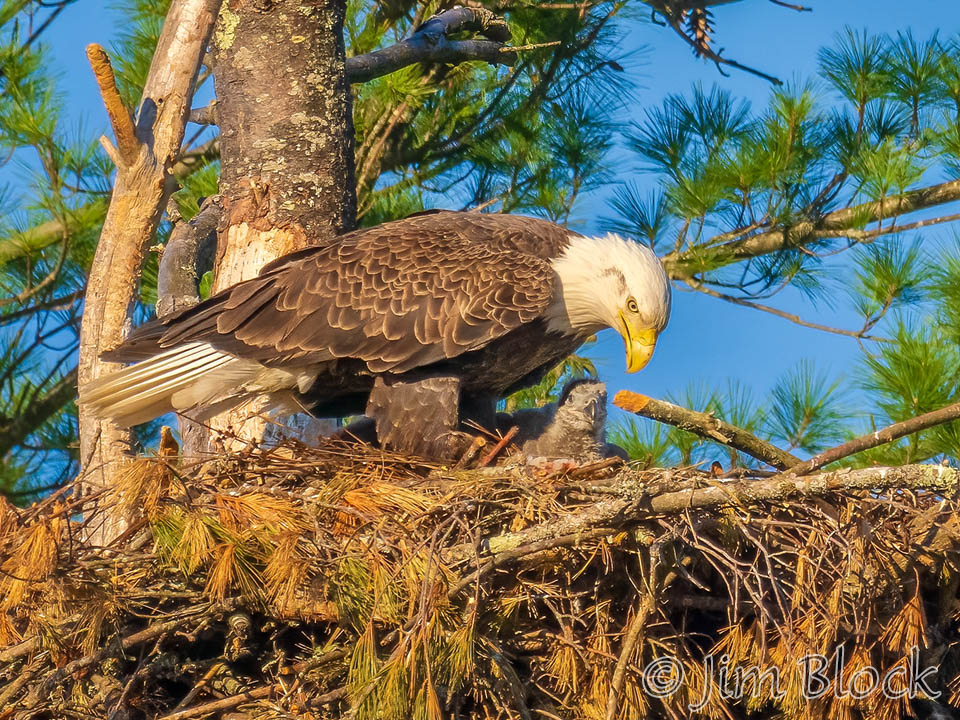
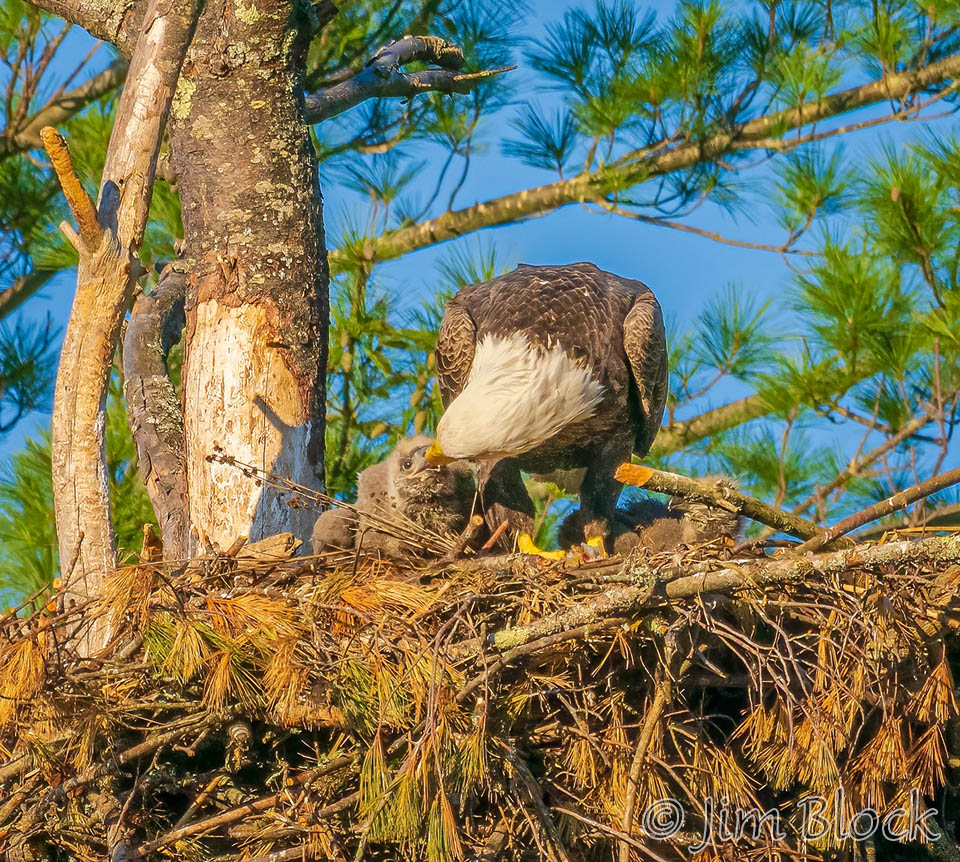
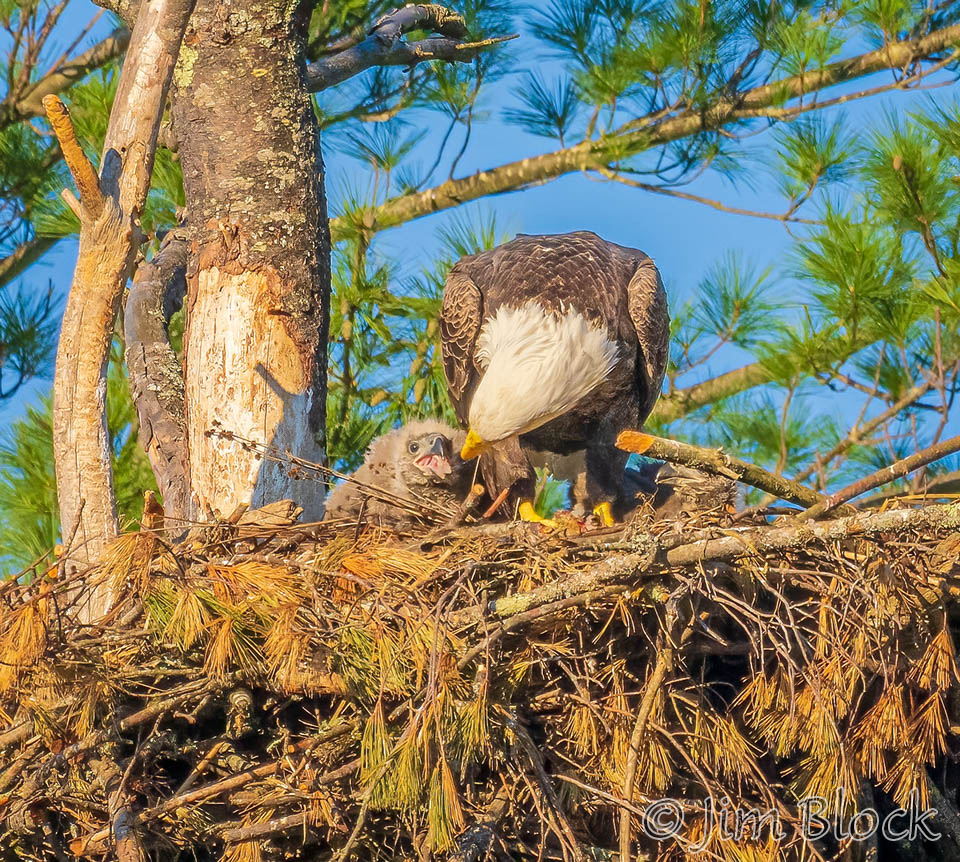
It proceeded to feed the chicks.
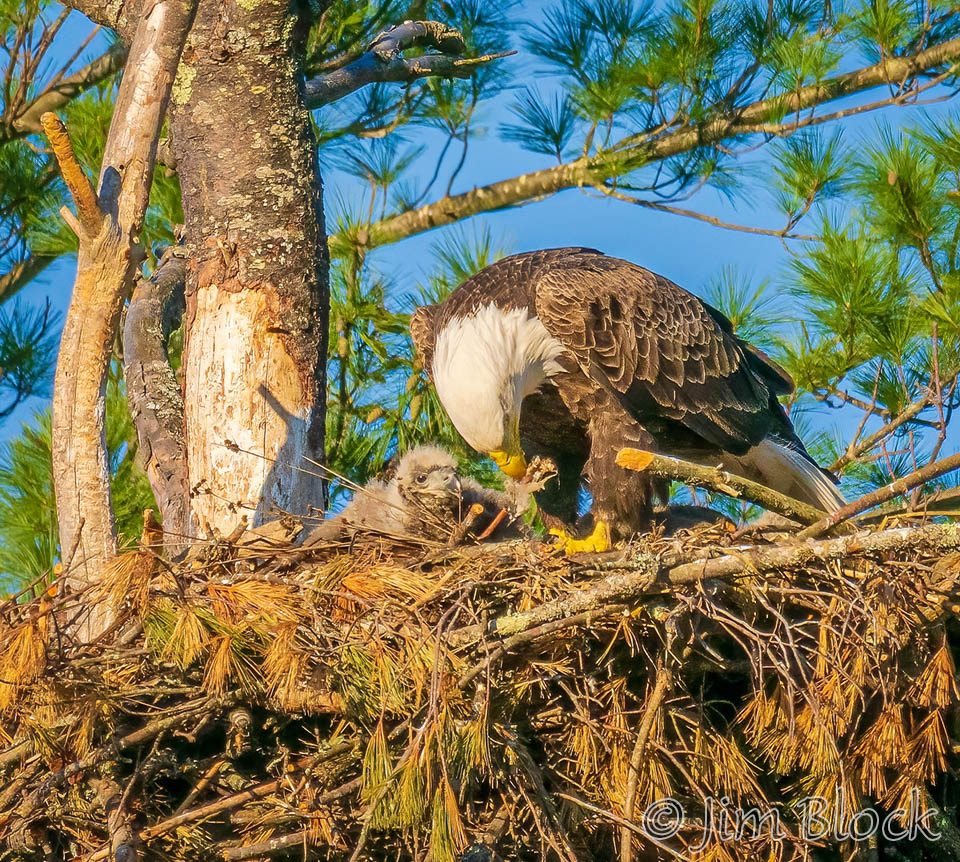
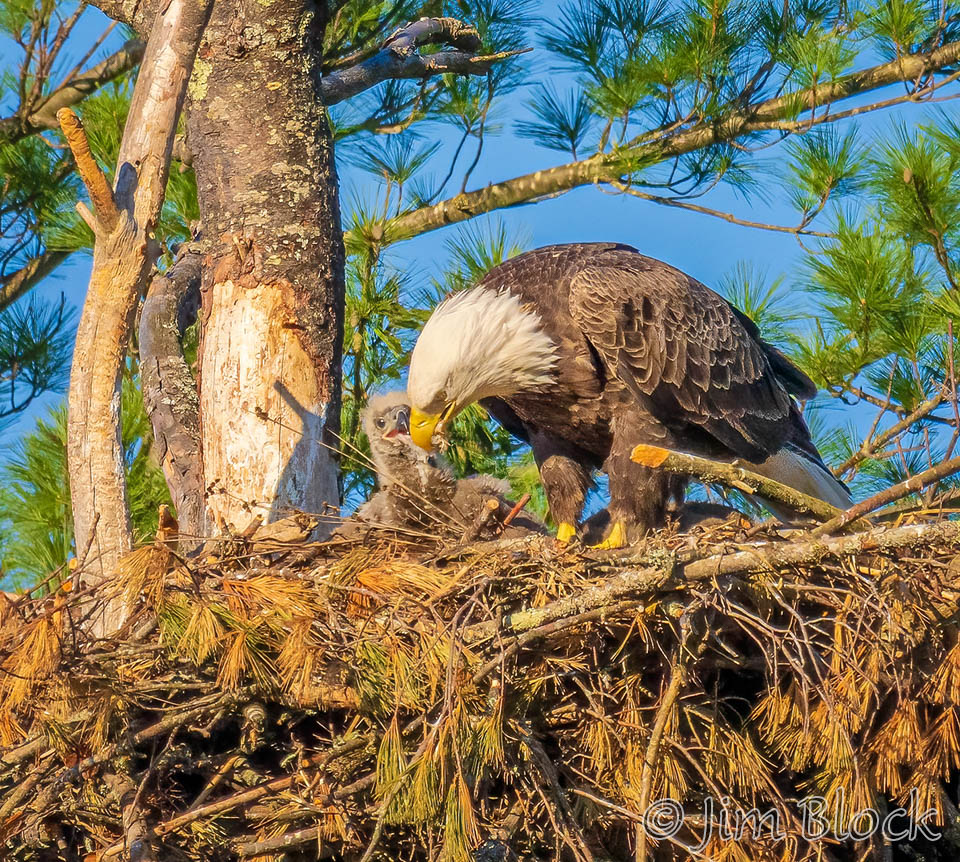
And some stretching and wing flapping.
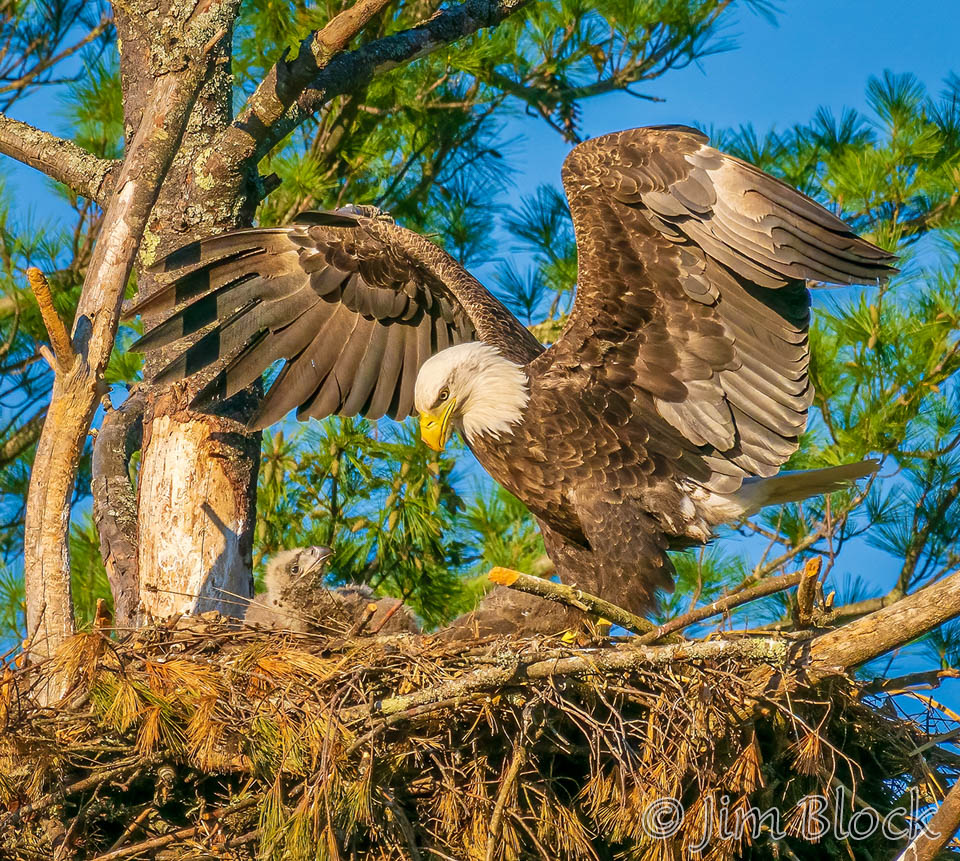
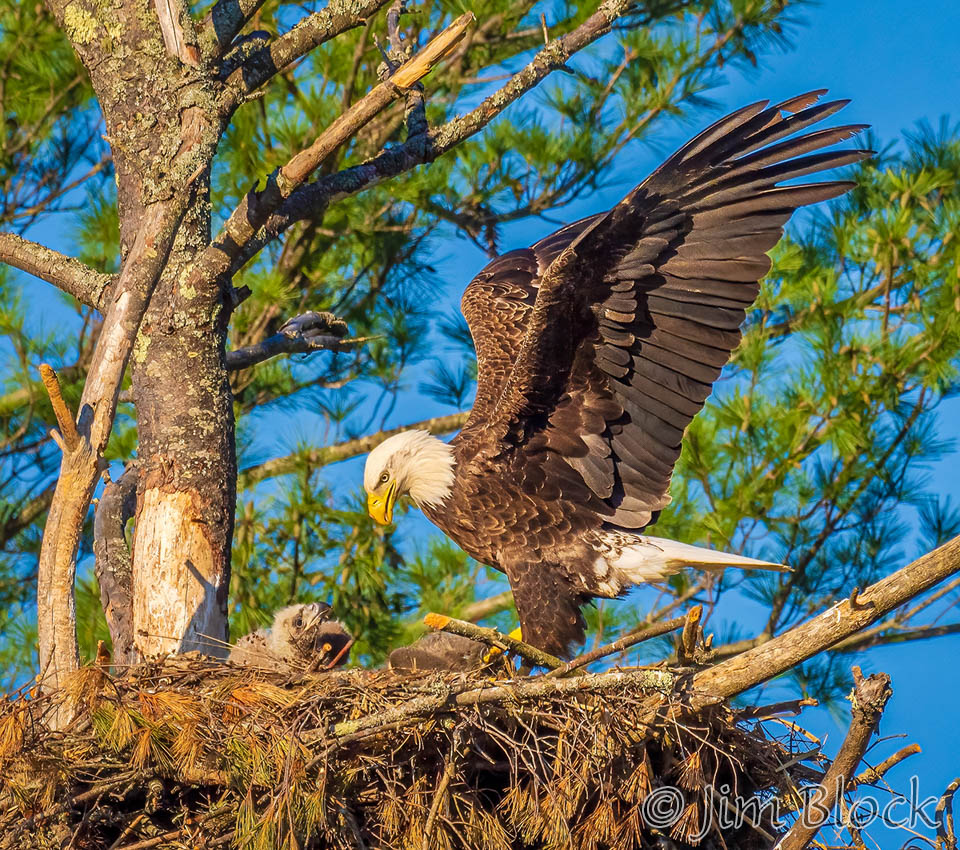
The eaglet followed suit doing a fair imitation of its parent.
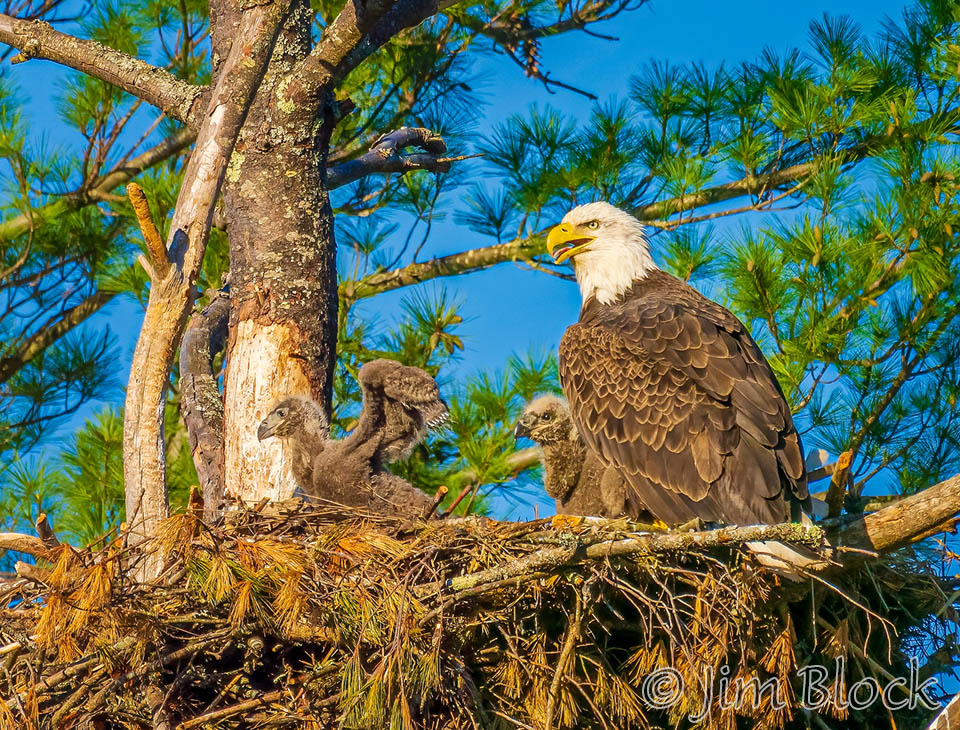
A proud parent basks in the 7:30 a.m. sun.
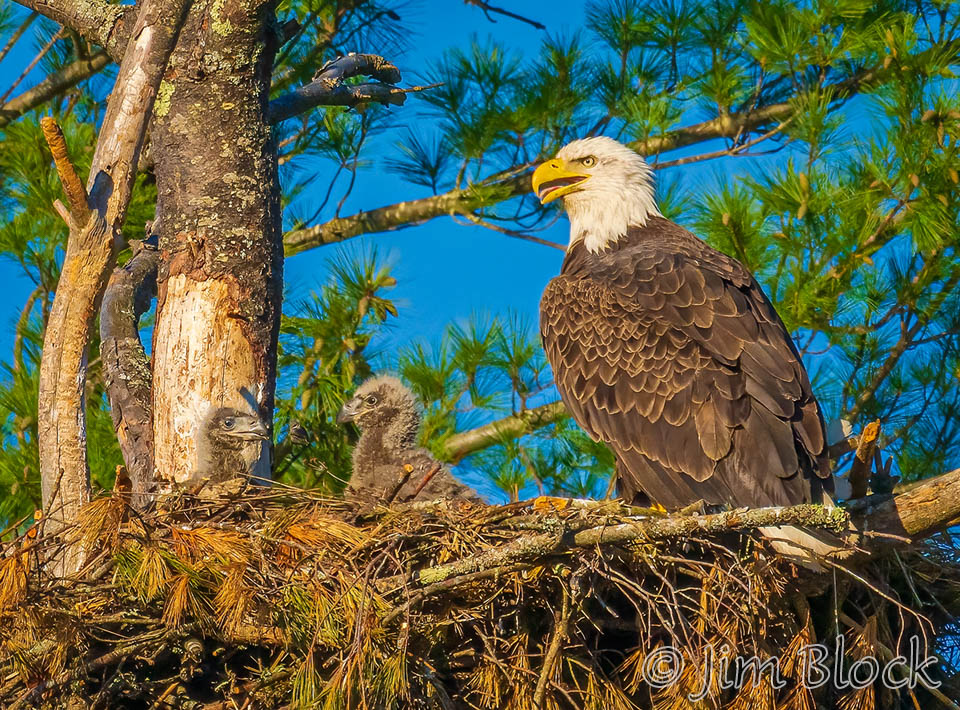
Ten minutes later it is time to depart.
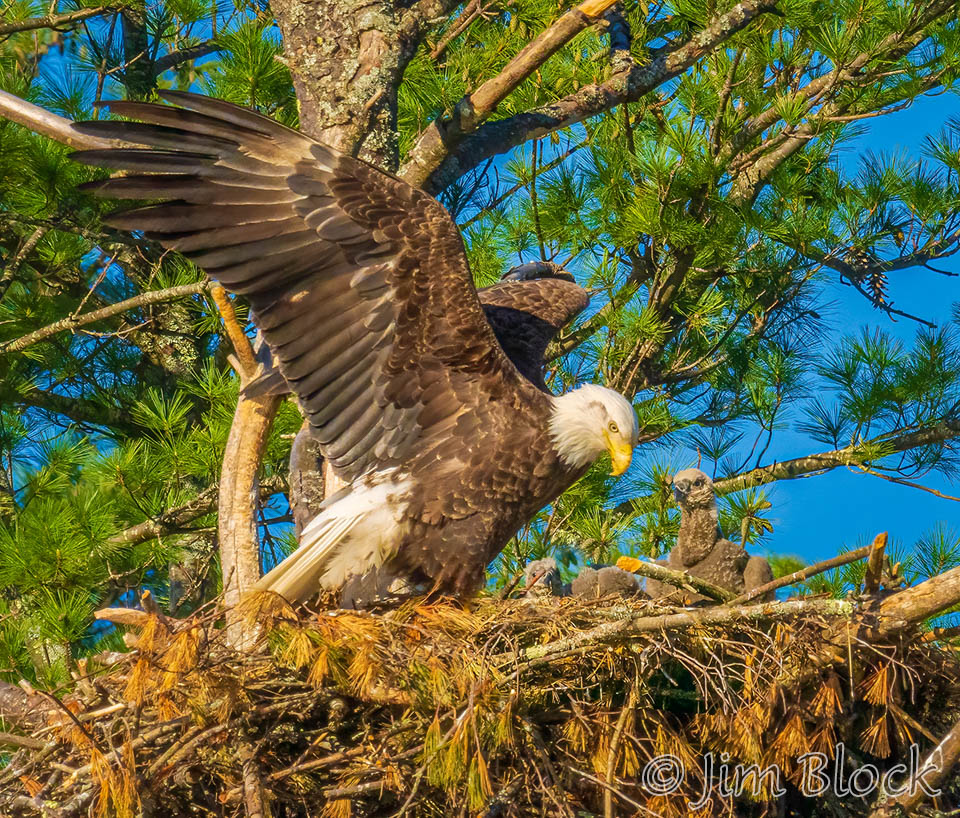
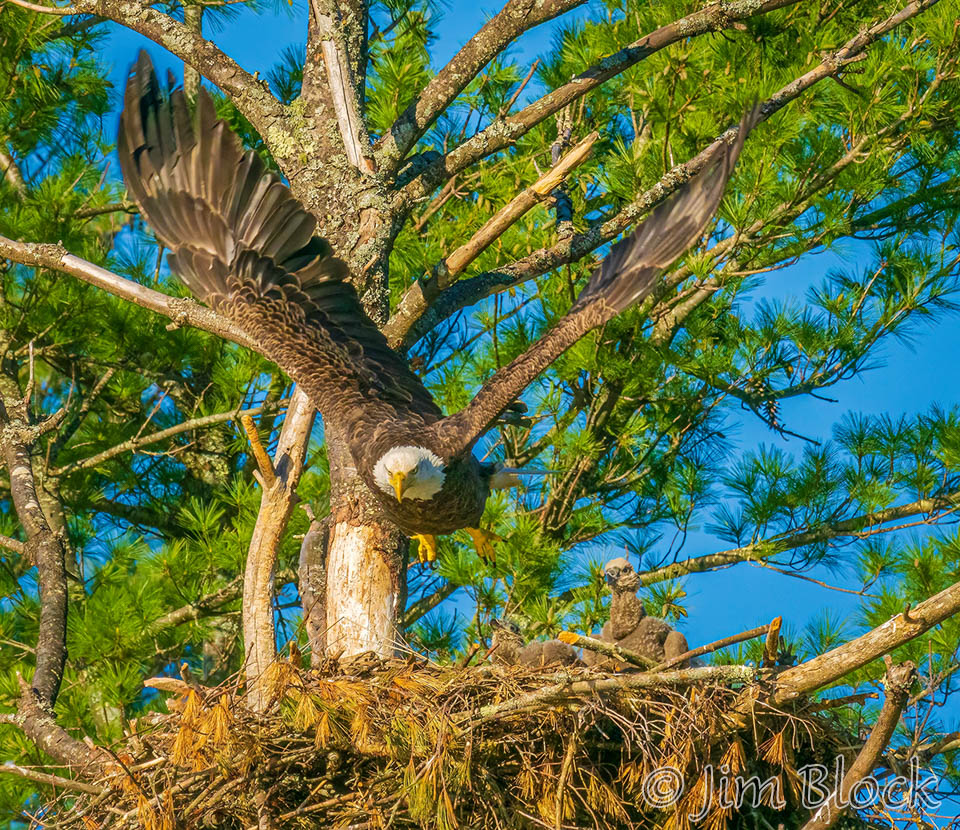
I photographed a final wing flap, then headed across the river to Vermont and Kilowatt Park to photograph Ospreys flying.
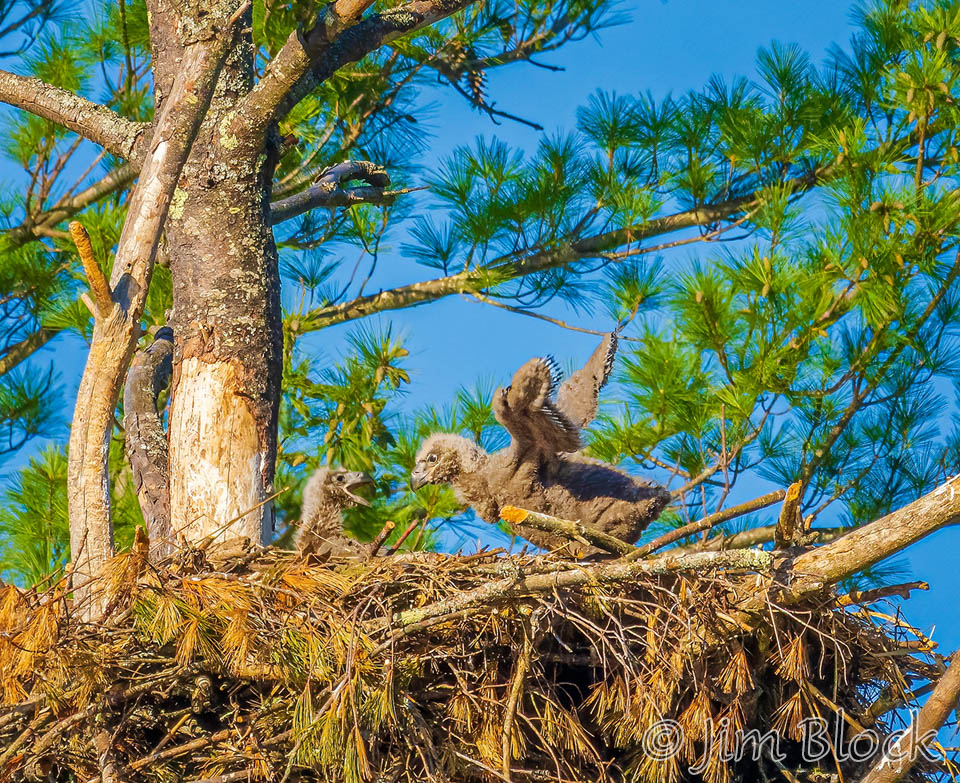
I spent a cold hour with the eagles from 6-7 a.m. on March 9. All of the action happened during a 12 minute stretch.
An eagle flew in and fed one chick.
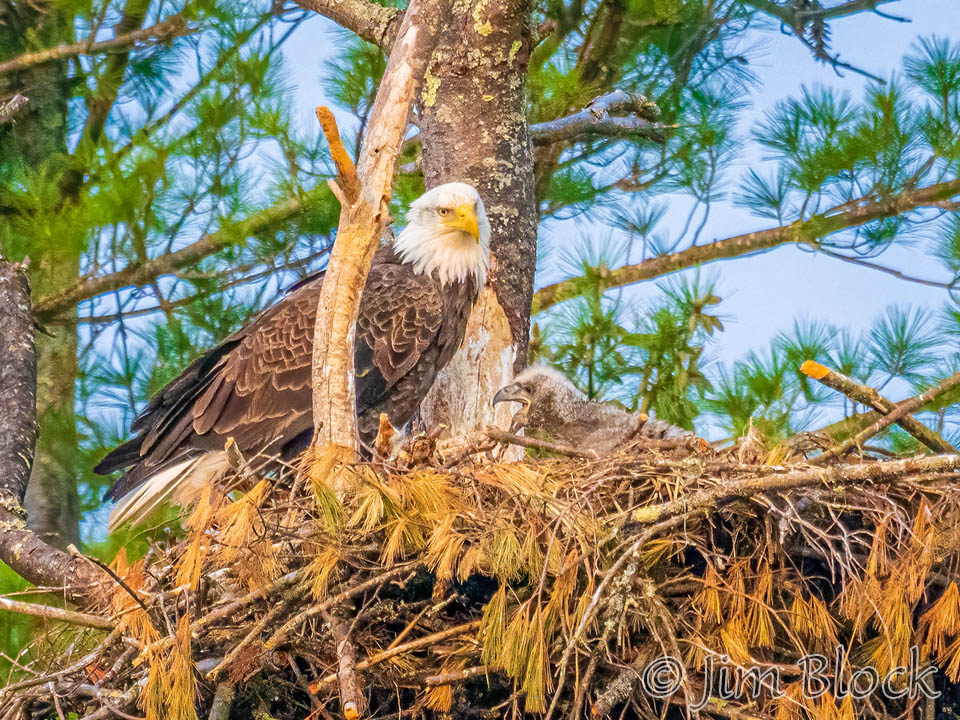
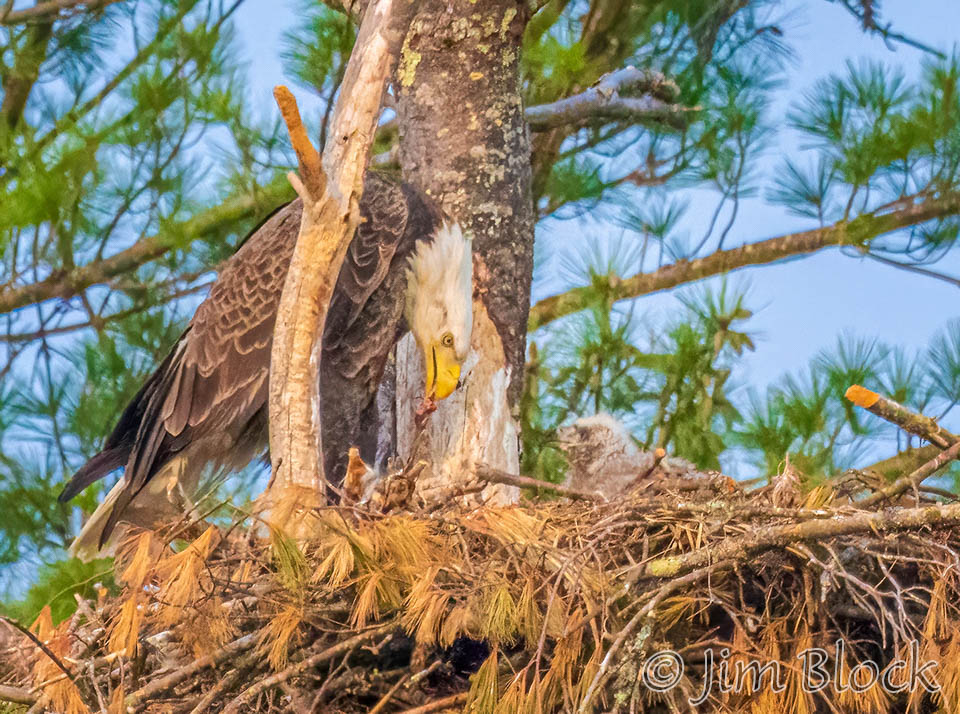
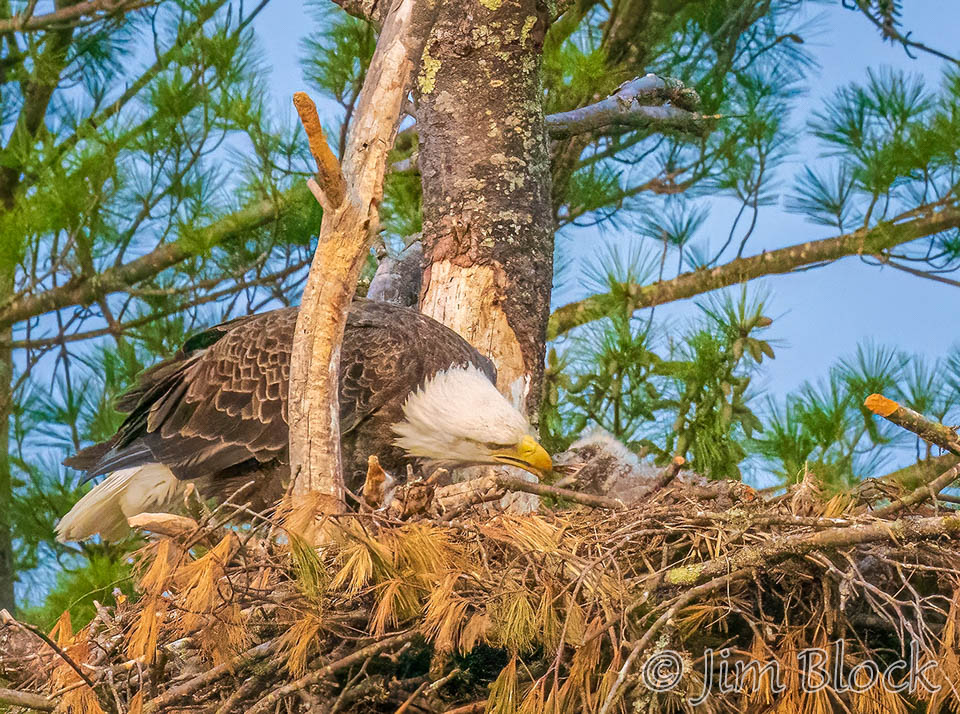
Then it departed.
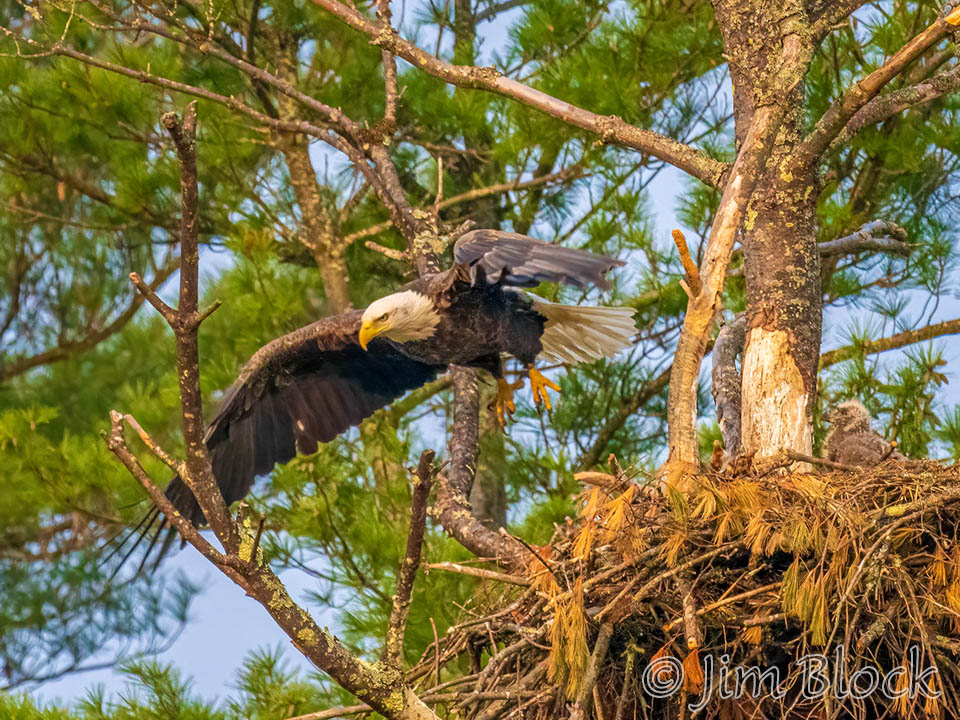
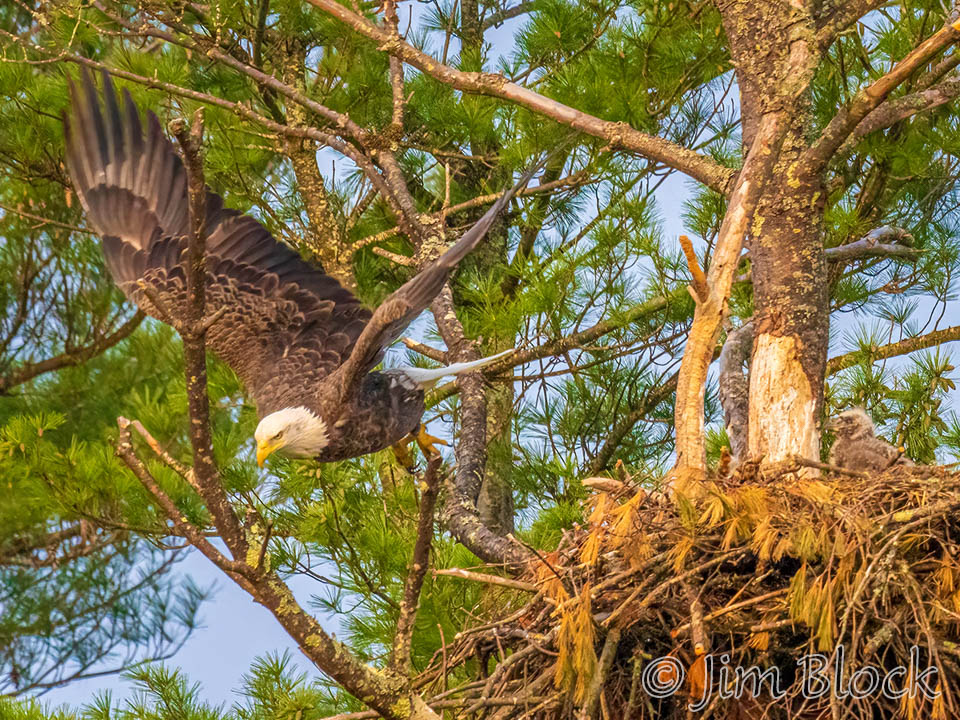
One of the chicks held something that did not appear to be edible.
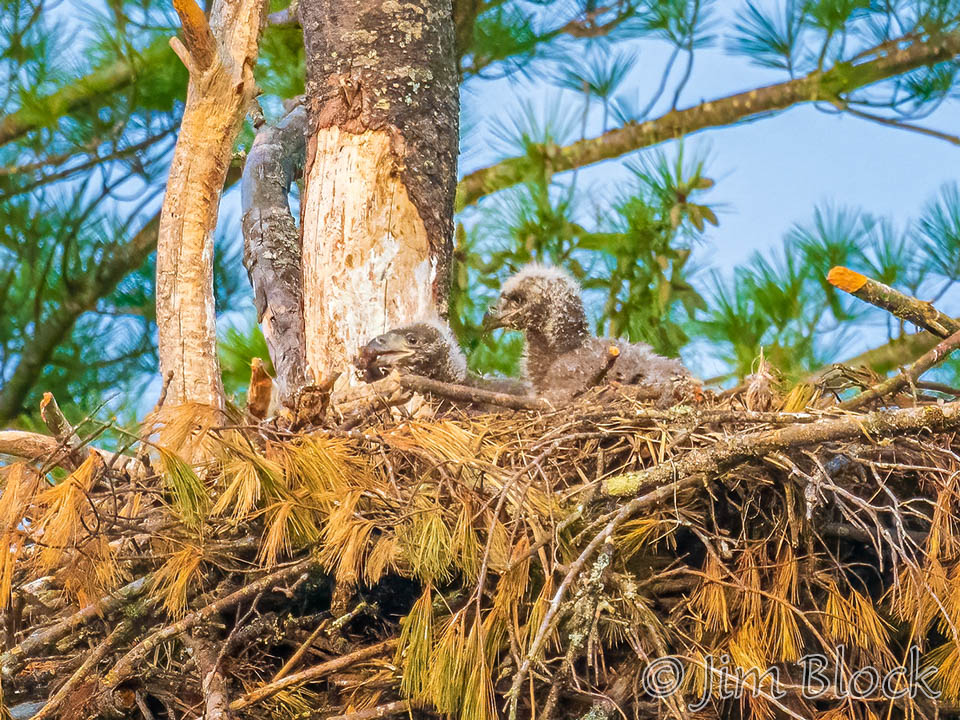
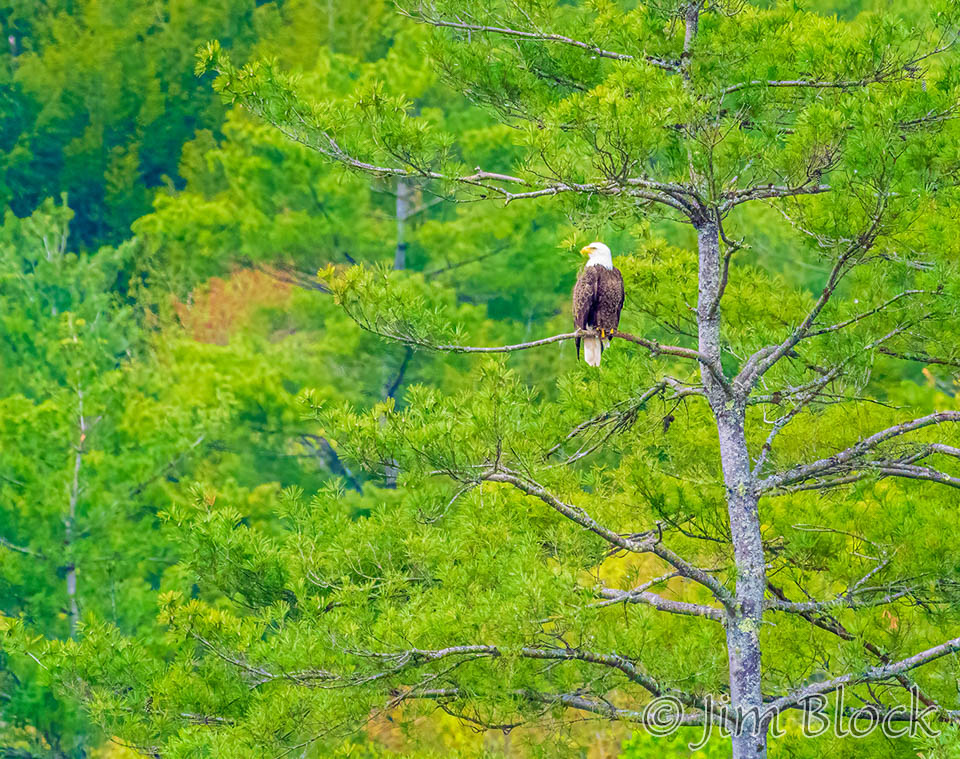
Another cold, mostly boring, three plus hours on May 12. A parent sat in the nest tree above the nest and also in its favorite tree to the south, but never flew into the nest.
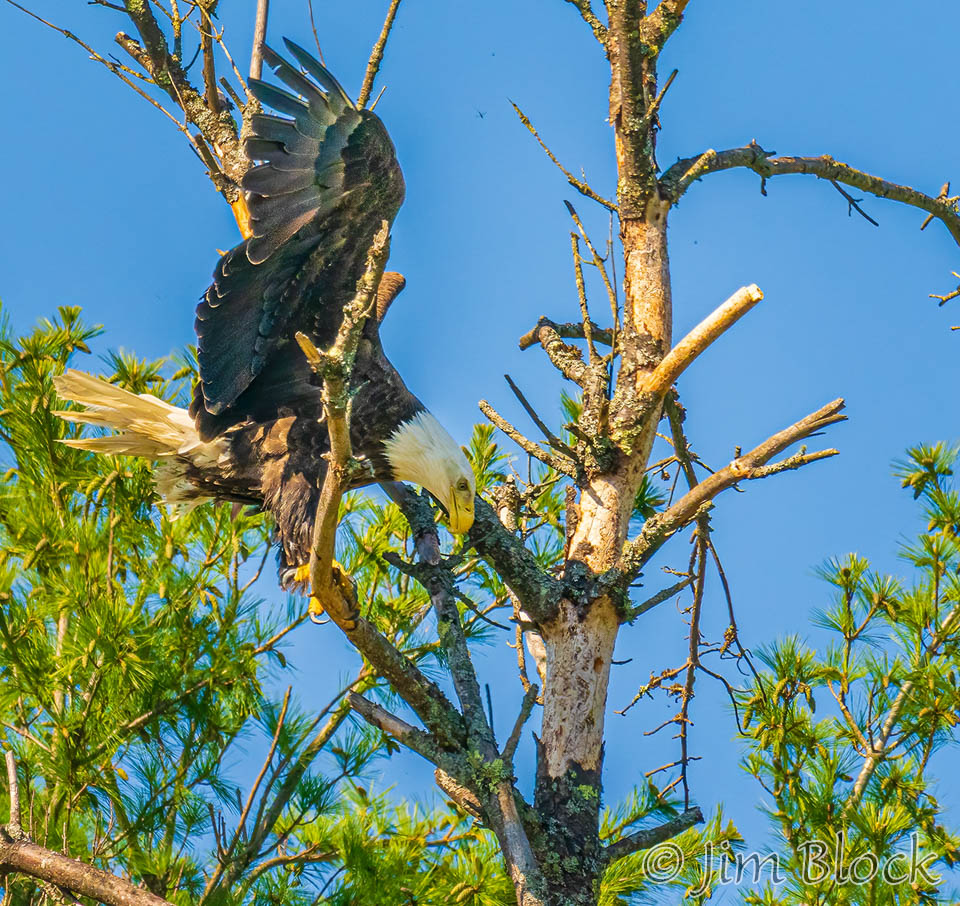
The major action was a chick pooping.
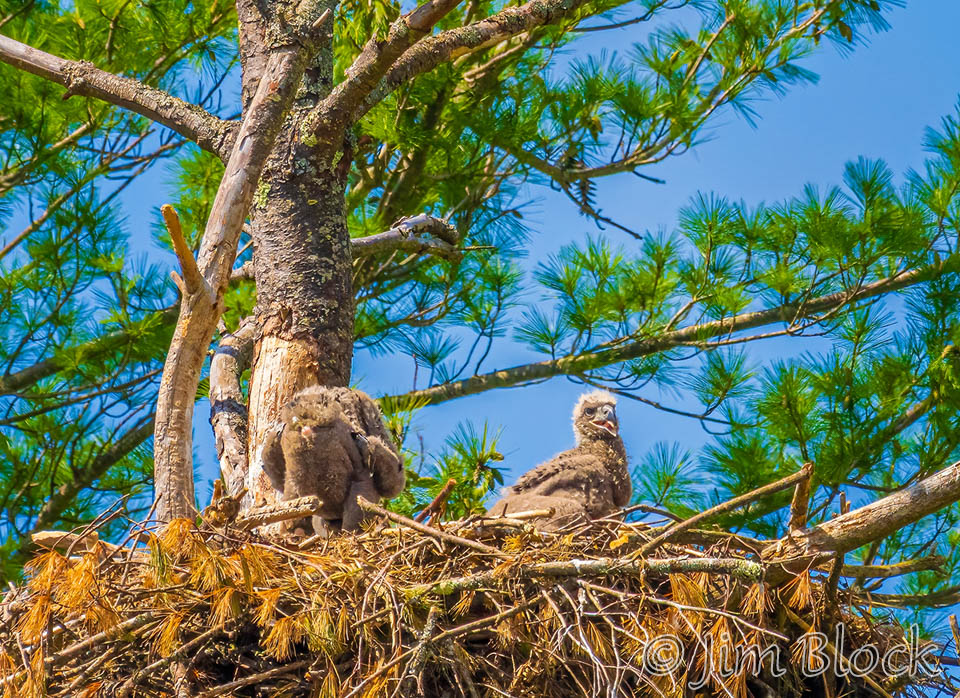
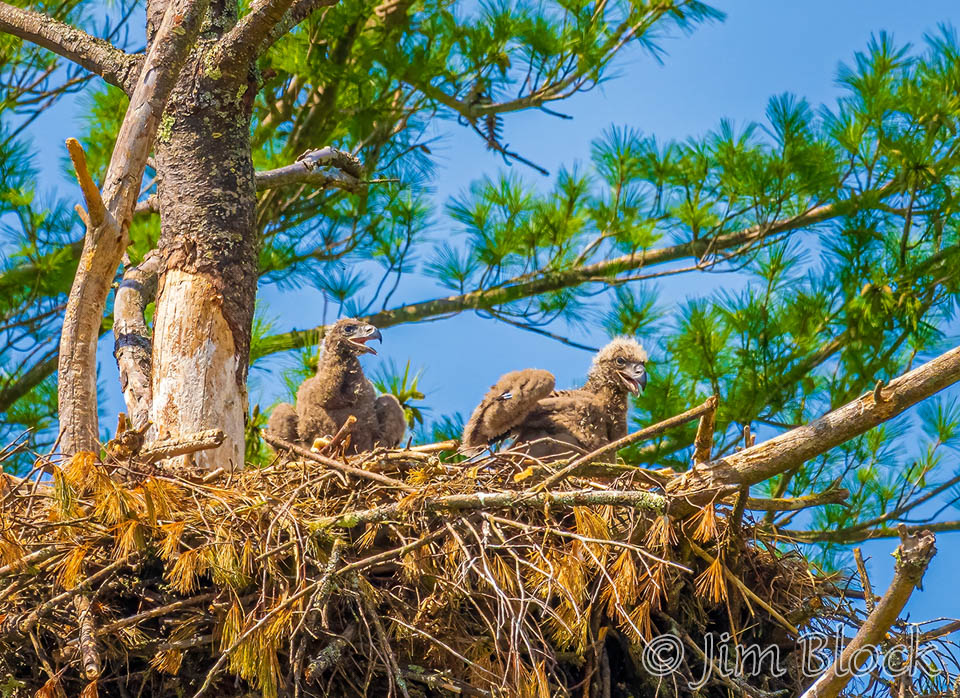
The pair were visible at times, but that was about it.
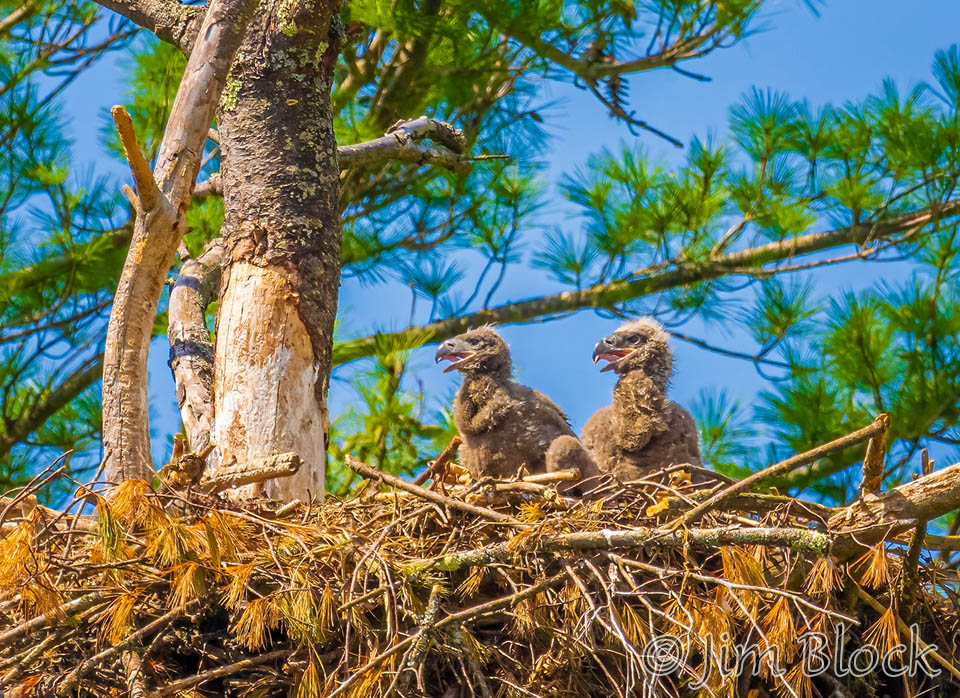
I finished the morning with a nest photo from the parking area. I concluded that arriving at 9:20 a.m. as I did was too late for the best action.
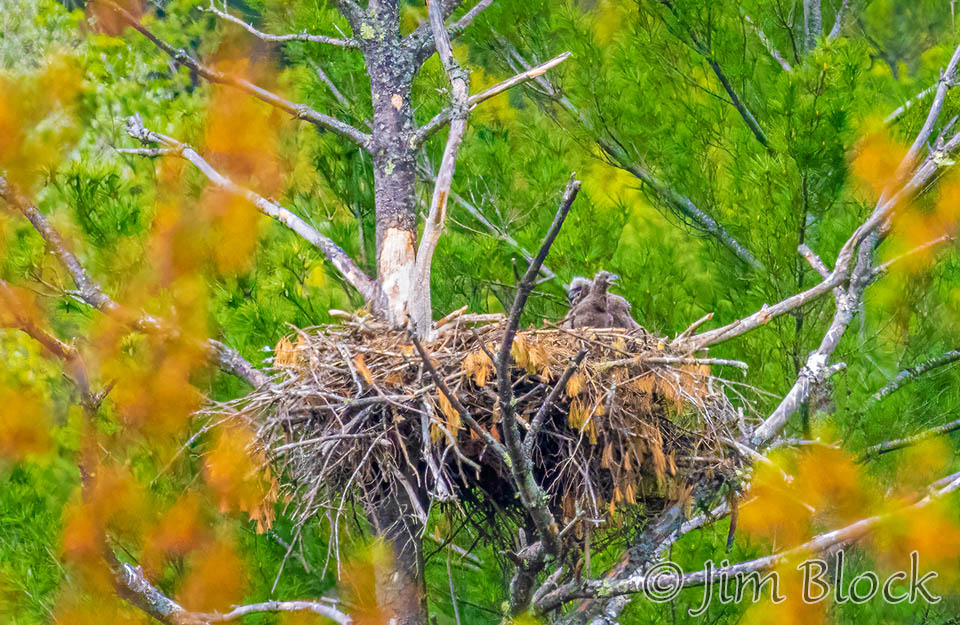
I arrived earlier, at 5:40 a.m., on May 16. An eagle and chick were enjoying the early sunlight.
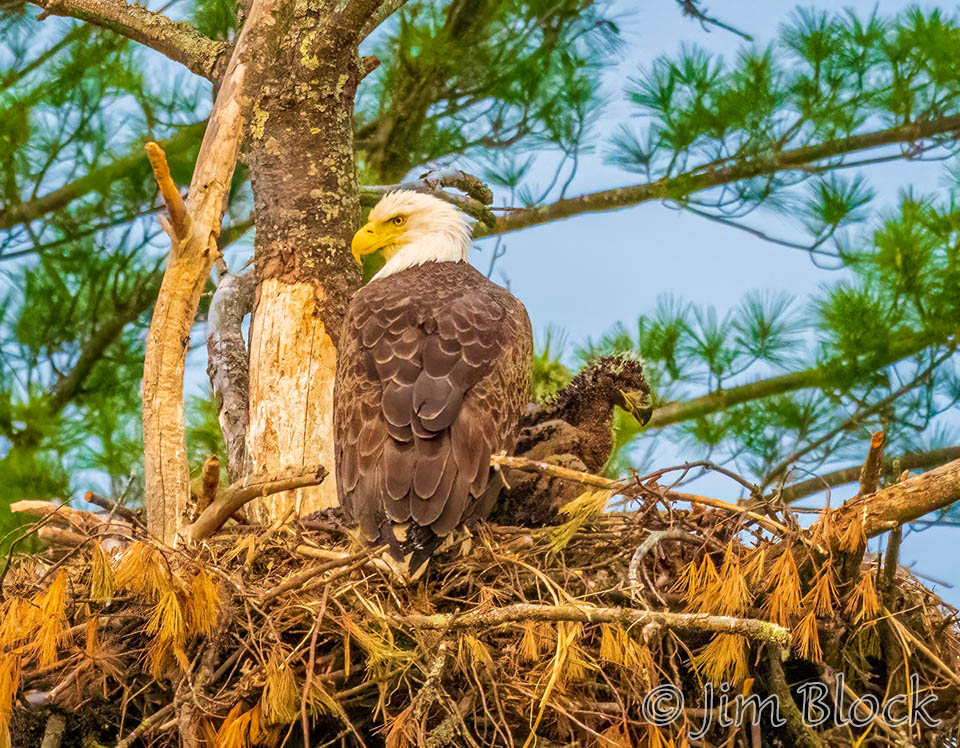
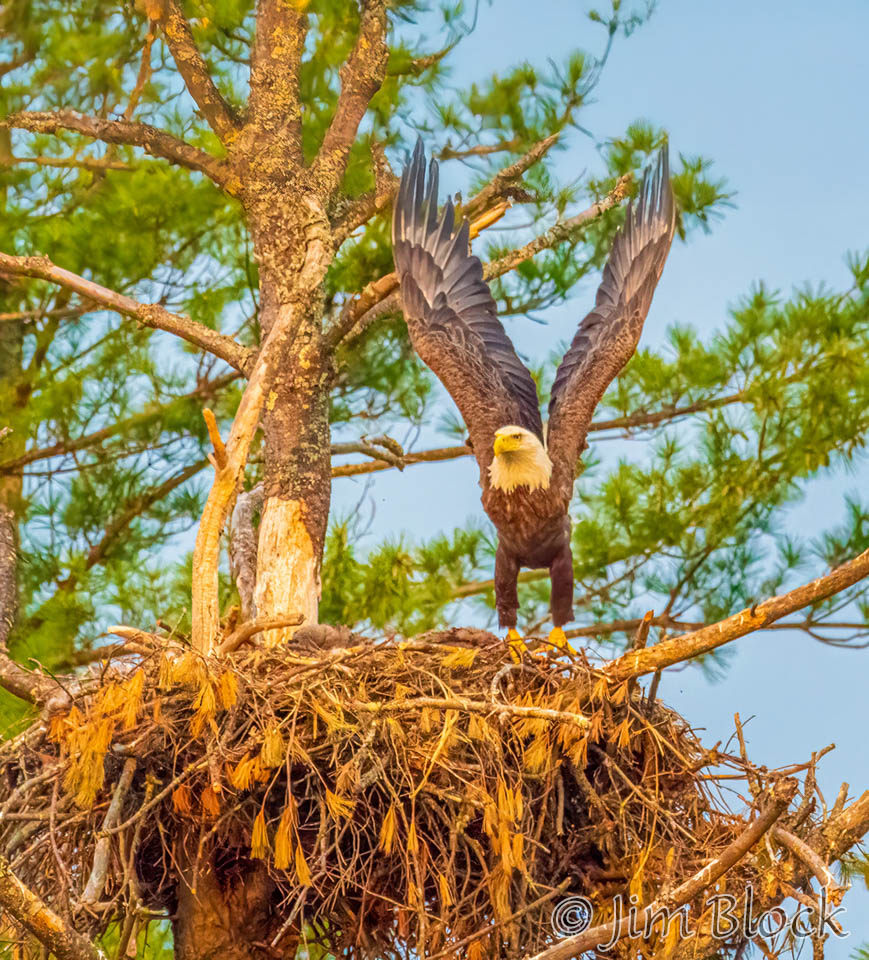
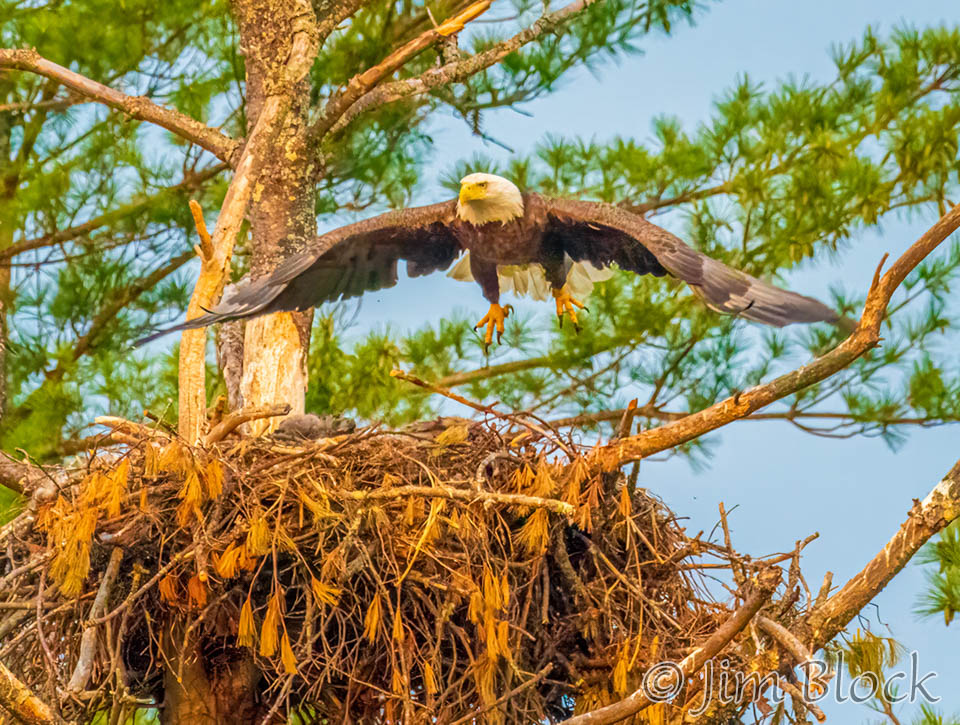
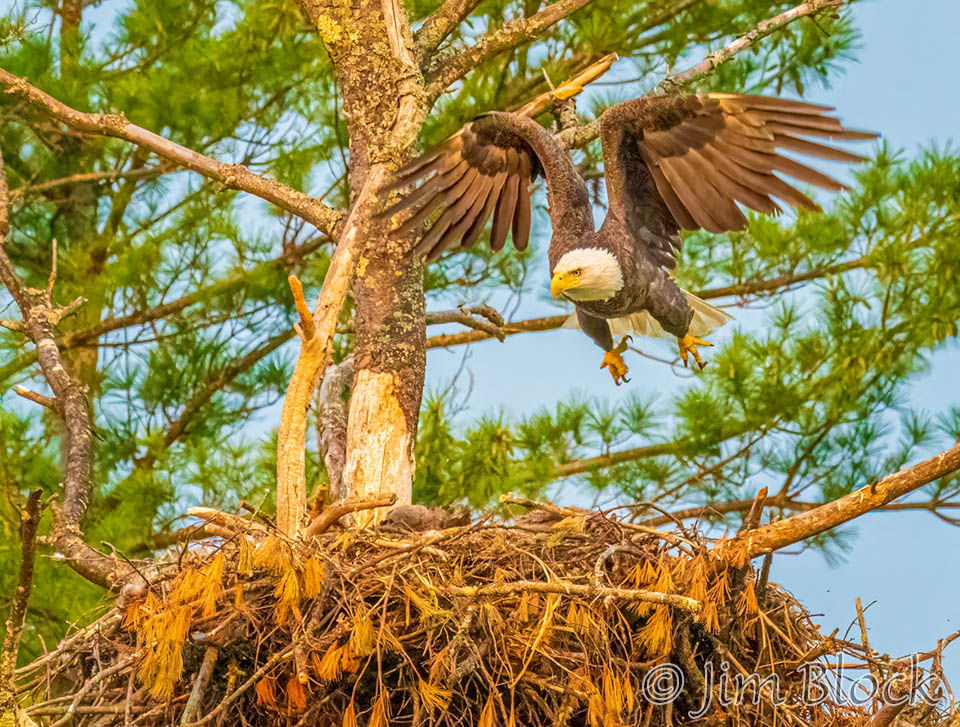
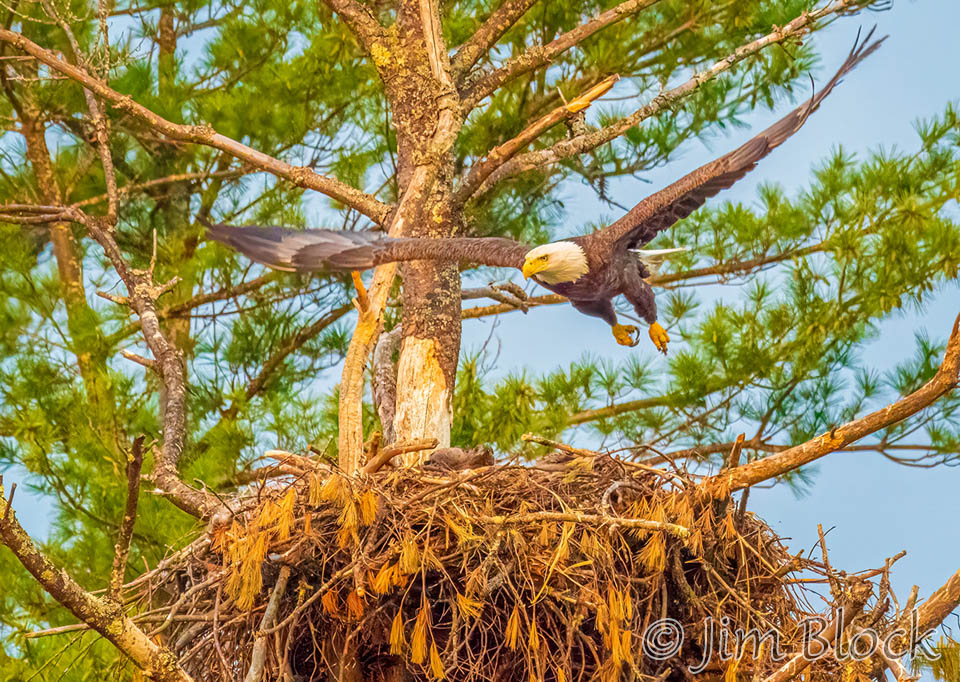
Then the second eagle flew in from the rear. This is a much better way to enter the nest for a photographer rather than just permitting butt shots with a front entry.
The eagles normally came and went at the left side of the nest or the front. The left side is toward their favorite tree. When they came or went in that direction their flight was often obscured by branches. When they left from the front, they were facing me and that was an excellent directions for photography. When they arrived from the front, their back was to me and the photos were not very good. It was just a butt shot. Rarely they came in through the back door like this one did here.
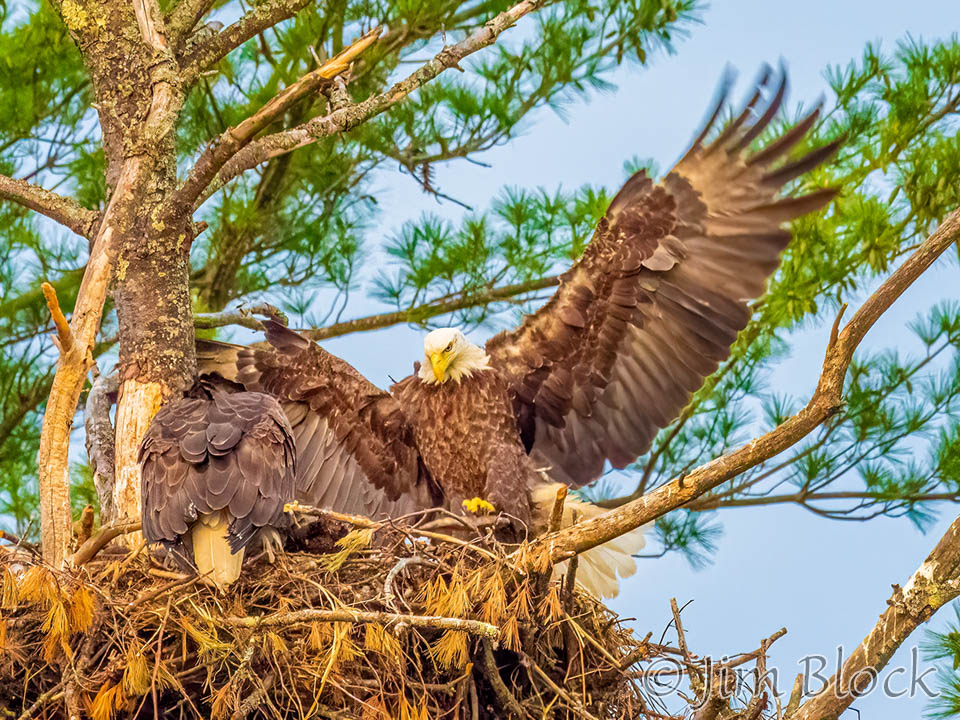
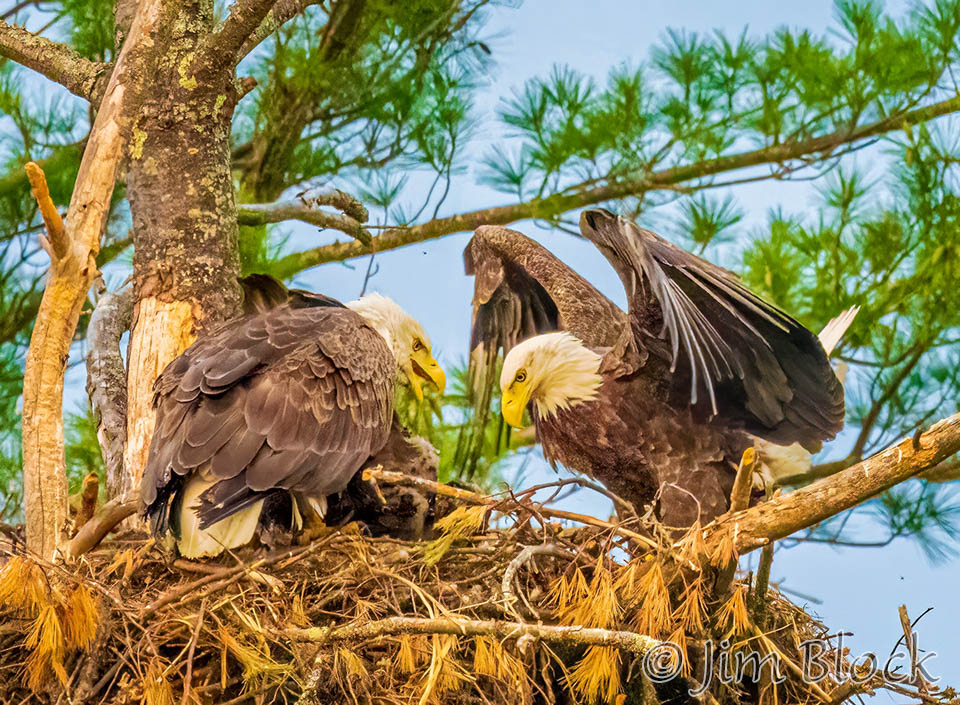
By 6 a.m. one eagle had left and soon after the second departed.
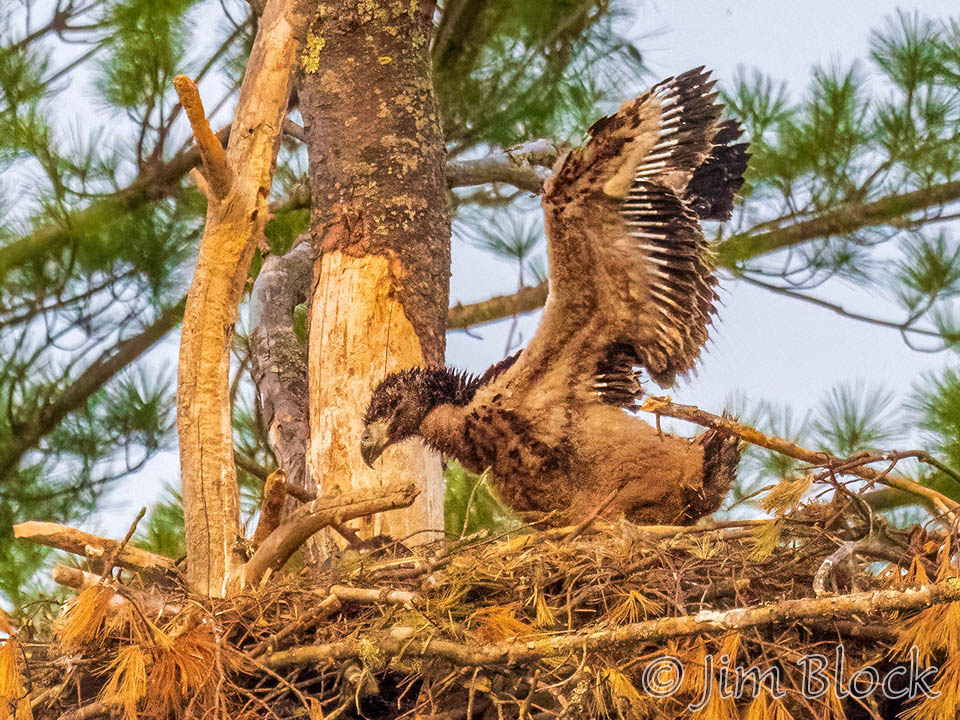
Ninety minutes at the nest on May 19 produced little. Both chicks were present.
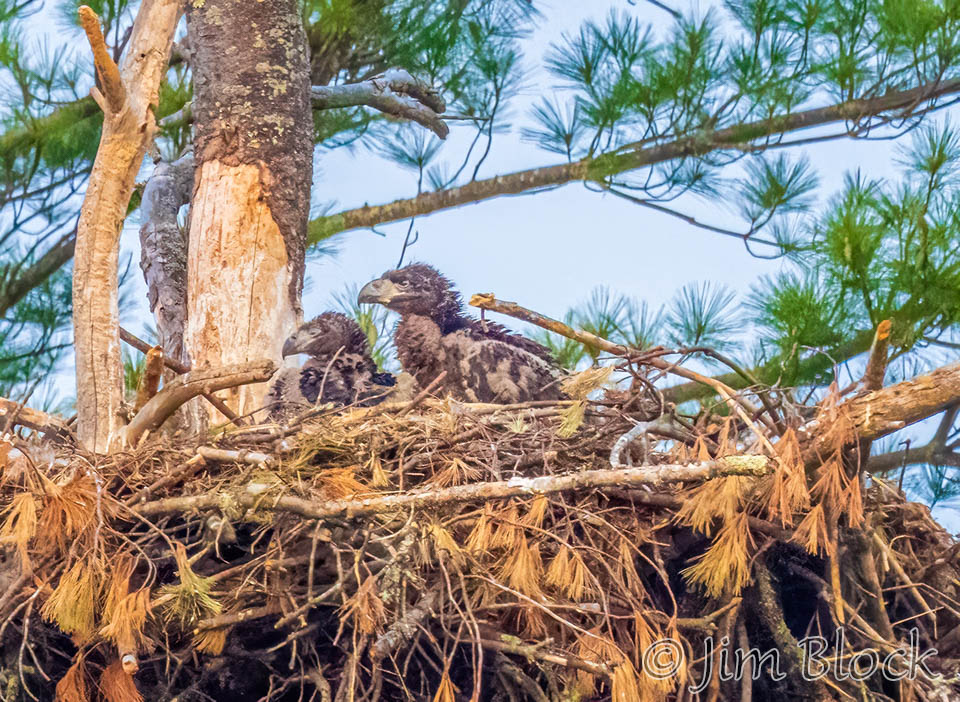
One gave a nice wing flap.
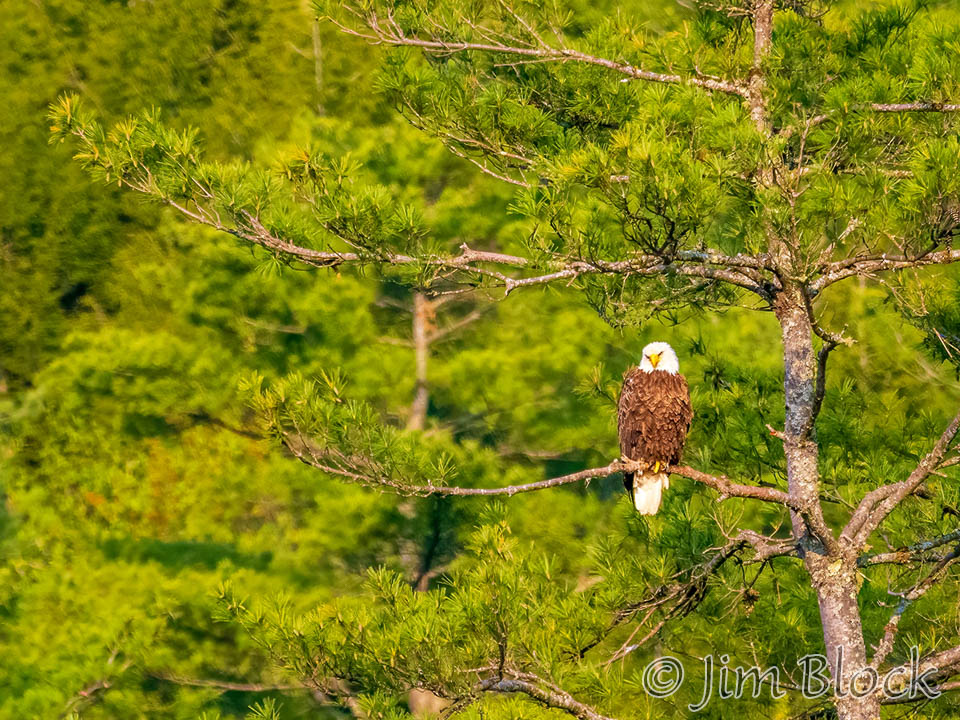
And one parent sat unmoving in their favorite tree.
I spent the next ten days concentrating on many other avian species. It turned out to be a fabulous May for bird photography. I attended the 23rd Annual “Birding with Bill in Boltonville”, photographed Chipping Sparrows mating the same day in the yard of my good friend Alice, and captured, digitally, eleven species of warblers.
I returned to the eagle’s nest May 29 and discovered that there was only one eaglet. I later learned that two were observed on May 22 but on May 24 an observer only found one eaglet. Quite sad. But the lone chick seemed to be doing well.
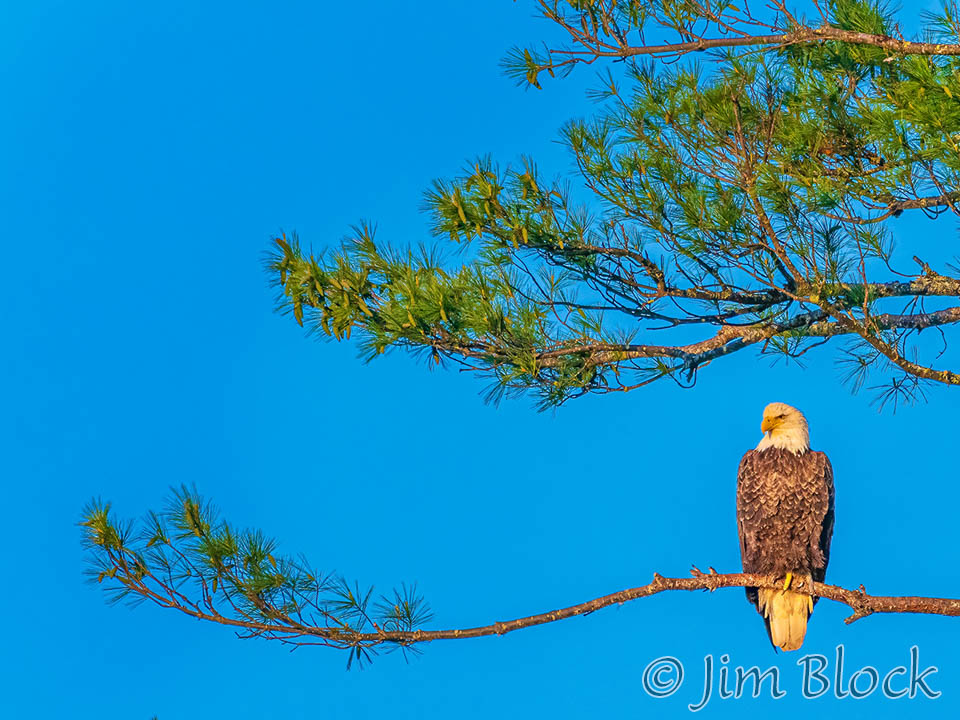
At 6 a.m. May 29 an eagle was, naturally, perched on their favorite branch.
Meanwhile the lone chick was testing its wings.
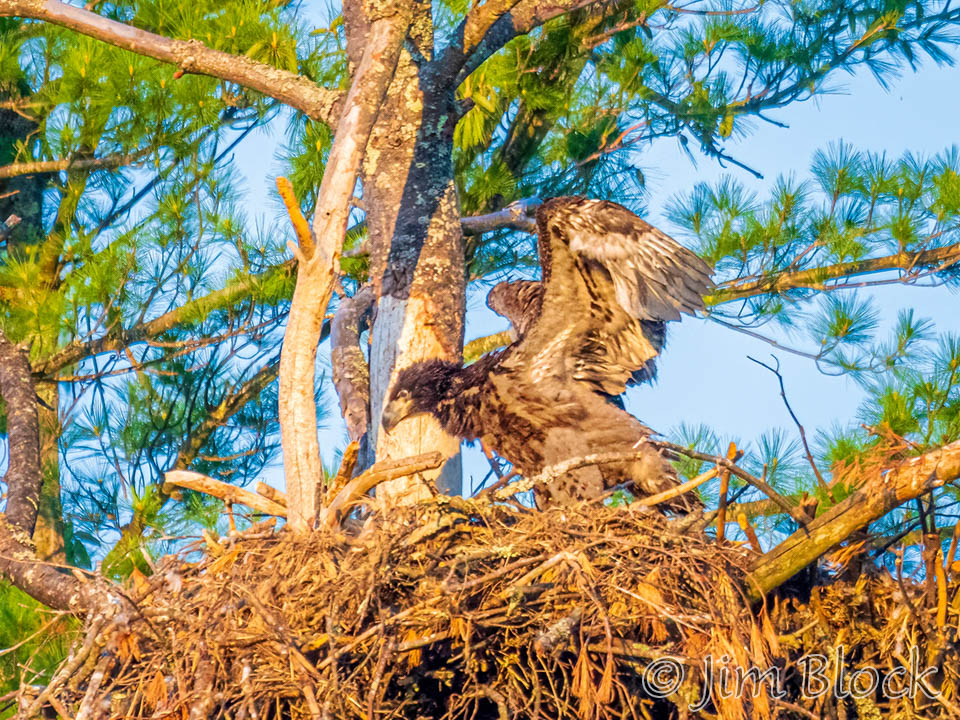
Thirty minutes after I arrived an adult paid a very short visit to the nest, hopped to a nearby branch, and then left.
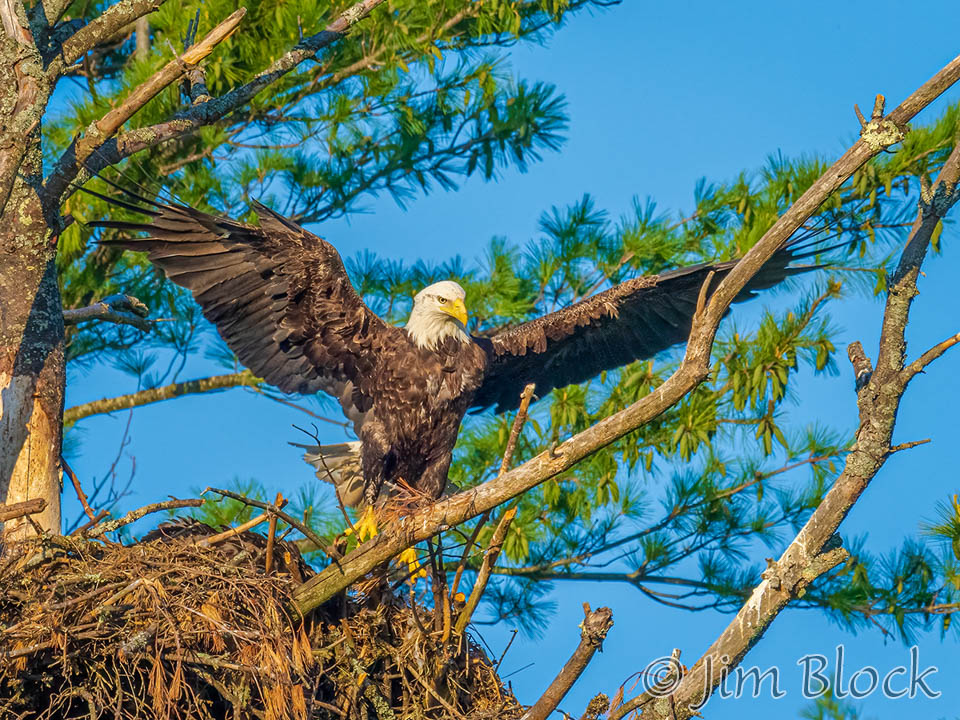
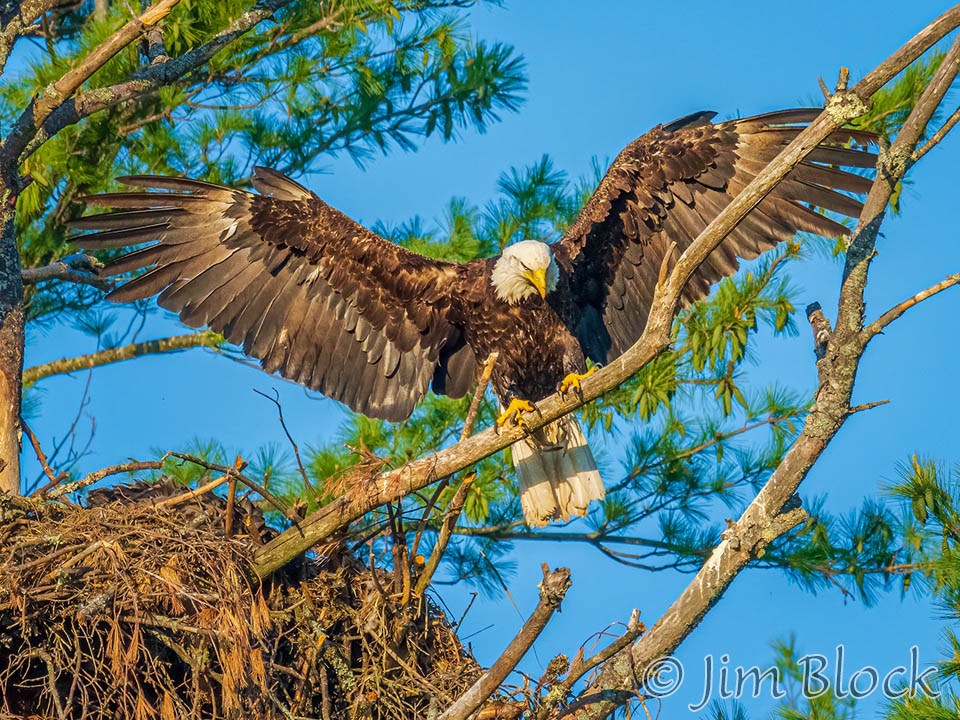
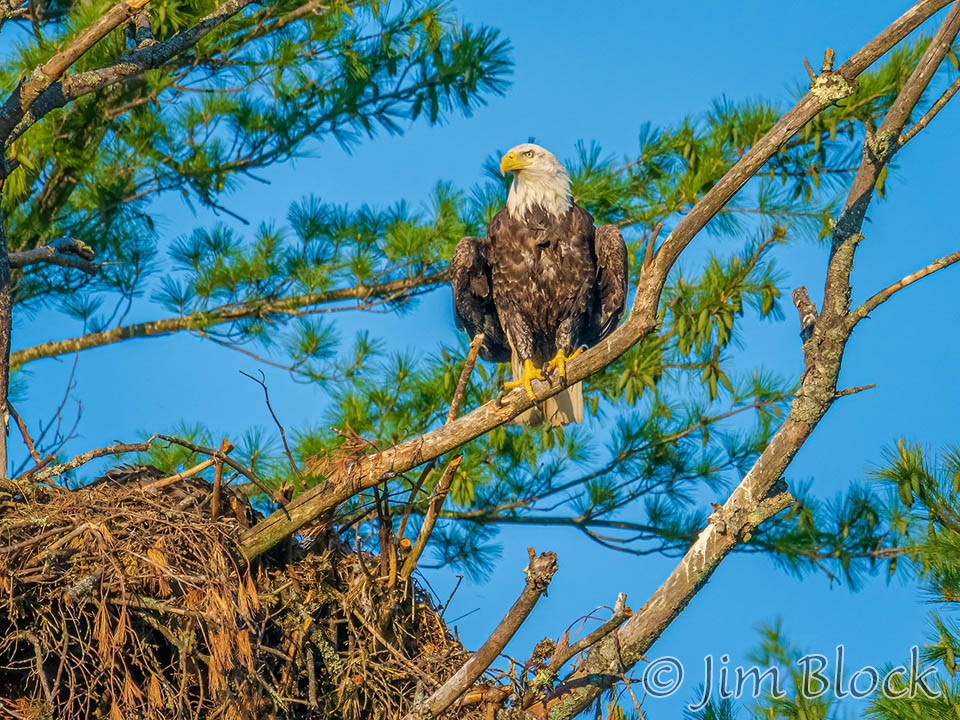
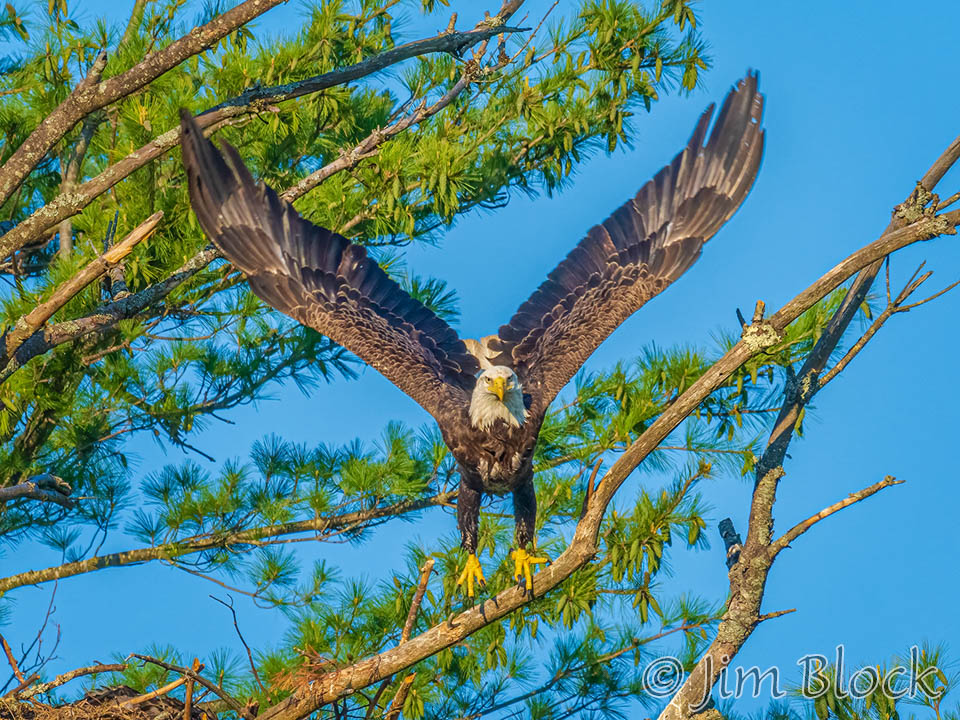
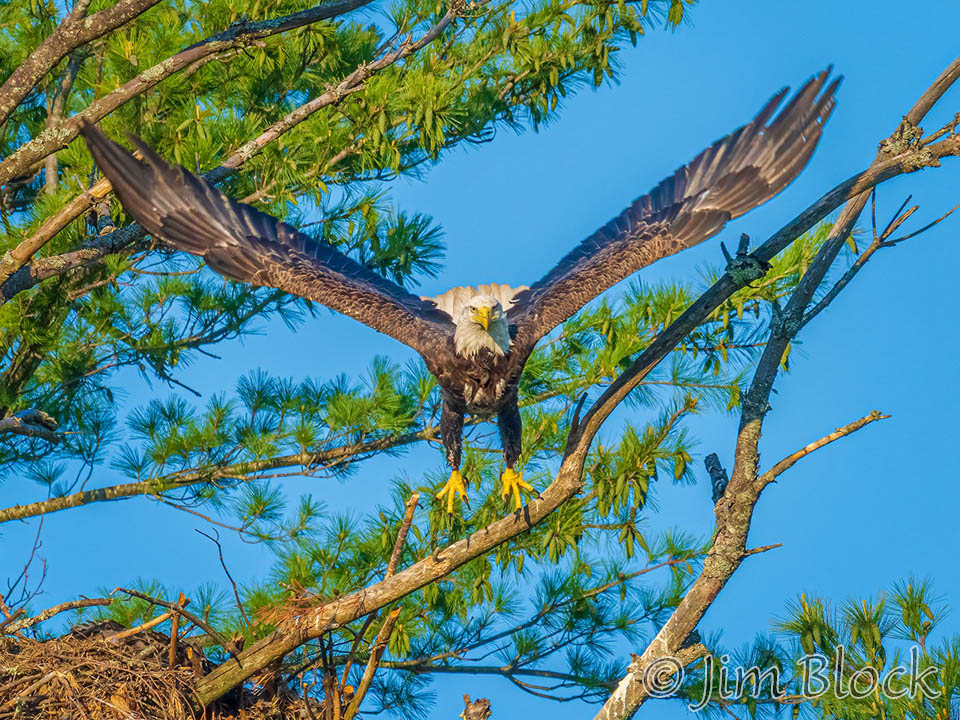
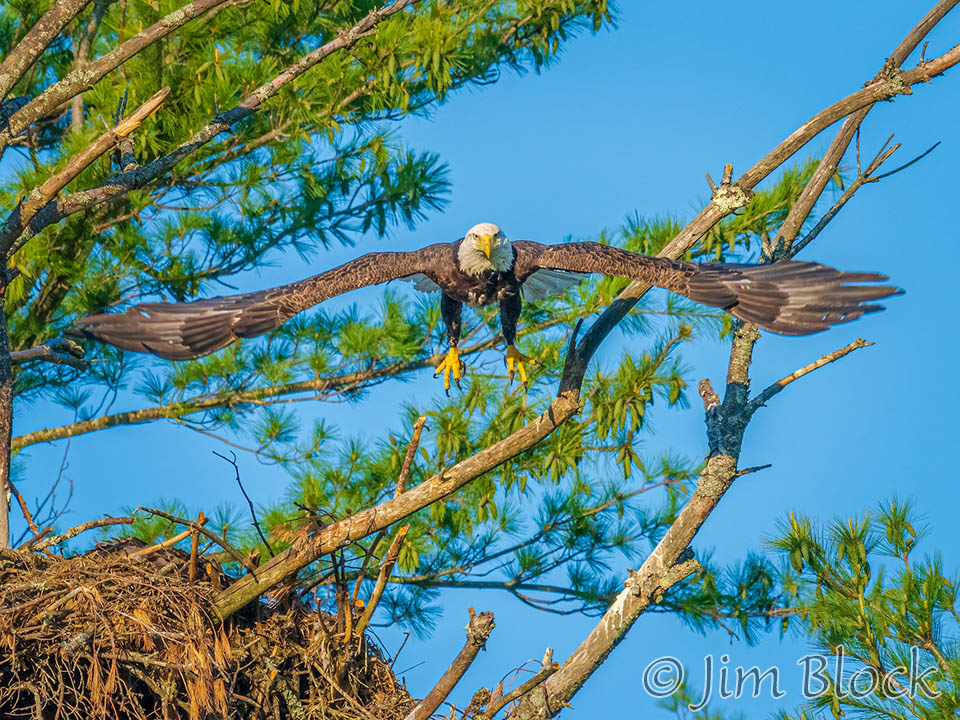
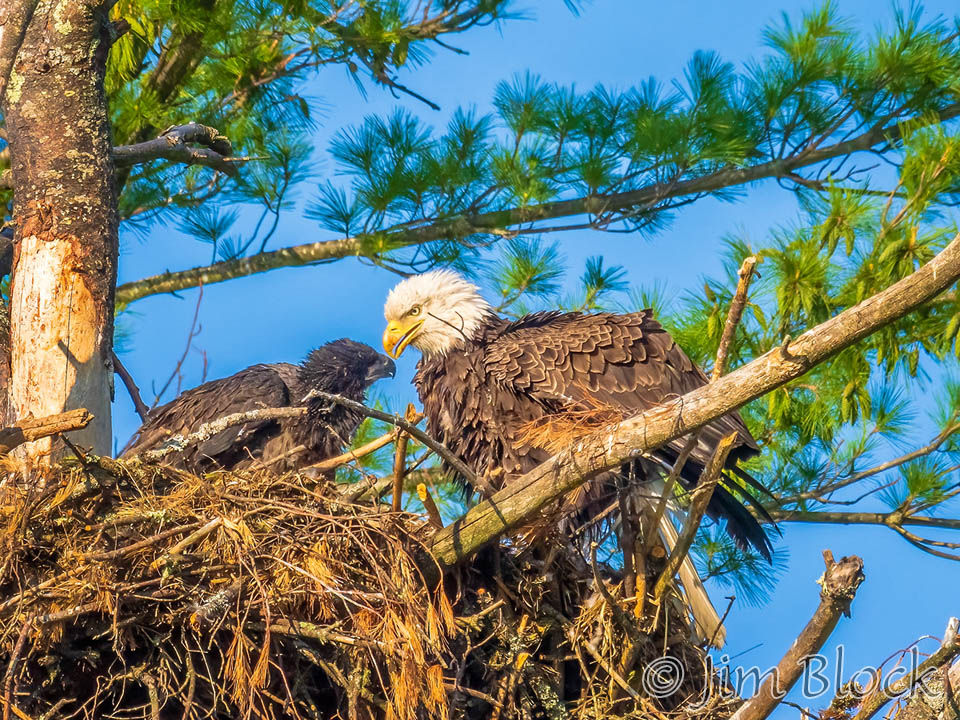
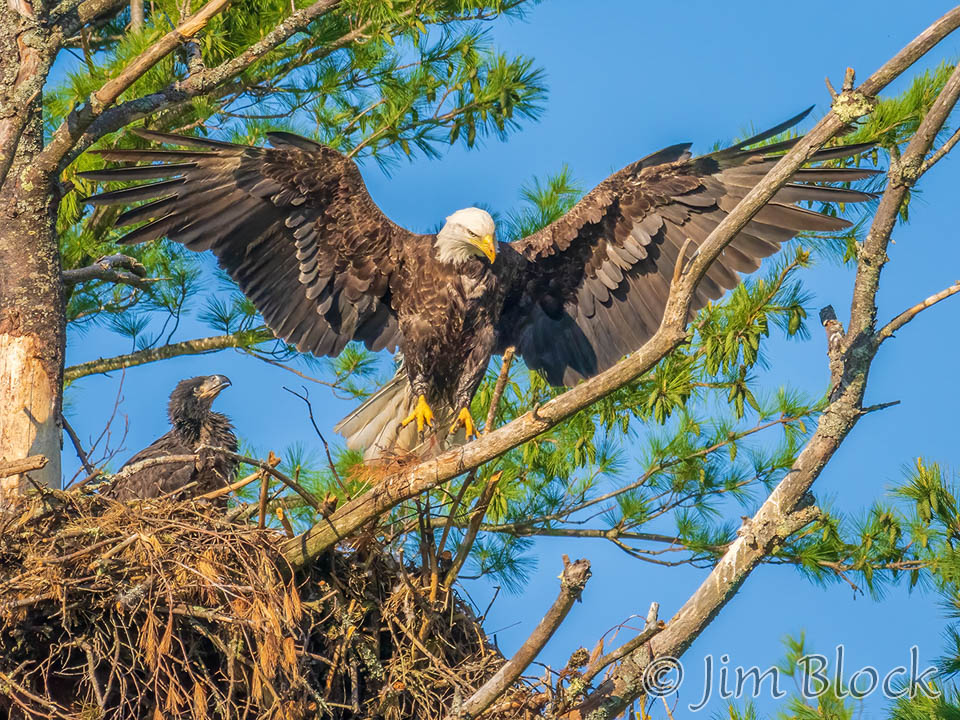
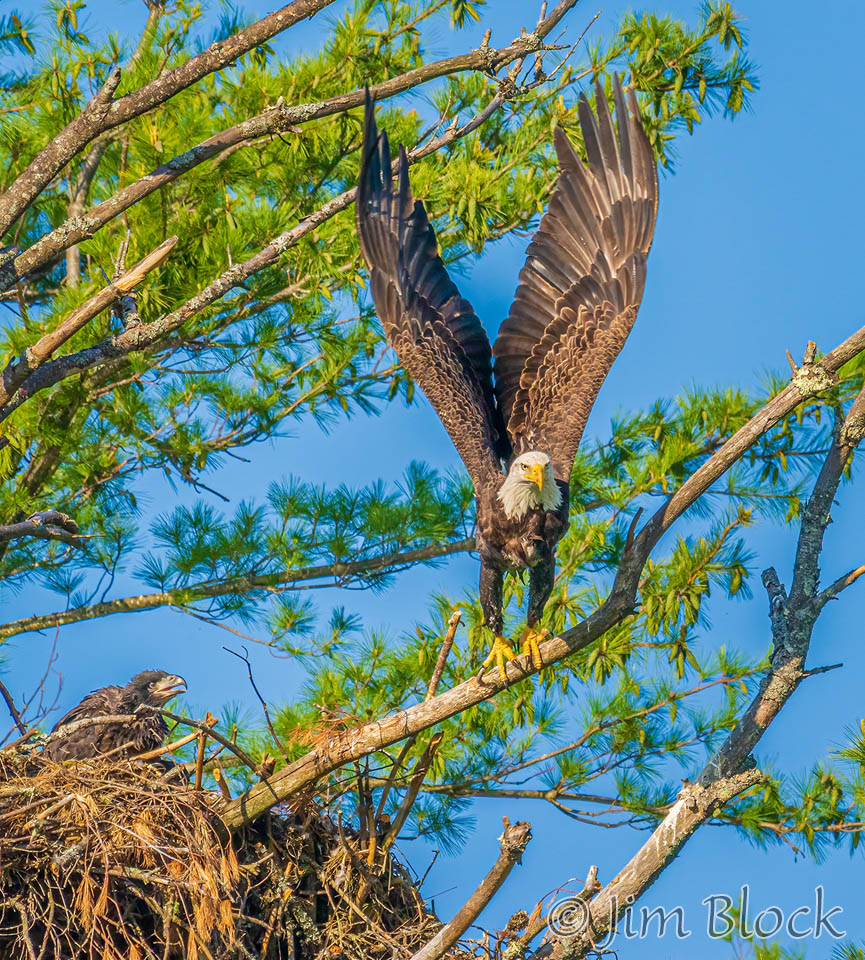
The chick spent a lot of time this day flapping its young wings, preparing for the big day. Flap flap, parent visit, repeat, repeat again.
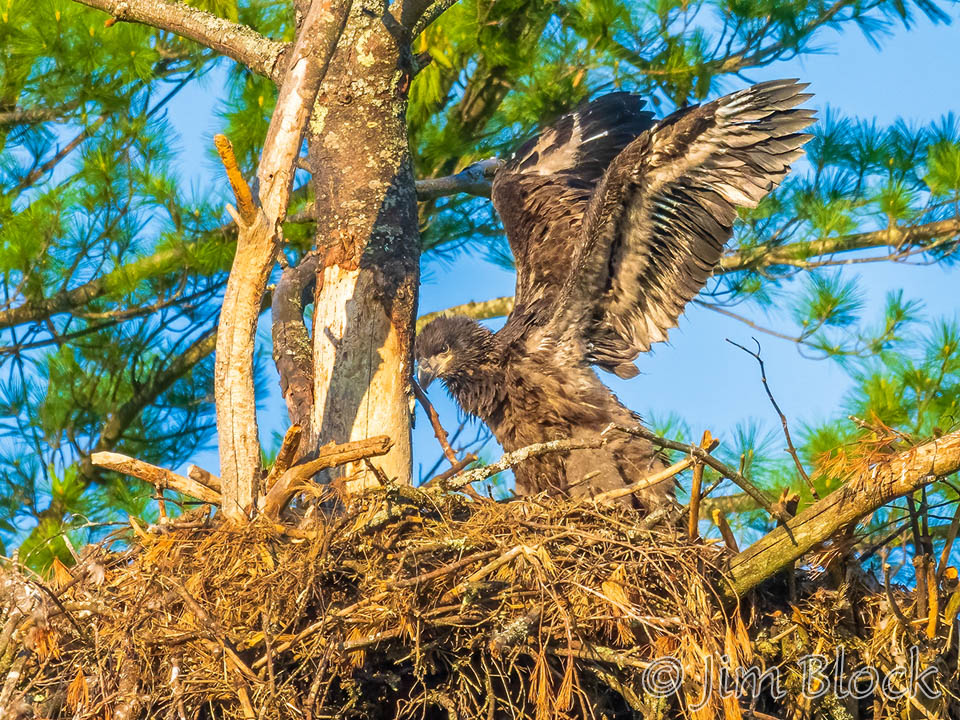
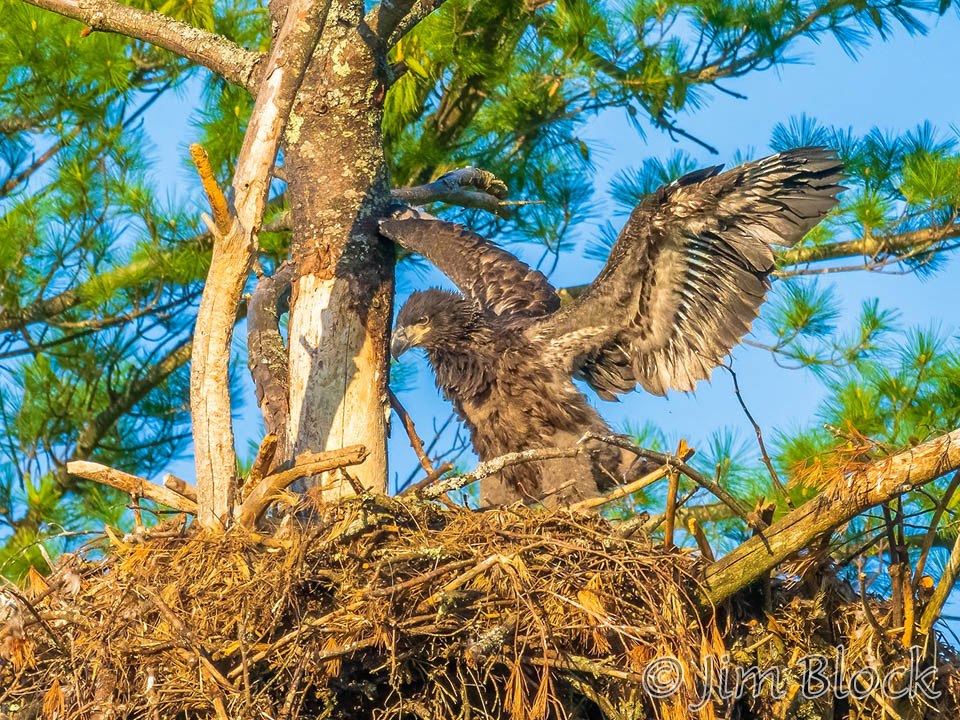
Parent visited for about one minute.
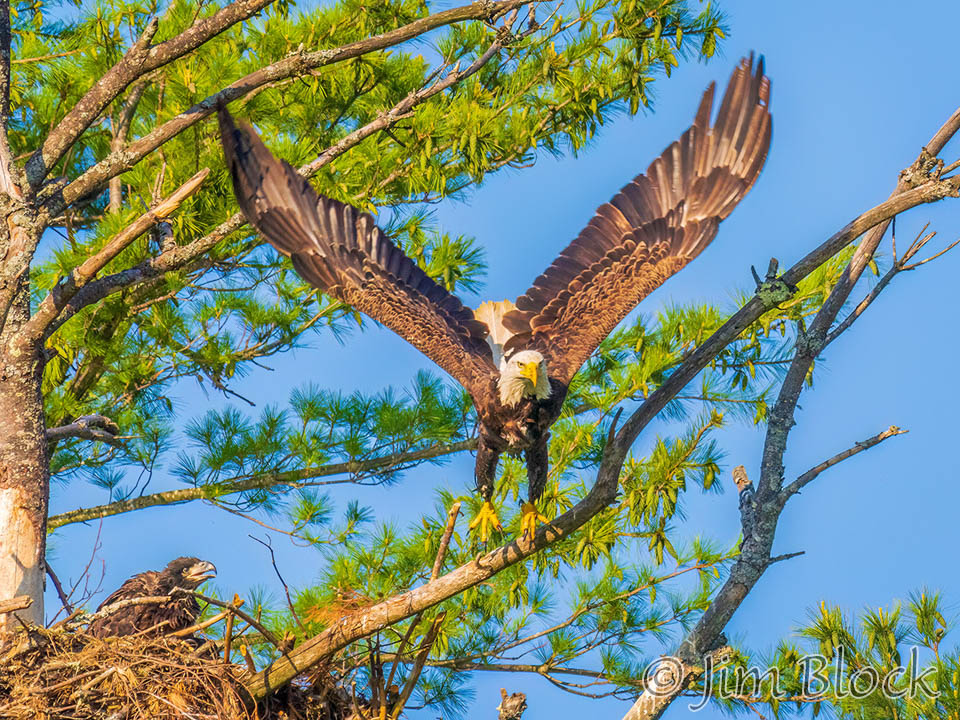
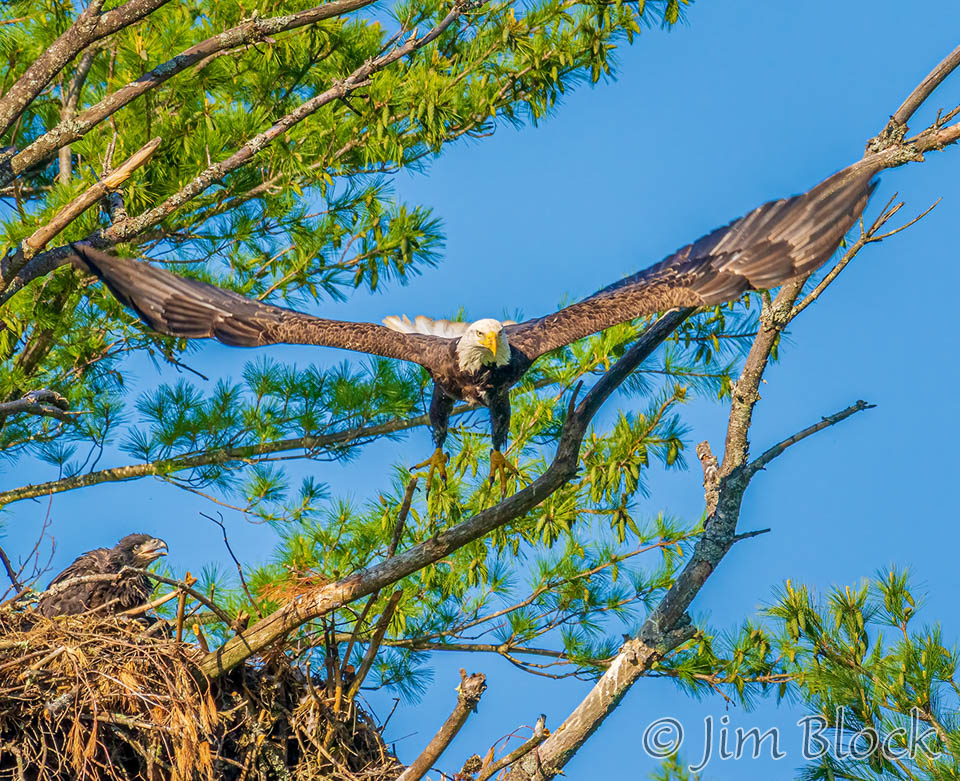
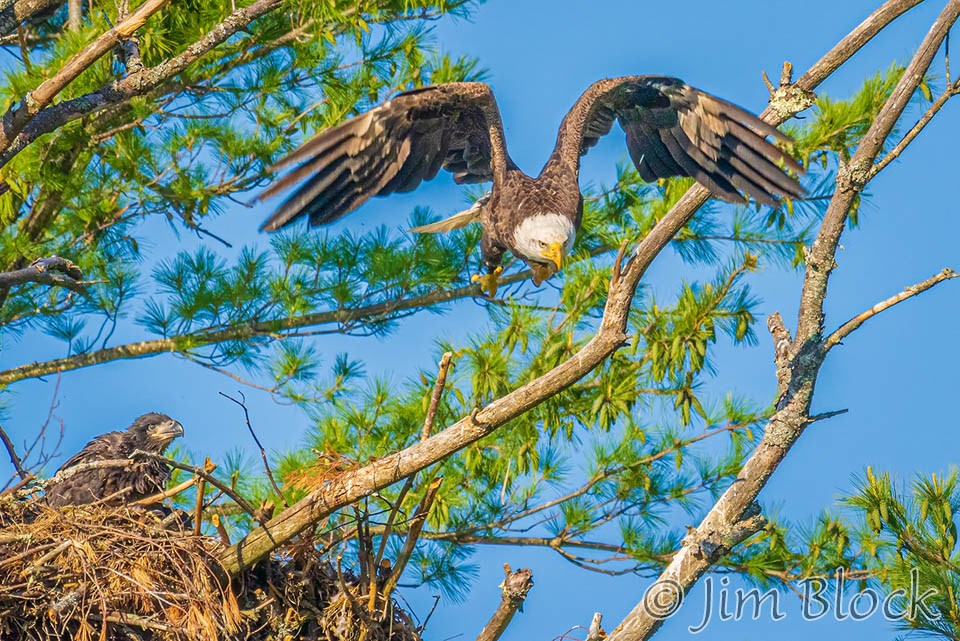
Flap, flap.
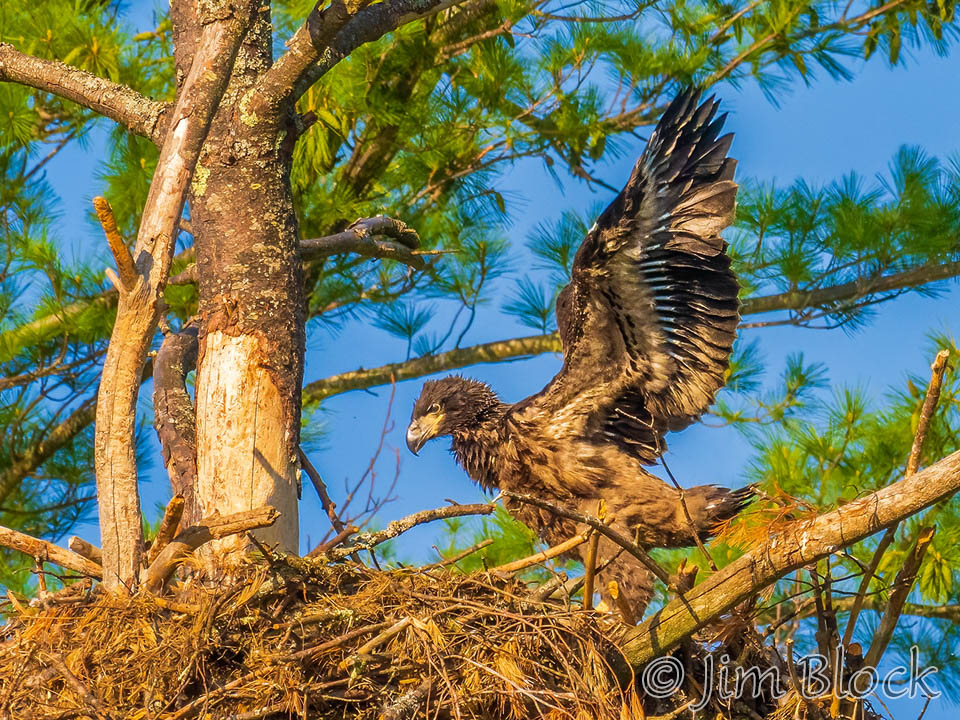
Another short visit with the chick showing off.
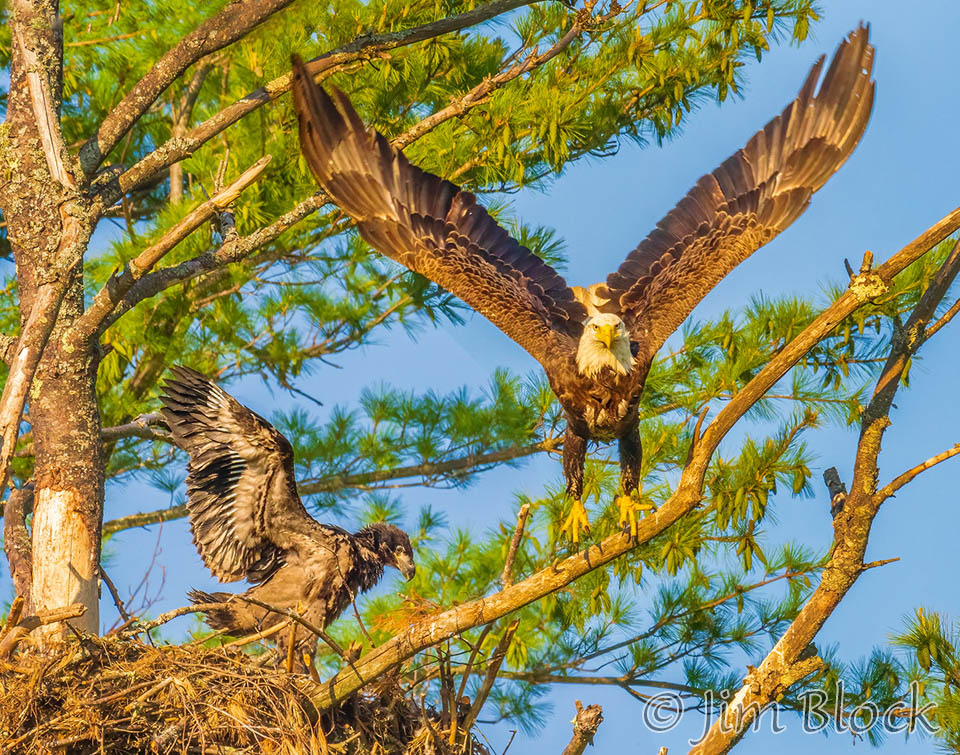
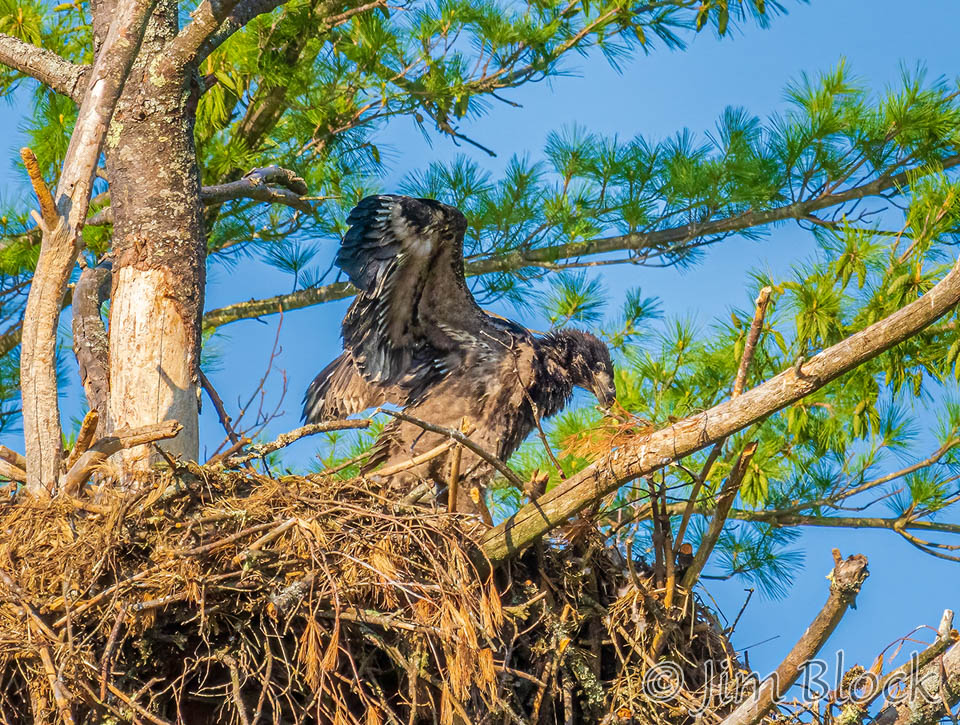
I photographed more flapping then left for a loop across the river then home.
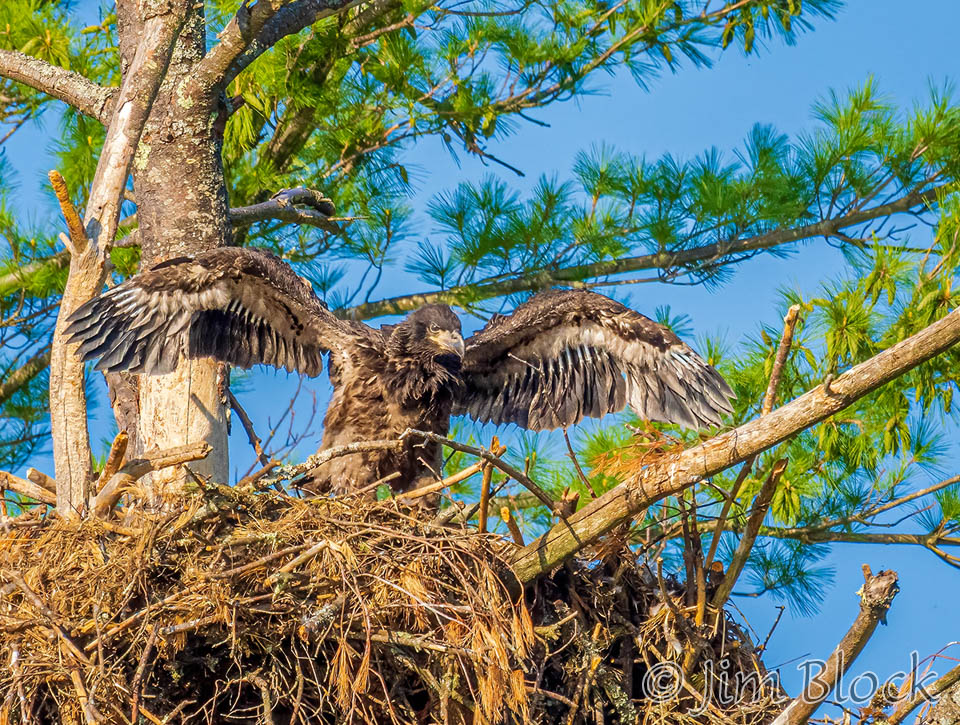
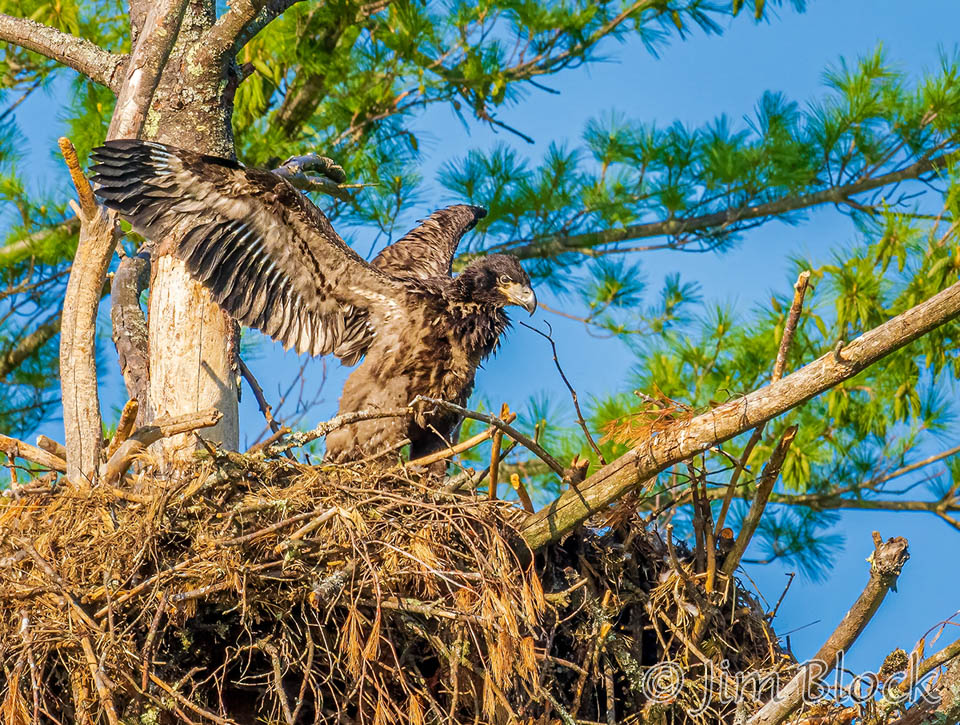
Sadly, that was the last I saw of the chick. We moved to our late-1800s cabin on an island, and I spent a few days photographing an eagle’s nest in New London that Chris Martin told me about.
On June 4, I received an email from Chris that read in part:
“…confirmed the empty nest this morning, but hadn’t seen a chick since 6/1. She said that today the adult pair was hanging close to the nest and reportedly looking down into the brush frequently. With their continued attendance, there’s a fairly good chance that the young eagle might be receiving food even while out of the nest. My advice was to give the adult eagles their space so they aren’t too distracted by people, and be especially alert for sound of food-begging calls from the juvenile.”
I did not return to the Lyme nest that spring, and I got no other information about the chick. I’m hoping it survived and has prospered.