
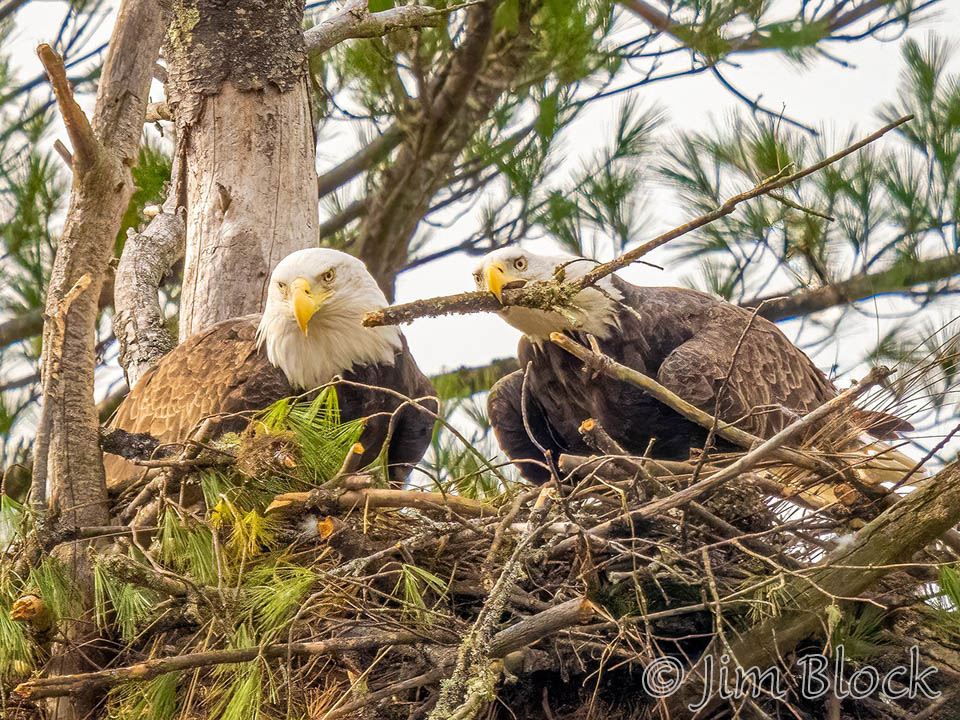
I spent many hours observing, studying, and photographing a pair of bald eagles in Lyme over the last four years. Most of the time that I was watching the nest nothing happened; there were hours of boring downtime. But then my patience was rewarded by seconds or minutes of high excitement and drama.
I have put the photos I took during these four years on a series of pages which you can get to HERE. This post merely summarizes a few of the highlights. I have intentionally omitted some of the drama. I hope you will read the whole saga. I learned a lot during this time. Opportunities to study nature like this are very rare indeed.
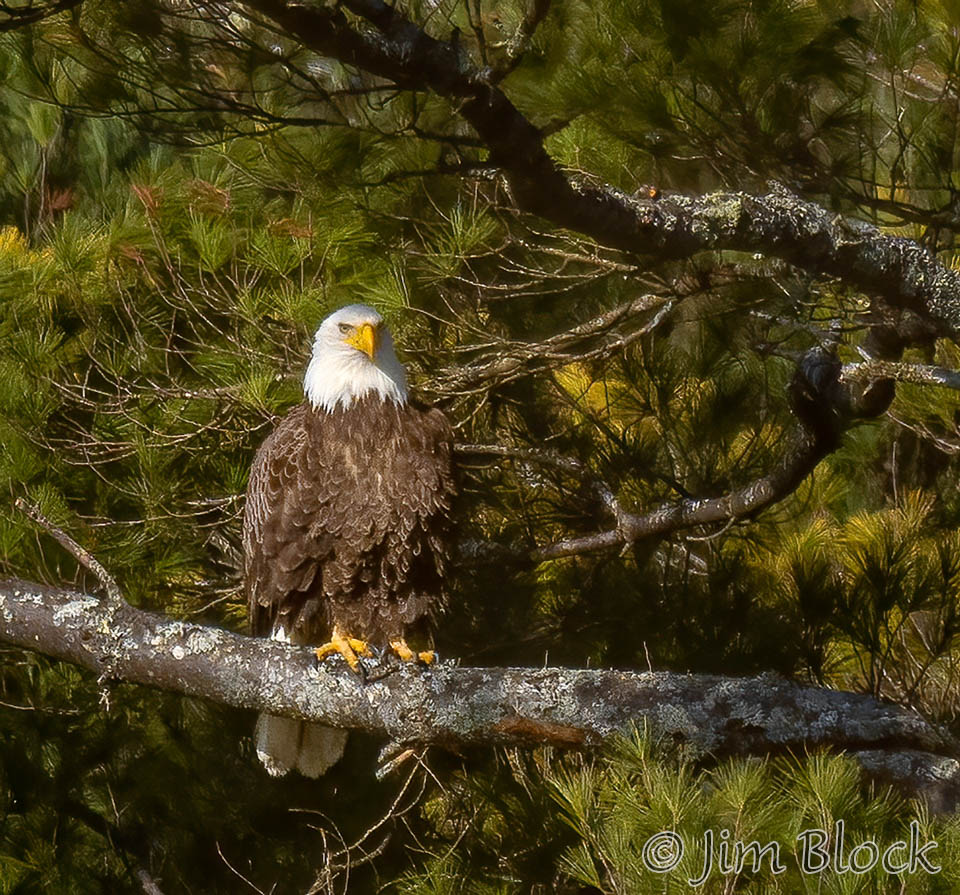
On April 4th of Year One, I crept slowly to the edge of Clay Brook at the crack of dawn hoping to photograph wood ducks as I had in the past. Suddenly a bald eagle flew past. A few minutes later I noticed A second eagle perched majestically in a nearby tree. I got a first clear photo of a bald eagle at this spot.
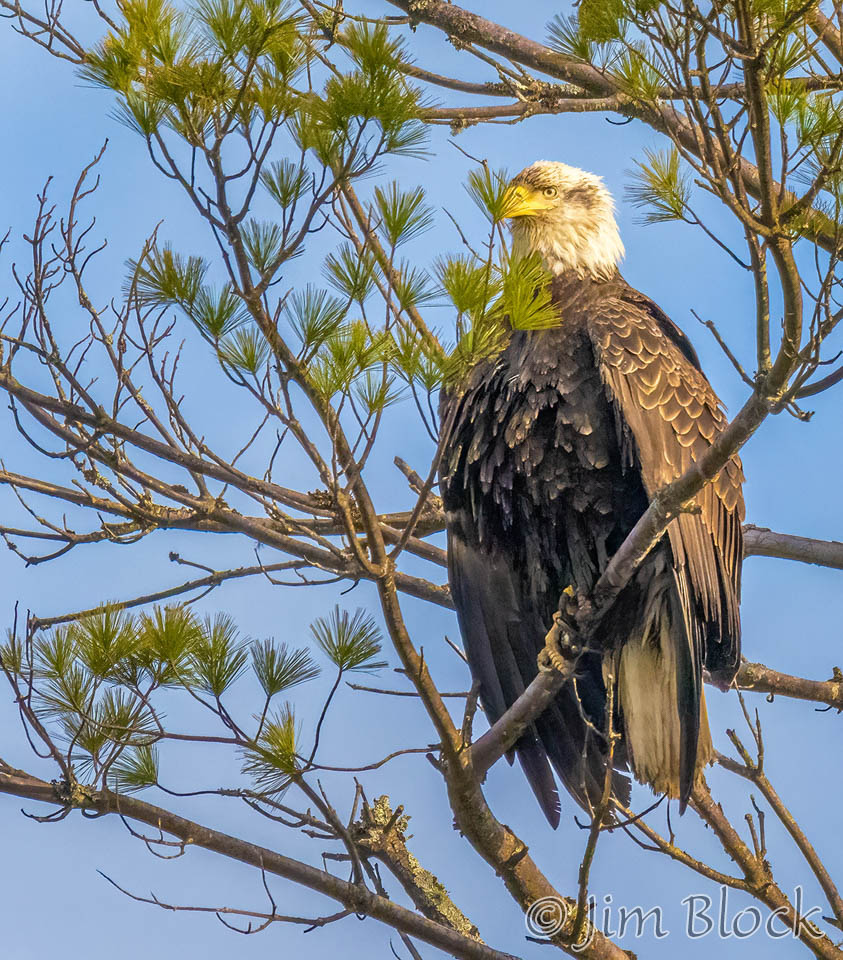
Then nine days later at the same spot I saw another eagle from the same location. This was clearly a different and younger eagle based on the blackish smudges on its head. This is sub-adult plumage.
Then I spotted what looked like it might be a nest.
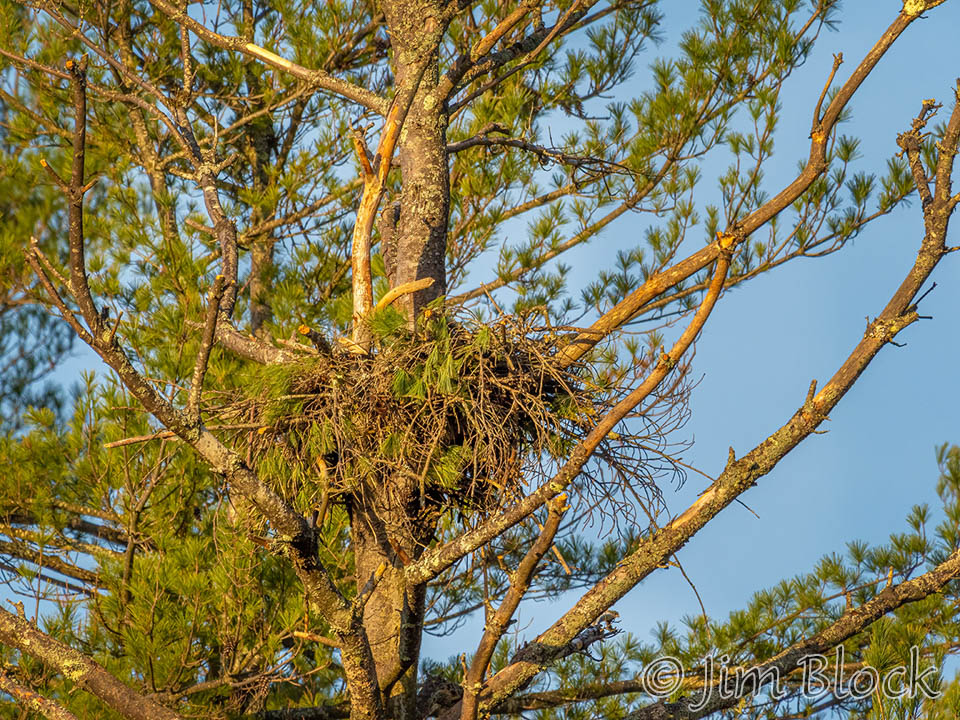
I was back two days later and realized I had indeed found a nest being built. I notified Chris Martin the raptor guru at NH Audubon. He told me this was a new nest he did not know about.
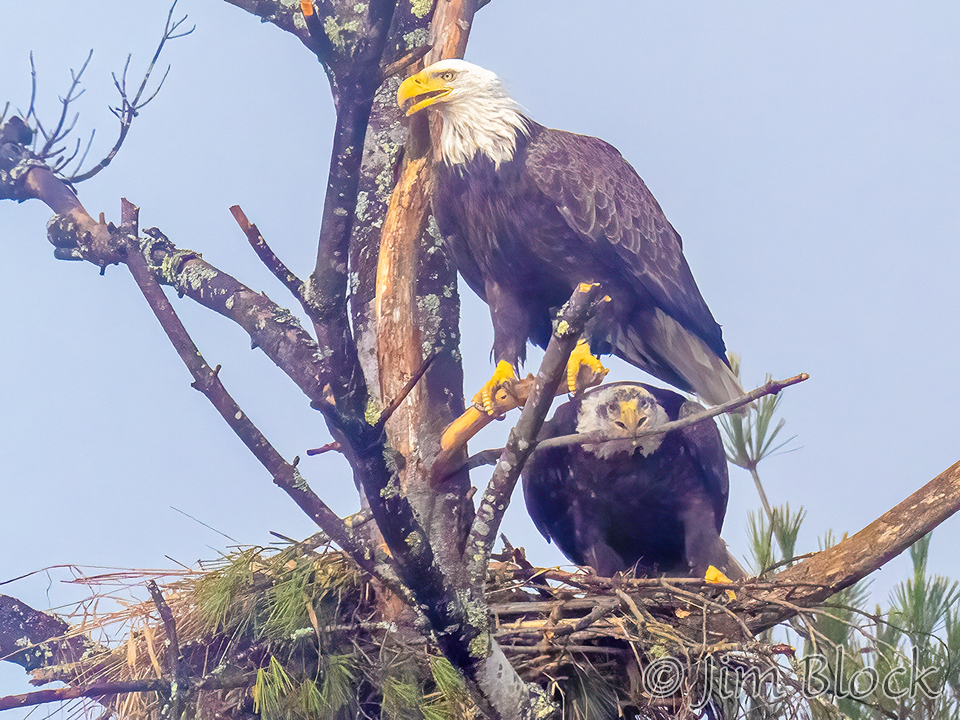
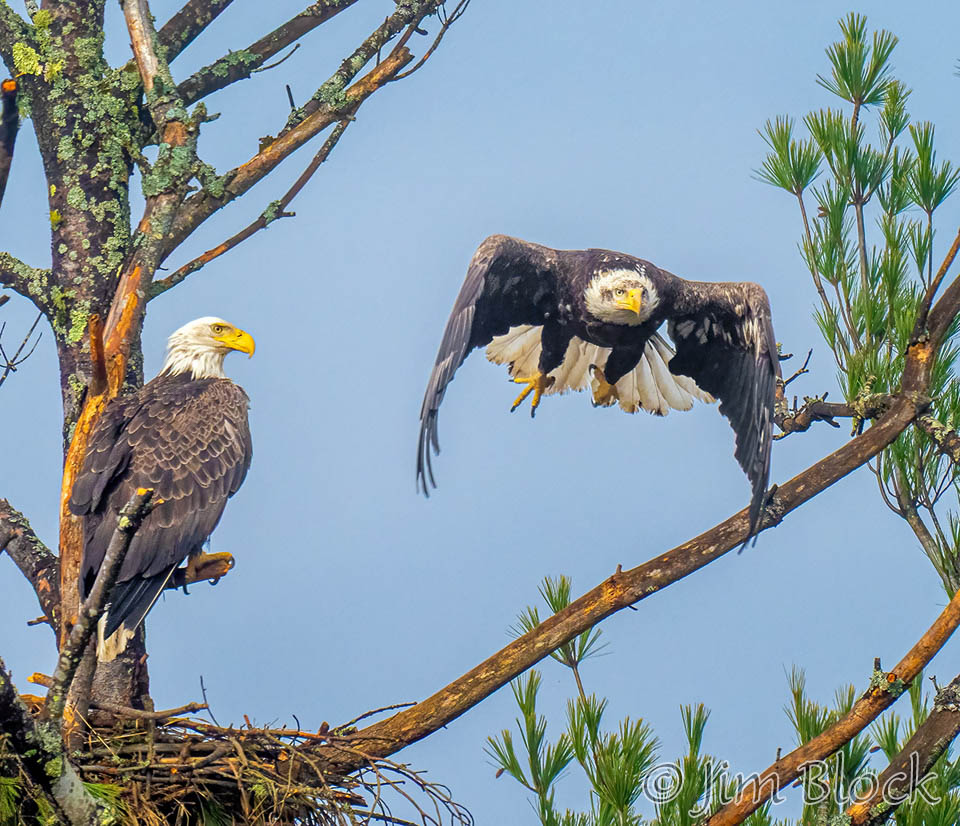
I spent considerable time Year One watching the eagles build their nest in preparation for good things to come.
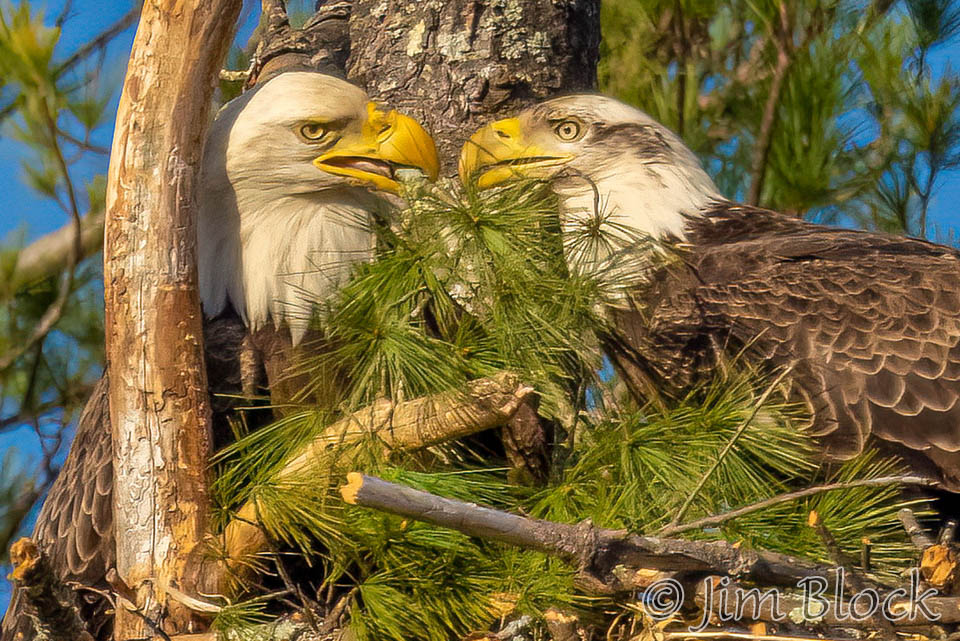
Year Two found the eagles incubating their first eggs.
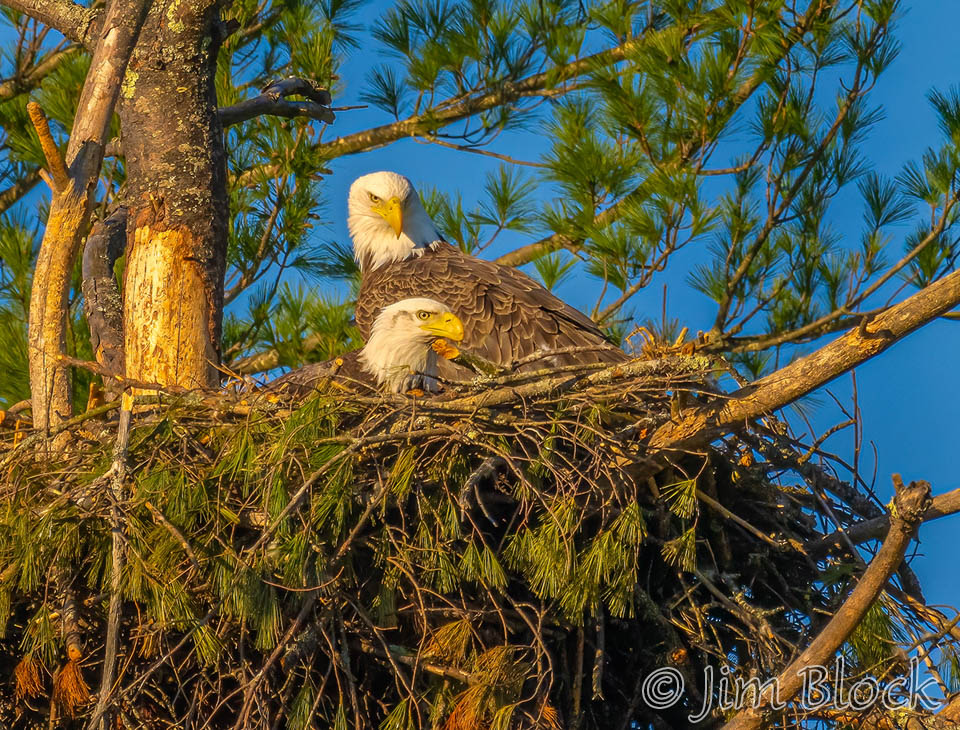
Then there was a first look at a chick on April 27th.
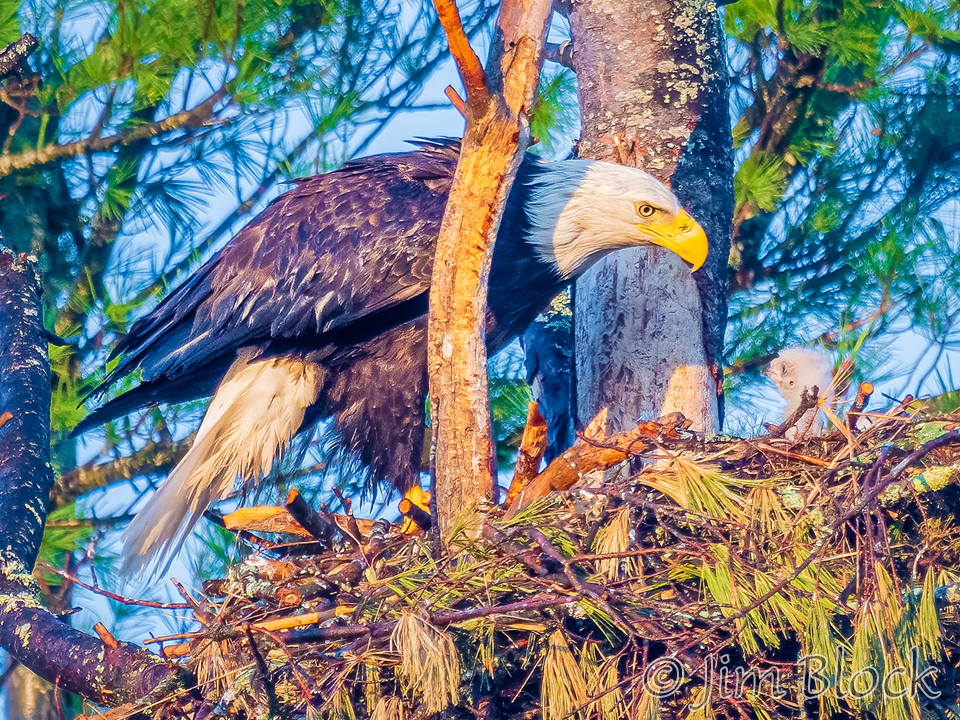
The next day I found that two chicks had hatched.
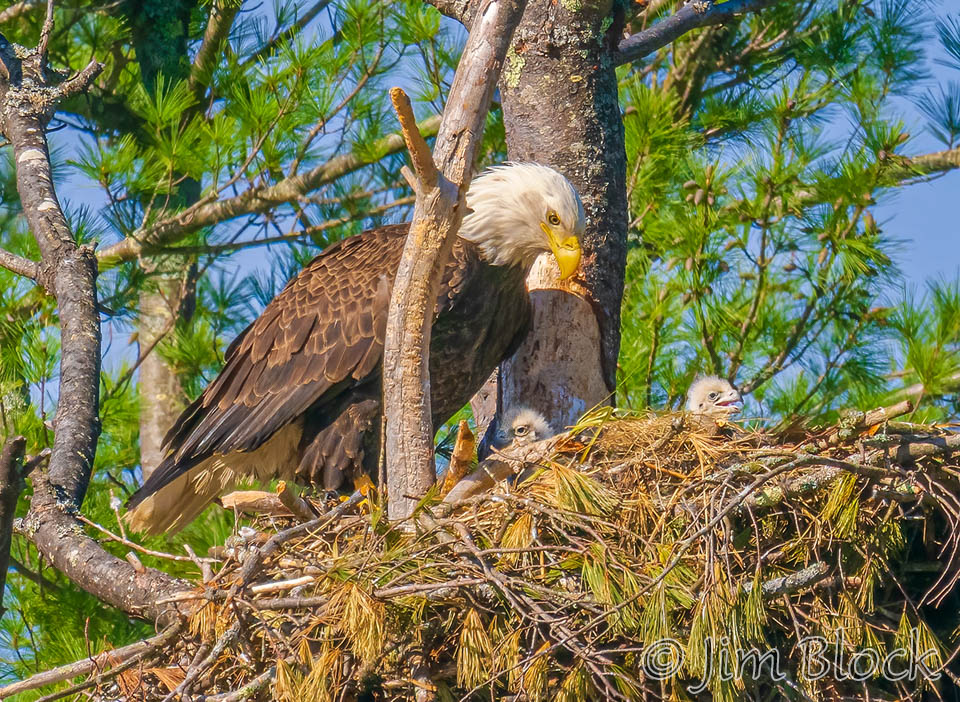
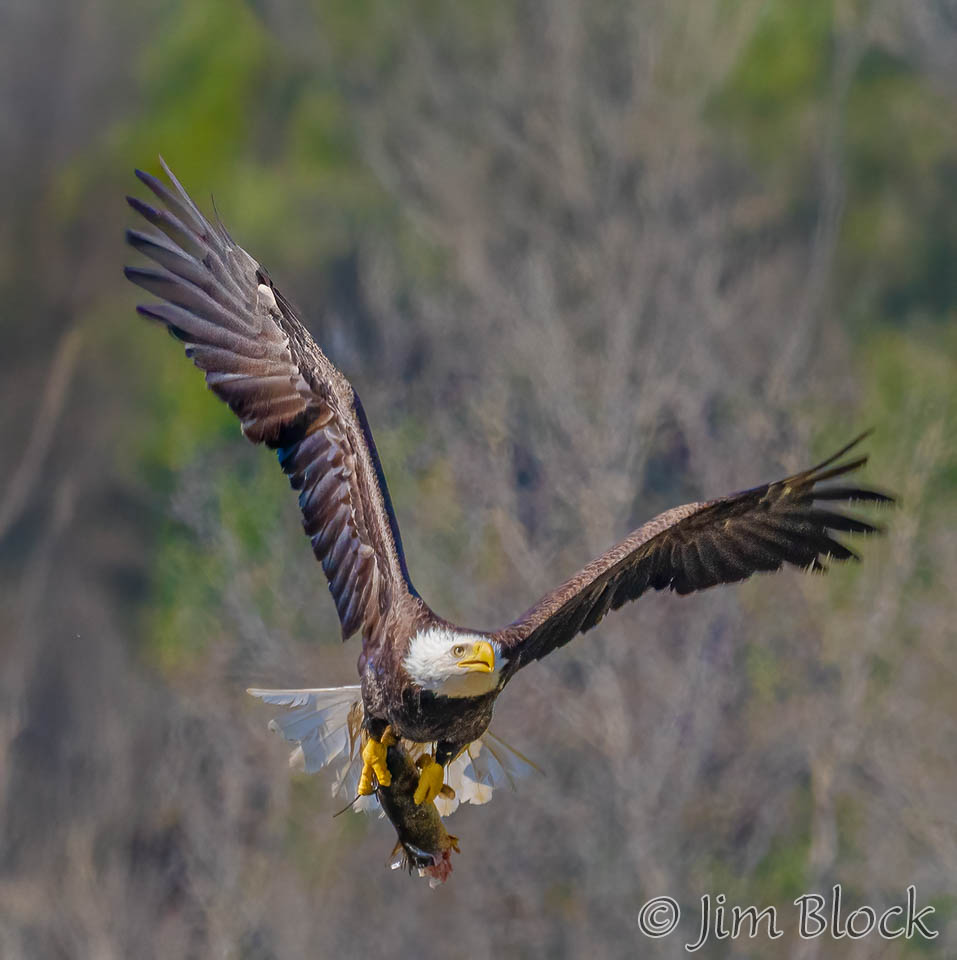
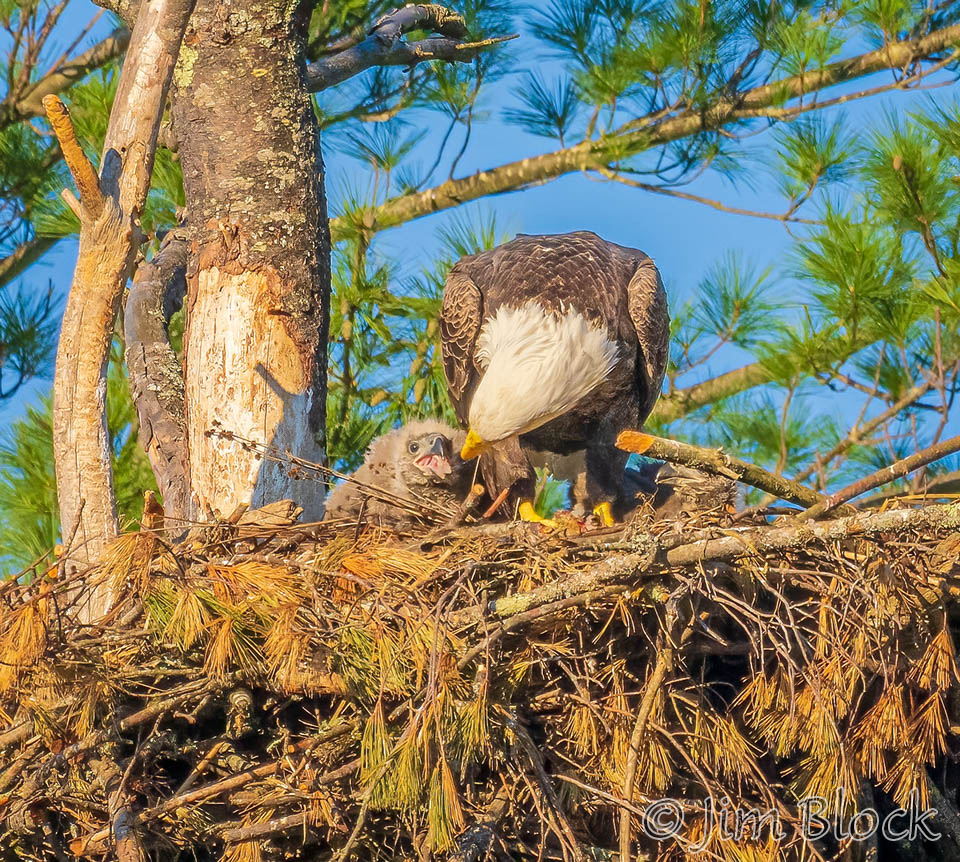
I photographed the eagles bringing fish to the eaglets.
The chicks were being well fed.
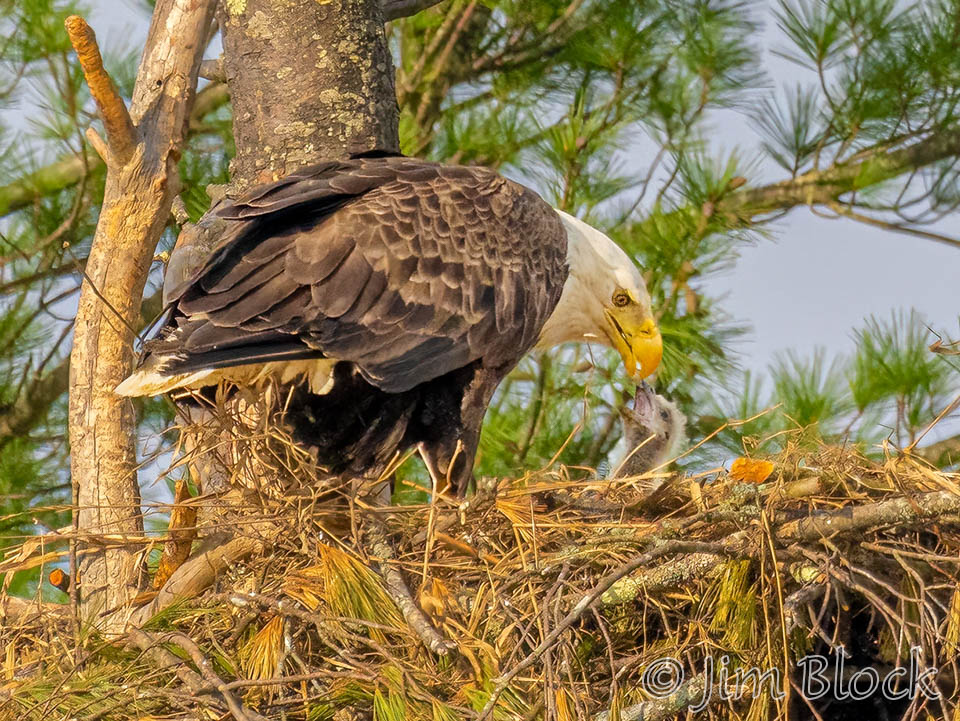
One chick appeared to be larger than the other.
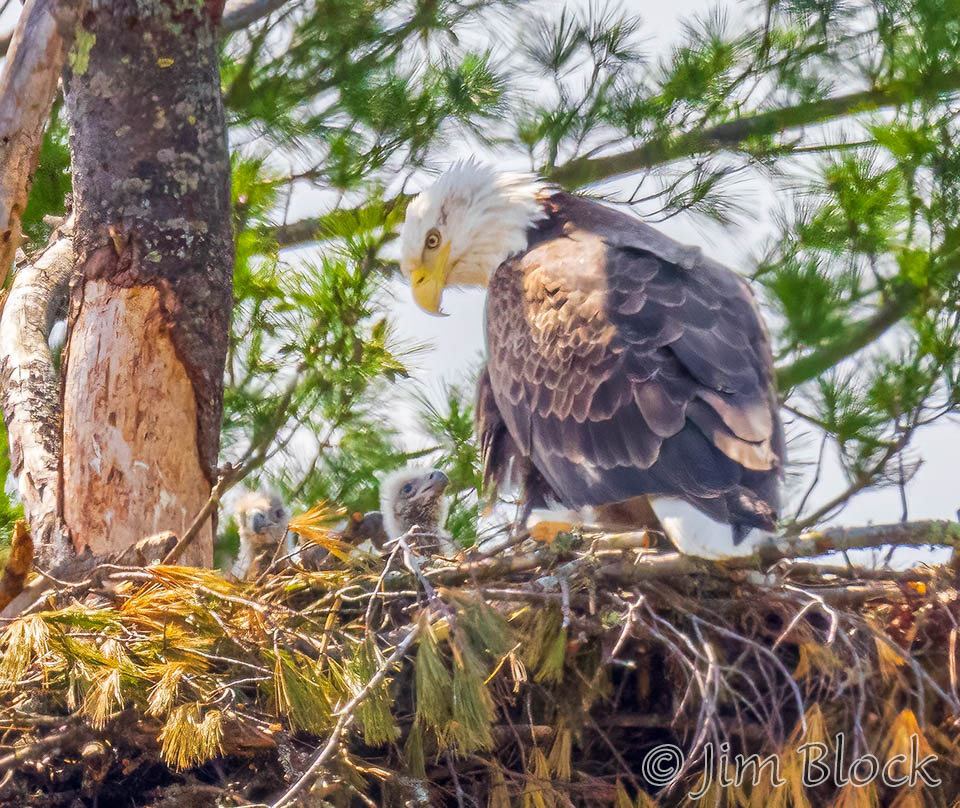
By May 8 the chick had grown considerably …
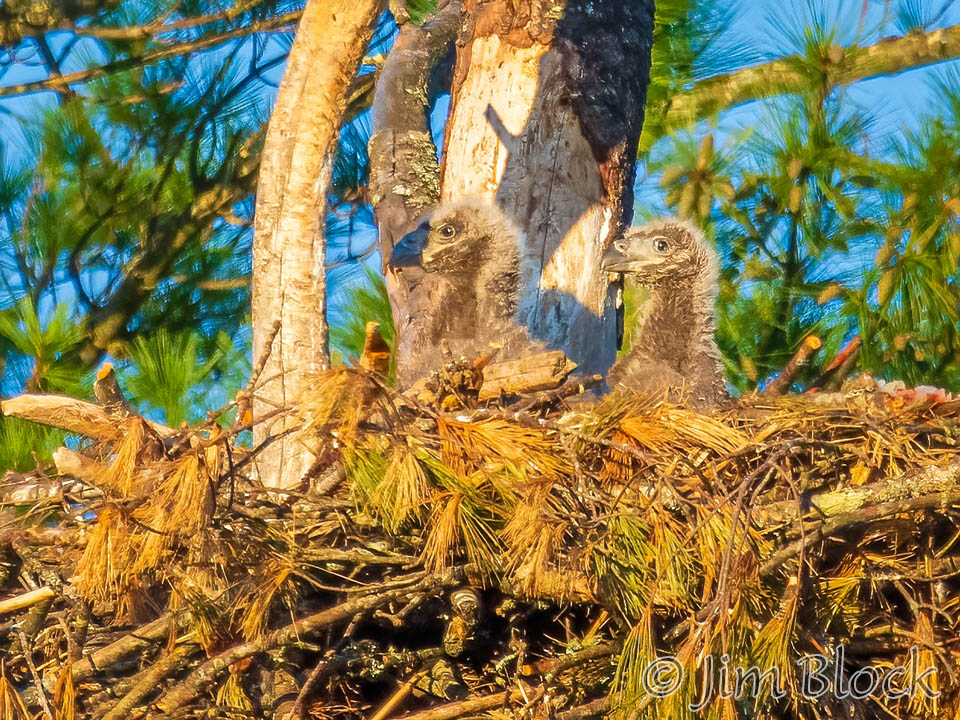
… as the parents kept feeding them regularly.
The eaglets were growing and flexing their wings.
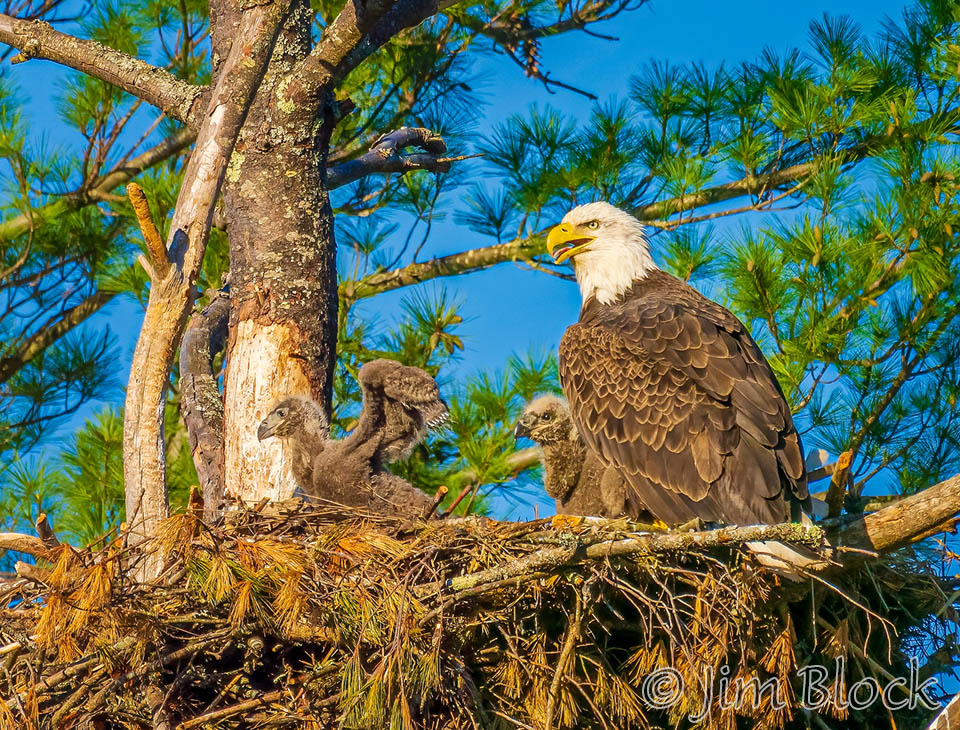
In late May a growing eaglet was testing its wings as an adult departed.
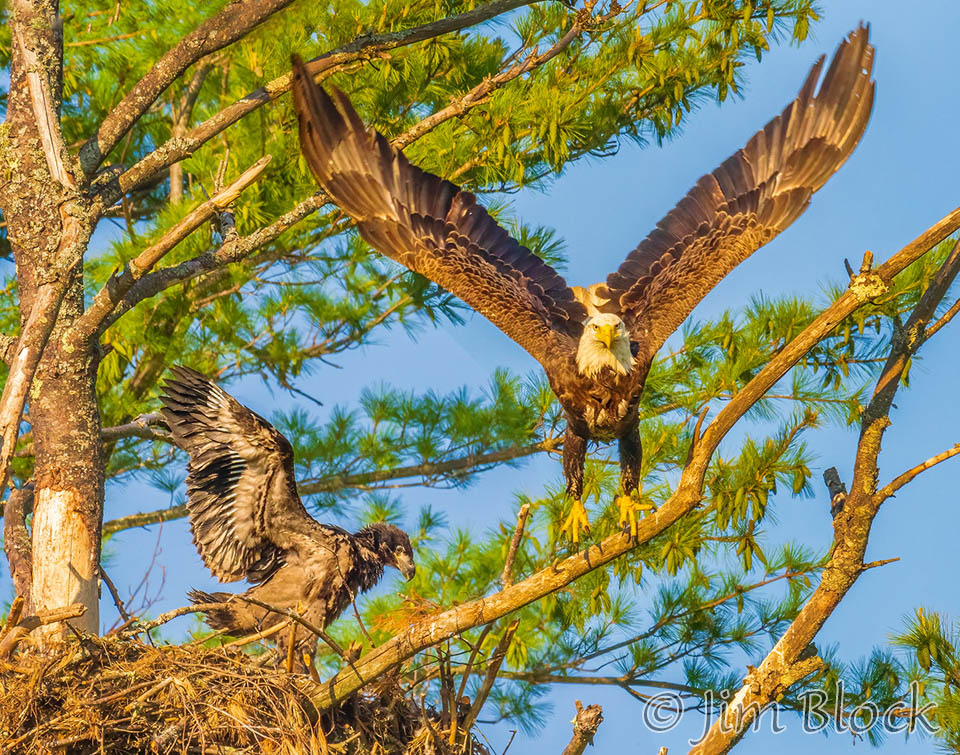
But I was mostly out of the area the rest of the spring and summer so this was my last visit of Year Two.
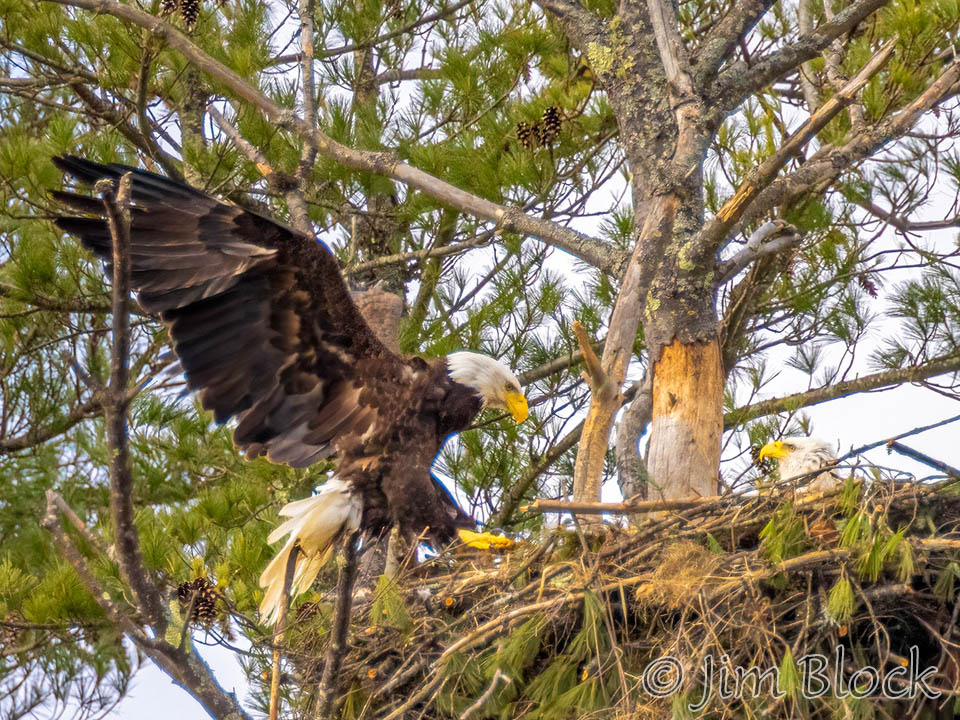
Year Three, March 19th, an eagle flies to the nest while its mate incubates.
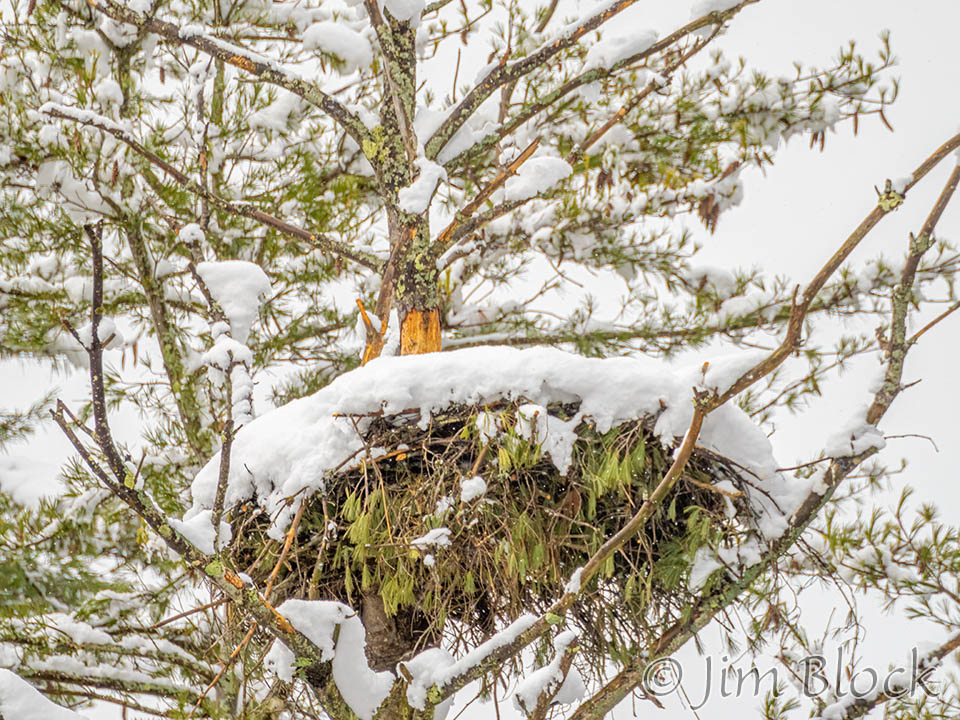
Then on April 5 the nest, and the eagle still sitting in it, was covered with snow!
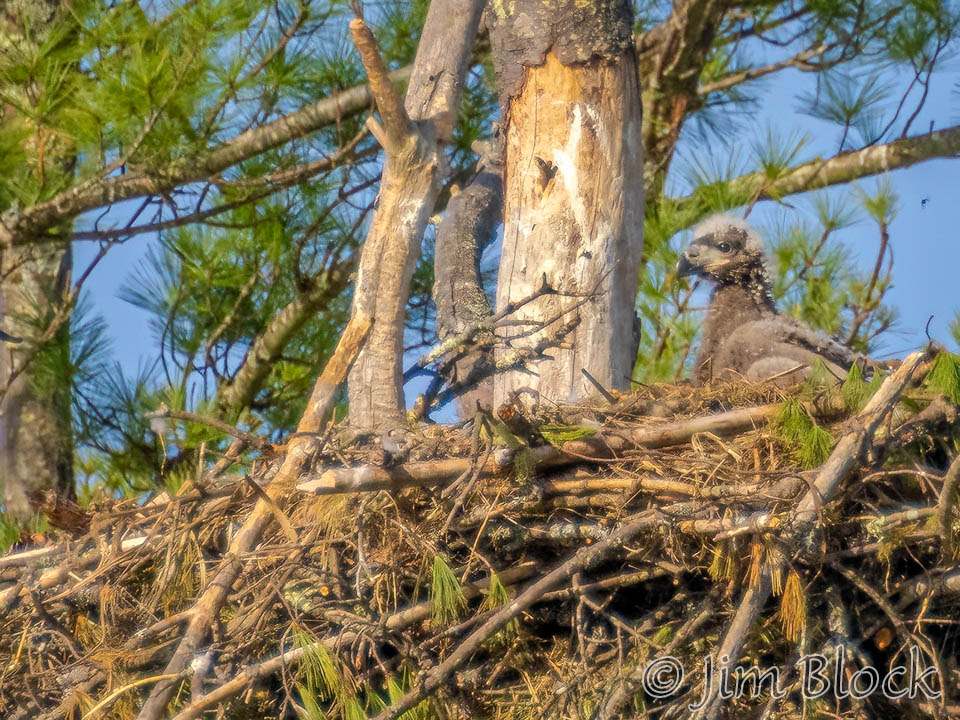
But eagle did a good job of keeping the egg warm and on my May 3rd visit to the nest I found one chick had hatched.
The chick was well fed and grew. Here a parent is bringing a large fish to the eaglet.
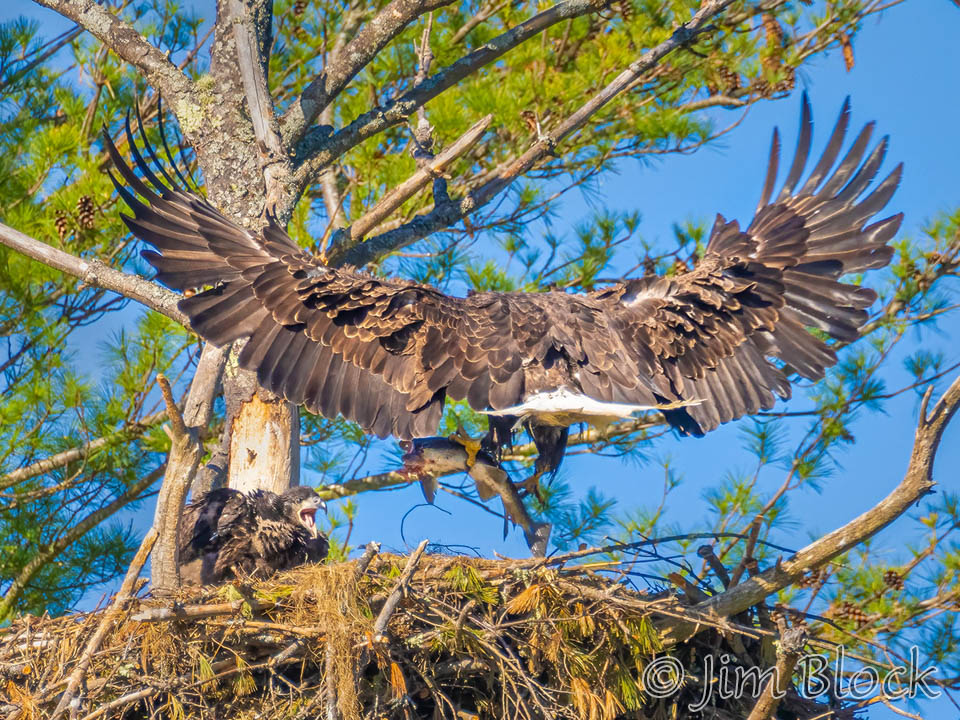
The chick was also fed a small duck.
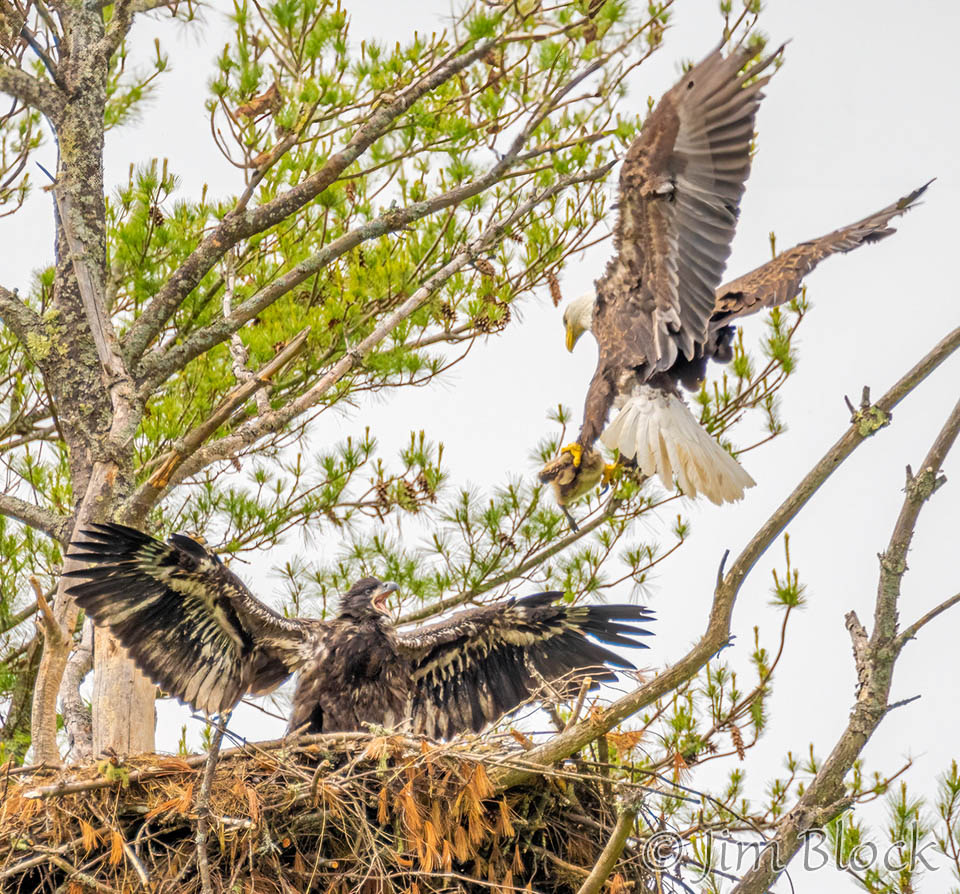
By June 20 the eaglet was reaching new heights.
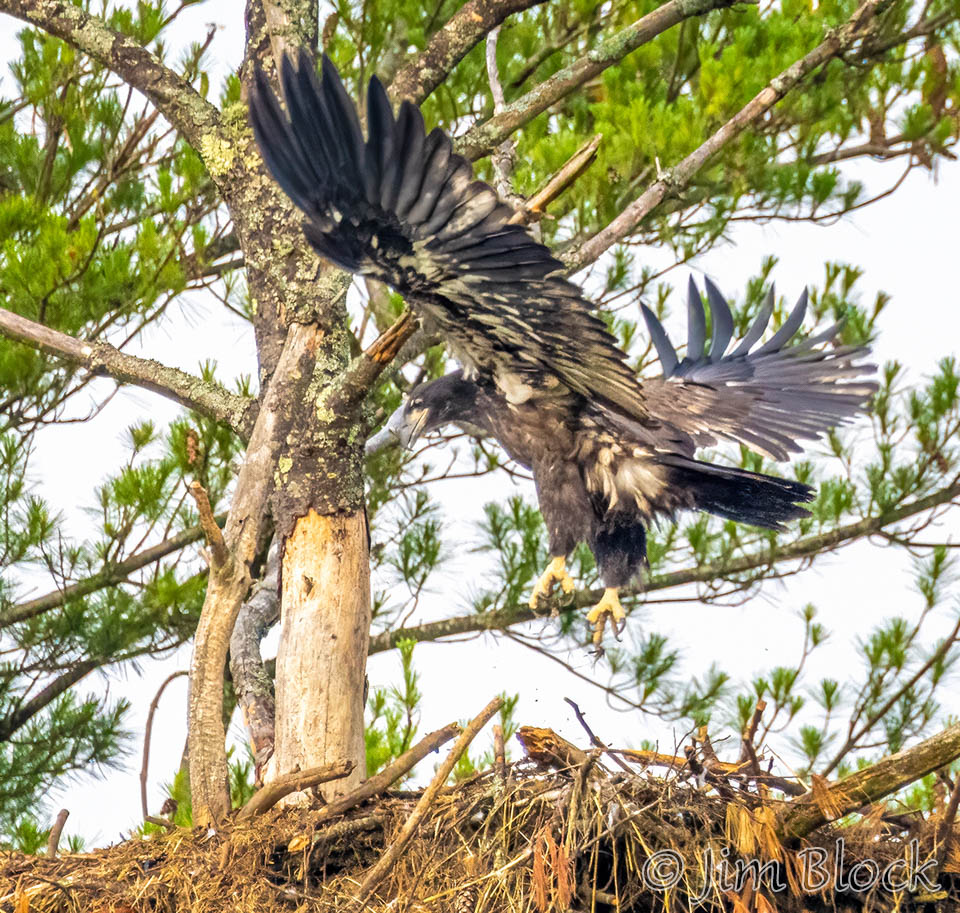
And by July 19 the eaglet fledged.
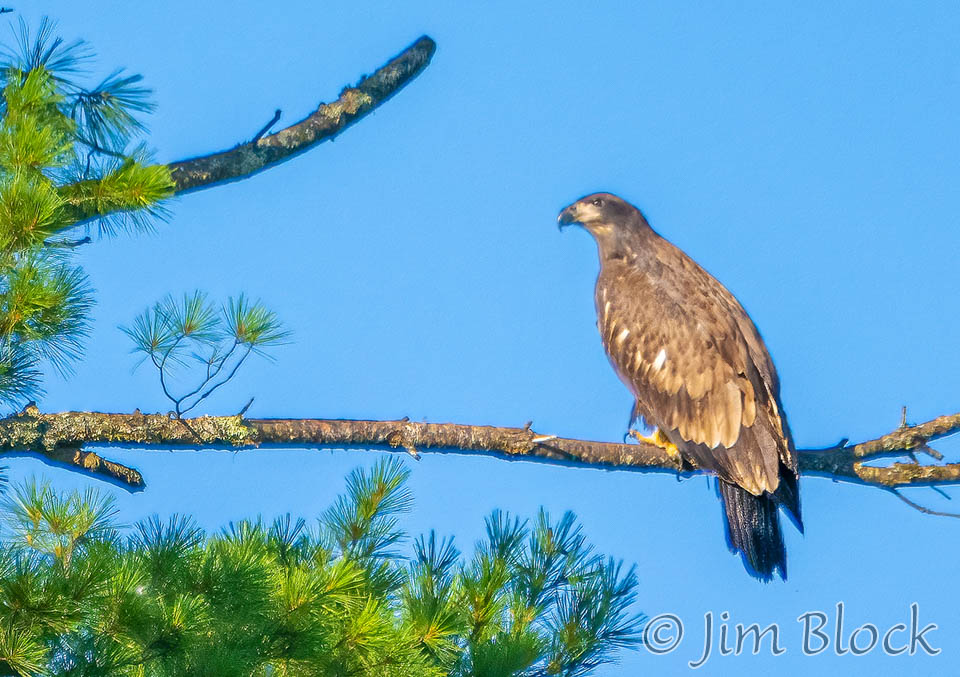
November of Year Three was an amazing time. I have chosen to describe the nest building action that happened that month on the Year Four page.
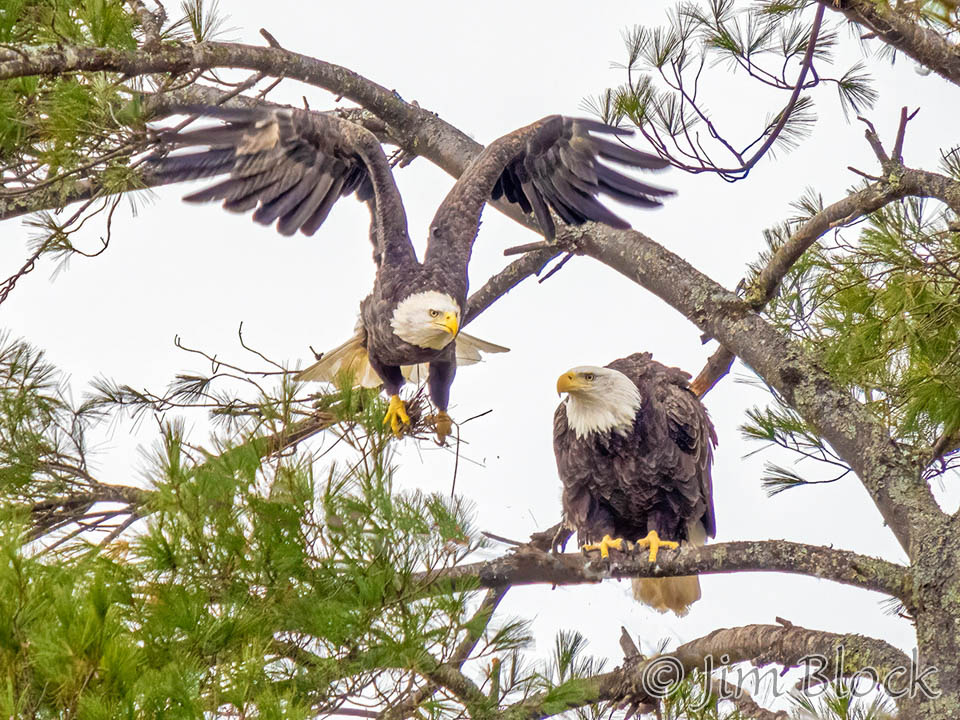
Who would have guessed some of the best action photos of the eagles were taken in the cold, drab month of November. They were flying in and out of the nest building and refurbishing — perhaps because the daylight hours were similar to spring.
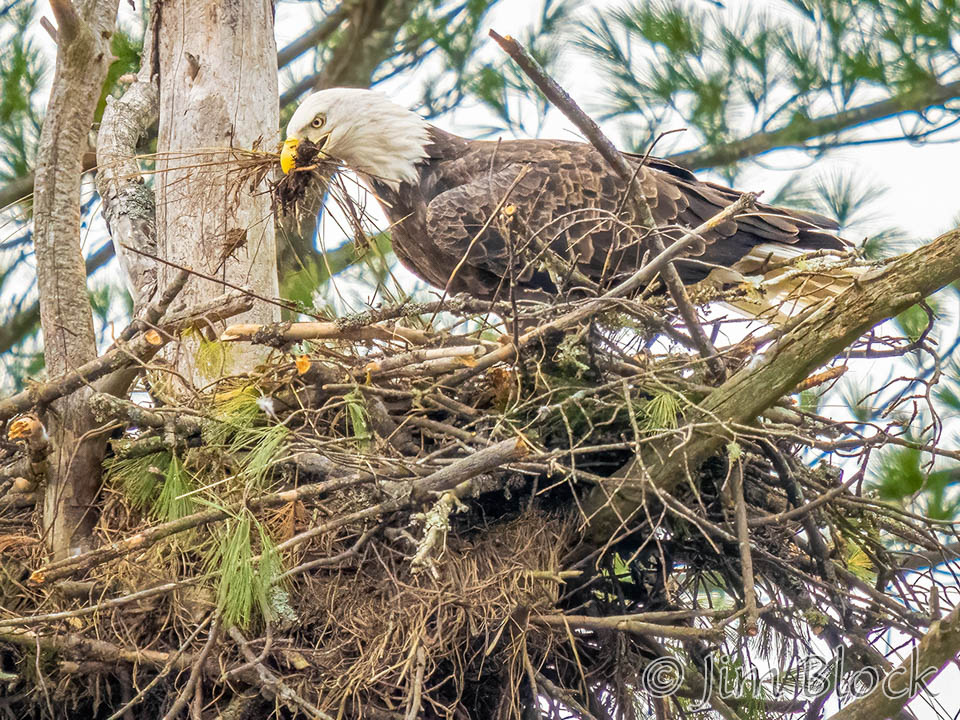
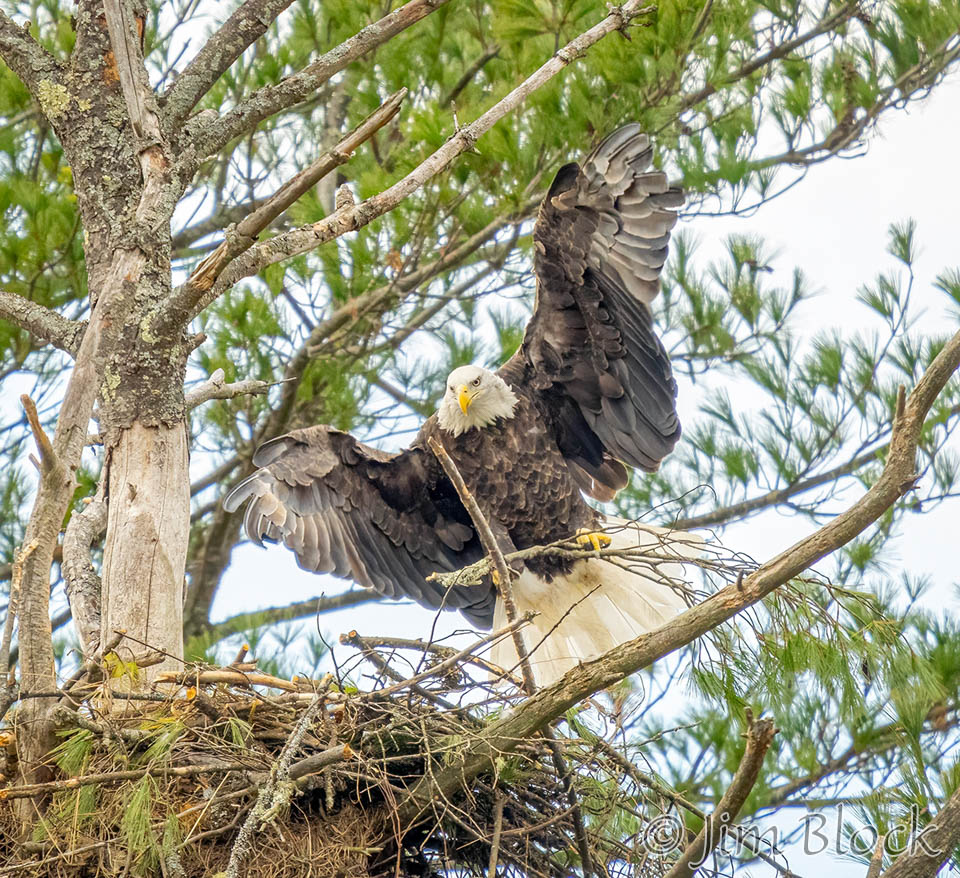
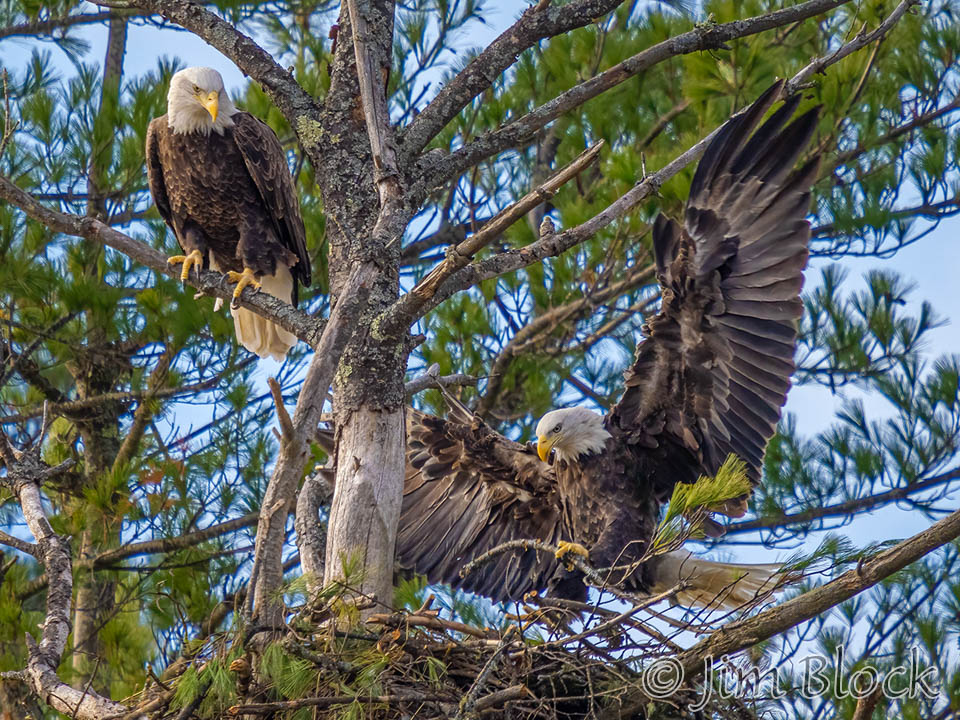
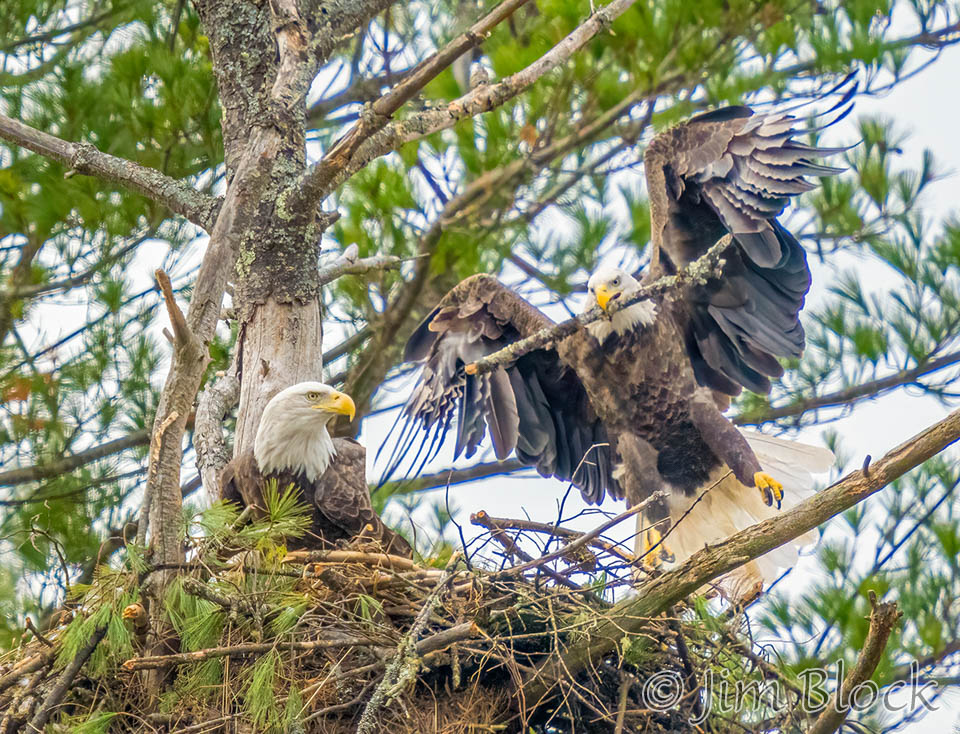
These were a companionable and devoted pair.
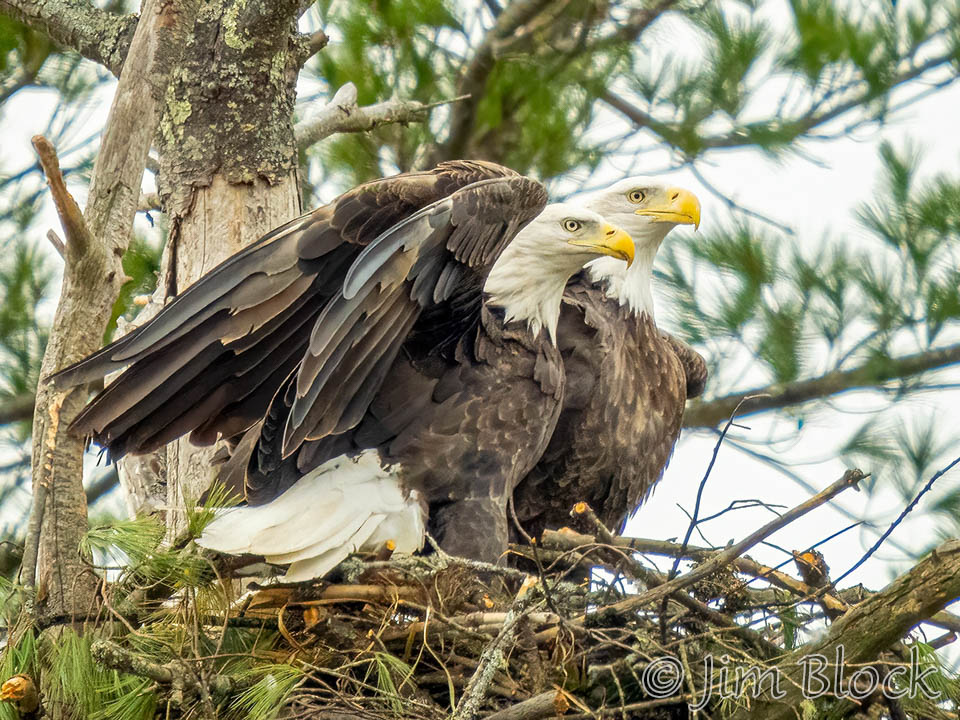
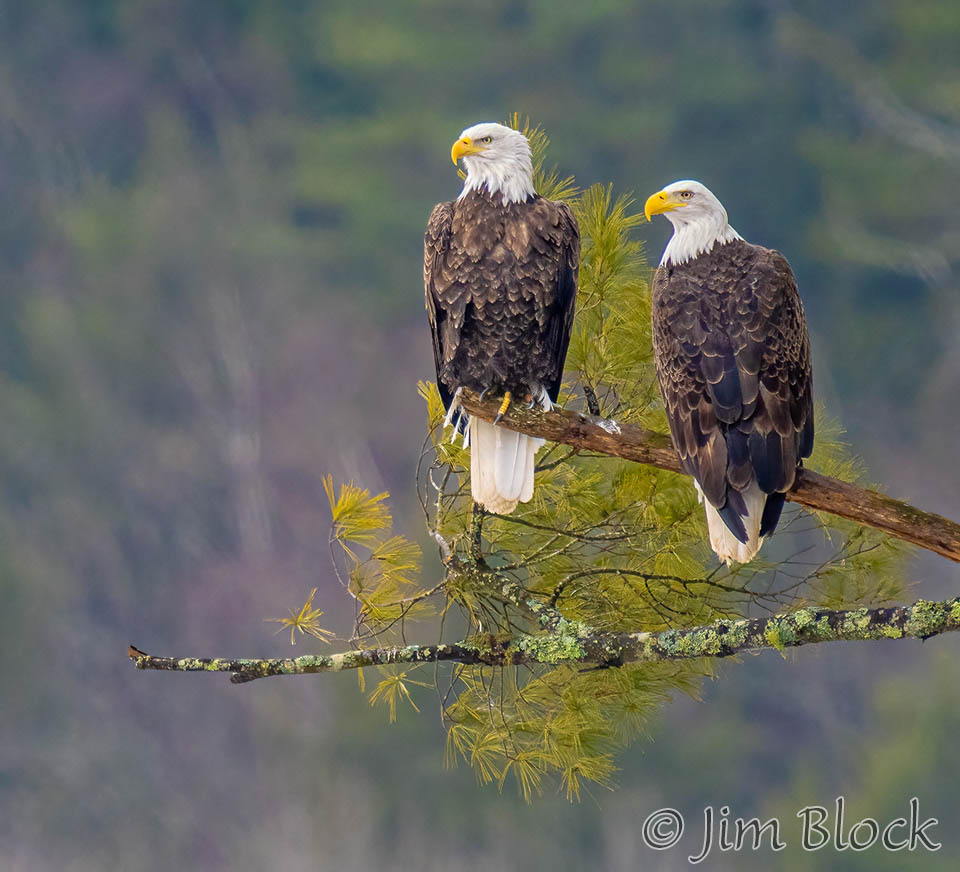
I returned on March 6. It had snowed lightly overnight and they were clearly incubating. Then suddenly they were on “their branch” copulating.
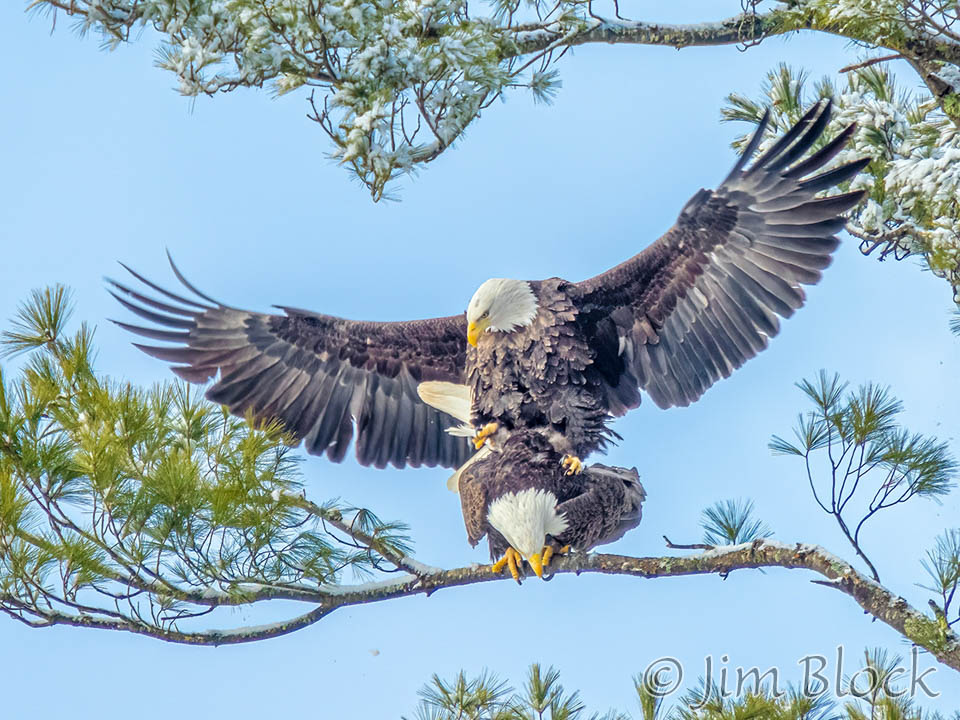
Like Year Three, there was one chick in Year Four. I saw that a parent had brought an opossum for the chick.
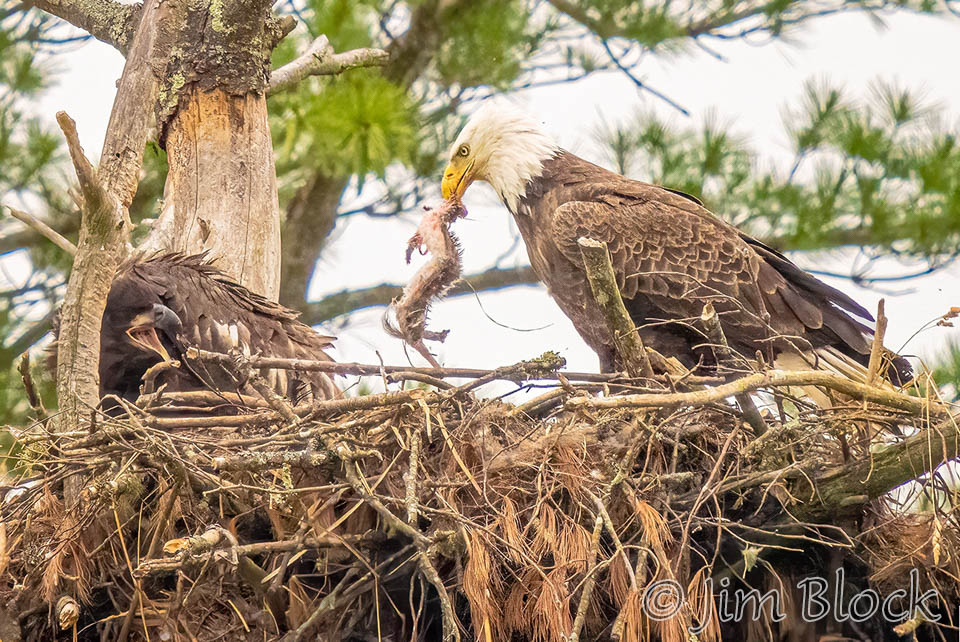
On June 17th it looked like the chick was almost ready to fledge.
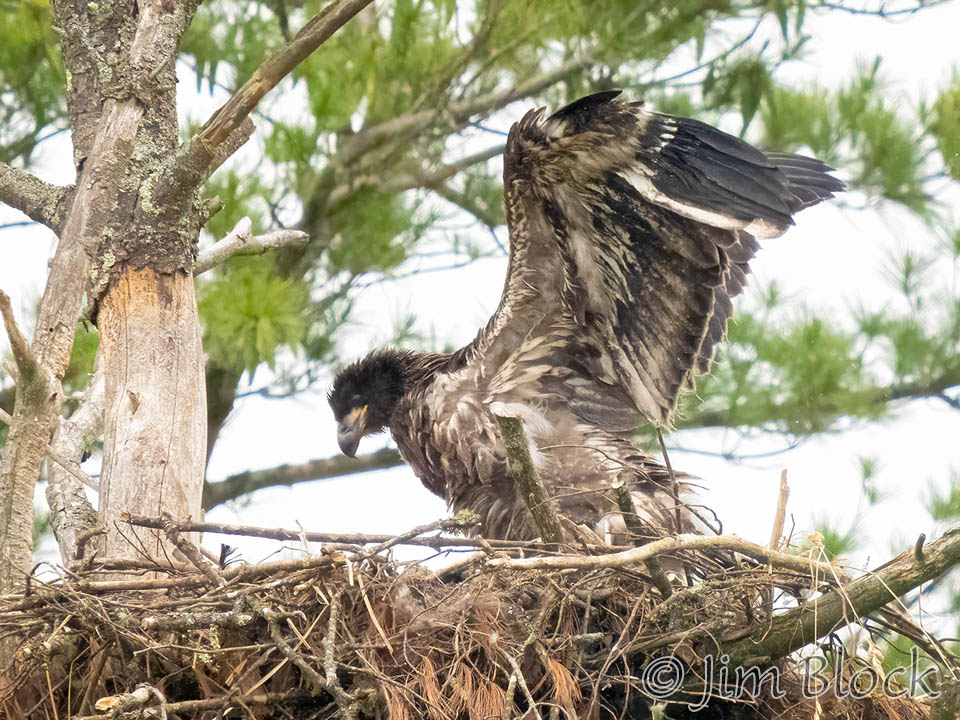
I was unable to get back to the nest to see it fledge. But I will forever be thankful that I was afforded this rare opportunity to study nature up close for a prolonged period.
In this blog post, I have intentionally omitted some of the drama. I hope you will read the whole saga. . I have put the photos I took during these four years on a series of pages which you can get to HERE.