Corcovado — first 24 hours
The dock at the Sierpe River was filled with sea level sun at 11 a.m. We boarded for our one-hour trip to Corcovado National Park — truly a special place.
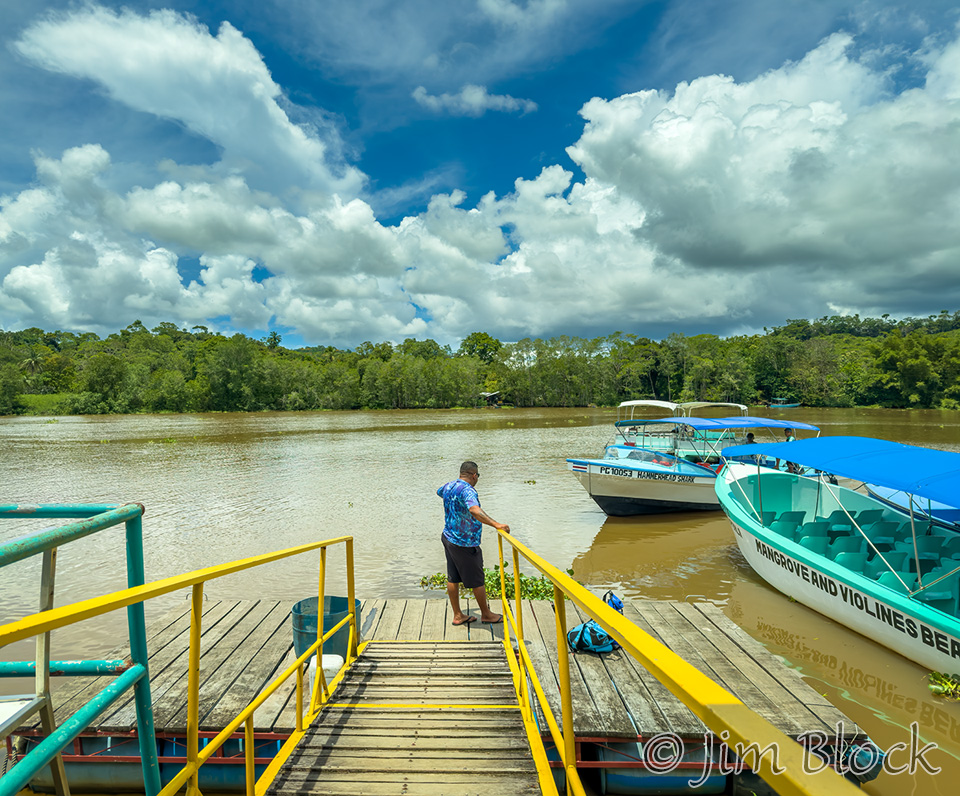
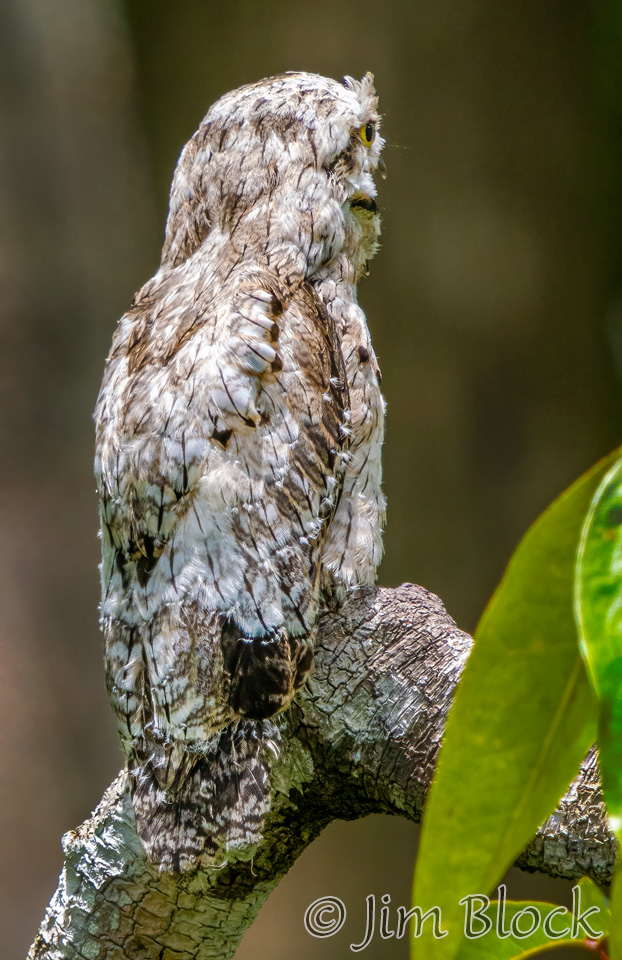
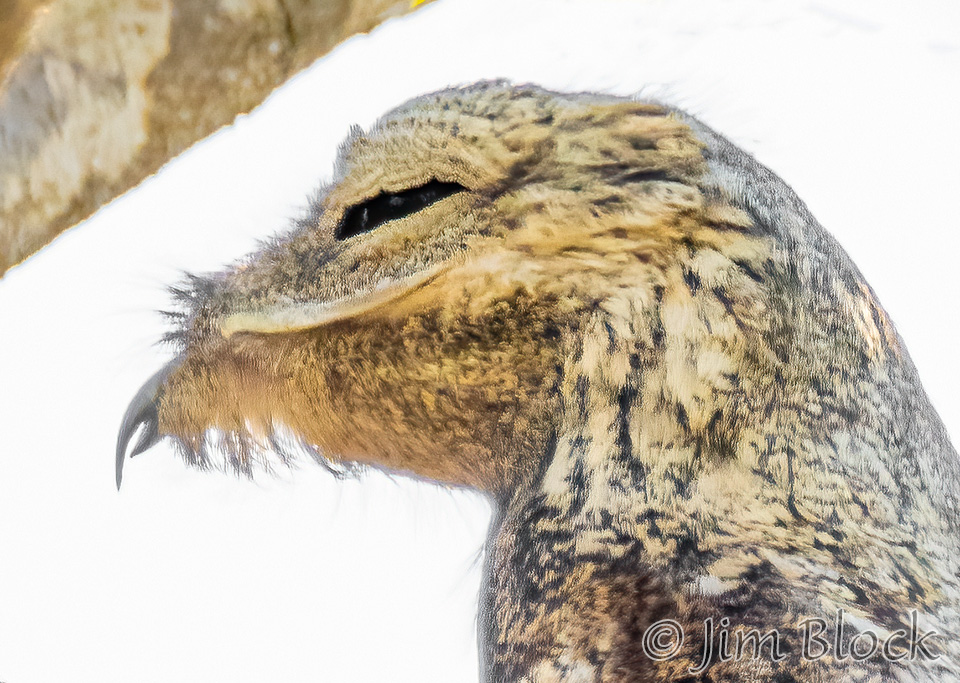
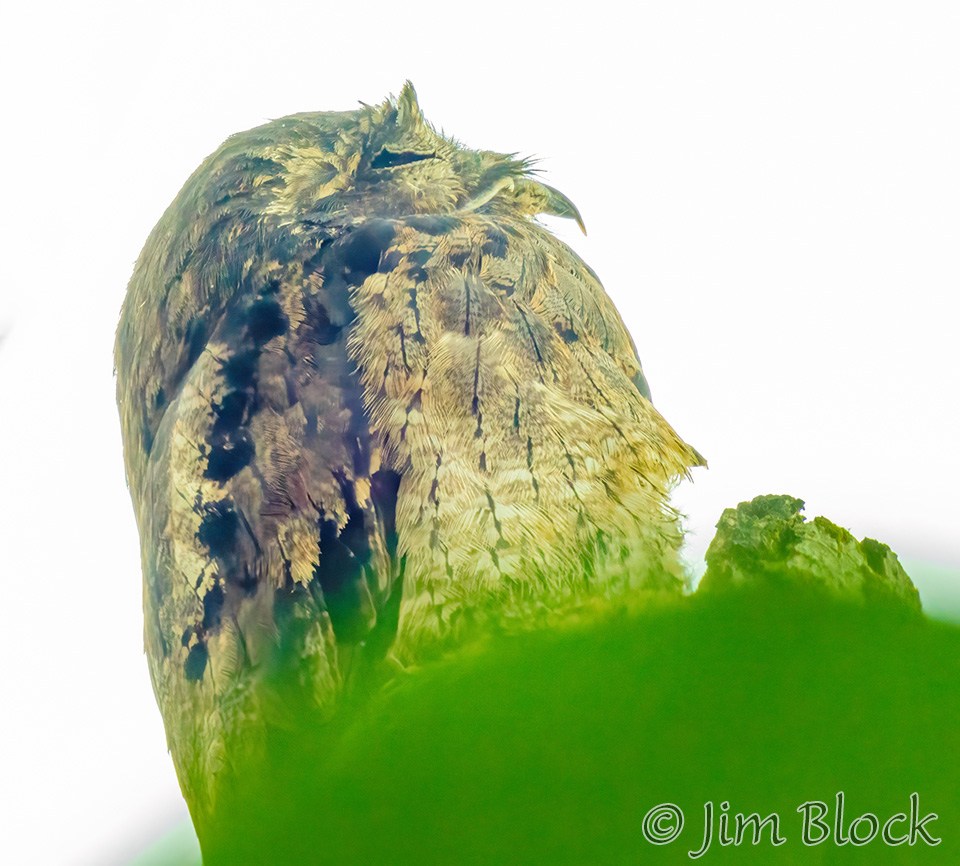
Most of the trip was at high speed — 30 minutes along the river, followed by a very rough ride in the Pacific Ocean. I held my long lens on my lap trying to protect it as the boat crashed down when crossing waves. I only used it once when the boat stopped briefly not far from the dock to allow us to see a Common Potoo. Potoos are nocturnal and are related to nightjars. Note the huge yellow eve.
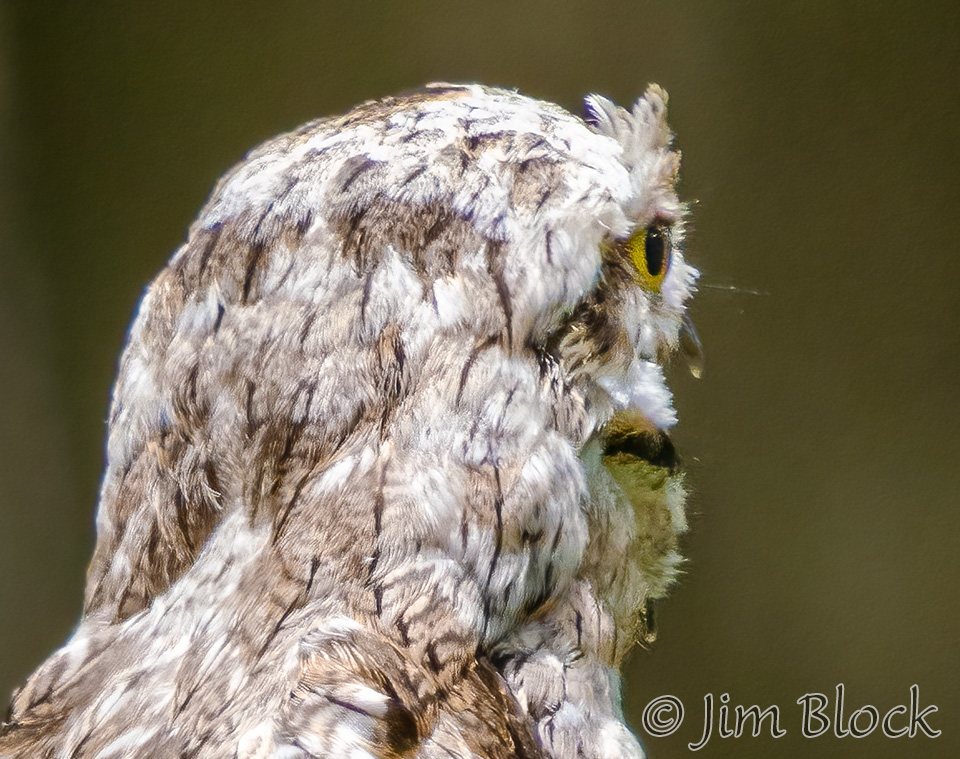
This is a very strange bird. Here is a close up of its head as it faced slightly away and to the right of the photo.
The Common Potoo is perhaps a foot tall. The Great Potoo is two feet or more. Here is a Great Potoo from Brazil.
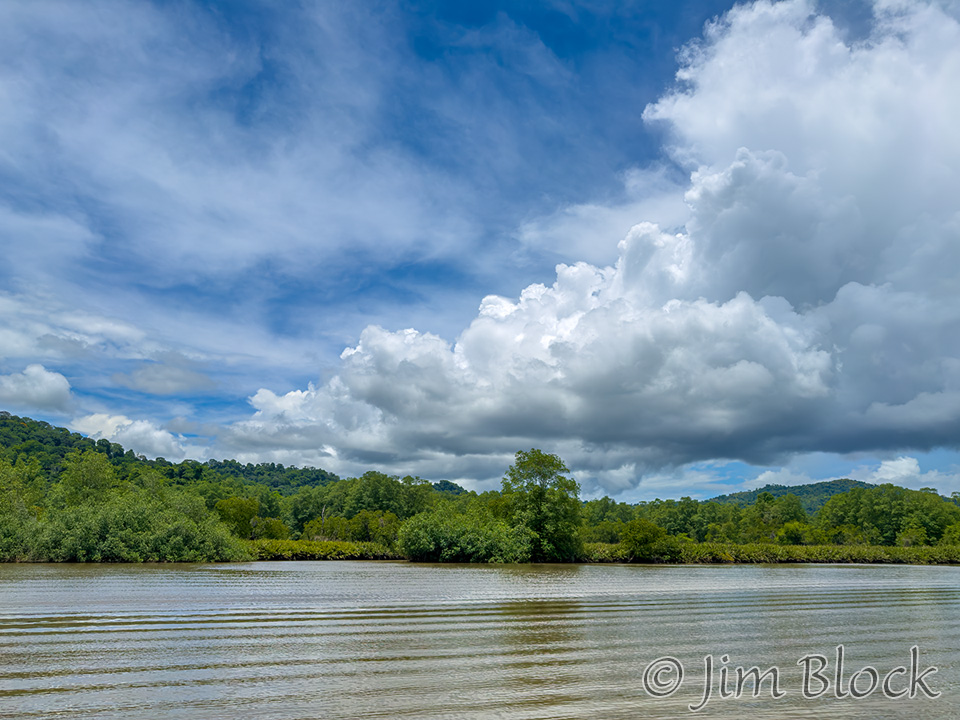
The clouds were beautiful as we raced along the river.
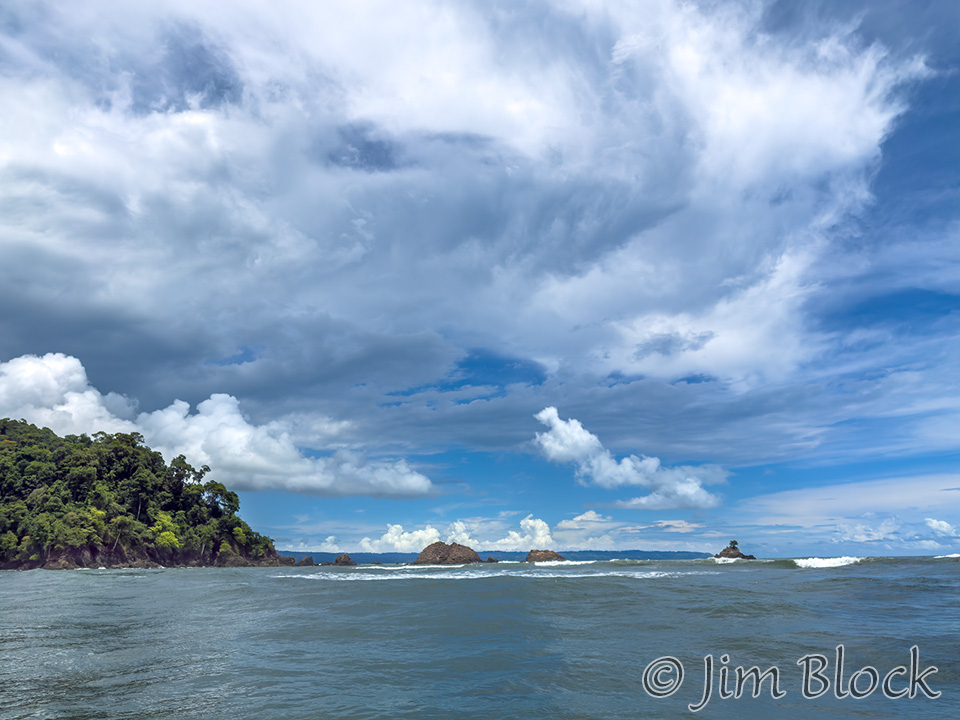
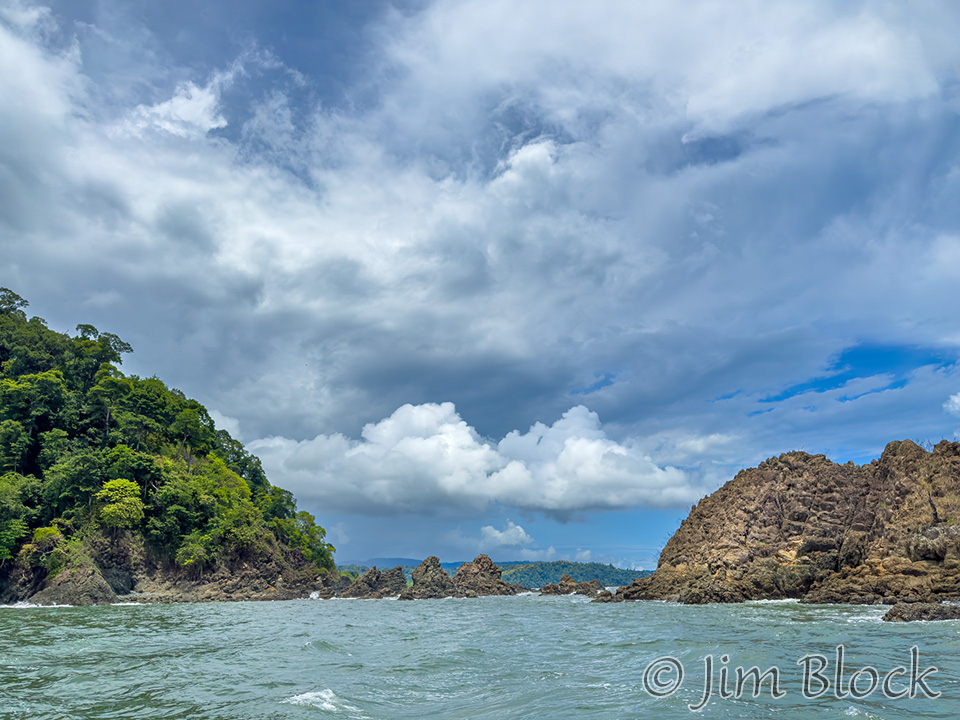
Also along the Pacific coast of the Osa Peninsula.
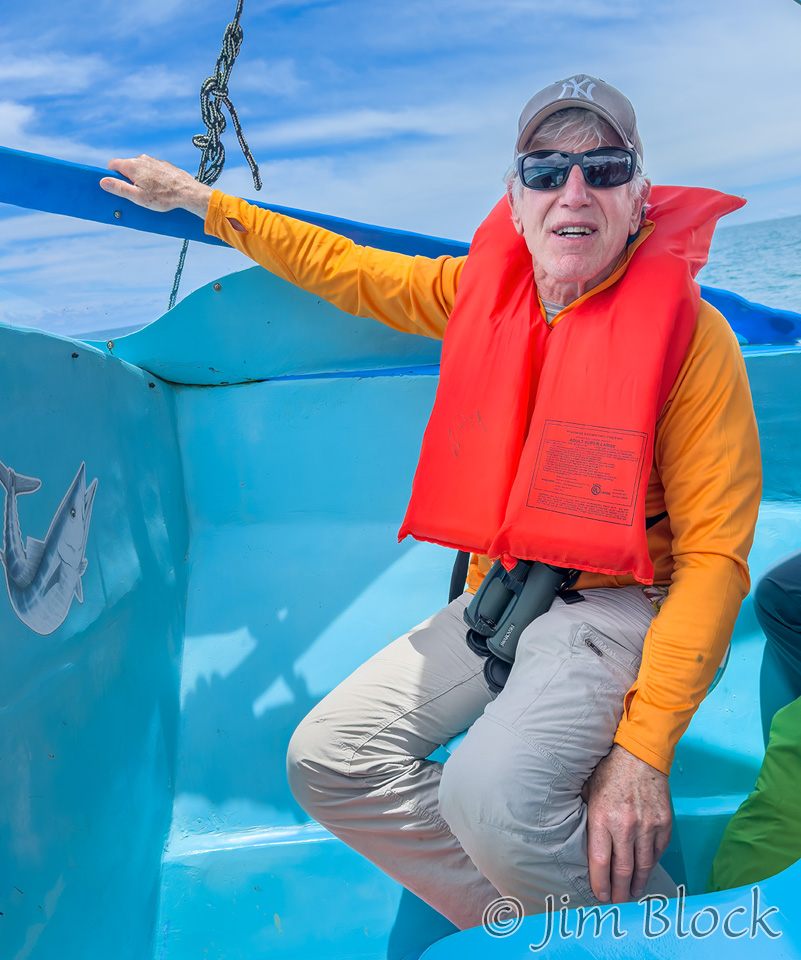
They were strict about life jackets.
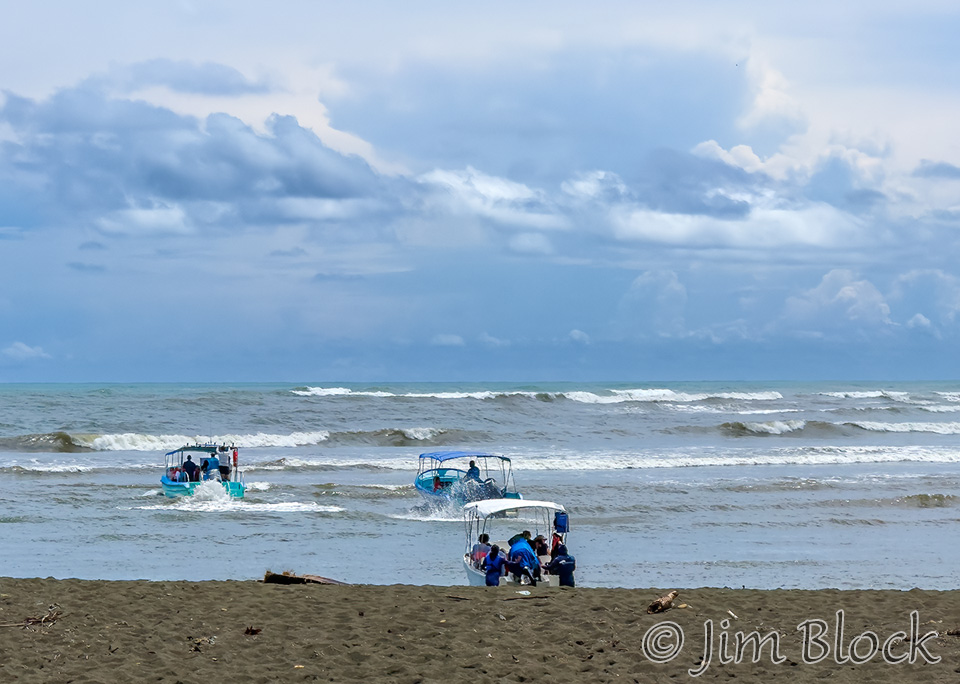
We landed well out from shore. This photo is misleading because of the drop-off. Even the people on the boat closest to shore had to wade in knee-to-waist-deep water with waves and rocks adding to the challenge.
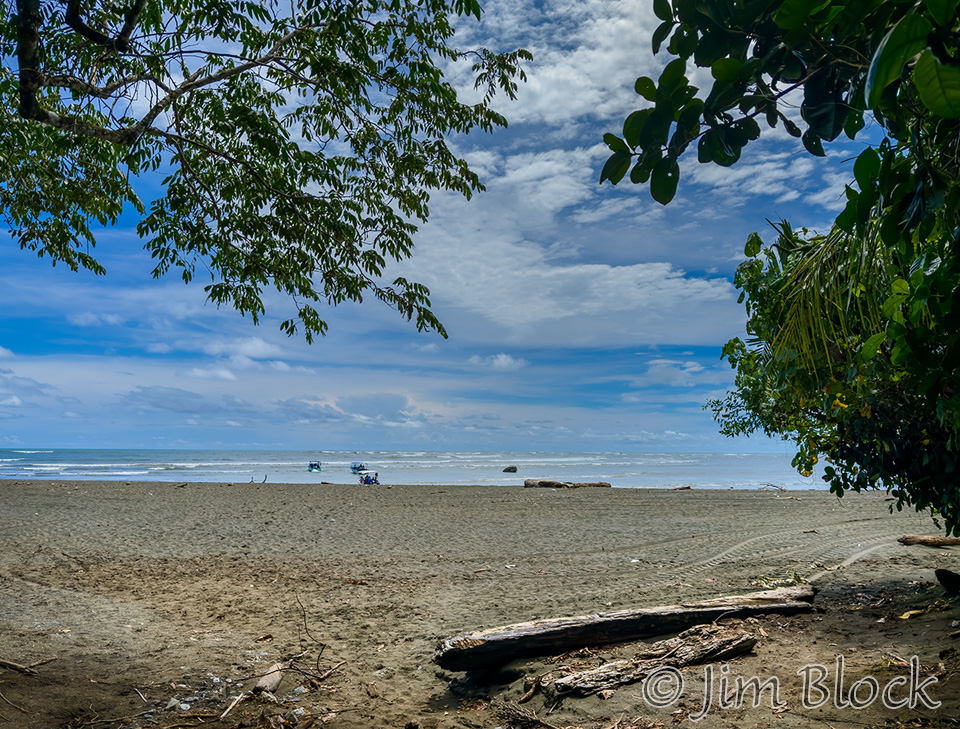
We moved across the beach to clean the sand from our feet and put on real shoes for the half-mile hike to the Sirena Ranger Station.
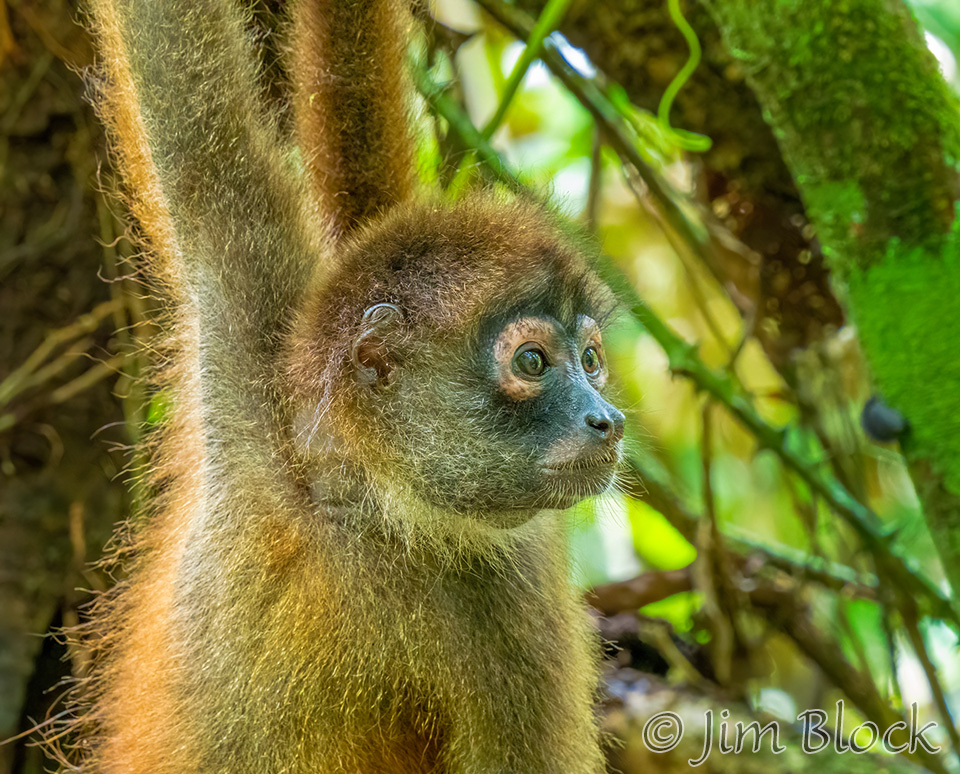
Not far along the path we were surprised to find a group of spider monkeys on the ground. Boy, this is going to be great!!!
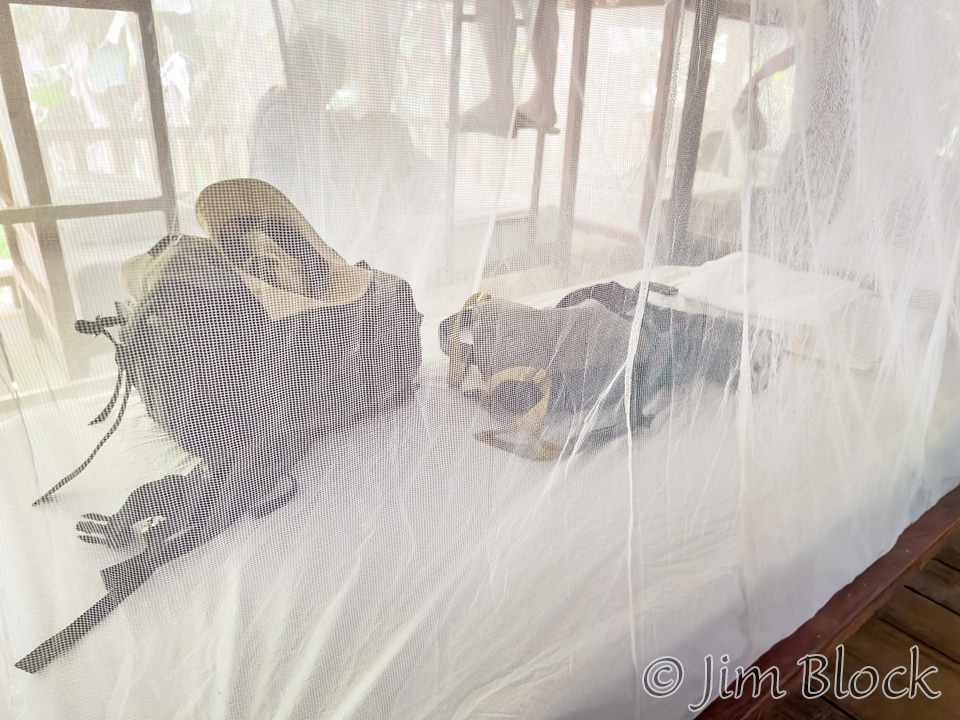
We had “discussed” who would get lower vs. top bunks. I lobbied hard that they be assigned by age with the oldest getting the bottom bunks. Nothing was settled, but it did not matter. The two bunk rooms without walls that held 50 beds each were not full, so getting a bottom bunk was easy.
Here is mine with my camera and backpack on the bed. At night there was some room on the floor between the ends of the bunks for my camera bag and small backpack. But my camera with long lens slept with me.
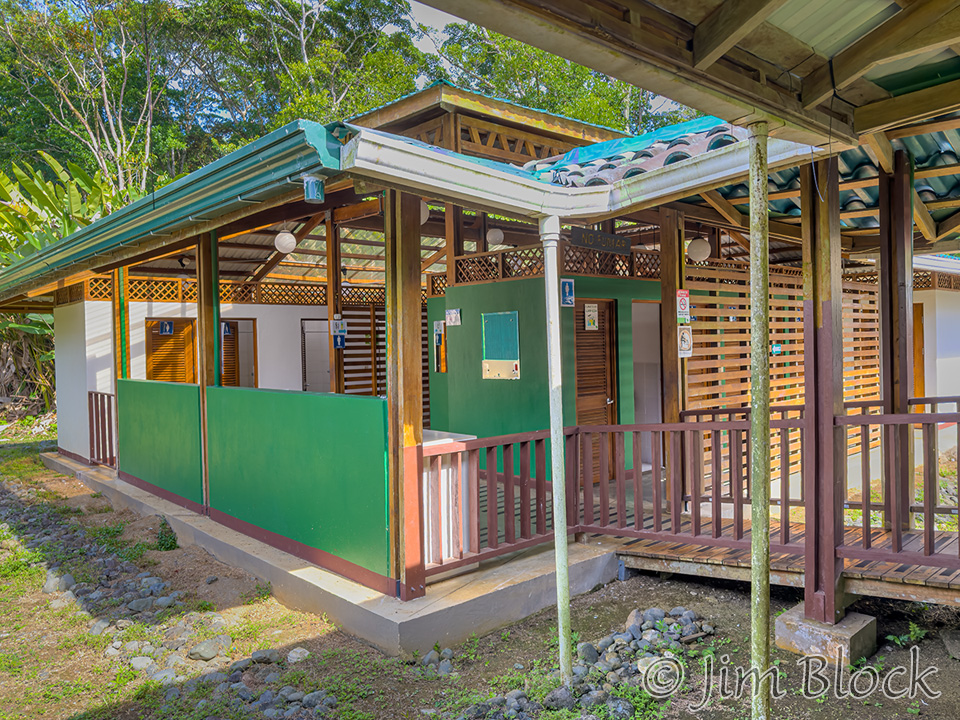
Our muddy shoes were parked outside. Most walked barefoot, some had types of slippers, along the platforms and covered walks. It is hard to say “inside” because most everything was open air between the floor and roof.
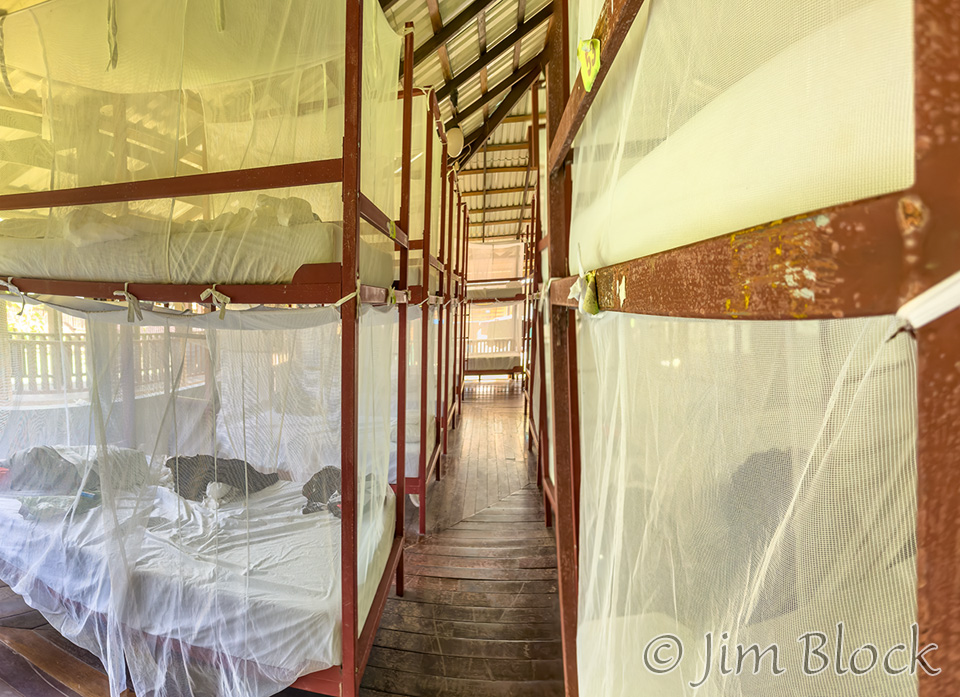
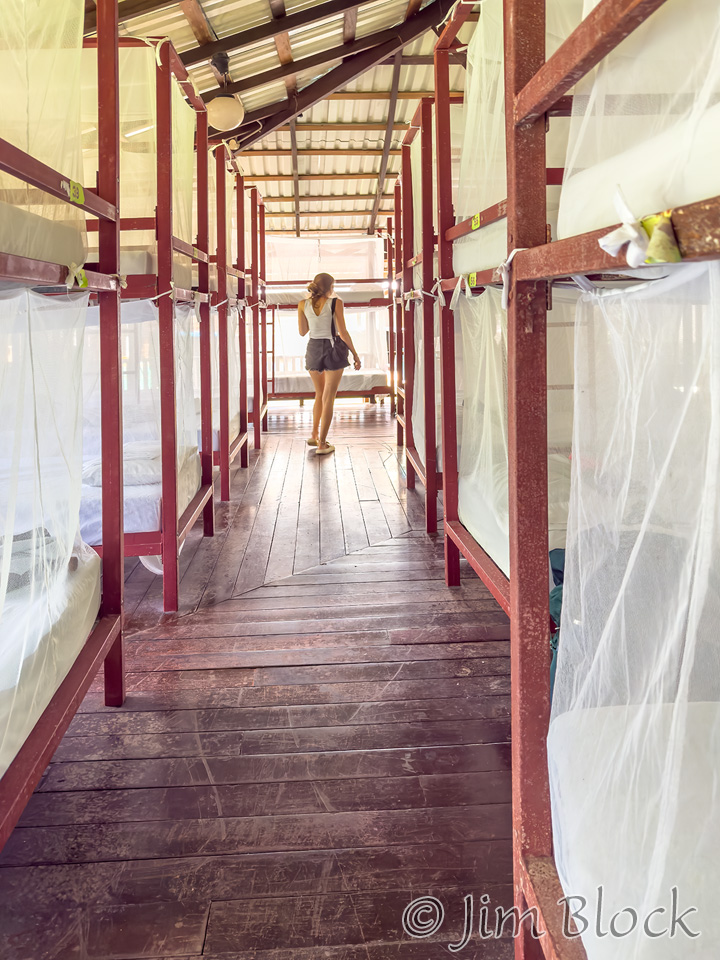
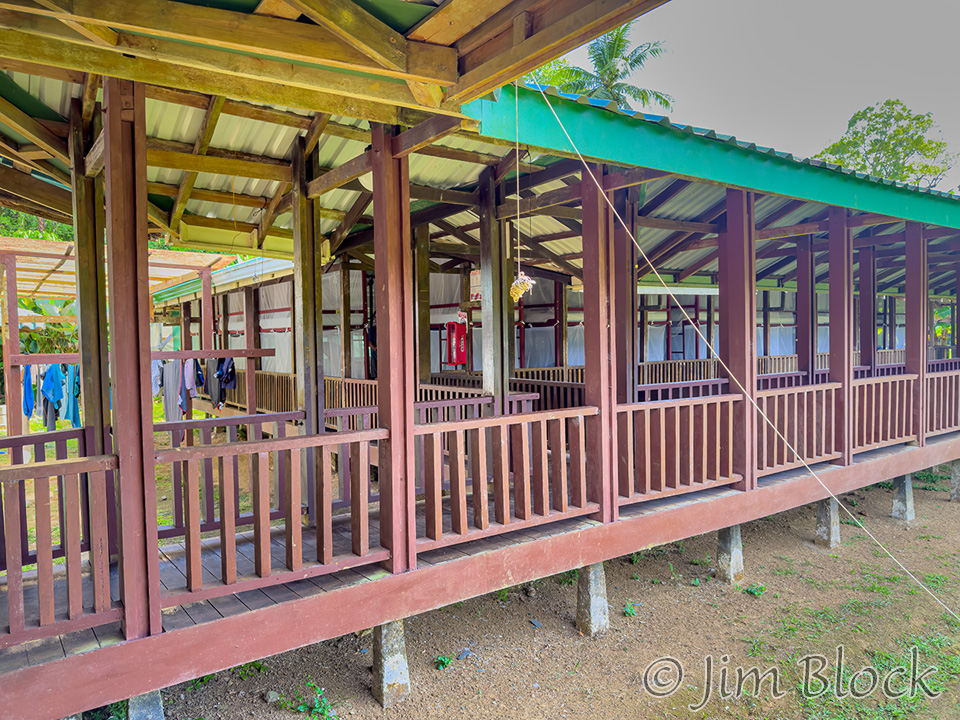
Here are photos of the walkways, the toilets and showers, and the dining room. In the background of the first you can see one dorm.
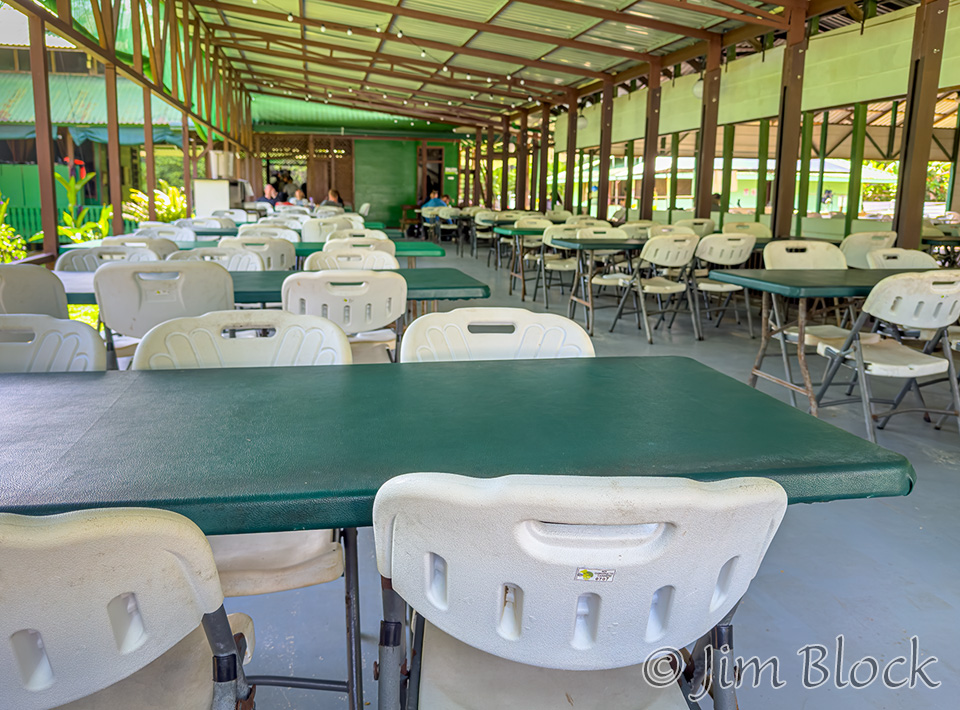
Meals were buffet style with the staff dishing out the portions. But it appeared that one could request as much or little of each as desired. After waiting in line once for a meal and noticing a line for the showers I realized that timing is everything. So I just timed my arrival for meals and showers to avoid a line.
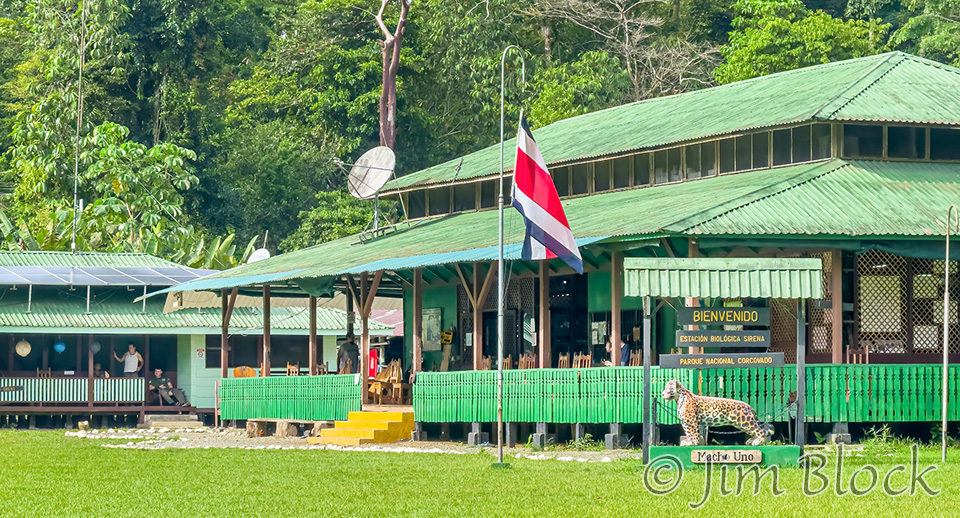
This view of the ranger station is misleading because it looks like there are walls. But they are just for the office and staff areas.
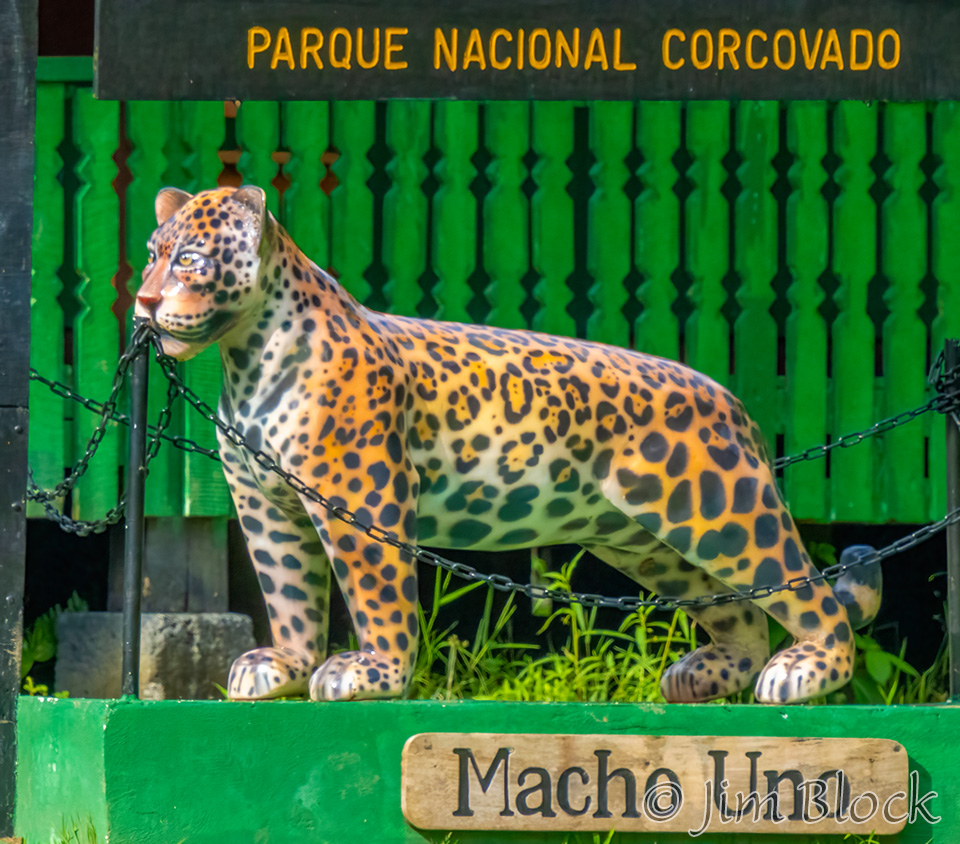
There are apparently around 50 Jaguars in the park, and we saw a track, but no one seemed concerned about running into one.
After lunch we met our local guide, Rodger, who would be with us until we left Corcovado. Rodger was great. He spotted and pointed out birds I had trouble finding even when he said they were in tree in front of us. His green laser helped. He even grabbed my huge garbage bag holding my camera backpack and cameras and carried it through the pounding surf when we boarded the boat to head back. I did not ask for or expect that, and felt I could manage myself, but I was very happy for the help.
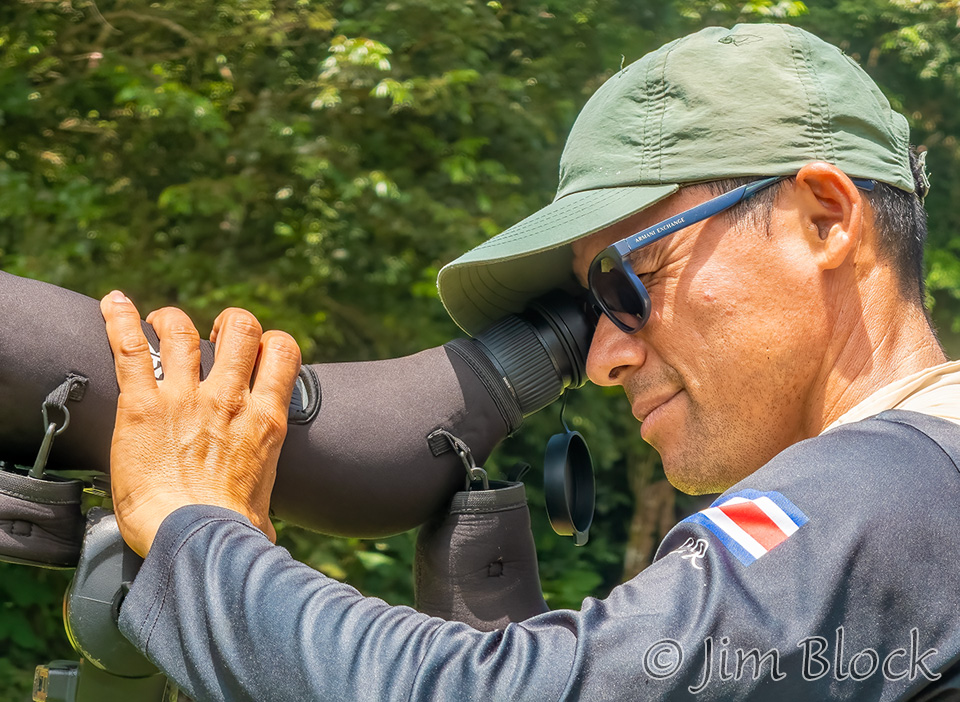
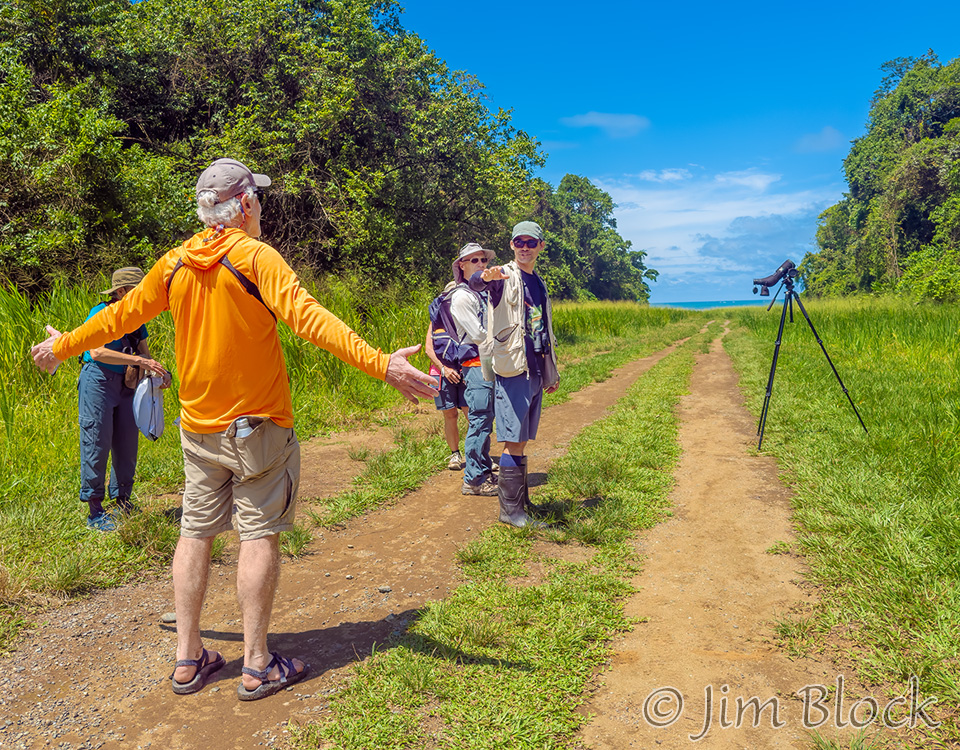
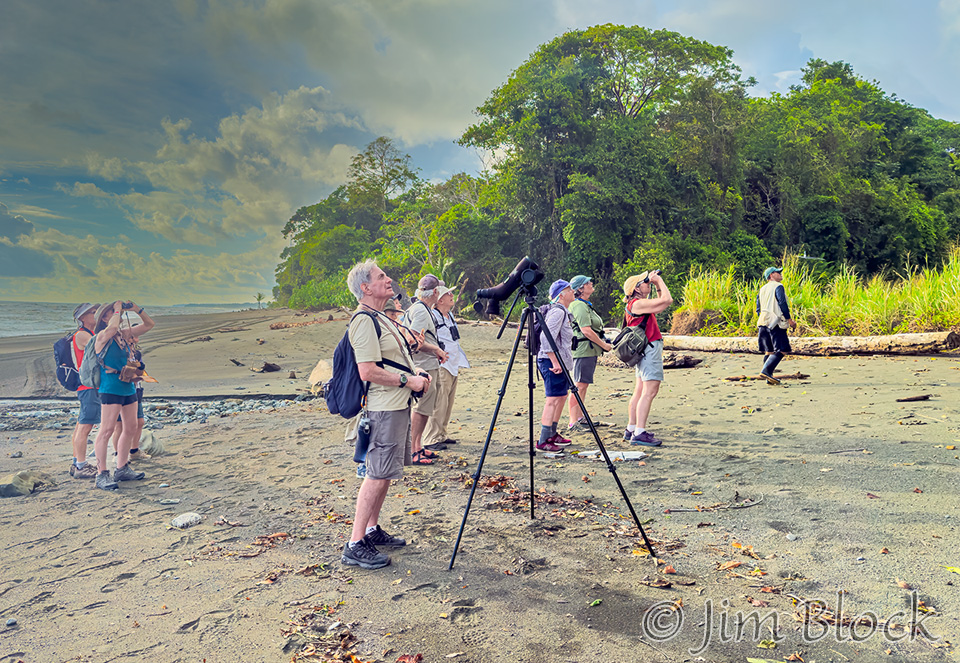
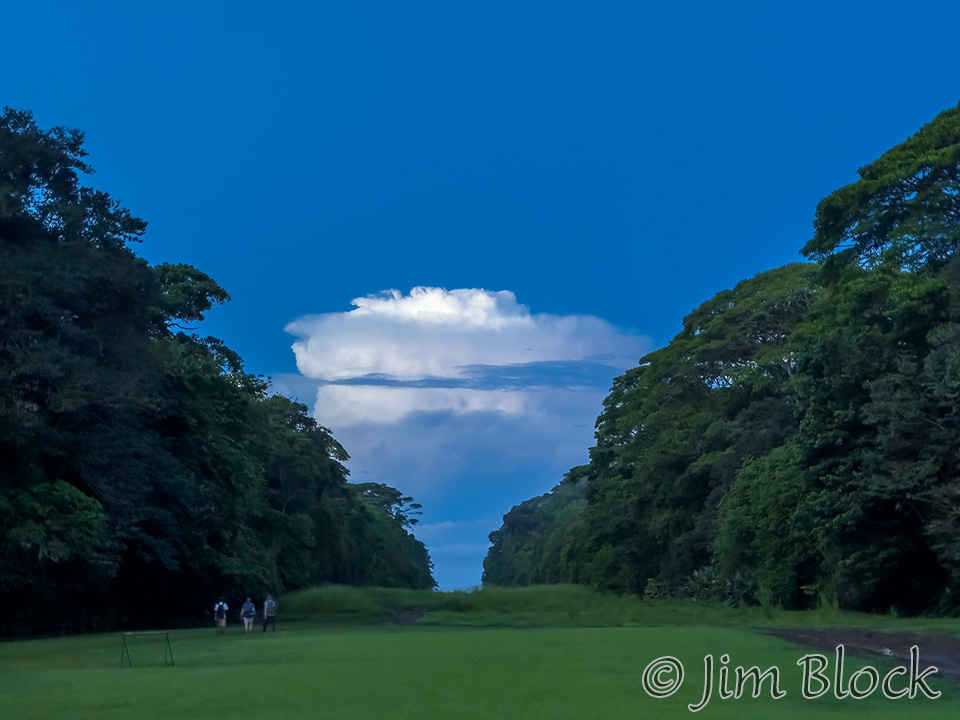
There was a long cleared area that ran from the ranger station to the Pacific and has been used as a runway. It was a great area for birds because they could be seen in the trees on both sides and normally the light was good. Rodger is in the photo below with the sunglasses and boots. The Pacific is in the background.
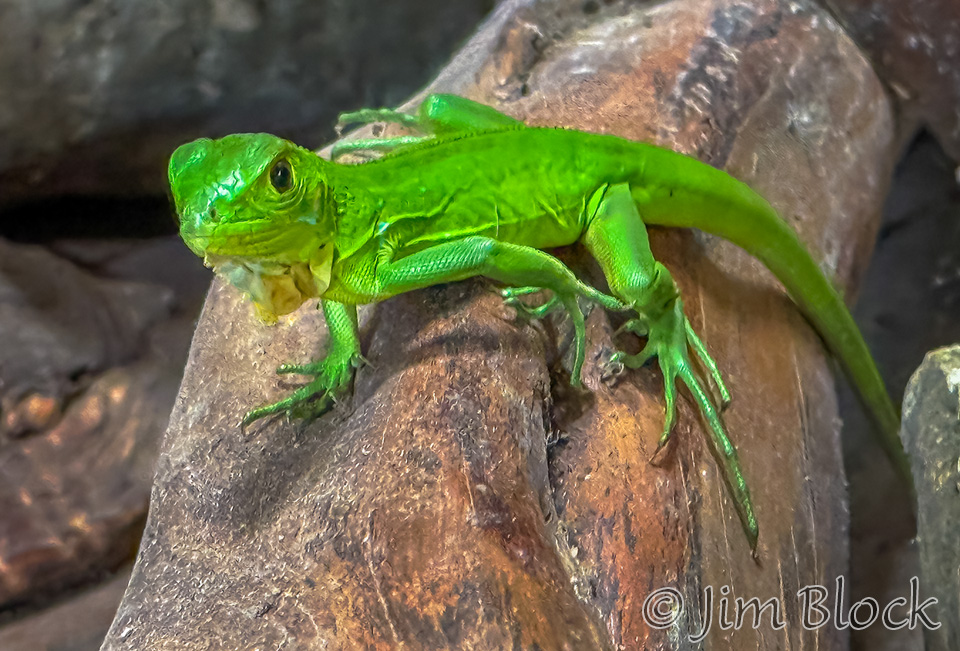
Near the lodge I found a Green Iguana that looked like a plastic toy.
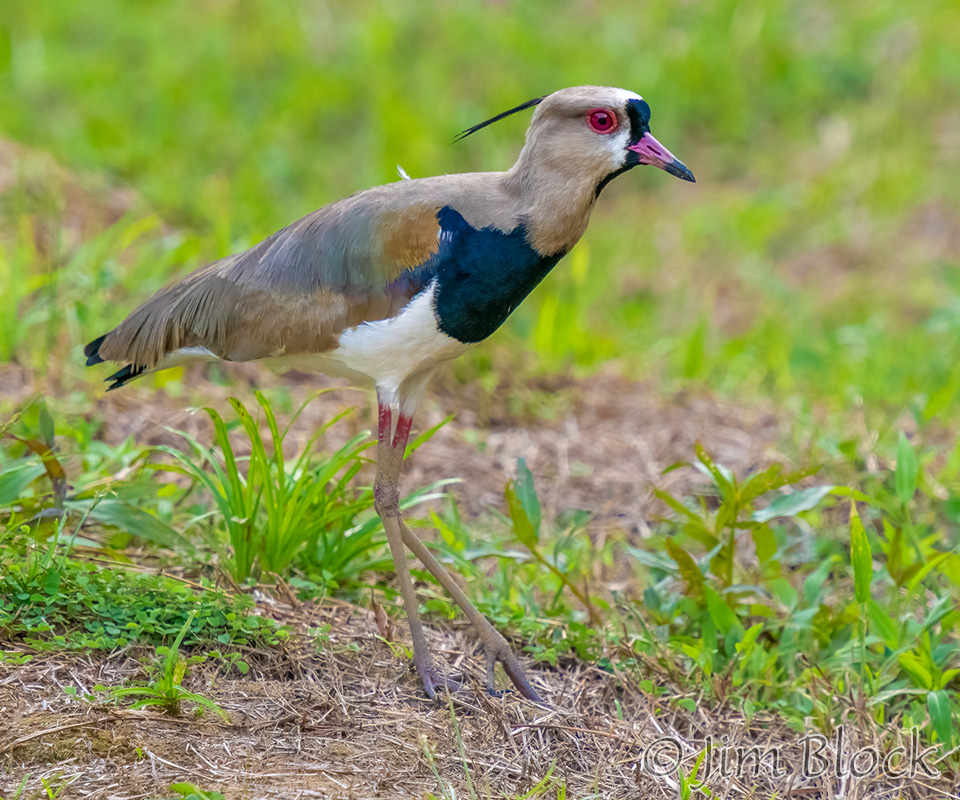
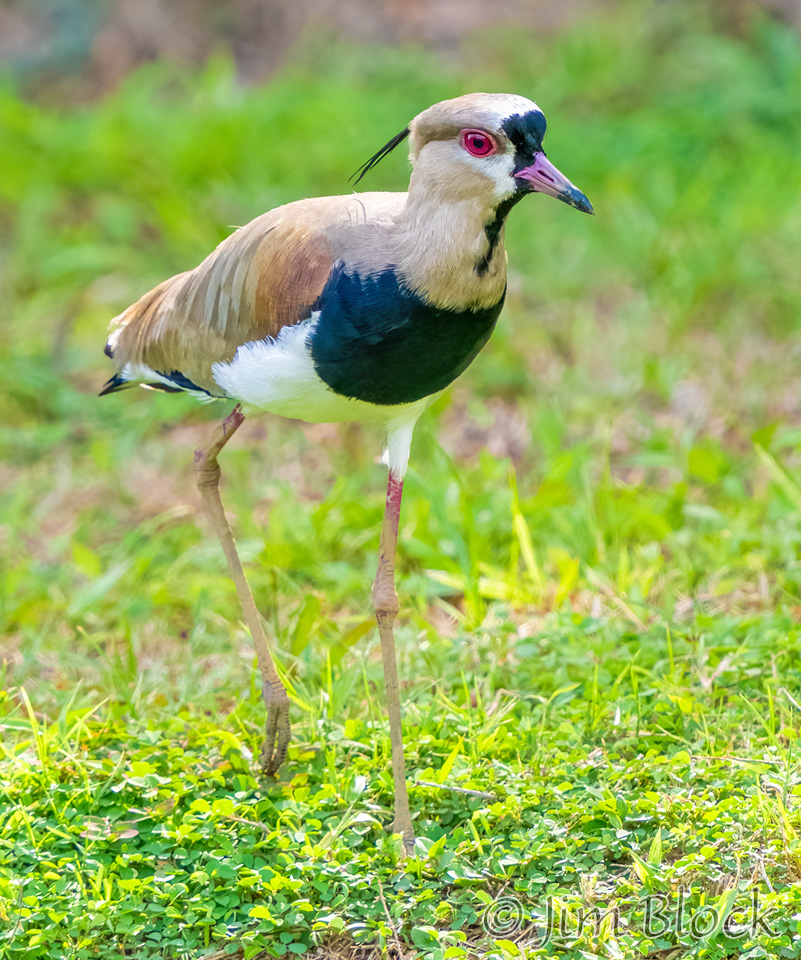
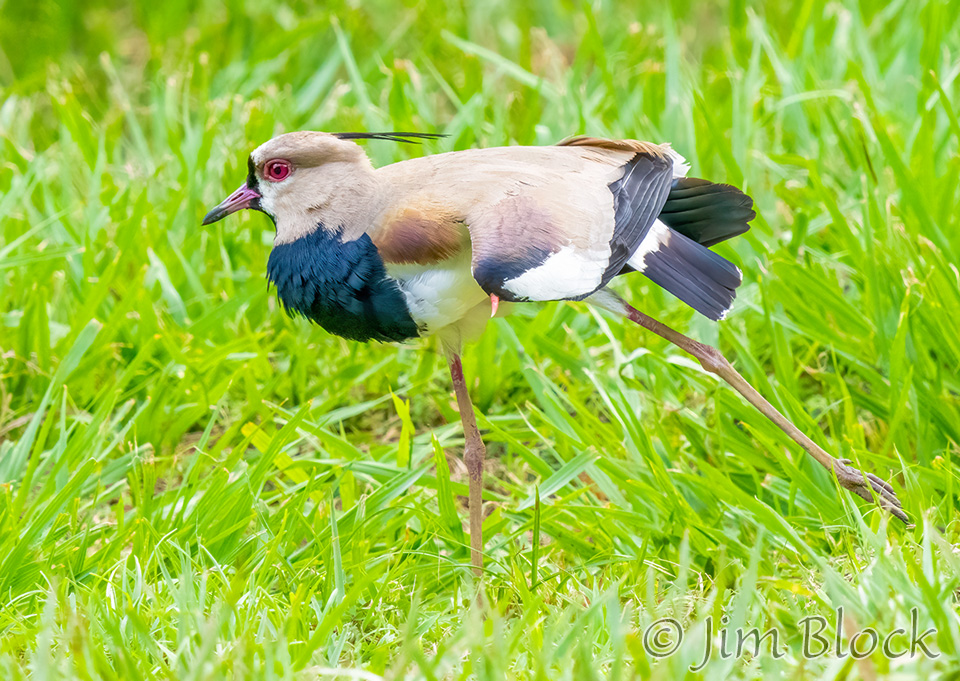
My first bird on Corcovado was a beautiful Southern Lapwing.
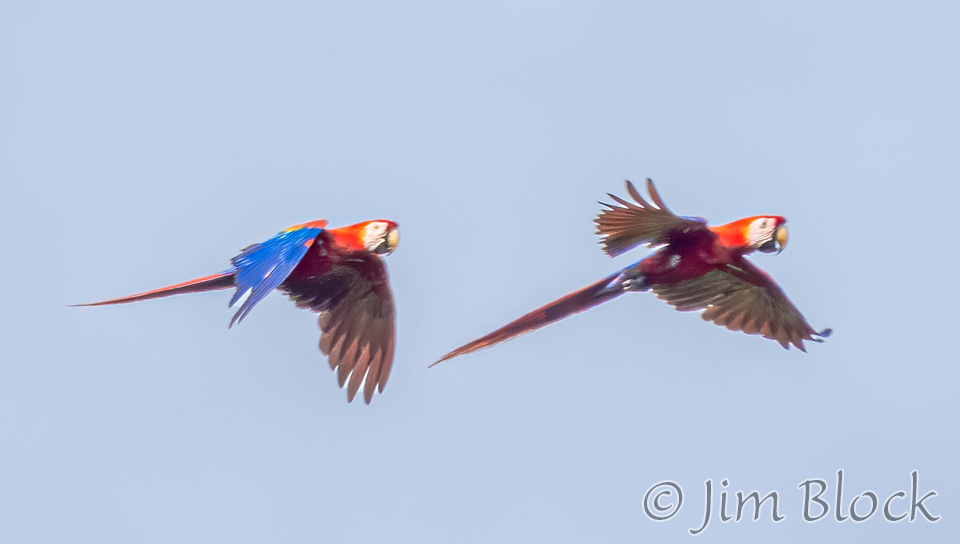
A pair of Scarlet Macaw flew over.
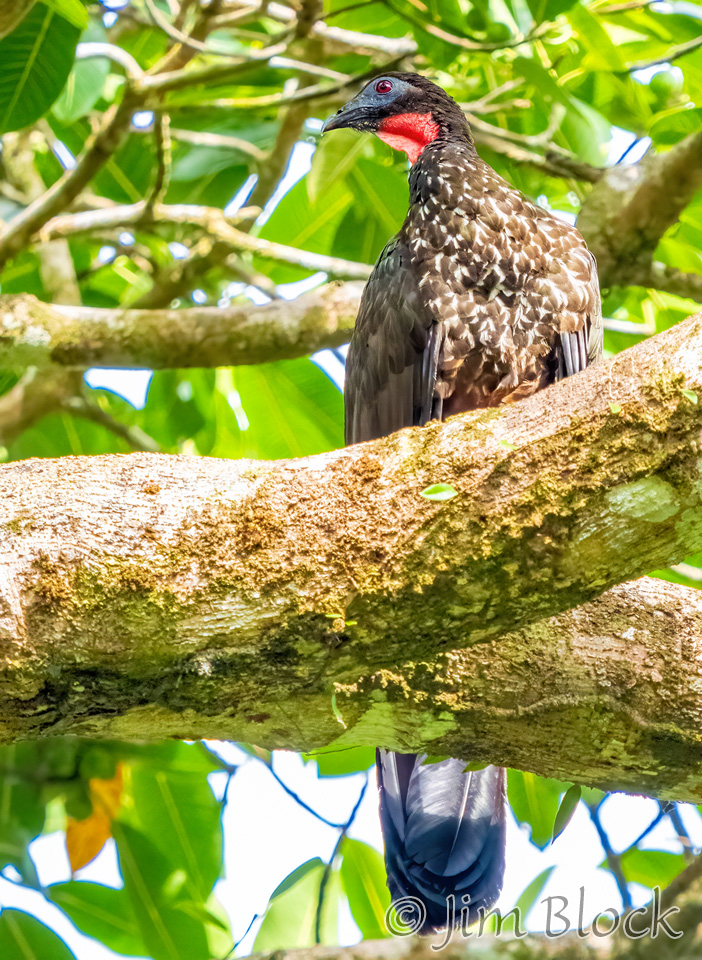
And a Crested Guan perched high in a tree.
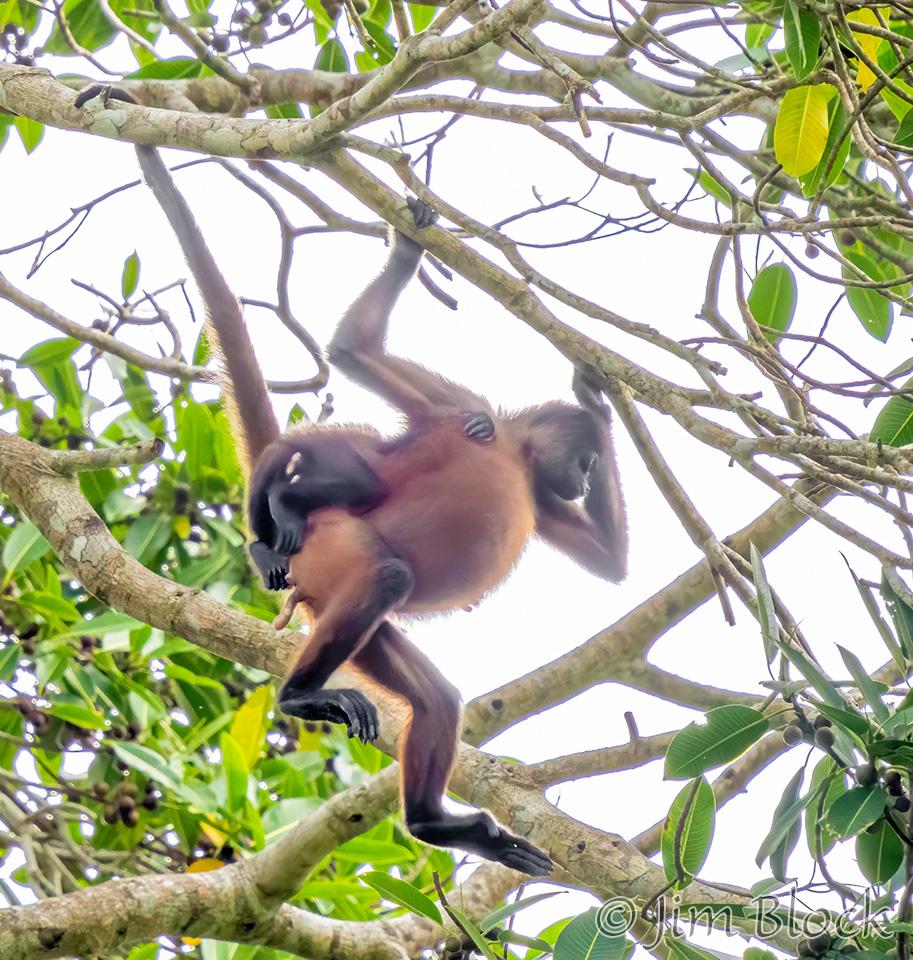
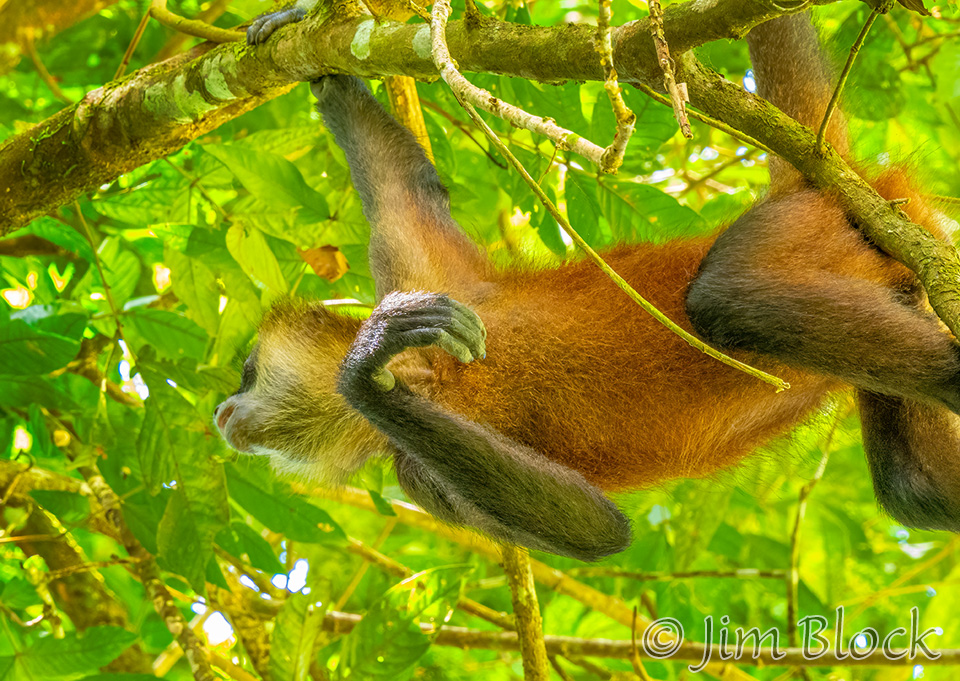
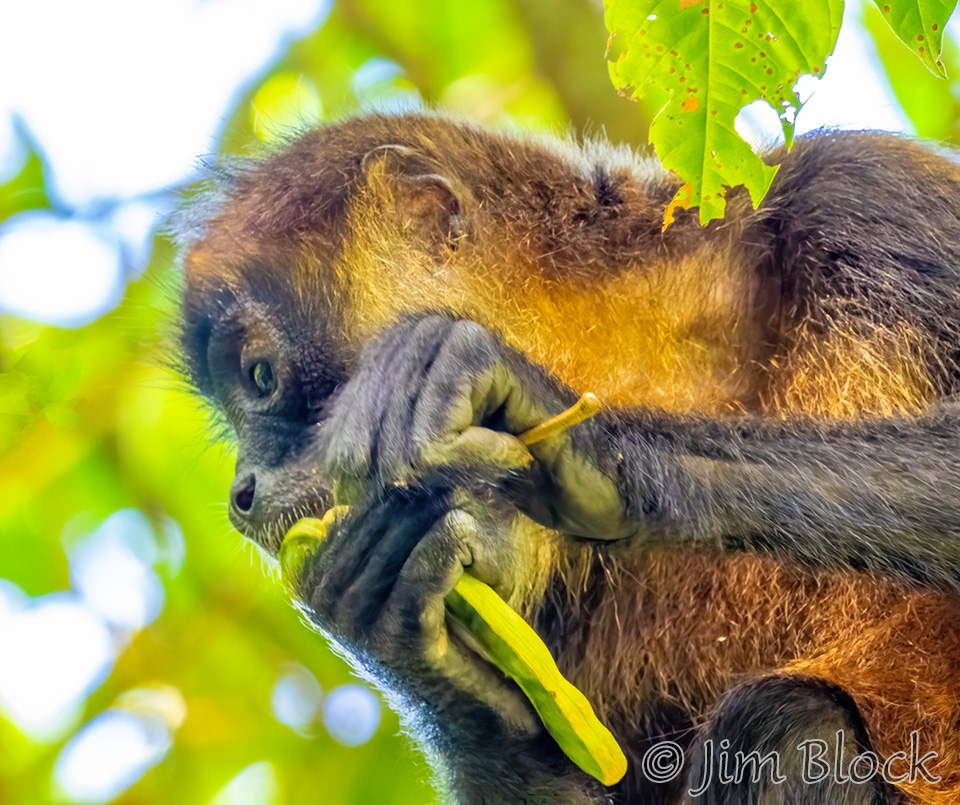
A family of spider monkeys worked their way thru the trees. Note how they use their tail as a fifth limb.
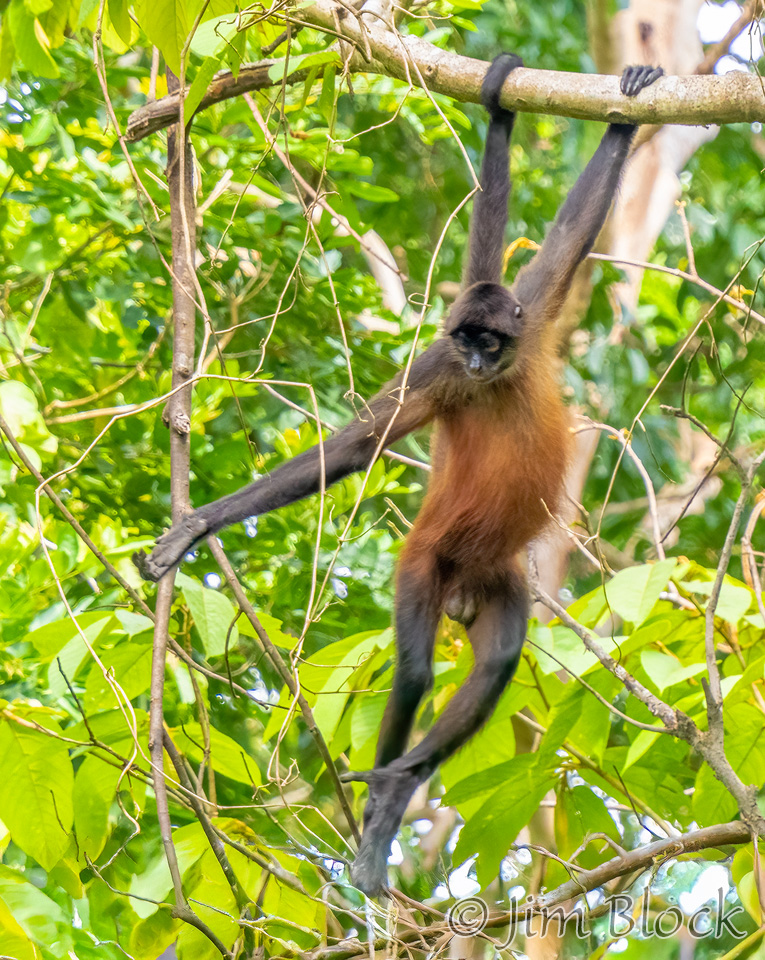
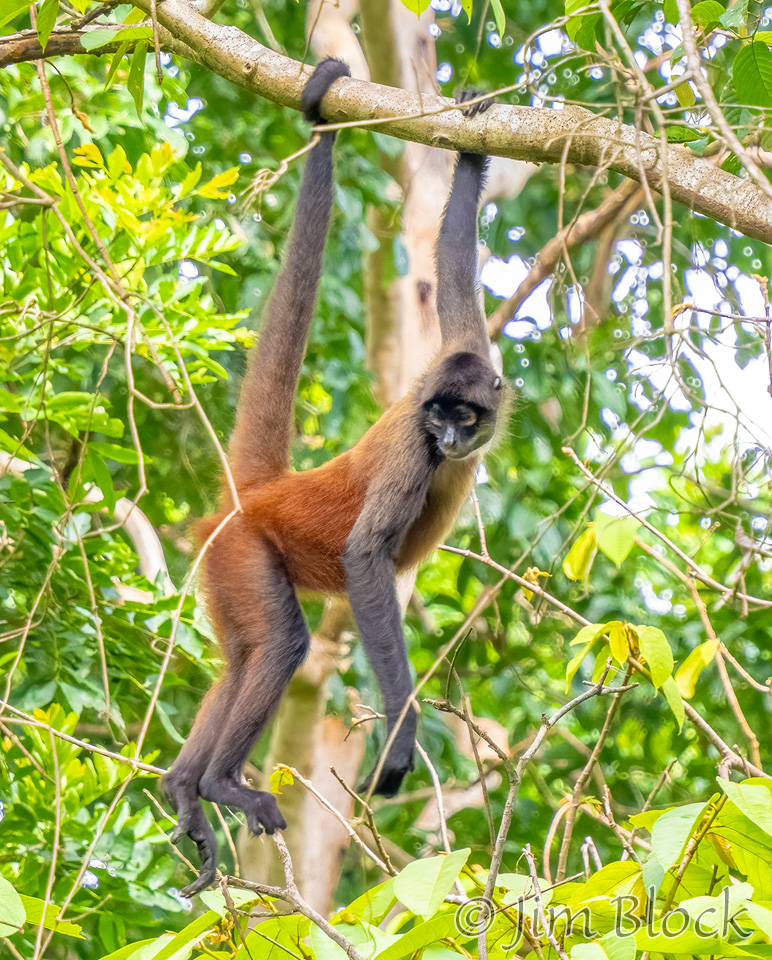
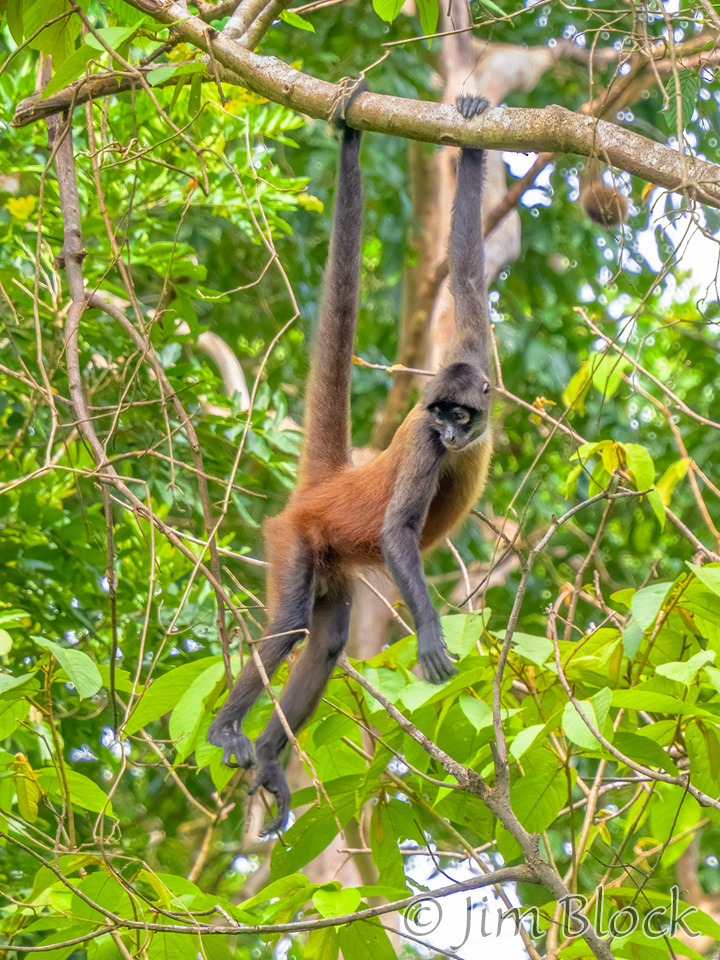
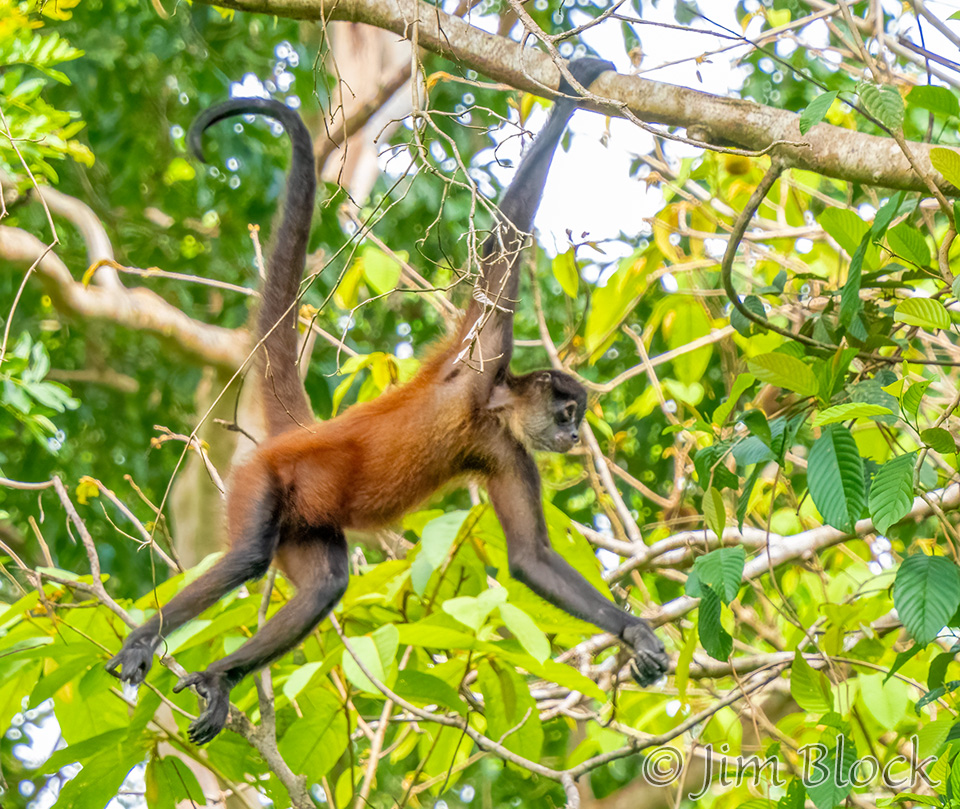
This female was carrying a baby on her back and perhaps another inside.
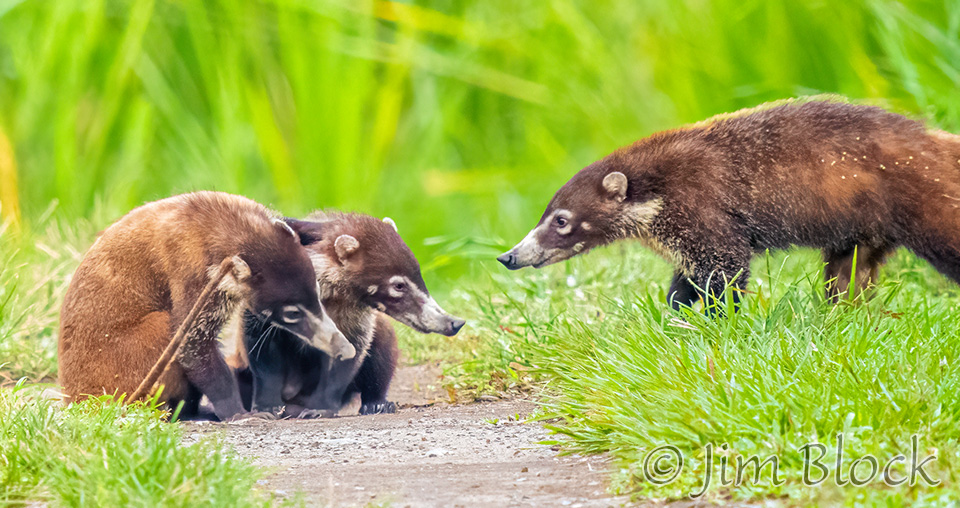
Far down the runway several families of Coatimundi walked across. I spotted them and took as many photos as I could before then vanished in the grass and then forest.
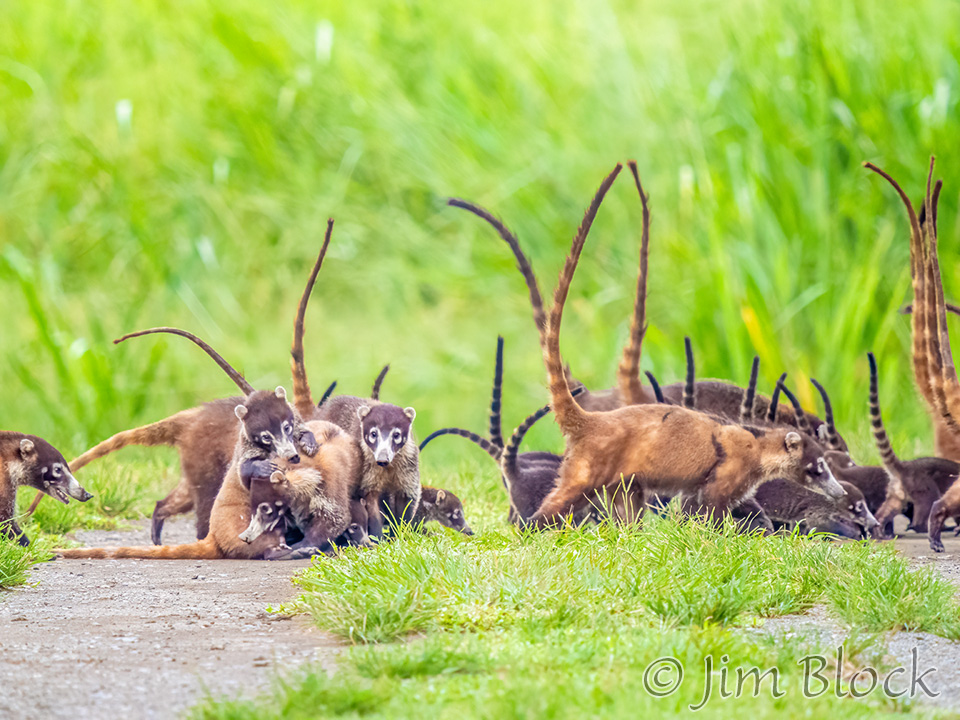
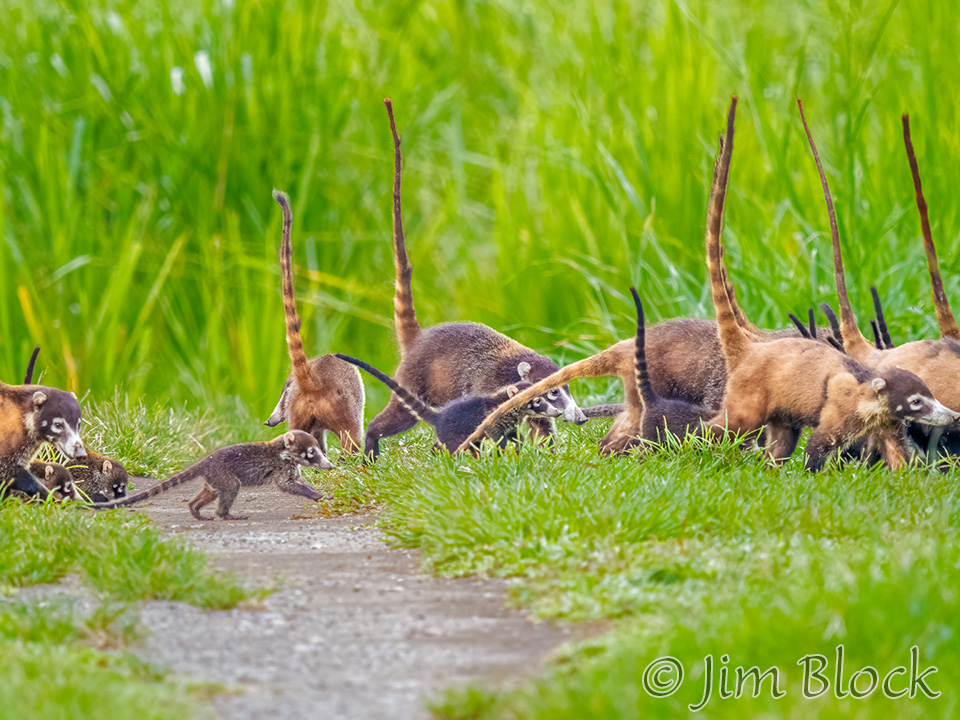
The kids got into tussles…
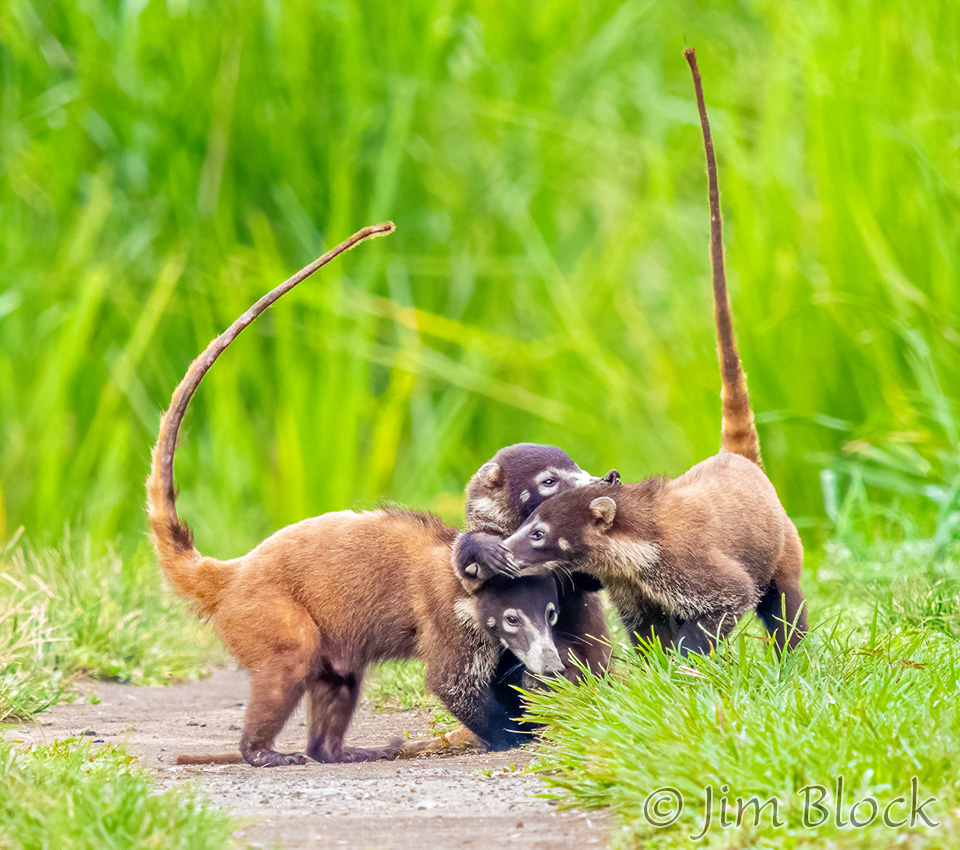
… then a parent came to break it up.
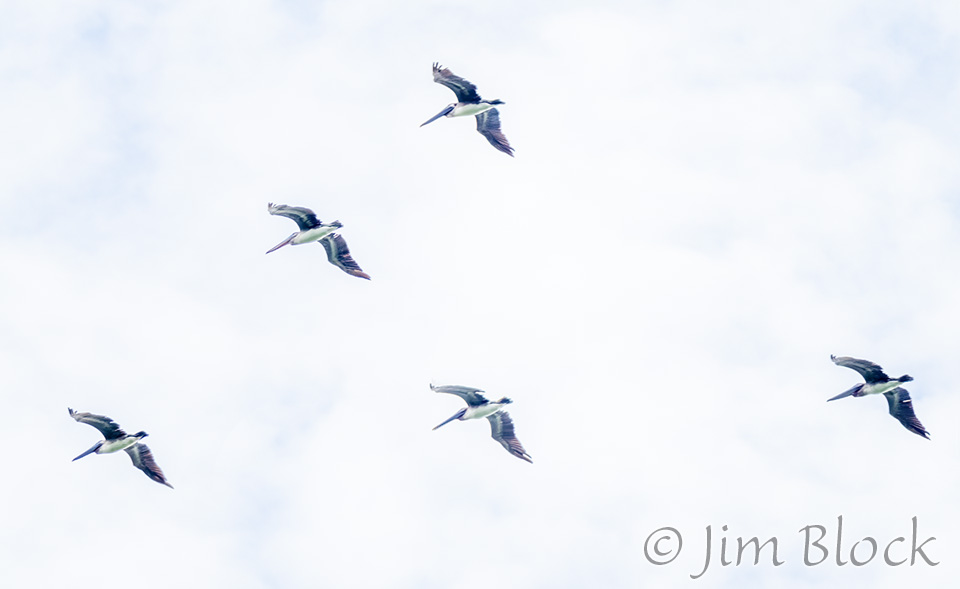
As we approached the beach, Brown Pelicans flew by.
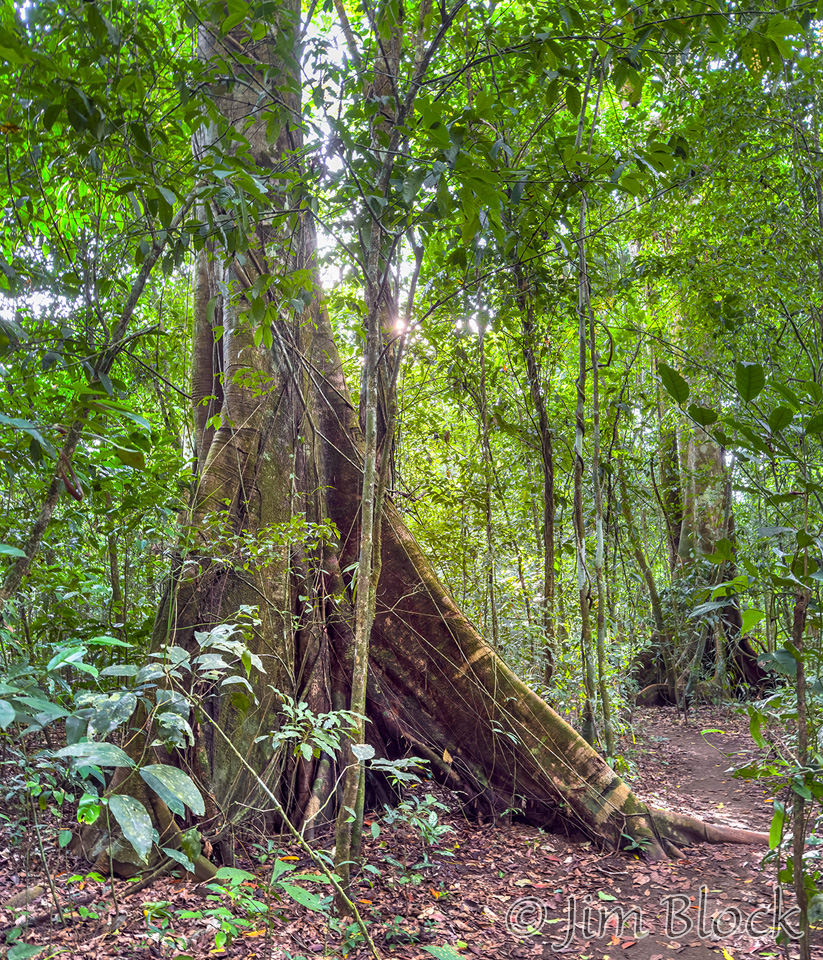
This tree was just short of the beach.
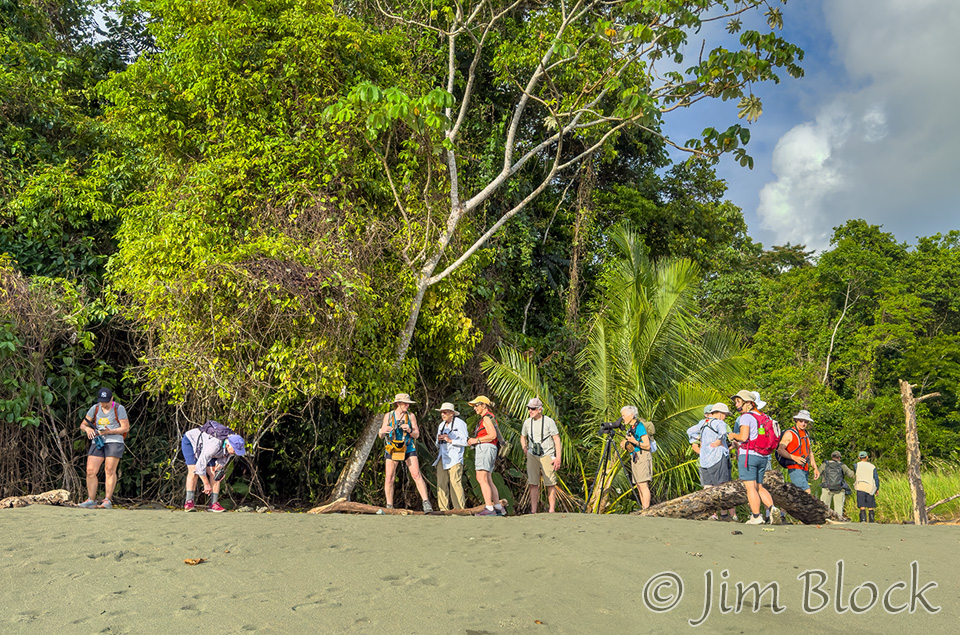
We walked quite a distance south along the beach.
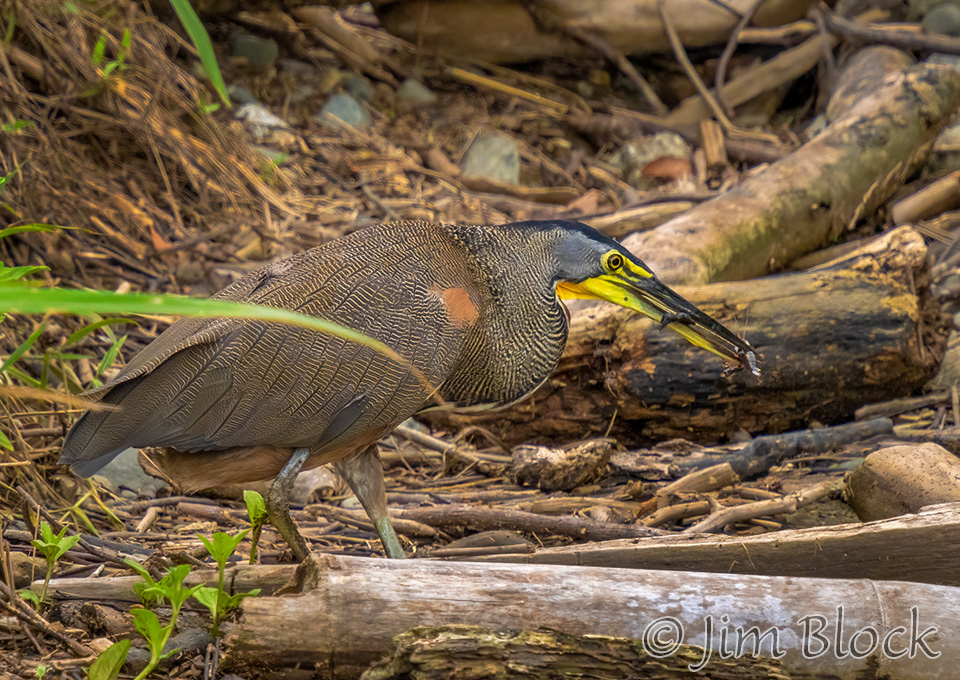
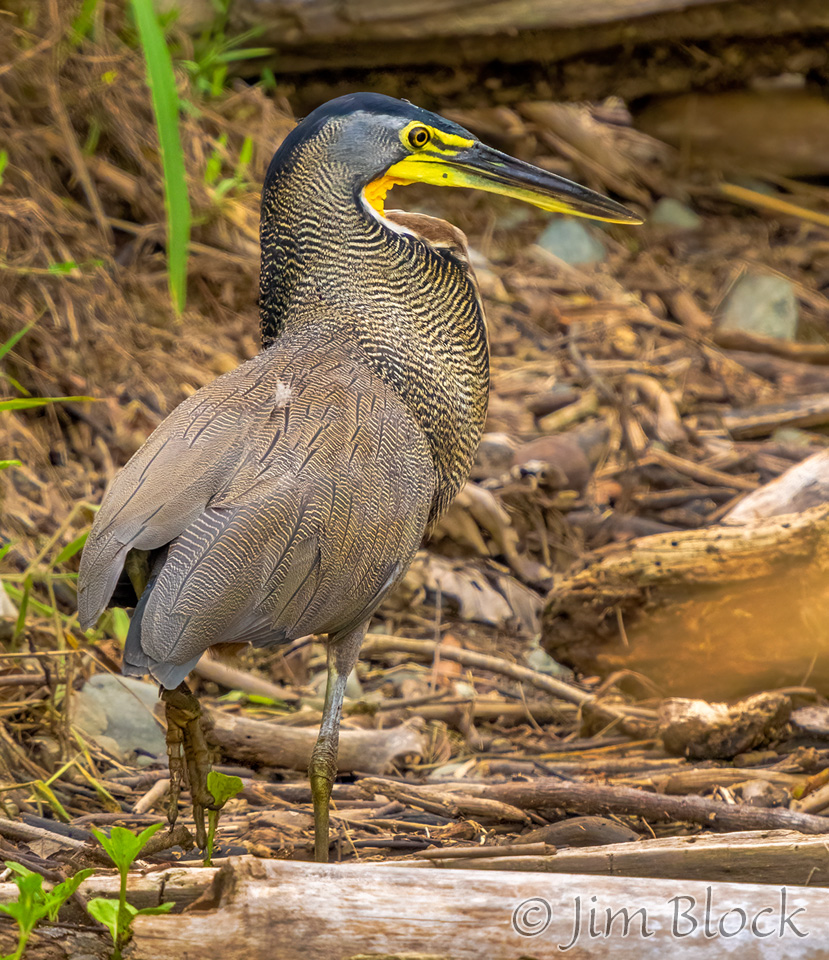
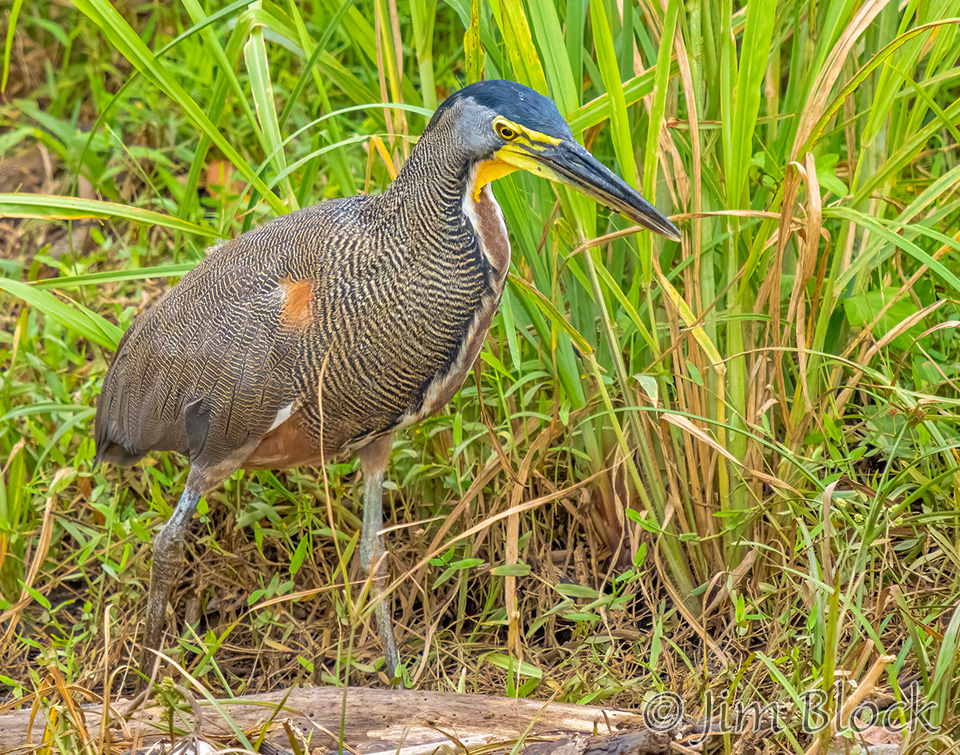
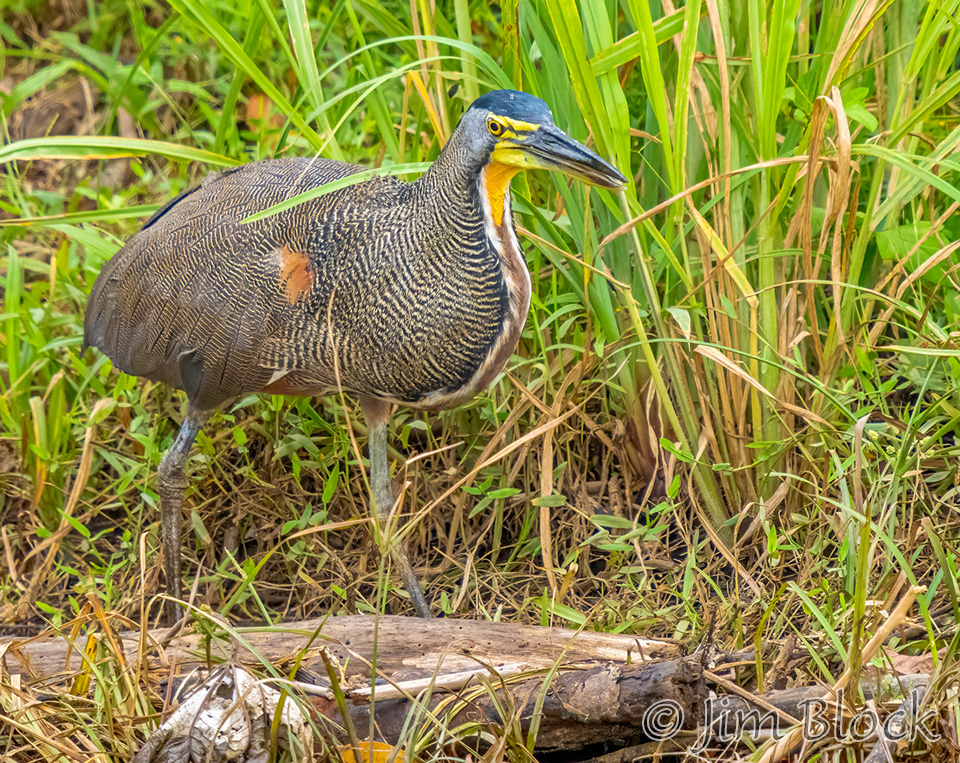
We found a Bare-throated Tiger-Heron that seemed unconcerned about our presence. It caught and swallowed a small morsel.
Gil found some “ocelot scat”.
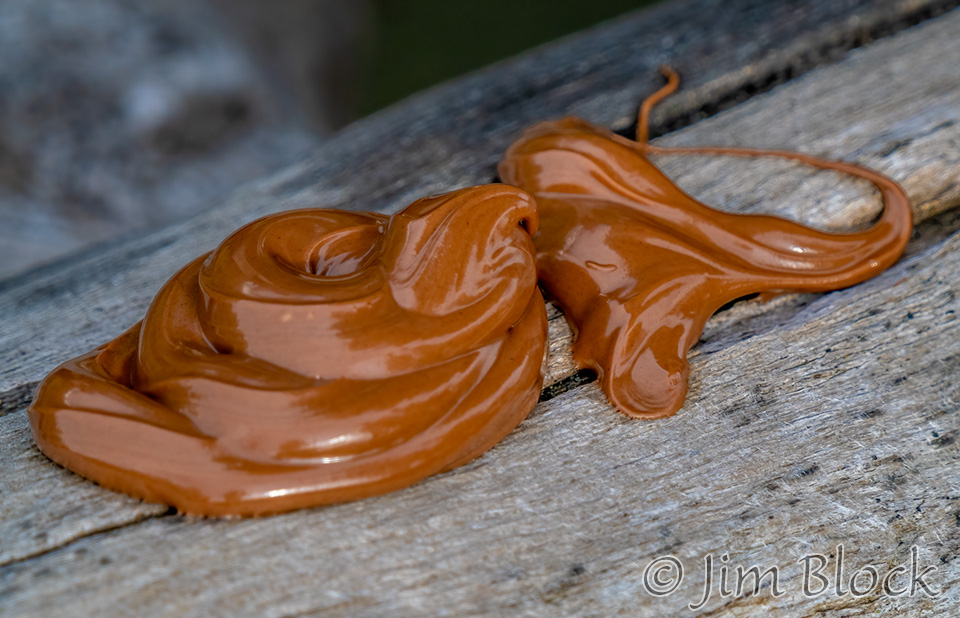
He tasted it and offered tastes to others.
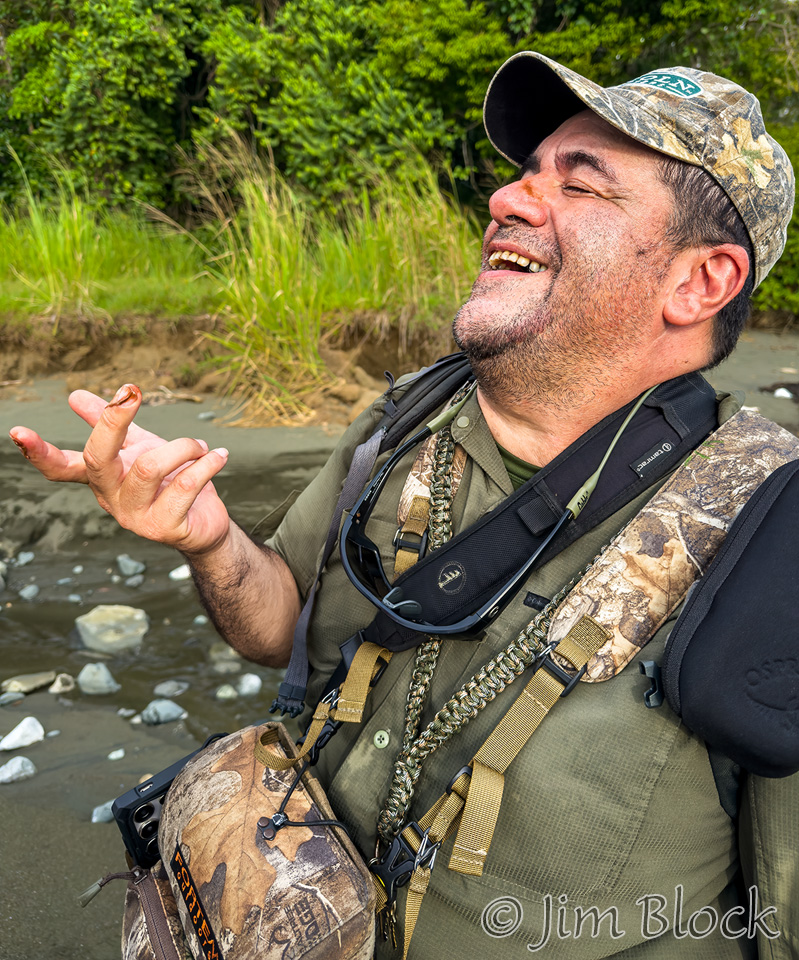
I got in on the gag late, but I believe it was something edible that he sprayed on a log.
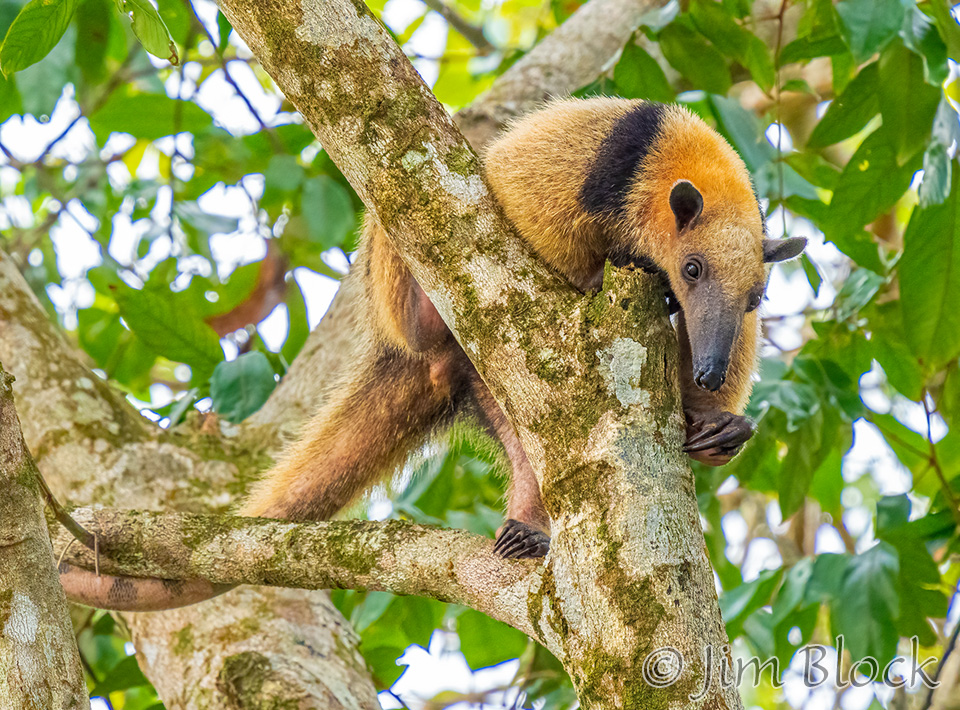
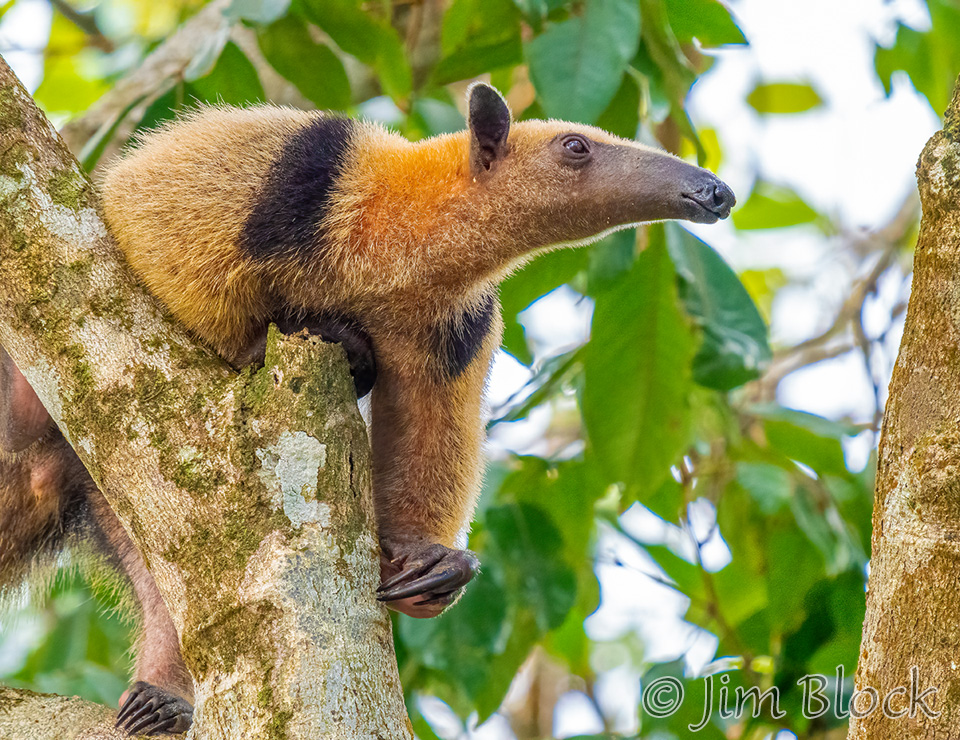
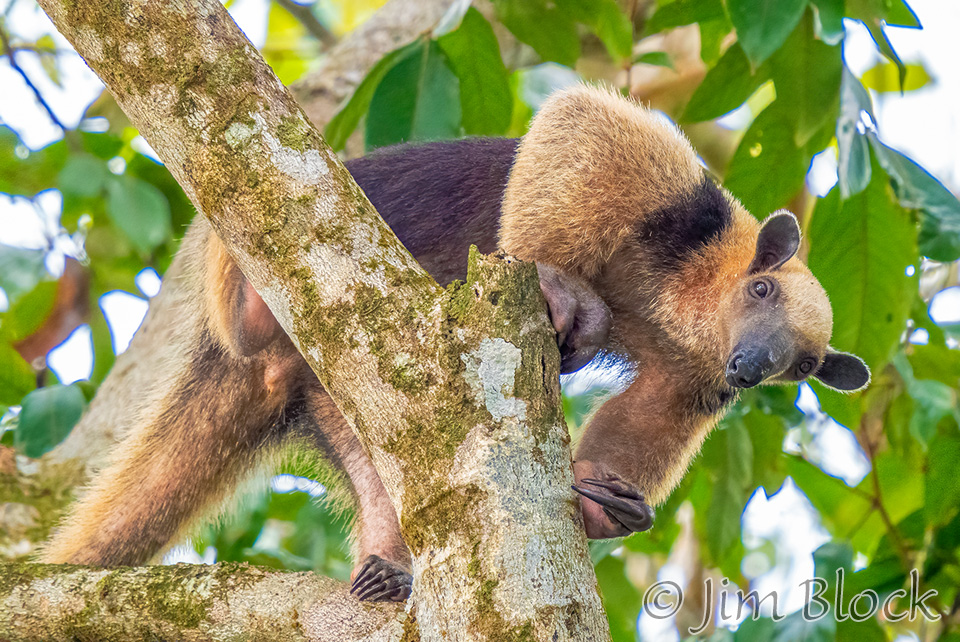
We found an anteater in a tree. This is a Tamandua rather that the ground-dwelling Giant Anteater that I saw in Brazil.
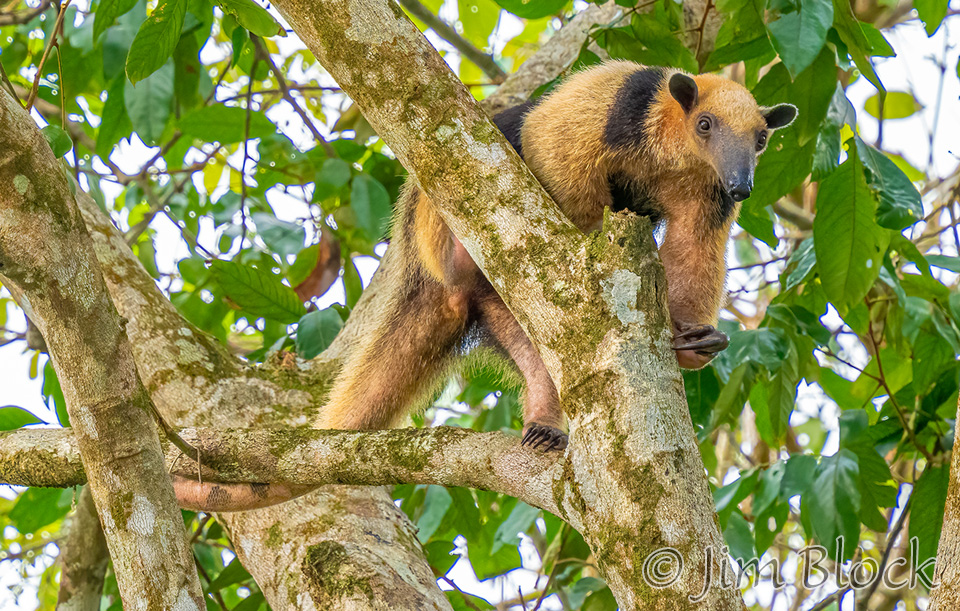
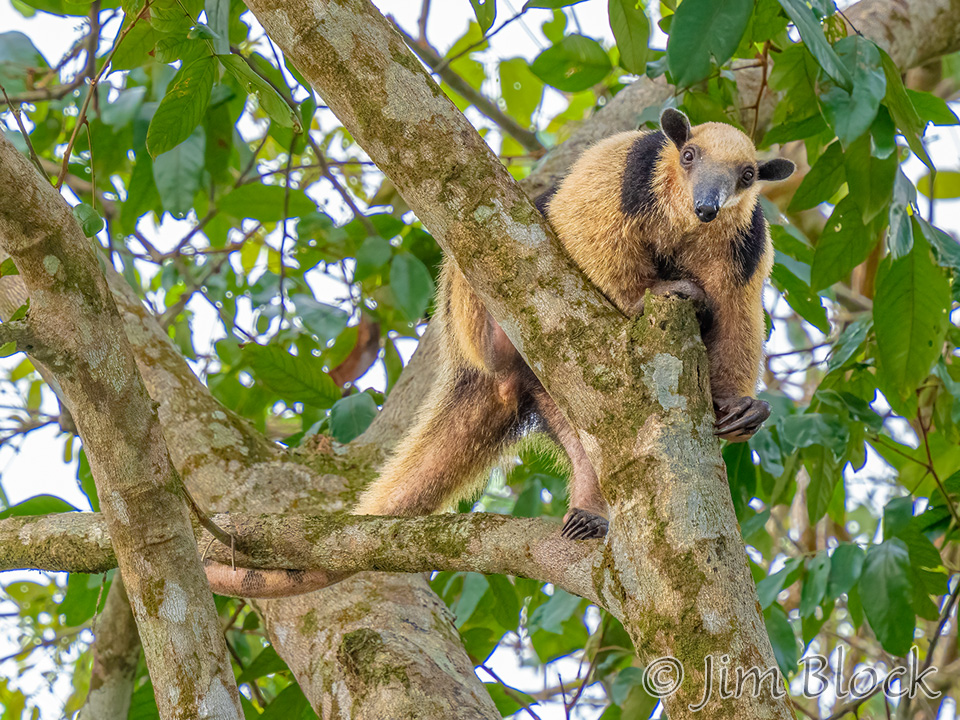
Anteaters are more closely related to sloths than they are to any other group of mammals. Their next closest relatives are armadillos. This is a strange and beautiful animal.
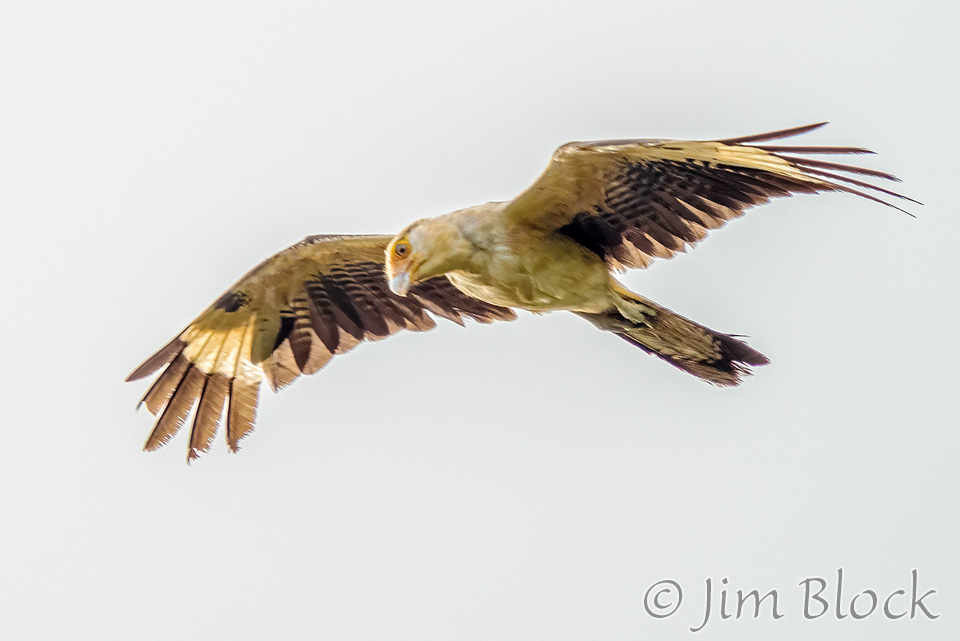
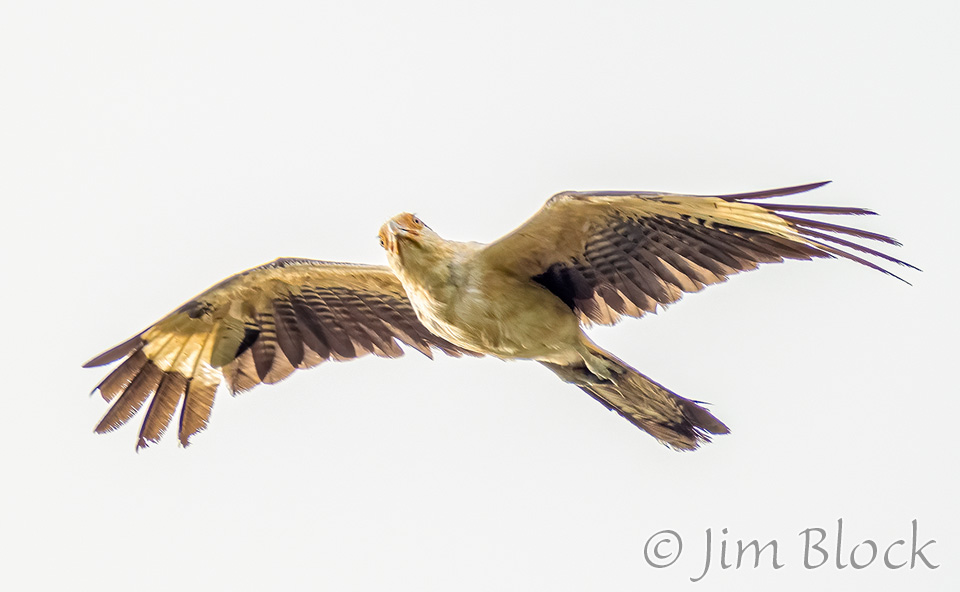
As we walked along the beach we watched a Yellow-headed Caracara fly high overhead.
Farther along the beach we found a pair of Whimbrel, a species I have seen in Florida.
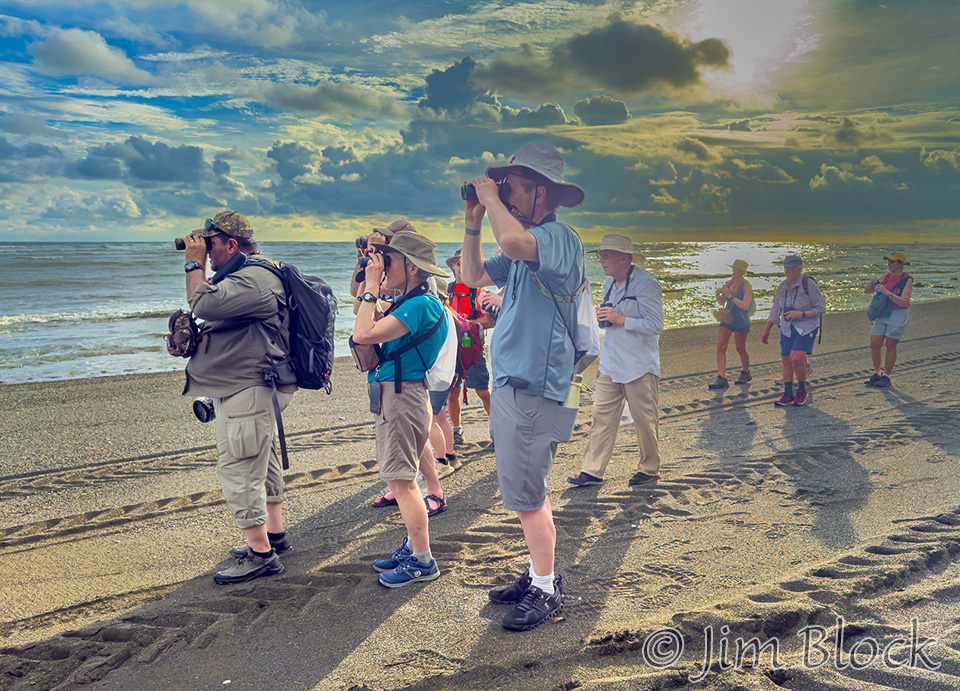
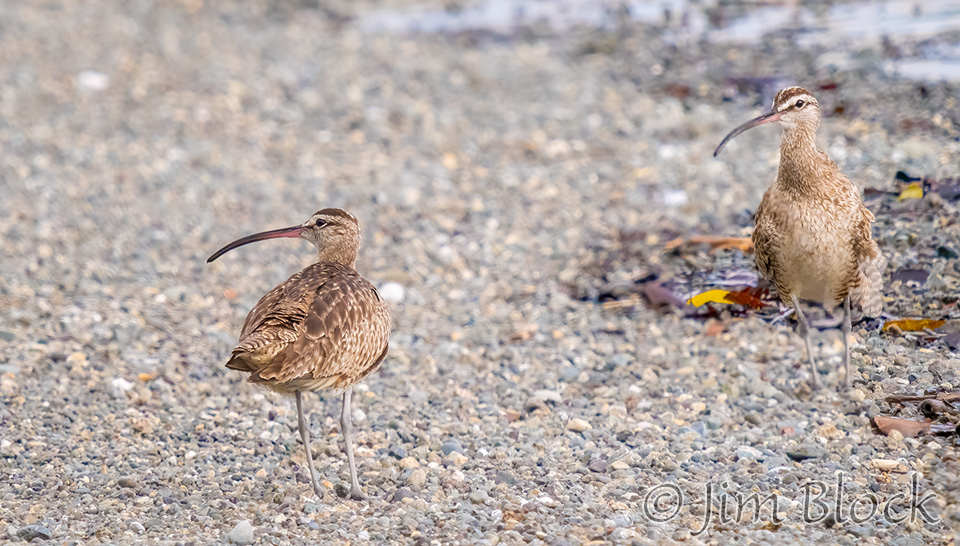
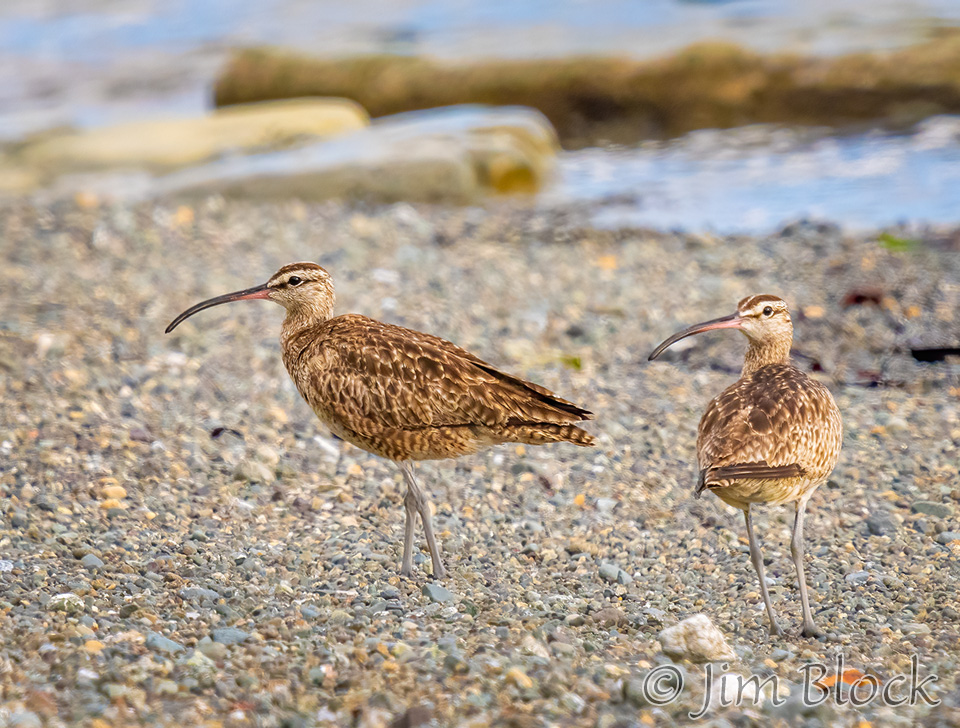
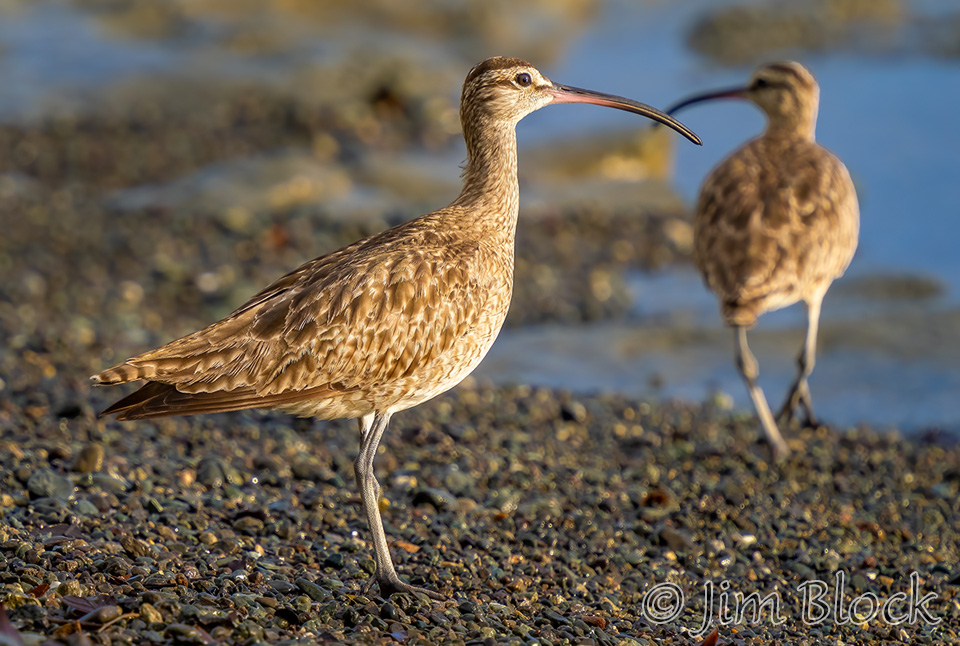
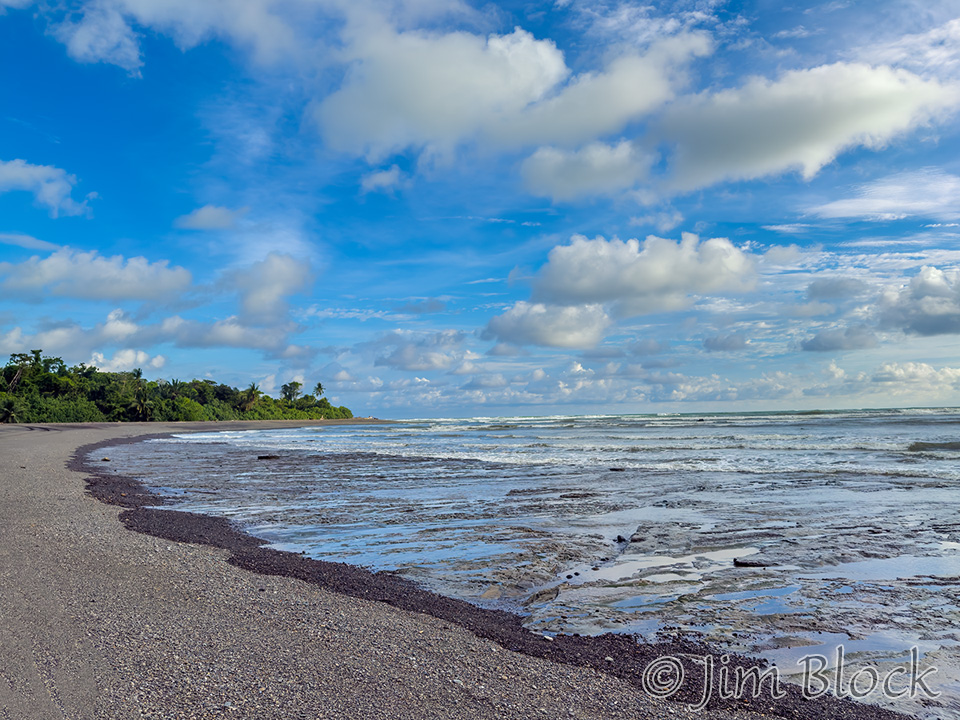
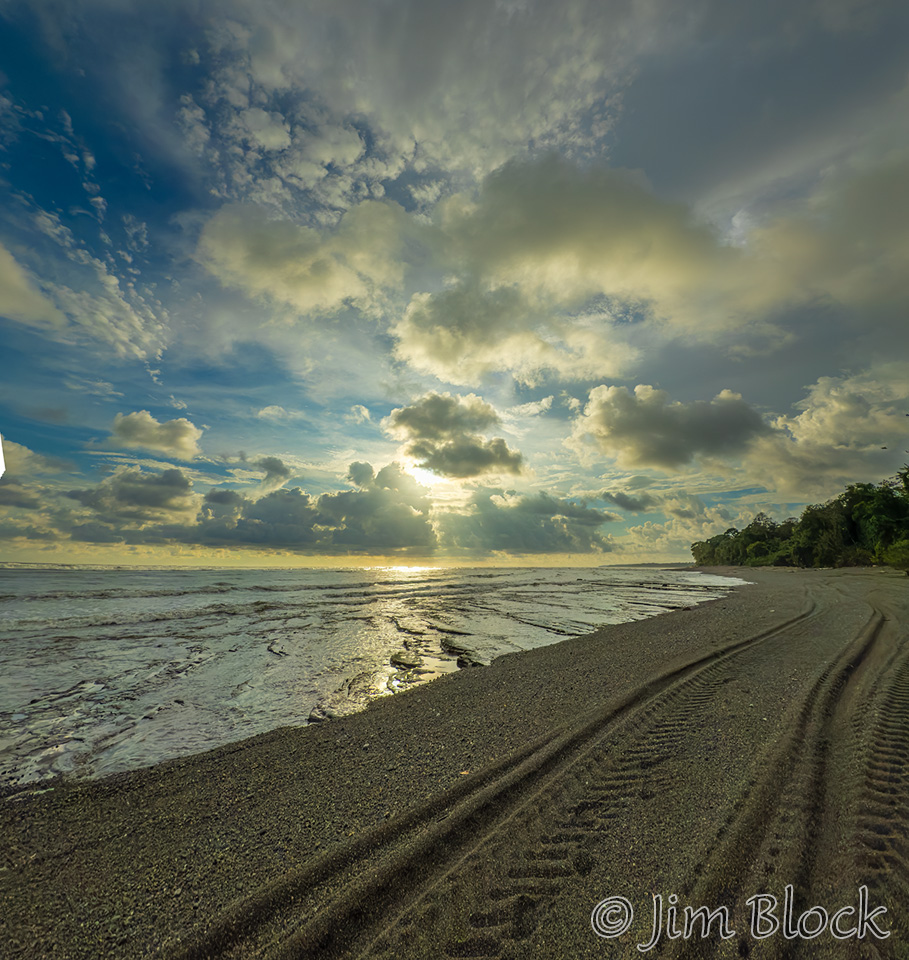
Below are views looking away from and toward the setting sun. Apparently some groups get their gear hauled to the station for them. We carried ours.
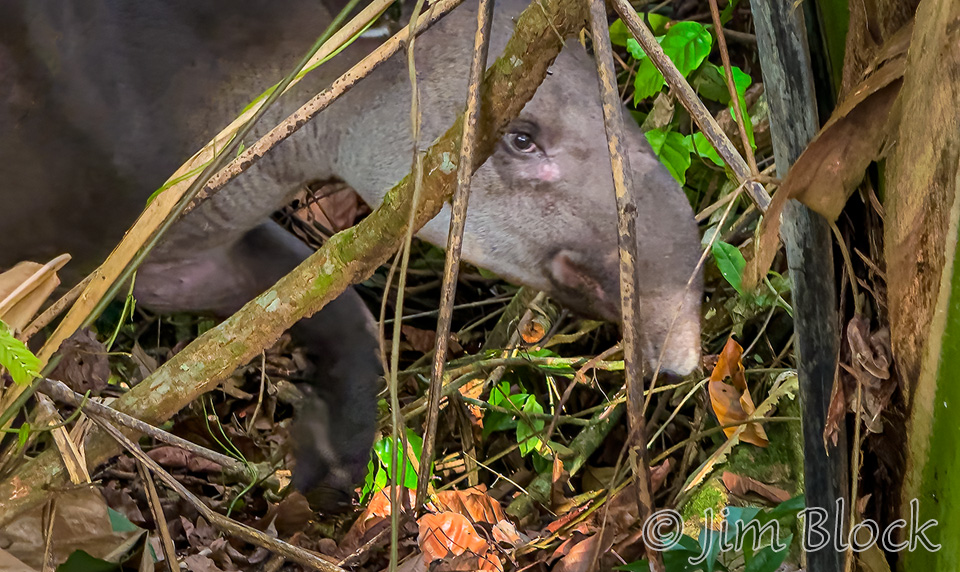
Hidden in the brush along the beach was a tapir. These creatures can weight over 600 pounds.
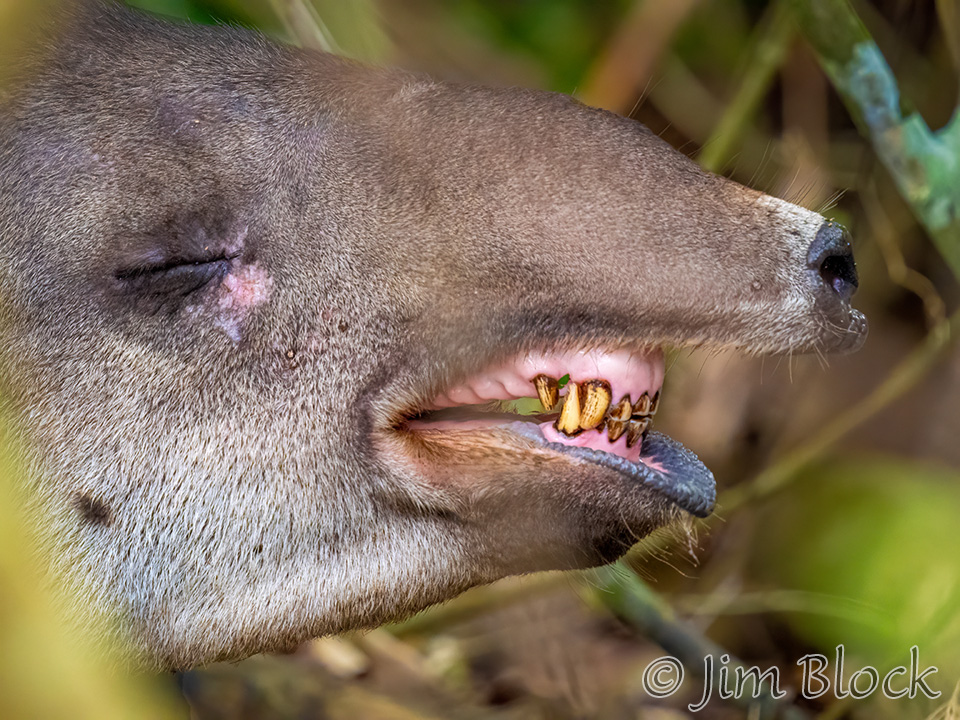
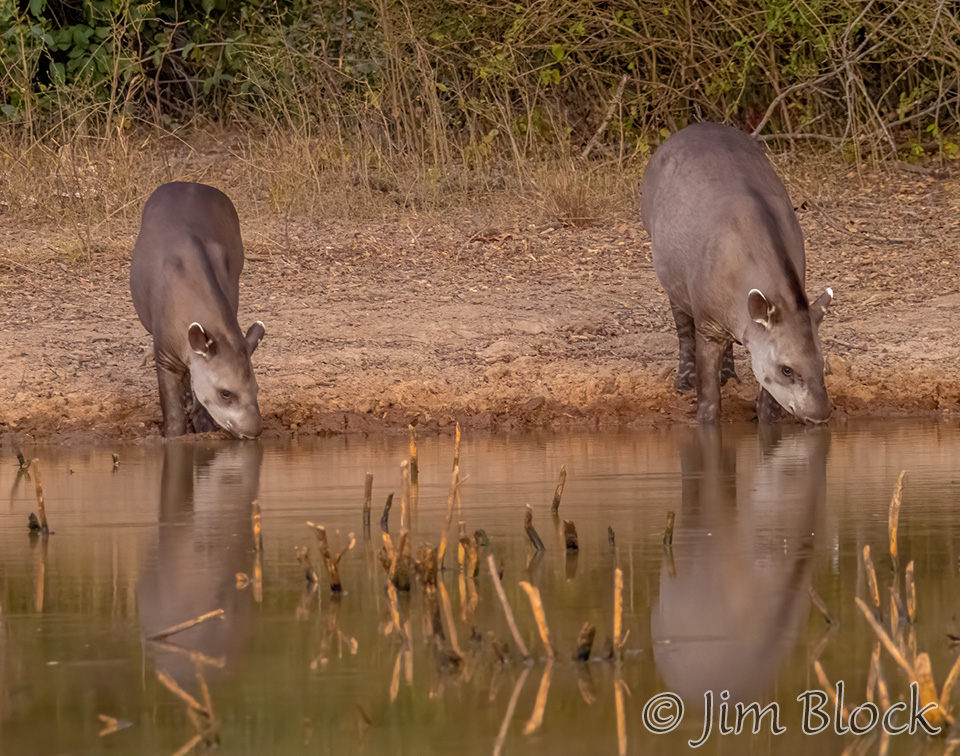
I did not get a good photo of tapir in Costa Rica but here is a pair from Brazil.
There were some Black Vultures on the beach and in a tree along the beach.
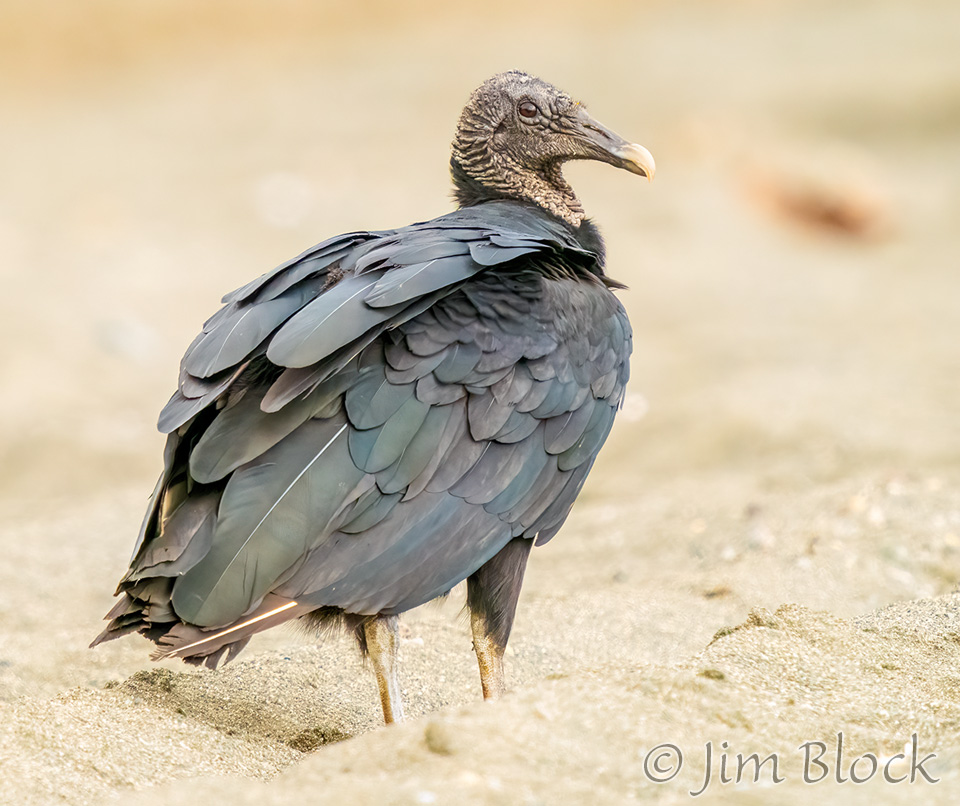
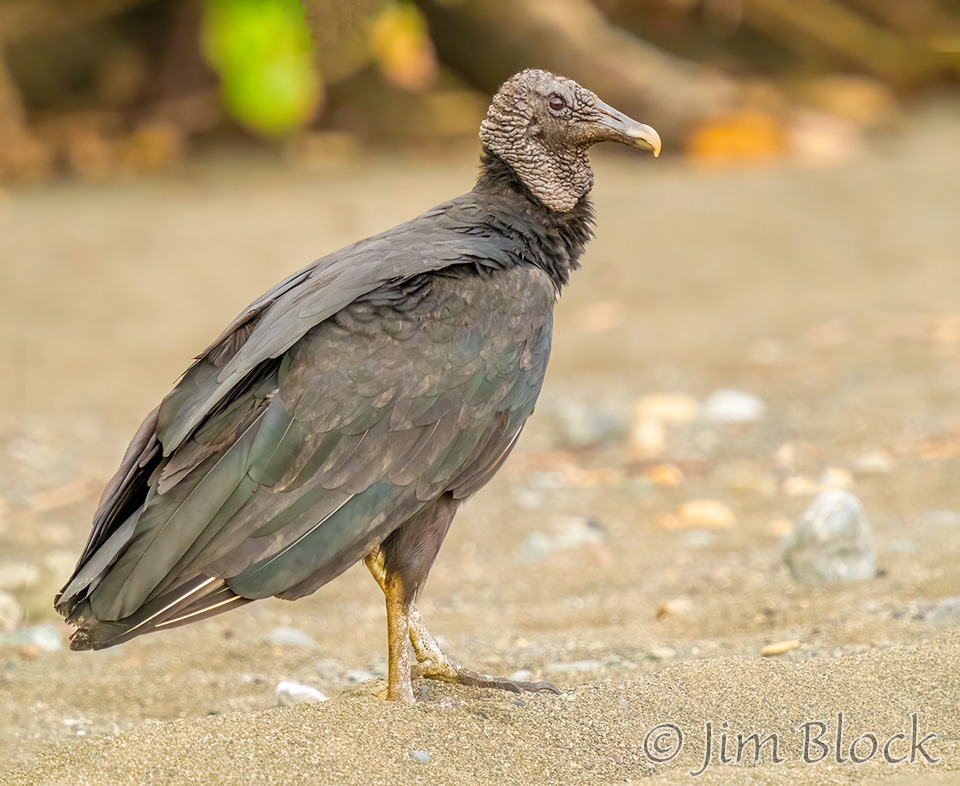
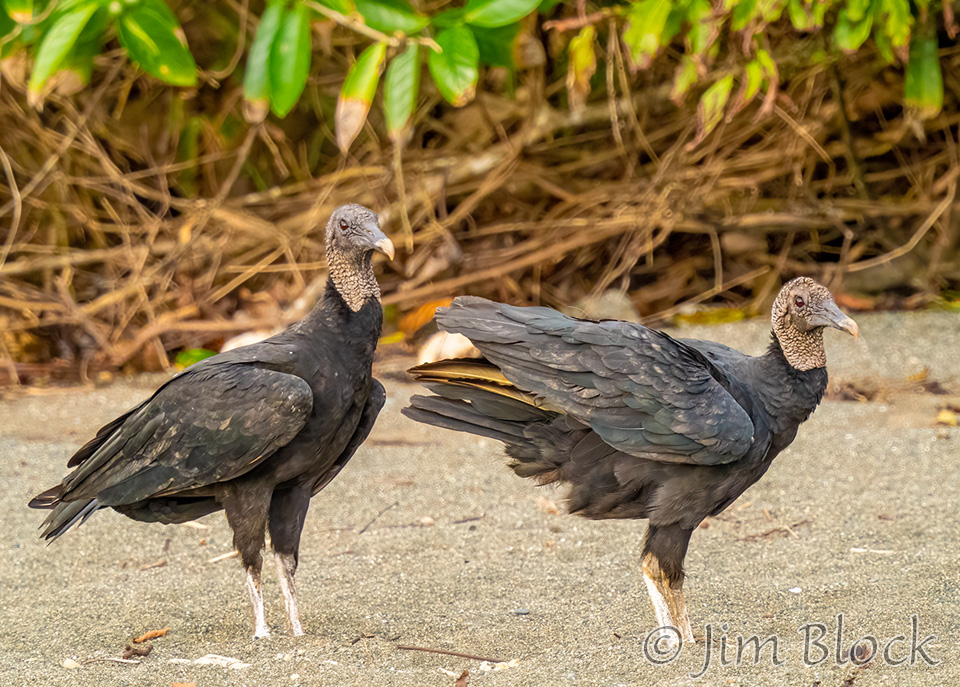
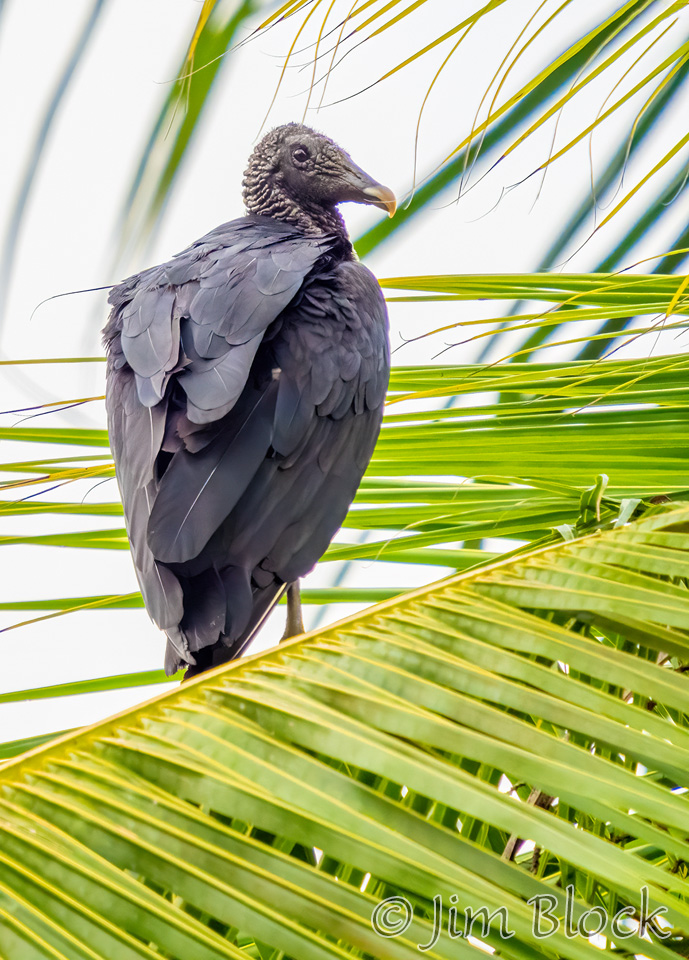
We exited the beach near where the boat landed and hiked back to the ranger station as it was getting dark.
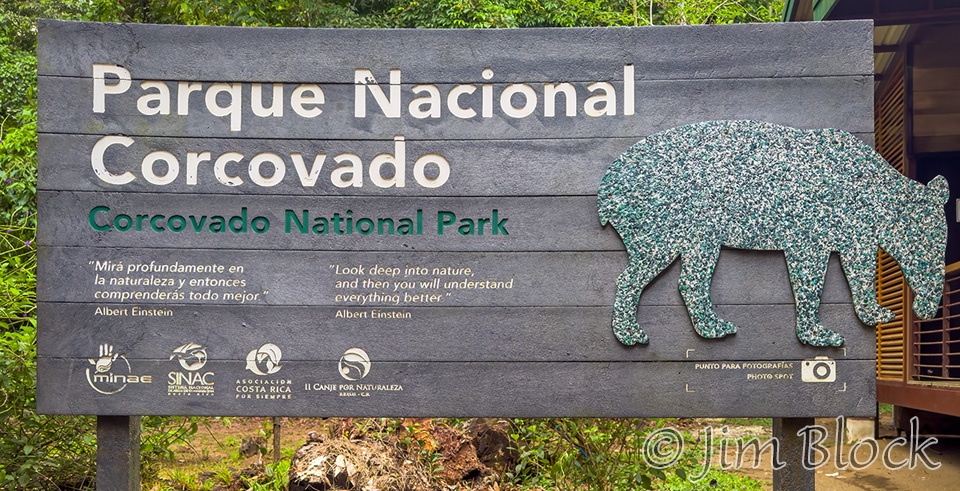
Since I was using my iPhone as my second camera rather that carrying the second OM-1 that I had with me, it was important to keep it charged. I charged my phone during dinner. Those are my feet, bare of course.
Lights out and quiet time in the dorms was 8 p.m. But everything was hushed by 7:30 p.m. I had the best two nights of sleep on the trip at Corcovado. Maybe it had to do with walking 5-7 miles each day and sleeping in the open air.
It rained all night. Hard. Torrential at times, rolling thunder, and bursts of lightning. Noisy on the roof. Yet I slept well until 3:45. Plenty of sleep since 7:30 p.m. Ted was already stirring in the bunk next door. I bought a cup of coffee before our early walk. Coffee was free with meals; $3 other times.
We met on the runway at 5 a.m., well before sunrise, for a pre-breakfast excursion.
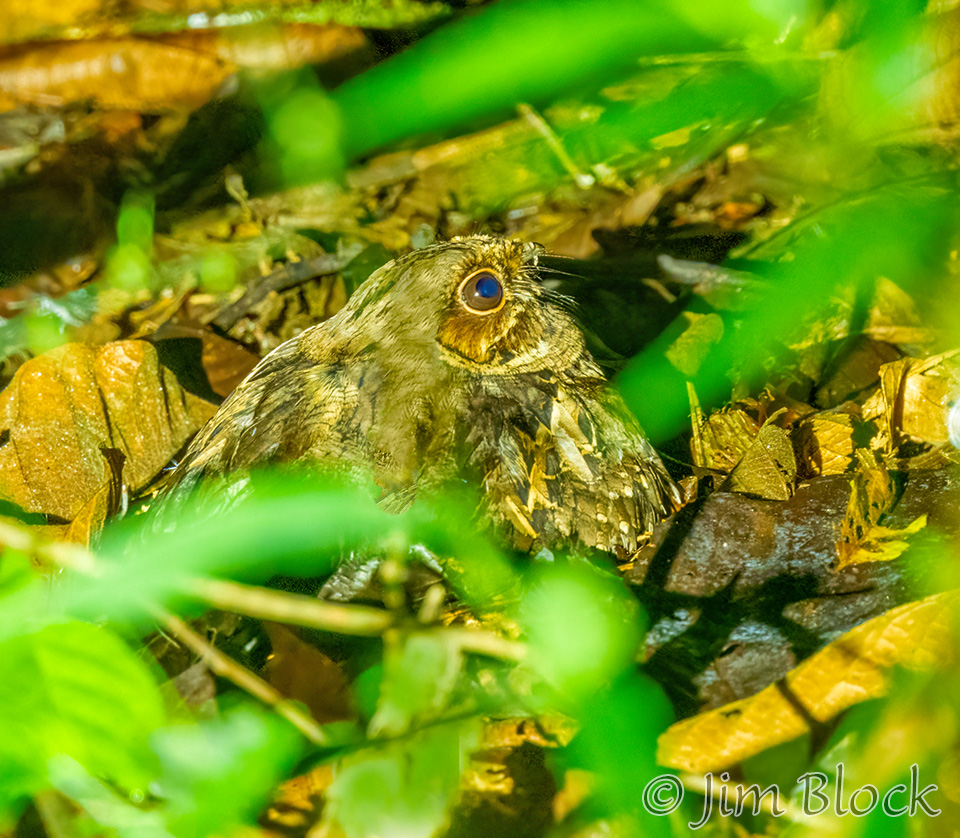
It was still quite dim. This was birding by flashlight! We found a nightjar, a Common Pauraque. Here it is lit by Rodger’s flashlight.
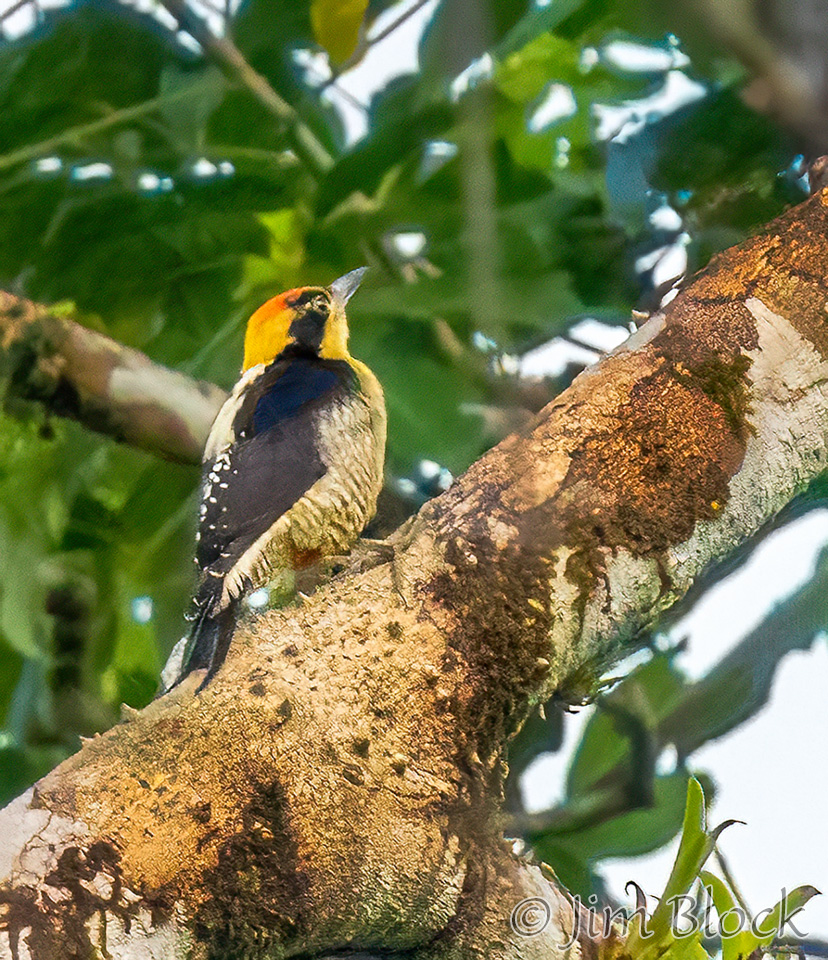
Handheld at 1/80 sec. and 1122 mm (eq.), this Golden-naped Woodpecker was high and dark.
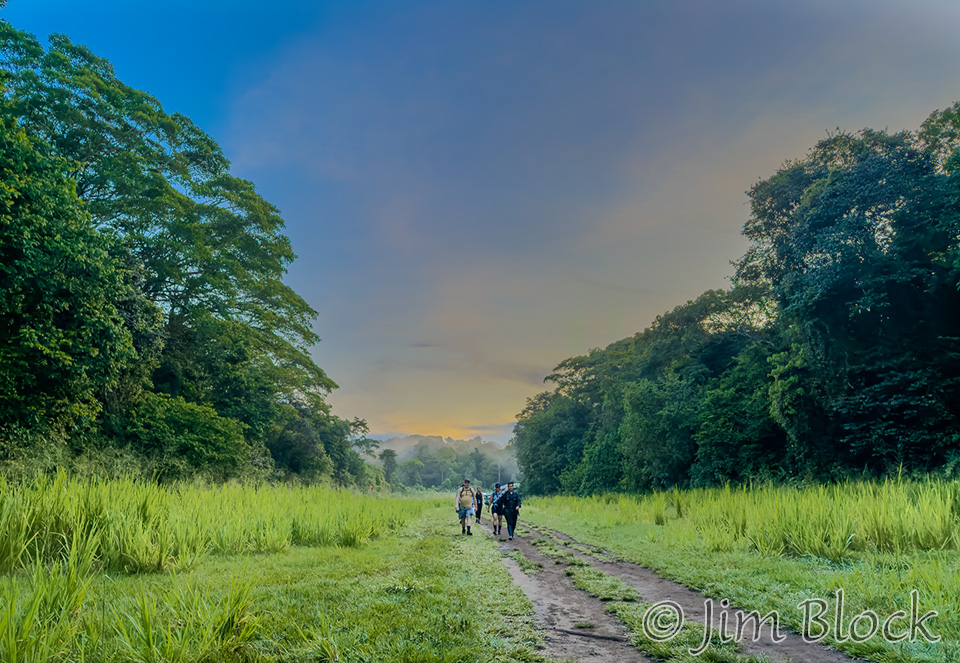
The sun was still not reaching us at 5:17 a.m.
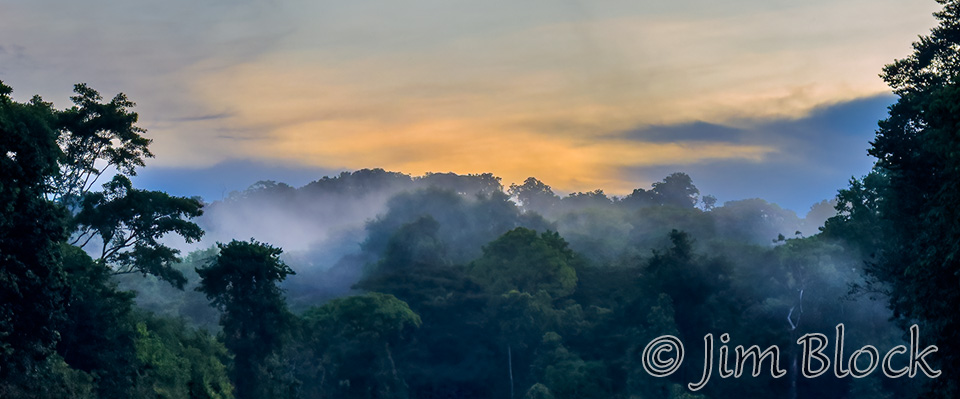
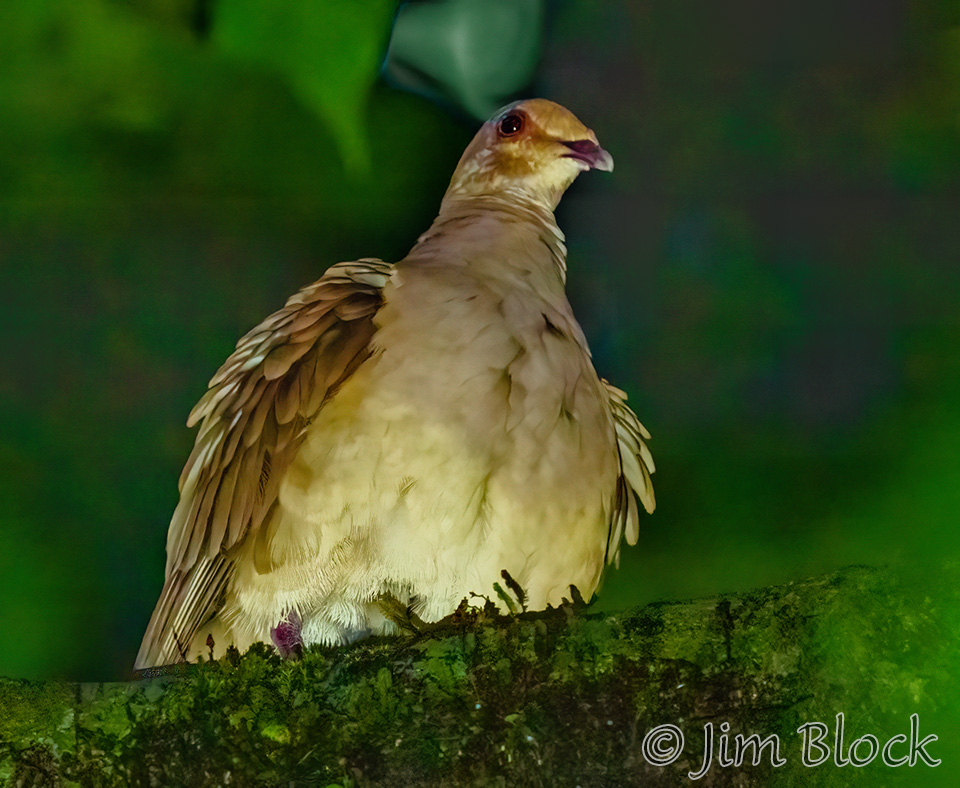
So naturally we headed into the darker woods. Here is a Ruddy Quail Dove.
We really were birding by flashlight. In the center of this photo you can see Rodger shining a light looking for some bird.
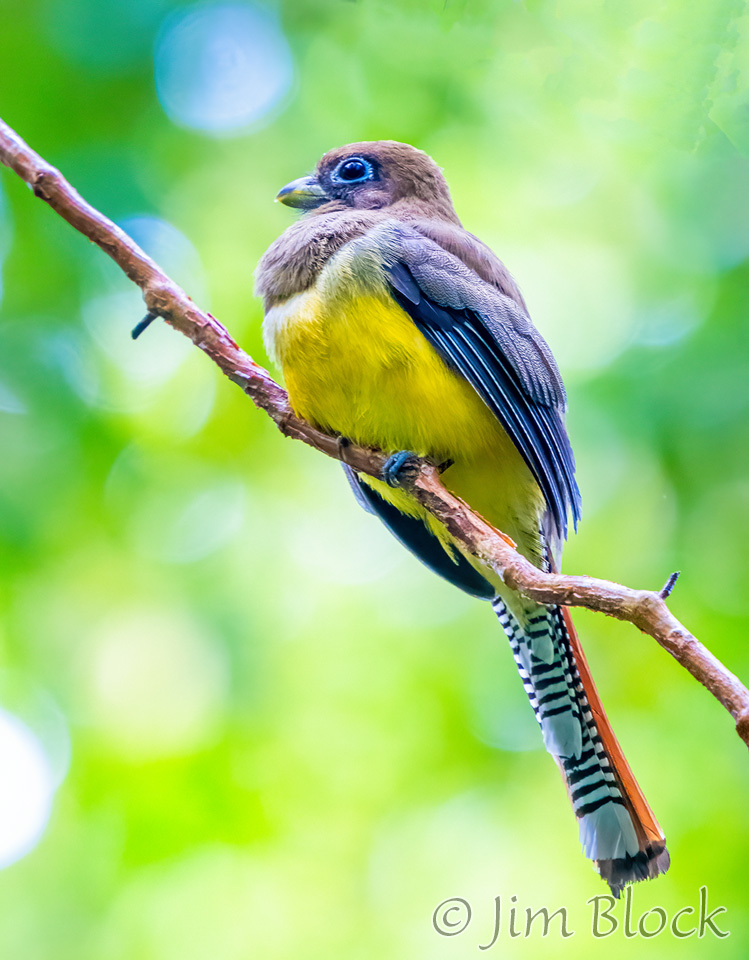
A bit before 6 a.m., we found two trogons. A Black-throated Trogon and …
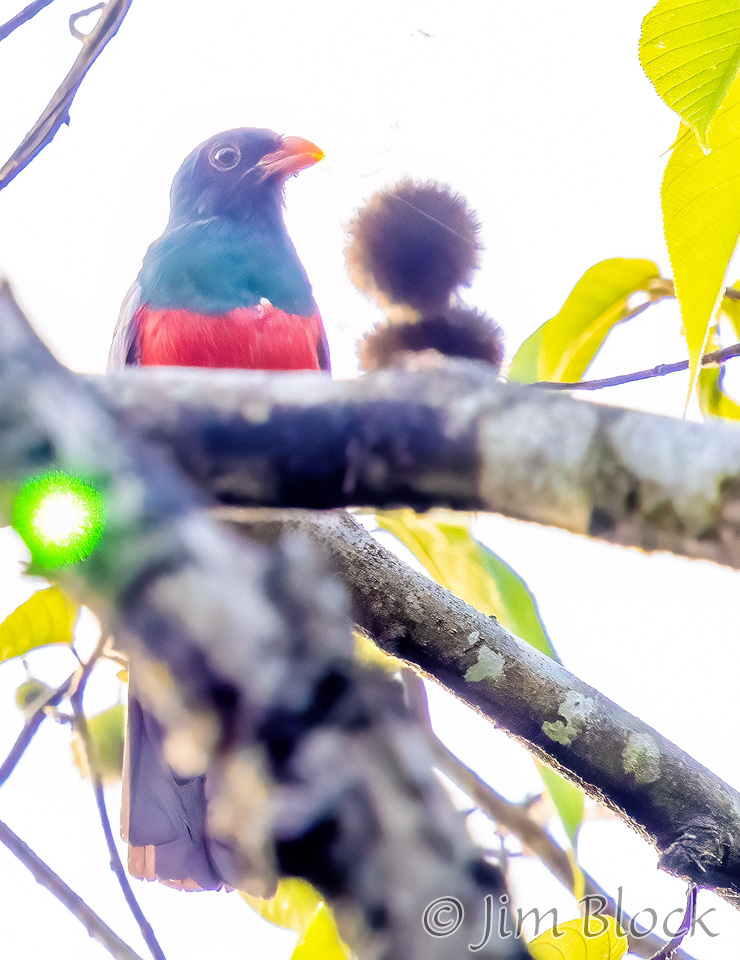
… a Slaty-tailed Trogon.
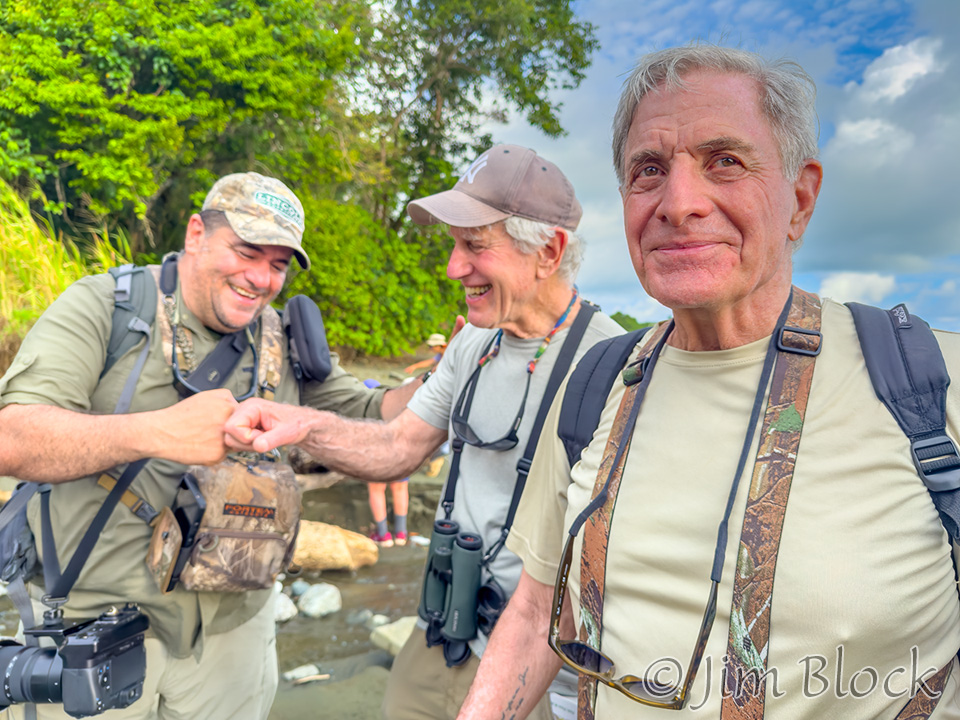
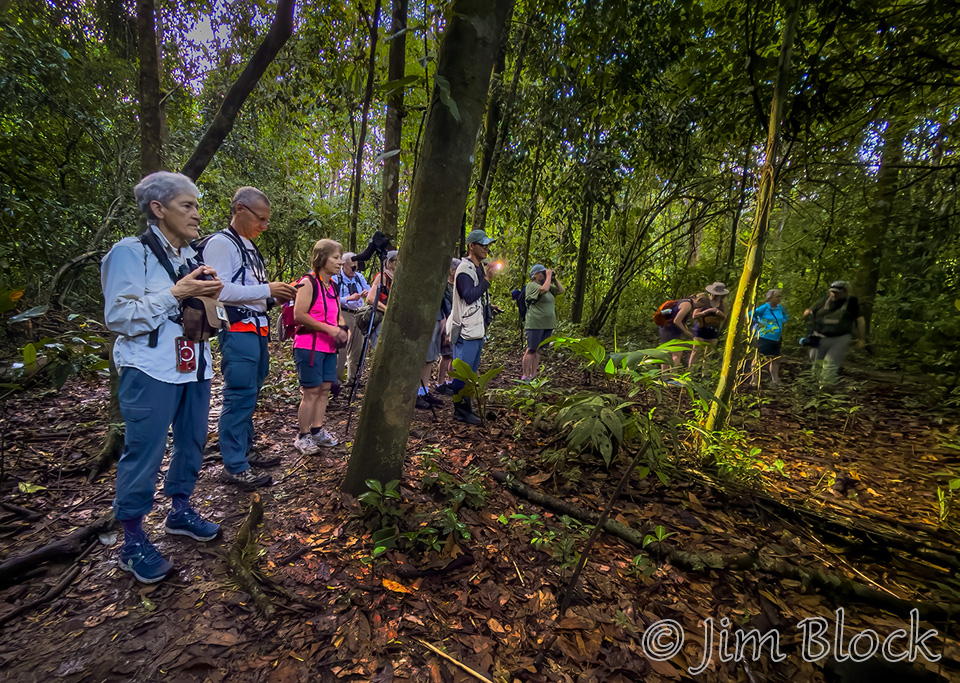
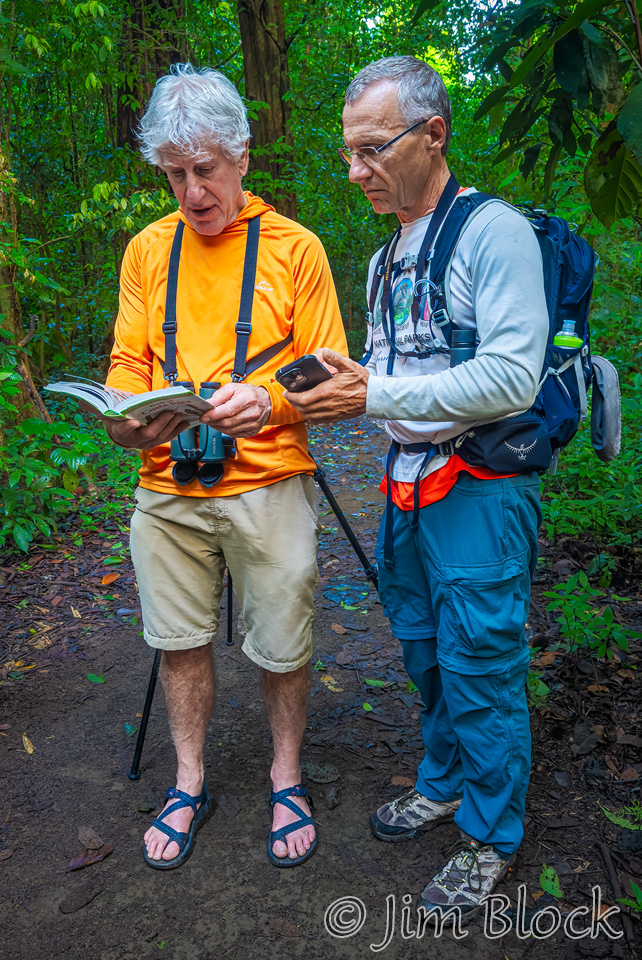
For the next 4o minutes we searched while I took photos of the group and the forest with my iPhone. The first one shows Ted and Bob consulting a bird book.
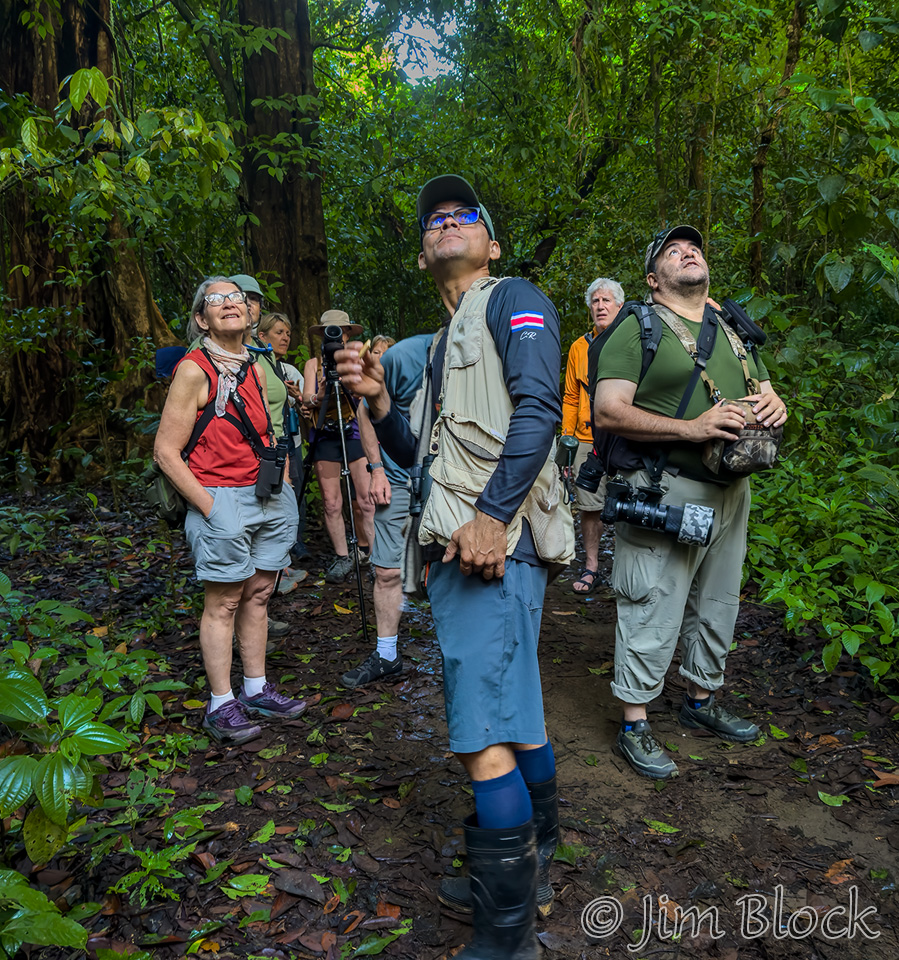
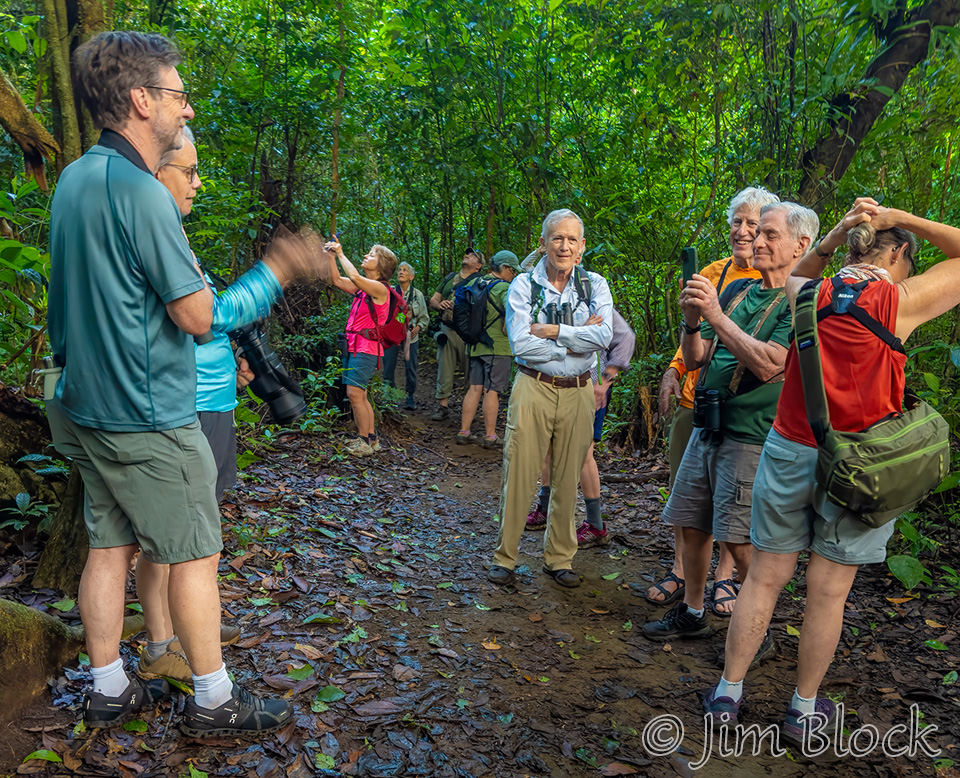
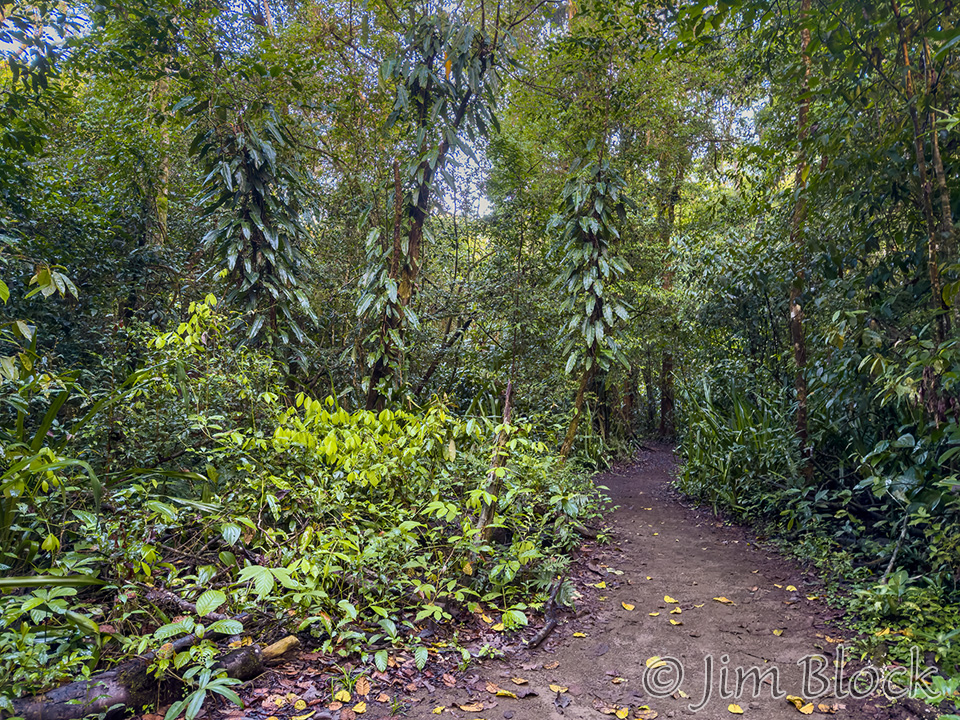
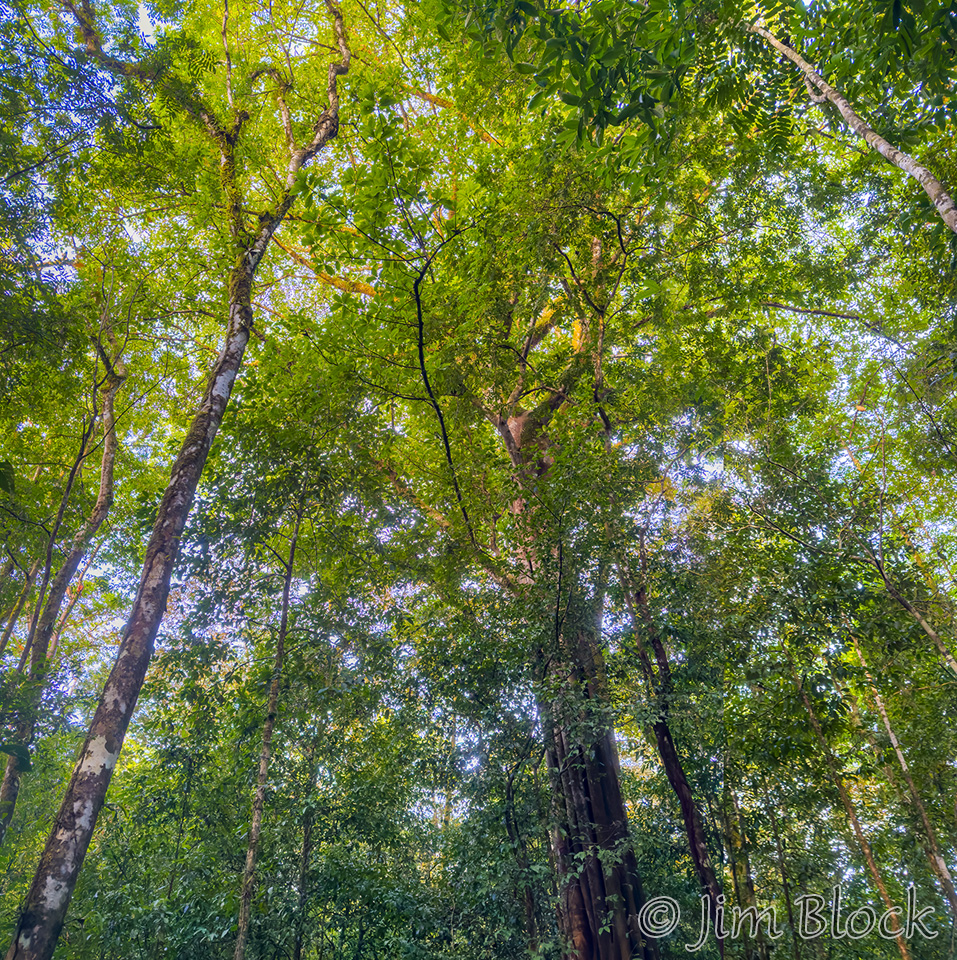
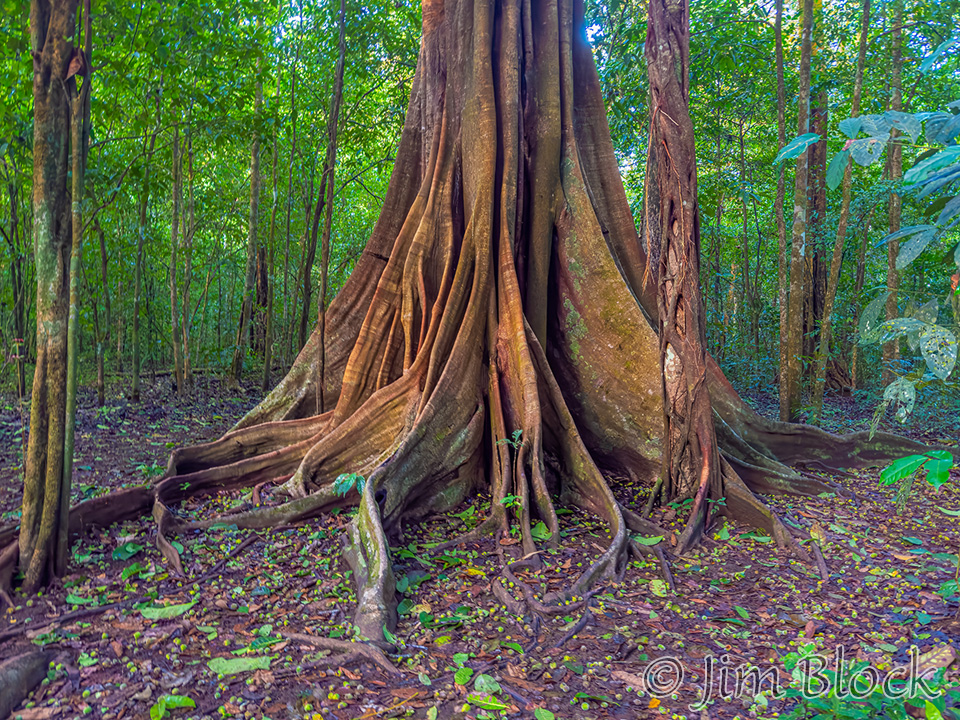
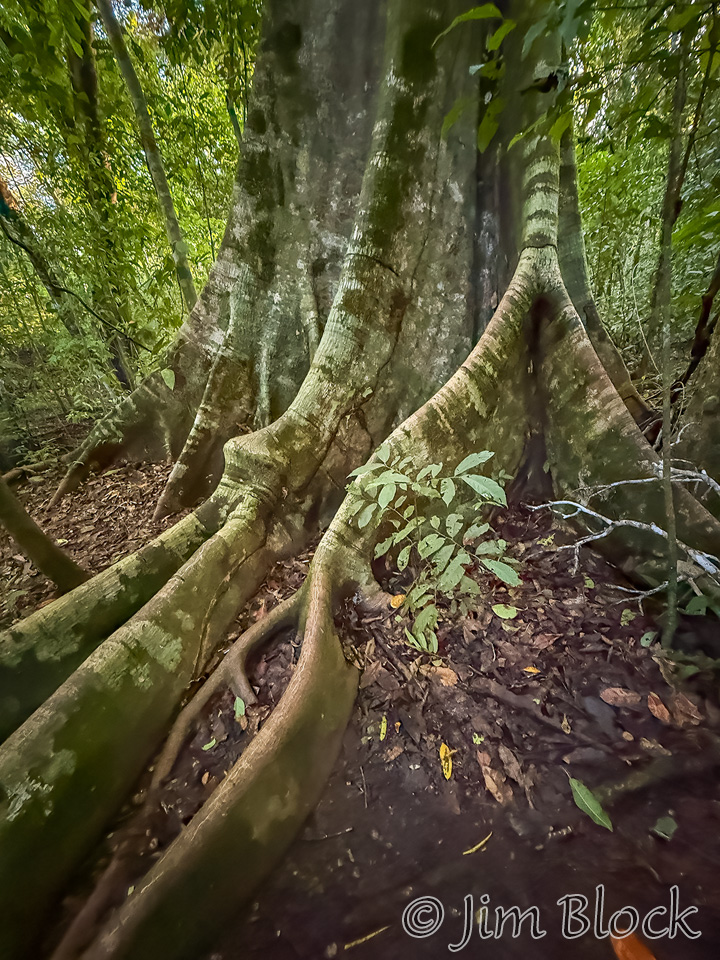
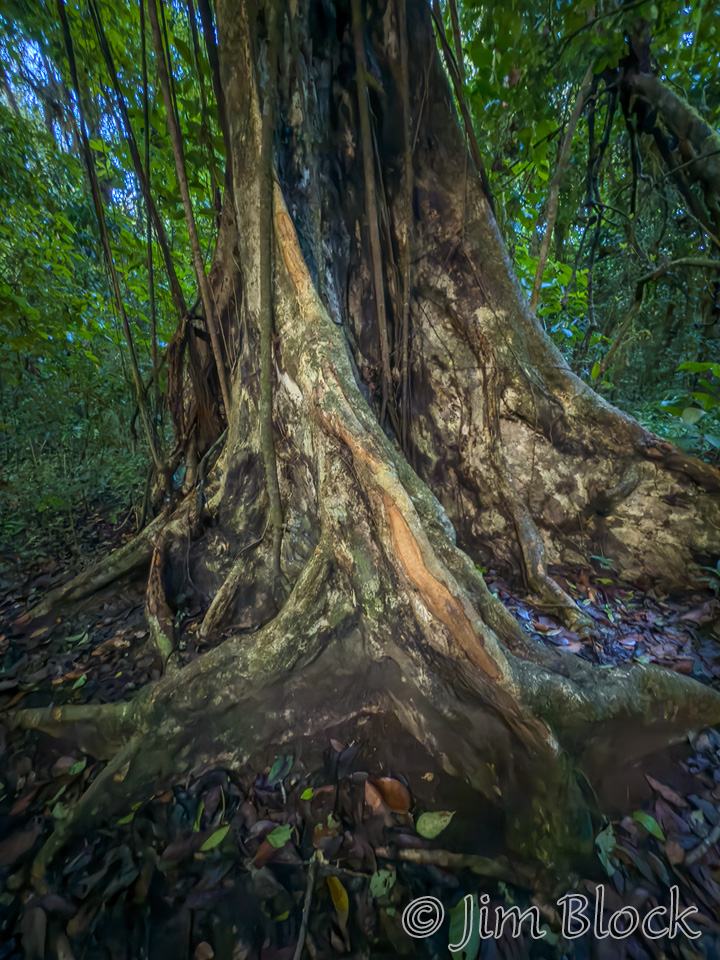
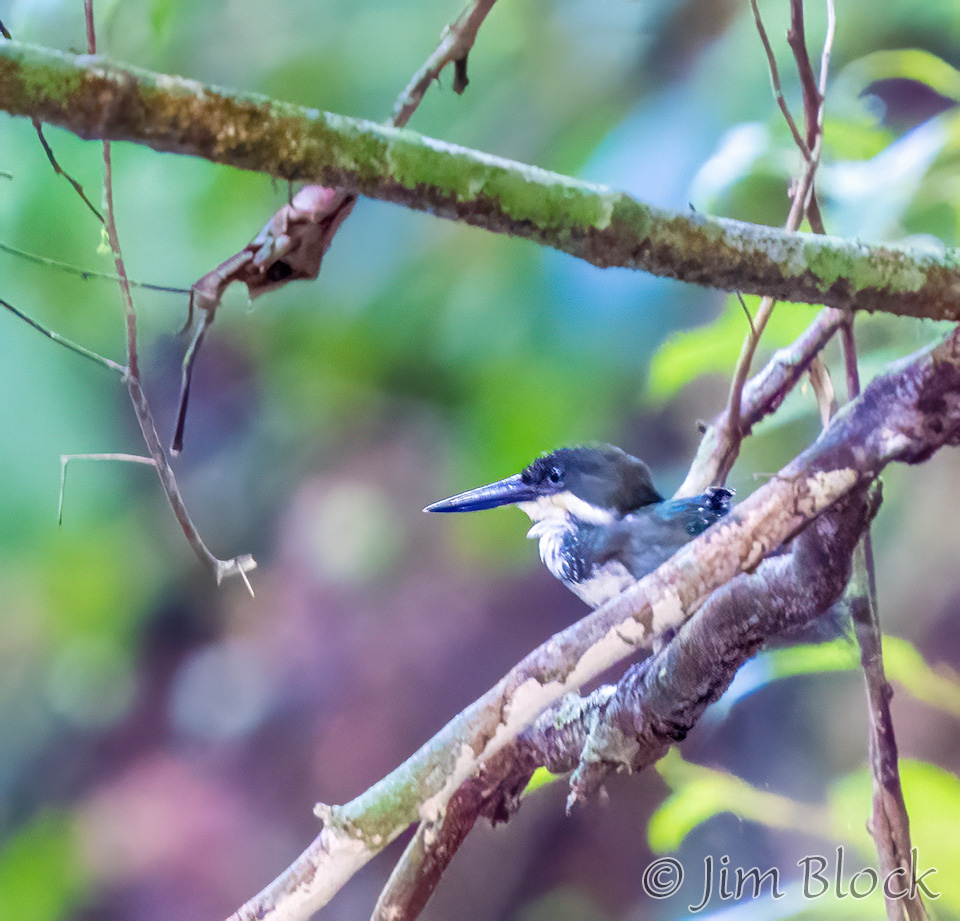
We reached Rio Sinera and found a Green Kingfisher.
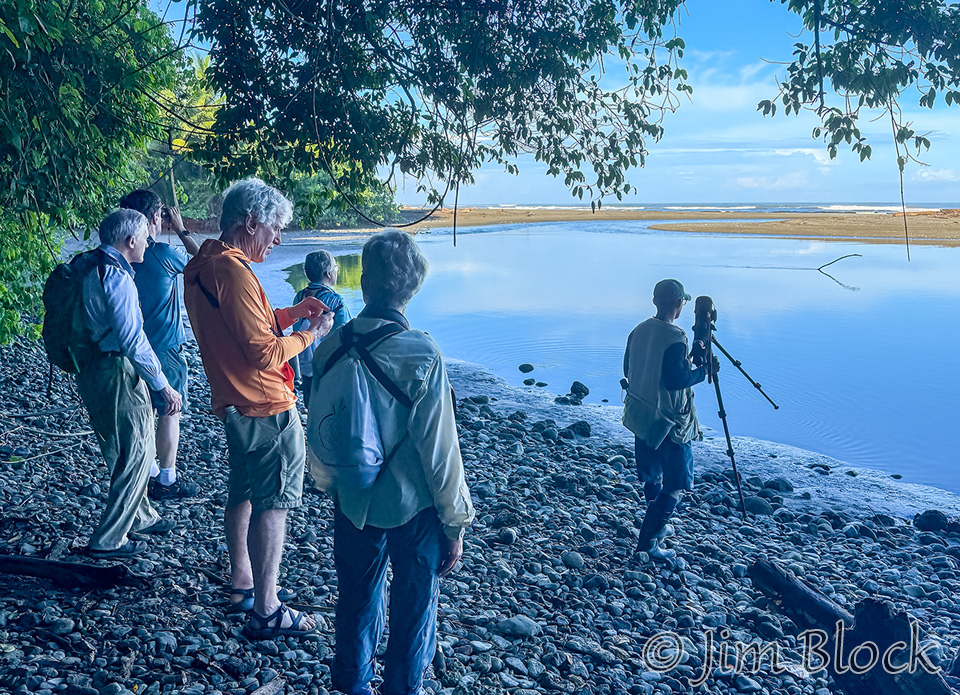
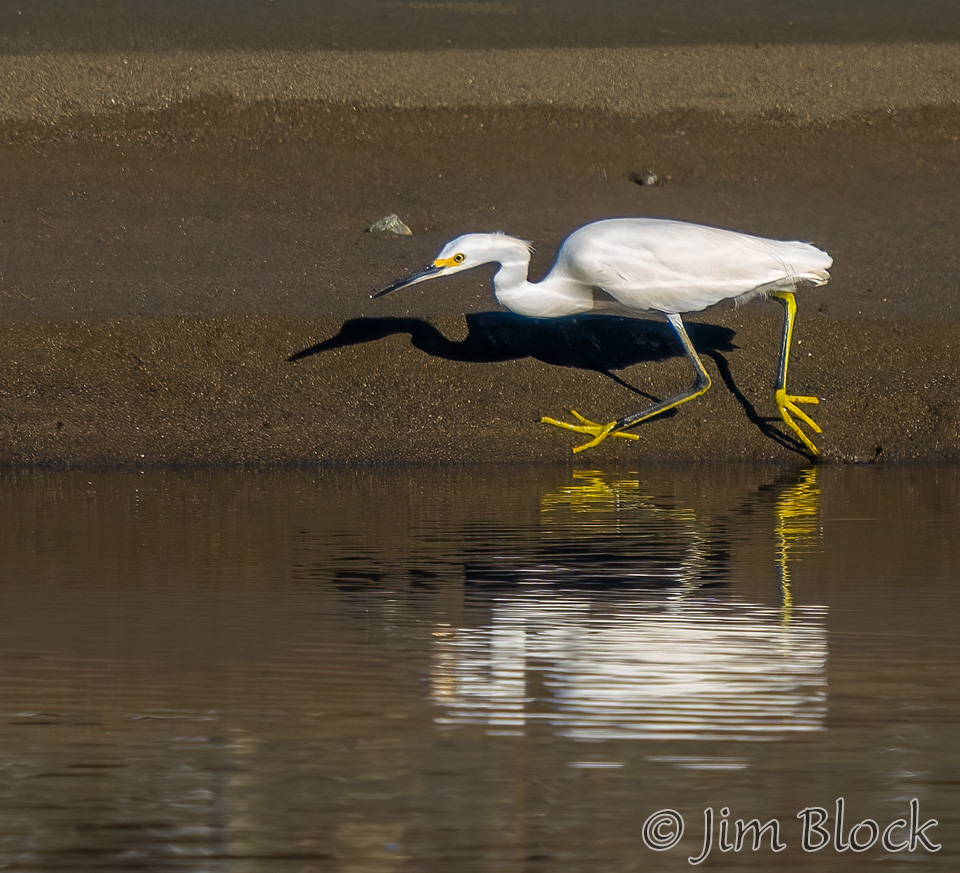
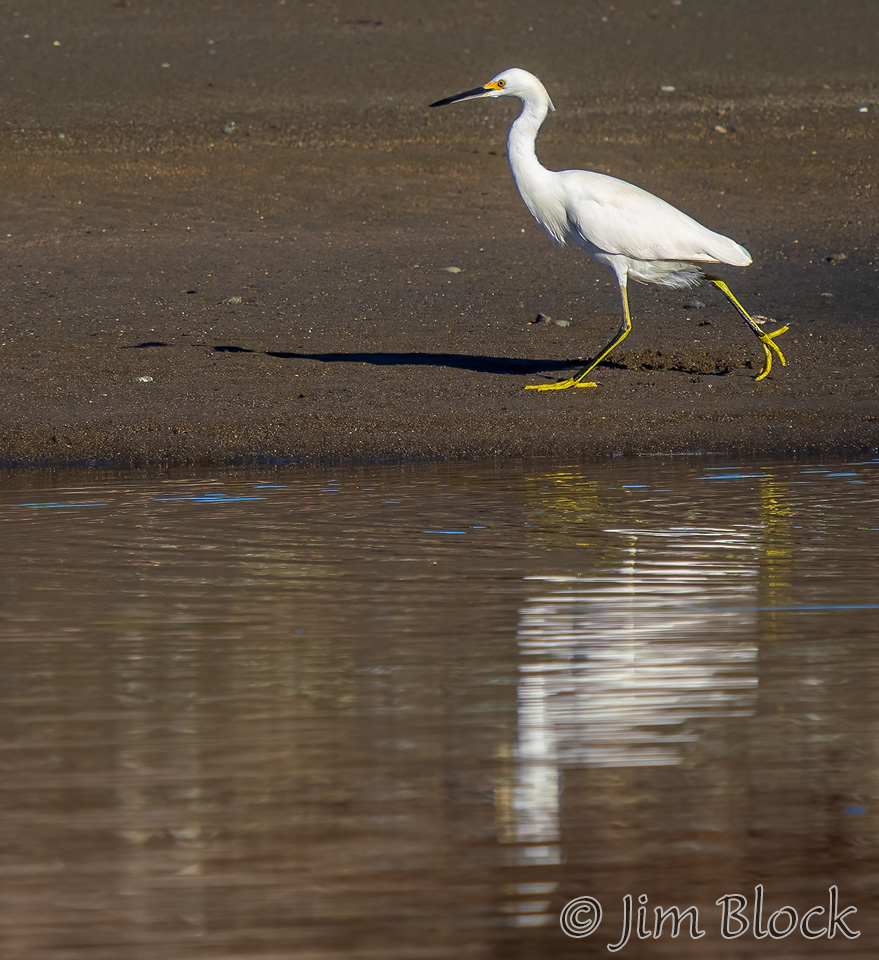
From a small pebbly beach on the shore of the river near where it entered the Pacific, we photographed several birds on the far shore:
Snowy Egret
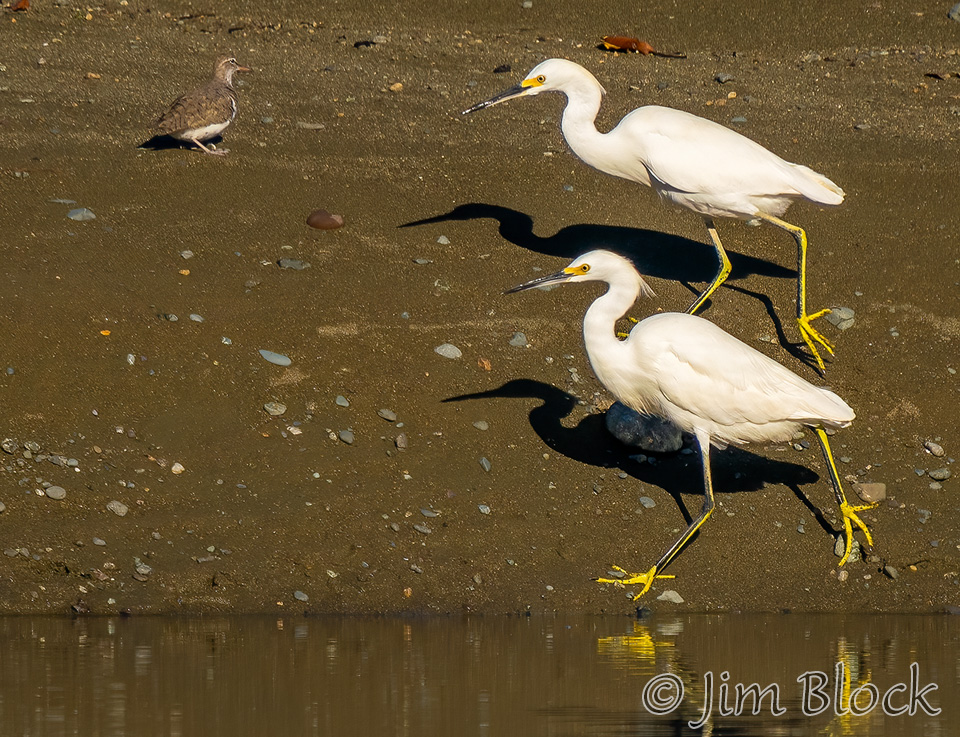
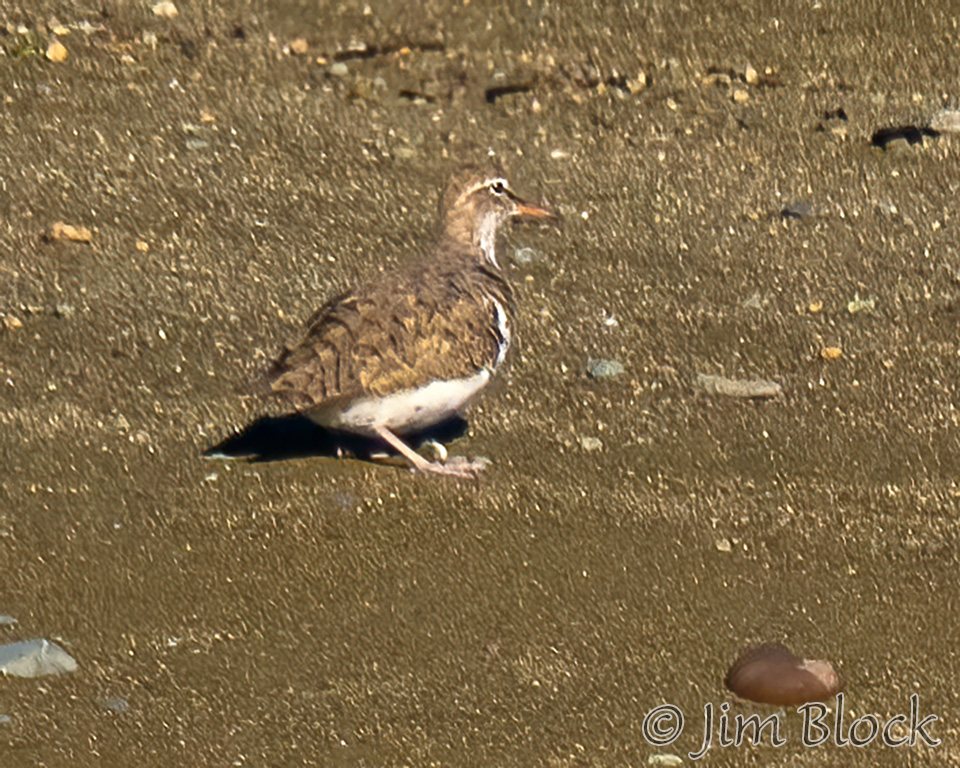
The small bird near the egrets was a Spotted Sandpiper.
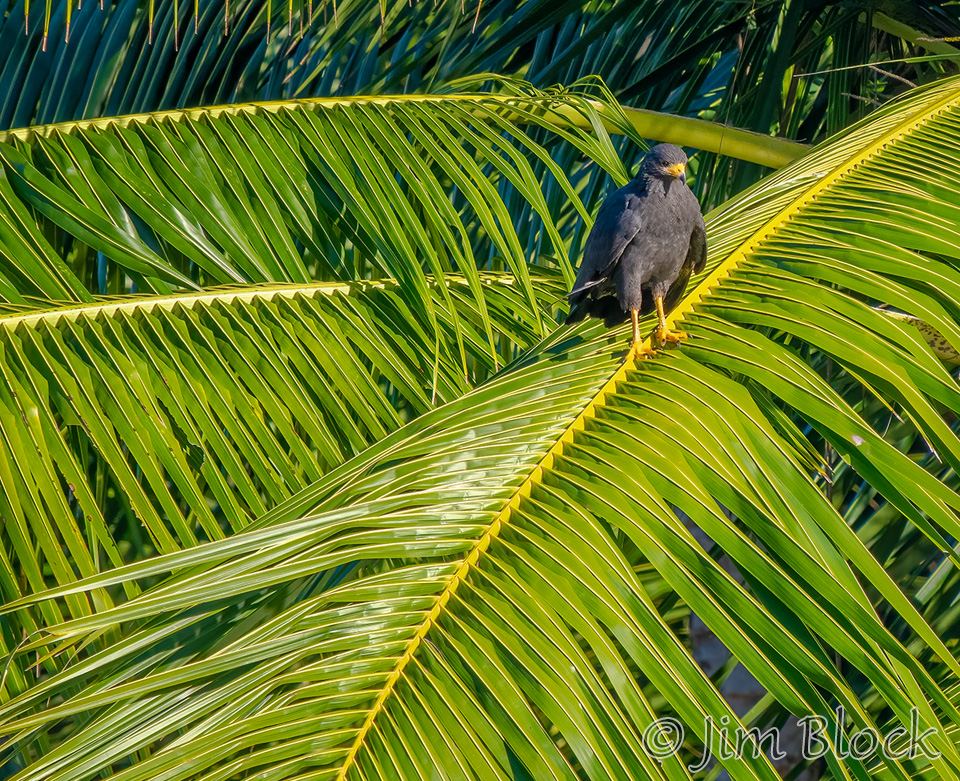
Common Black Hawk
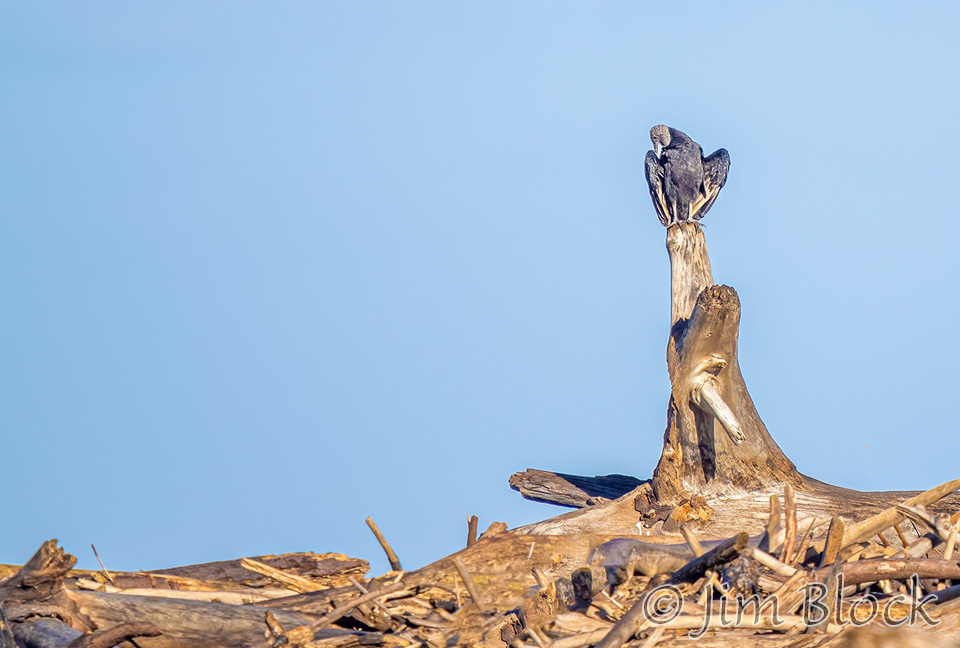
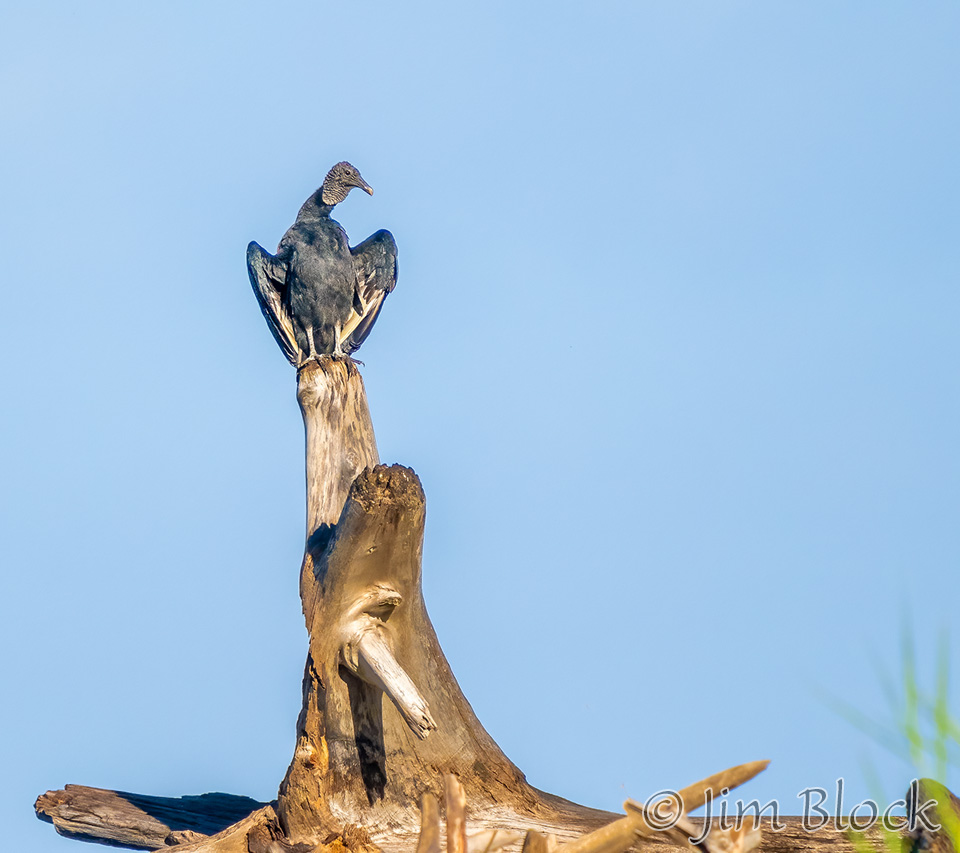
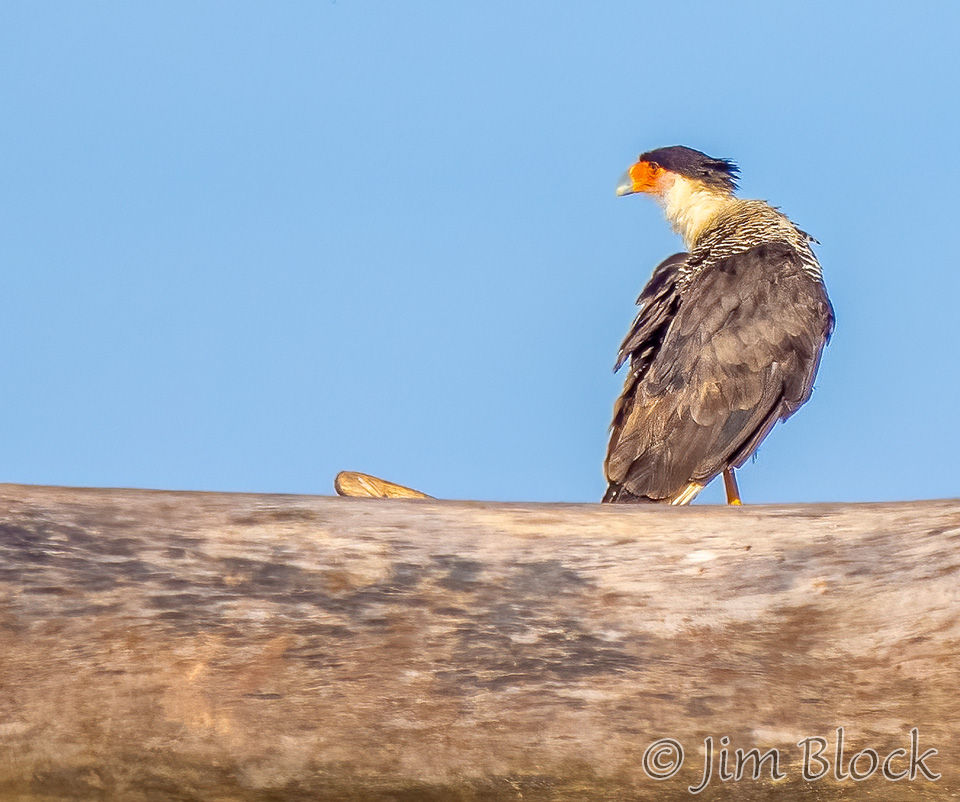
Crested Caracara
I took a few photos of the river and beach with my phone.
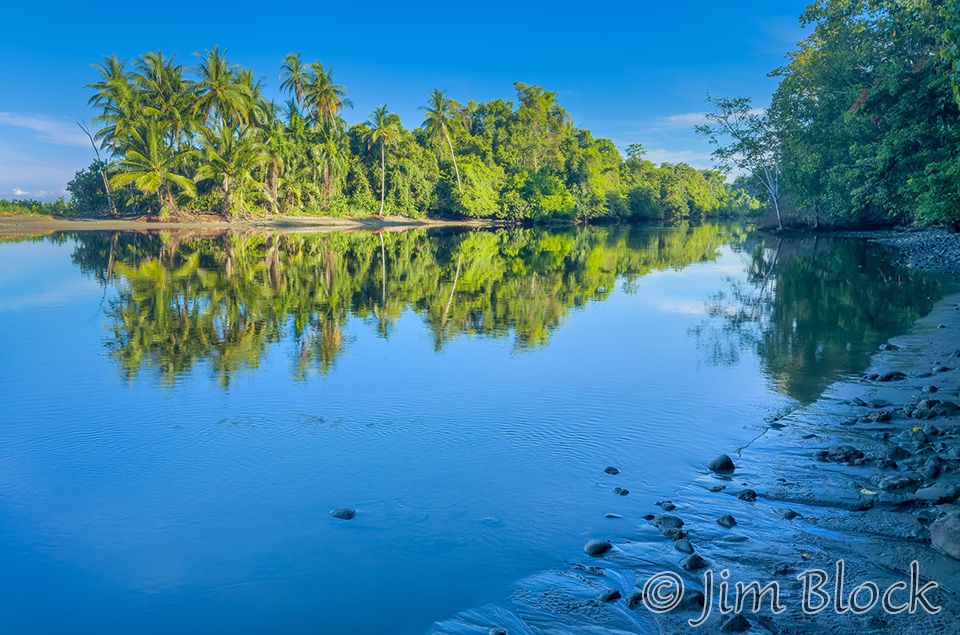
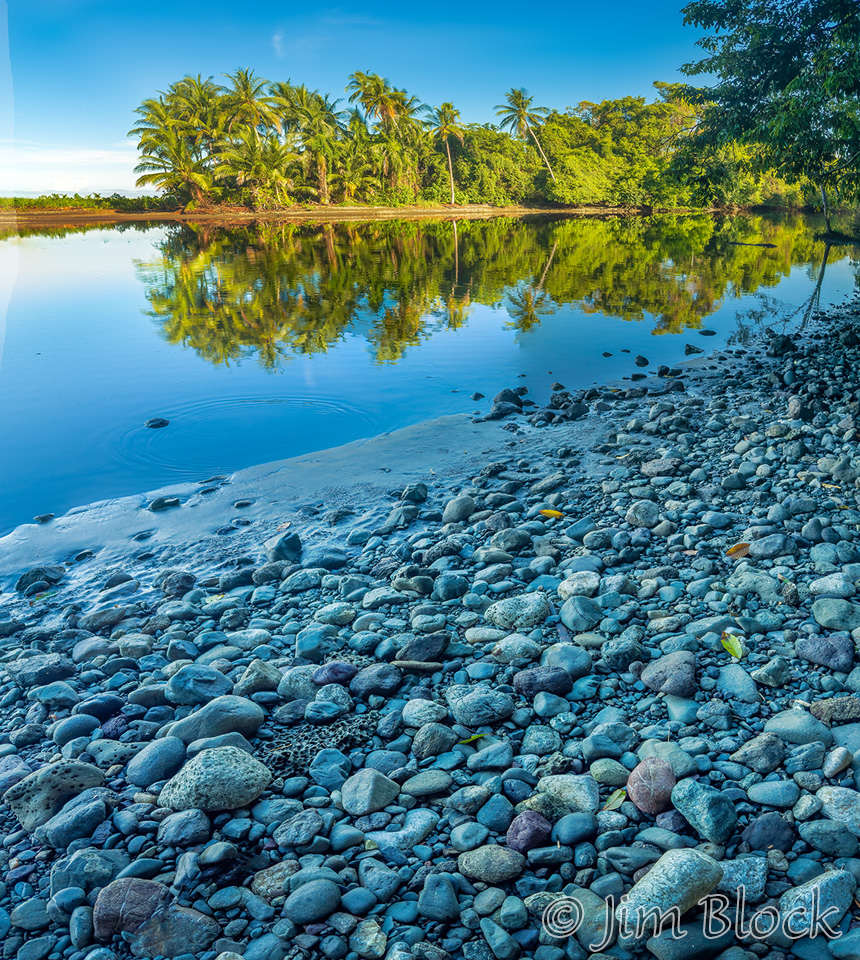
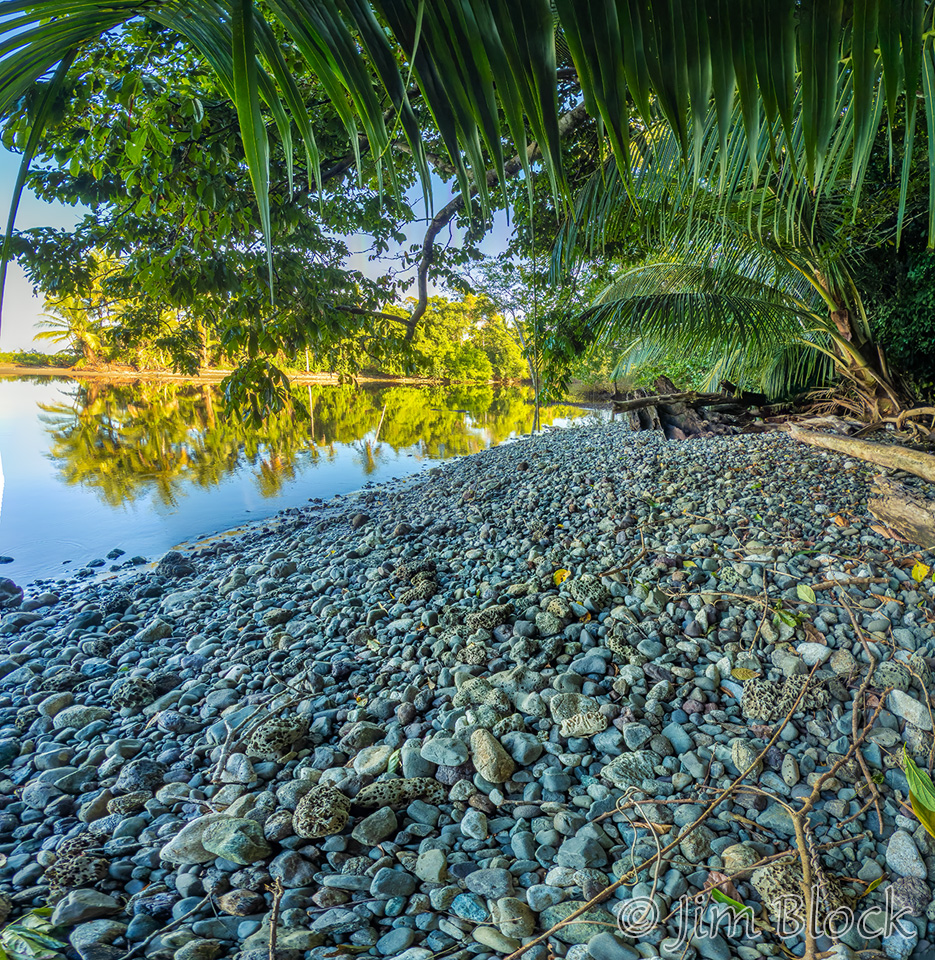
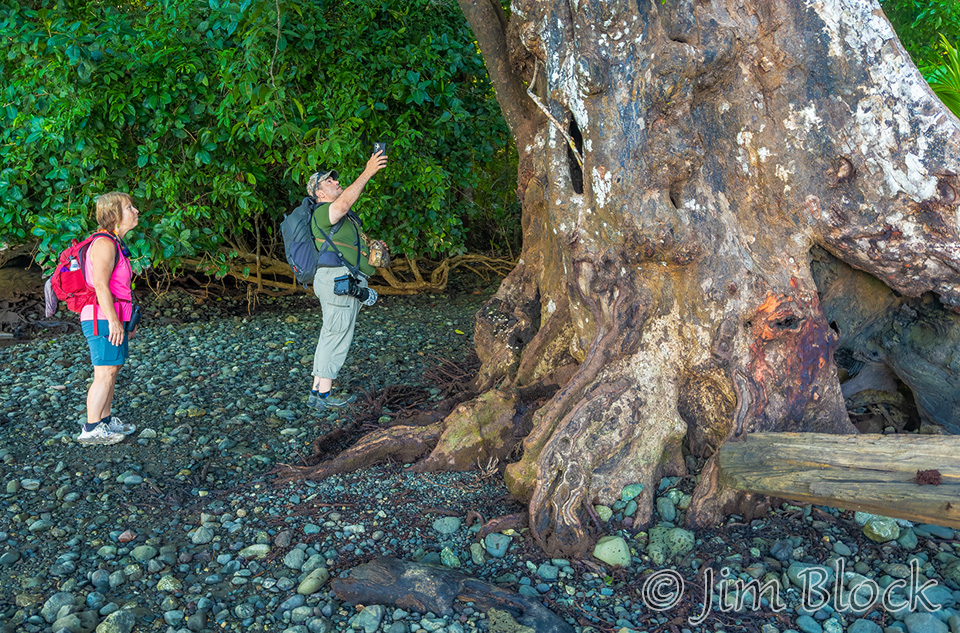
Gil has spotted something while Jill looks on.
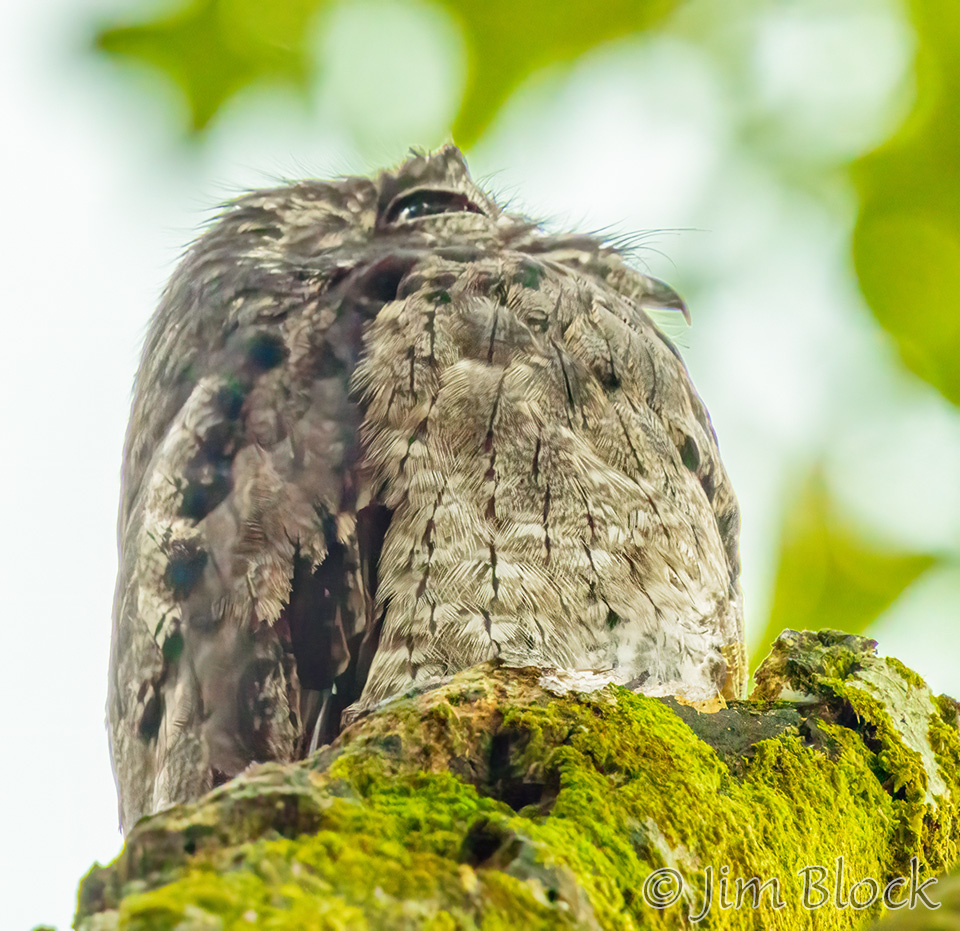
Along the river we spotted a Common Potoo. We could not get a good viewing angle without climbing a tree.
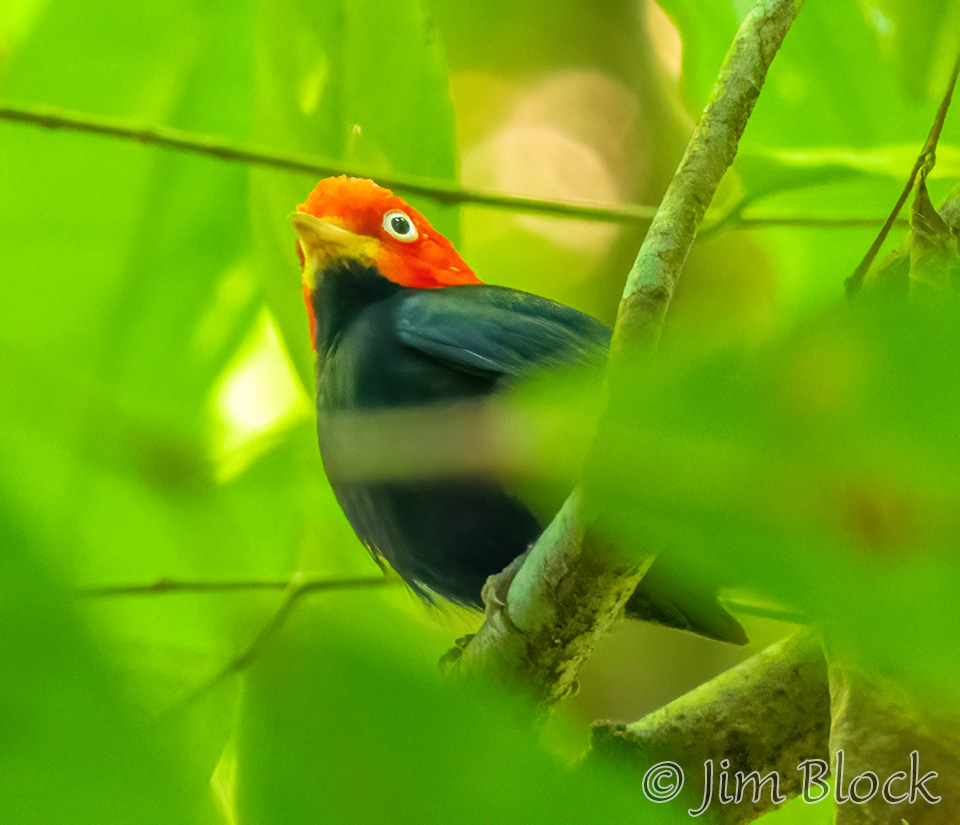
Heading back to grab breakfast just before 8 a.m., we got a look at a Red-capped Manakin.
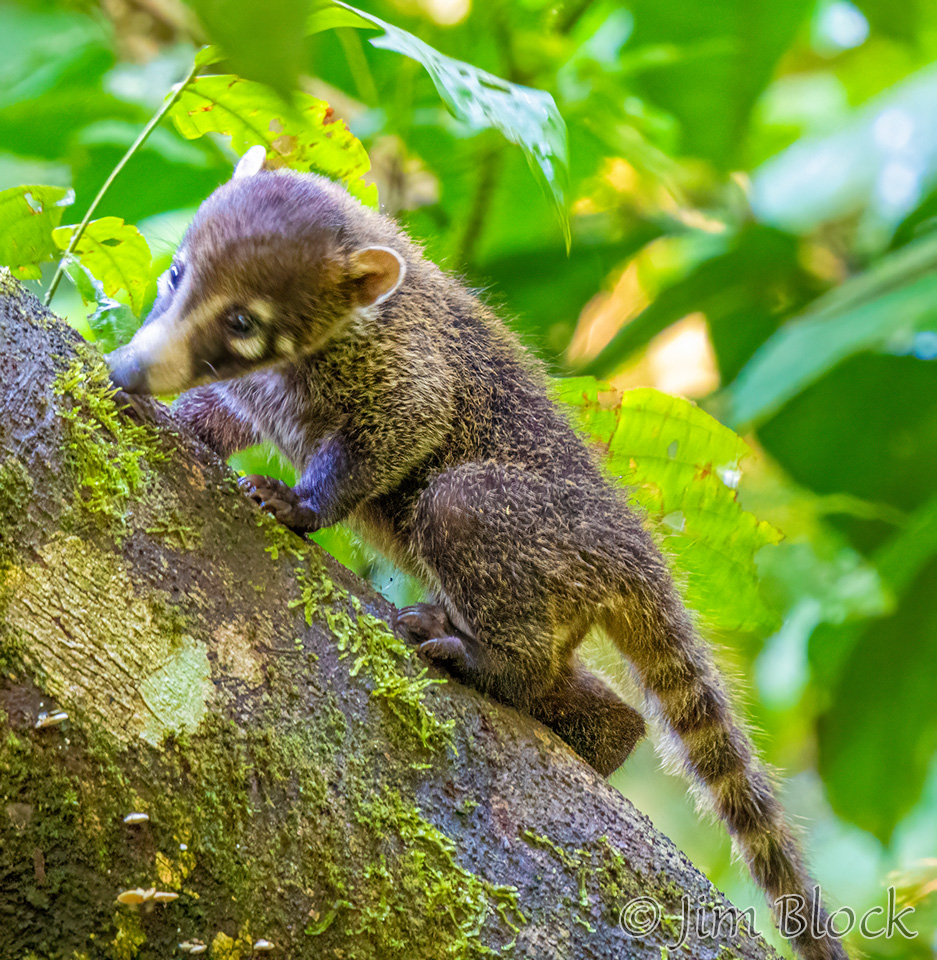
A cute Coatimundi was climbing a tree.
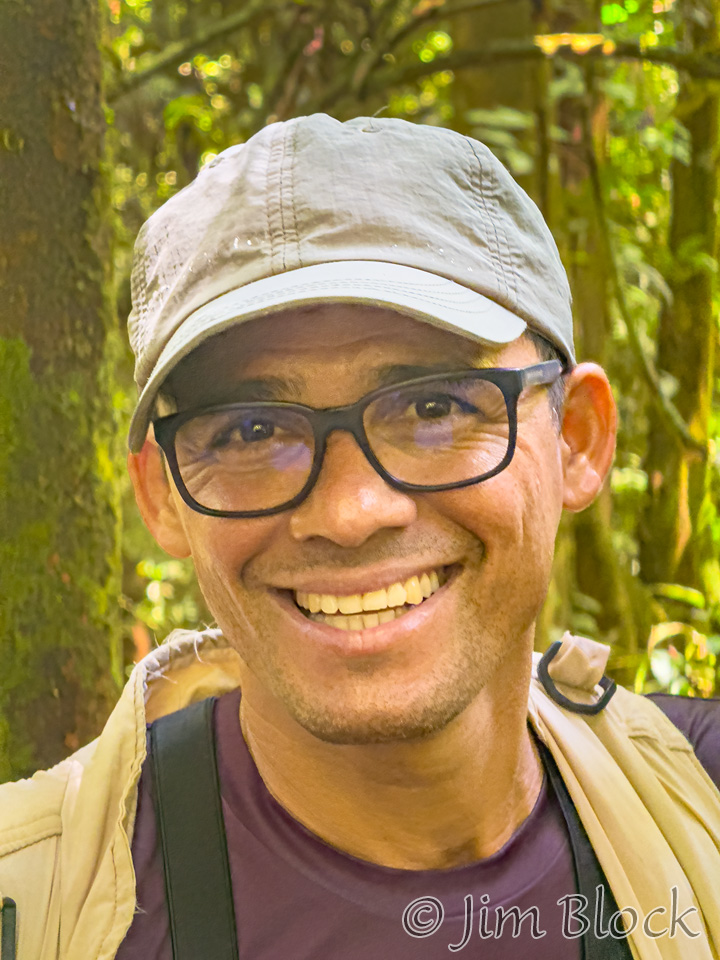
We met Rodger after breakfast and headed our for more birds.
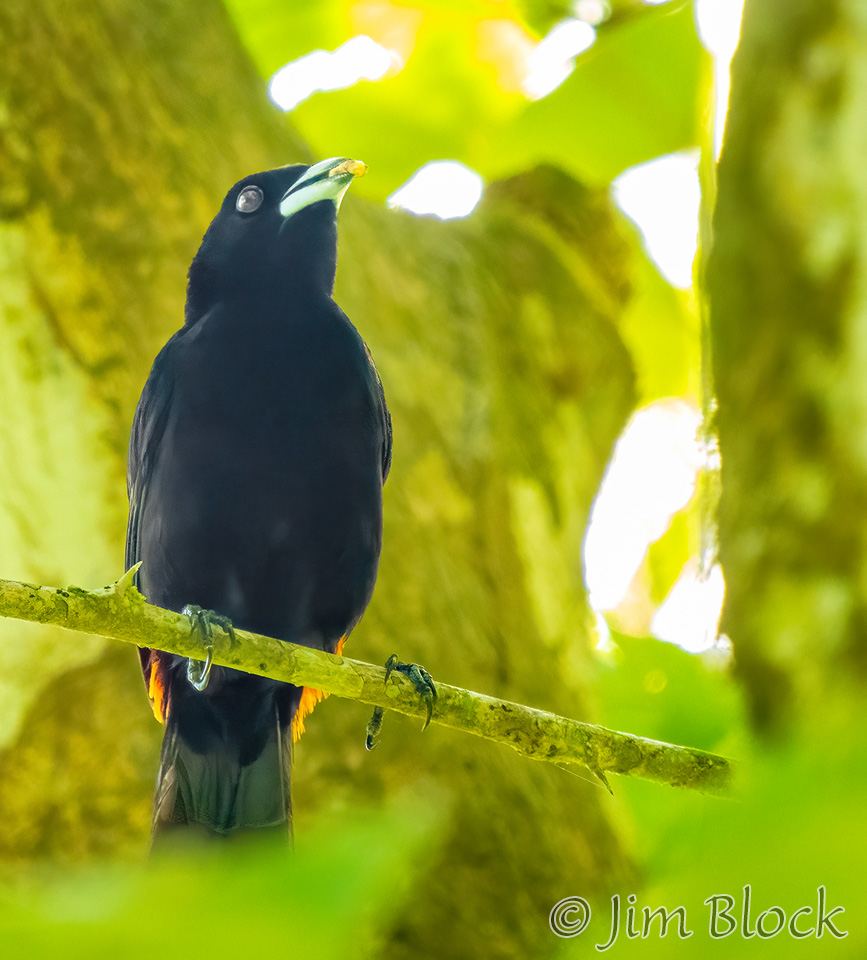
Here is a Scarlet-rumped Tanager, a species we saw at many spots in Costa Rica.
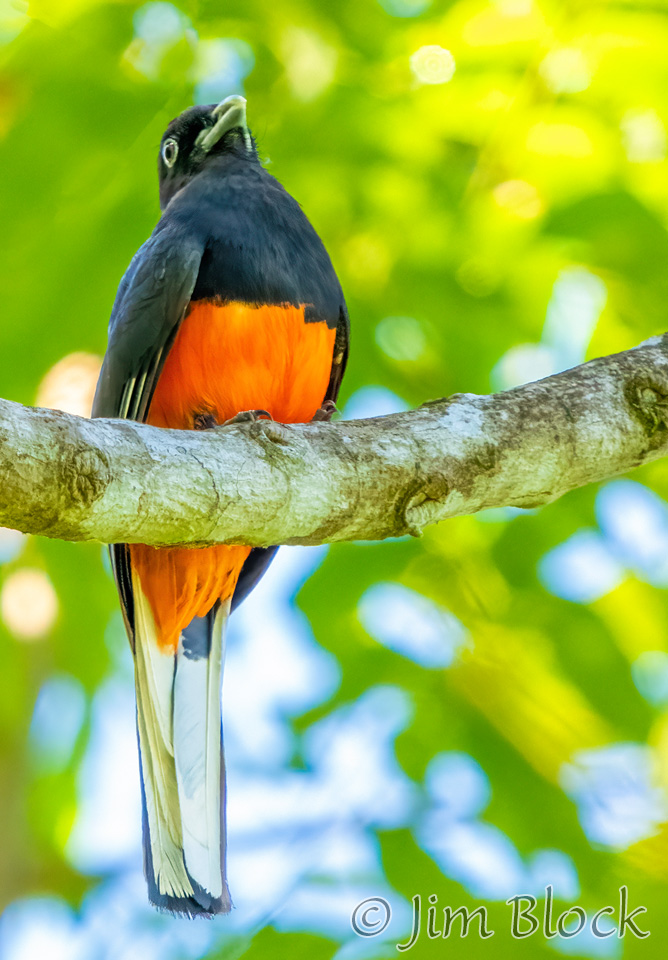
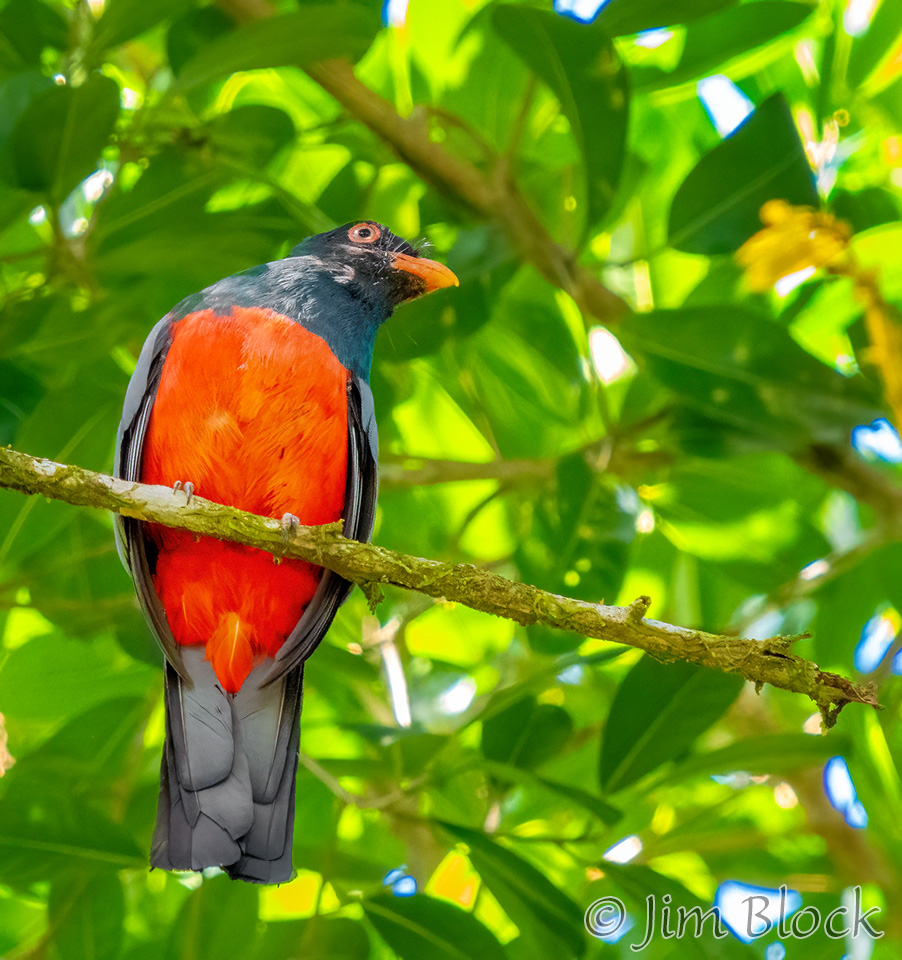
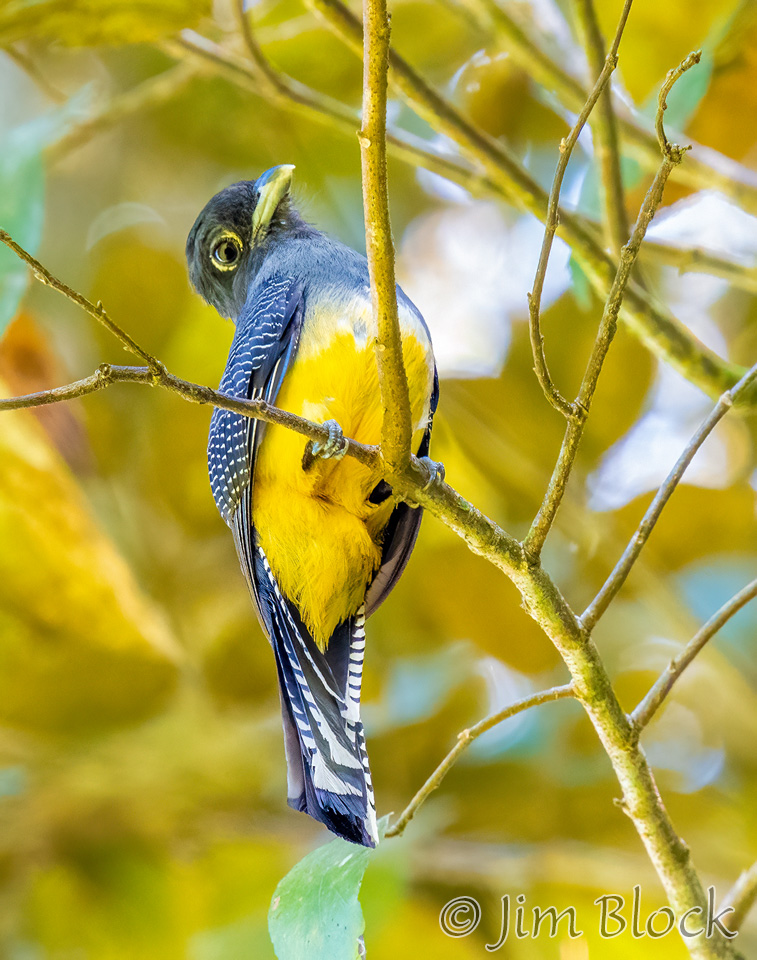
In short order before 9 a.m. we found three trogon species:
Baird’s Trogon
Slaty-tailed Trogon which resembles a Baird’s Trogon above
Gartered Trogon
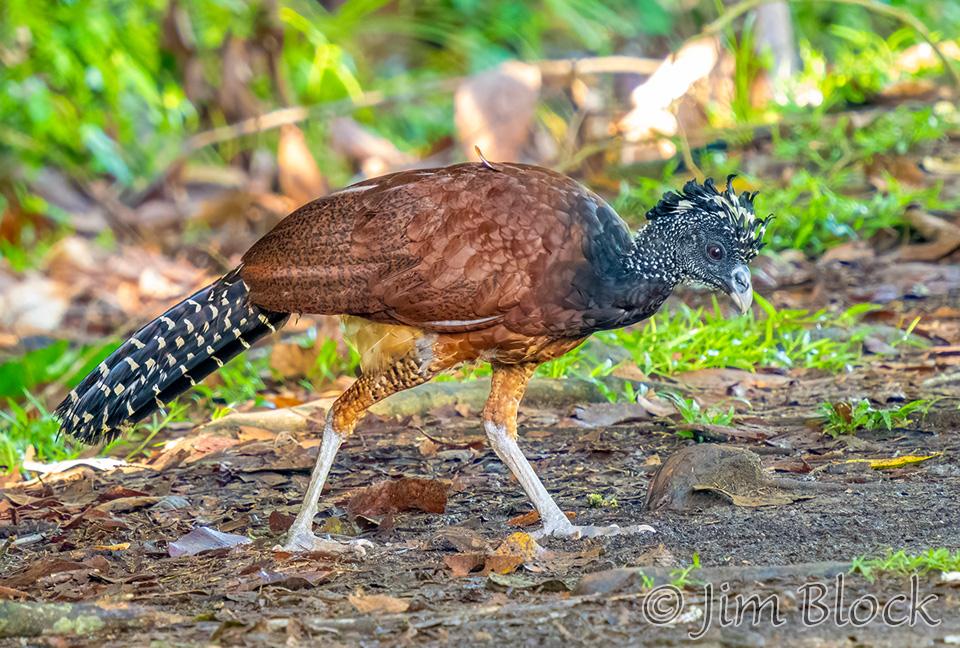
We found a male and female Great Curassow. The male is black and less colorful.
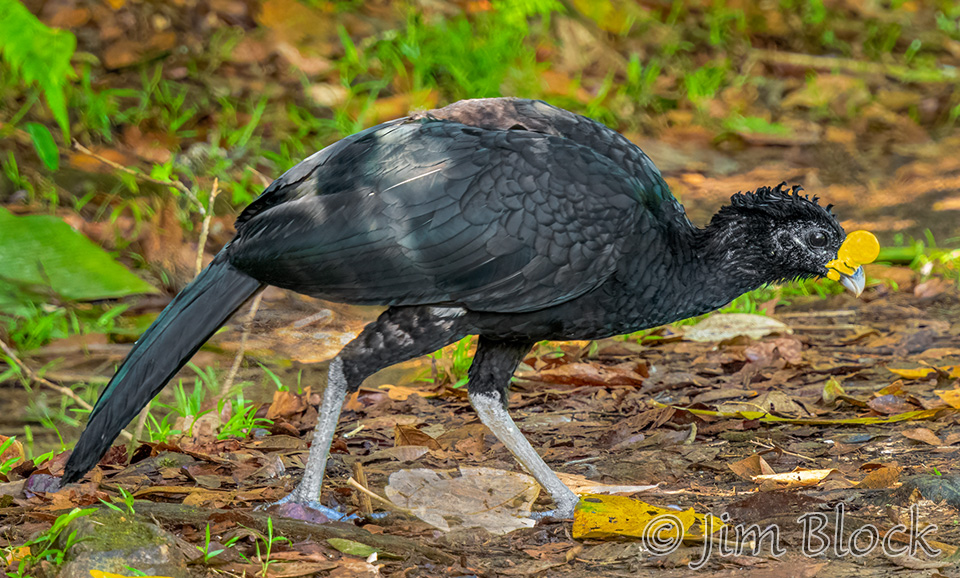
Below is a Rufous Piha.
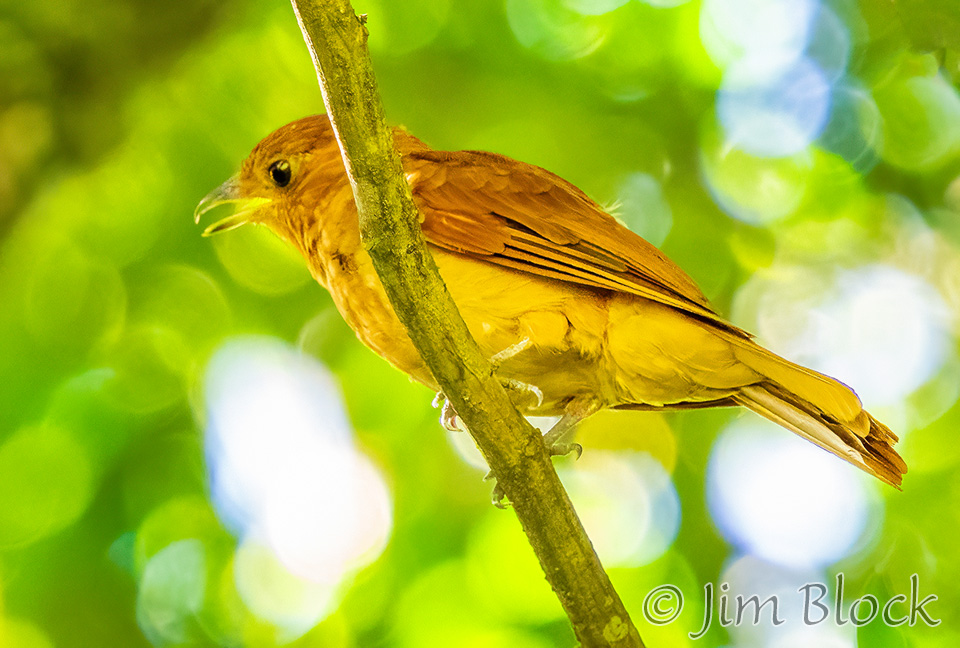
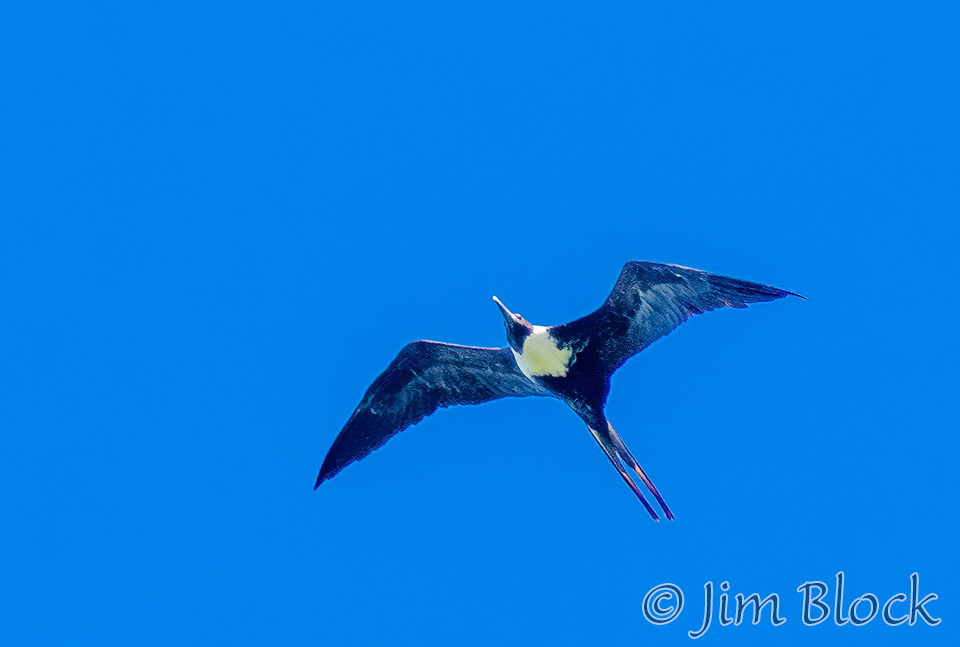
We saw several large birds flying:
A Magnificent Frigatebird…
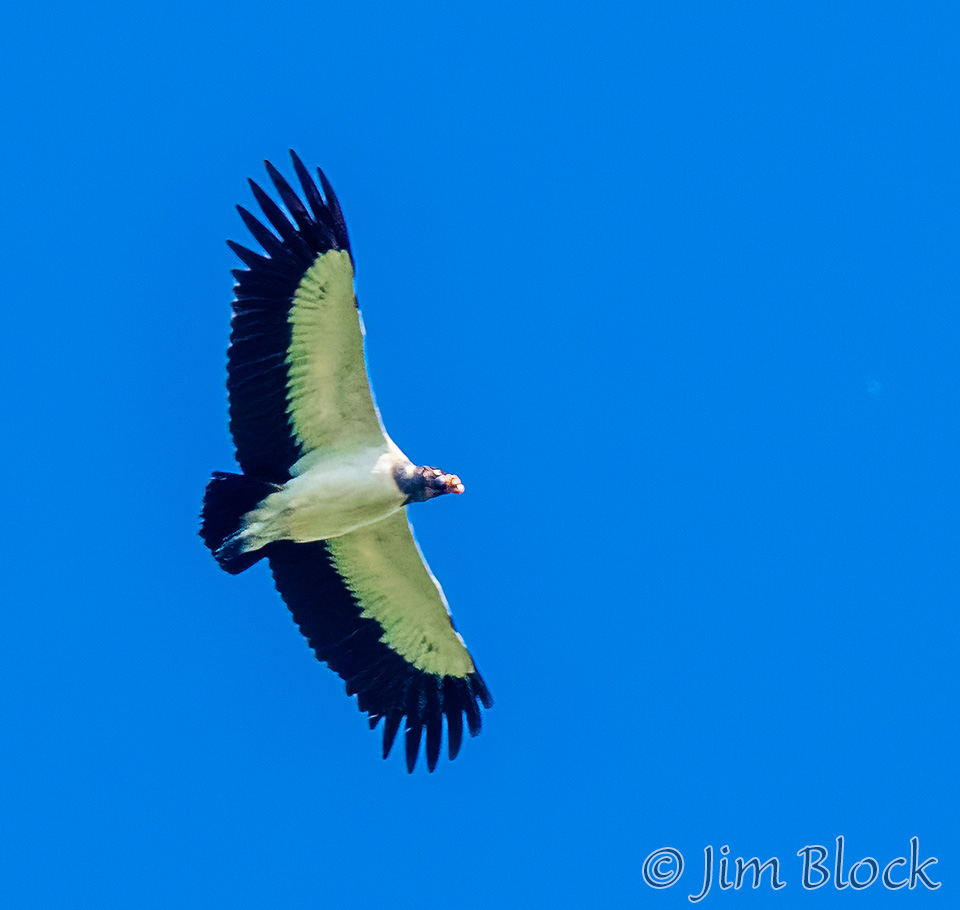
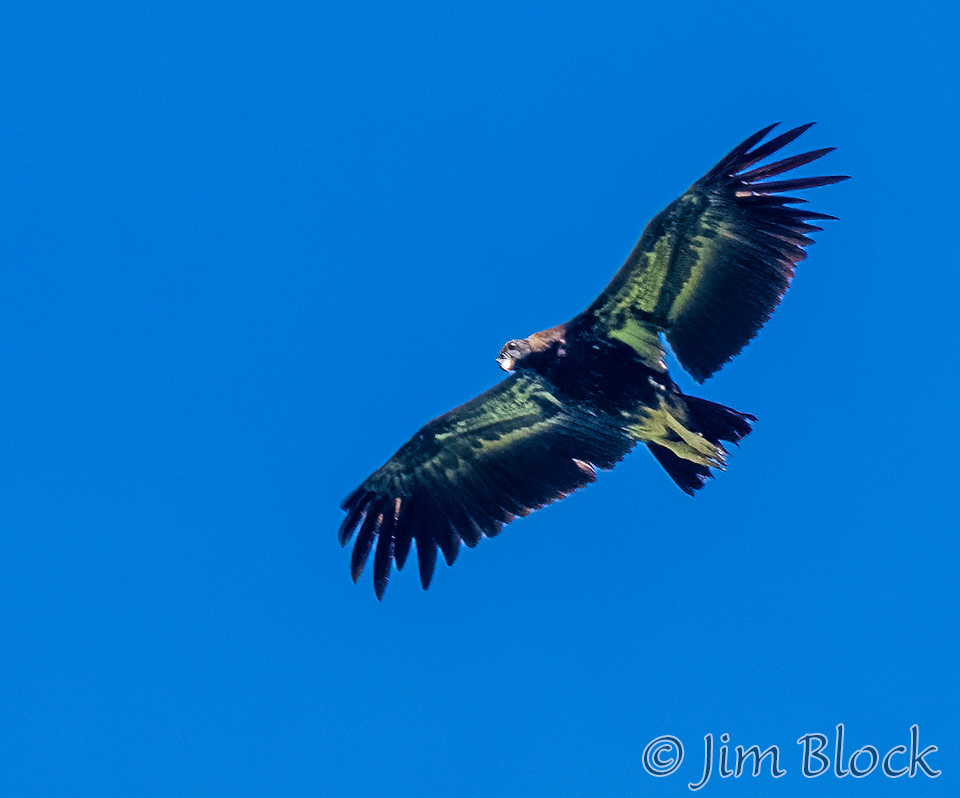
… and an adult and immature King Vulture. The King Vulture has a stunning head when viewed up close. Unfortunately it does not show well in this distant photo from below.
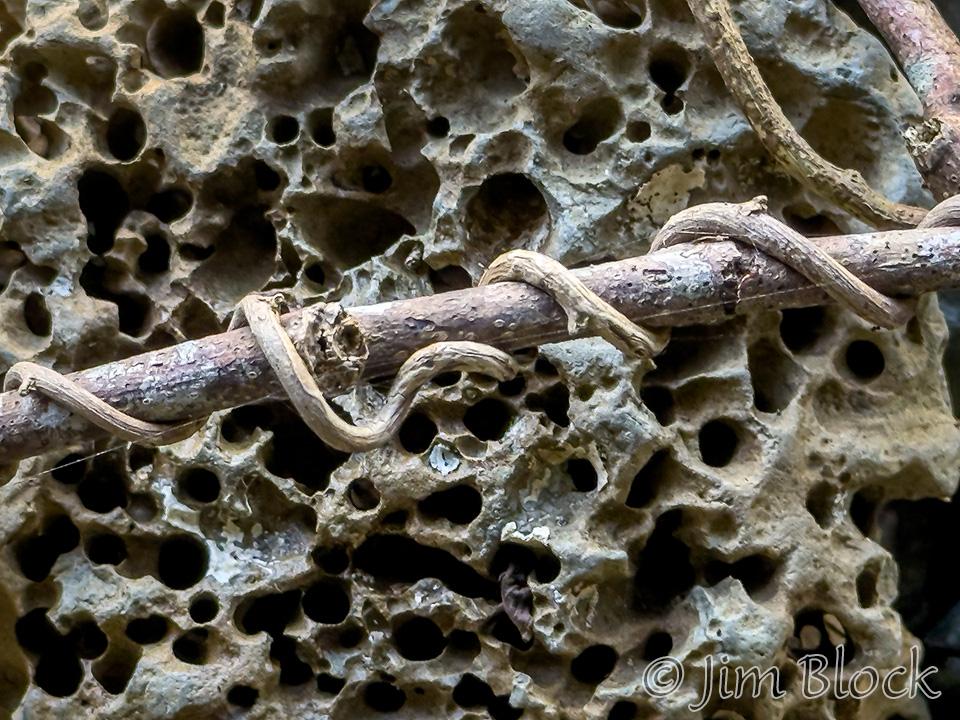
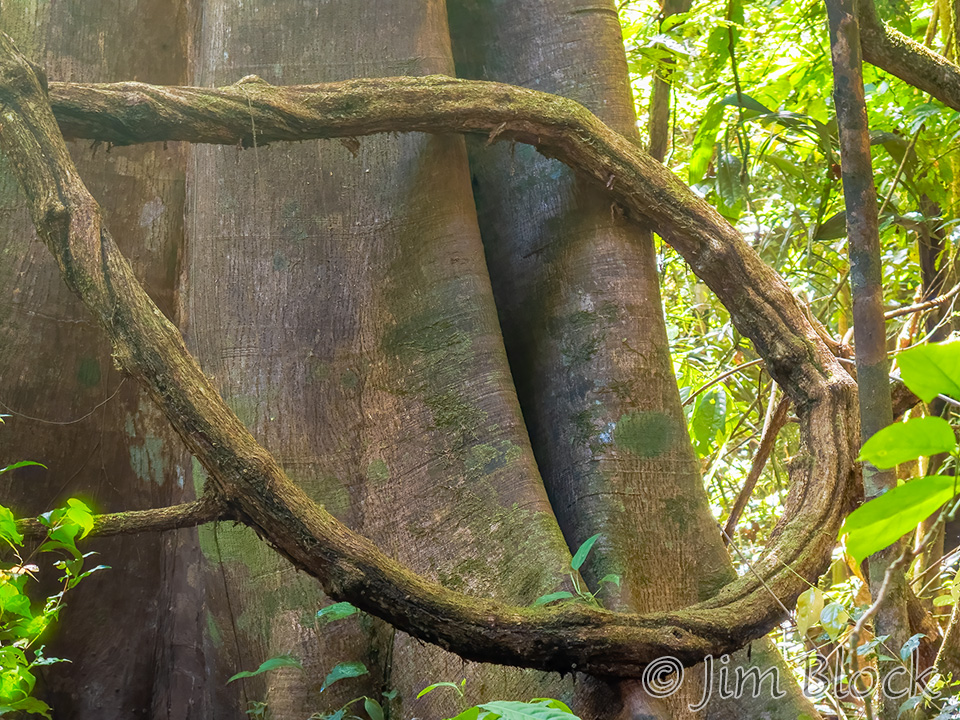
Rodger took us into the forest. I liked this vine.
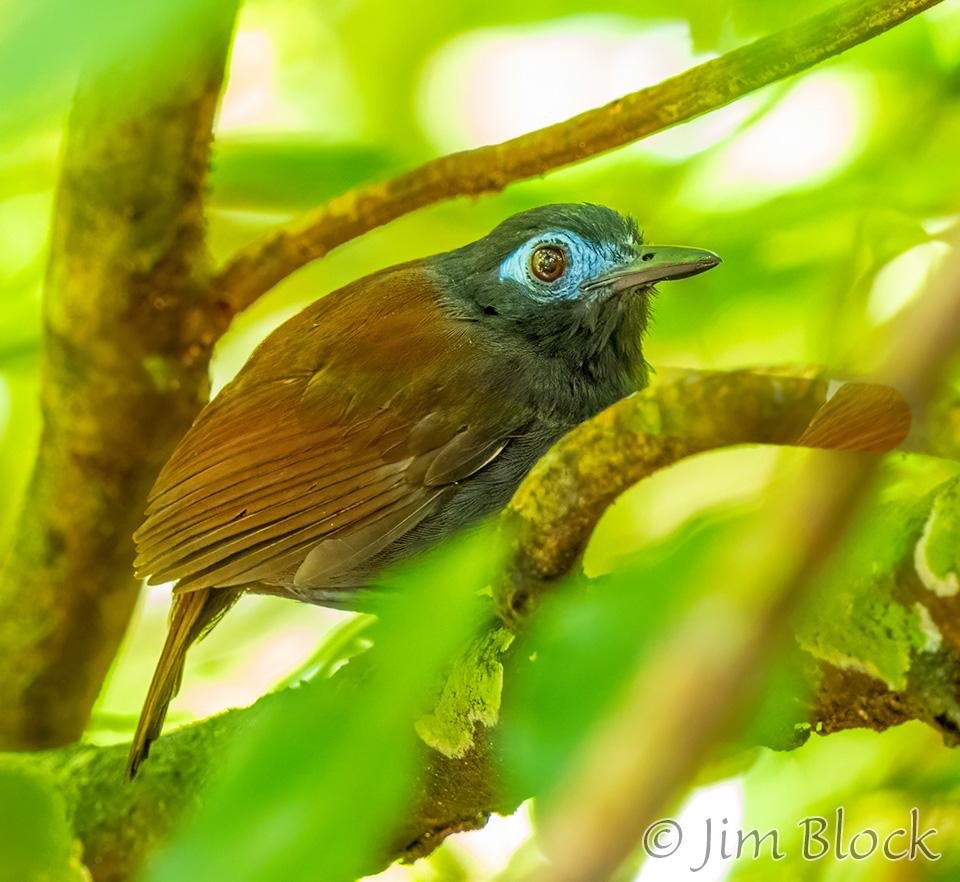
We saw a Chestnut-backed Antbird.
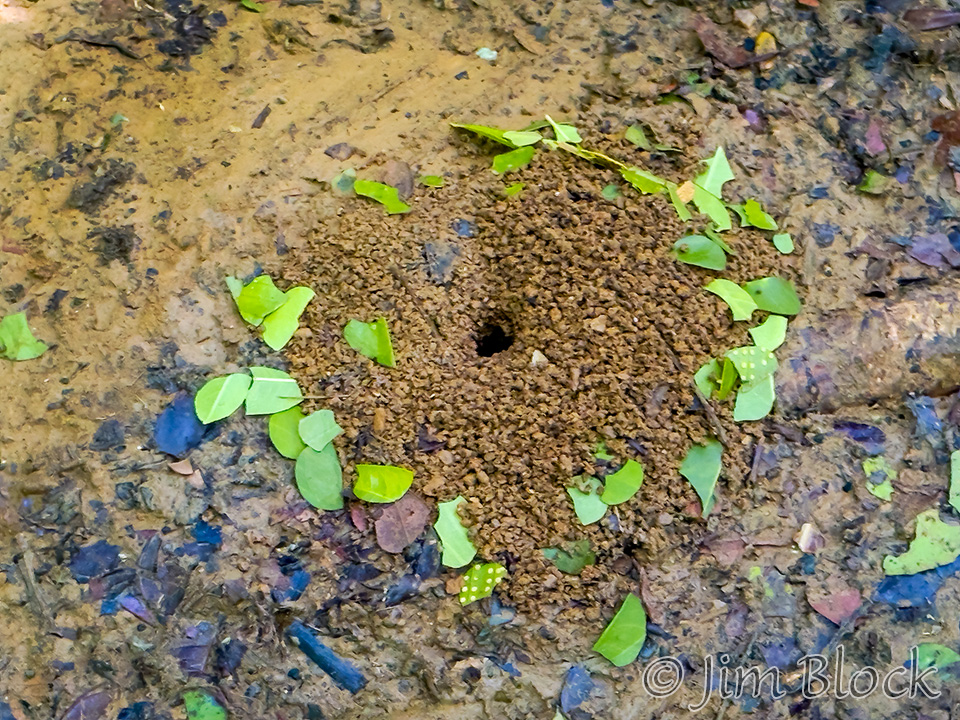
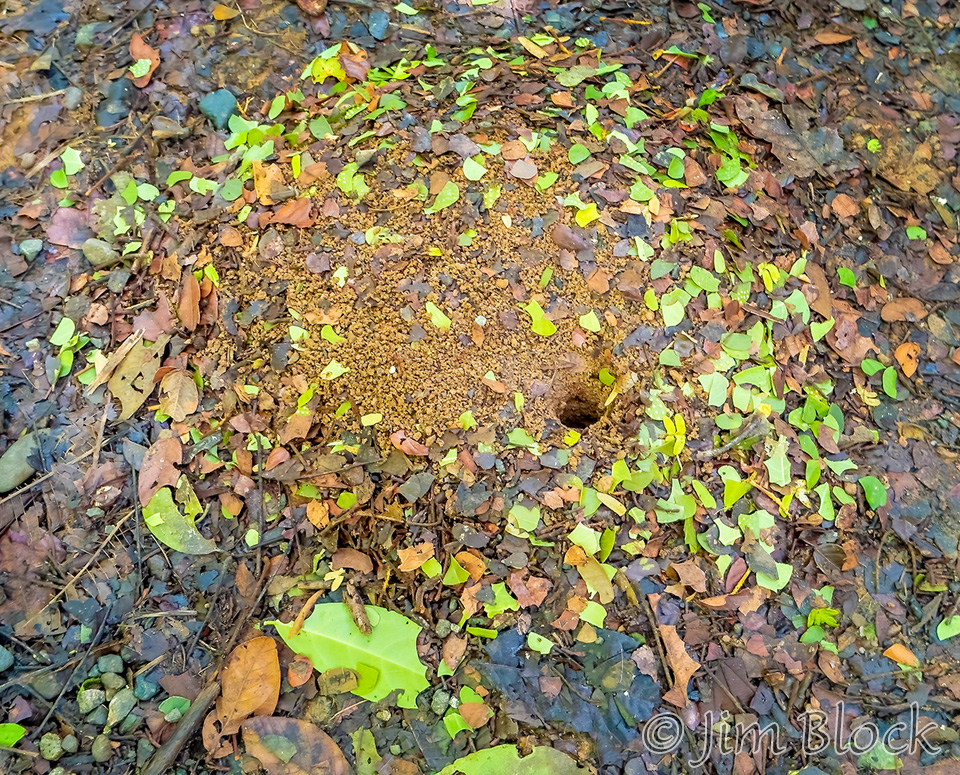
Leafcutter Ants were marching across a log. Note the two smaller “cleaner” ants in this photo.
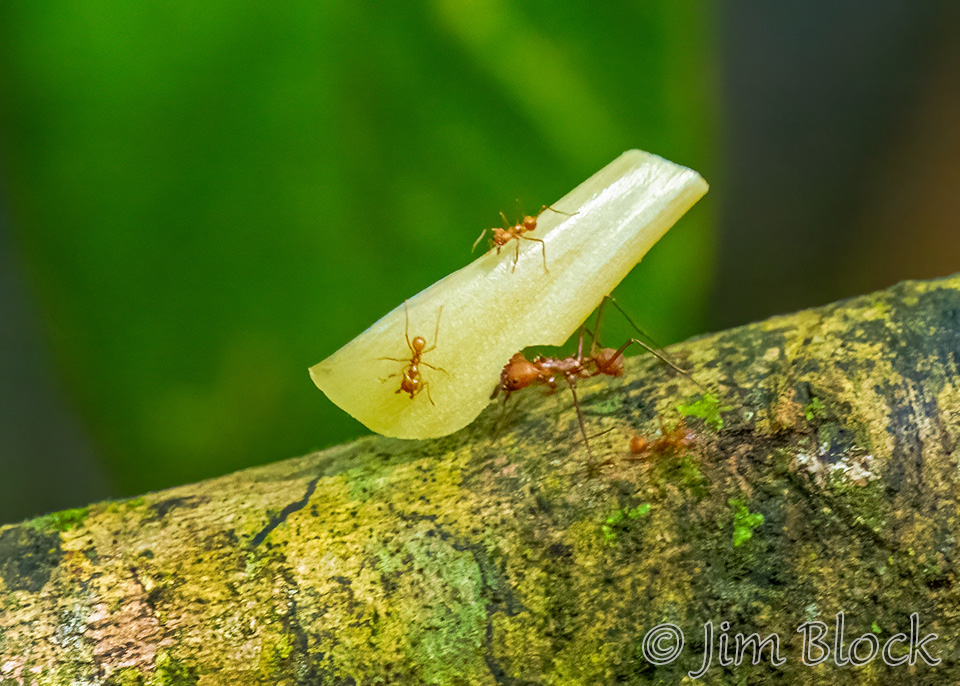
When it rains the ants cannot follow the scent trail so they drop the leaves. They are now “dirty” so they just leave them there. Such a highly intelligent and organized society exists on and under the ground.
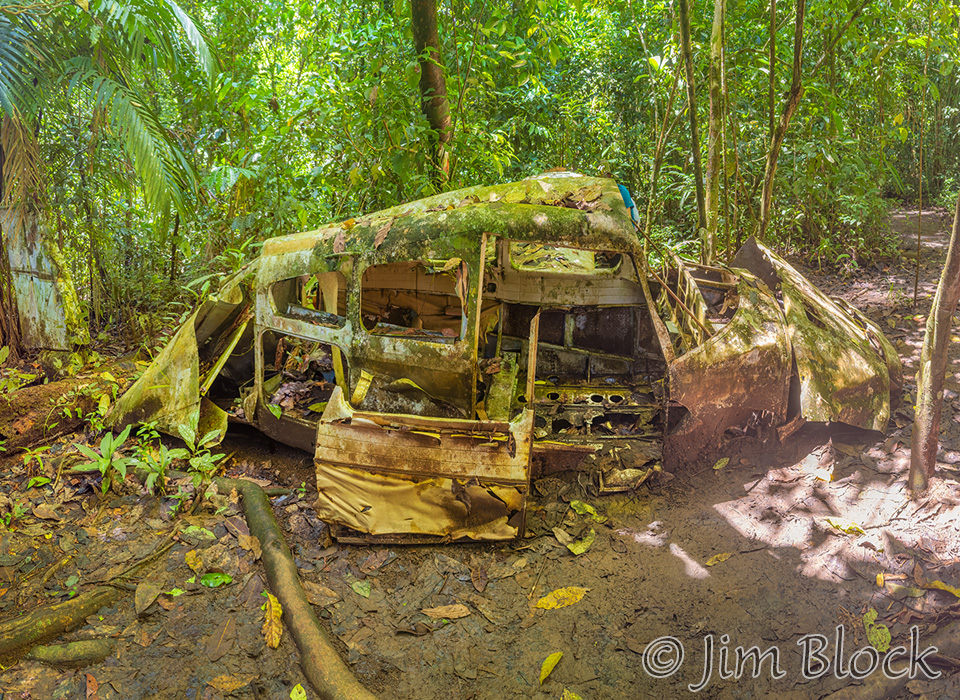
We came to a wreck of an airplane deep in the jungle. This is a seven-photo panorama taken with my iPhone.
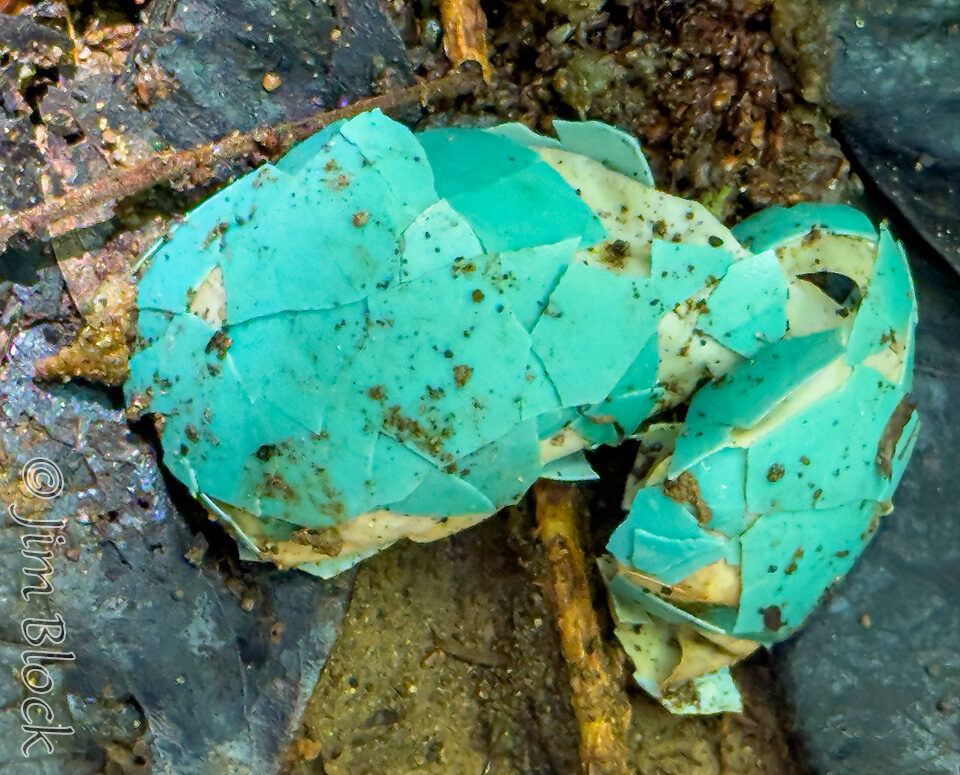
We found broken egg shells. I don’t recall if a species was mentioned.
At 10:20 a.m. we were heading back to the lodge to relax before lunch.
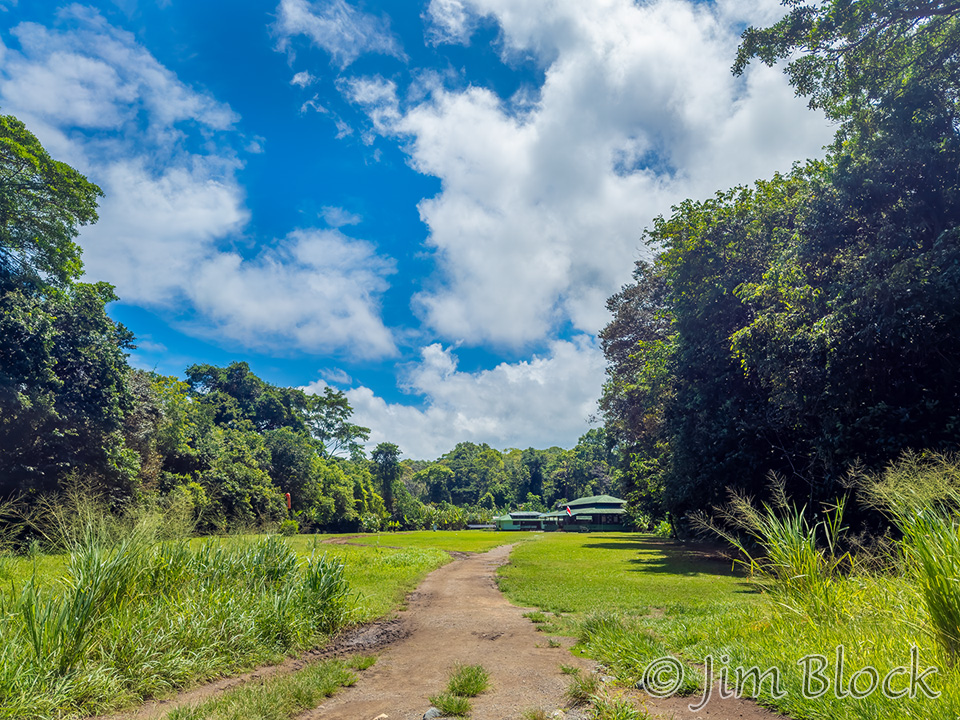
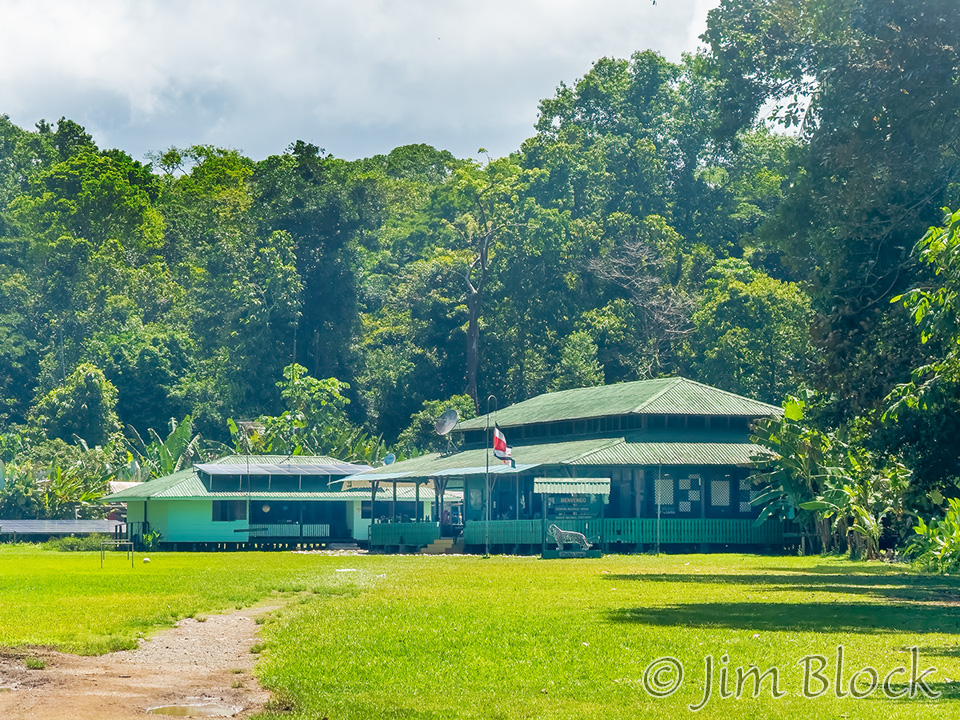
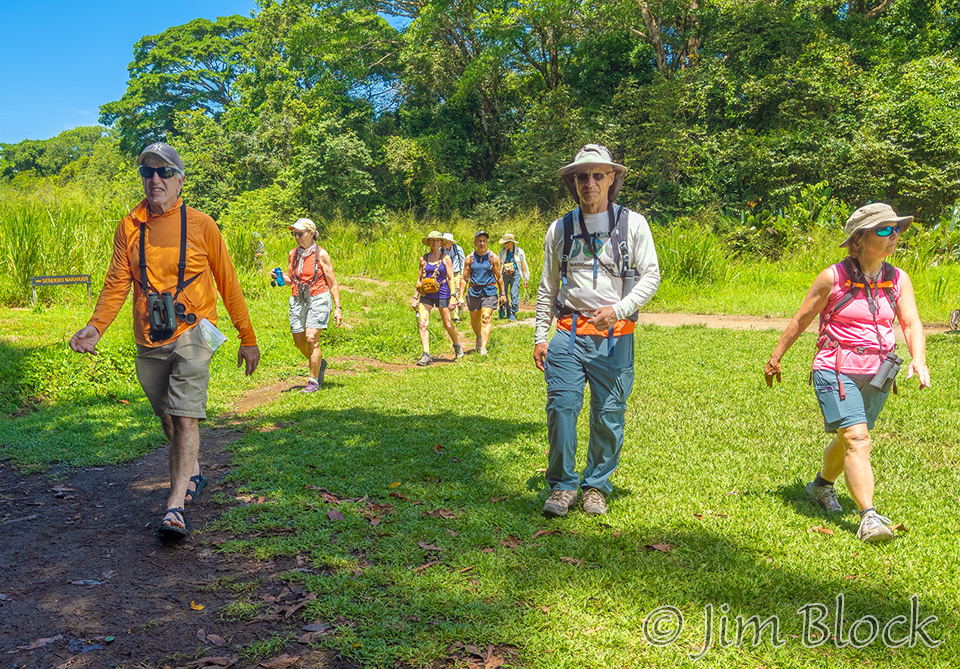
But our wildlife viewing was not finished for the morning. We saw a White-throated Shrike Tanager …
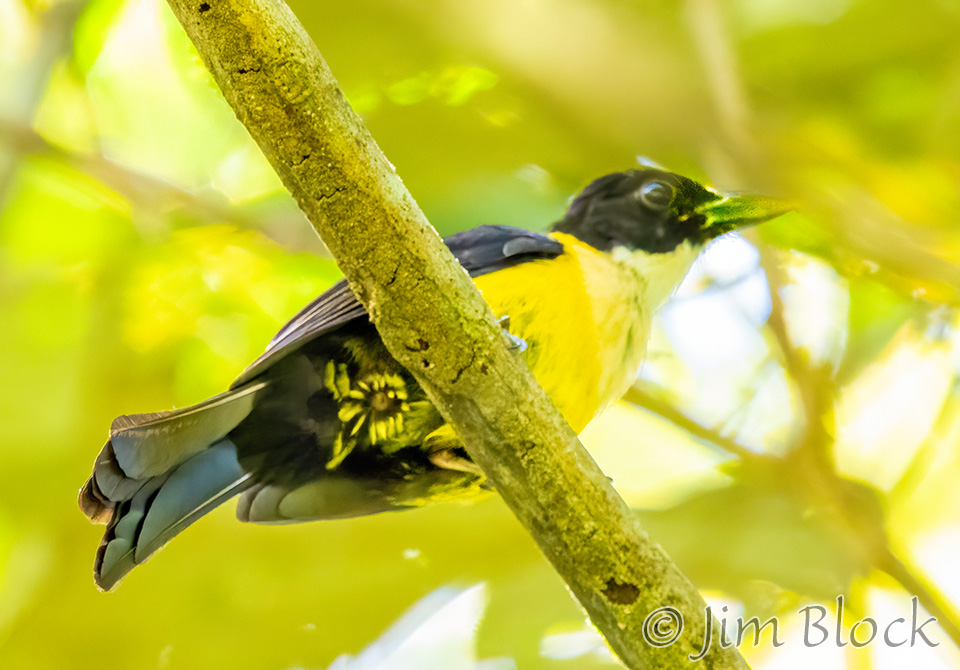
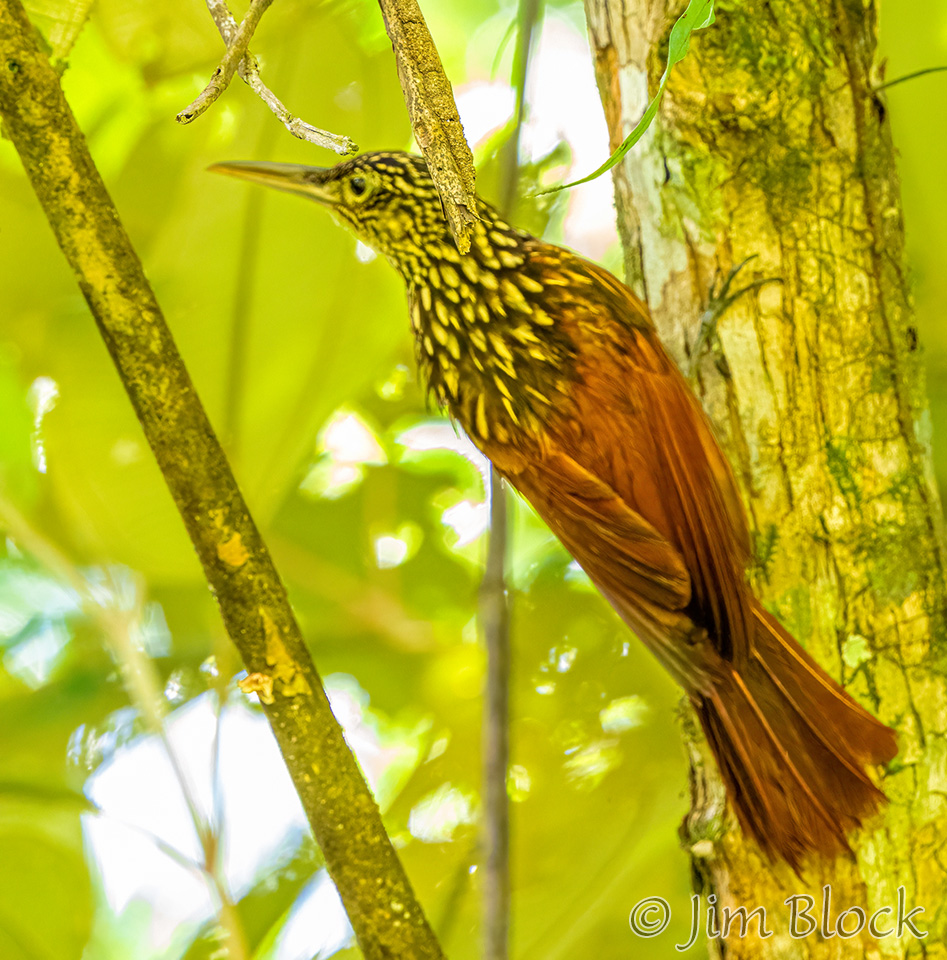
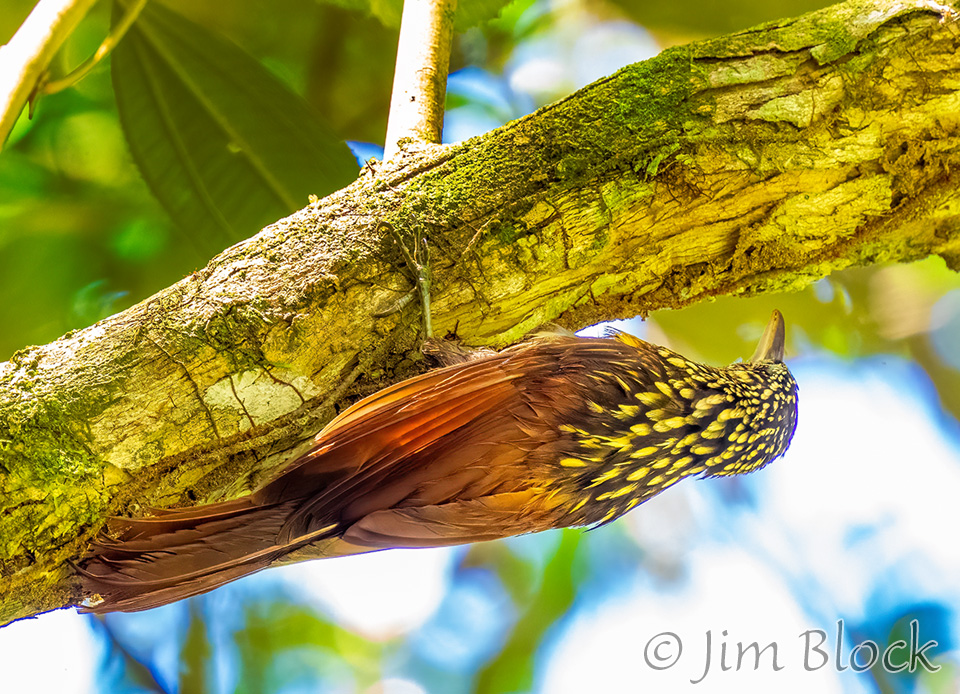
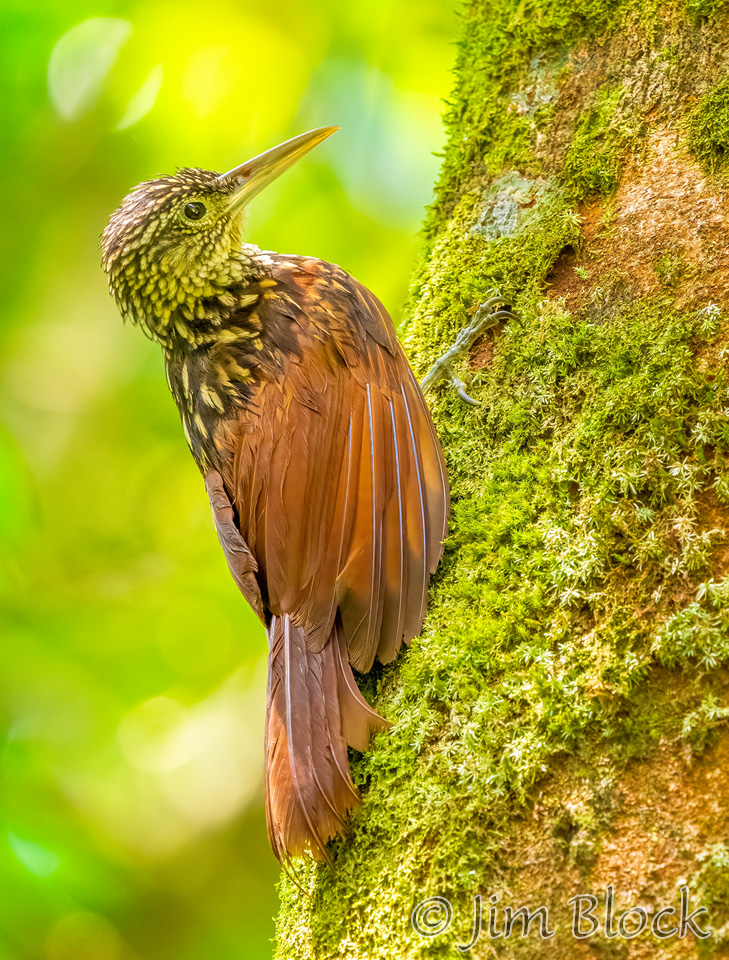
… and a Black-striped Woodcreeper.
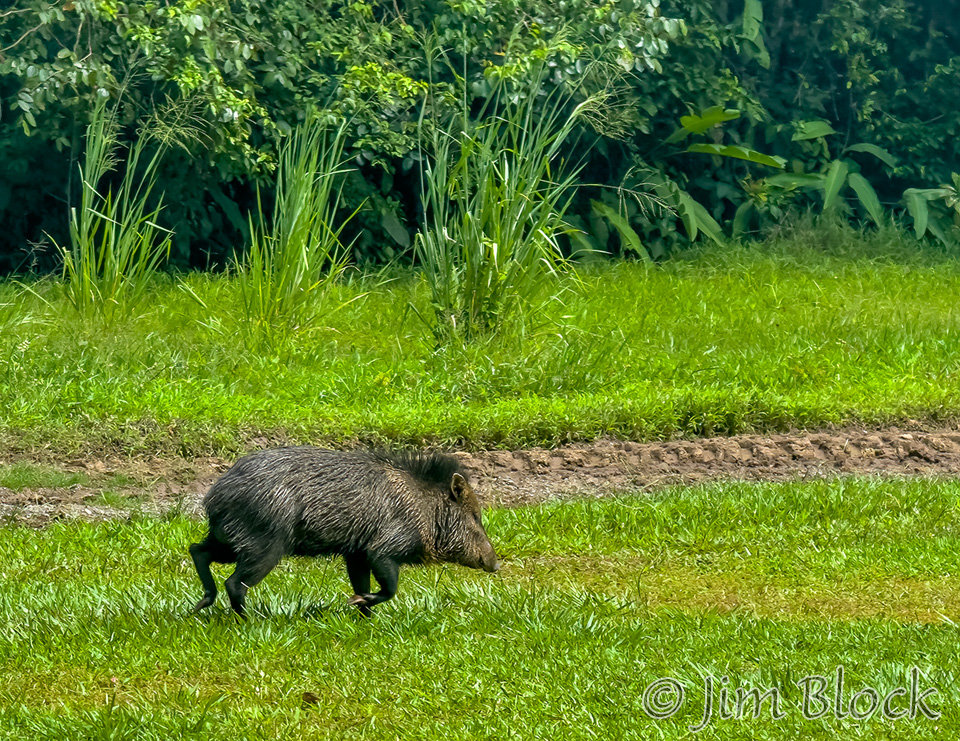
A collared Peccary walked by our group.
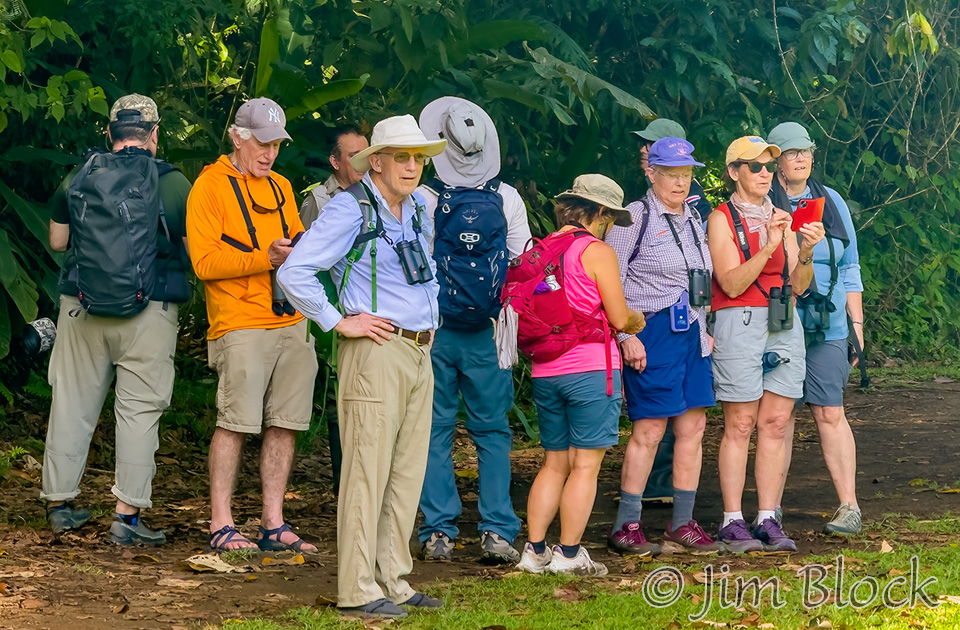
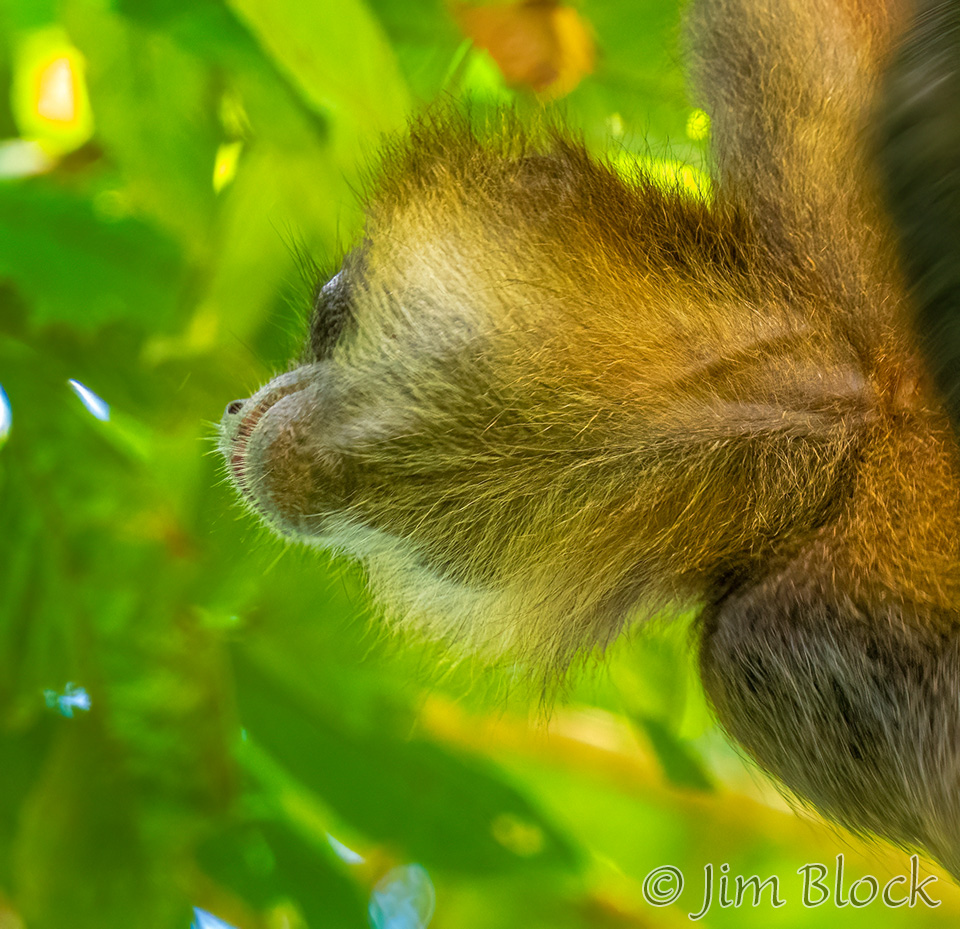
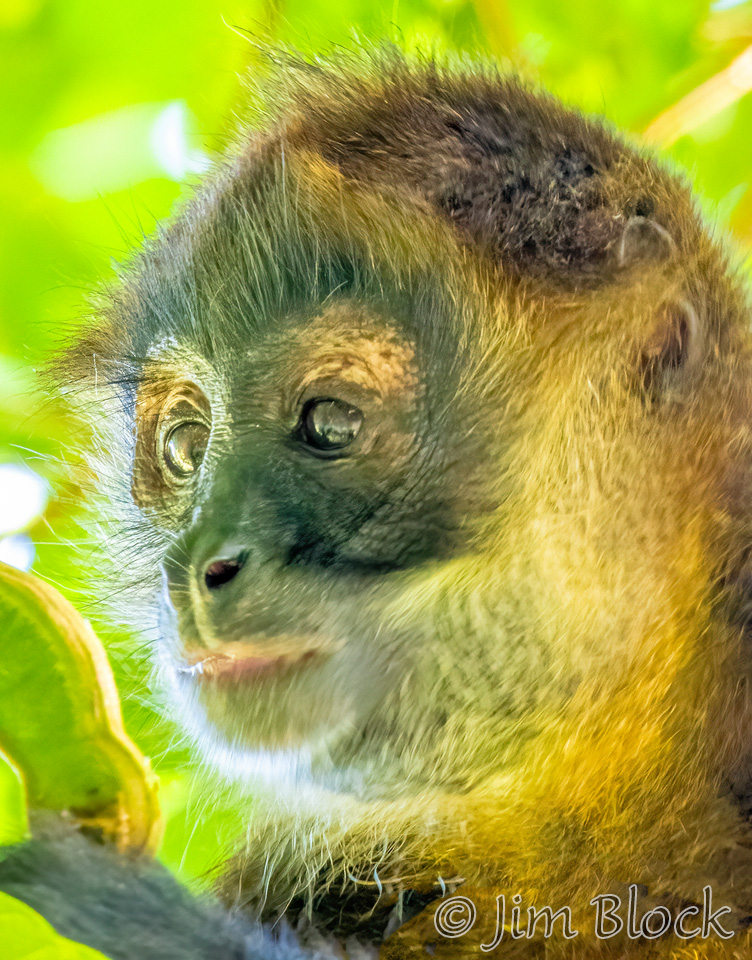
We saw more spider monkeys.
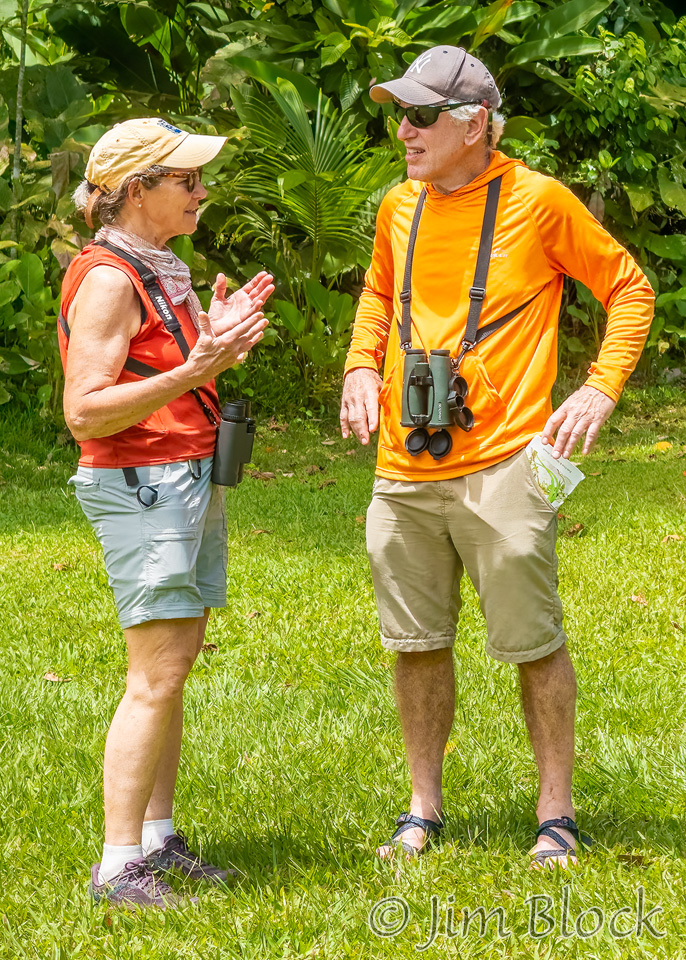
Judy and Ted discuss the great first 24 hours we spent at Corcovado National Park.