Bald Eagles in Lyme — Year Three
I visited the nest February 14, Valentines Day. Not surprisingly, the nest was empty.
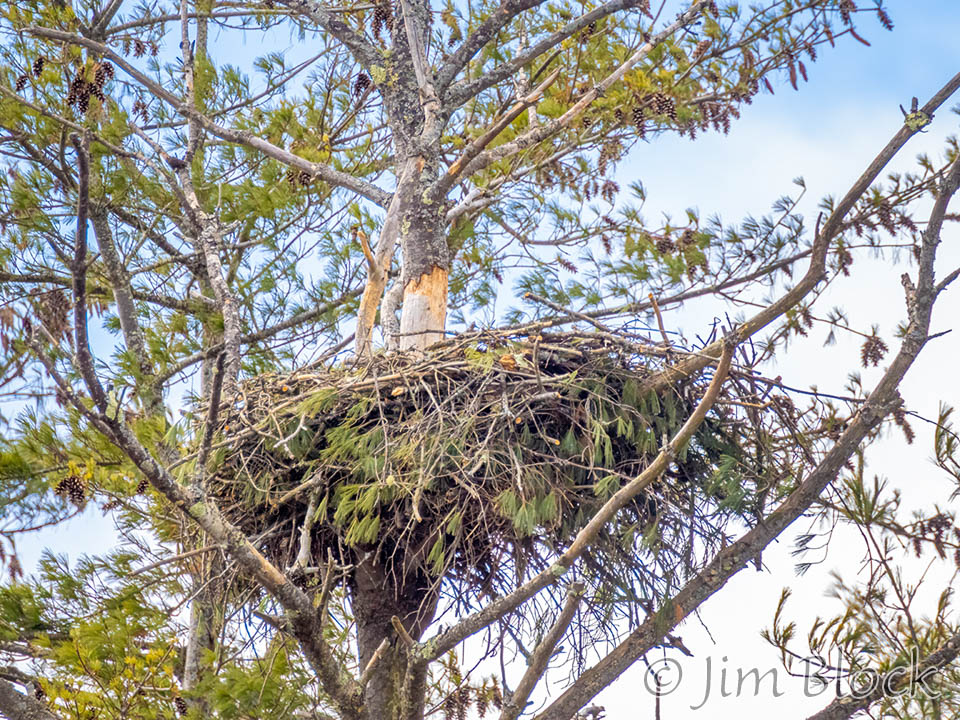
February 22, an eagle in a tree near the empty nest.
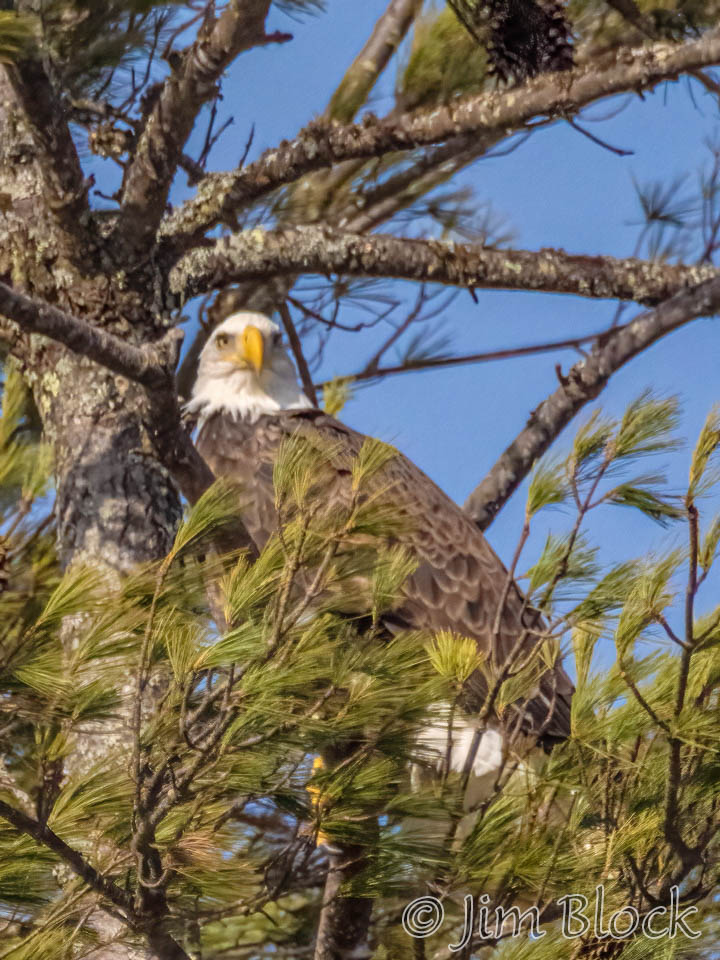
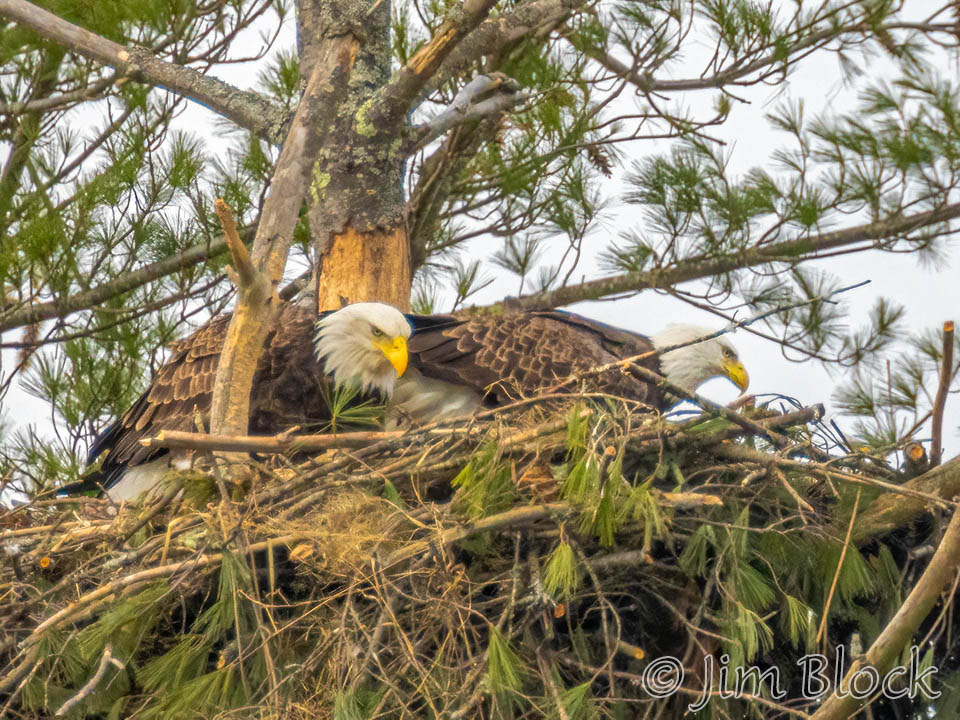
March 4, incubation in progress.
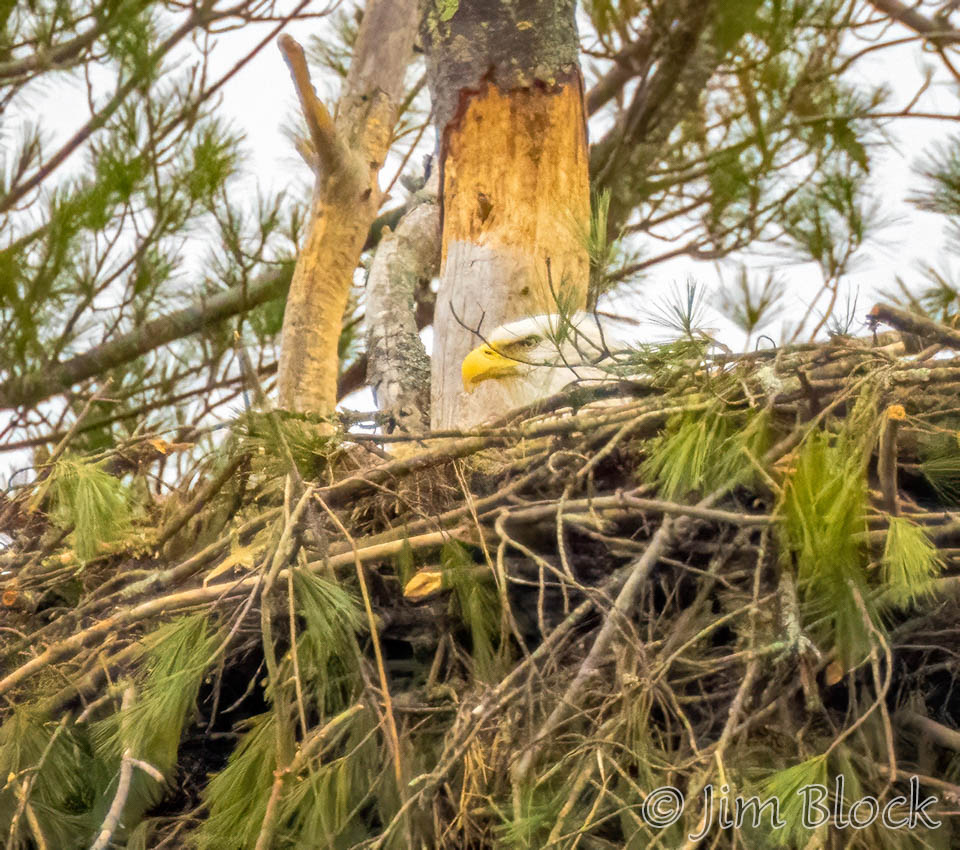
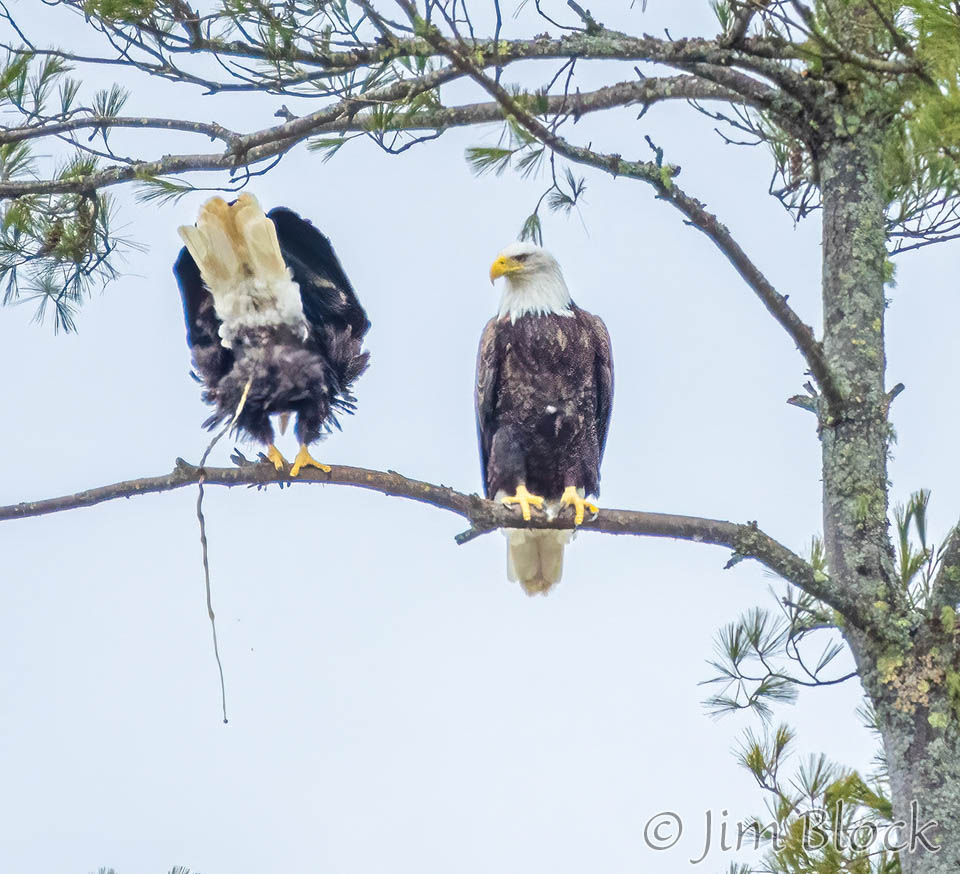
After an hour there was a nest exchange. One flew to the favorite tree.
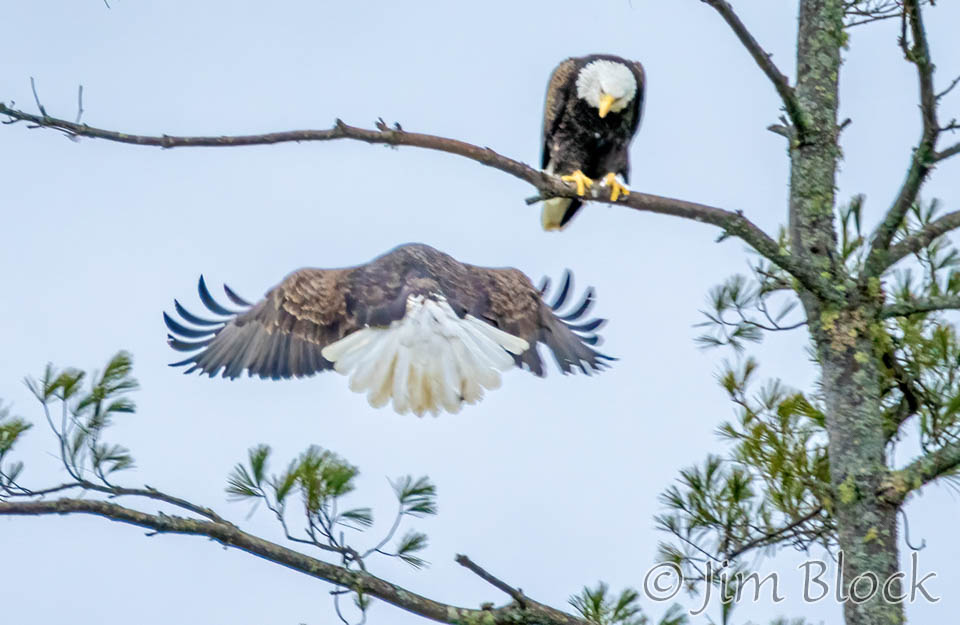
And relieved itself.
A minute later the other eagle flew to the nest.
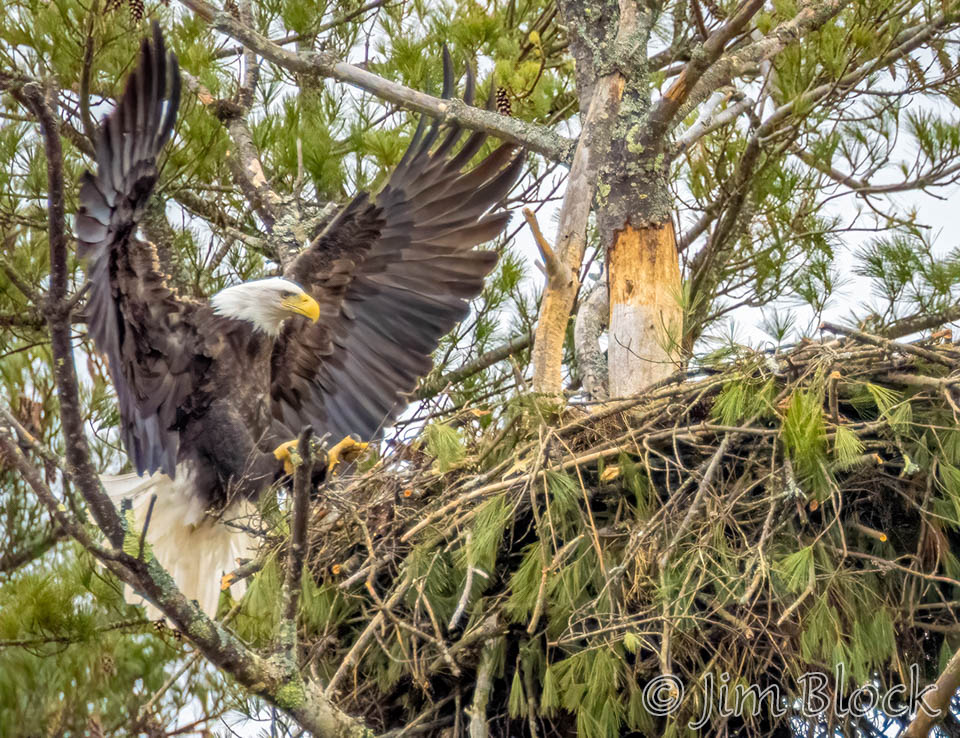
I only stayed an hour March 4. I returned March 8, staying for two and a half hours. All of the action happened at the very end of my stay. All of the photos below were taken in the last two minutes. Photographing the eagles was often a long, cold, boring exercise.
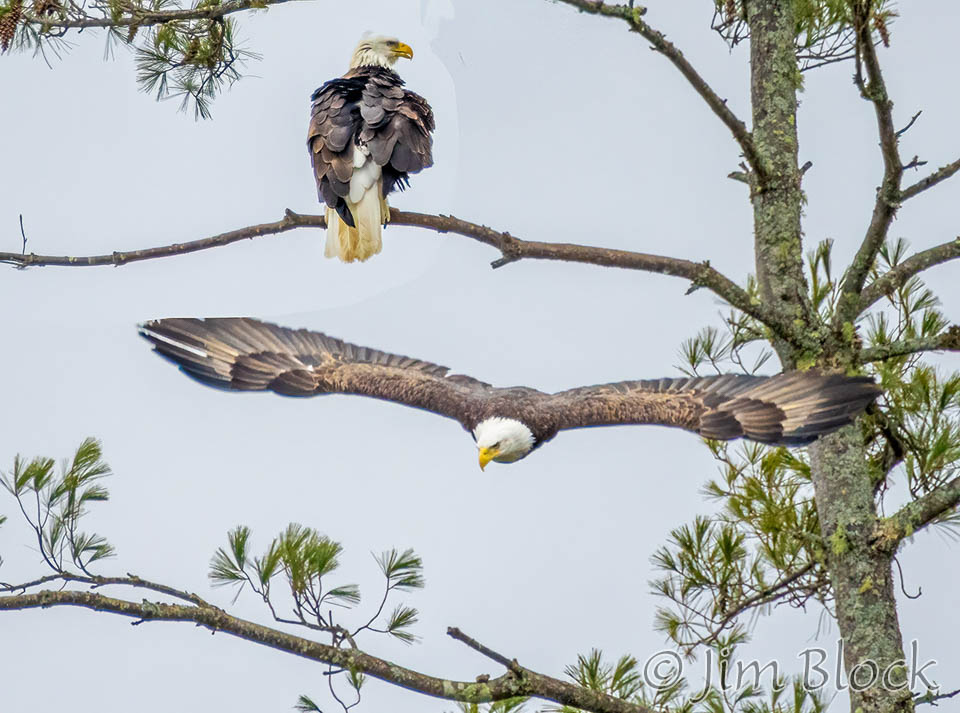
An eagle was poised above the nest waiting for its mate to leave.
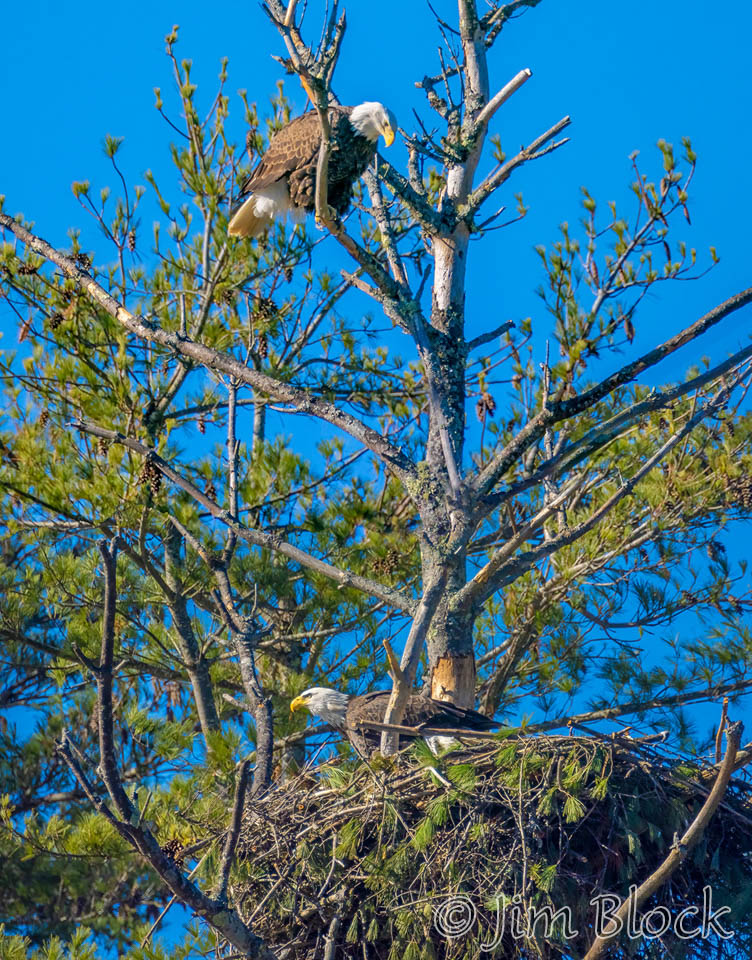
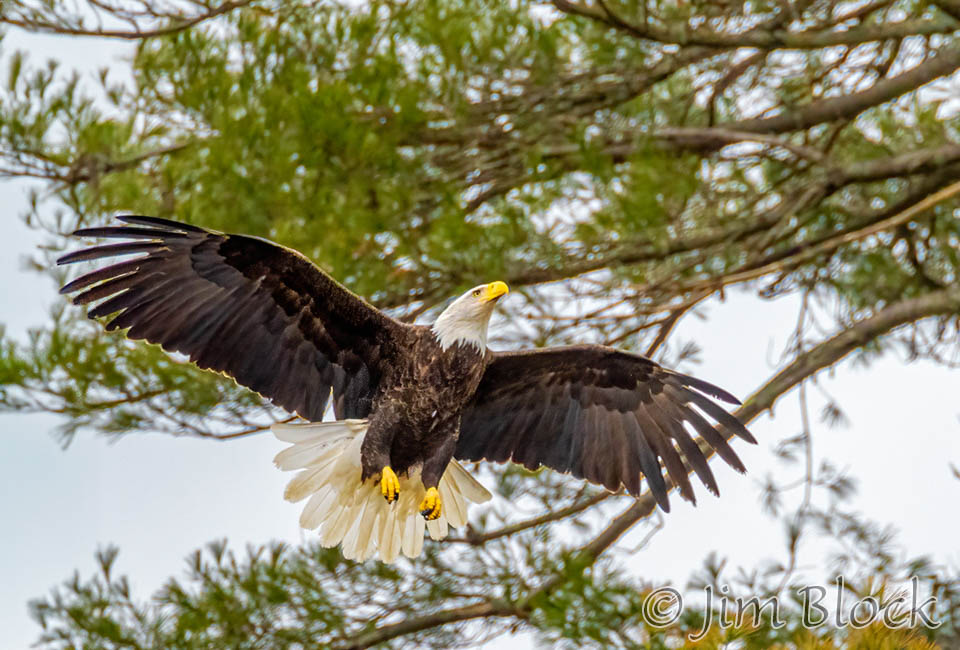
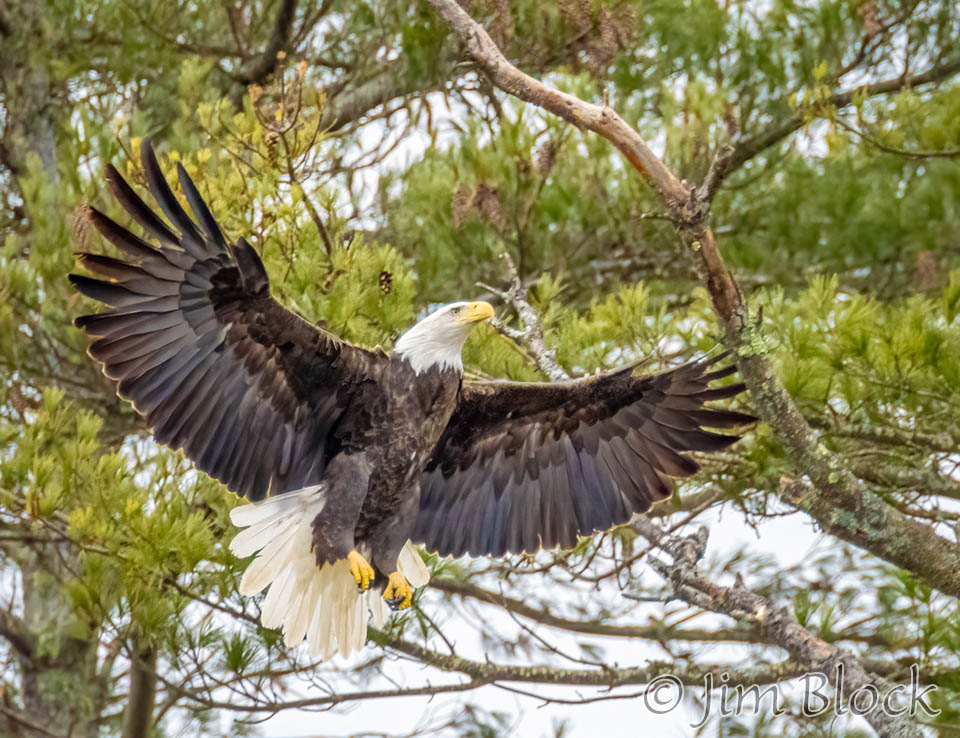
The eagle in the nest flew to their favorite branch and the one above did a long looping flight south over Little Post Pond and then back to the nest.
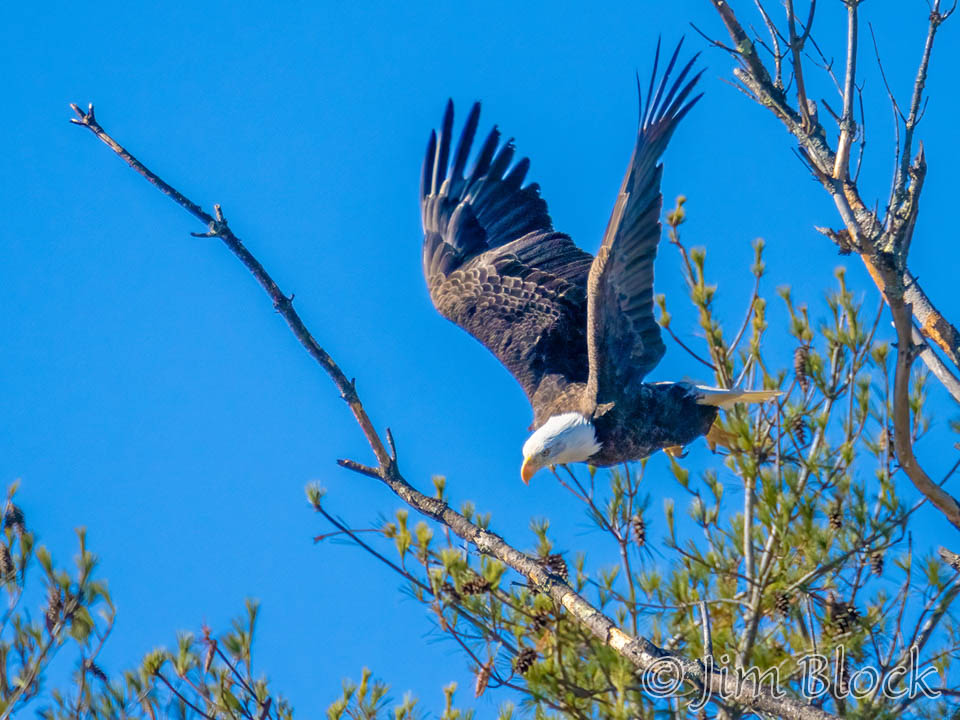
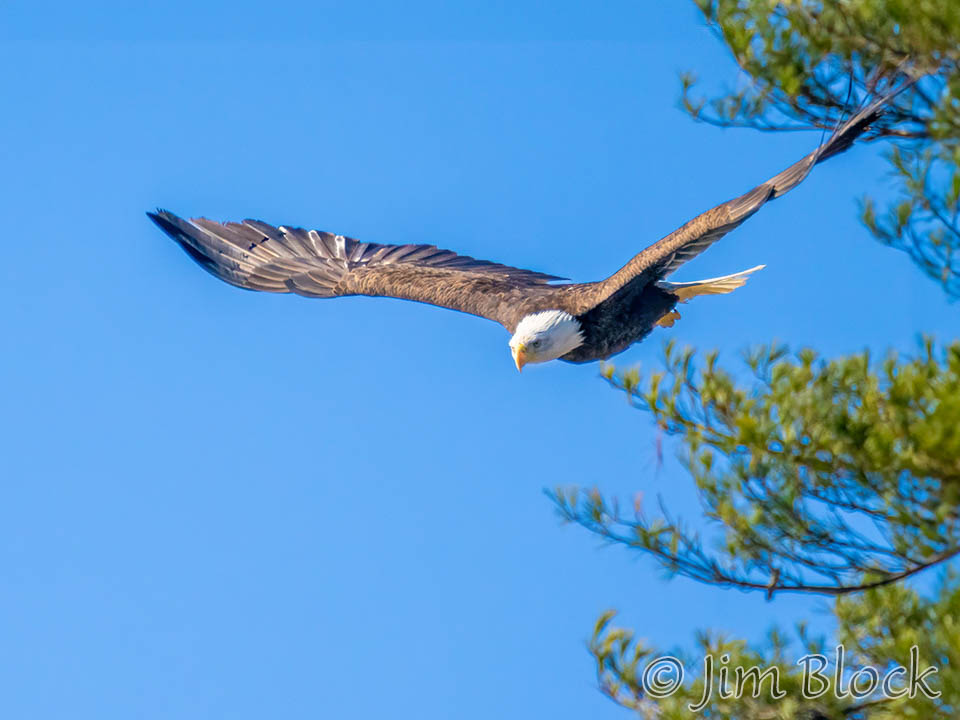
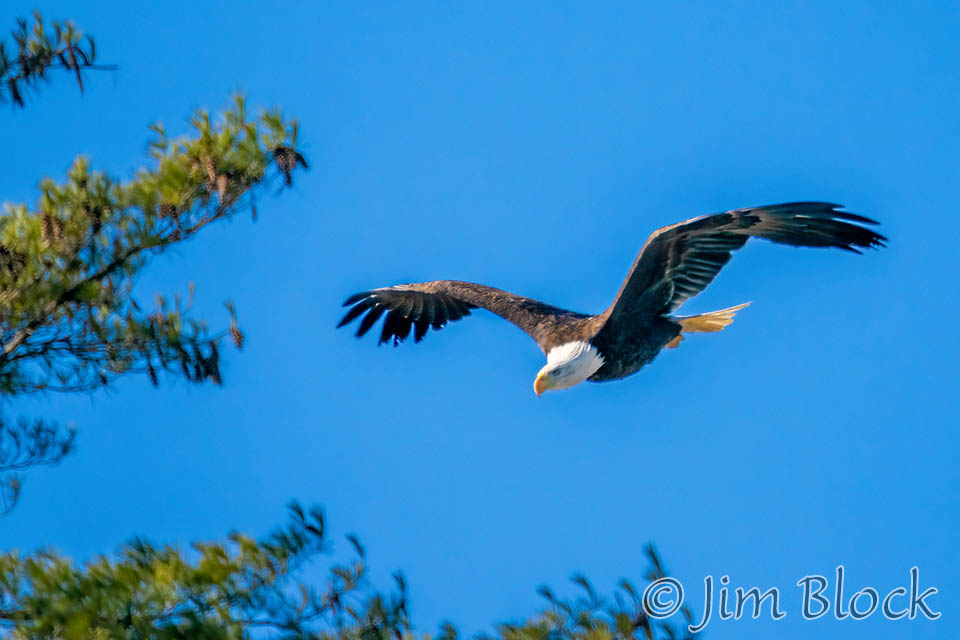
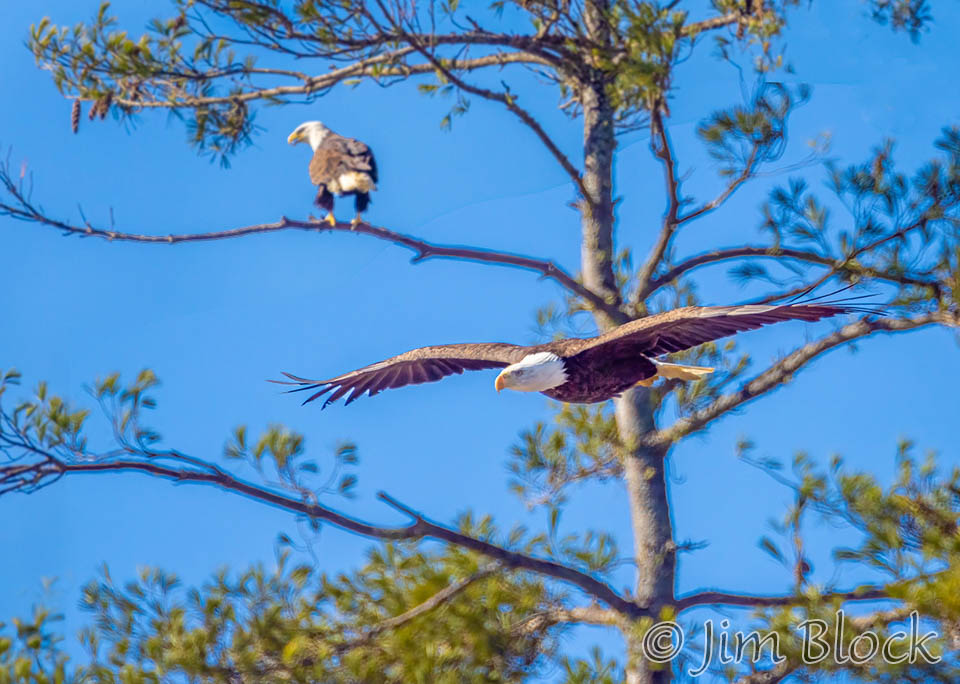
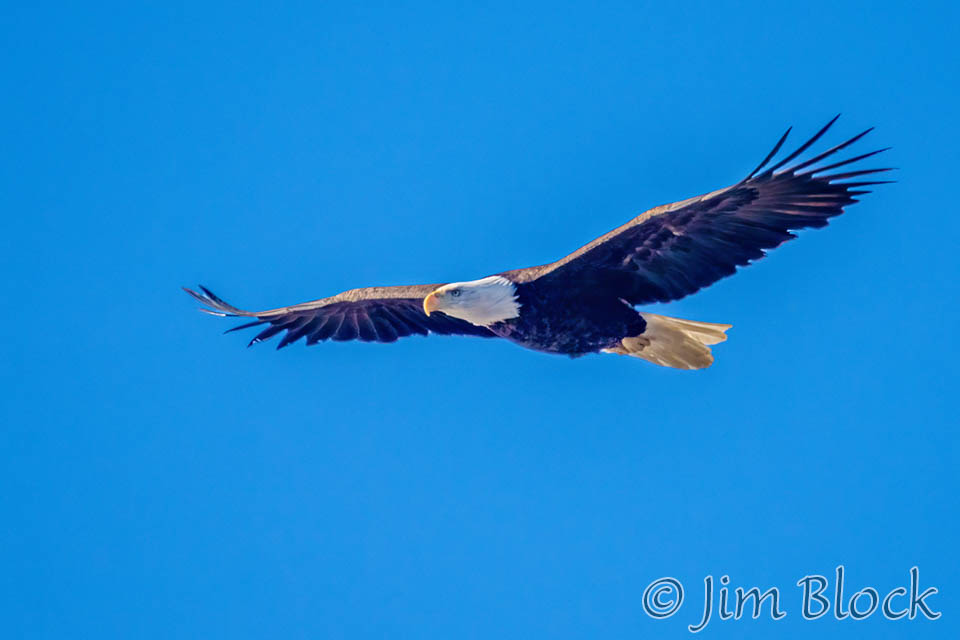
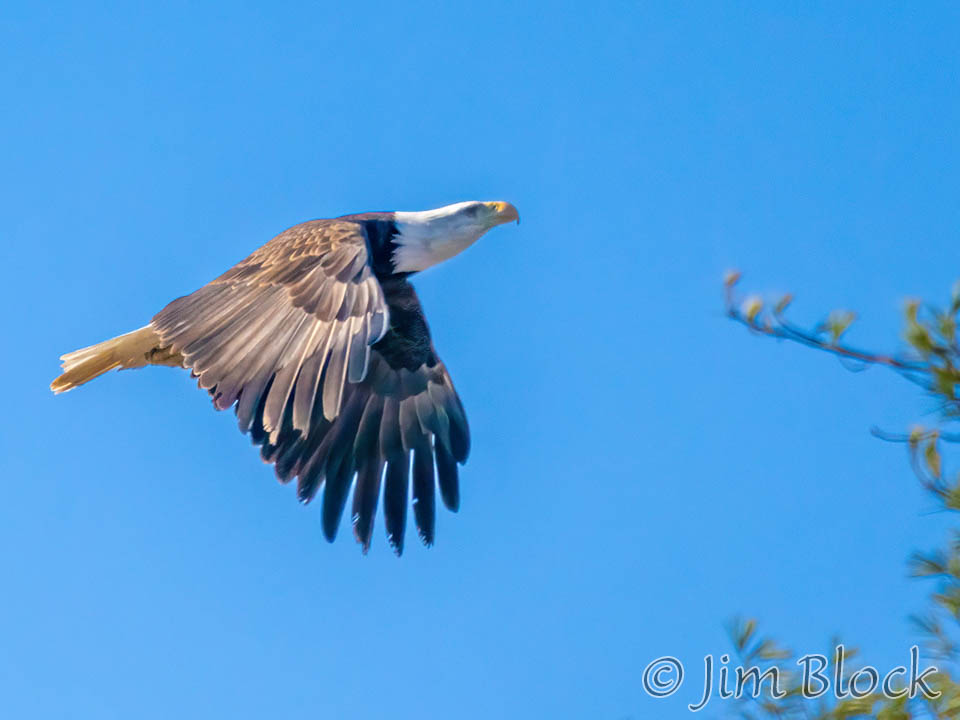
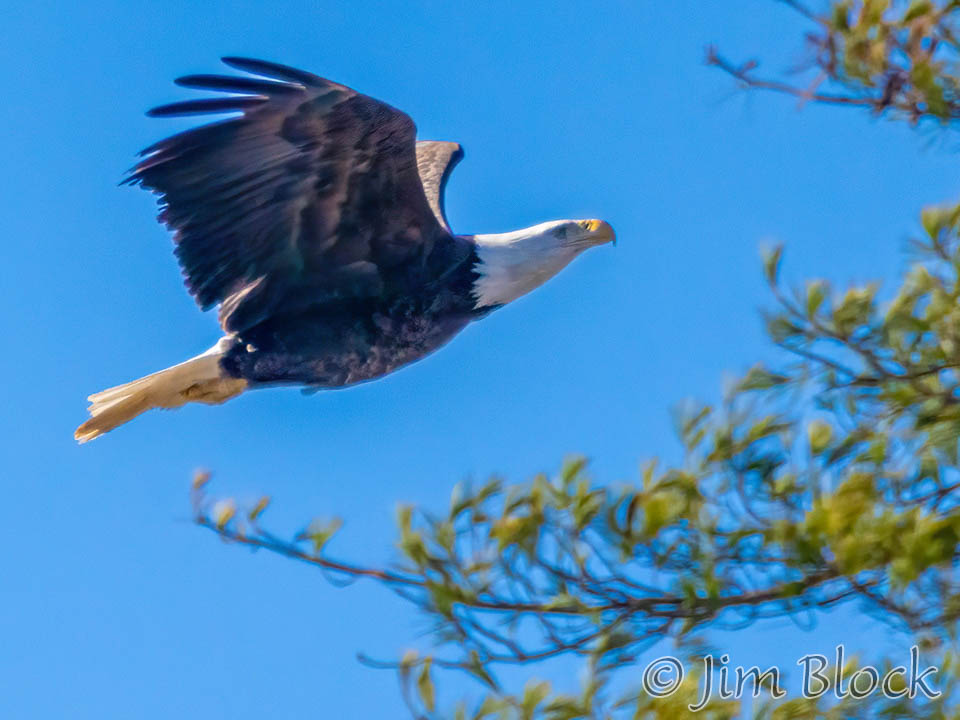
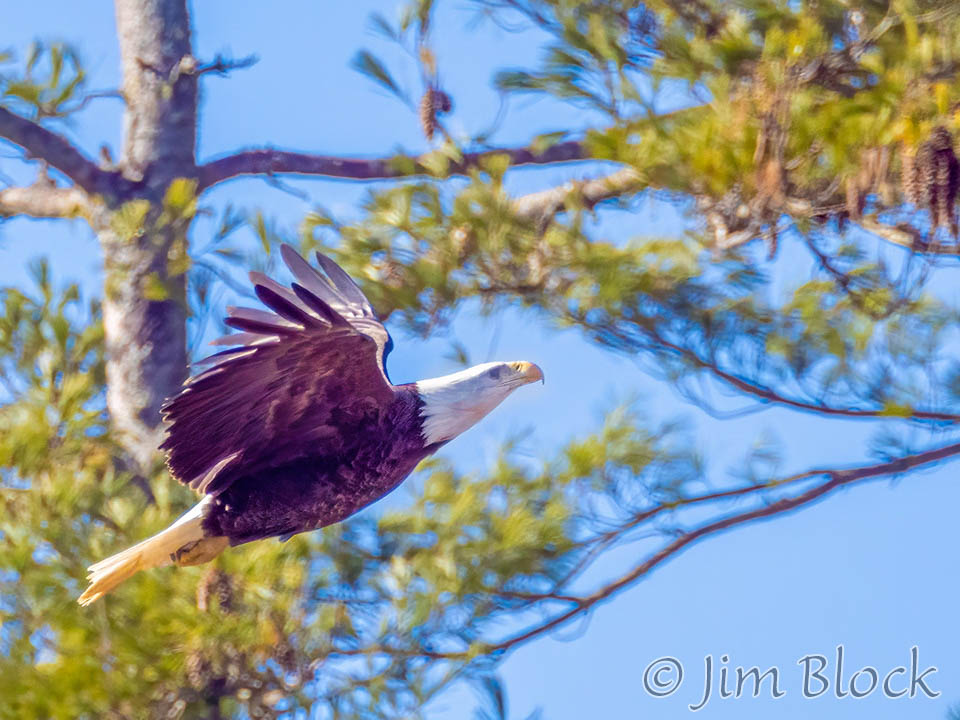
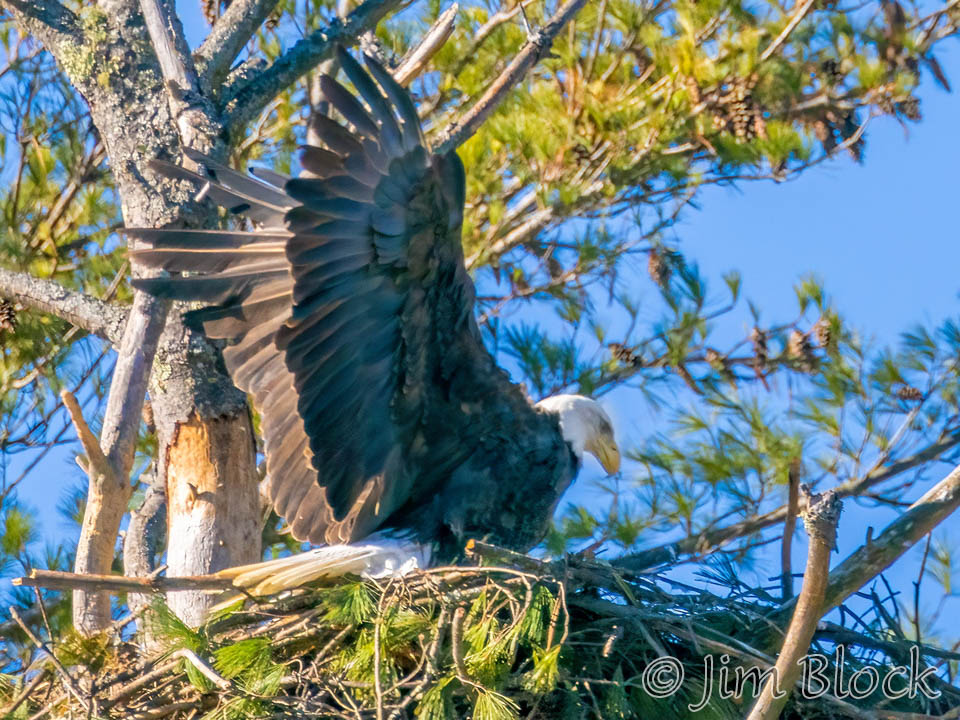
I declared victory and left.
I spent 20 minutes with the eagles on March 16 between visits to some other spots. One eagle was on nest incubating and the other was hanging out nearby.
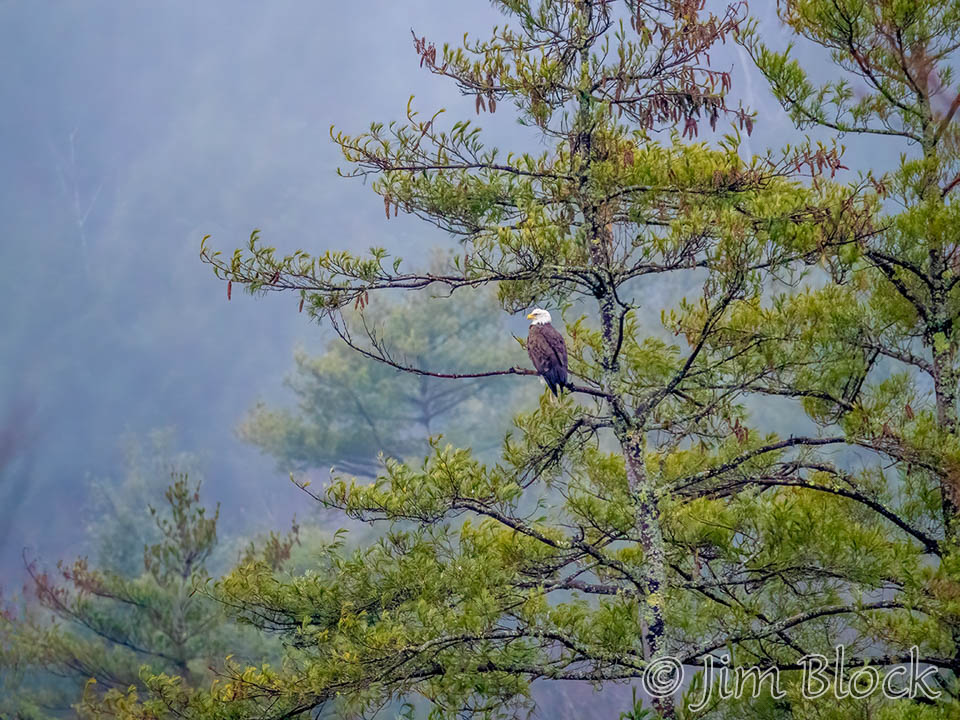
I only stayed 20 minutes again on March 19, but there was more action this time.
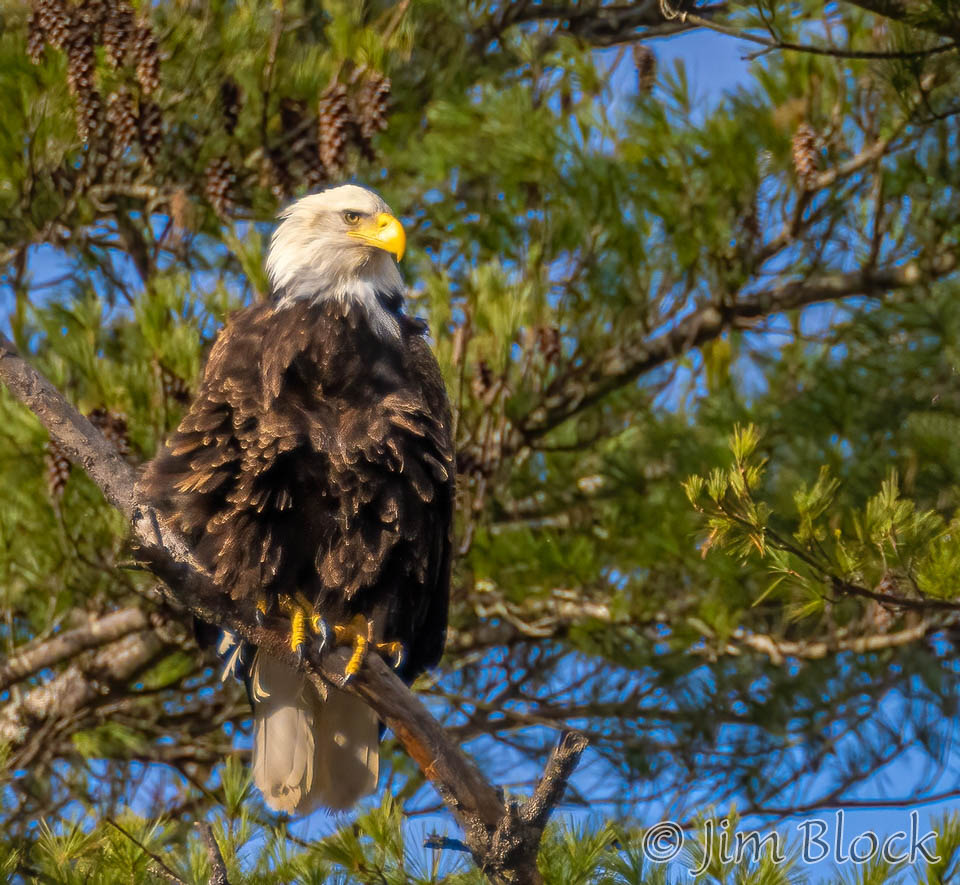
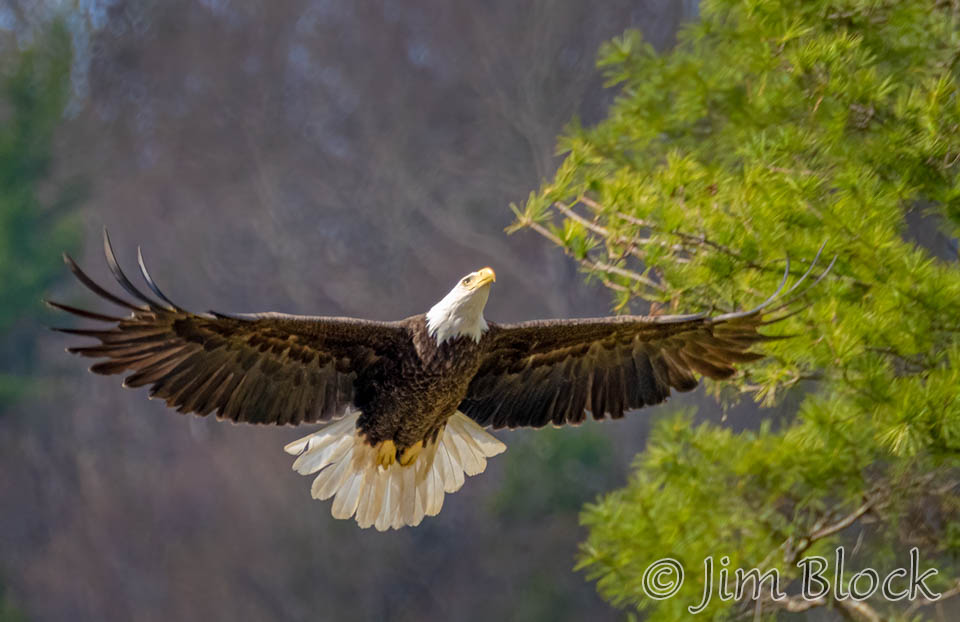
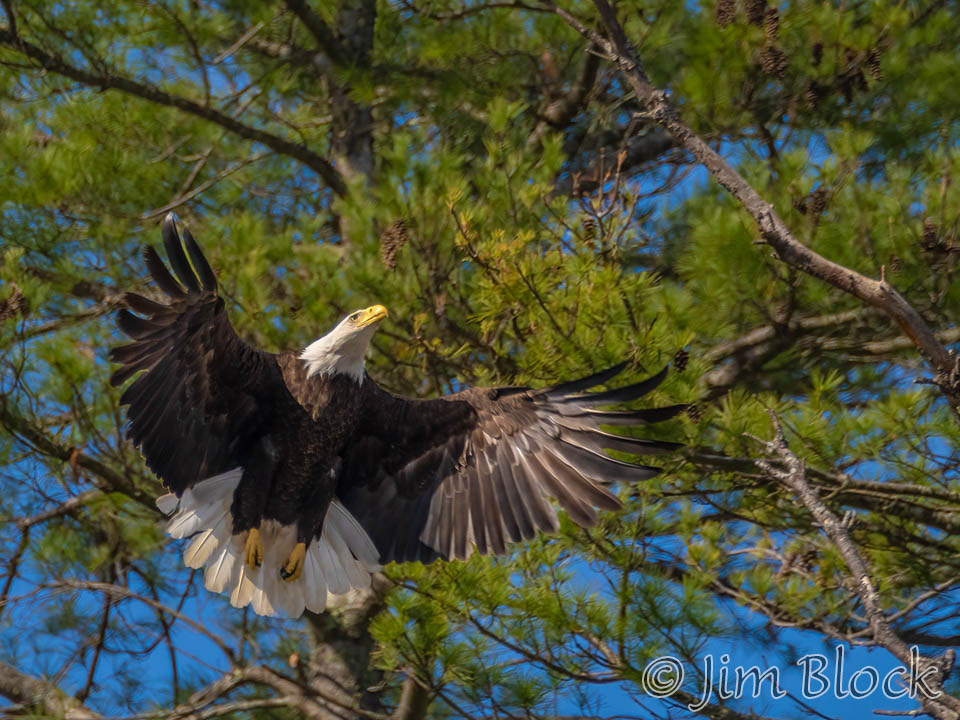
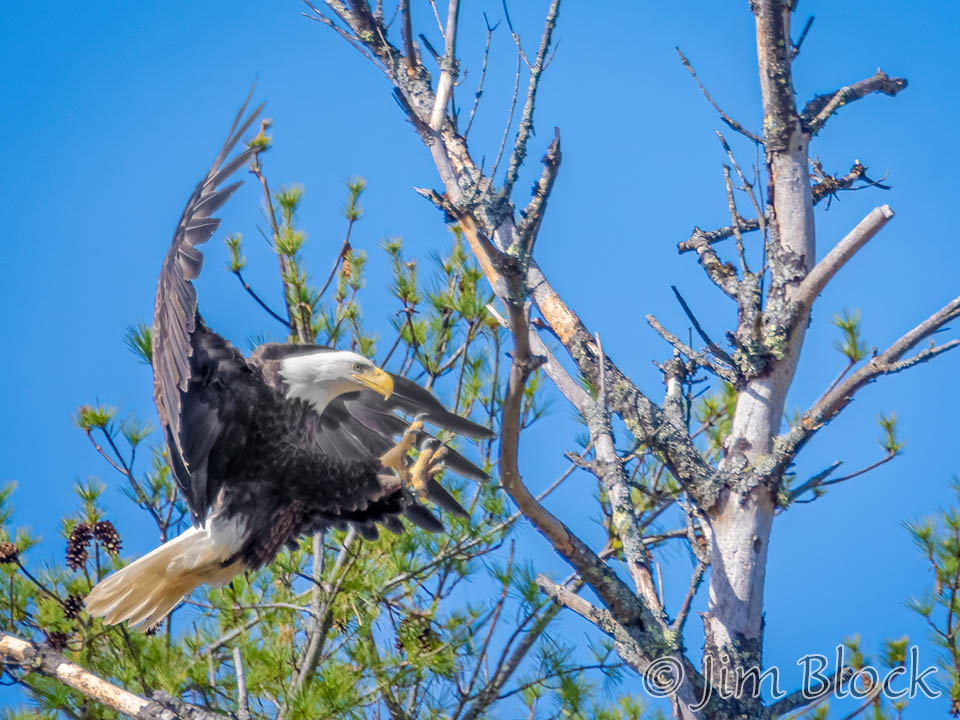
I caught an eagle flying from its favorite perch to a branch near the nest.
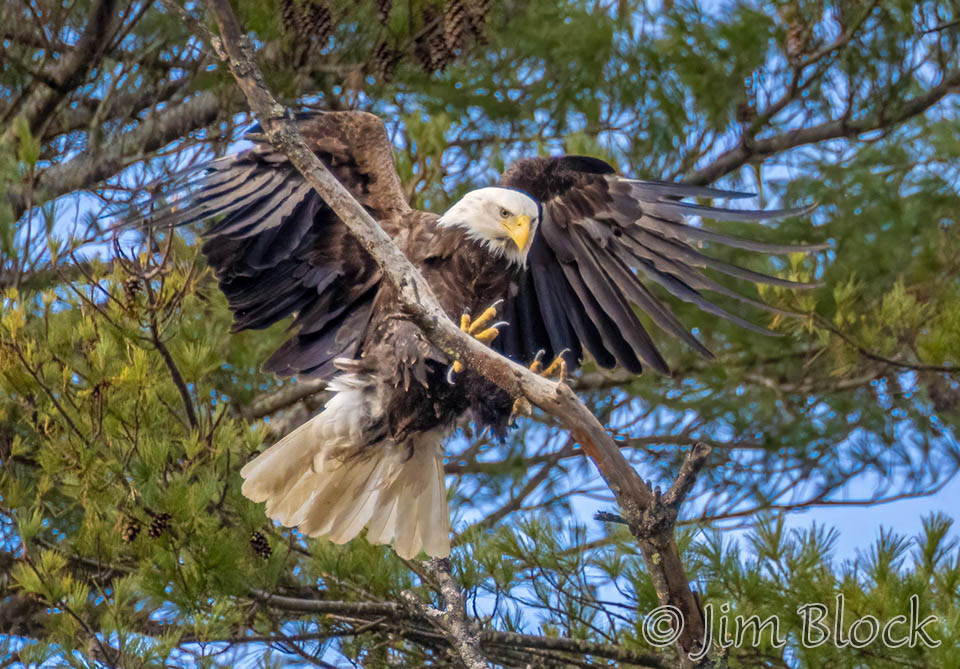
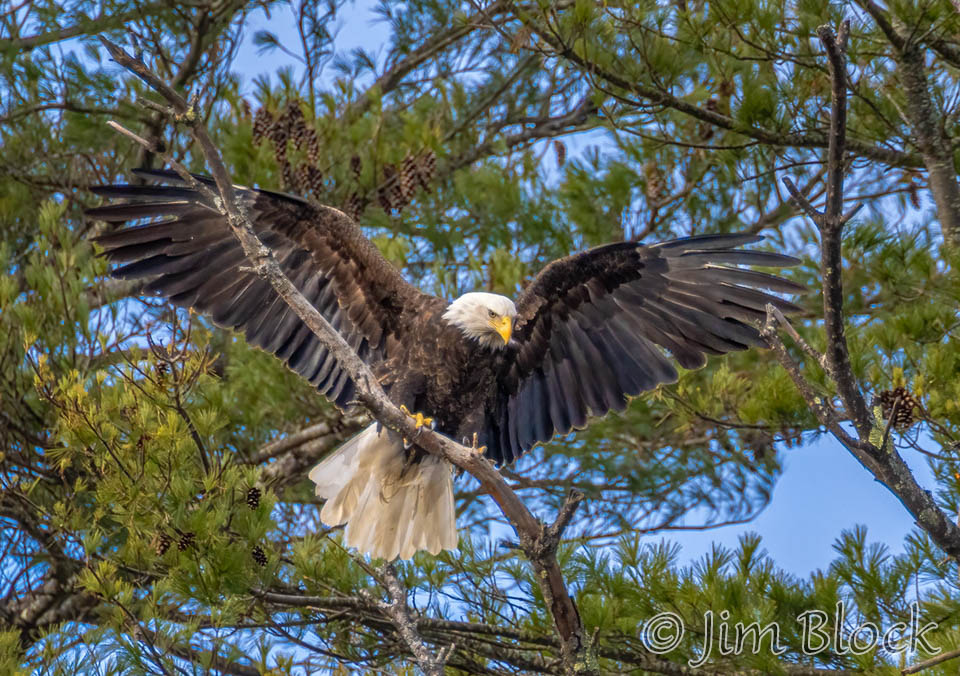
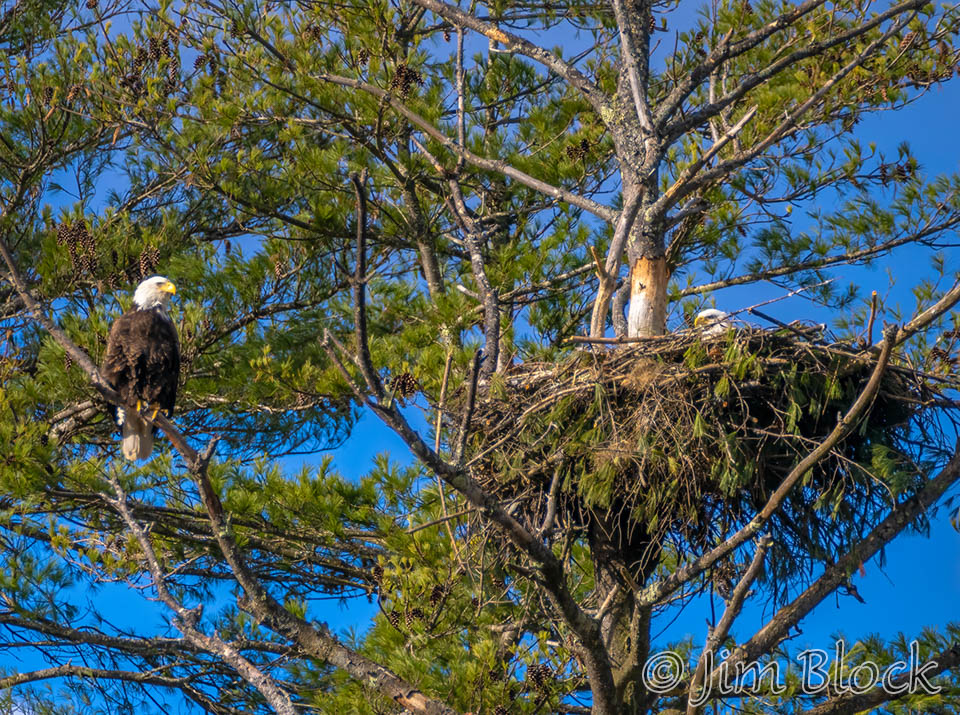
It then flew to the nest to relieve its mate.
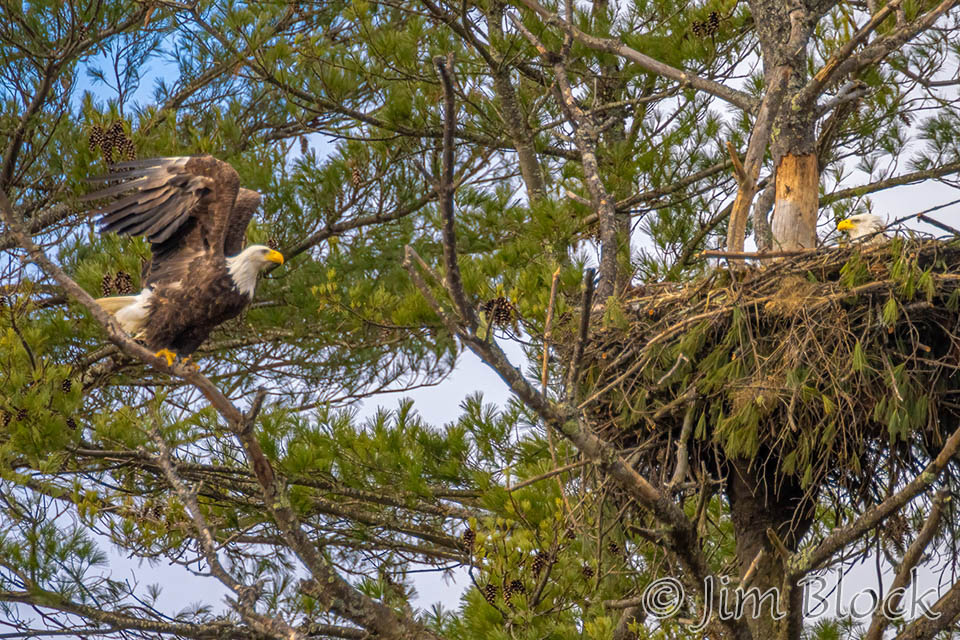
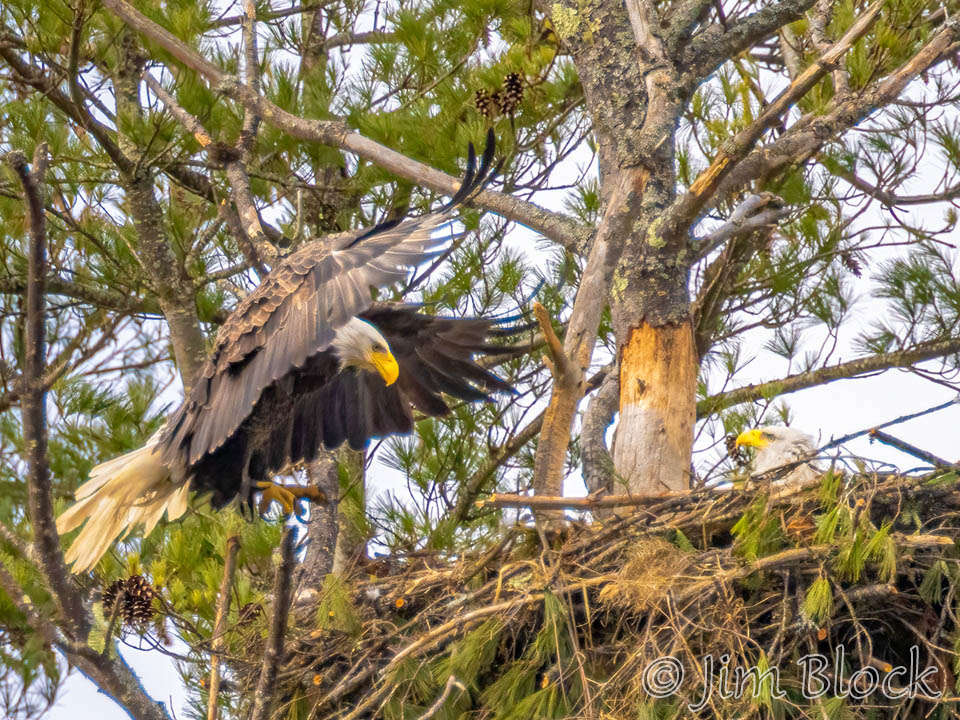
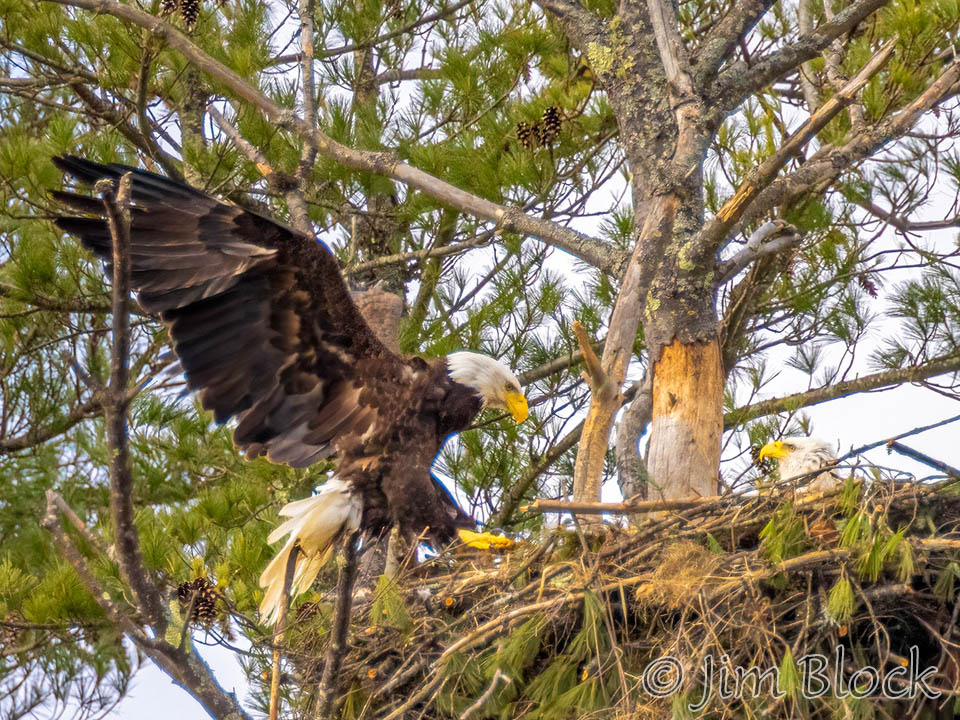
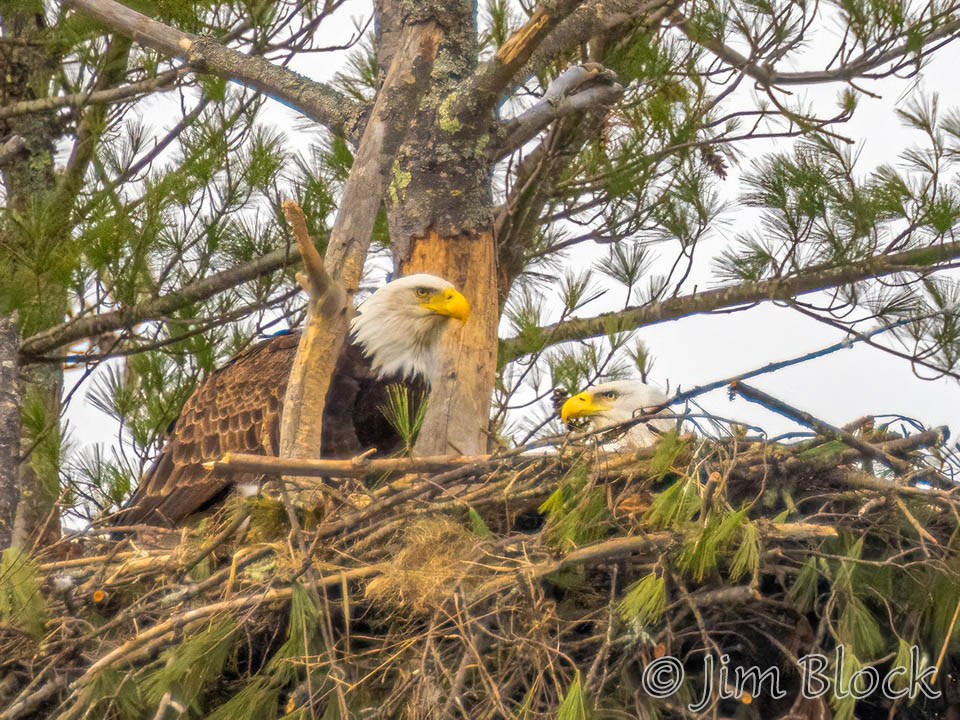
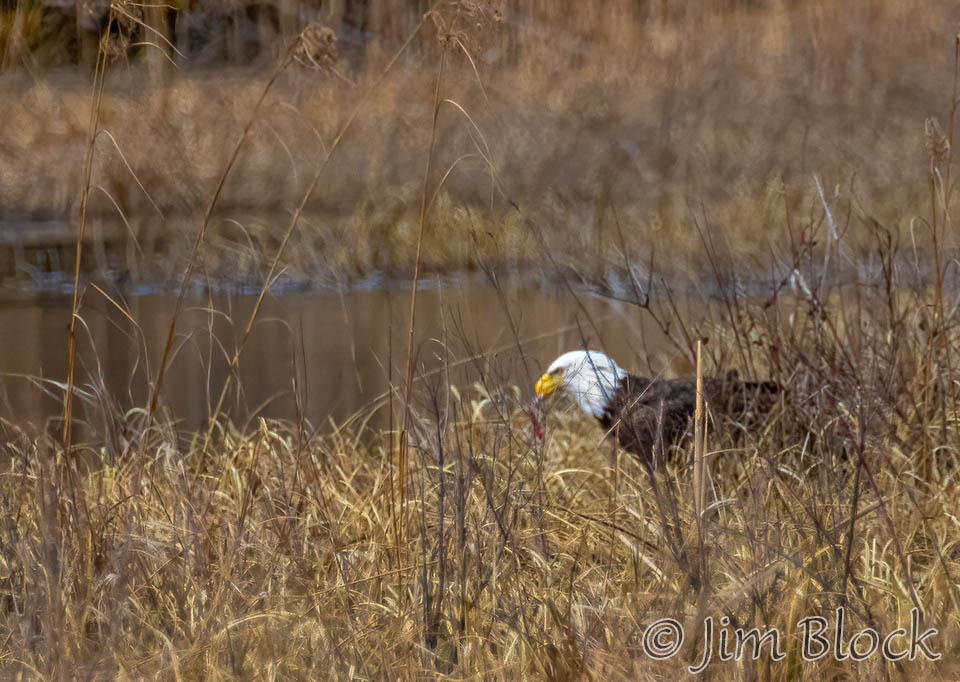
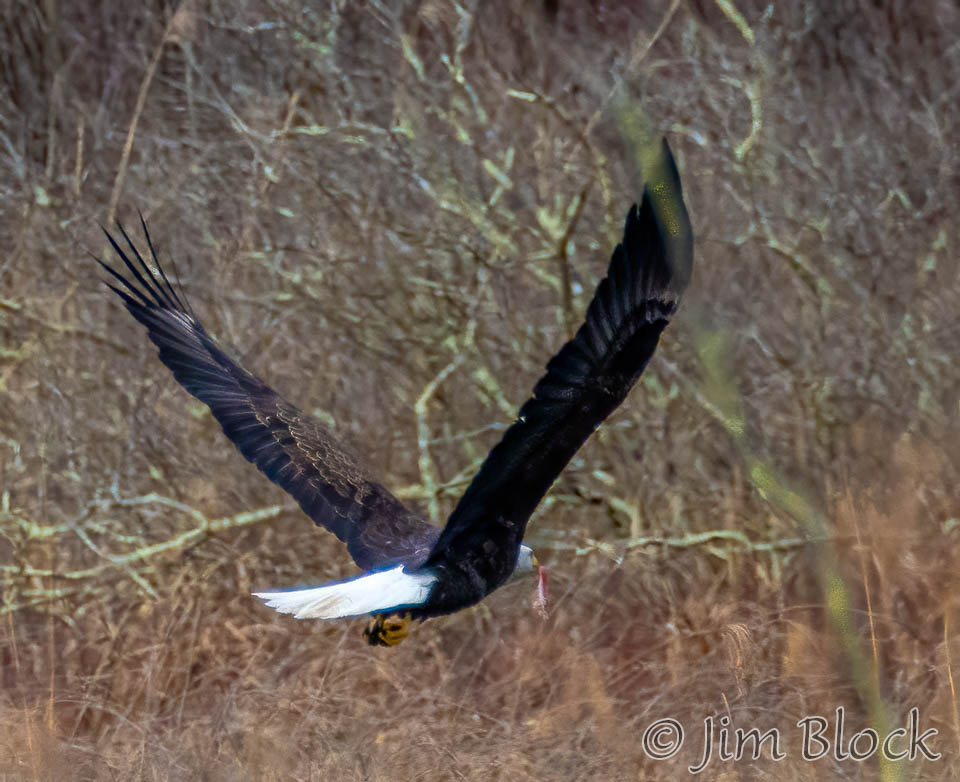
The original nest sitter then flew to the shore of Little Post Pond. I hustled down to the shore of Clay Brook and got two marginal photos of it in this unusual spot. In the second photo you can (barely) see something in its bill.
On March 27, I stayed for about an hour and saw a second-year bald eagle pay a visit to a tree very near the nest.
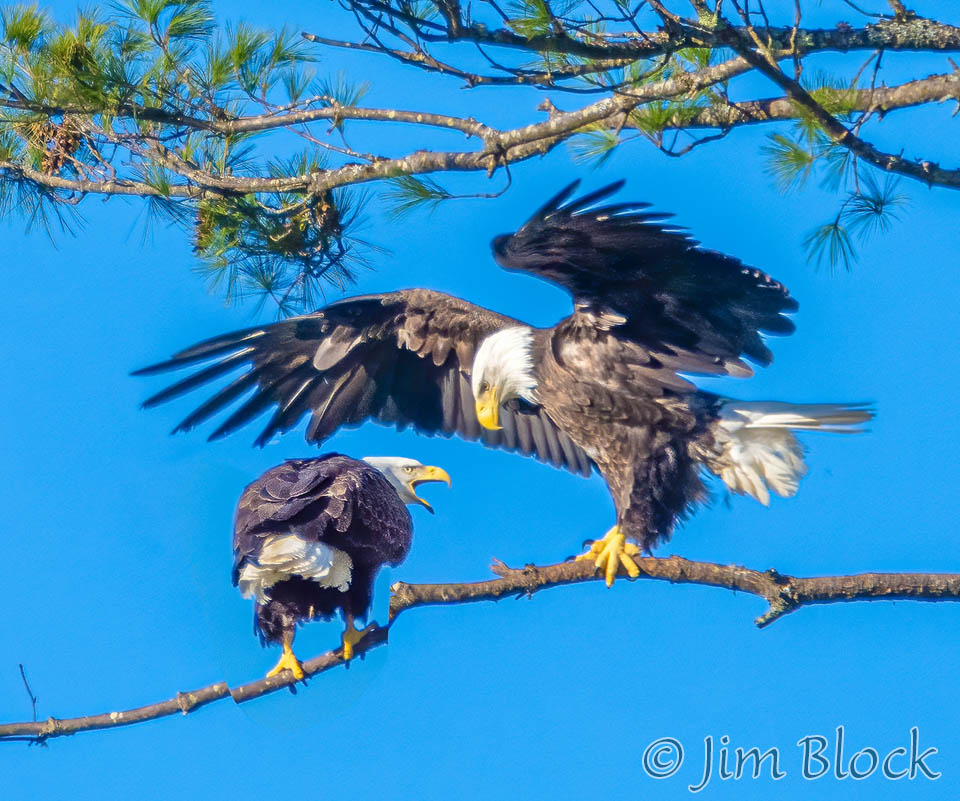
Shortly after arriving an eagle flew into the front of the nest. This is not the preferred direction for photography. Its mate yelled, ducked, and screamed.
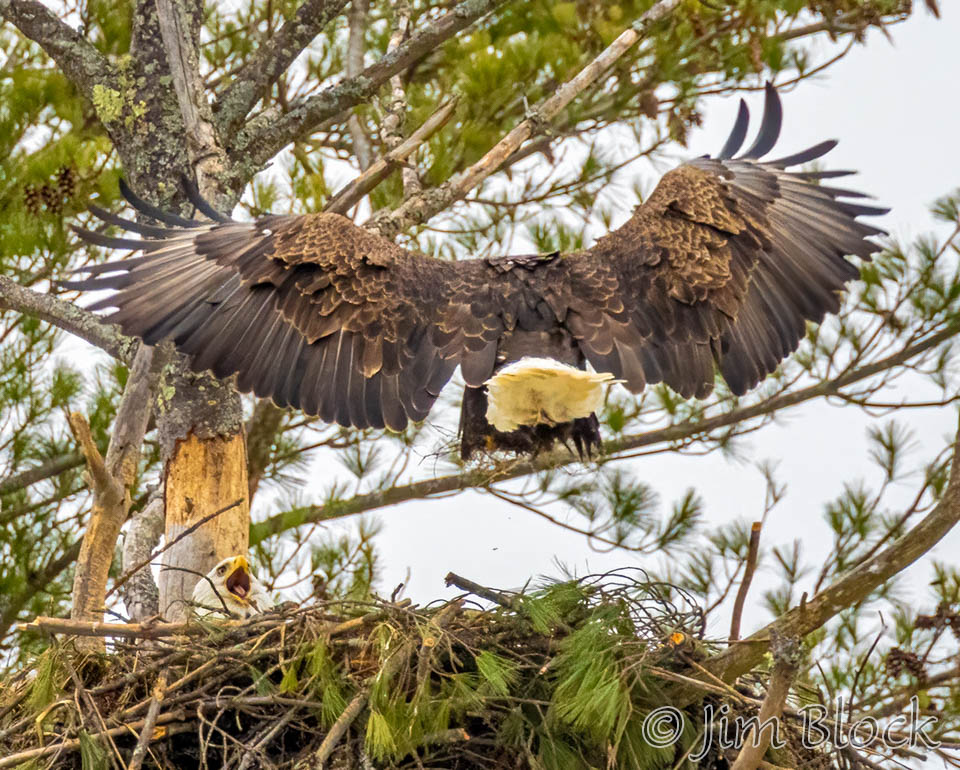
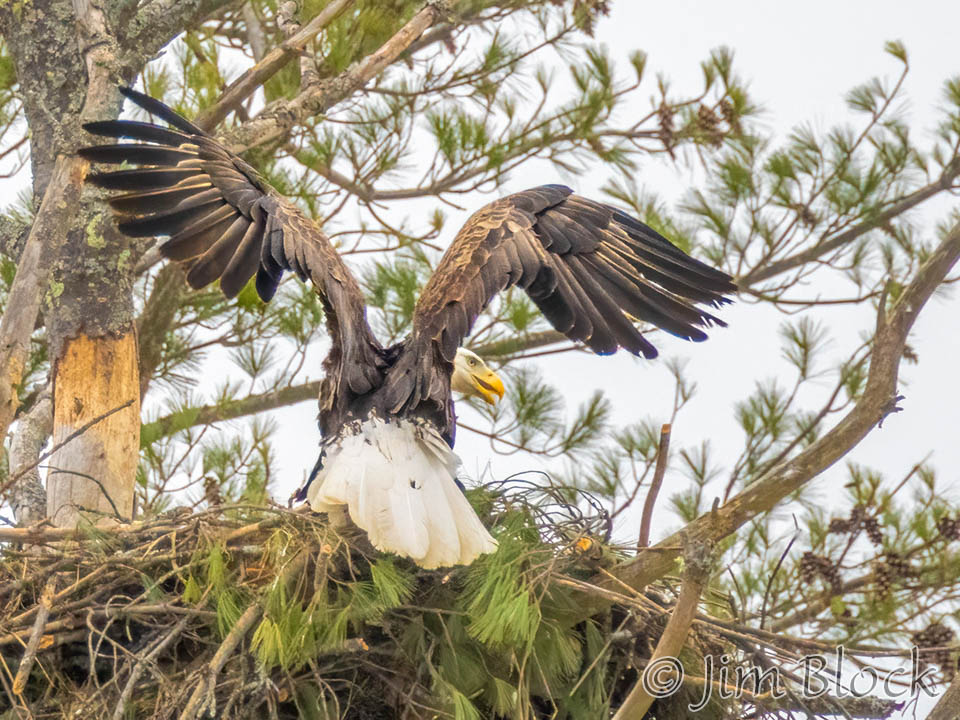
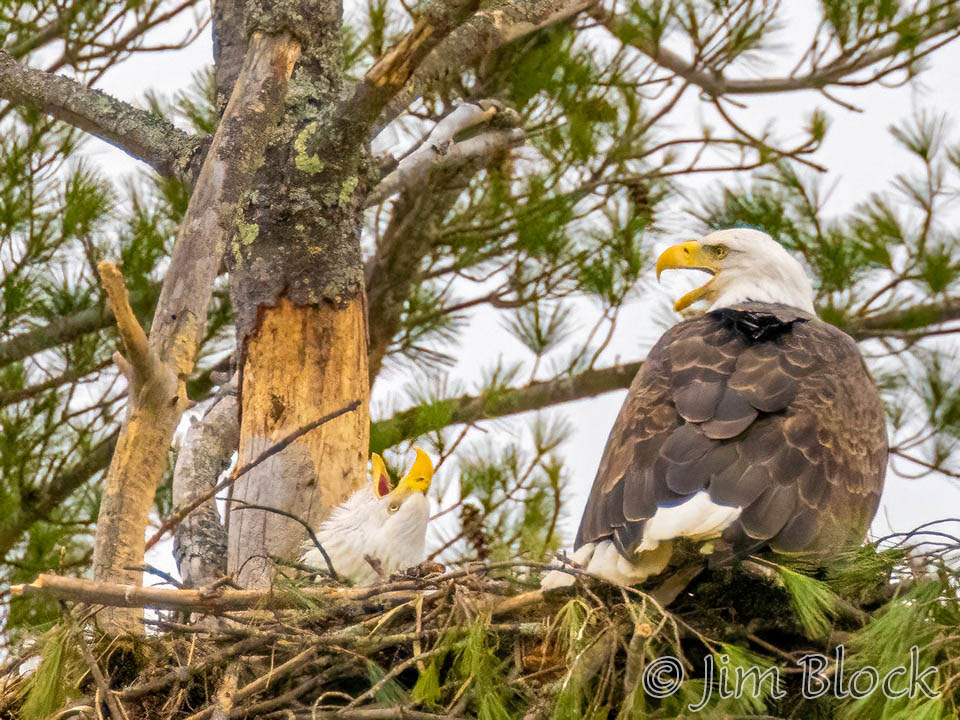
It could have been that the eagle was already reacting to the younger eagle that had landed above it.
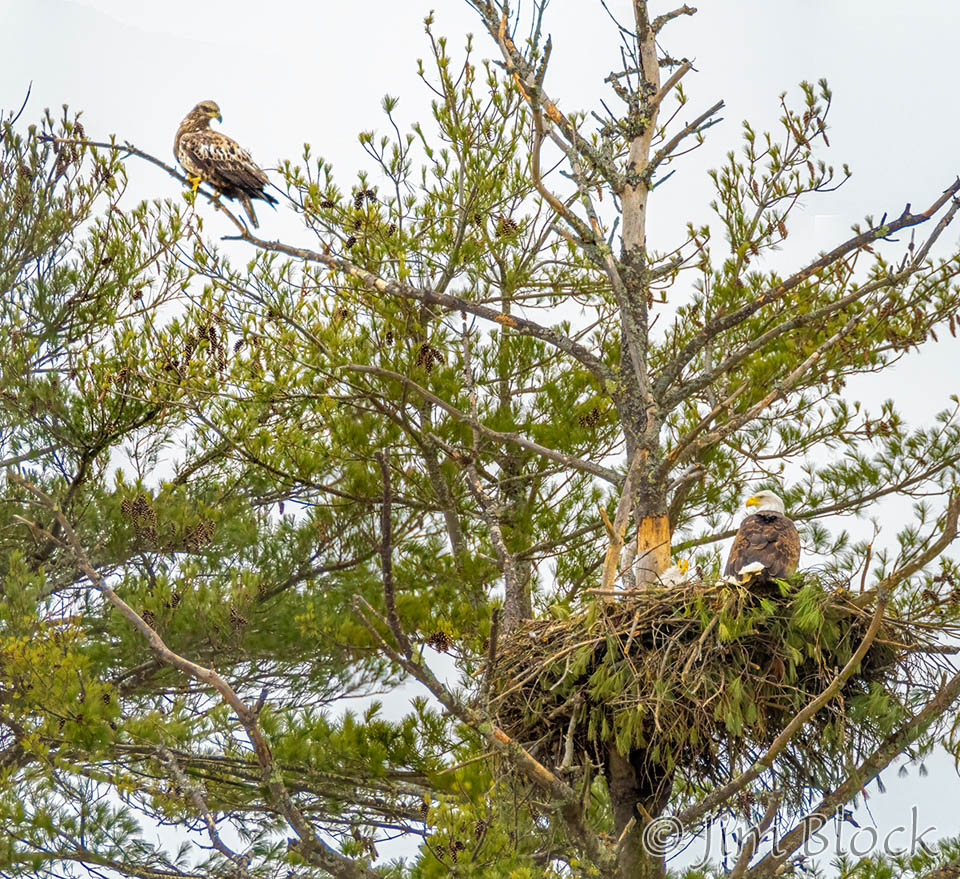
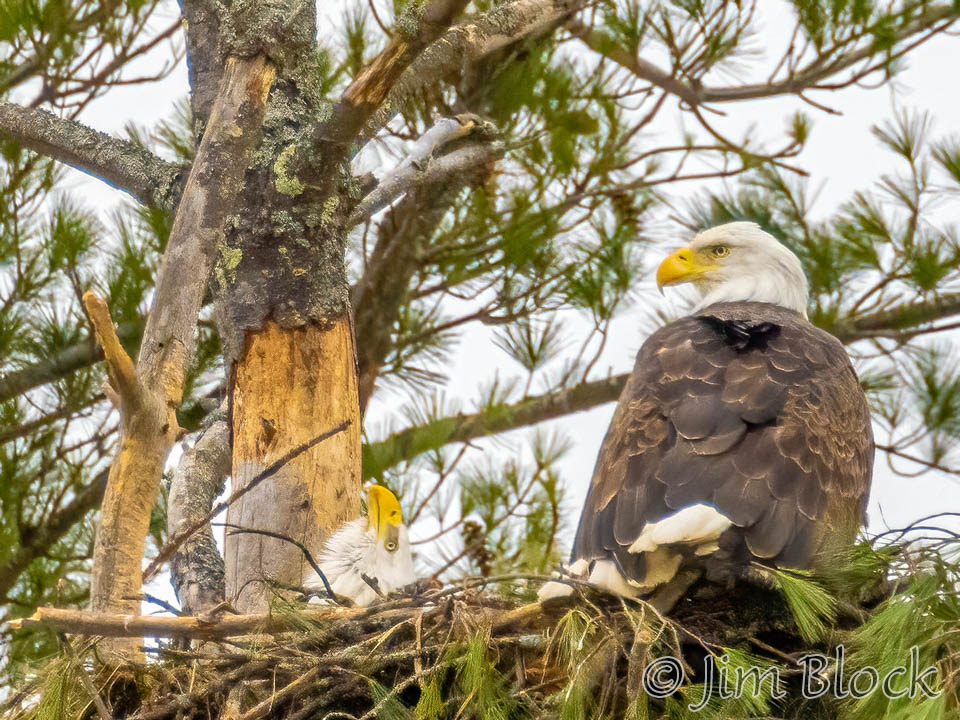
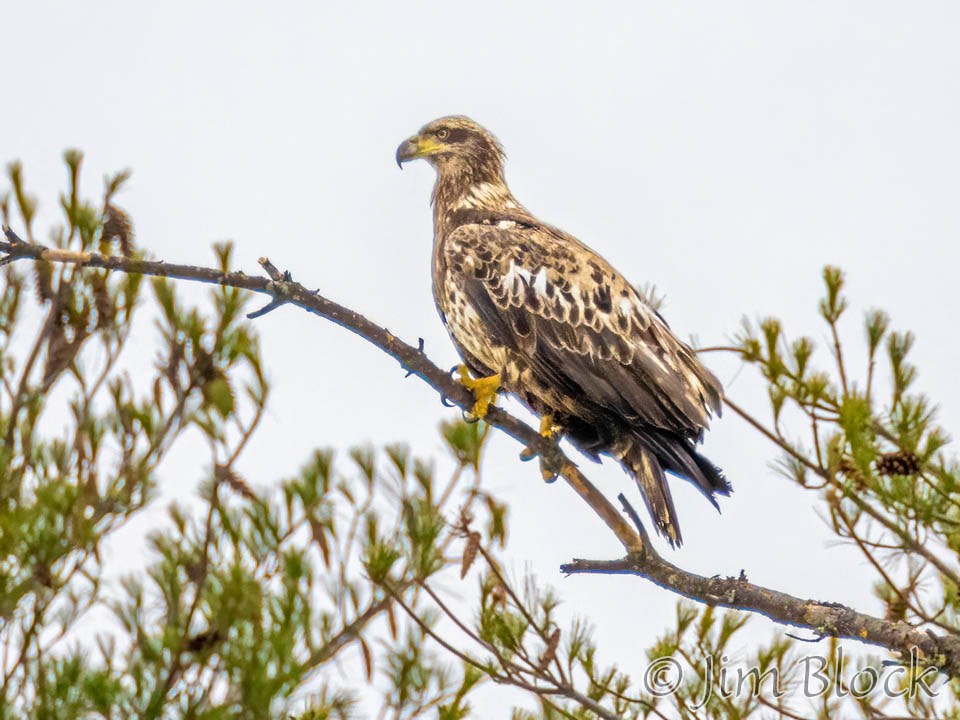
After a few minutes the young eagle departed.
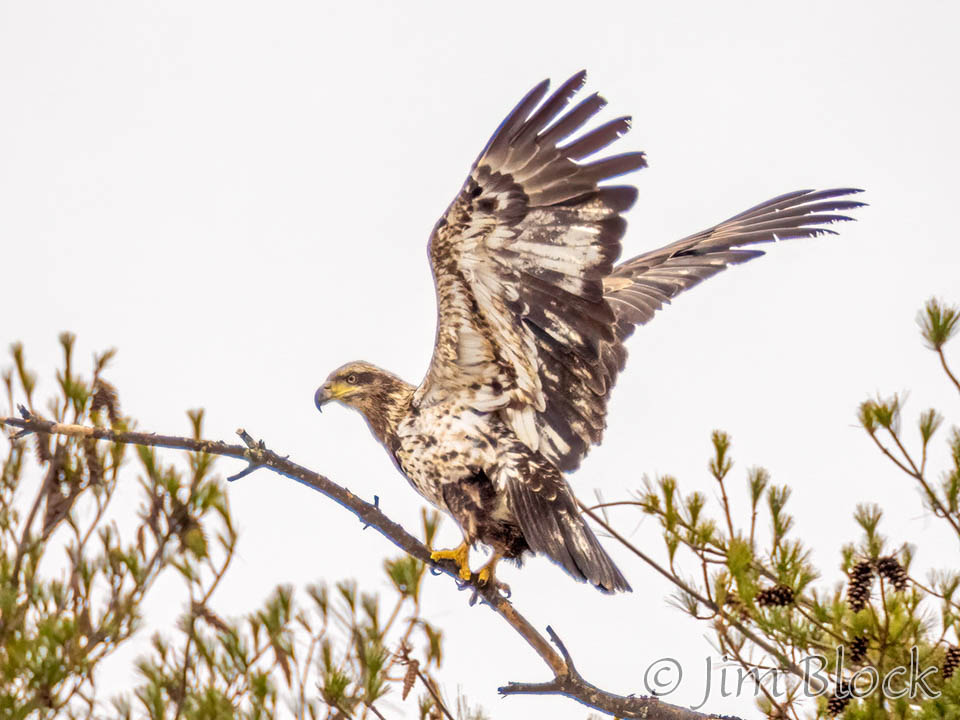
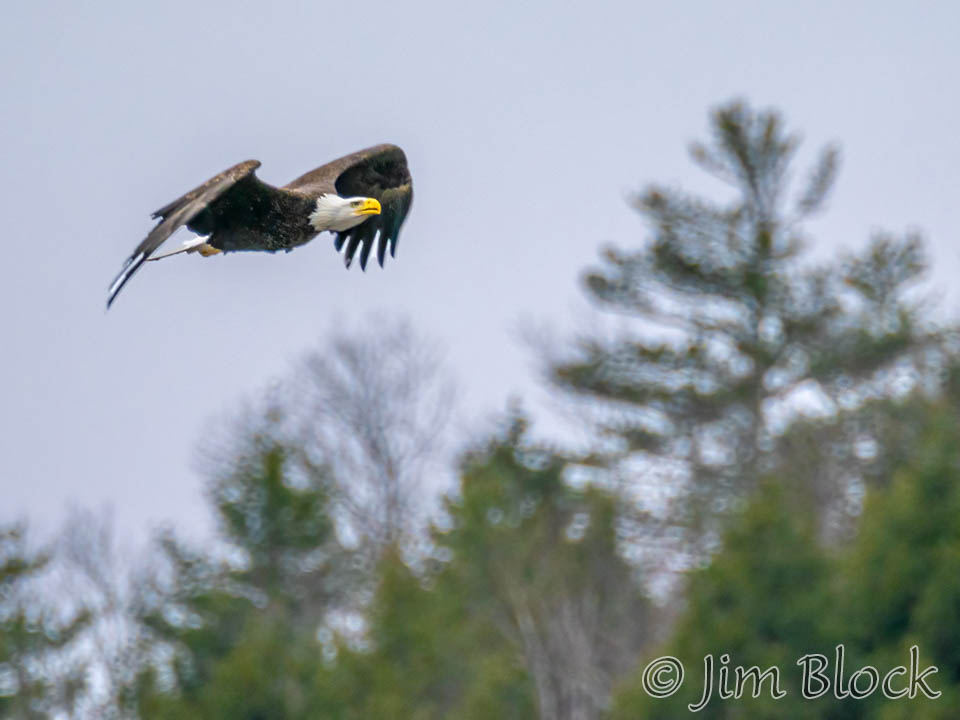
The nest exchange was completed with the eagle making a long loop over Post Pond before returning to their favorite perch.
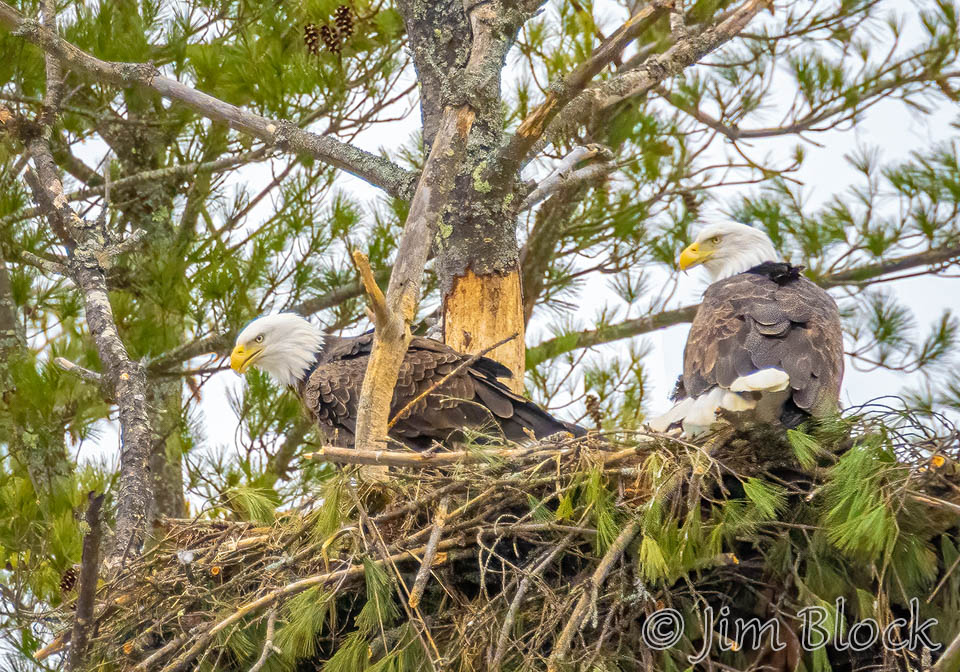
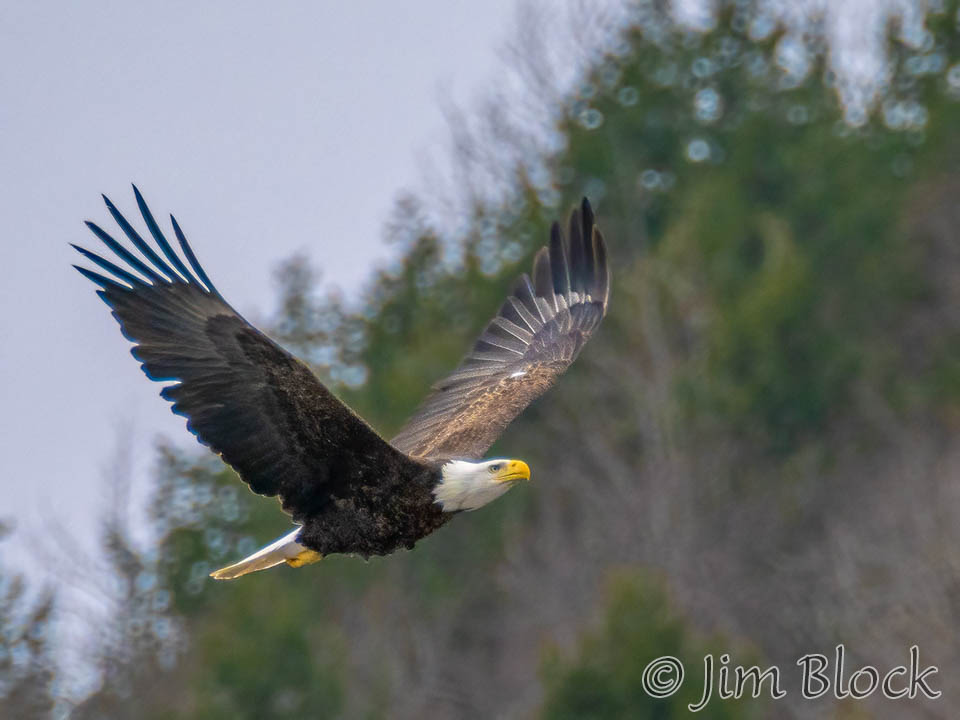
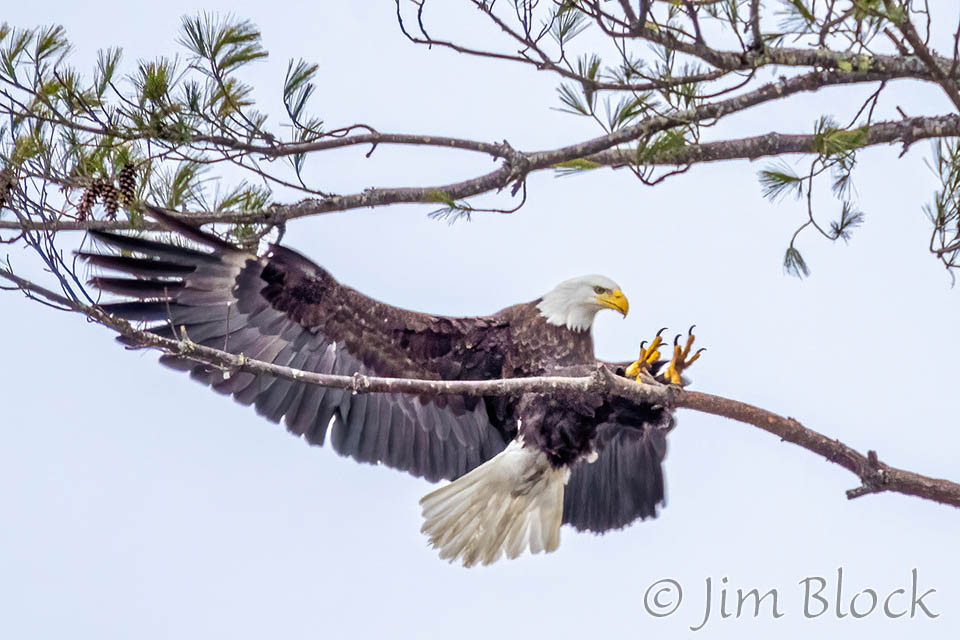
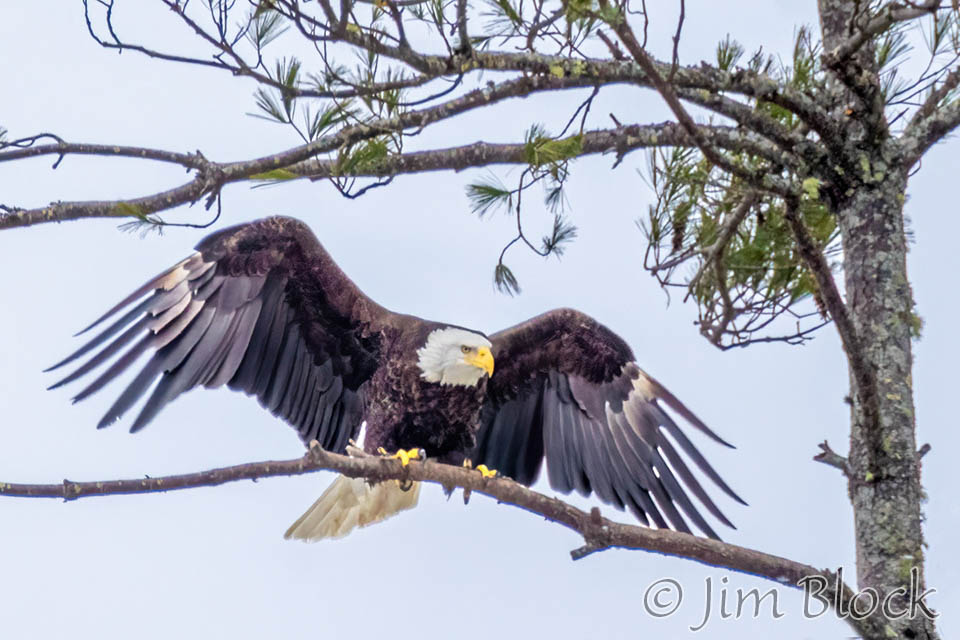
On April 2 the eagles were contentedly incubating.
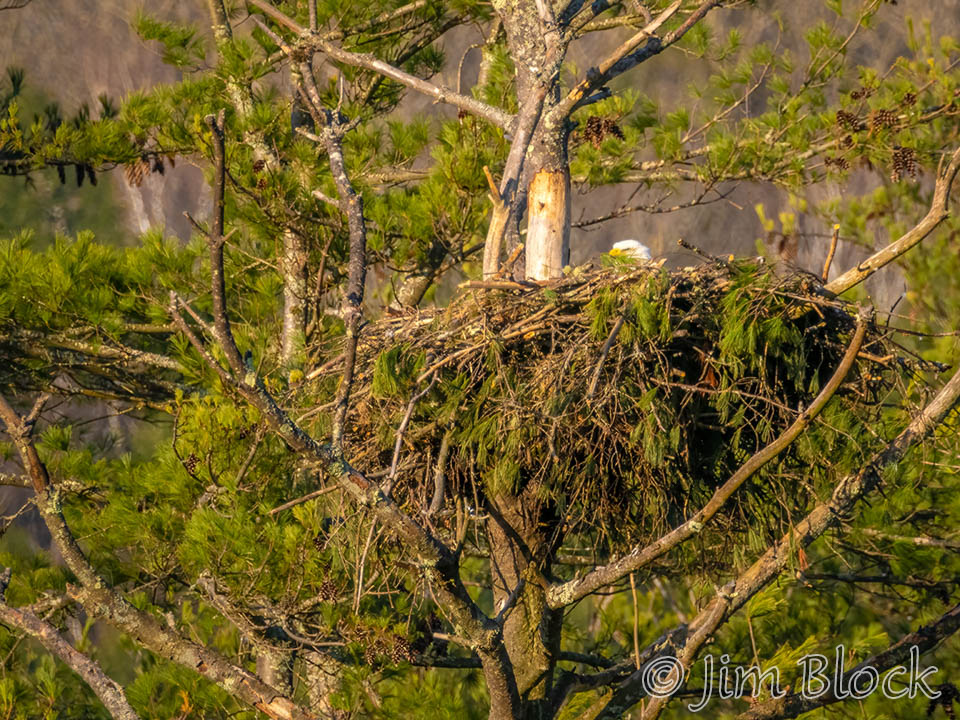
Then it snowed April 3rd and 4th! The world changed dramatically for the eagles, and on April 5th I saw how resilient and devoted this pair was.
For this day, April 5, I’m going to be describing some things. I can’t completely show you because they were hidden in the nest and I’m going to label the Eagles One and Two for clarity.
I arrived at 10 a.m. to find the nest covered with snow. Eagle One was in the nest partly covered with snow and down out of view.
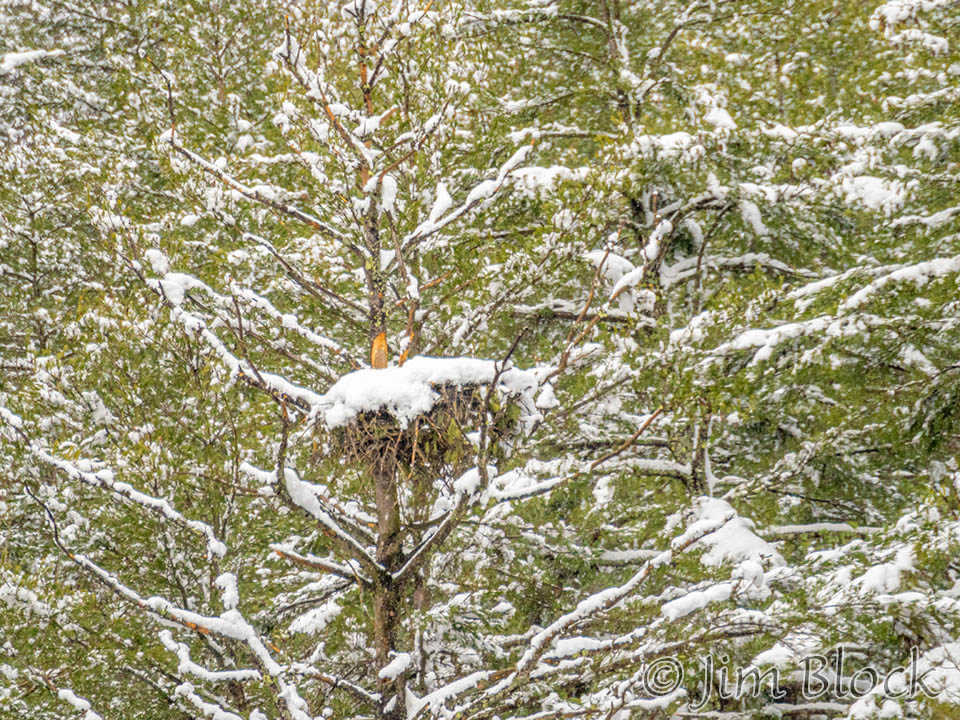
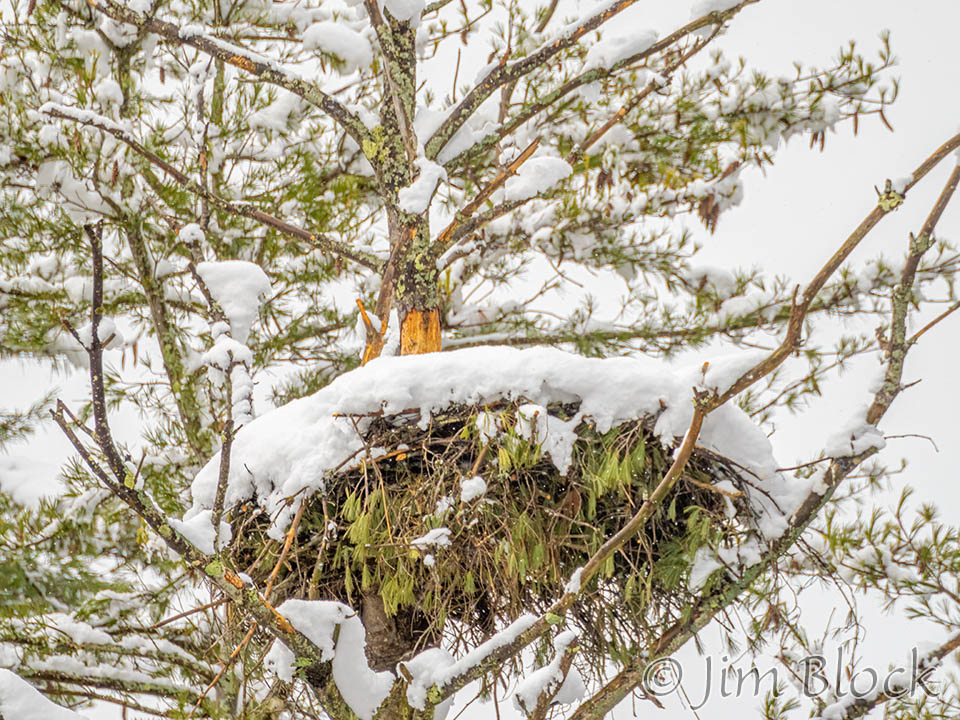
Eagle Two was sitting above the nest in a nearby tree.
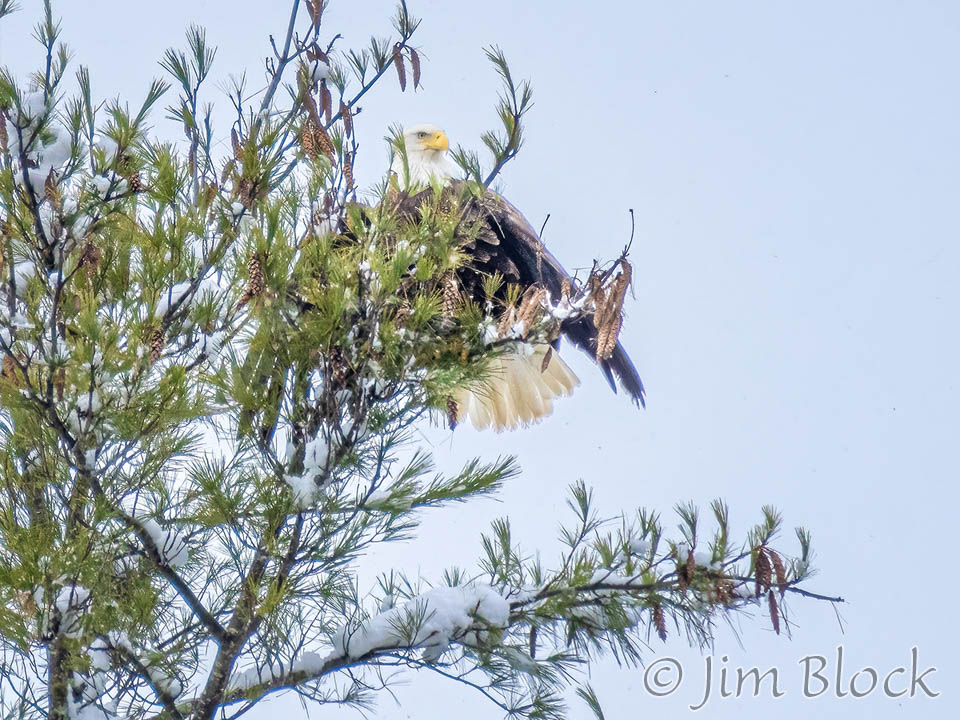
I waited for 80 minutes in the cold for something interesting to happen. And then at 11:20, Eagle One emerged from under the snow in the nest.
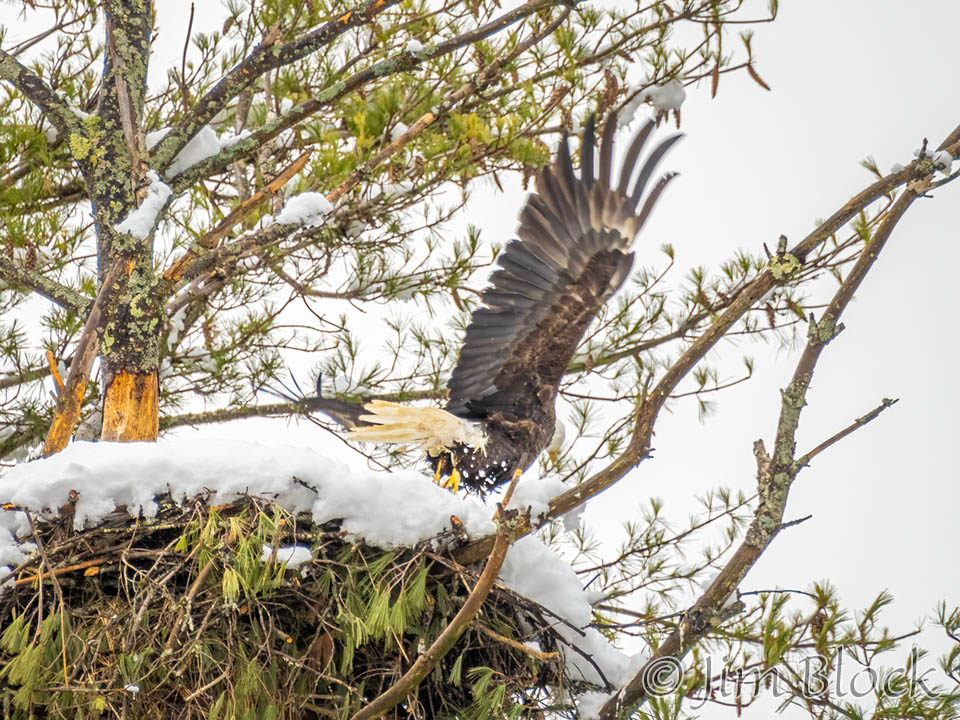
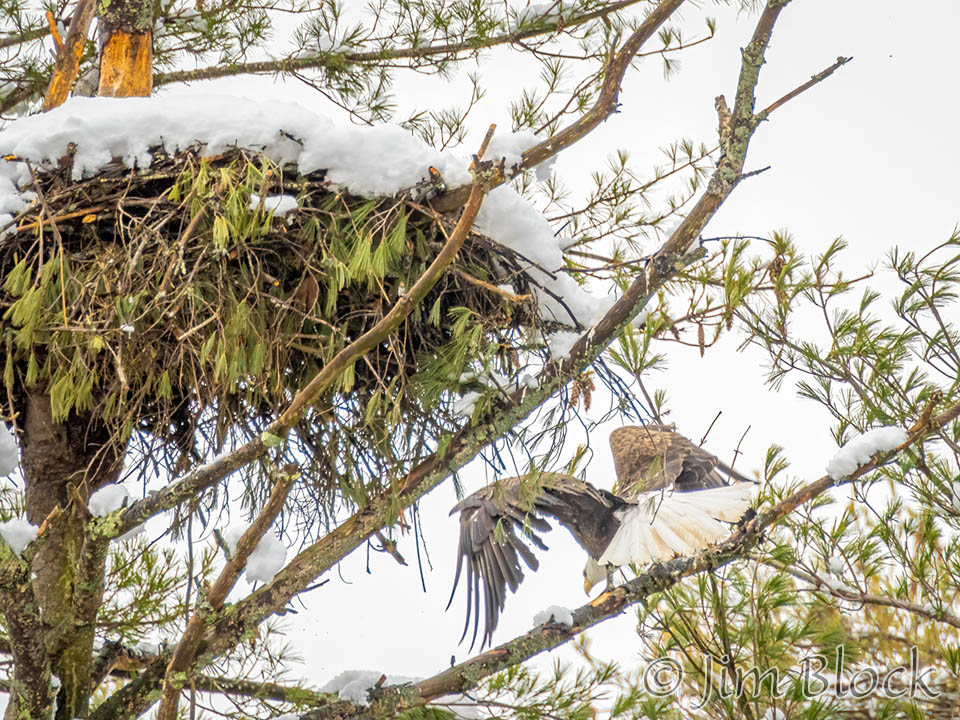
Eagle One flew toward its favorite tree.
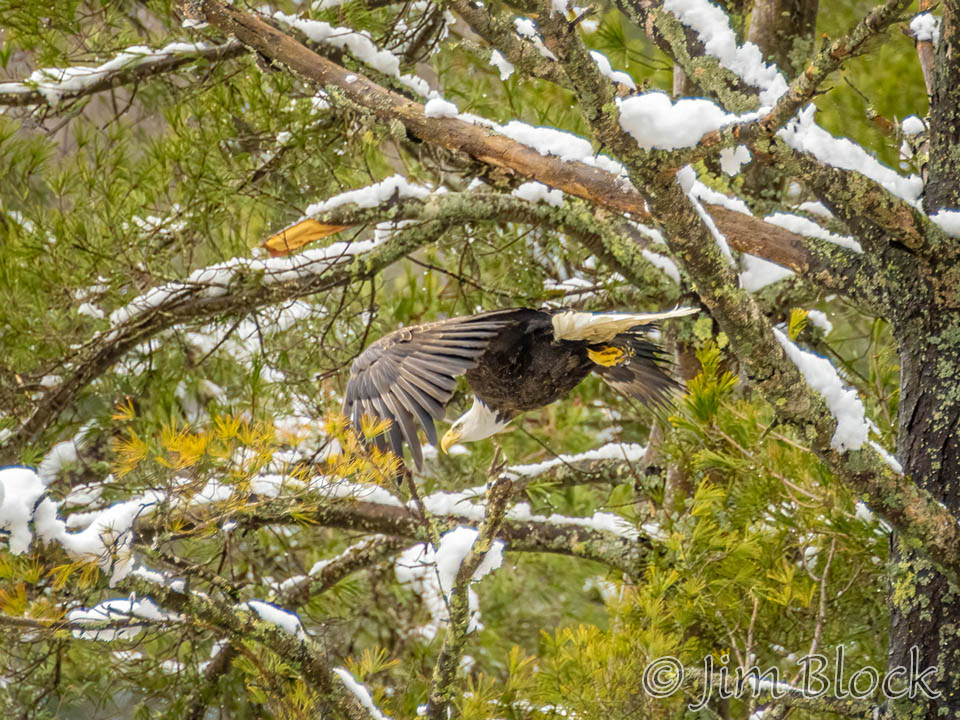
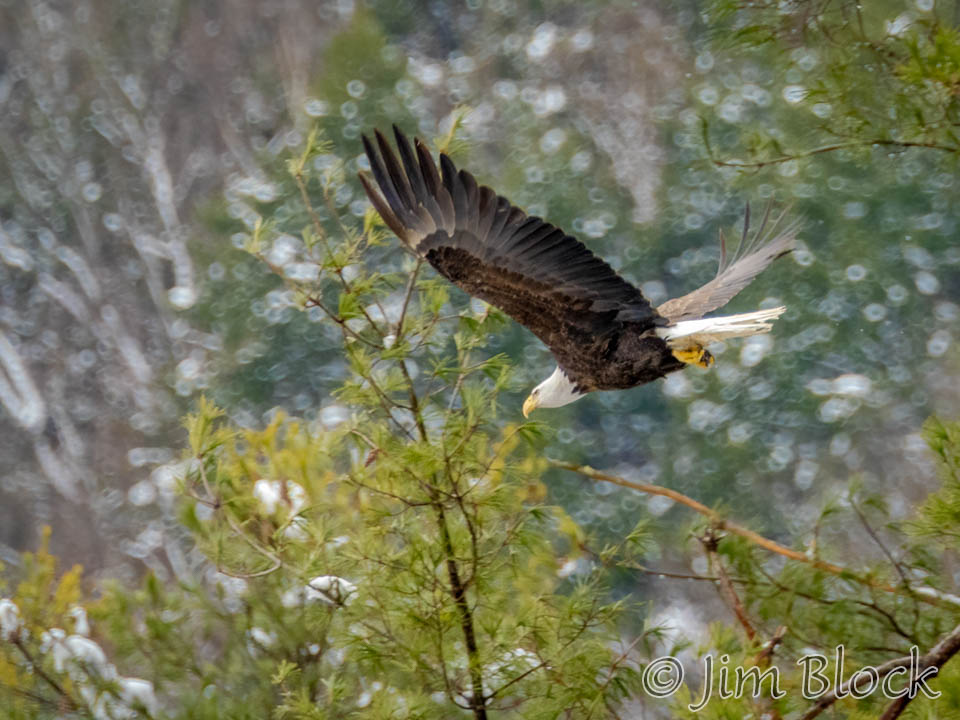
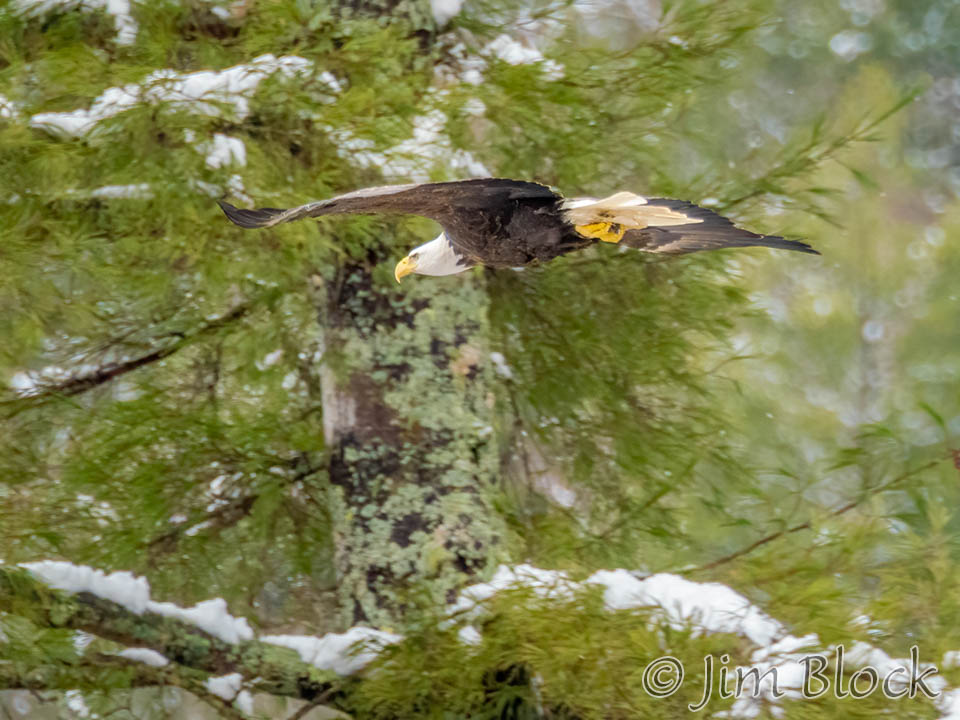
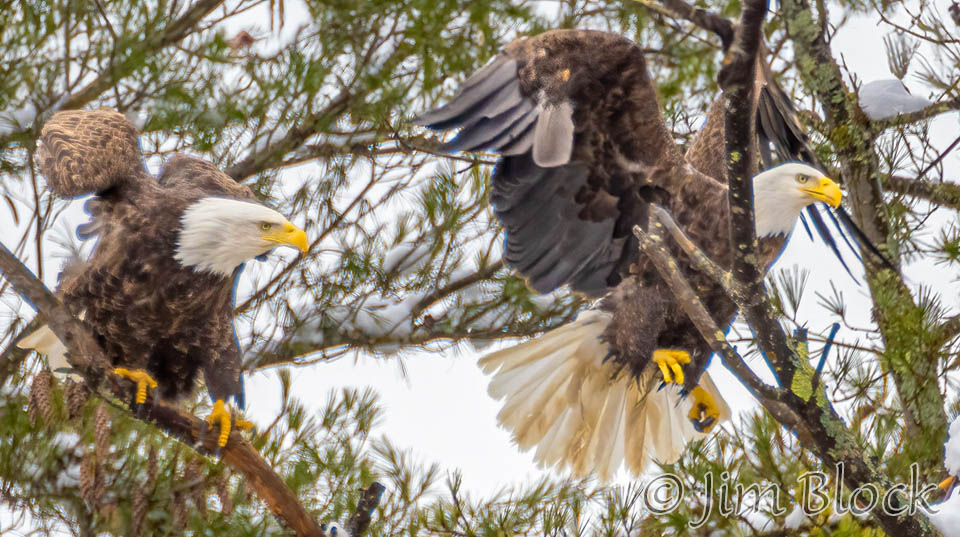
Eagle One stayed there for less than 30 seconds before it turned around and came back to the nest and sat on a branch near the nest. A few seconds after Eagle One arrived on that branch near the nest, Eagle Two arrived and landed in the nest.
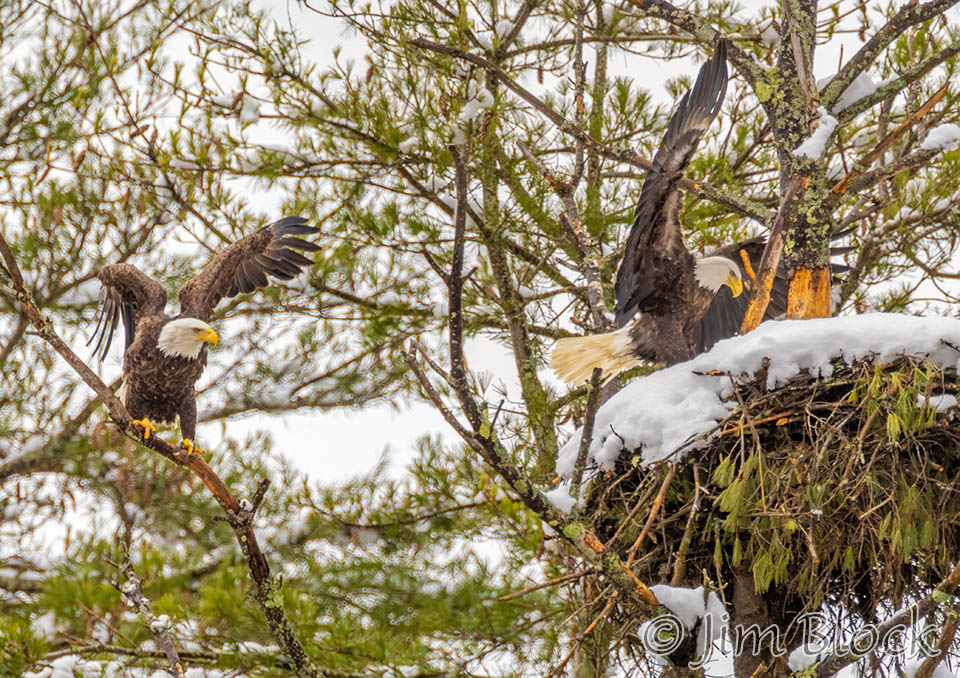
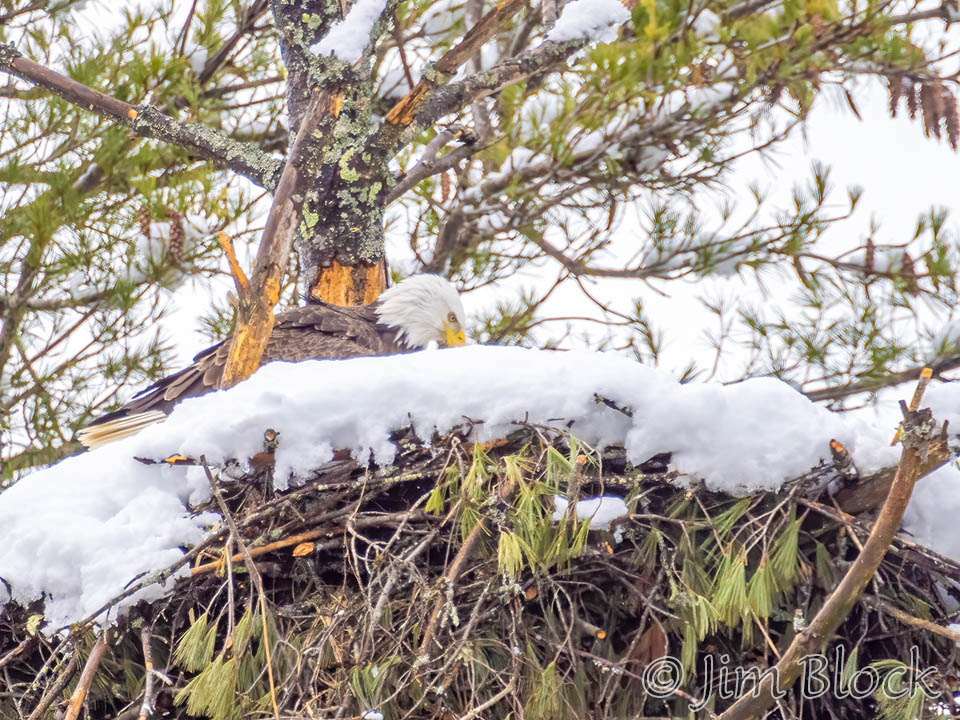
Eagle Two proceeded to dig its way into the nest and settle down.
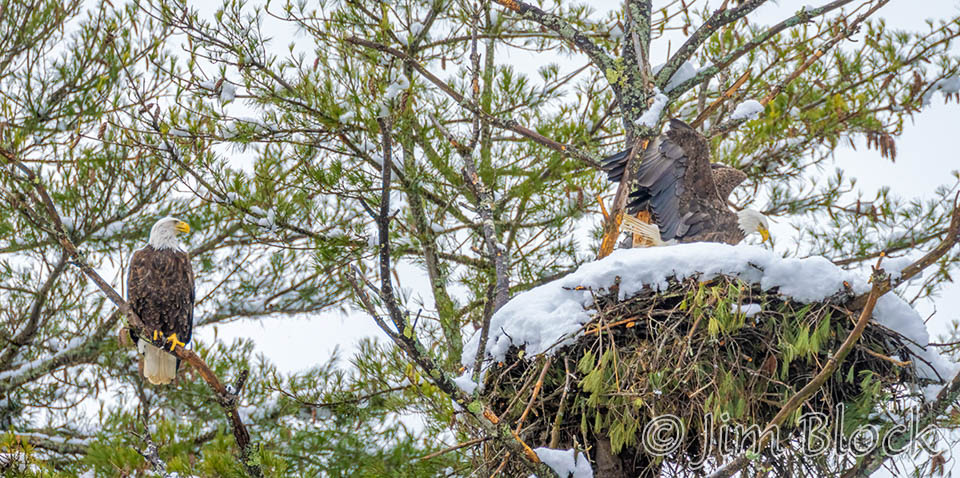
Eagle One then flew to its favorite tree.
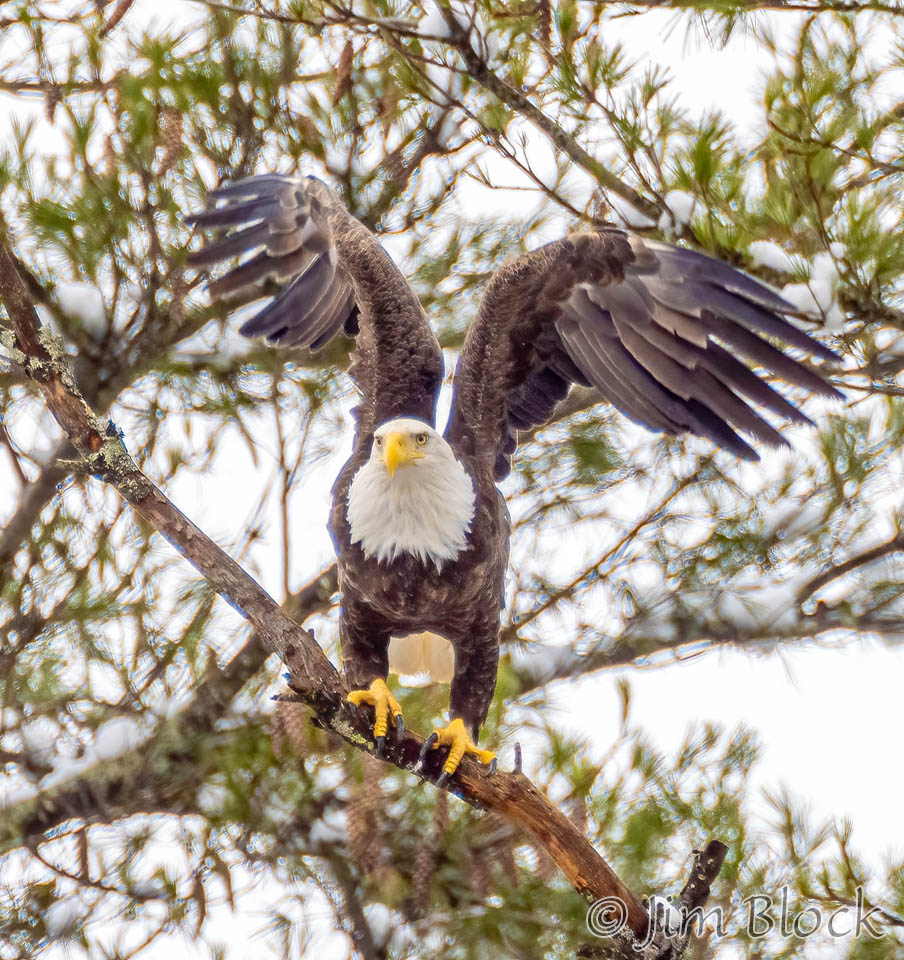
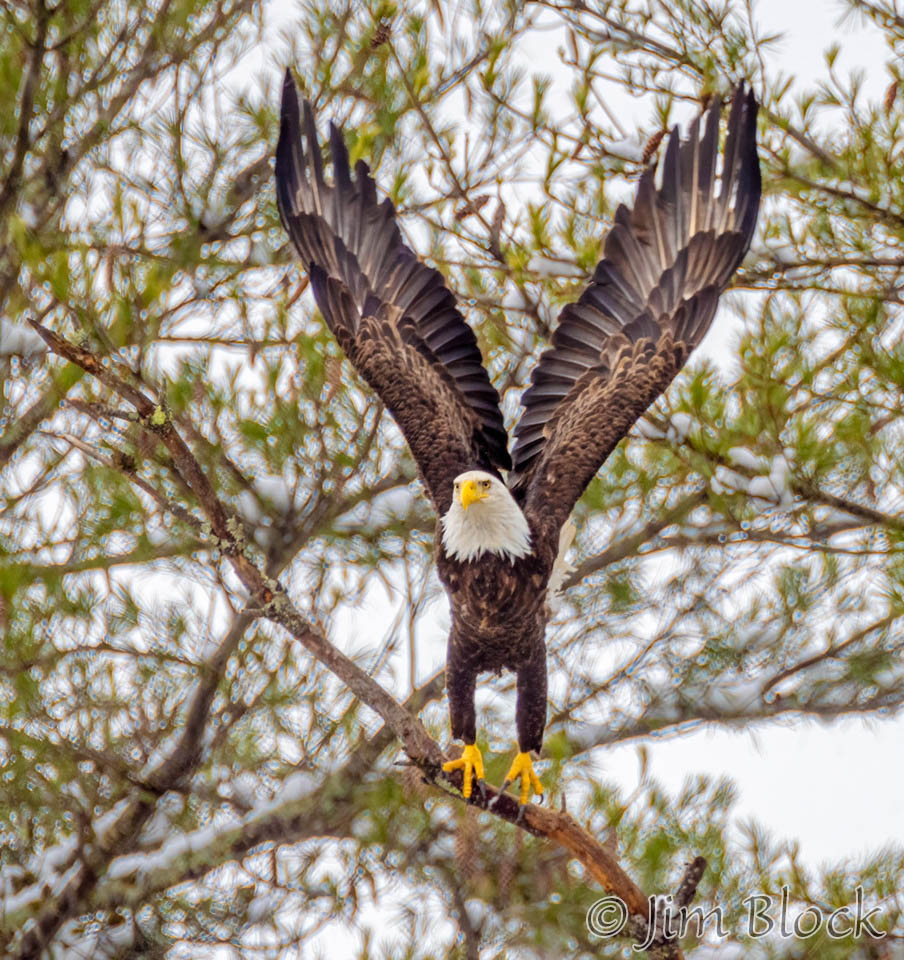
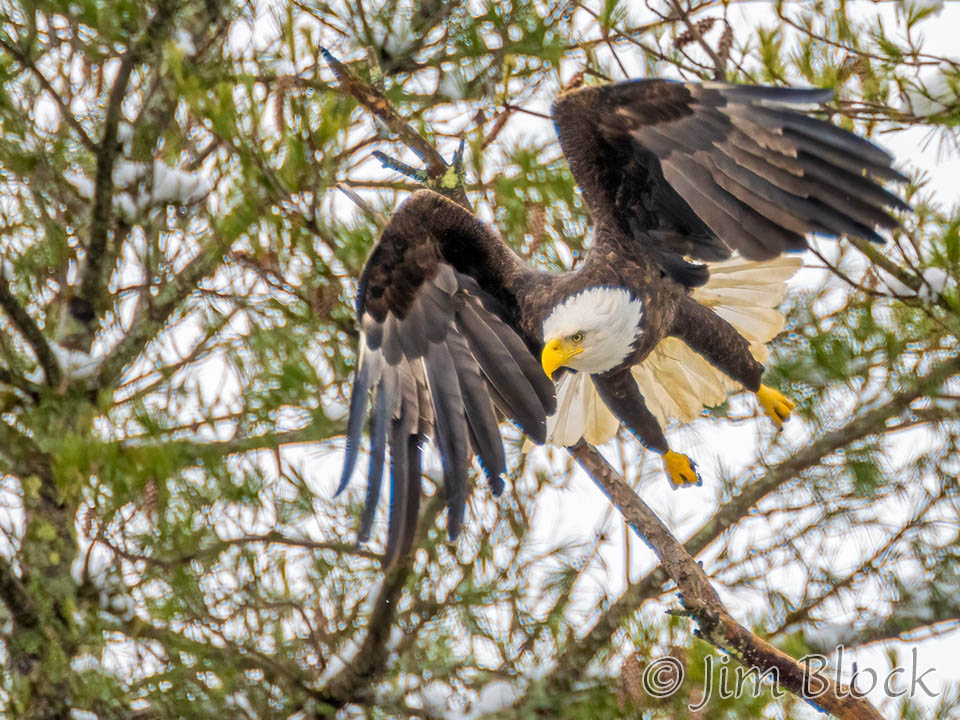
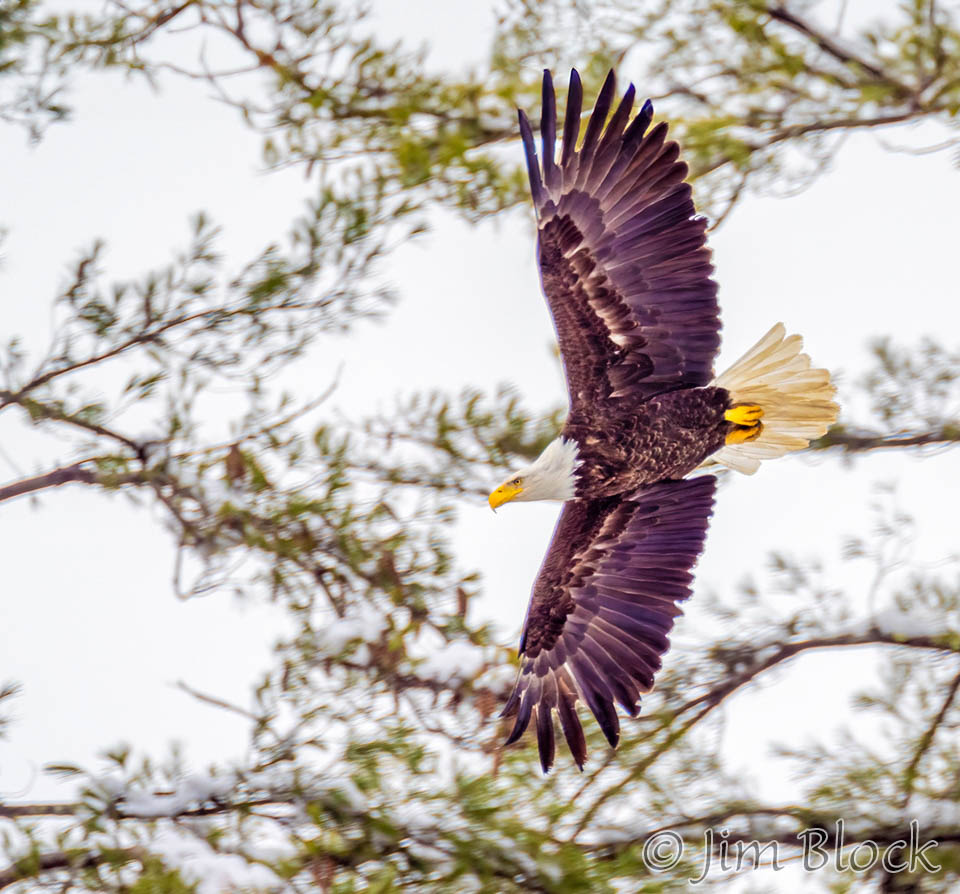
I departed at 11:30 cold but very excited. When I left, Eagle Two was buried under the snow in the nest and Eagle One was sitting on their favorite branch in a nearby tree.
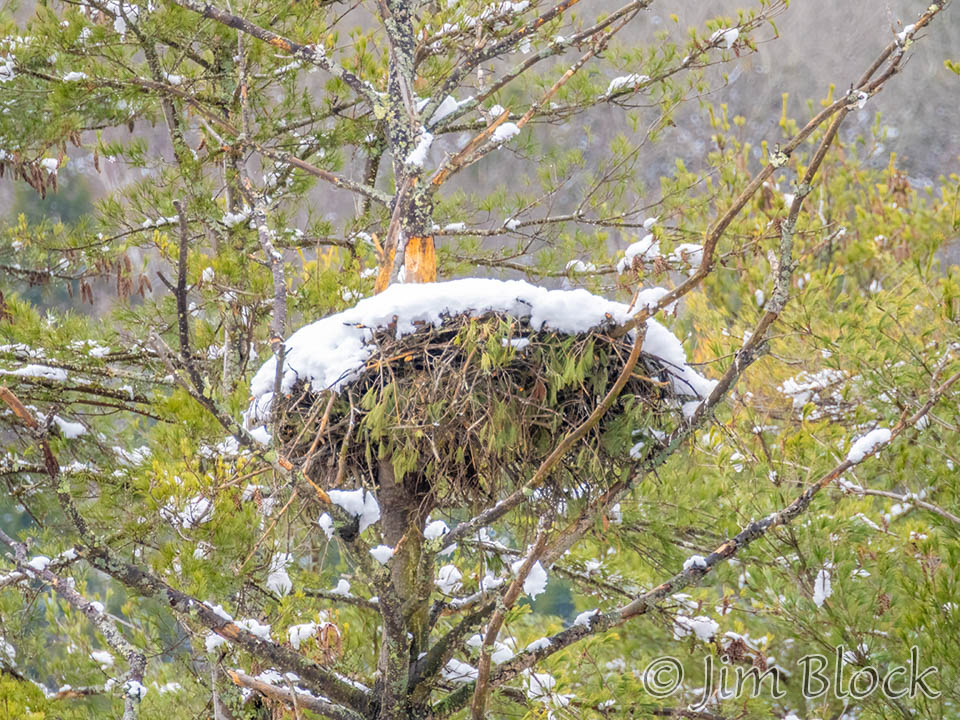
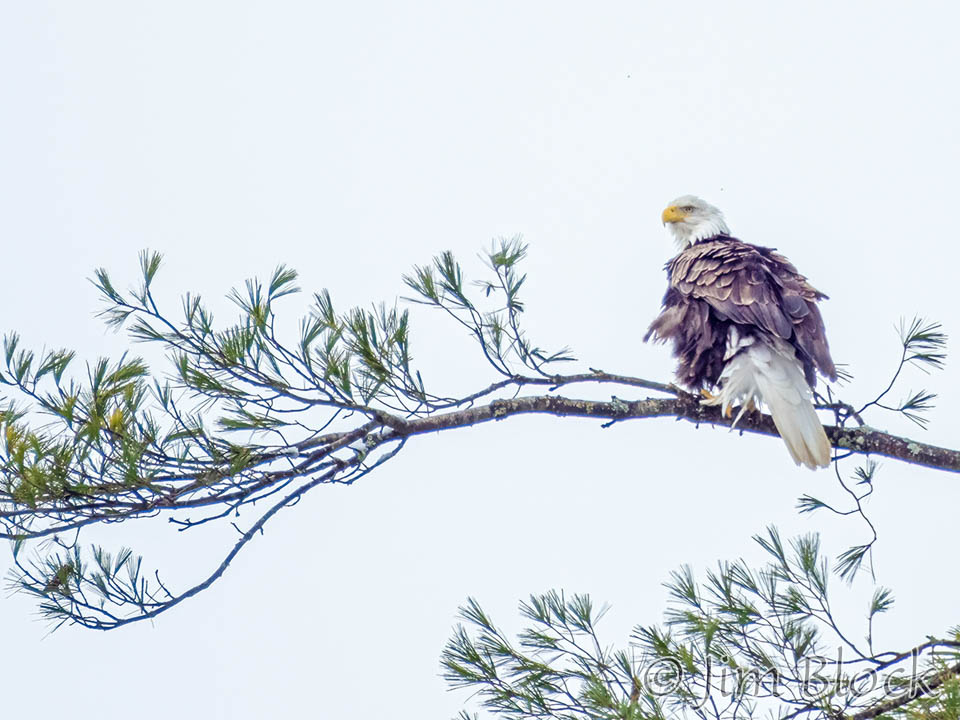
Bald eagle eggs can survive in nests covered in snow for extended periods because the parent birds insulate them with their bodies, and the snow itself acts as insulation, keeping the eggs dry and protected from freezing. The parents transfer body heat directly through a brood patch on their belly. The brood patch is an area of bare skin on the belly. Shortly before laying the eggs, hormones cause feathers on a bird’s belly to loosen and drop off, creating a patch of bare skin. The eagle may help by also pulling off some feathers. This patch of bare skin allows the parent’s body heat to better reach the eggs and keep them at the proper temperature. As long as the eggs remain dry and the parents continue incubating, they can withstand significant cold and snow, even if the parents leave briefly.
During heavy snow, parent eagles hunker down, sometimes becoming buried under a foot or more of snow, but emerge unharmed, as do their eggs. Clearly this is what happened here since three weeks later I got a peek at an eagle chick.
On April 13, I paid a very short visit to the nest while passing through the area. The snow was long gone and an eagle was in the nest incubating.
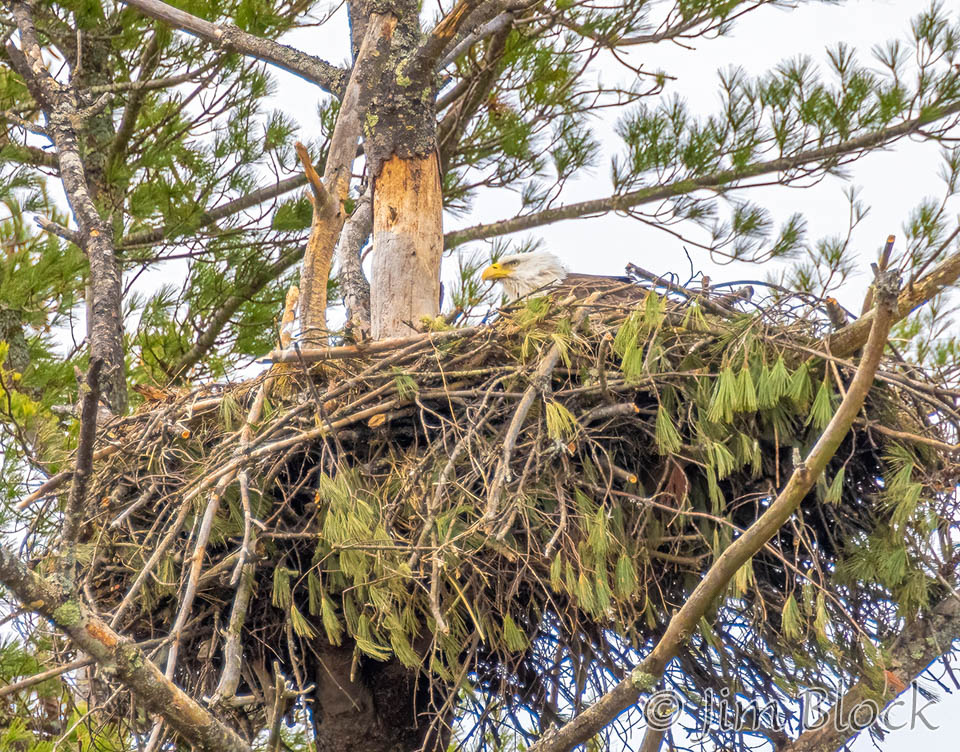
Incubation appeared to be done when I next visited on April 23. I viewed the nest from different locations standing down near Clay Brook. No chick seen; they were inside the nest out of view.
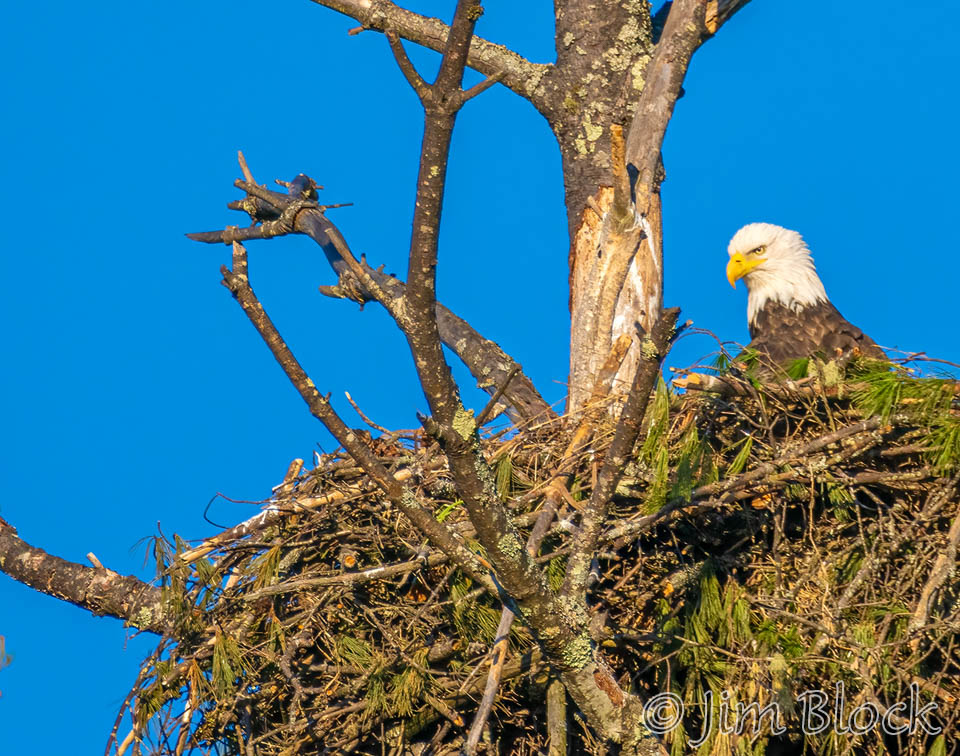
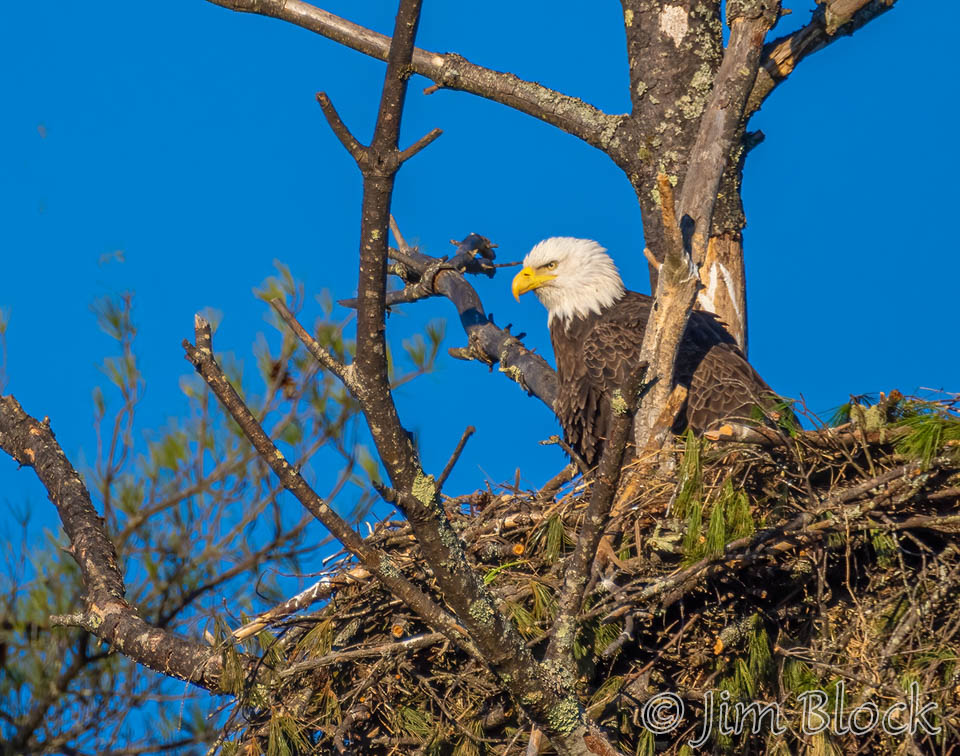
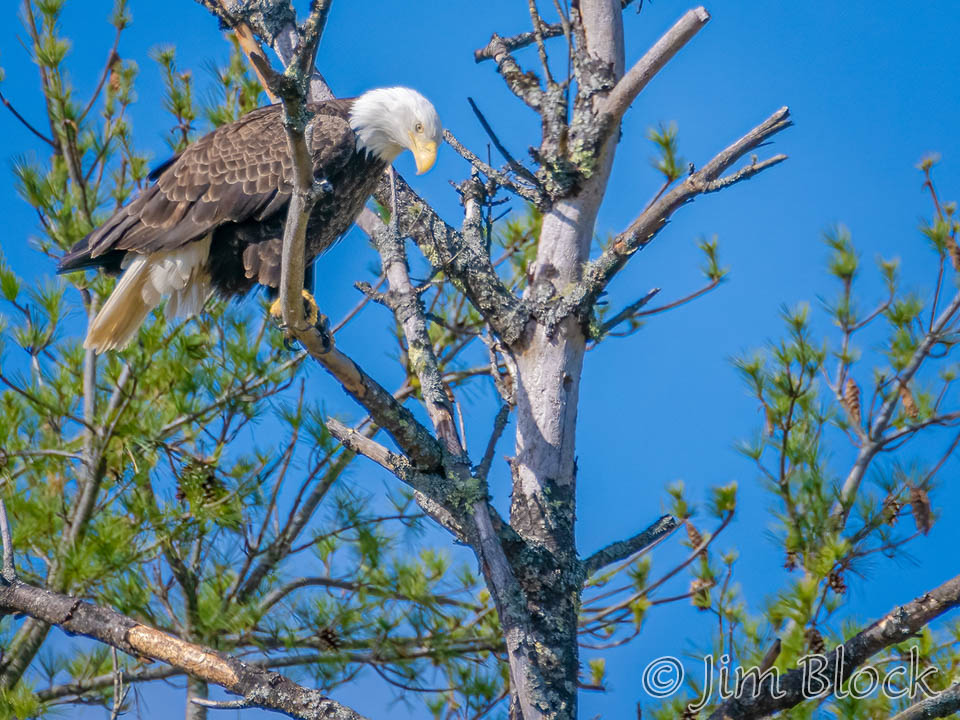
For a time both were on their branch.
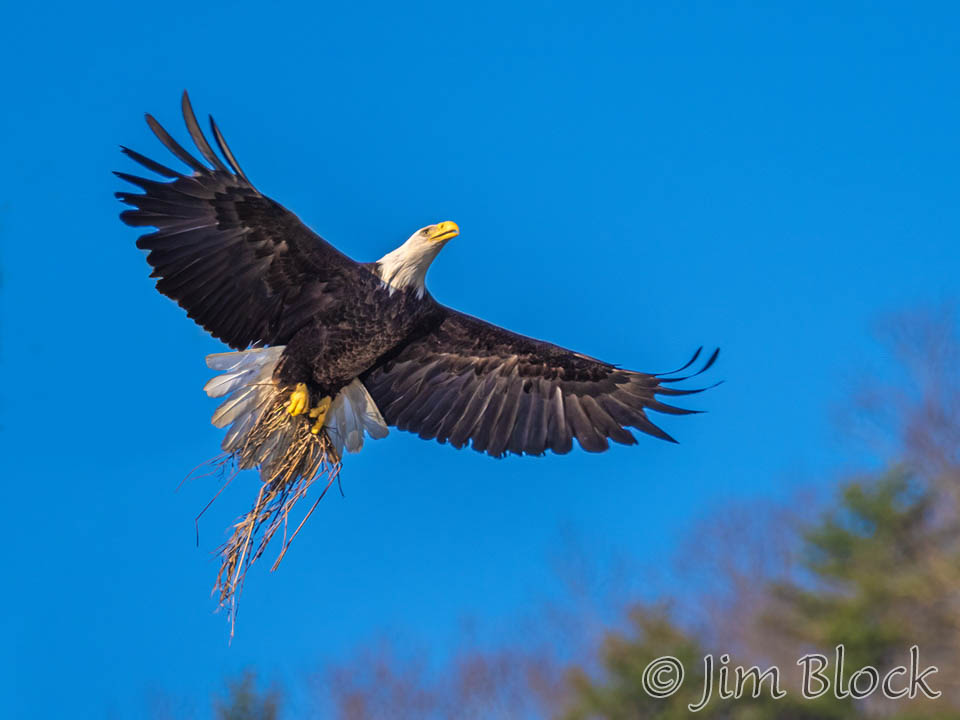
One eagle brought soft nest material to the nest.
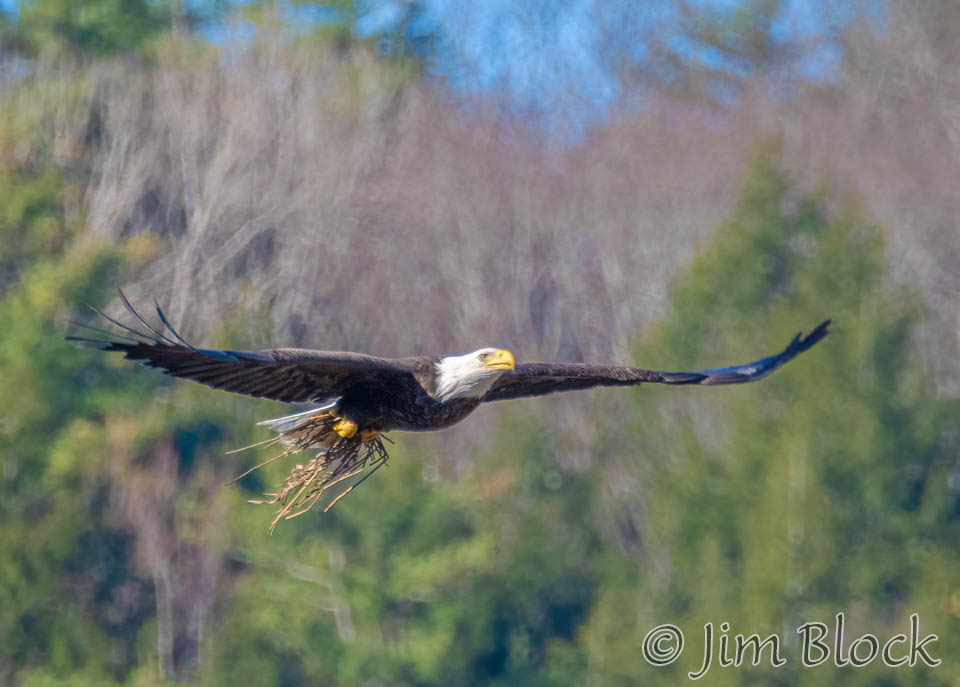
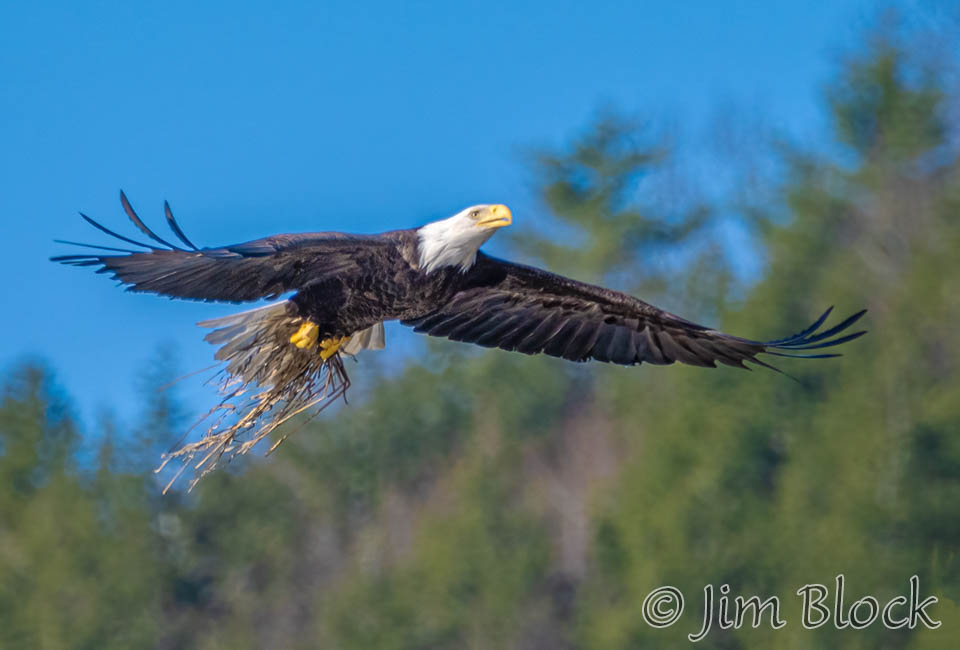
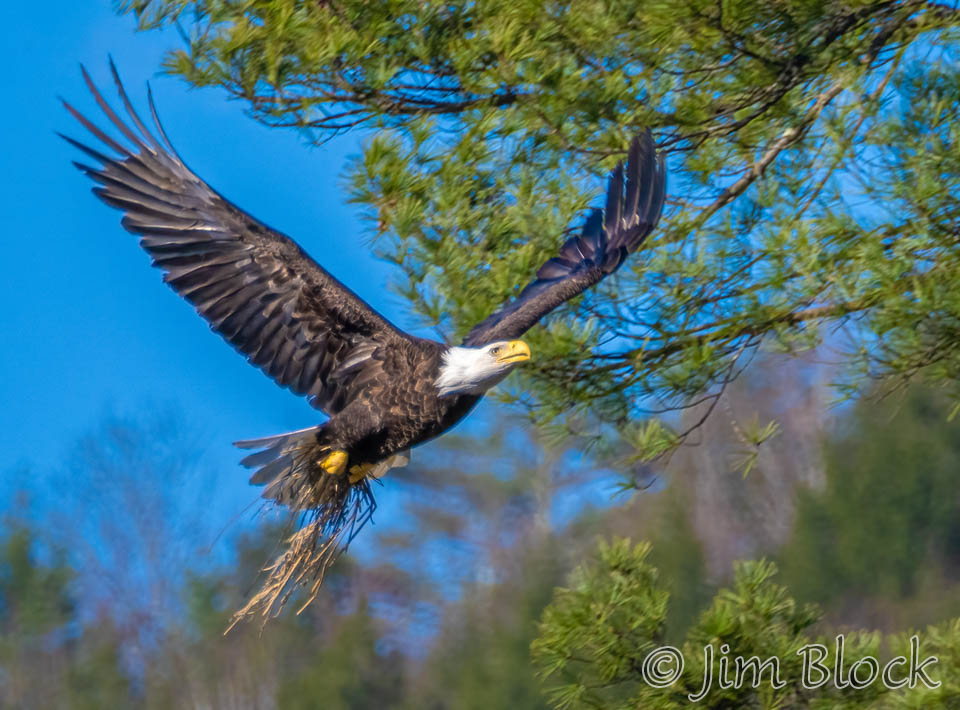
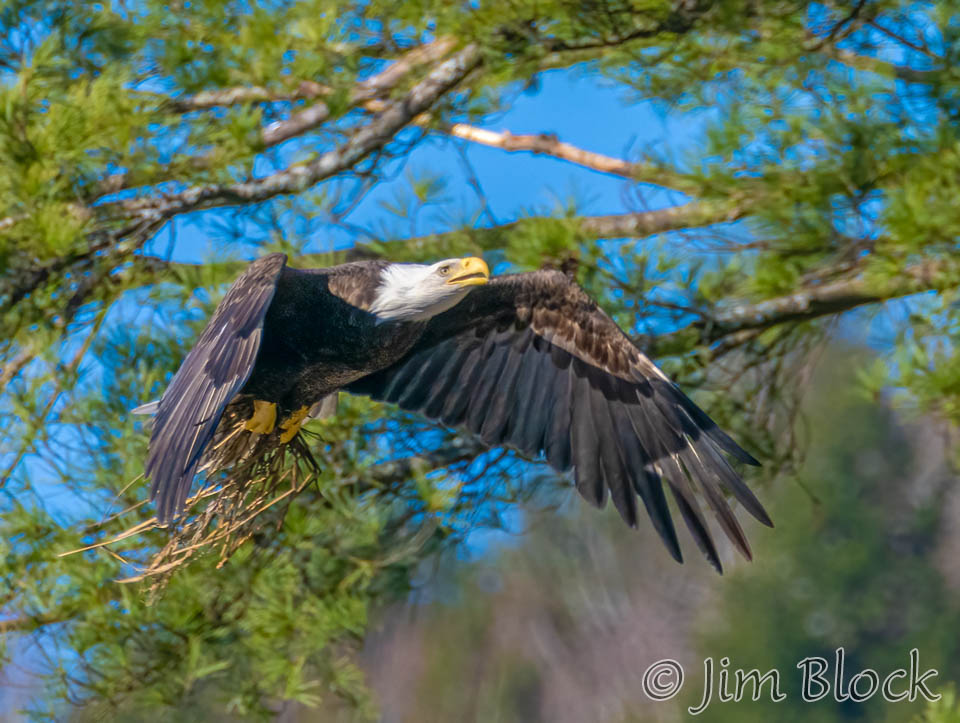
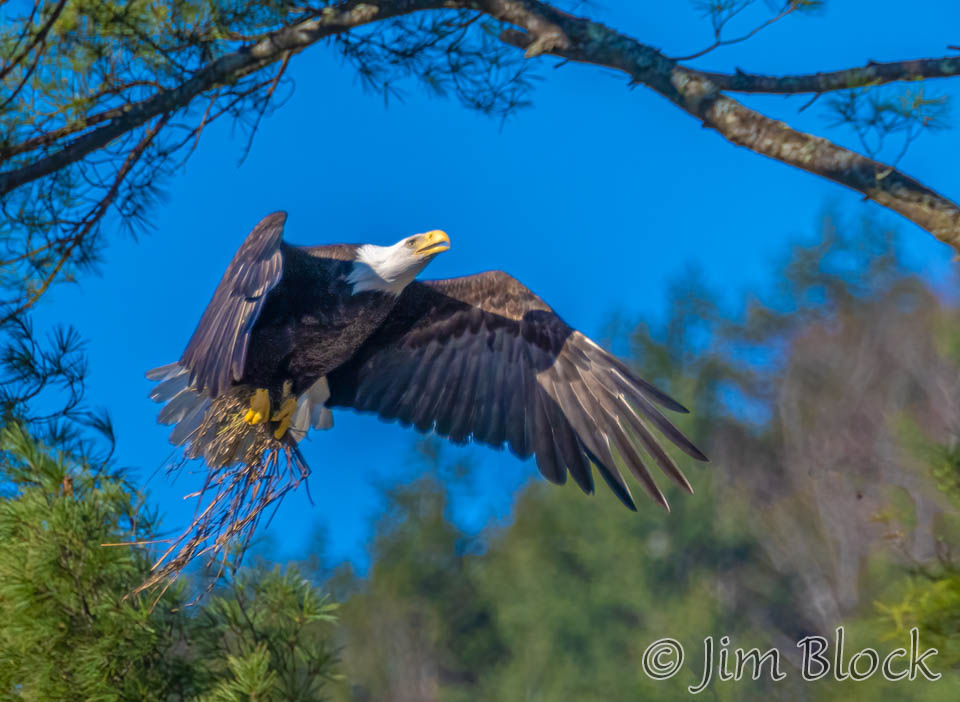
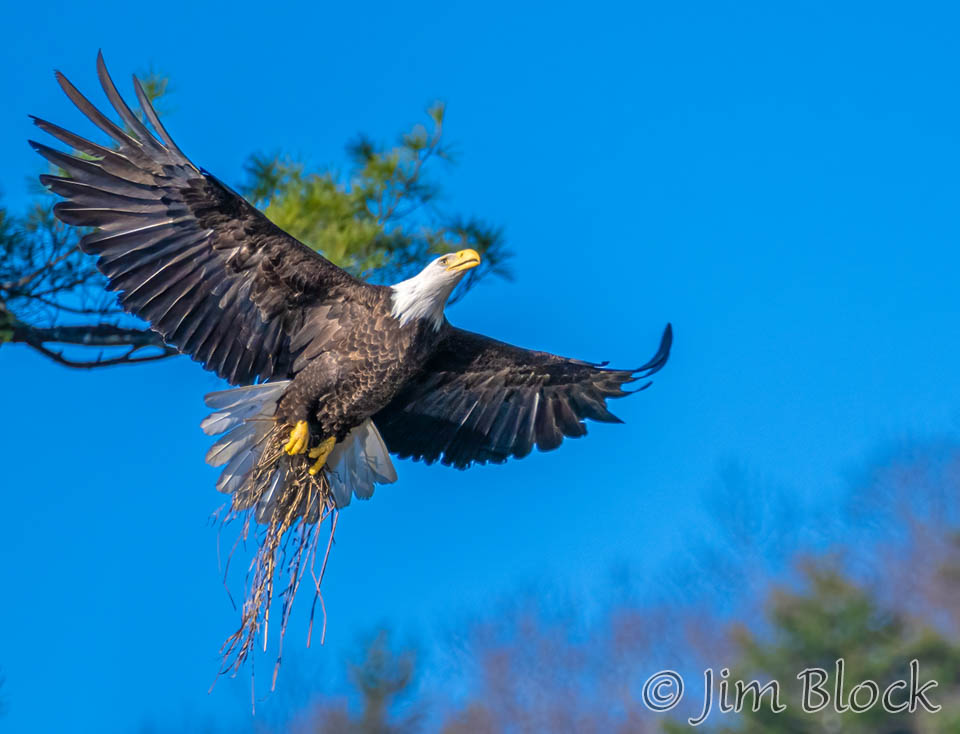
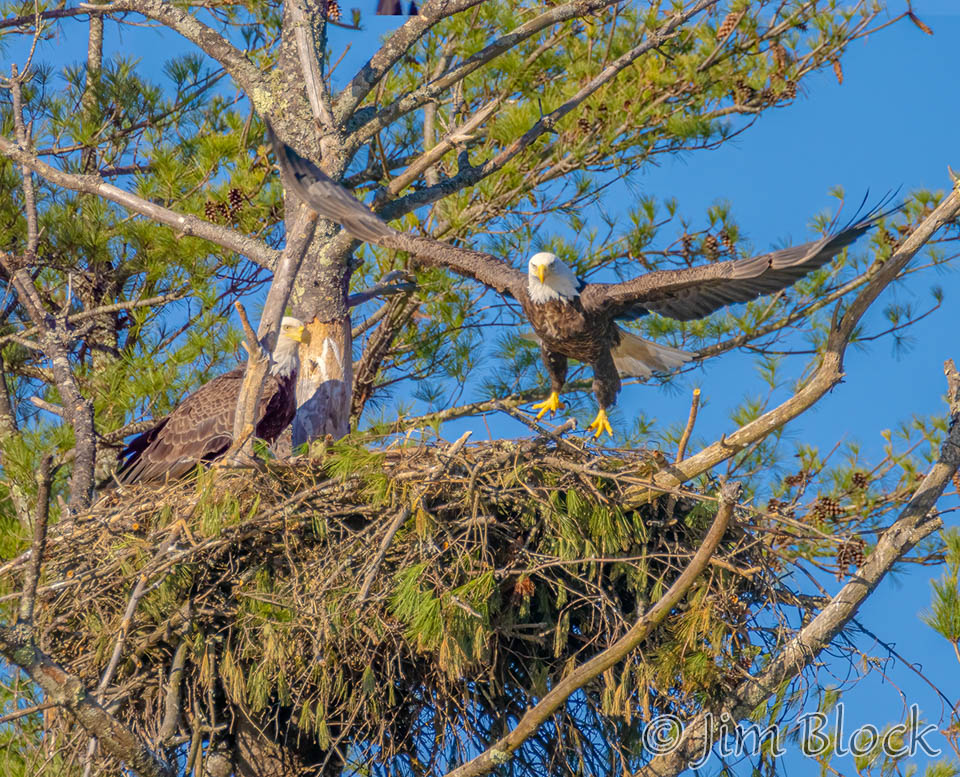
Ten seconds after that eagle reached the nest, the second eagle arrived from the rear carrying a few small sticks.
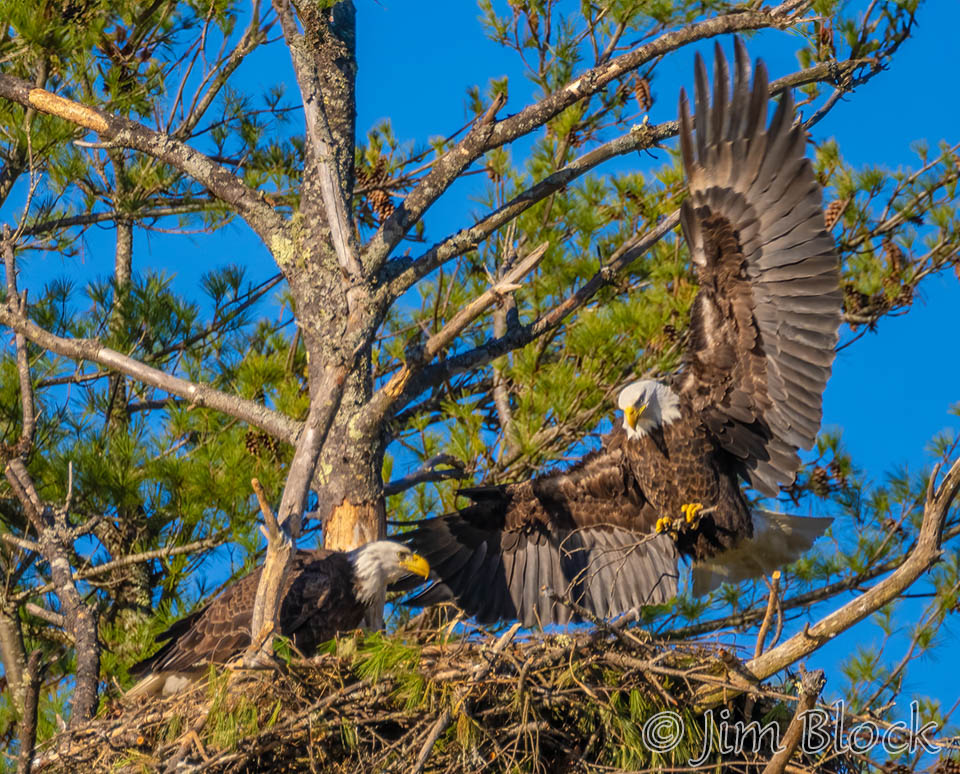
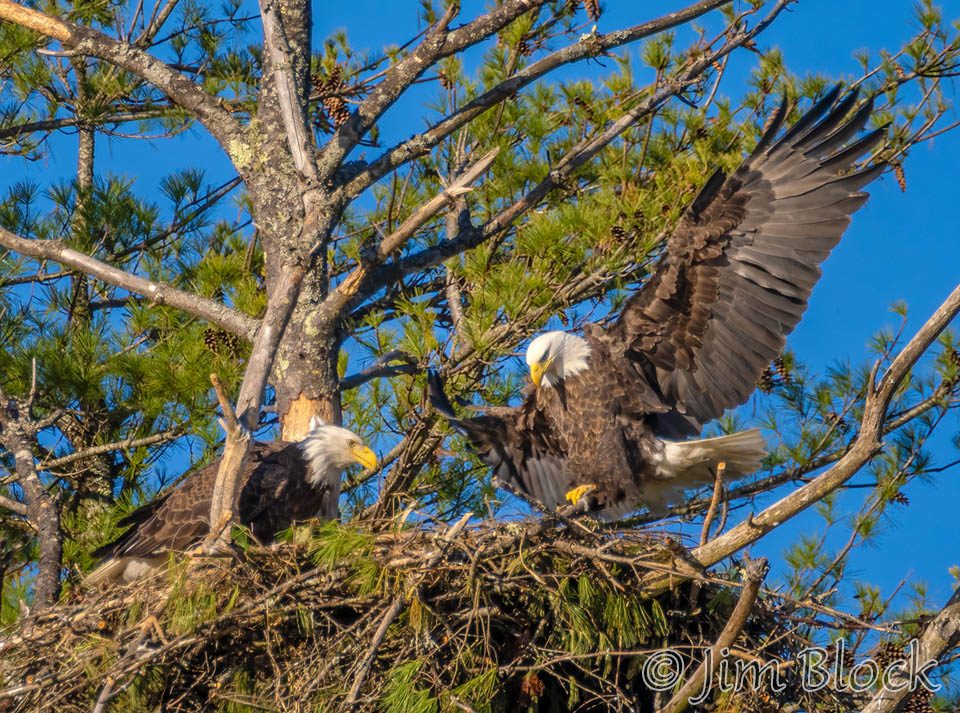
That eagle stayed for less than a minute. I watched it fly, then I departed, my hour vigil finished for the day. I headed off to finish my loop from Wilson’s Landing to Grant Brook (earlier) to Reed’s Marsh, Stevens Road, Campbell Flat, Pompy, Mascoma Lakeside Park, Ice House Road, and Mill Pond. You too can visit these spots HERE.
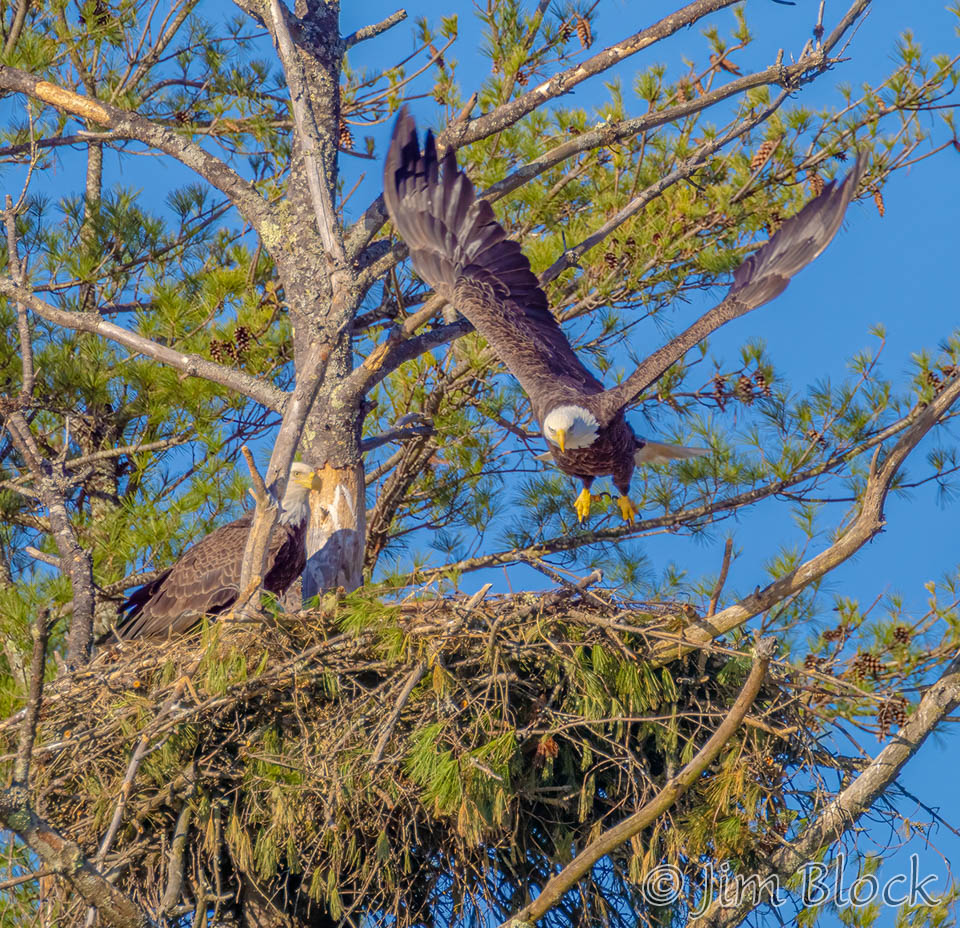
Almost two weeks passed before my next visit on May 3. After an uneventful 94 minutes listening to Garrison Keillor on my phone and remembering his live performance we enjoyed with our daughter, son-in-law, and three-day old granddaughter in St. Paul, an eaglet appeared. It was fairly large. It was their only off-spring this year.
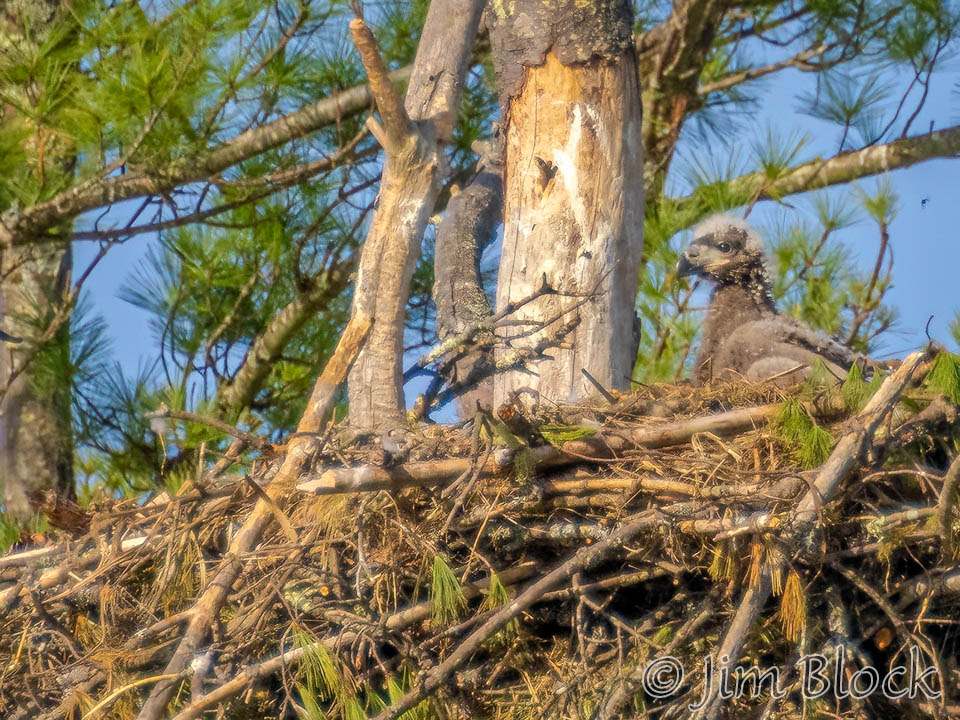
Forty minutes later I took another photo of the chick.
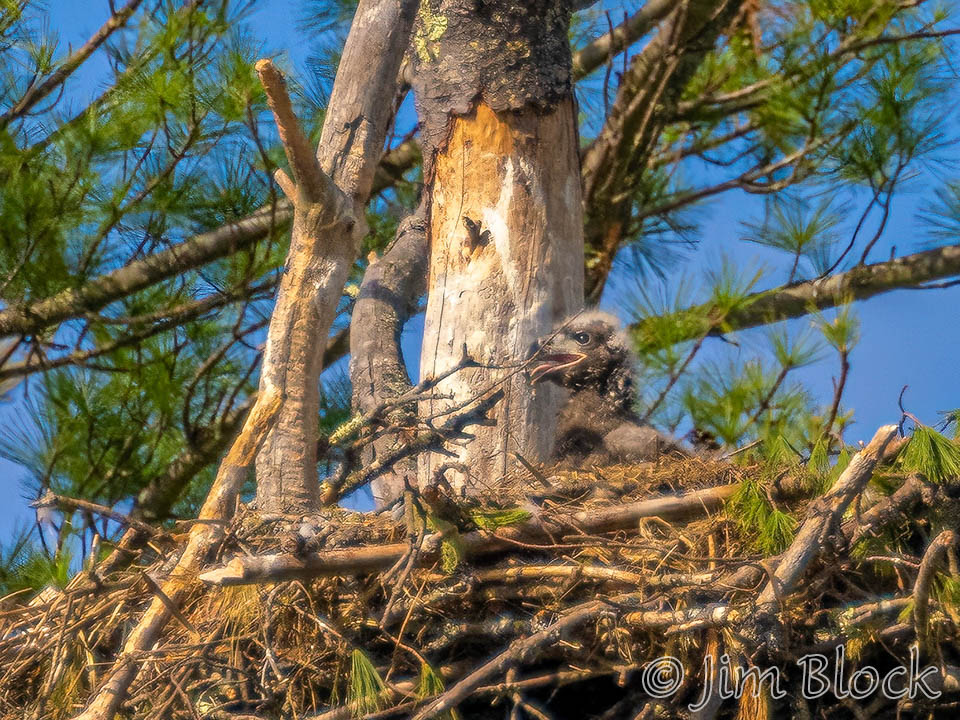
Then an eagle flew to a perch above the nest where it could look straight down at the chick.
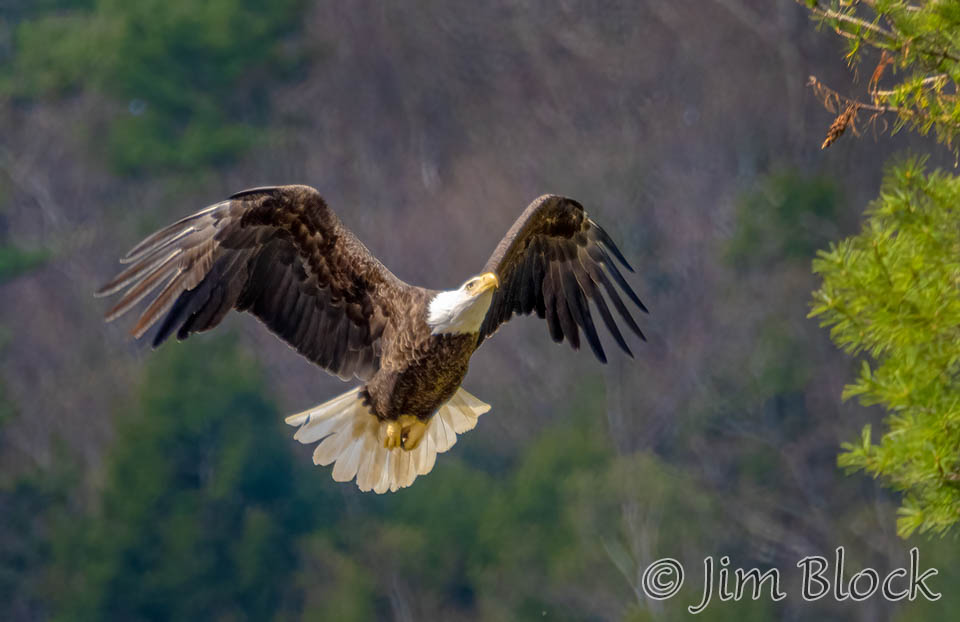
It stayed there for almost an hour before departing.
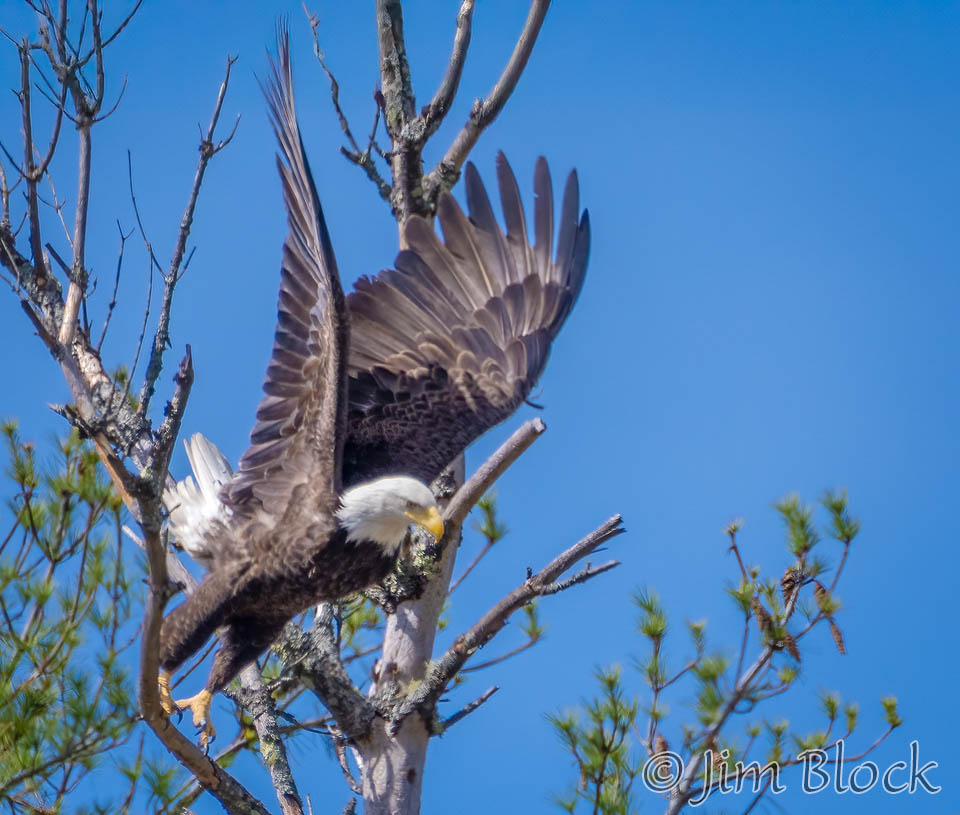
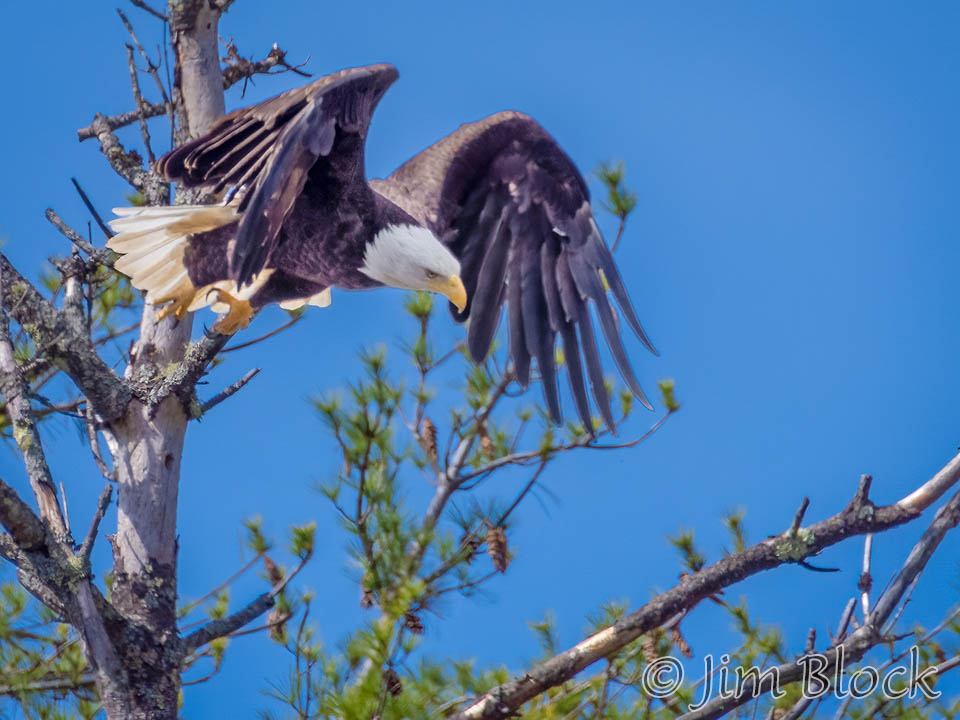
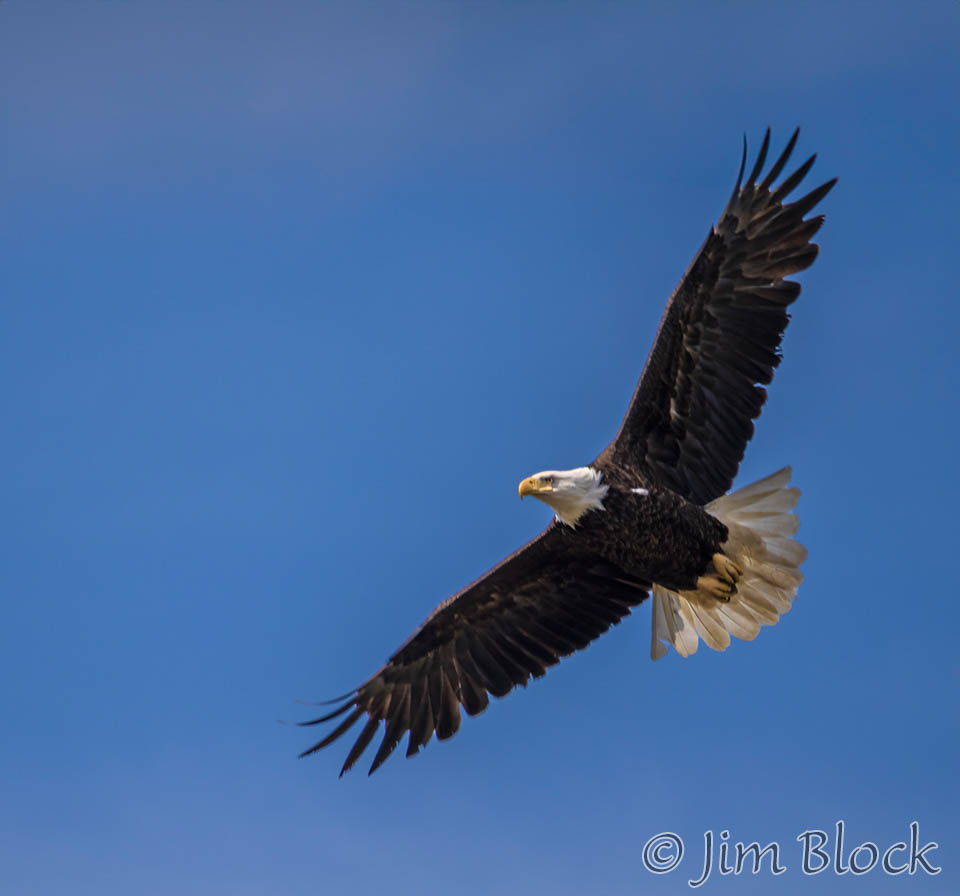
An adult visited the nest for a dozen minutes doing some housekeeping.
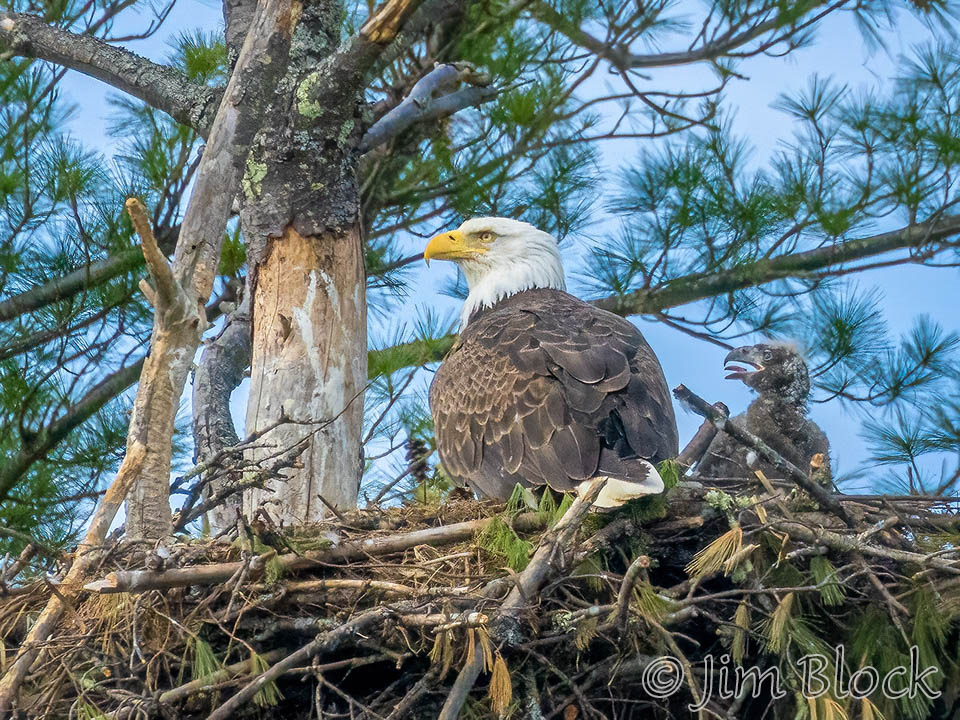
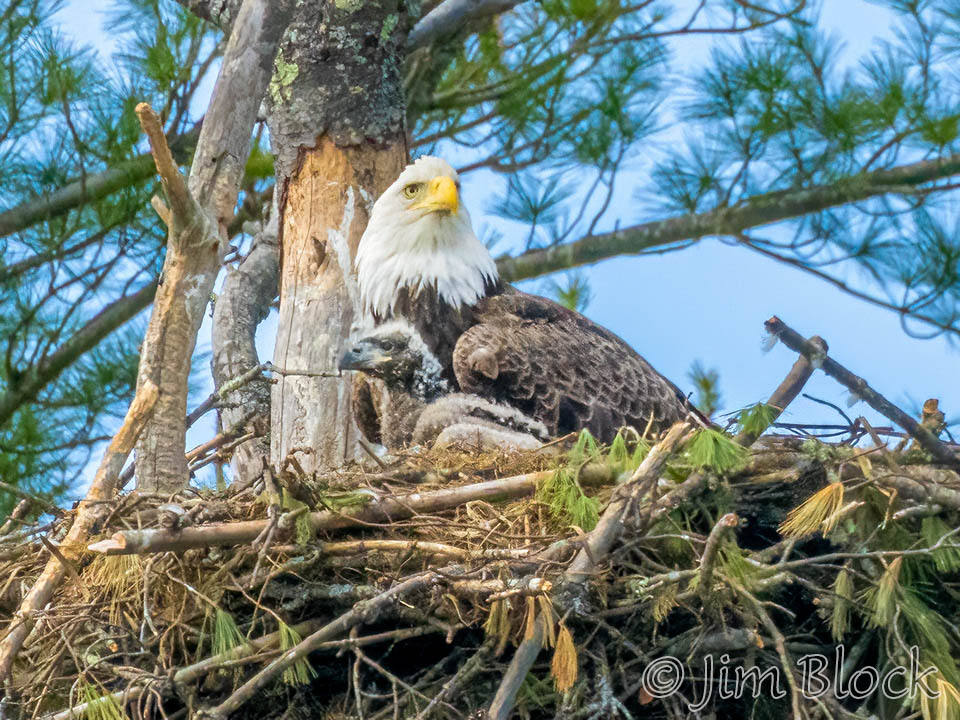
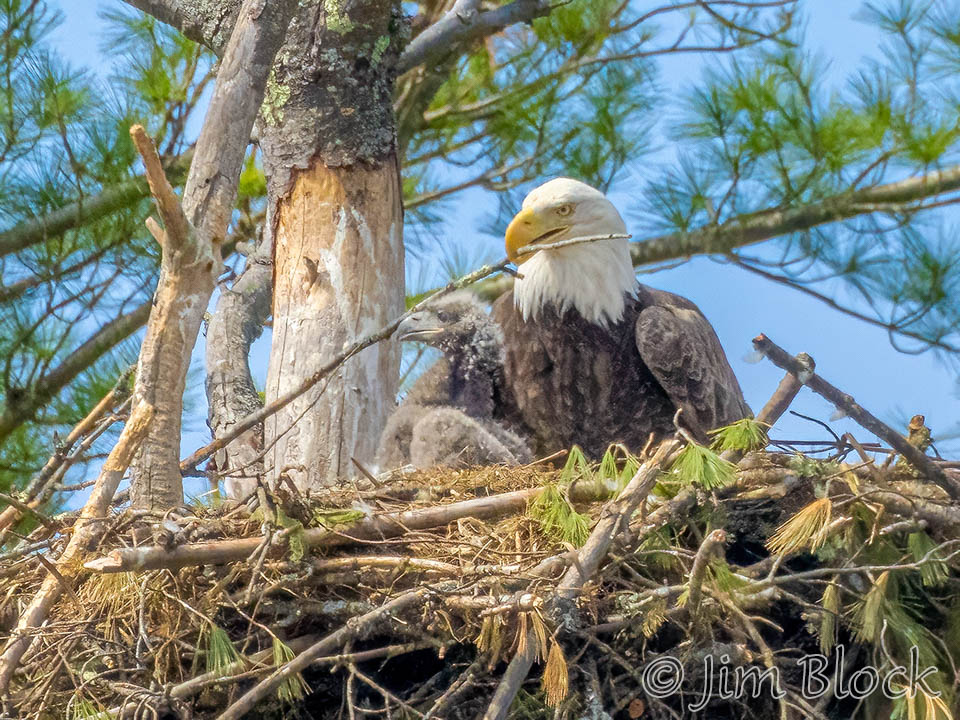
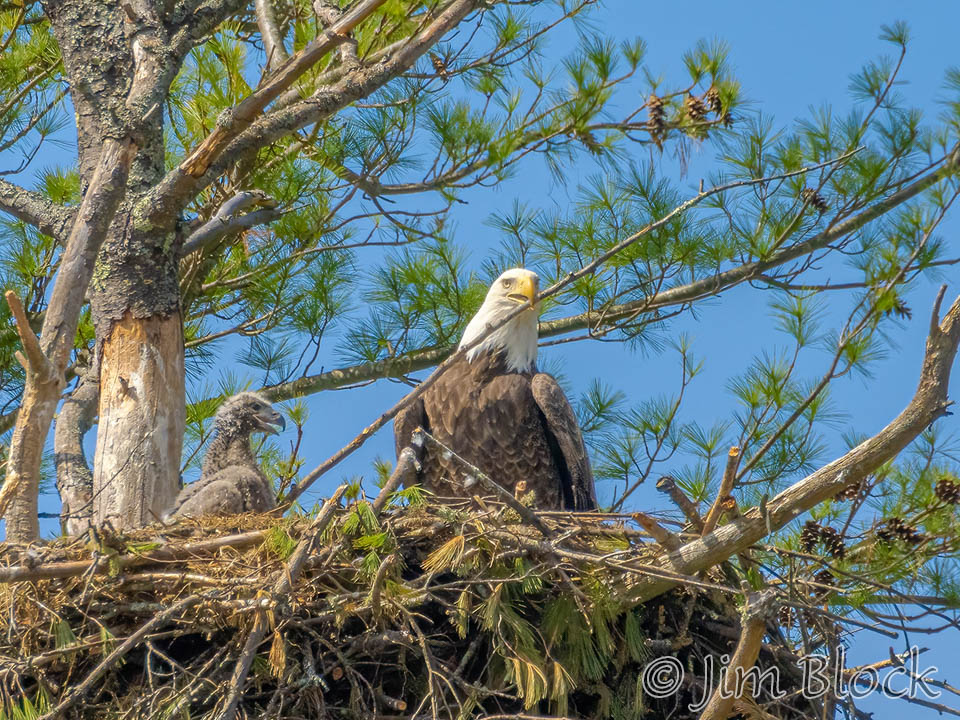
And then it departed. I followed soon after having spent five mostly monotonous hours with the eagles.
On May 4, I attended “Birding with Bill in Boltonville”, photographed fox kits in a briar patch in Alice’s yard, and visited Bedell Bridge State Park. I spent 15 minutes with the eagles on the way home. The adult was rearranging some of the sticks in the nest.
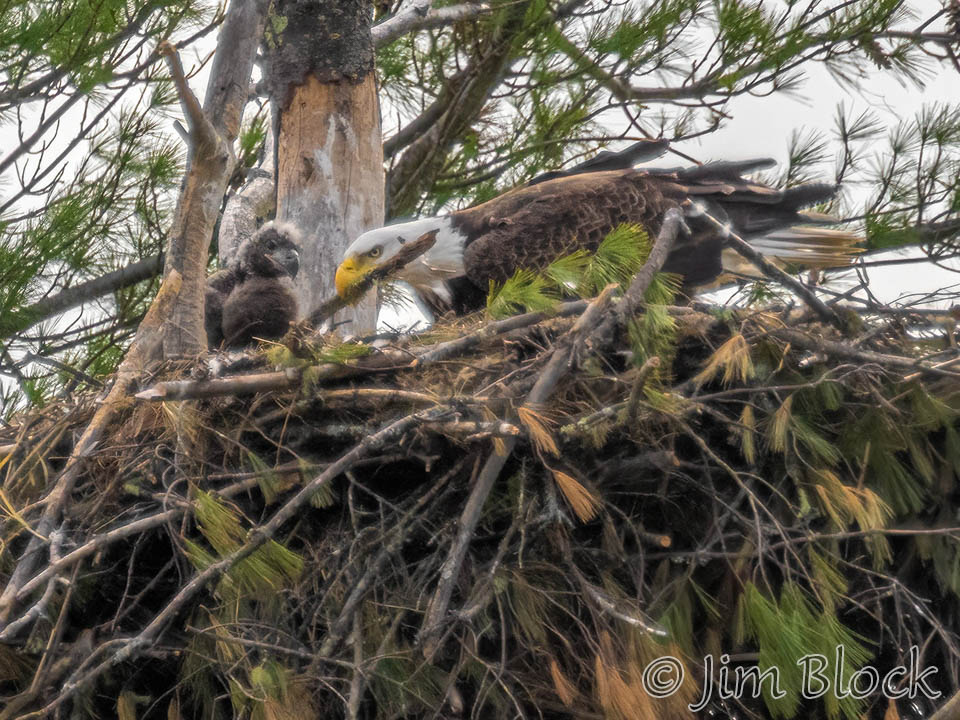
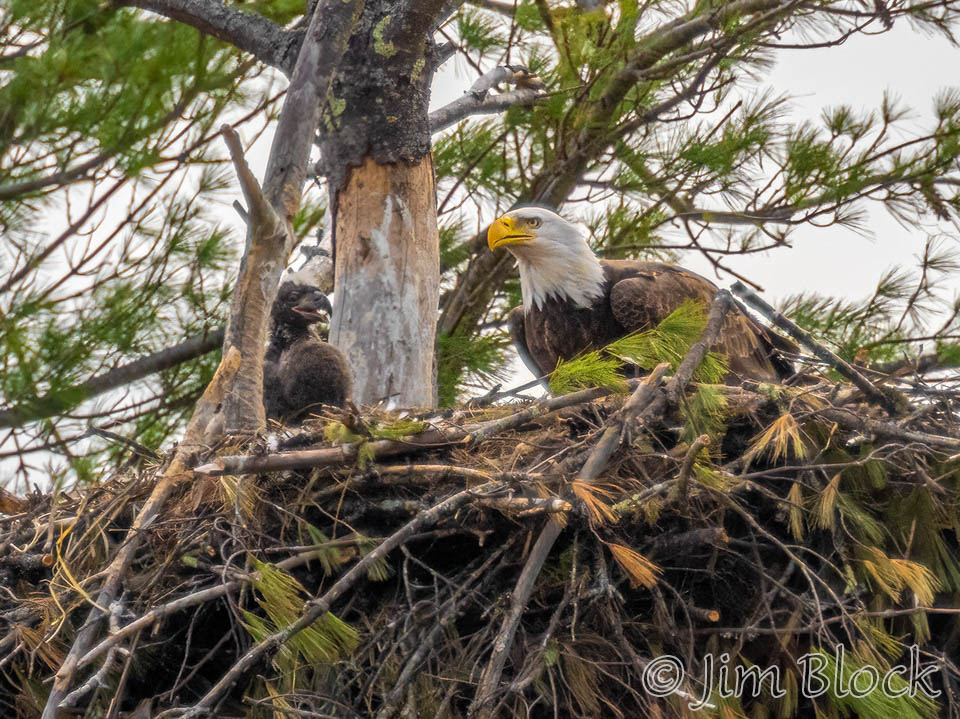
Another visit to Bedell Bridge on May 6 followed by a quick peek at the eagle’s nest in Lyme. No chick observed, but I did not linger.
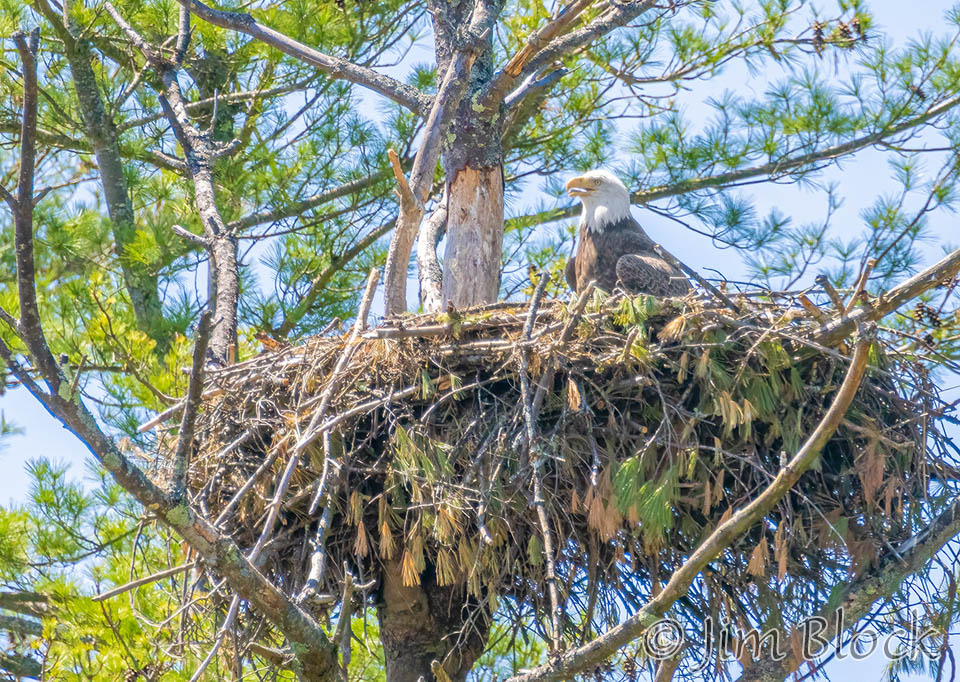
An excellent tour of the birds in the Union village Dam Recreation Area was followed by a very brief visit to the nest. A chick was exercising.
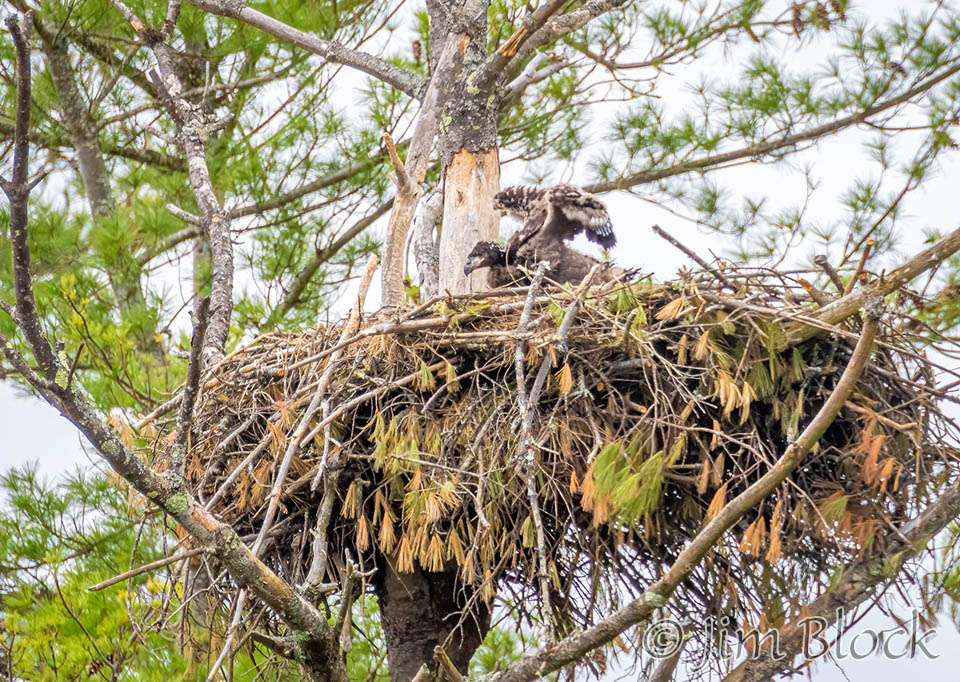
I made up for those short visits on May 13 when I spent four and a half hours with the eagles. Ninety minutes after arriving I took this photo at 7 a.m.
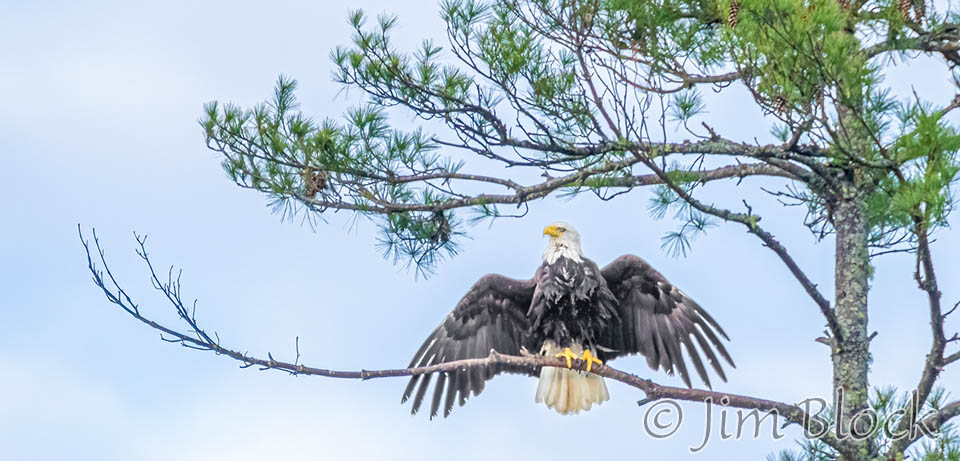
After over two uneventful hours with only a brief appearance of the chick, an adult flew into the nest the “wrong” way — into the front of the nest with it tail toward me. It stayed for less than two minutes before departing with the eaglet and me looking on.
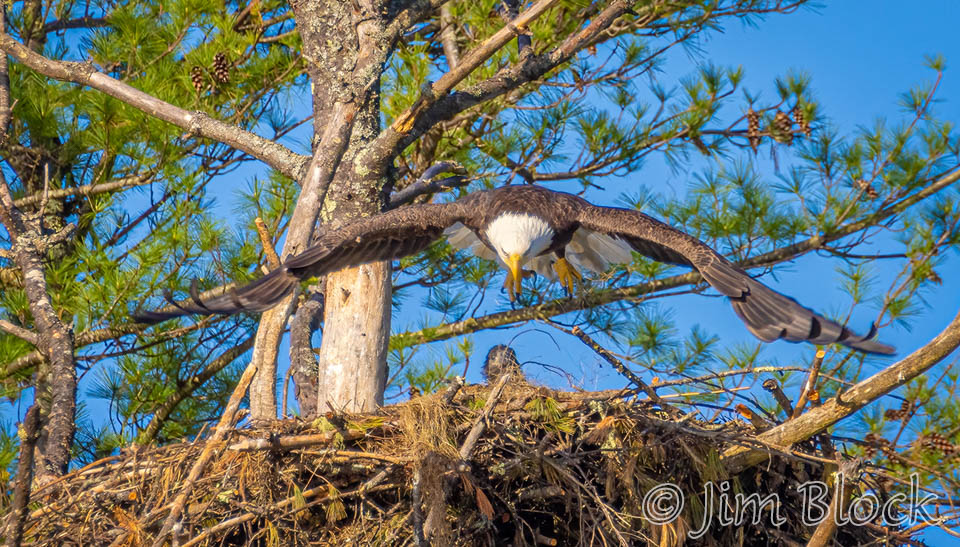
It took a hard left and headed to my right down Clay Brook to the north. My camera was able to maintain focus as I shot through branches and leaves.
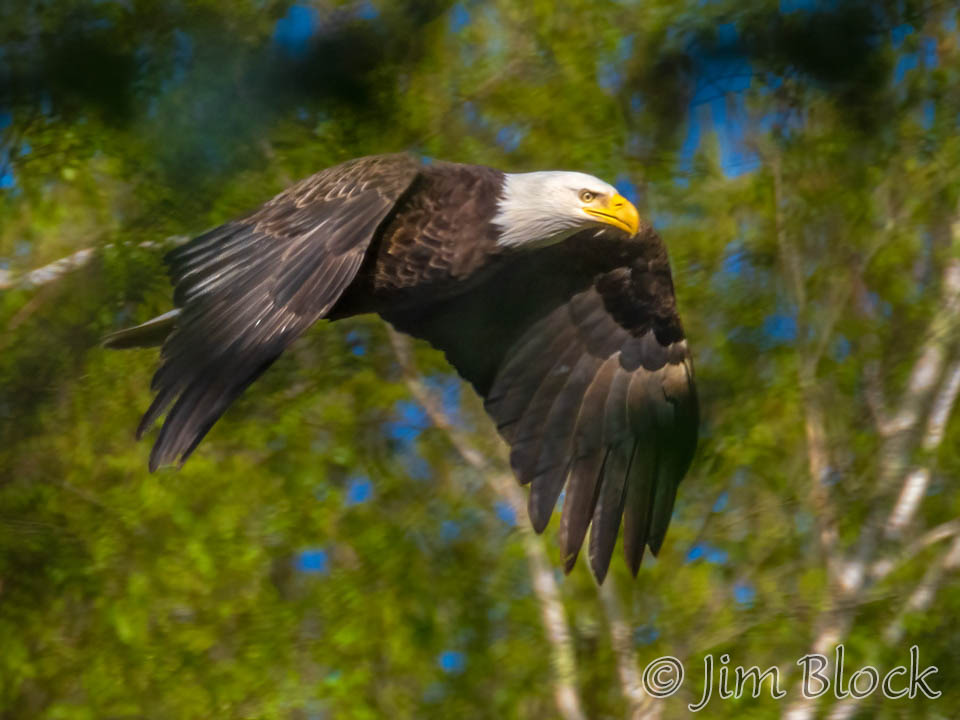
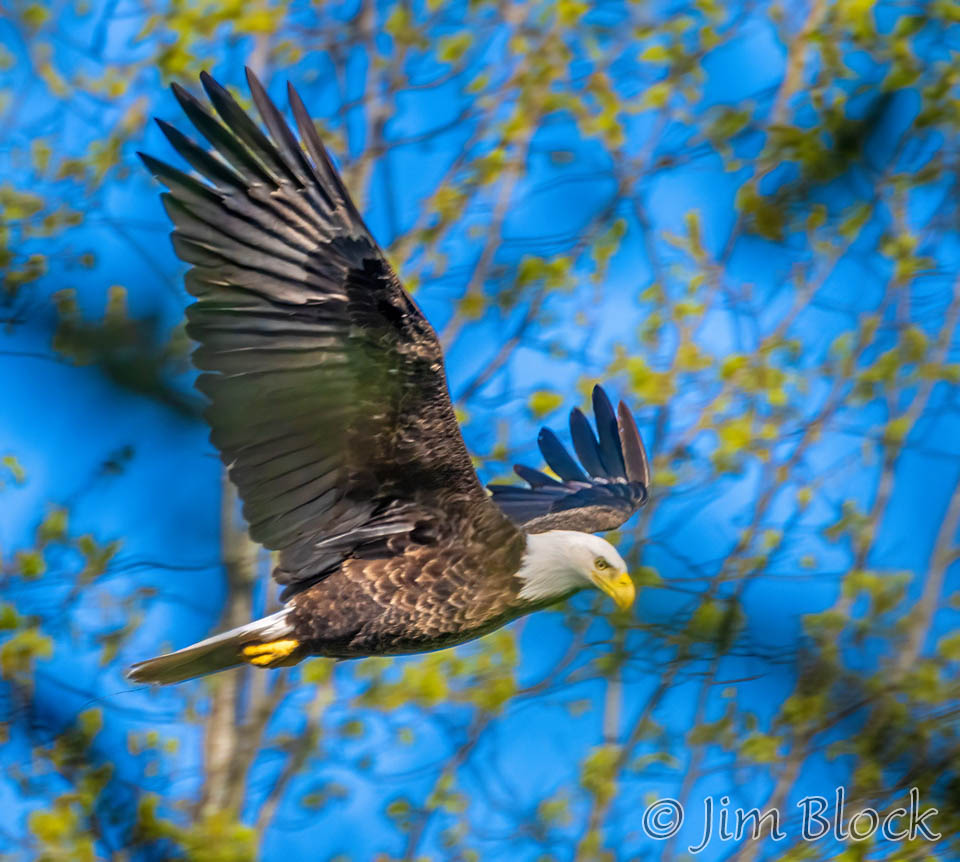
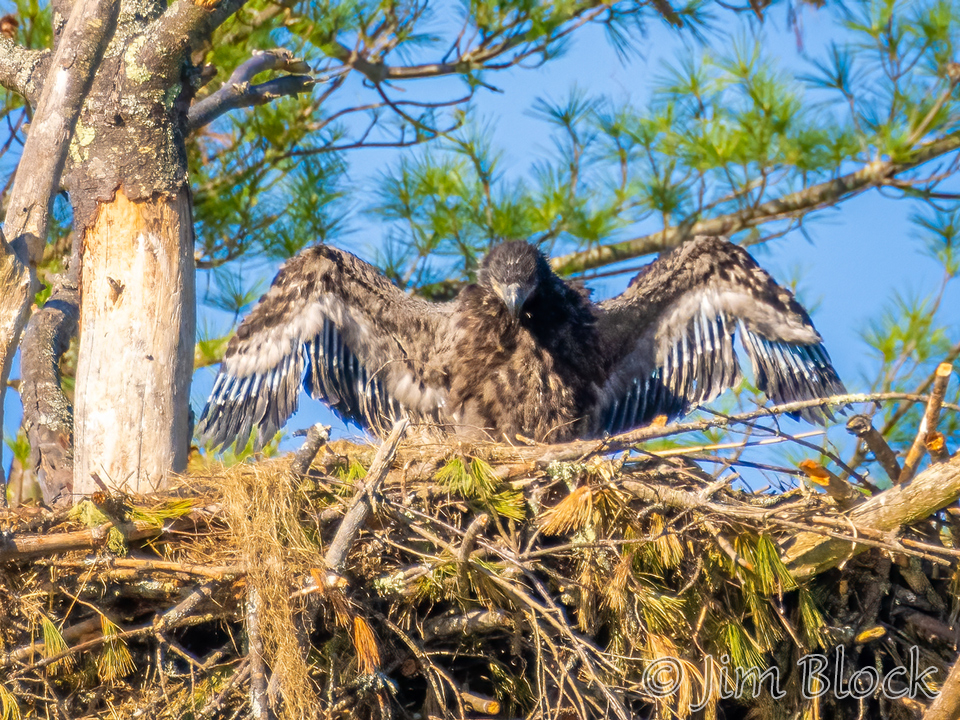
Twenty minutes later the eaglet was up stretching its wings. It was growing!
Fifteen minutes later an adult arrived carrying a fish.
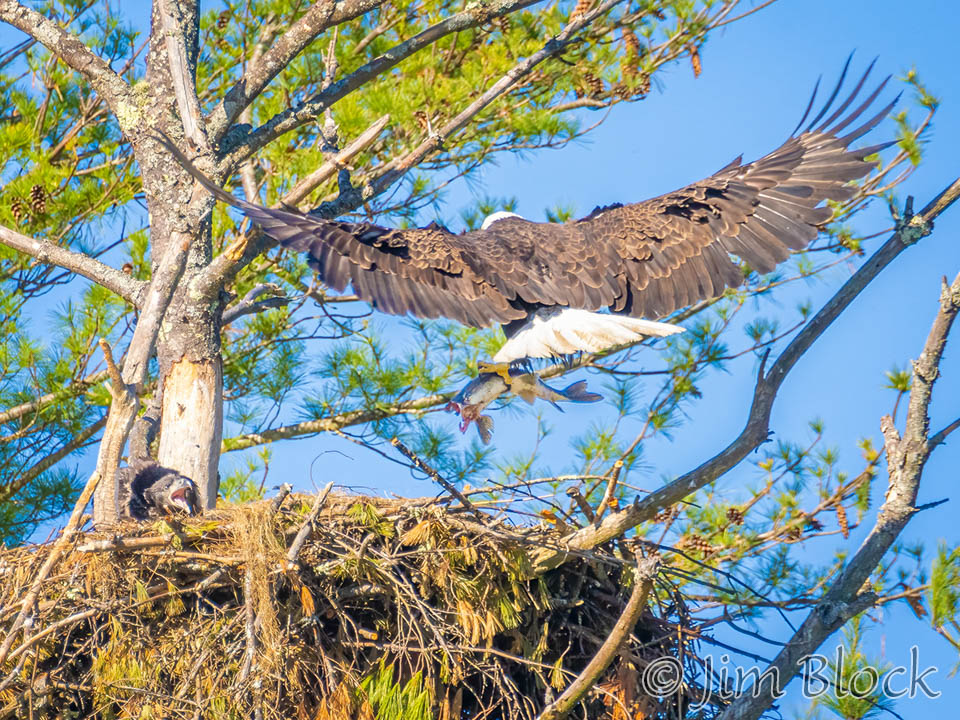
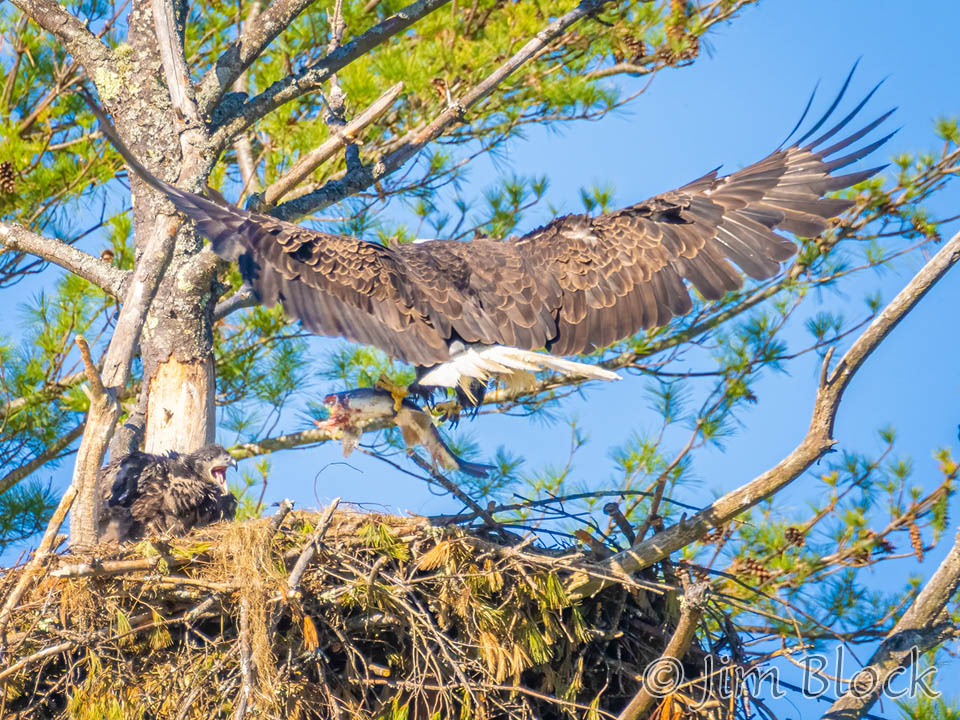
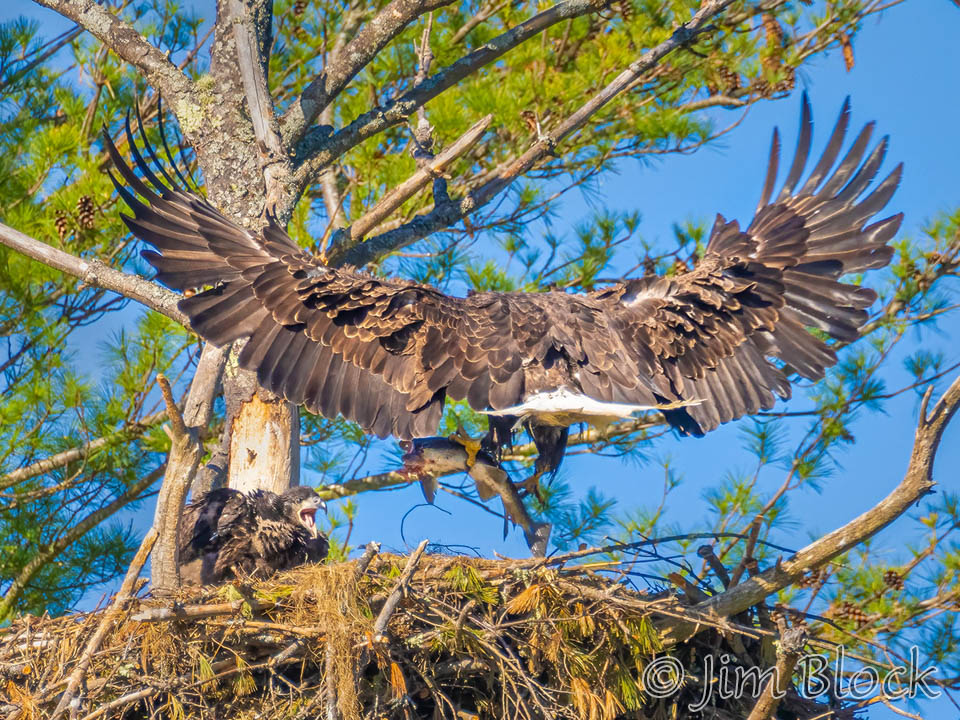
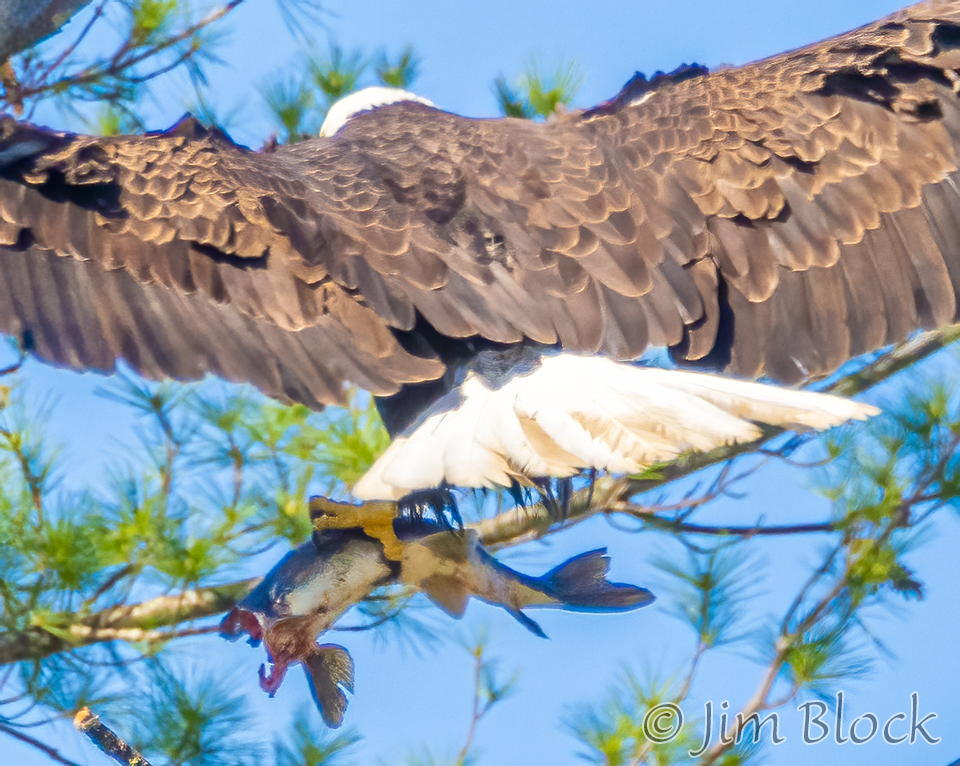
Here is a close-up of the fish. Eagles will sometime remove the heads of fish before carrying them to the nest. I’ve seen the same behavior with ospreys that seem to do it more often than eagles. The heads are normally eaten and bringing a dead fish into the nest is certainly safer for the chick than having one flopping around.
The eagle spent the next fifteen minutes feeding the chick.
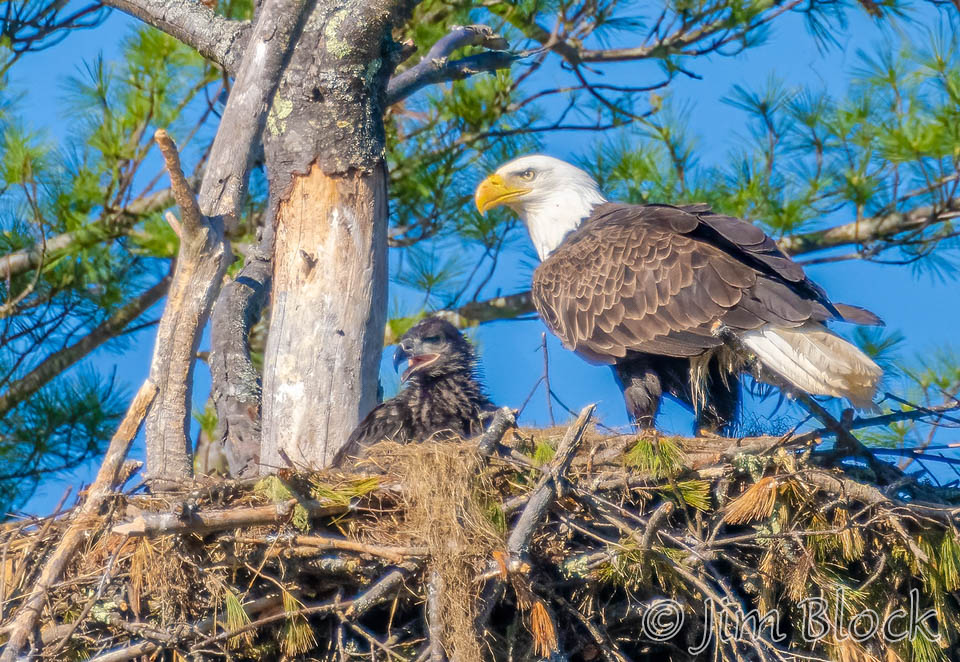
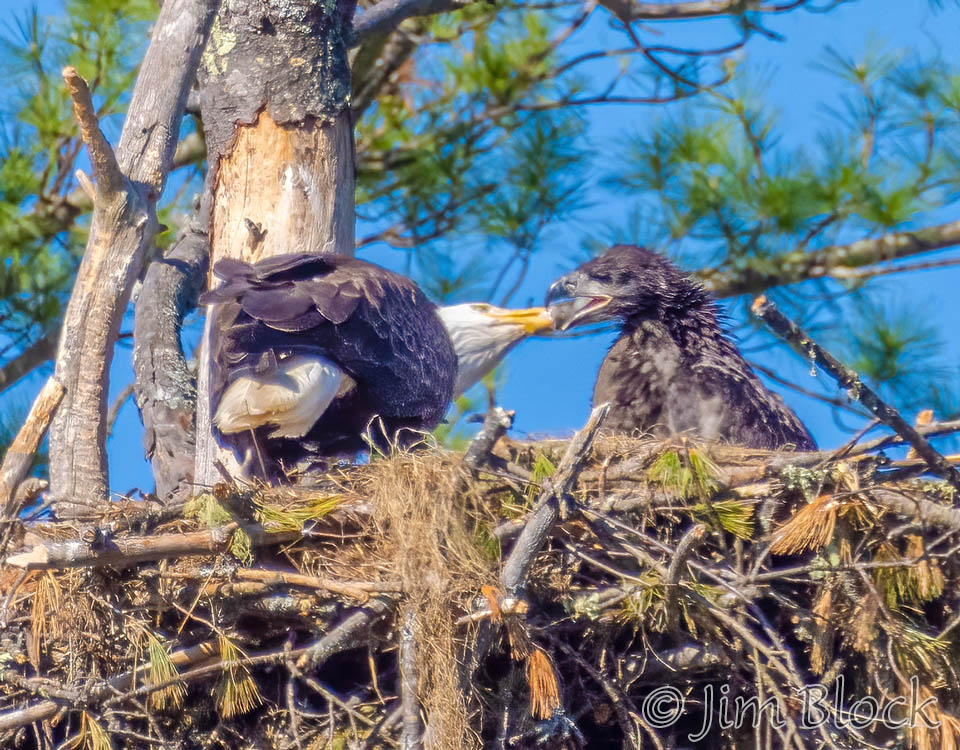
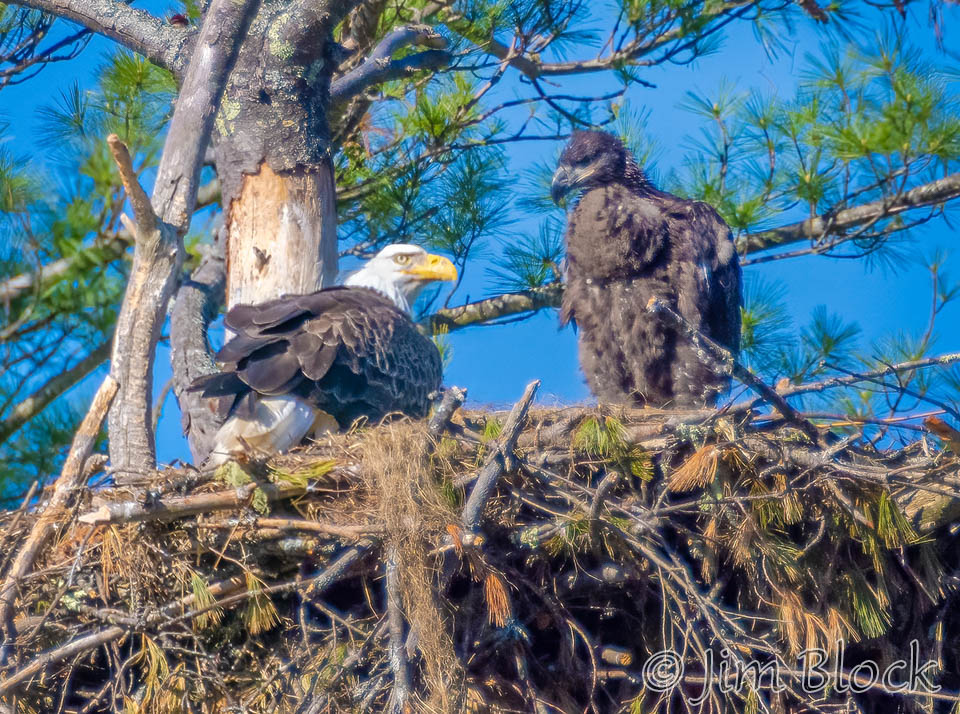
Over the next hour I captured these final two images from different spots along the trail.
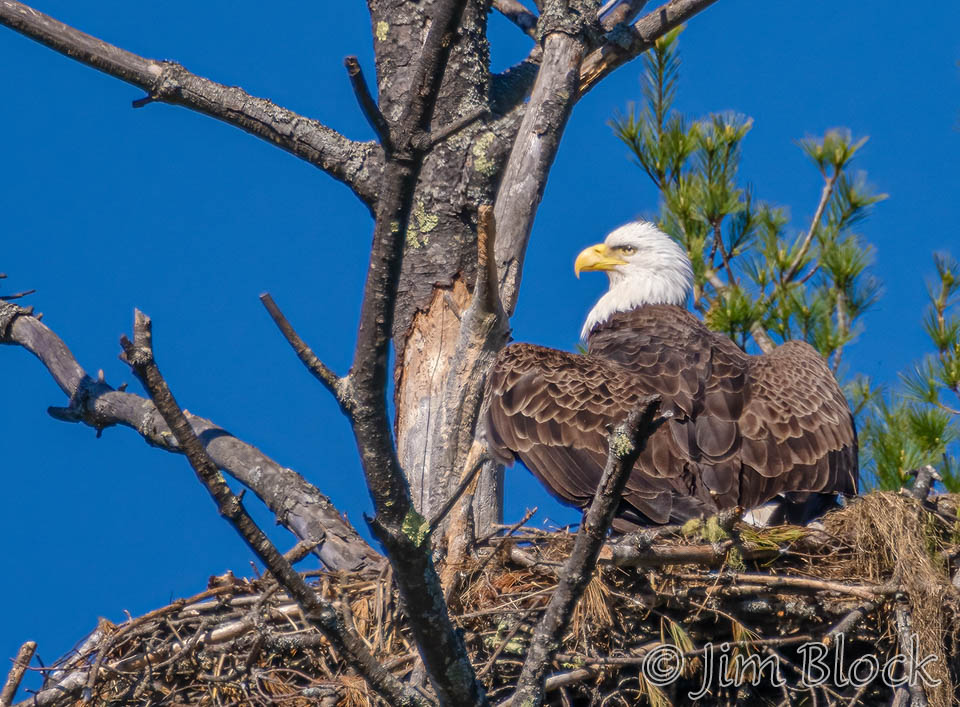
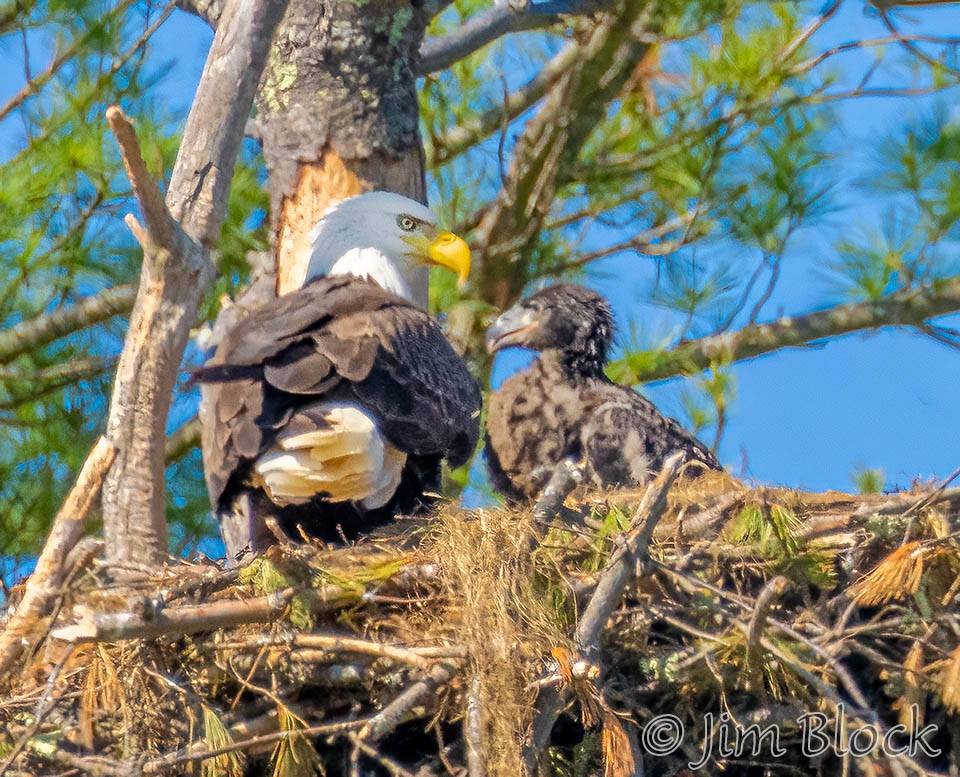
May 25, almost two weeks later, I spent nearly two hours at the nest bracketed around noon — an unusual time to visit. I had spent the early morning at Bedell Bridge. Little happened for the first half hour, then the rapidly-growing chick flexed its wings showing off for its parent.
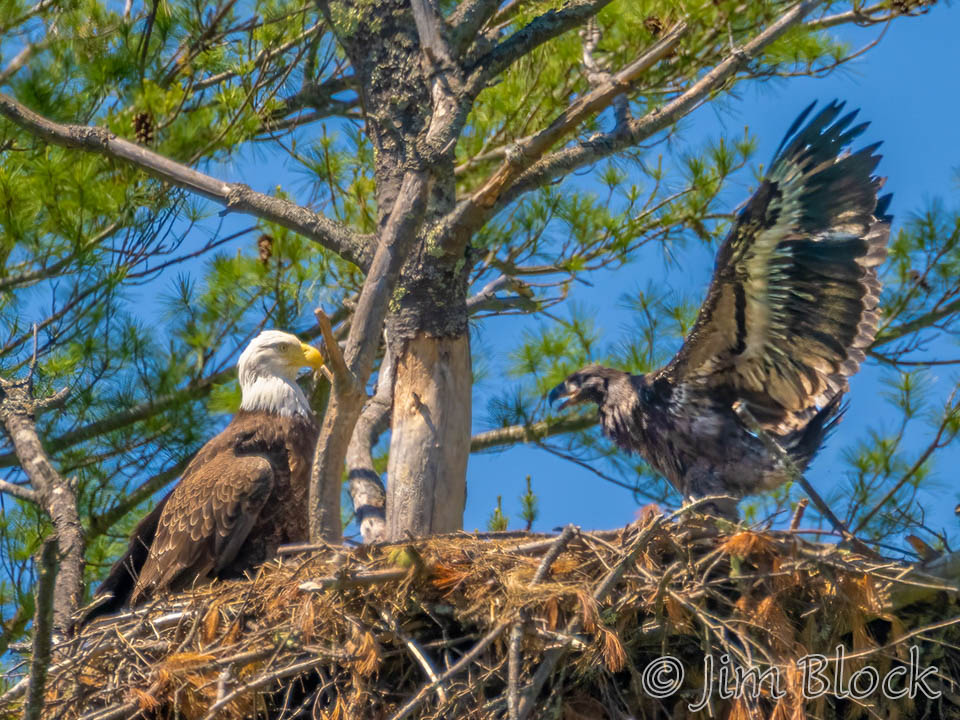
Forty five minutes later a parent arrived with a good-size fish. This one seemed to have its head still on.
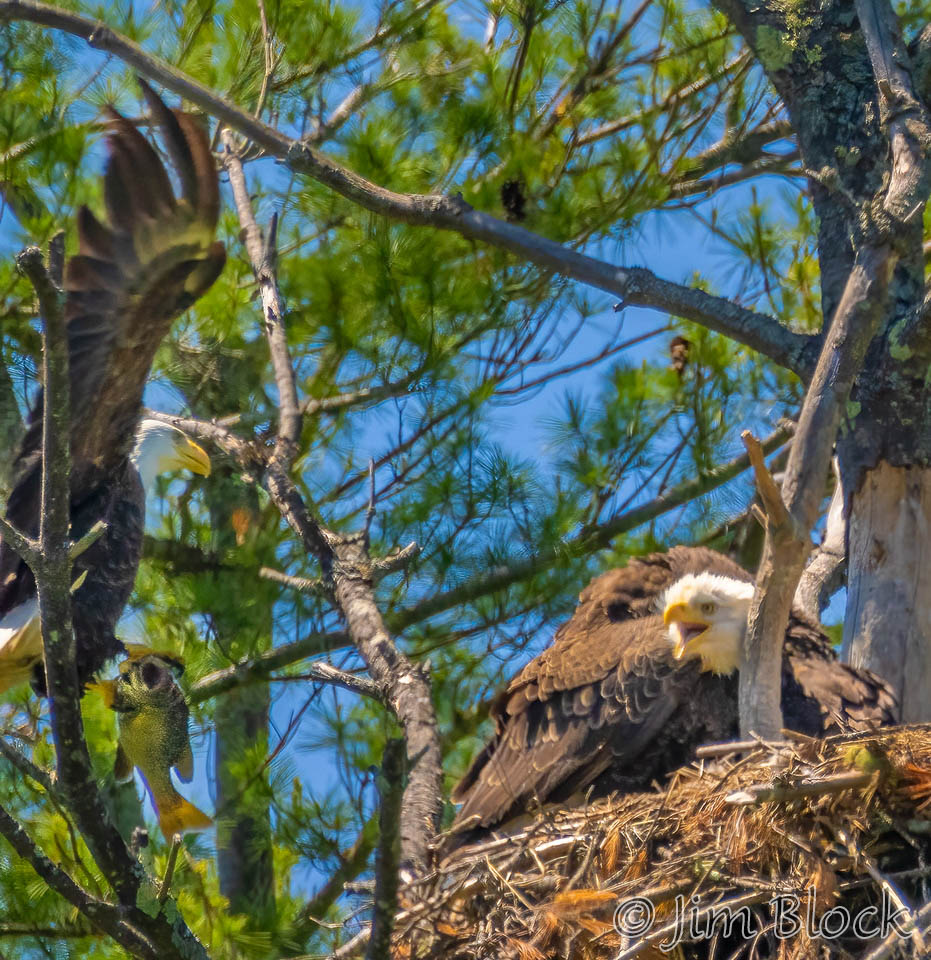
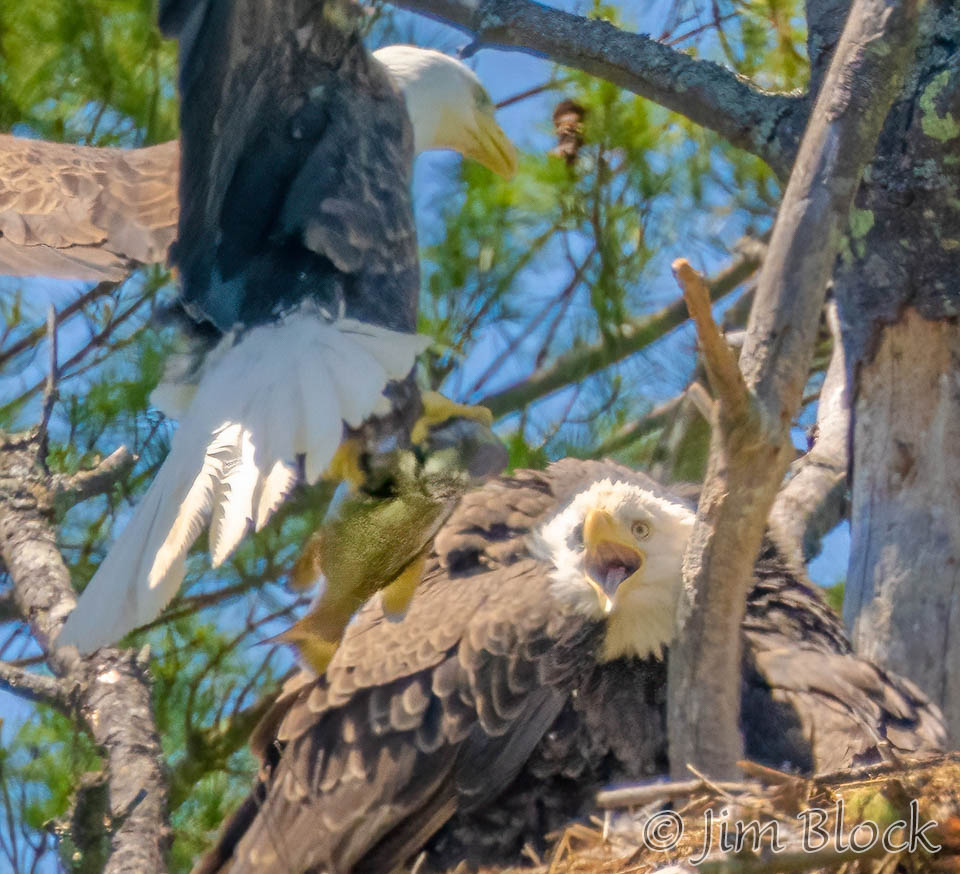
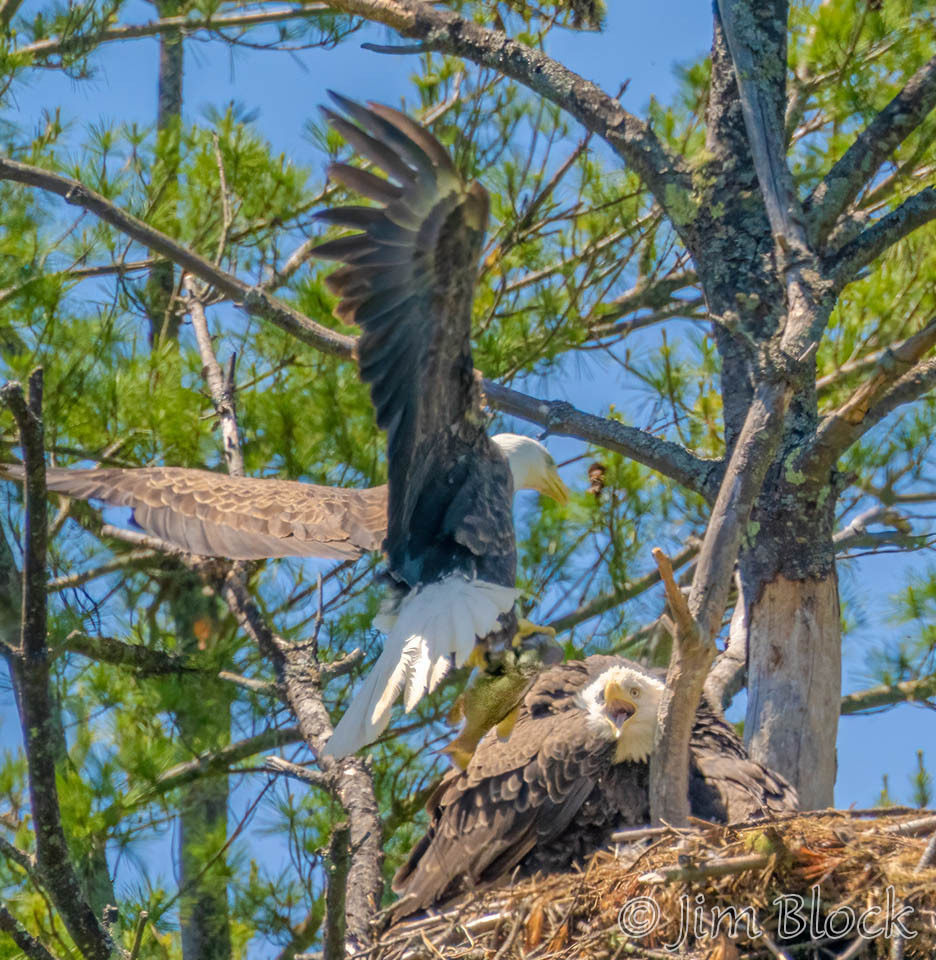
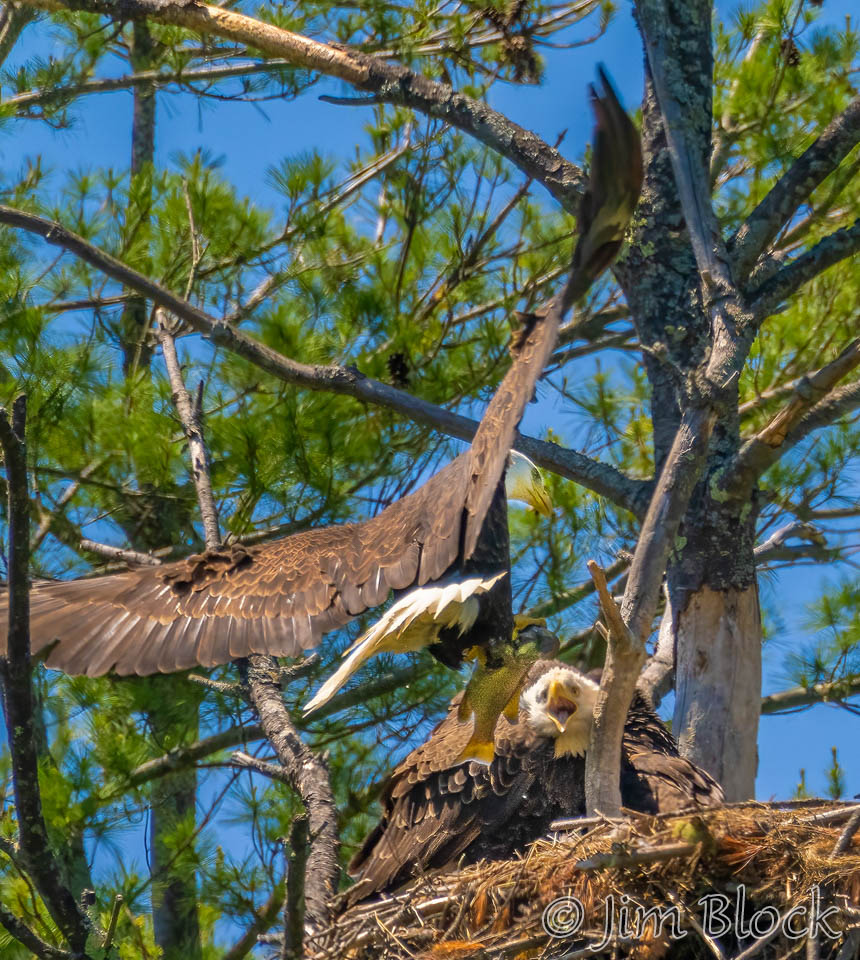
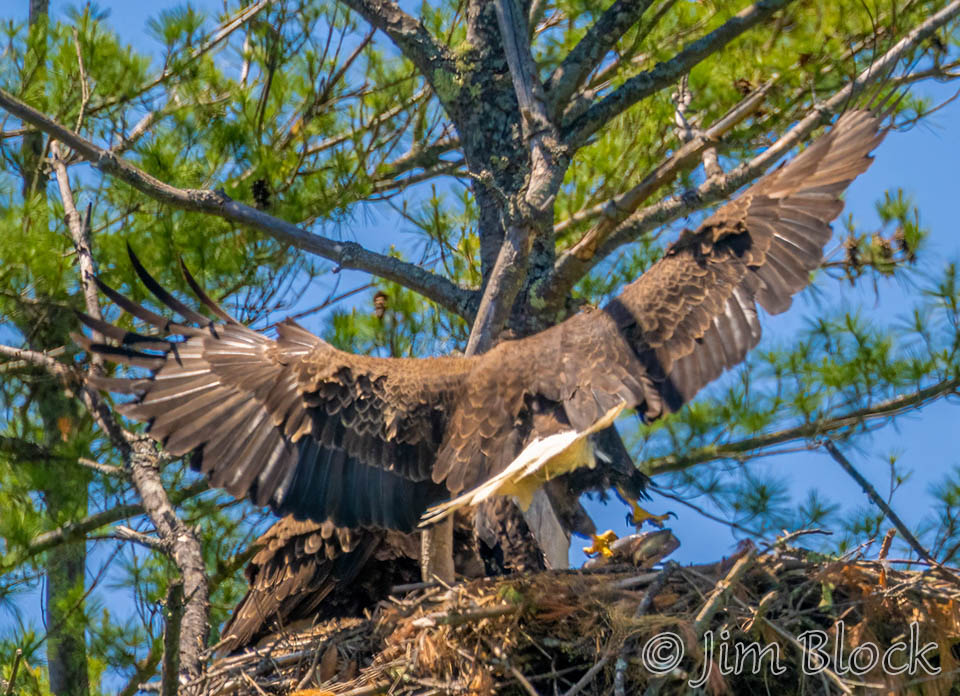
Twelve minutes later the adult swallowed something and the chick pooped.
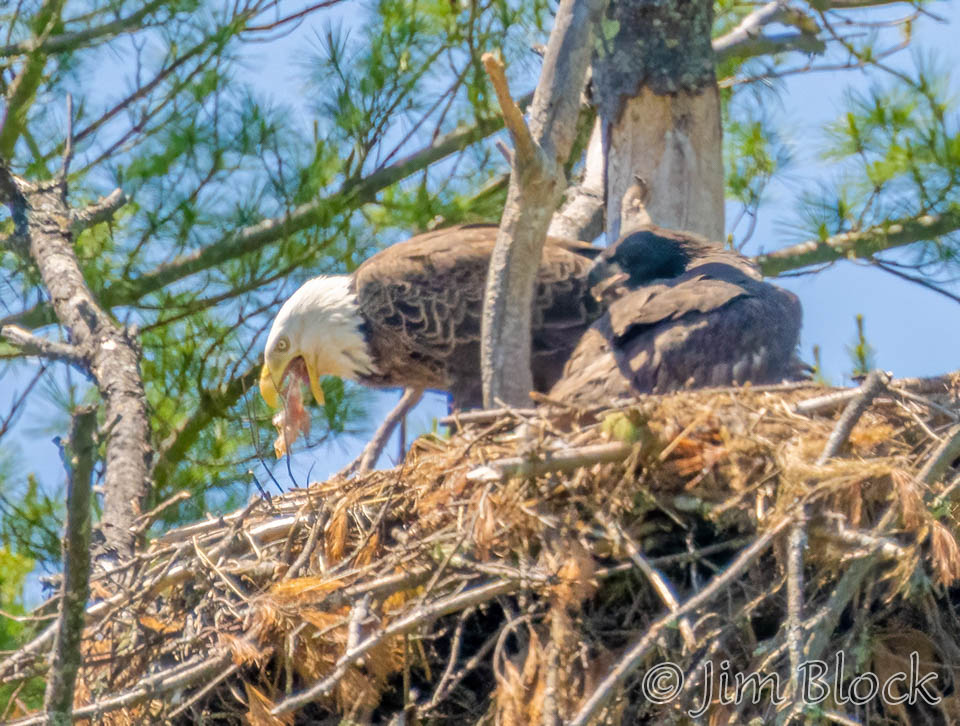
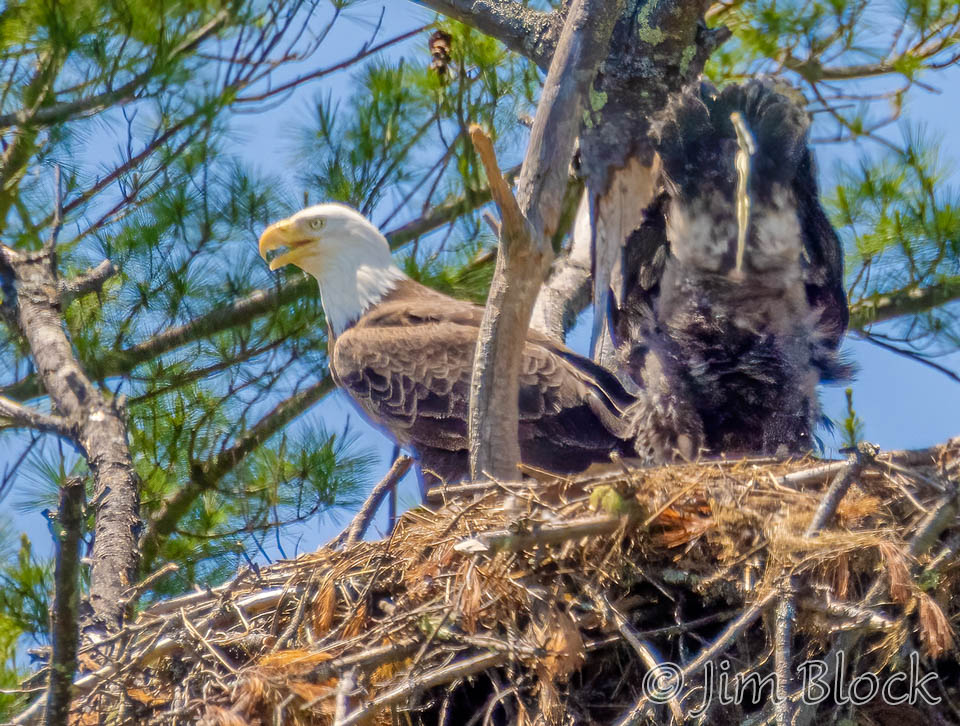
Ten minute later the adult departed and so did I.
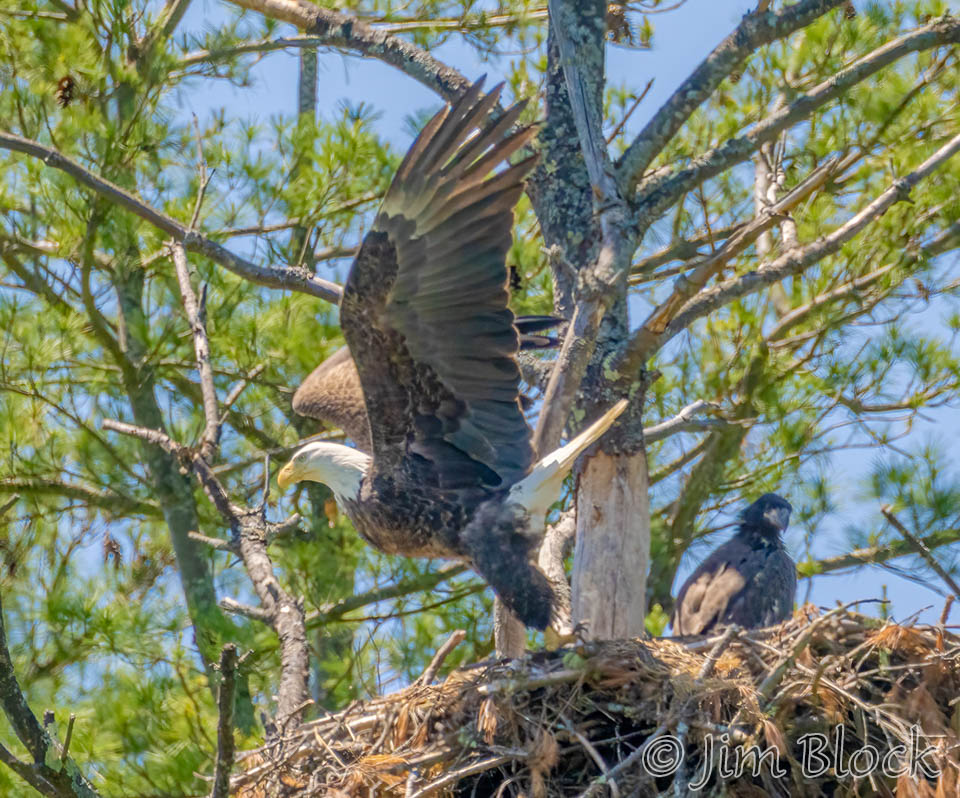
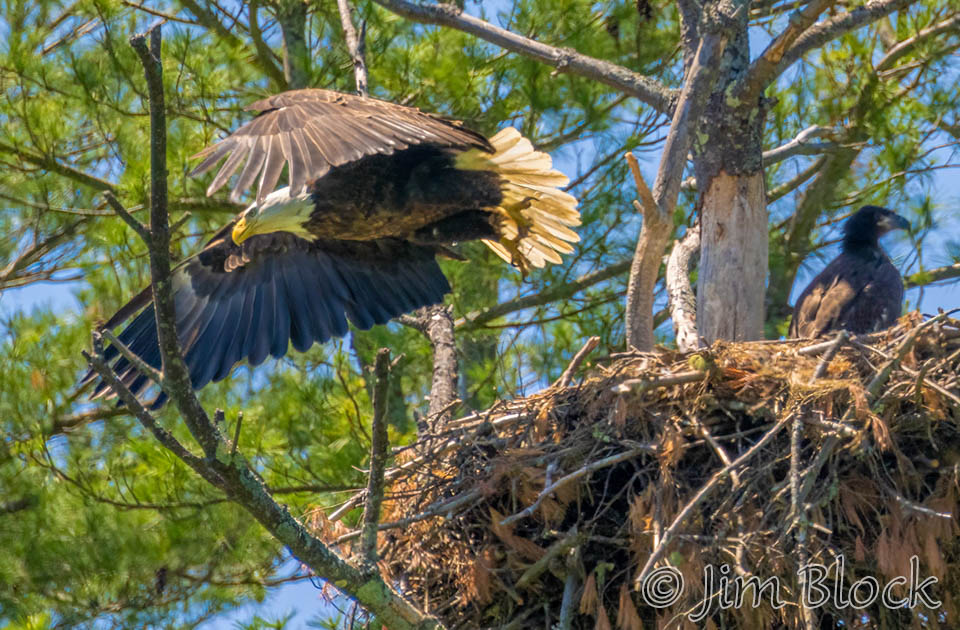
May 30 and two more hours with the eagles late morning. An eagle was sitting near the nest when I arrived.
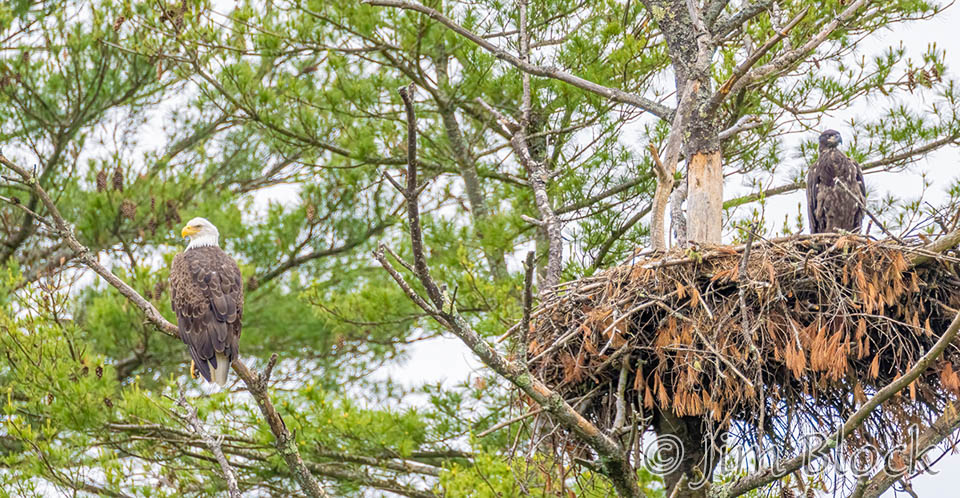
The chick exercised its wings and looked like it might fledge in the next two weeks.
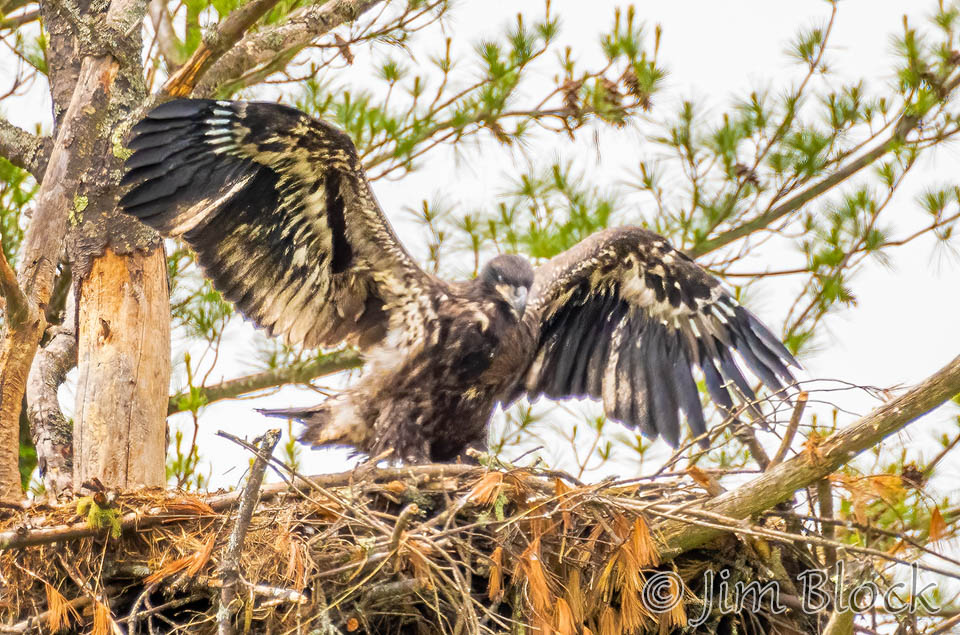
A parent flew in carrying what looked like a young duck.
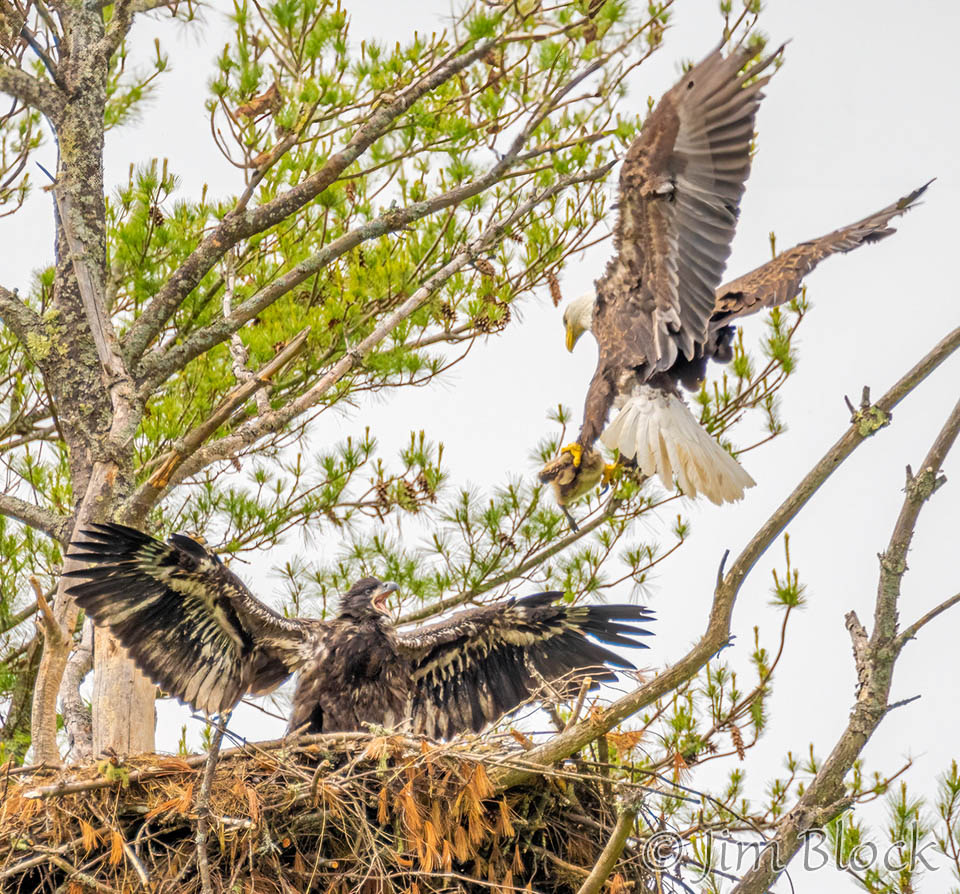
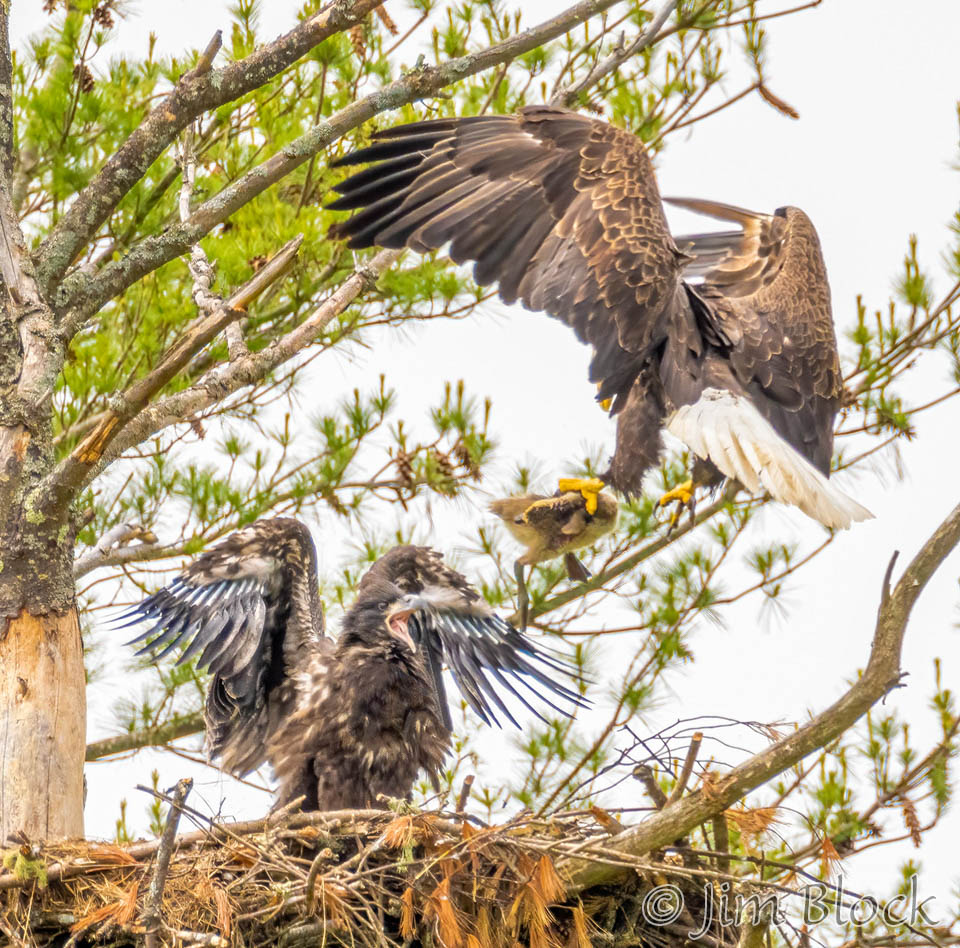
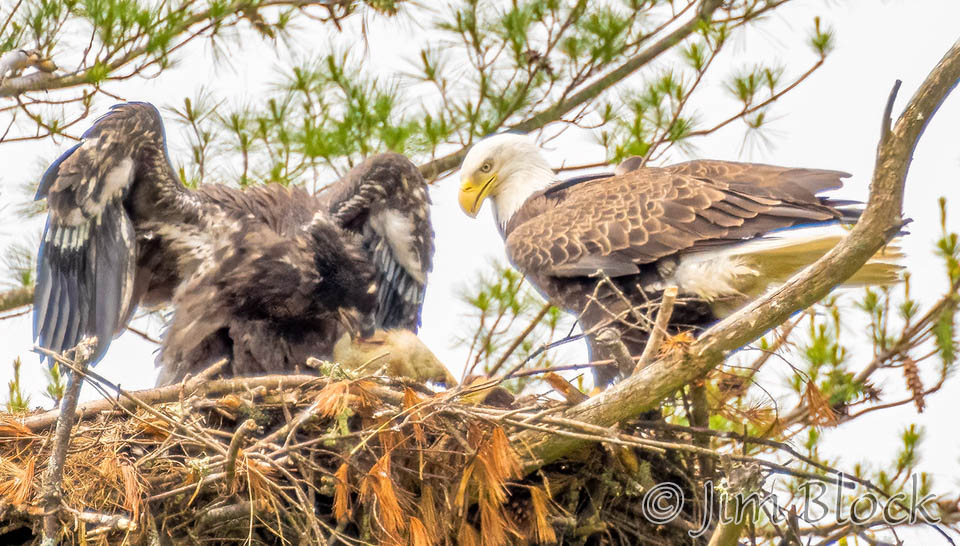
Four minutes later the parent left.
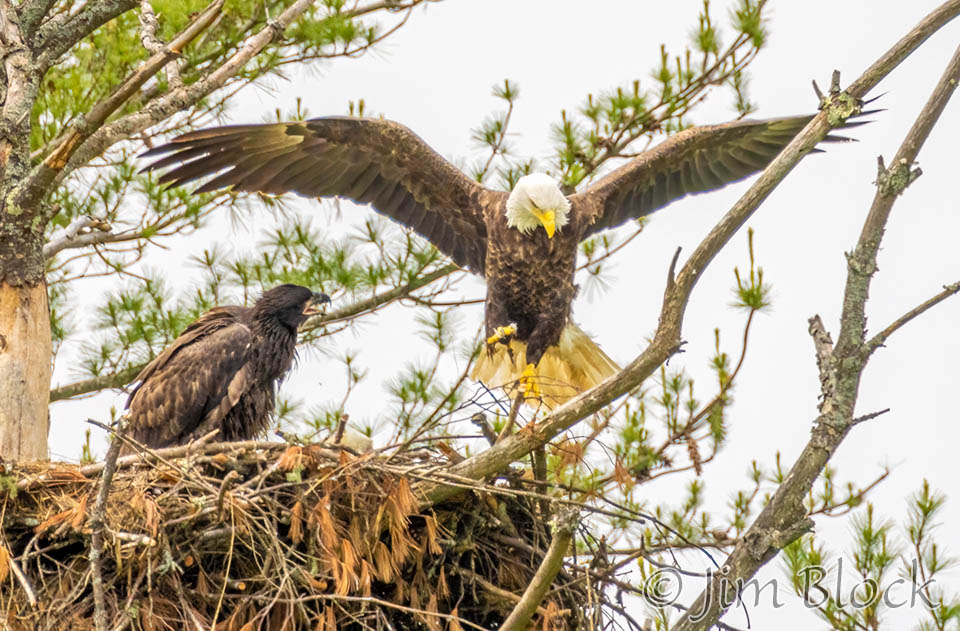
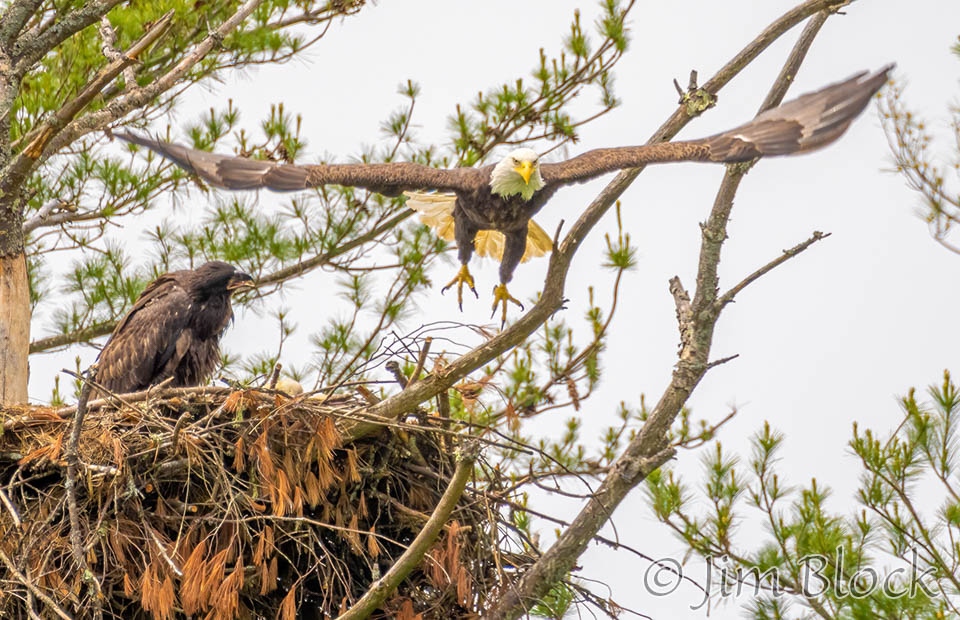
Leaving the chick to fend for itself with the duck and practice flying.
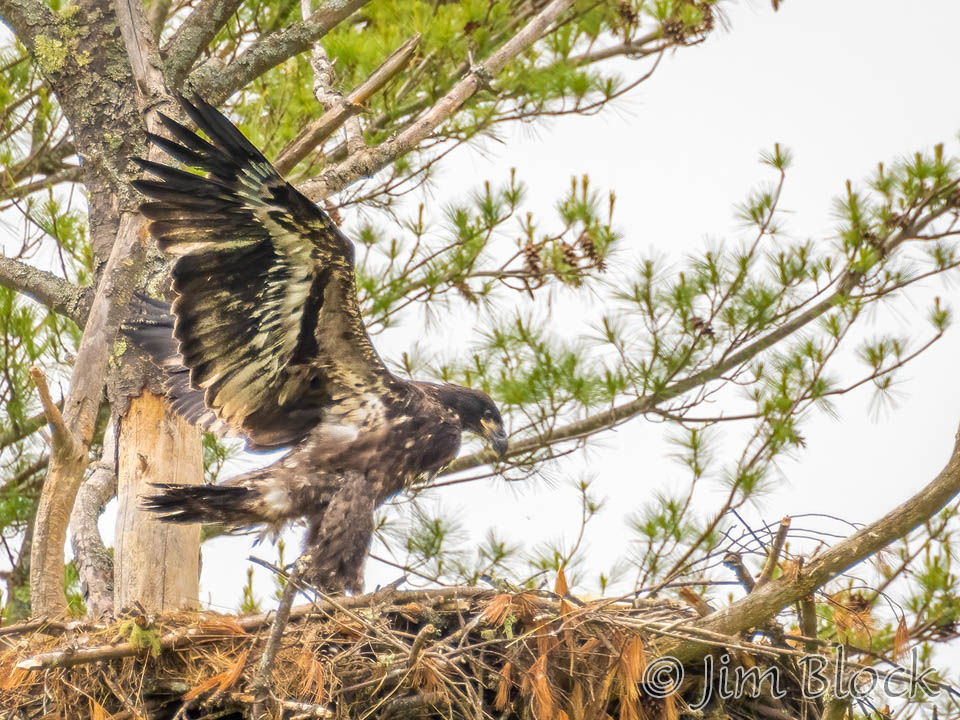
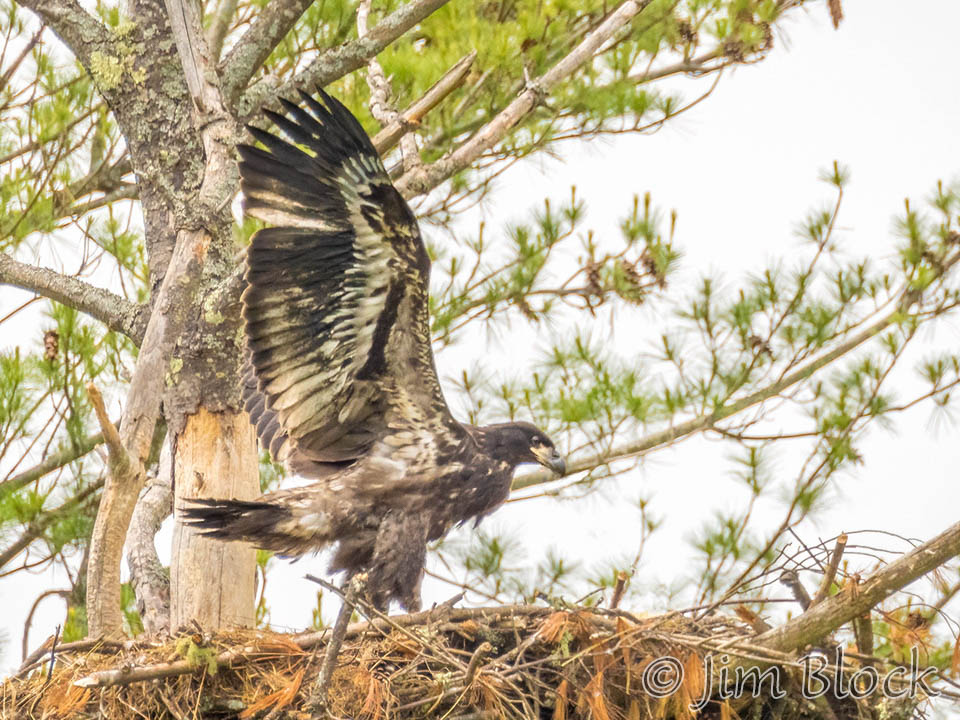
On June 7 and almost three hours with the eagles, I was greeted with a poop.
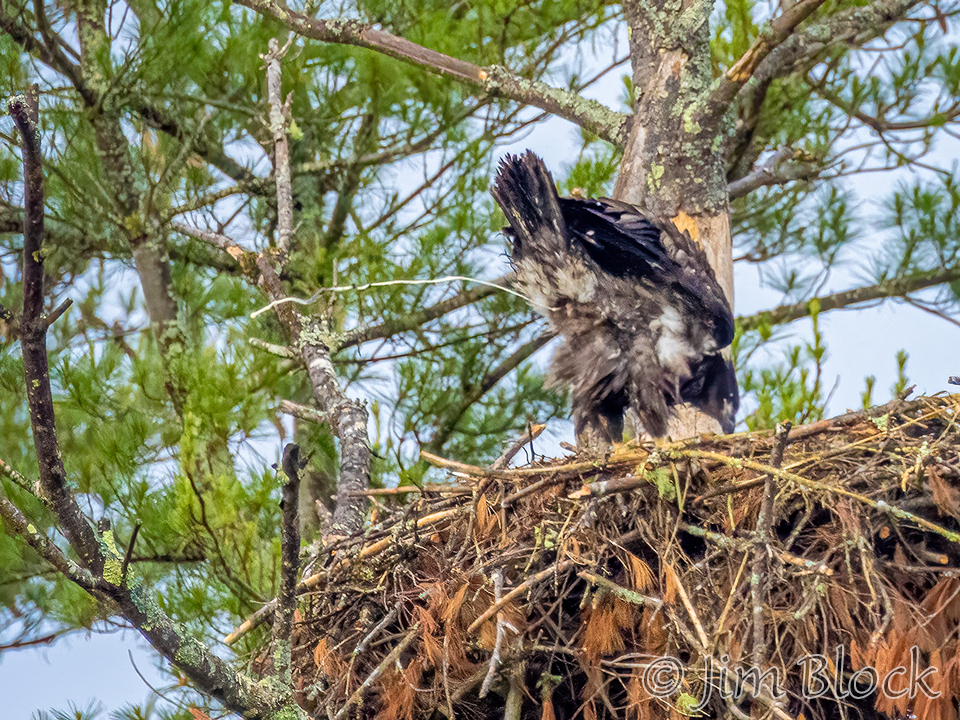
Soon an adult arrived and started feeding the eaglet.
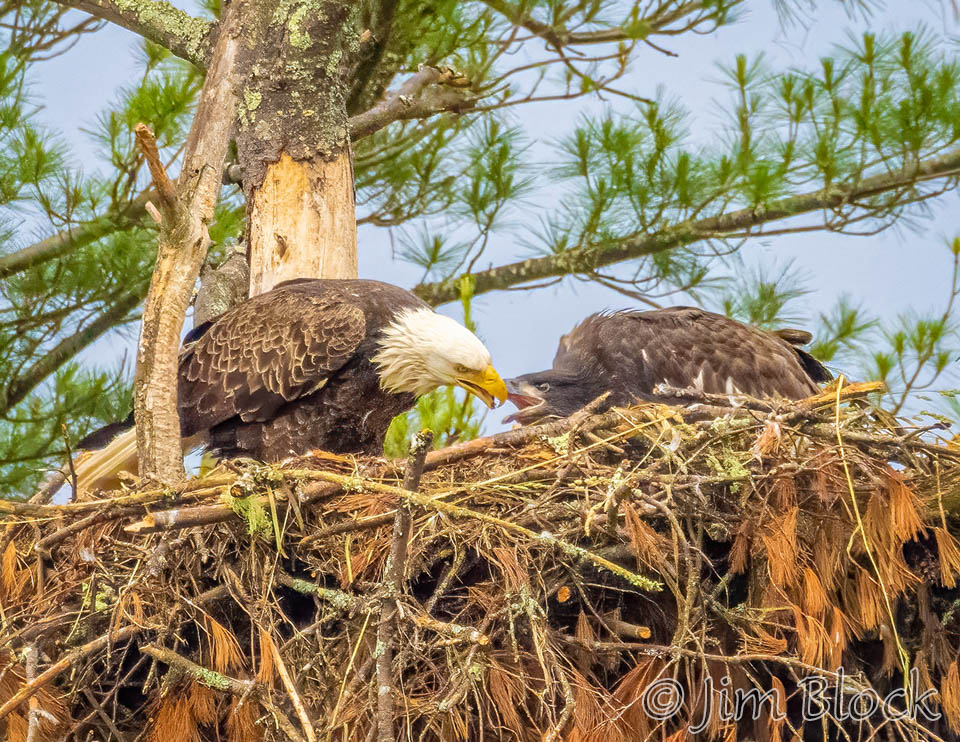
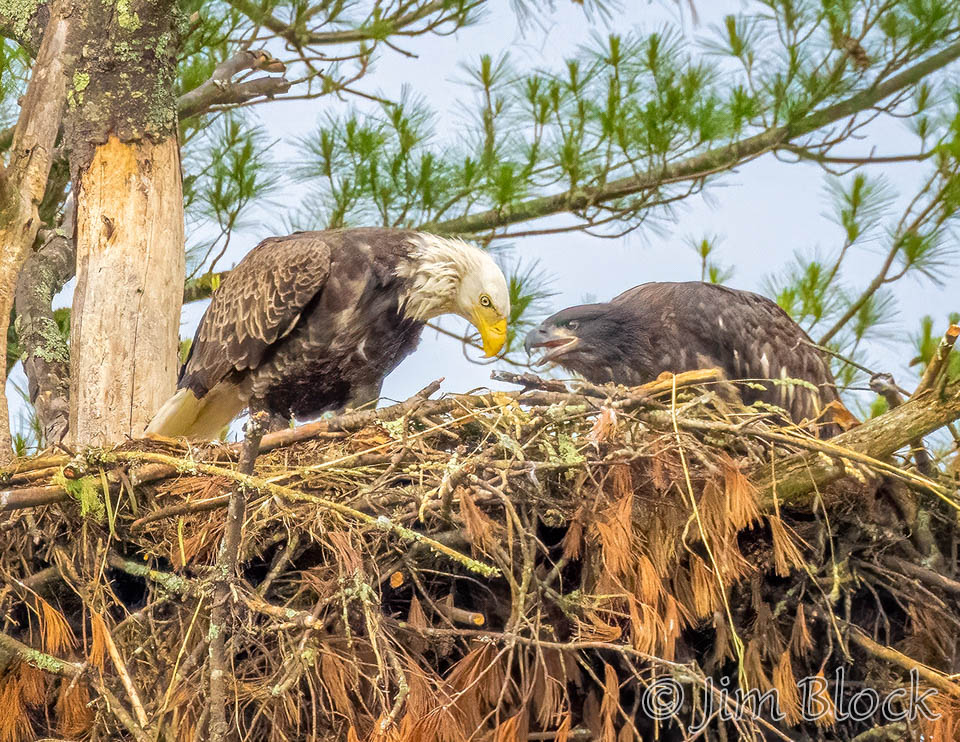
The adult was pulling some prey item apart — perhaps the young duck that it brought a week ago.
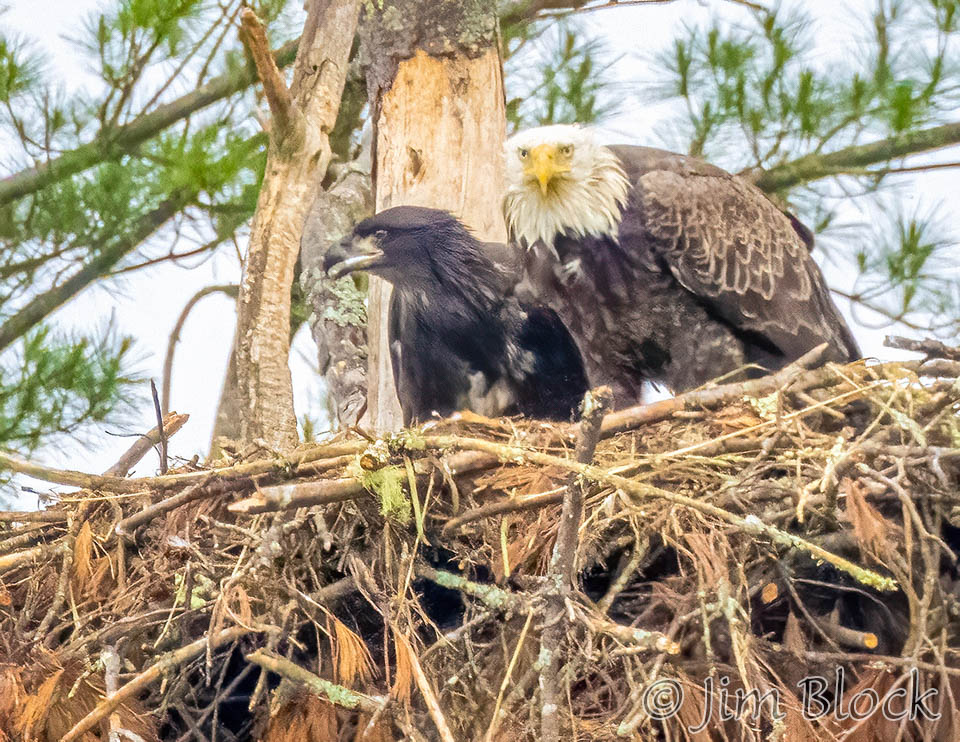
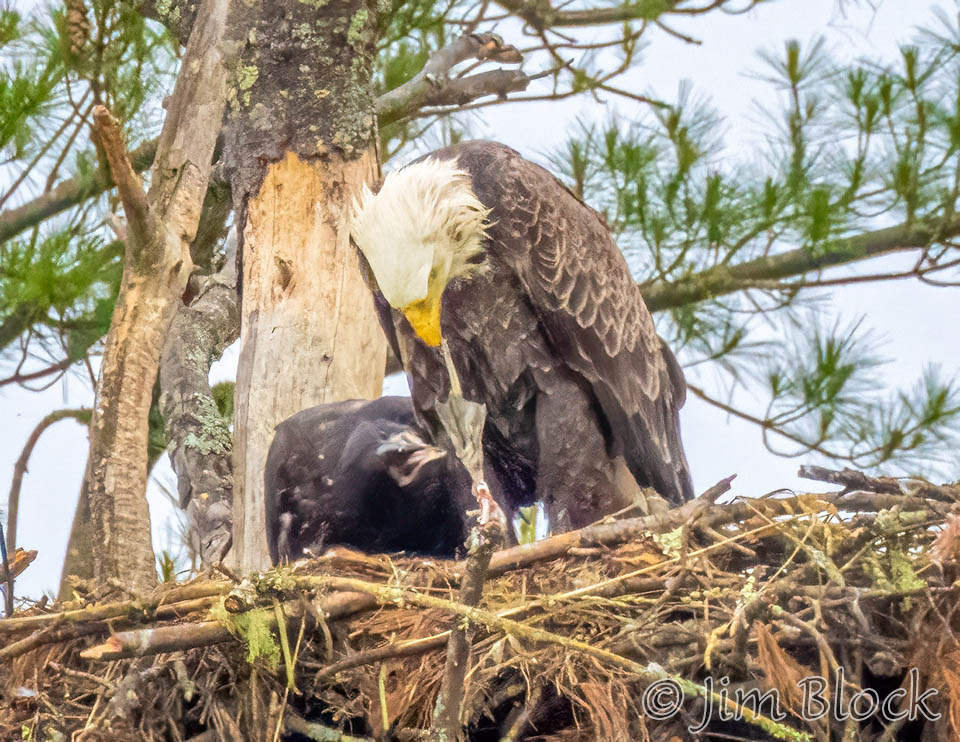
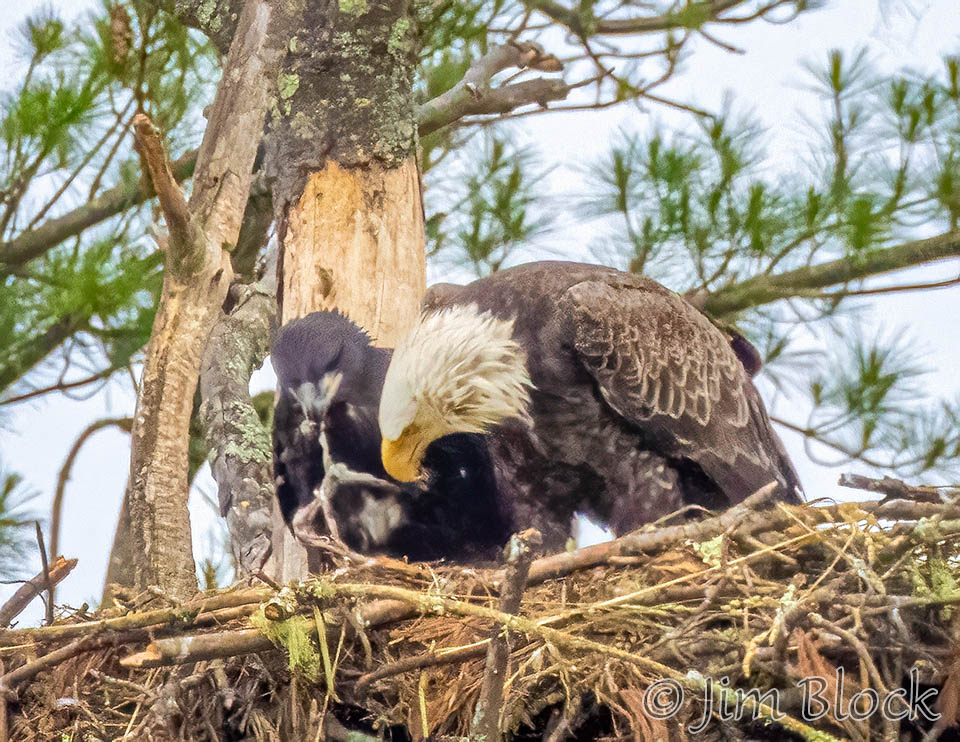
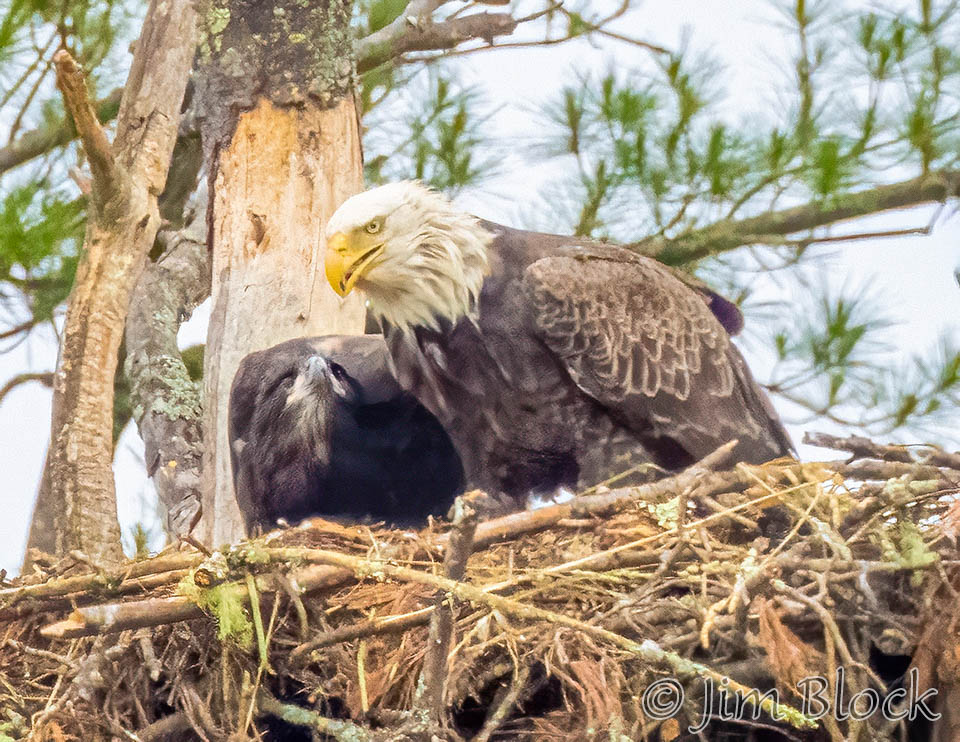
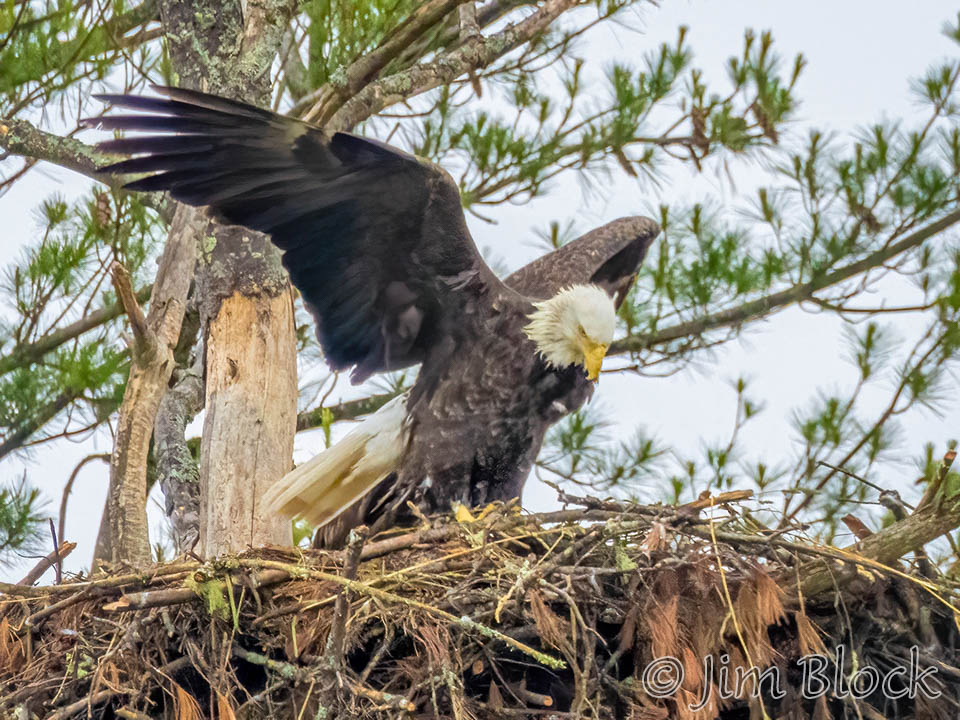
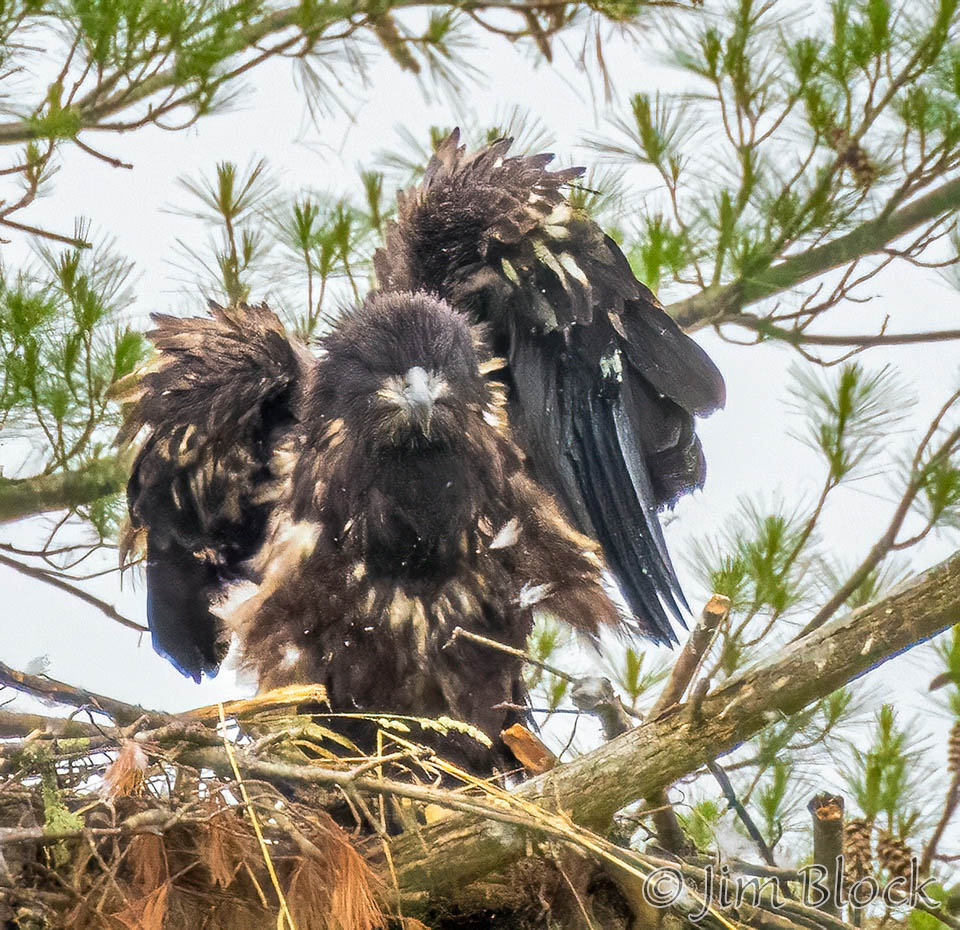
The parent demonstrated wing stretching and the chick imitated.
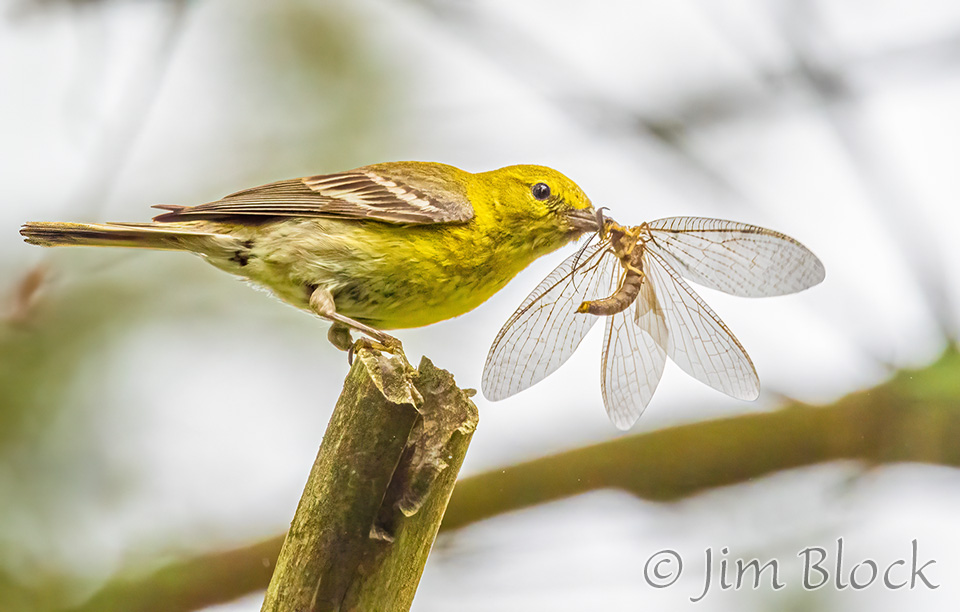
While waiting for more action in the nest, a pine warbler caught my eye. It had captured a Summer Fishfly (Chauliodes pectinicornis).
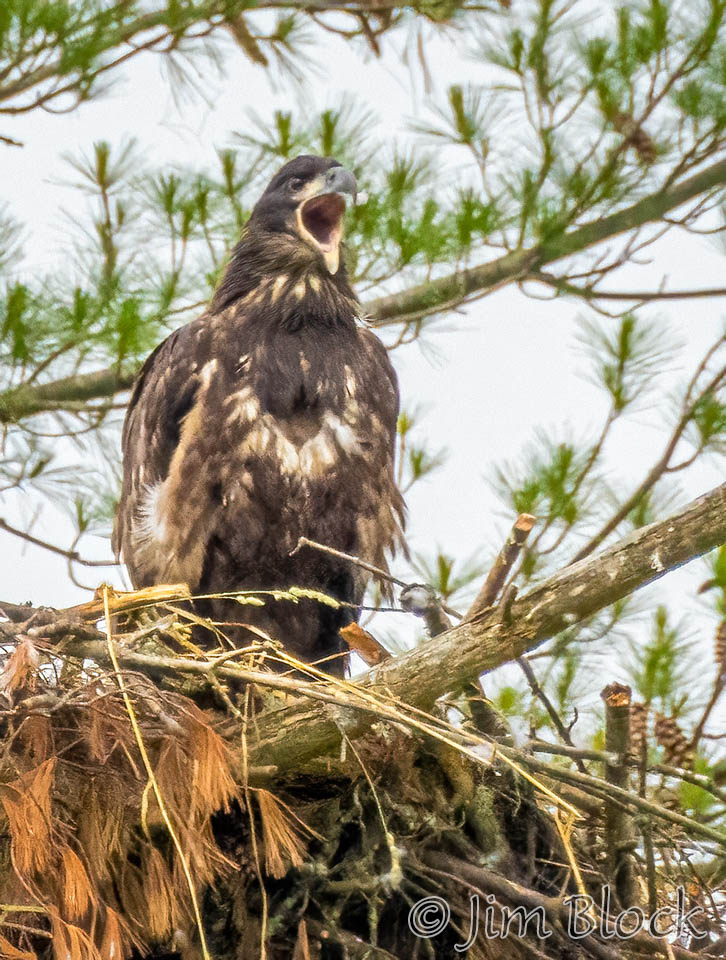
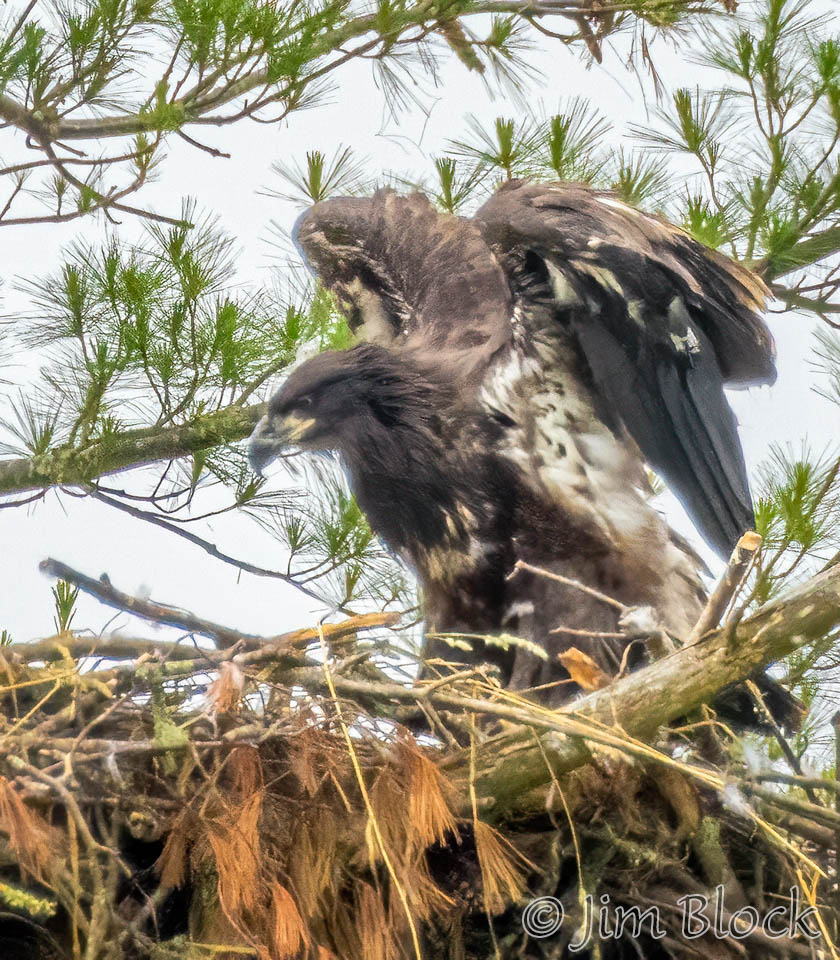
The chick was looking very colorful in shades of brown, a little ragged, maturing.
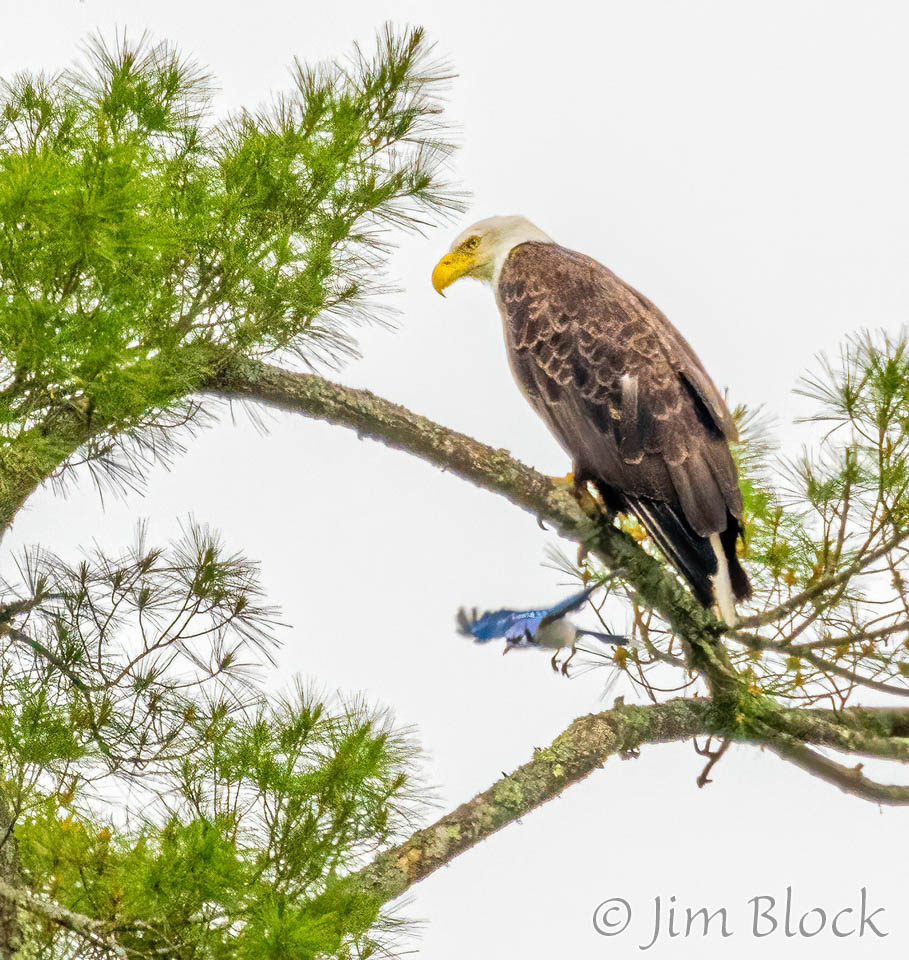
A blue jay took exception to the presence of the eagle and buzzed it repeatedly.
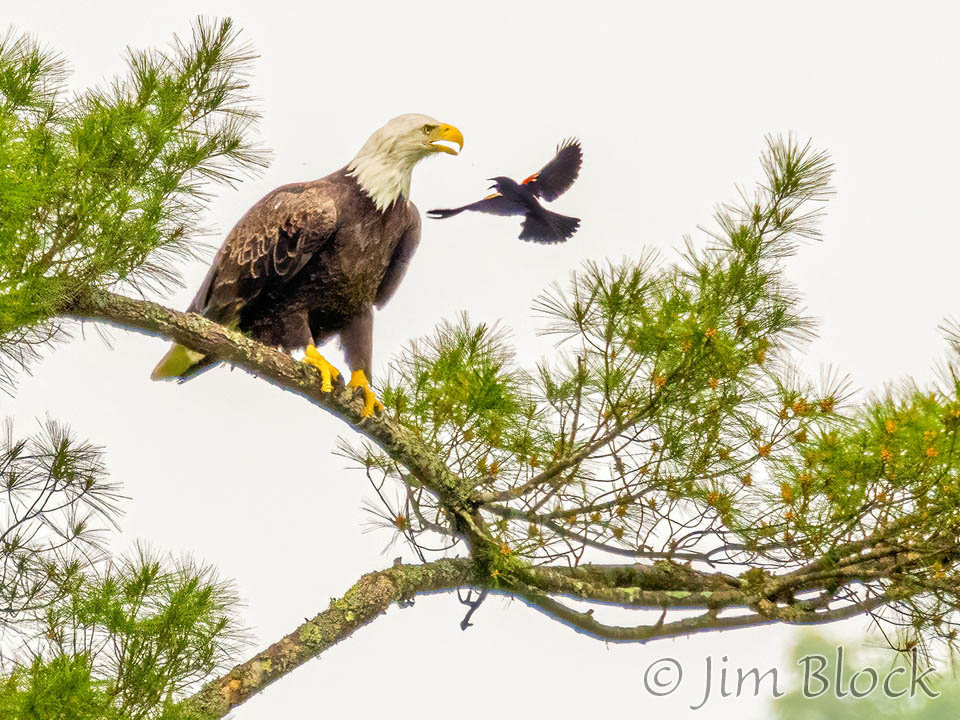
And then a red-winged blackbird took its turn harassing the eagle.
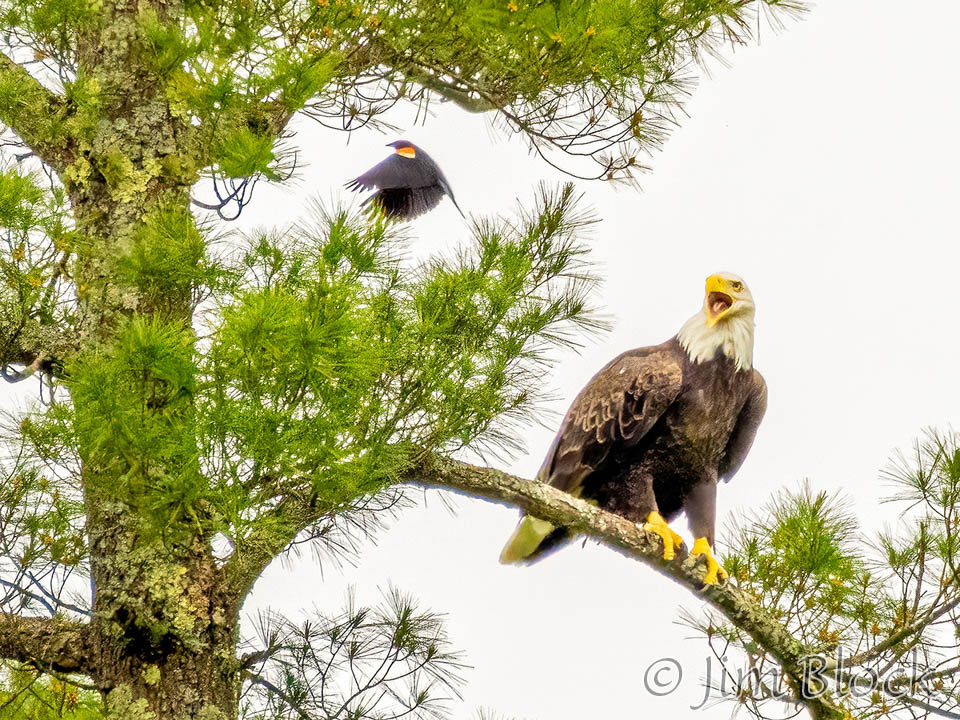
It succeeded in chasing the eagle from the tree.
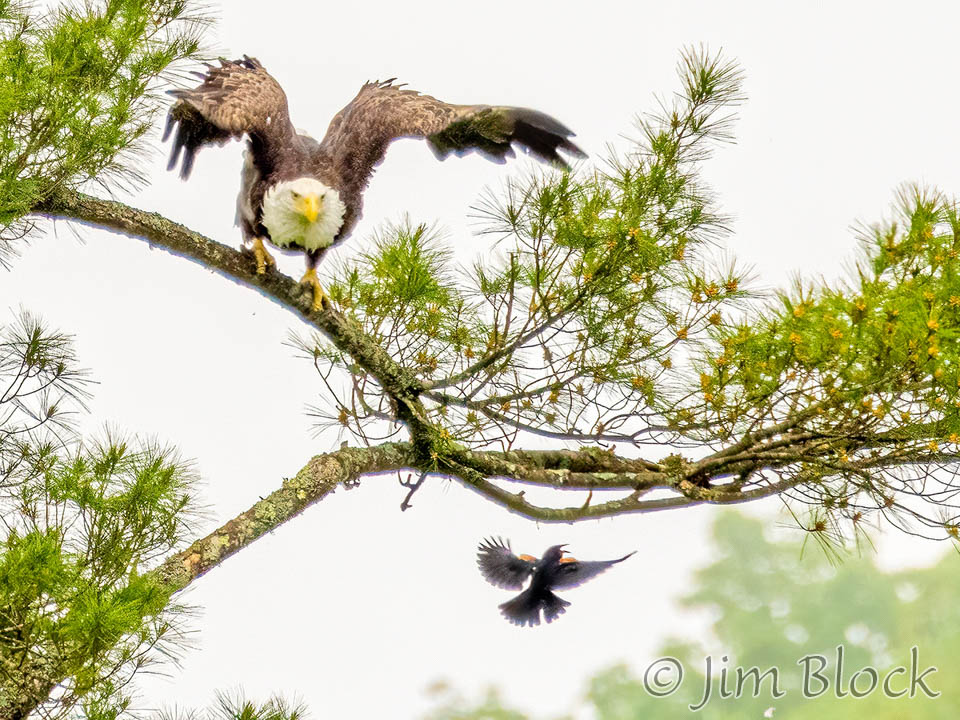
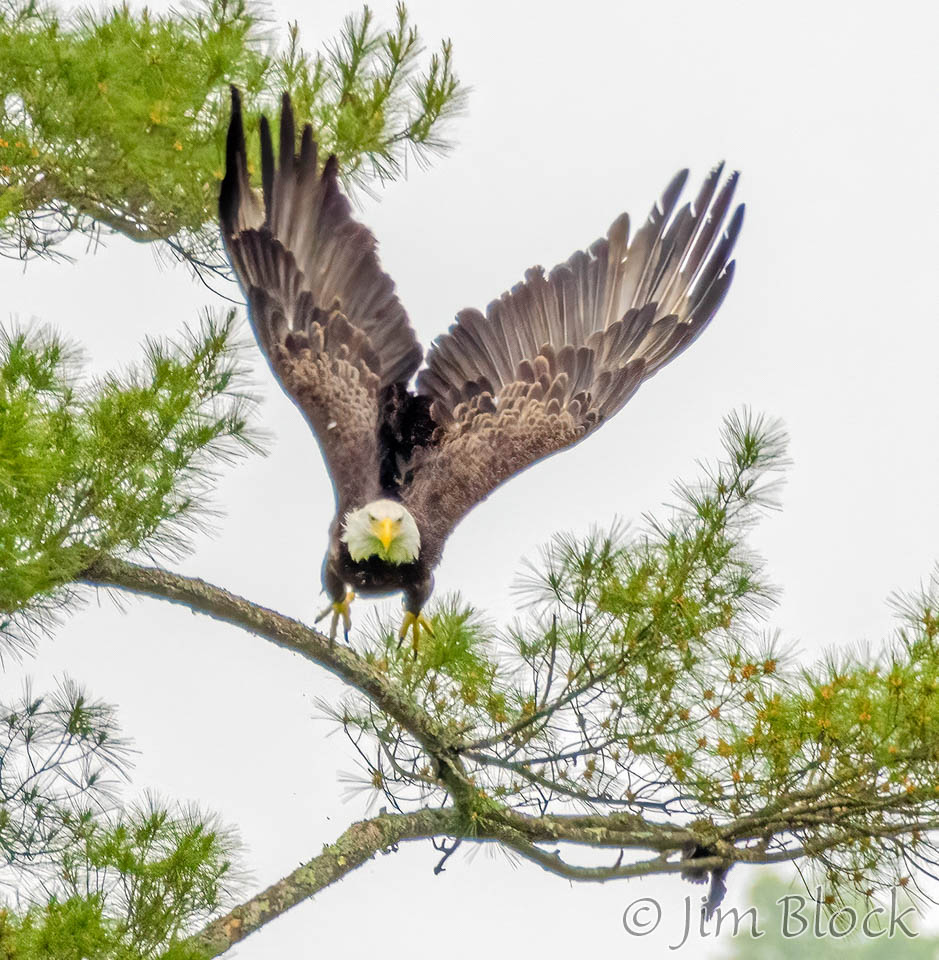
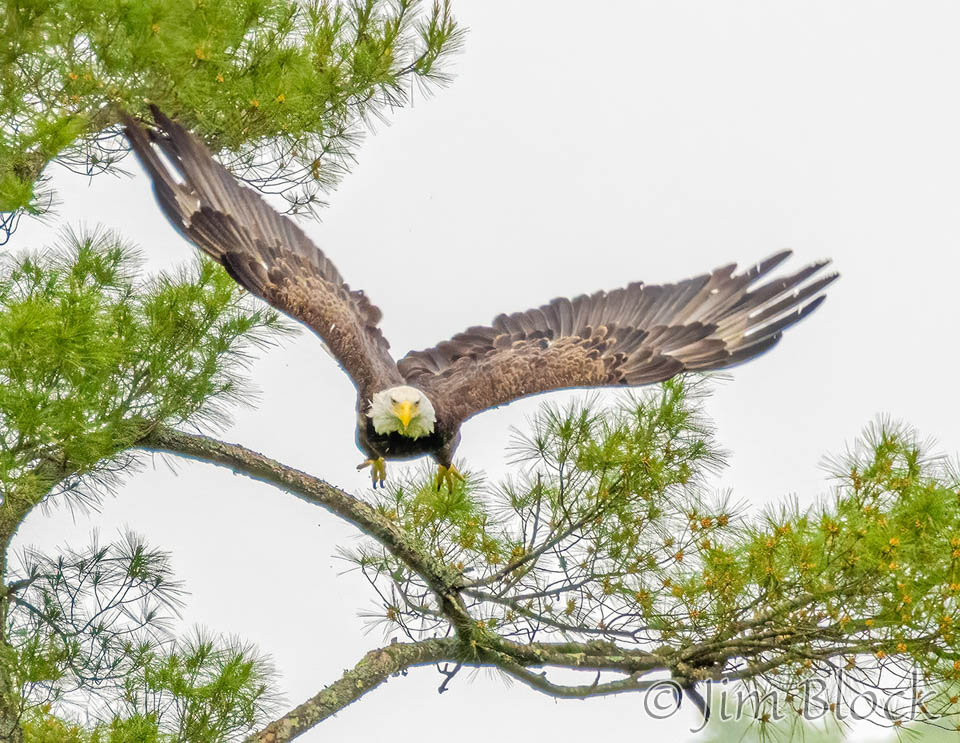
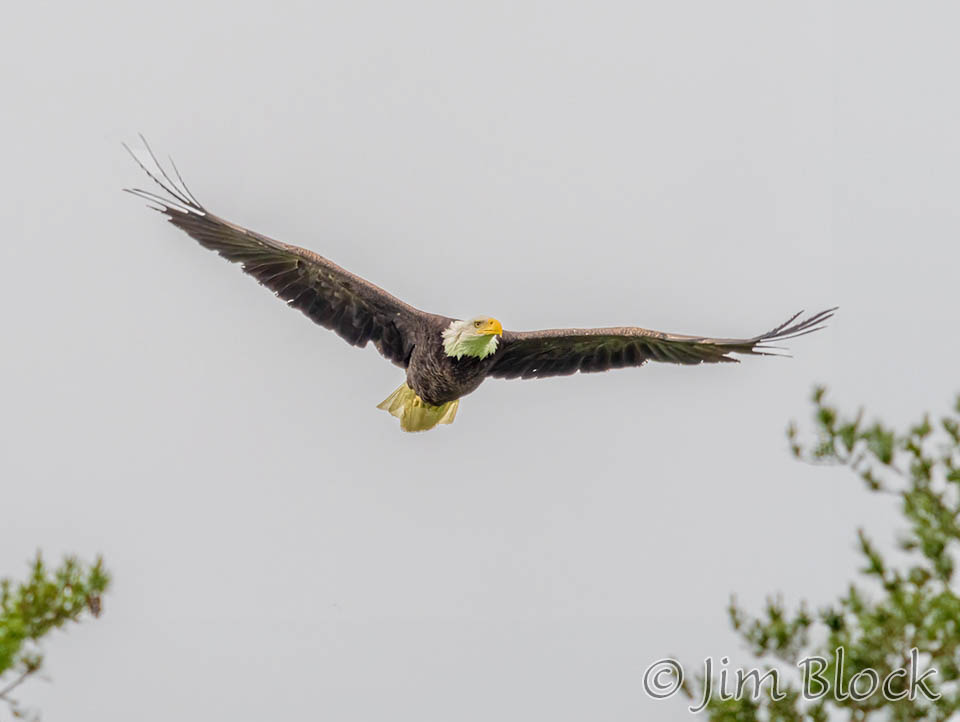
The eagle returned bringing more nest material.
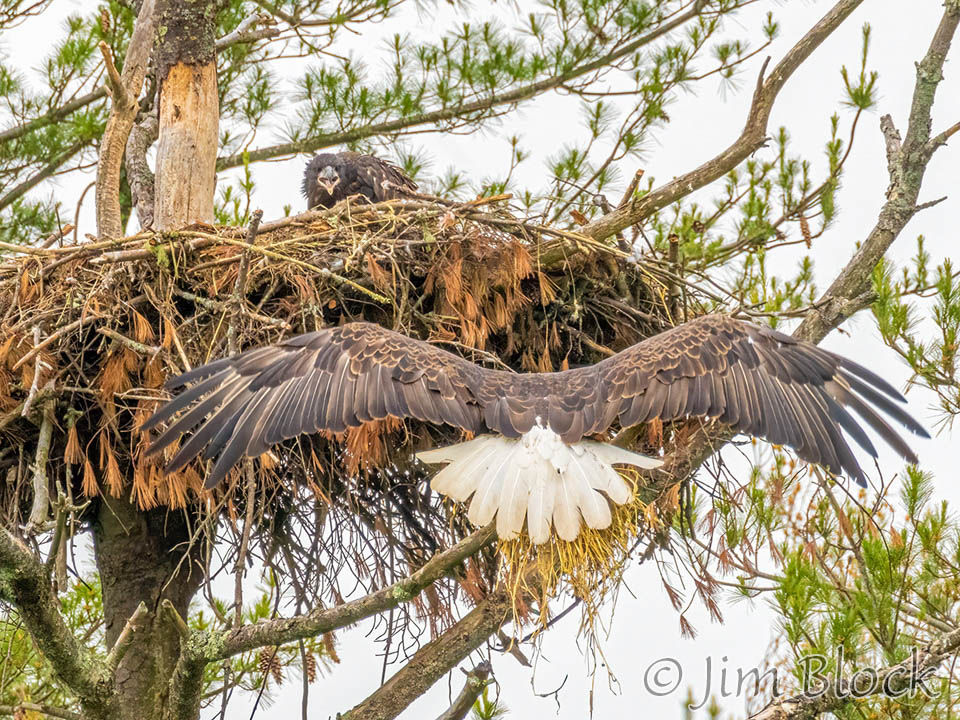
The eagle sat with its chick briefly before flying to a nearby branch.
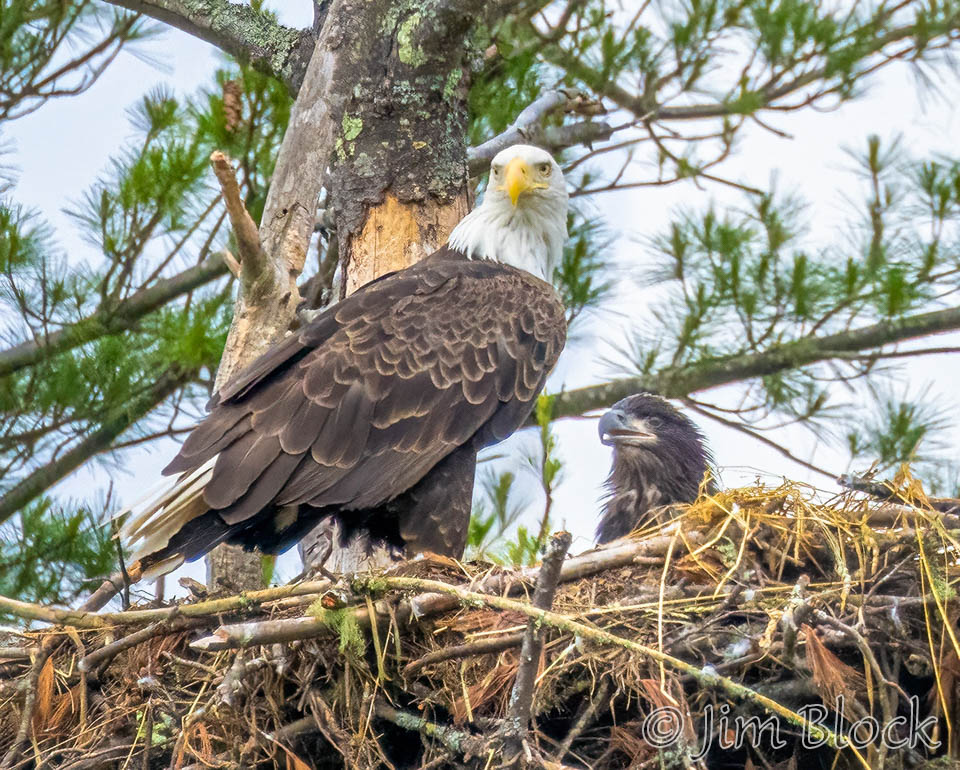
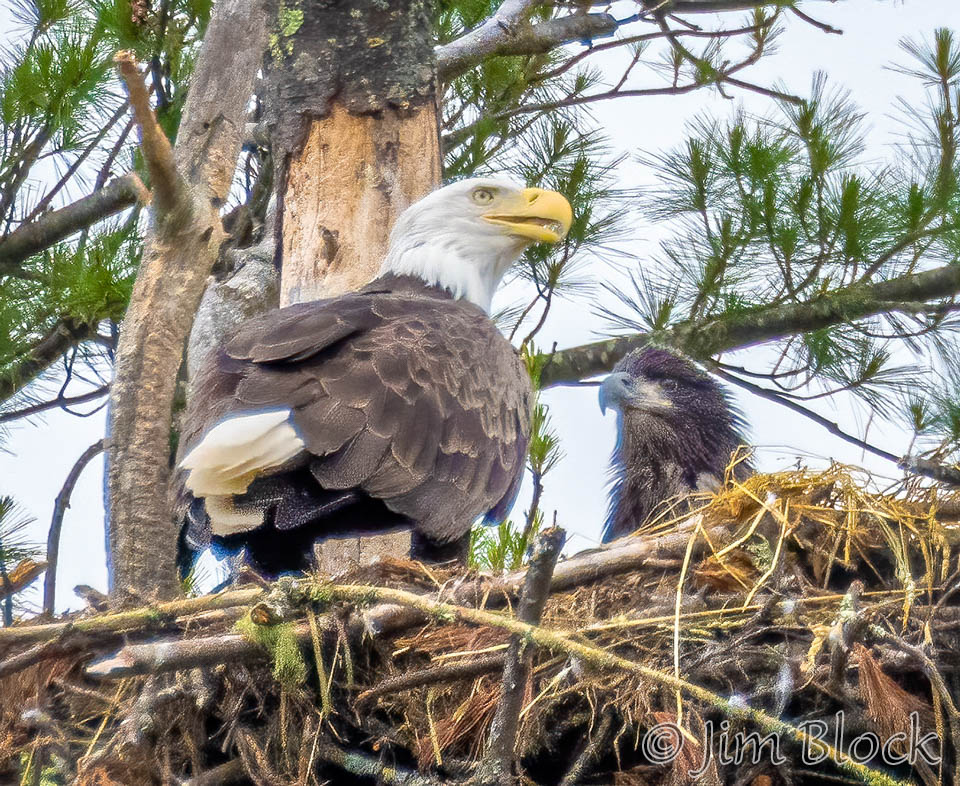
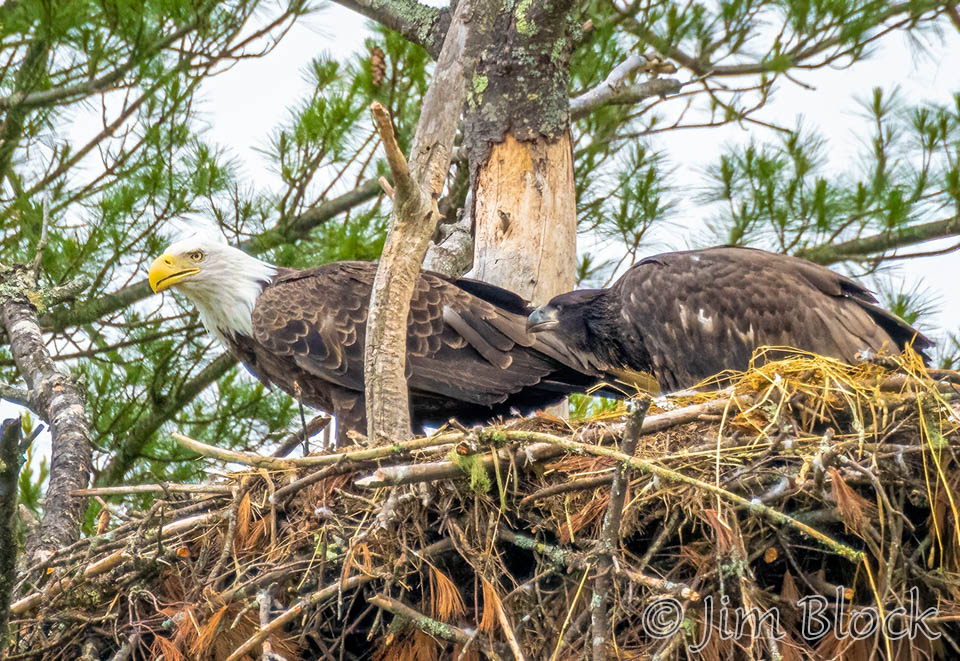
Where it was again pestered by the blue jay.
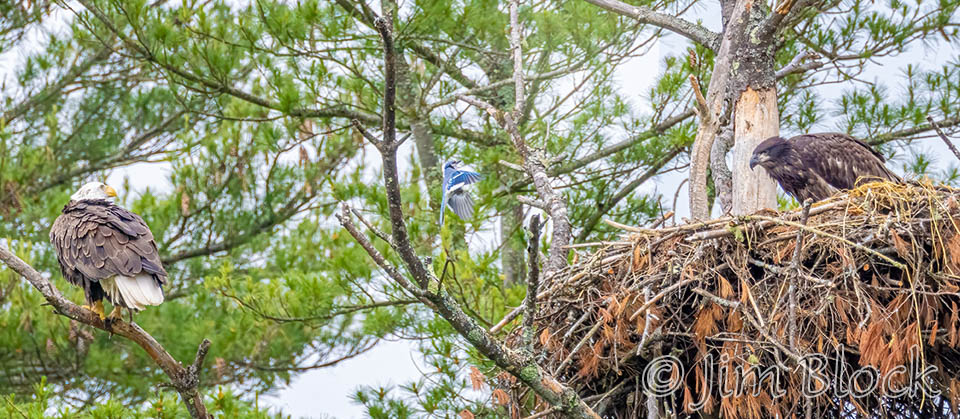
A very brief visit on June 19th caught the eaglet again spreading it wings.
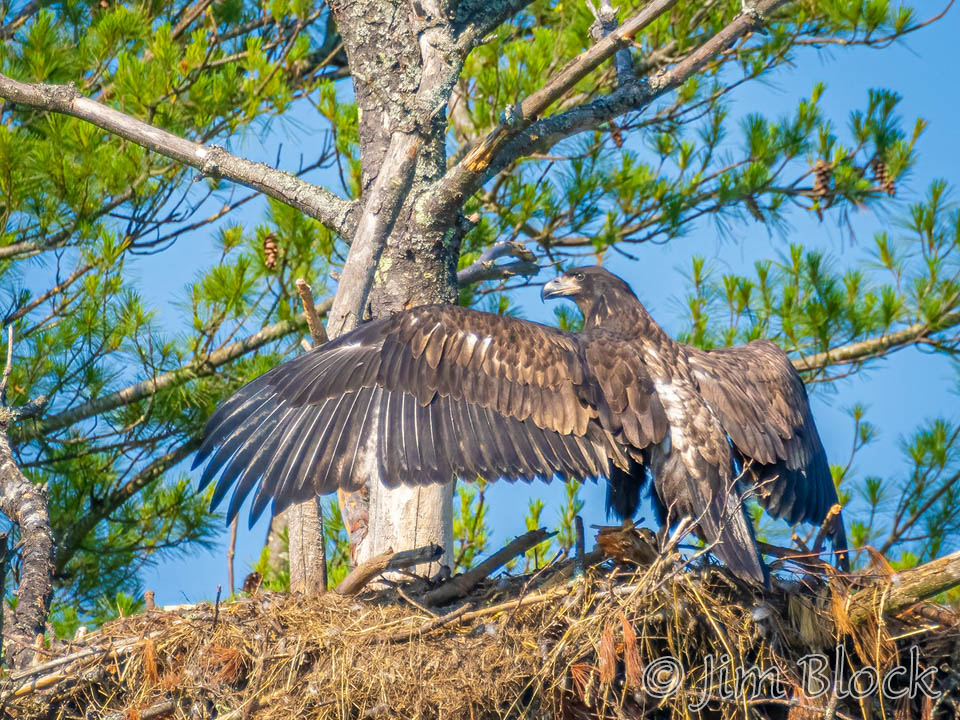
I returned for three hours on June 20. Since I would soon leave for a two-week trip to the Pantanal of Brazil, this would be my last visit for a while.
It was foggy when I arrived before 5:30 a.m. The nest is at the far right at roughly the level where the lens is aiming. Their favorite perching tree is the left-most in that group. Clay Brook is below the path separating me for the nest.
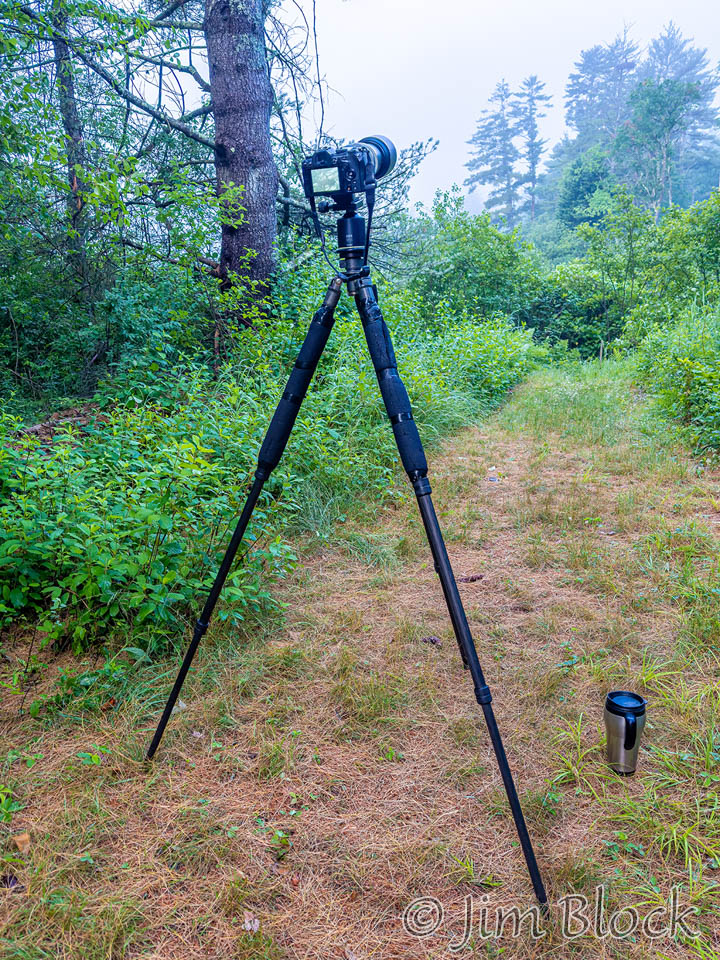
The favorite tree of the eagles can be seen directly above my lens hood in the photo below.

Through the fog I got a photo of the eagle practicing.
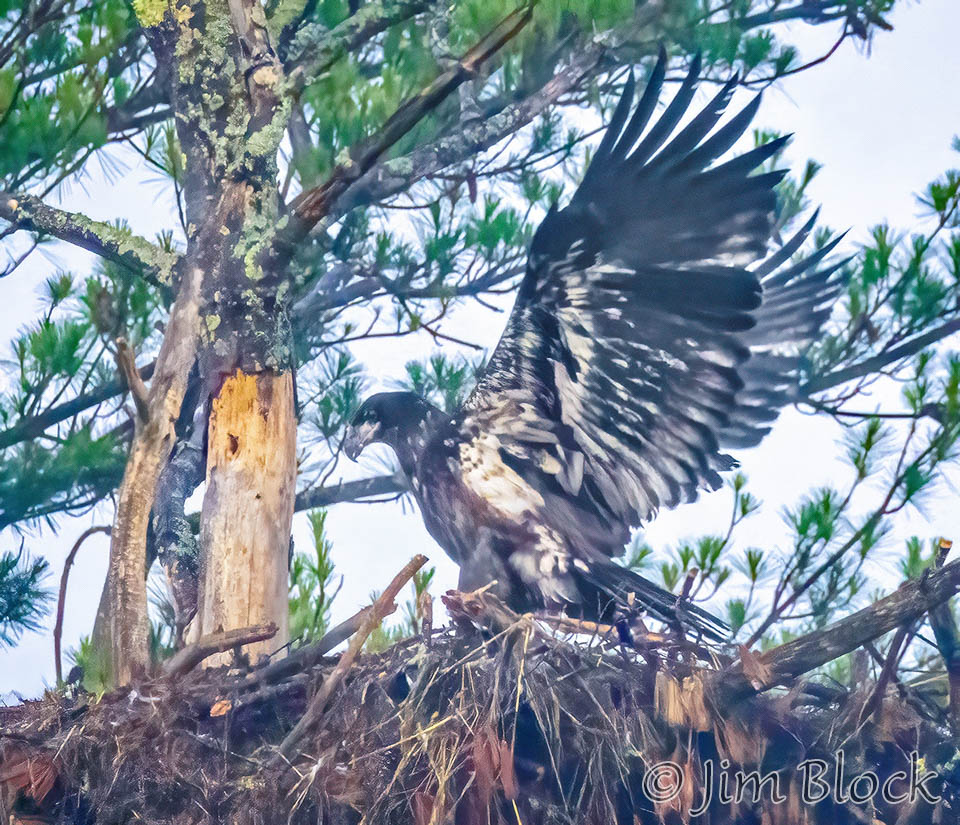
Here it got slightly airborne.
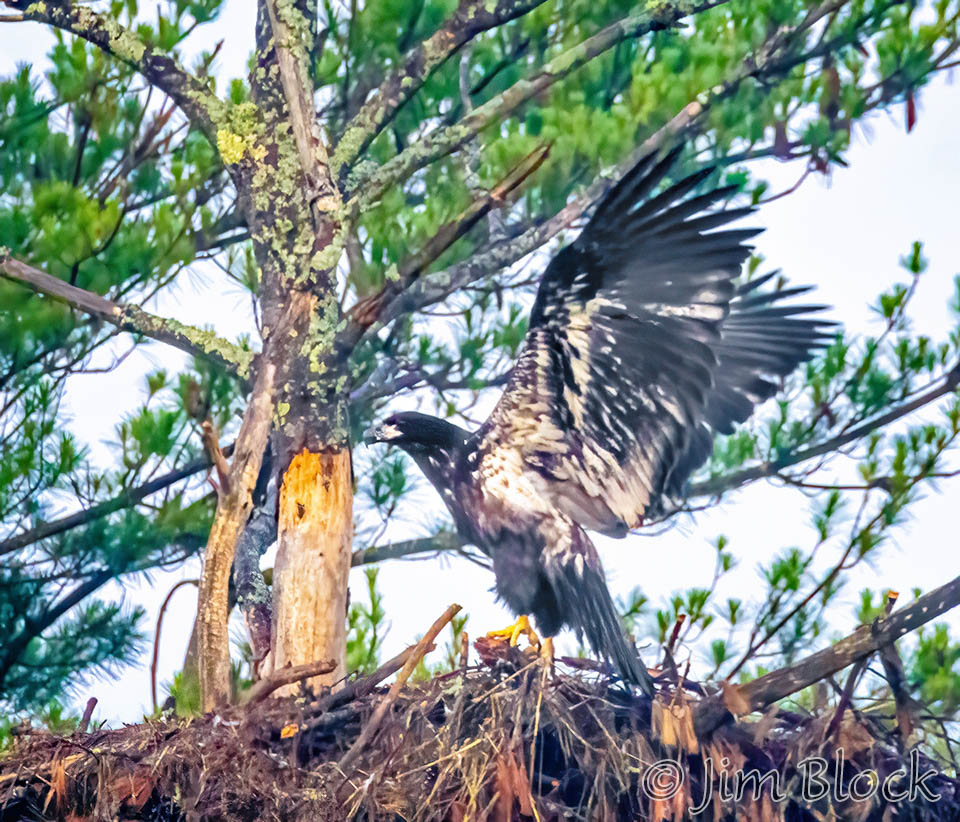
Before 7 a.m. it was reaching new heights.
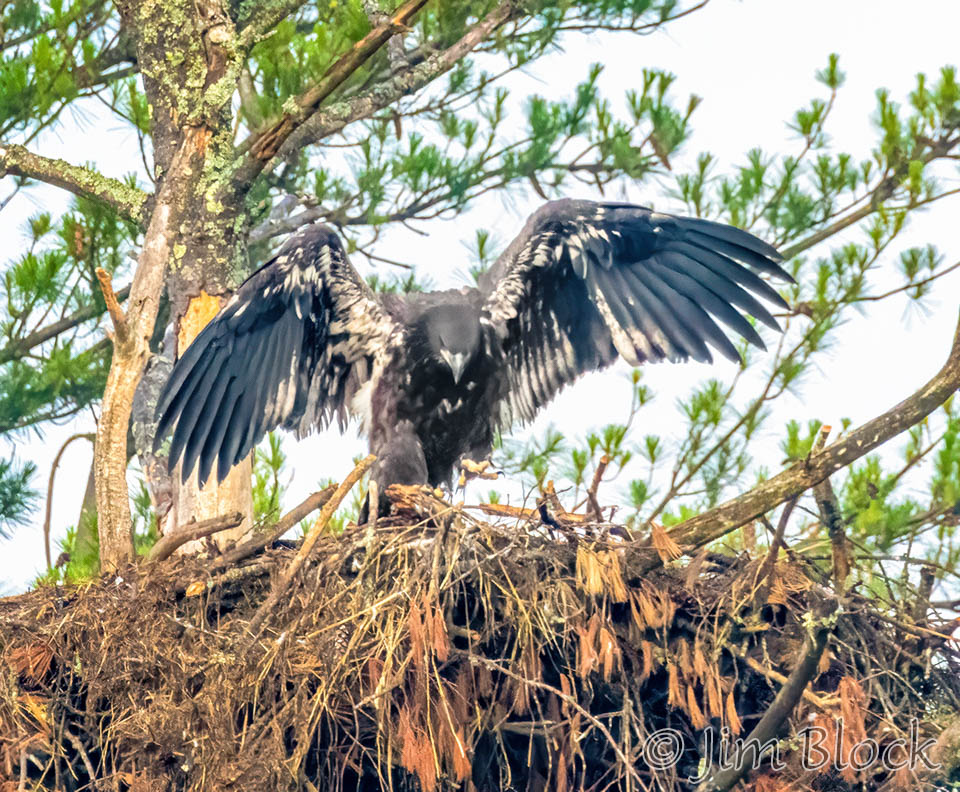
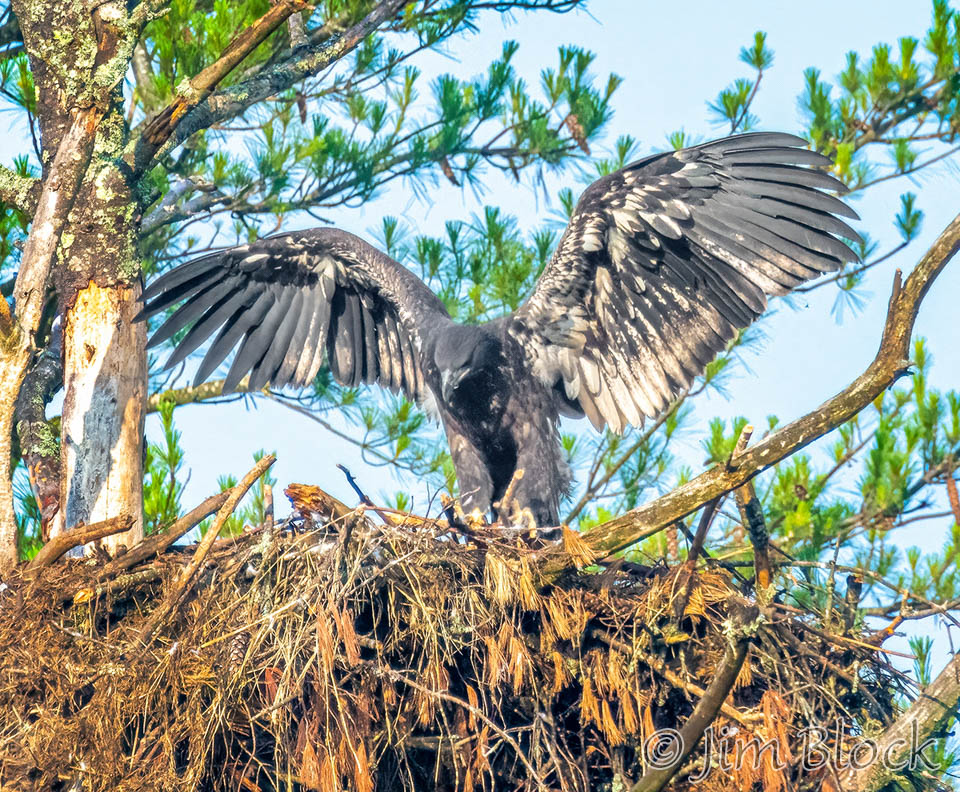
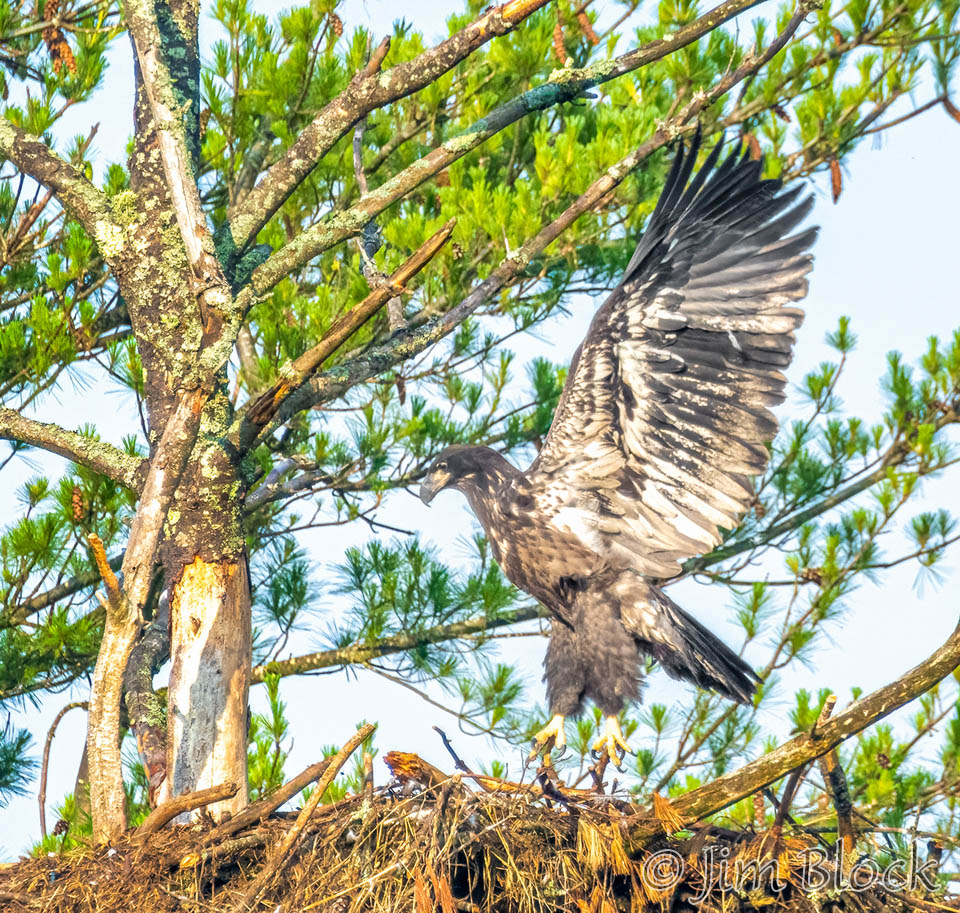
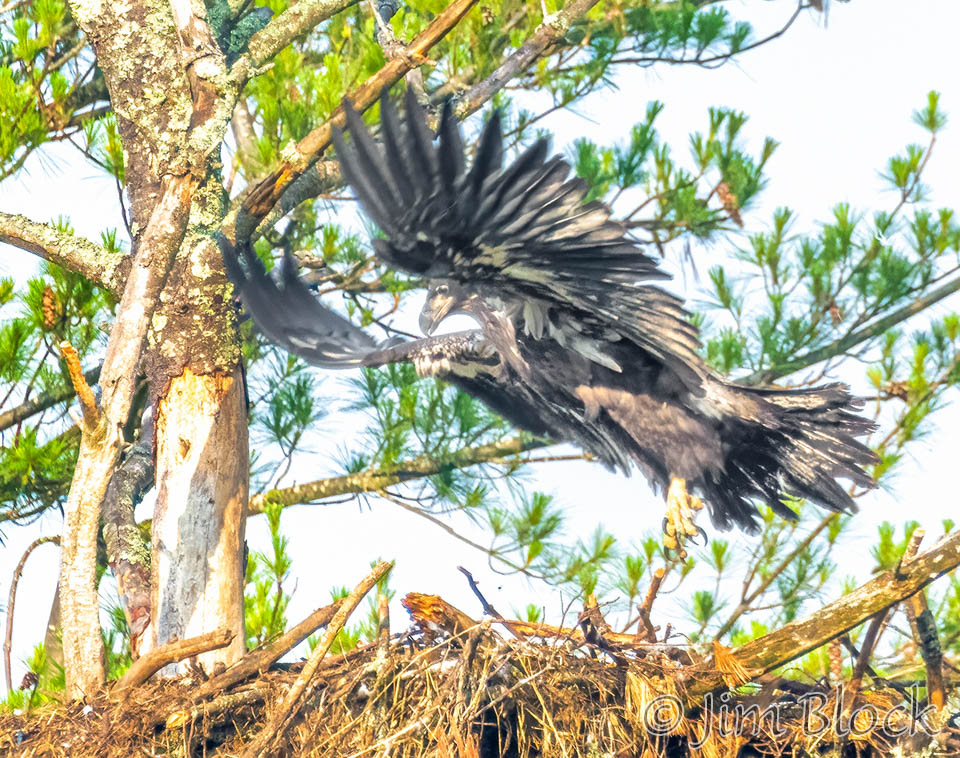
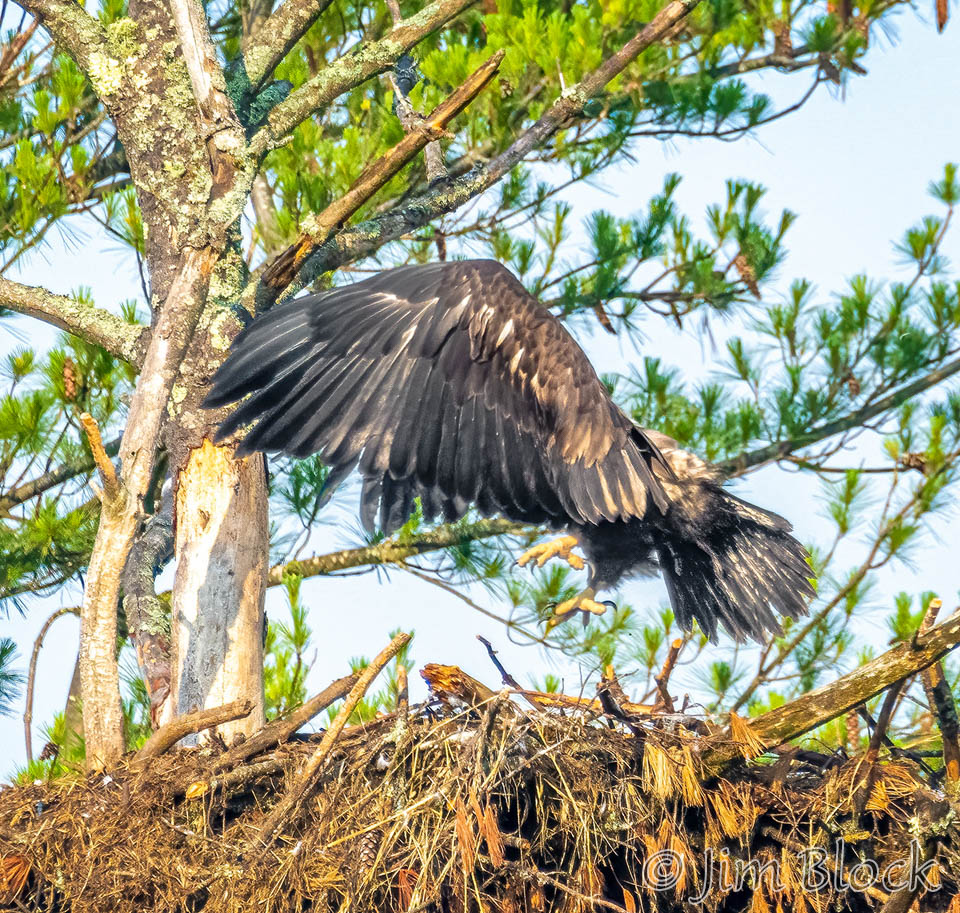
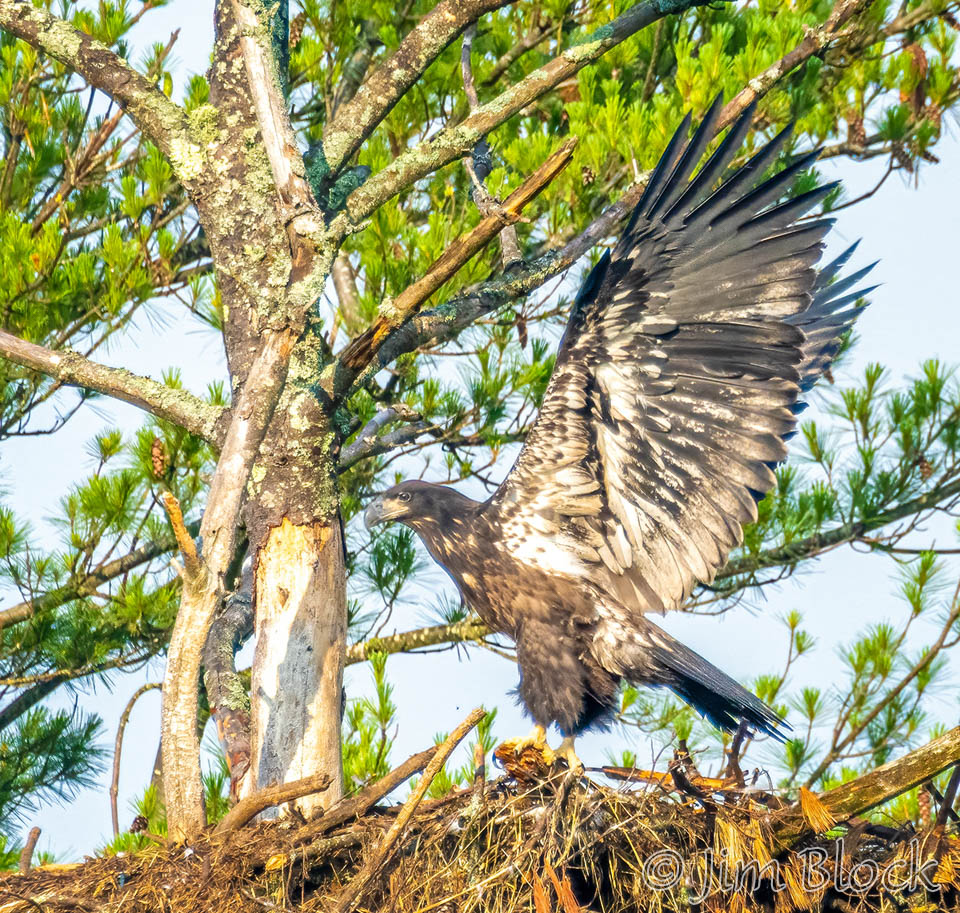
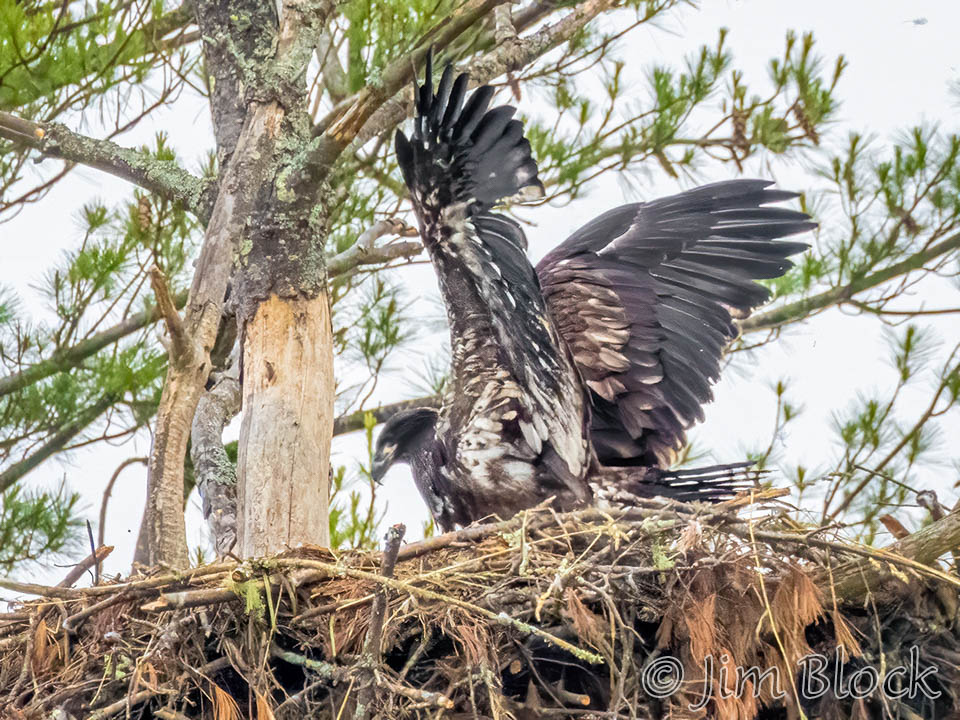
Around 7:45 a.m. it looked like it was about to fledge.
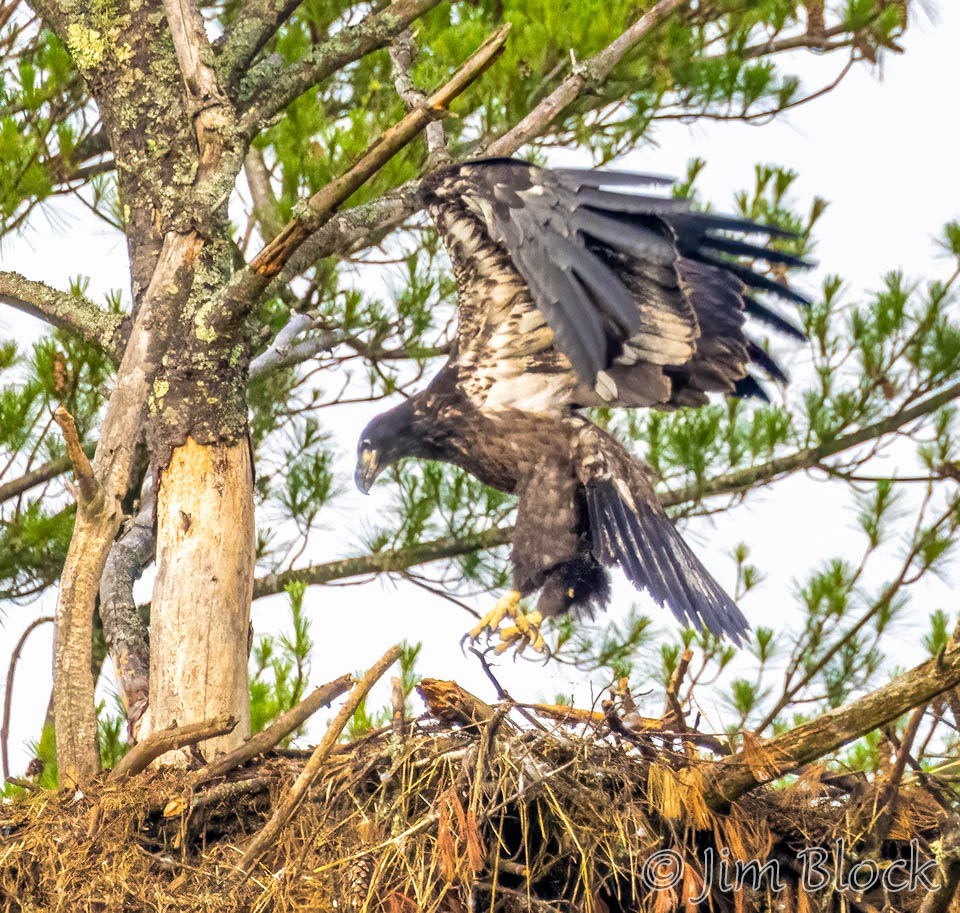
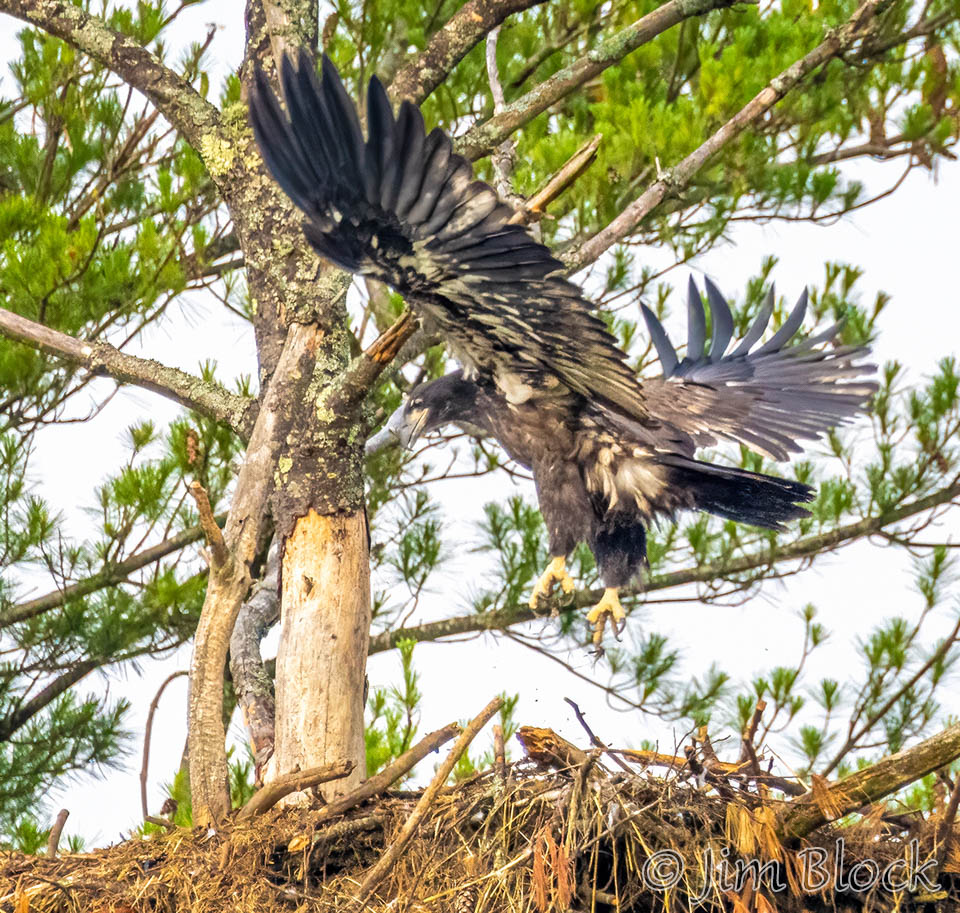
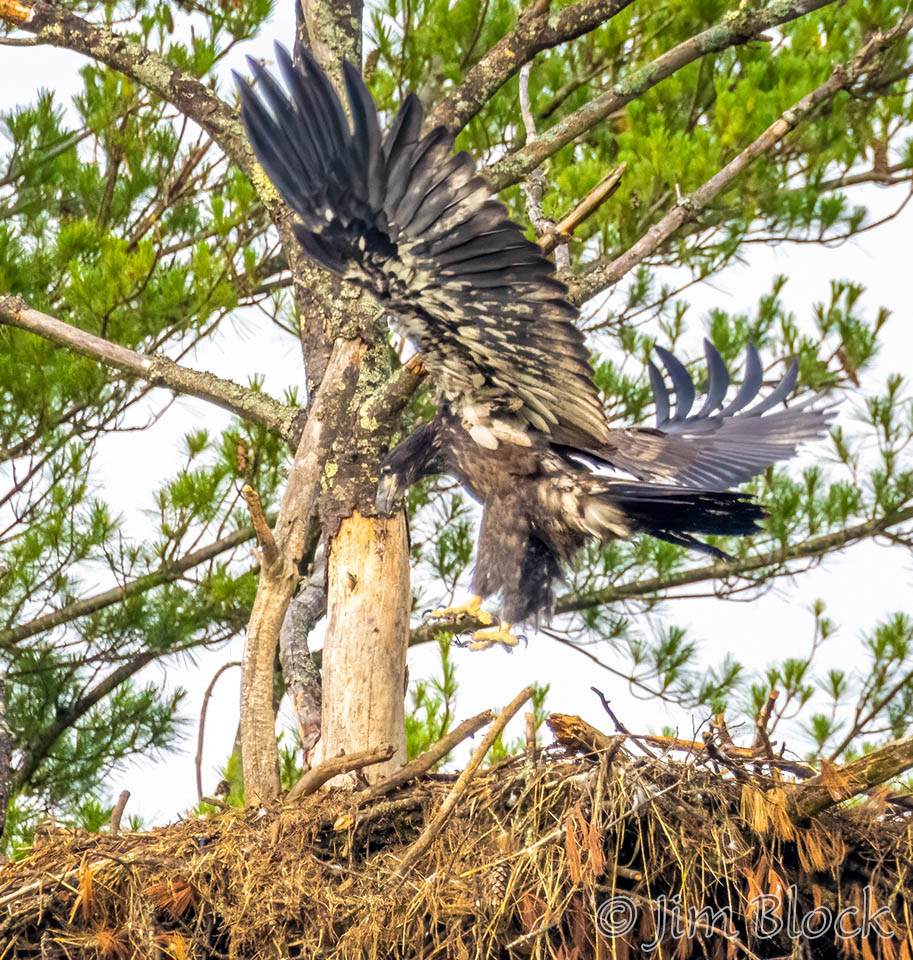
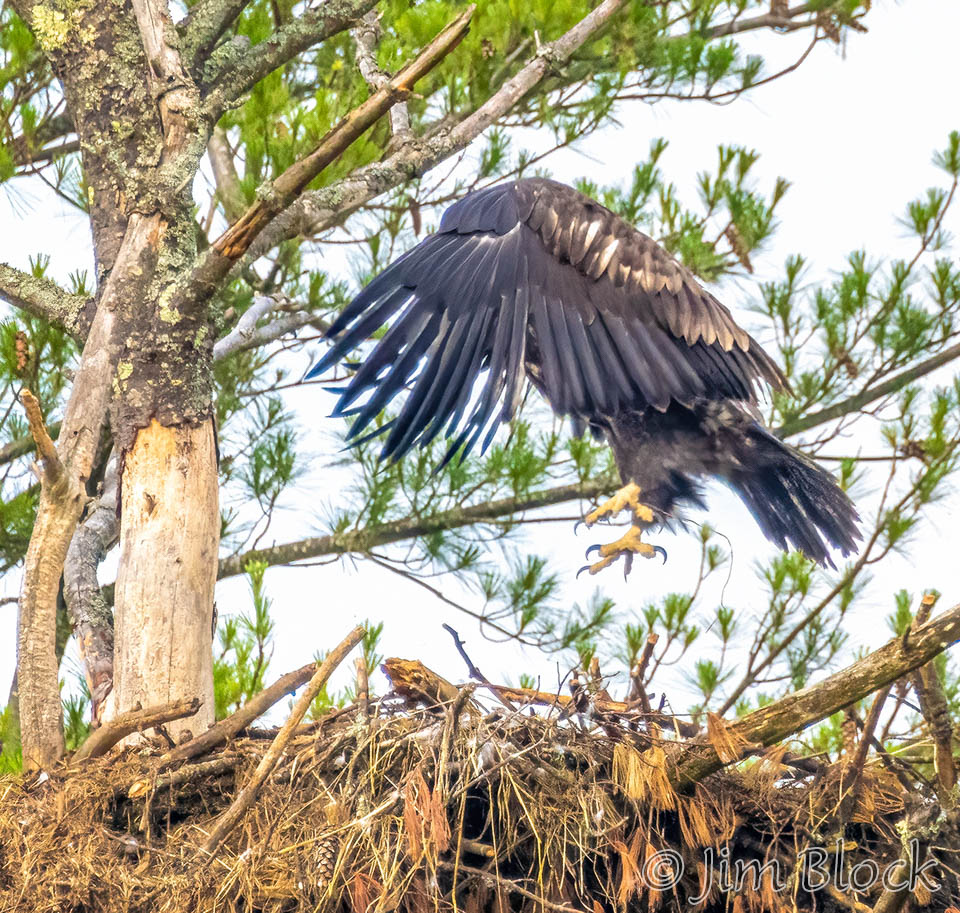
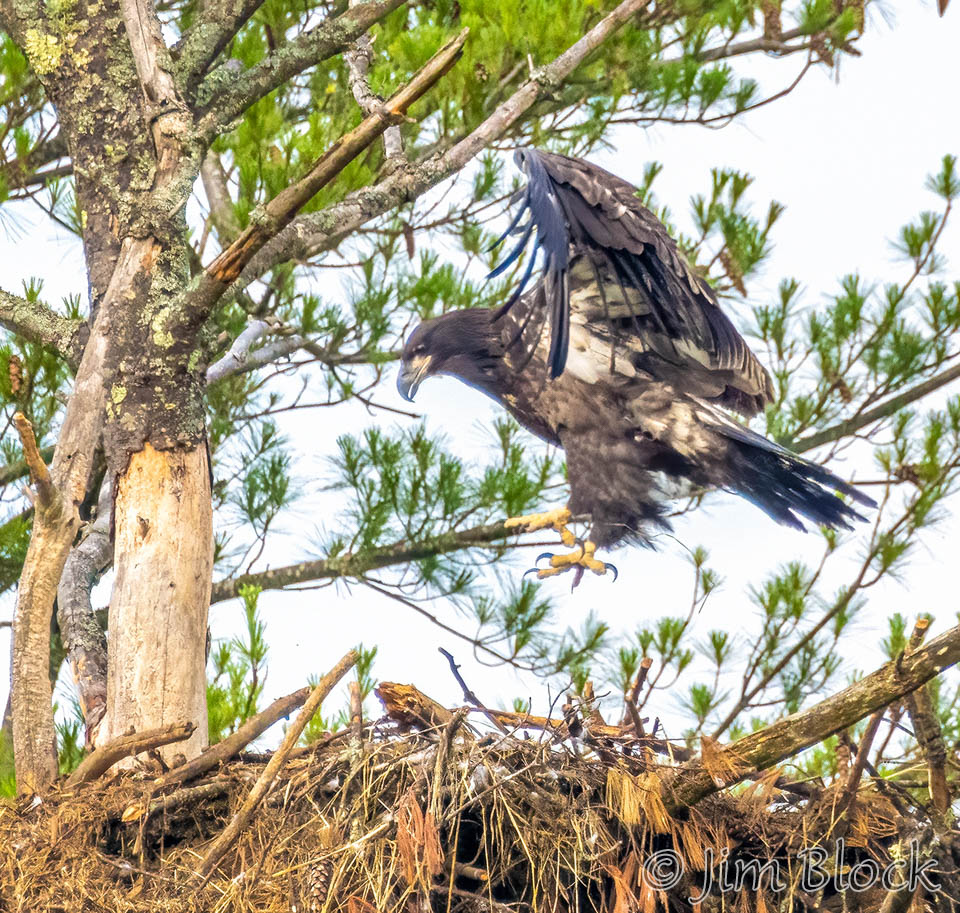
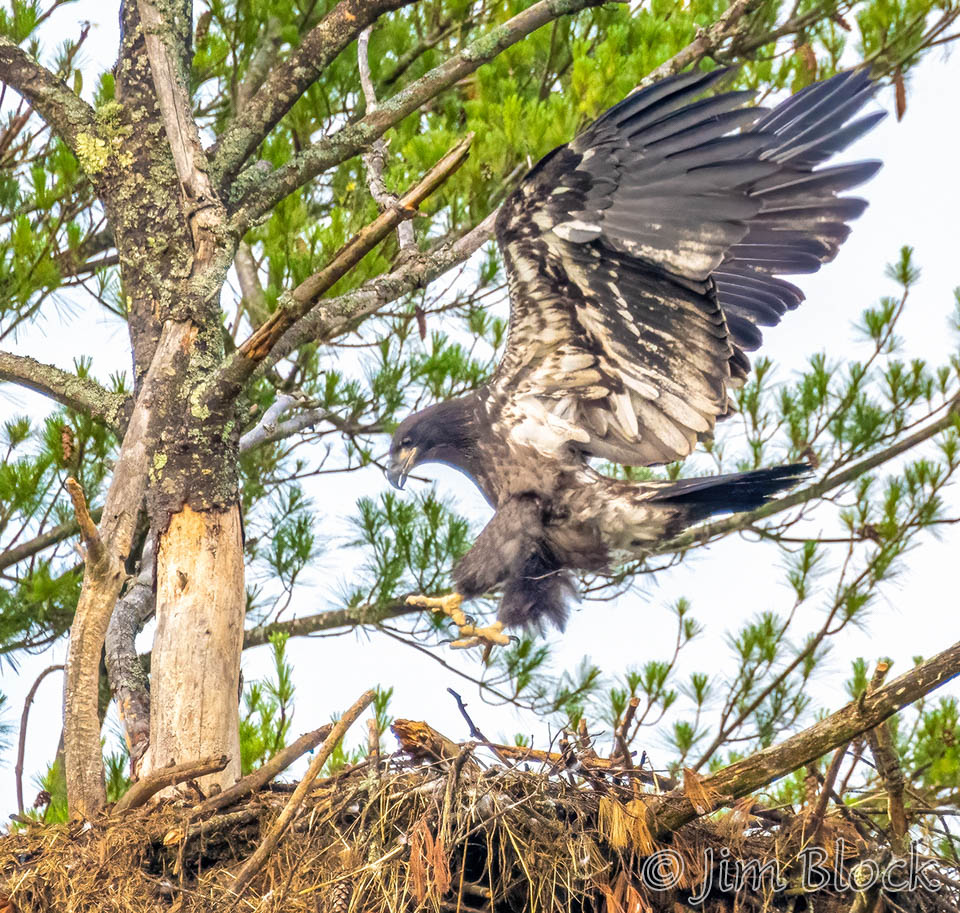
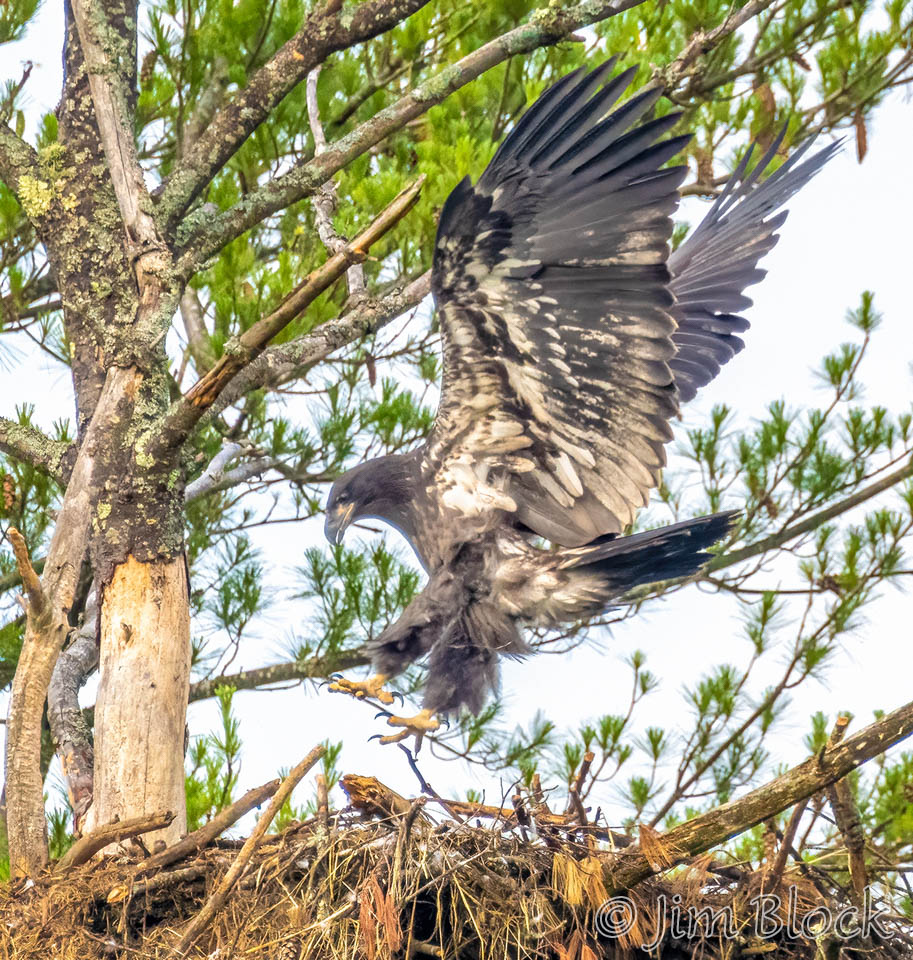
No adult was seen the whole three hours. Perhaps it was time for the eaglet to start thinking about feeding itself.
A month later, back from a fantastic trip to Brazil, I visited the nest briefly on July 19. Again no adult was seen. The quite large chick was standing on the edge of the nest when I arrived.
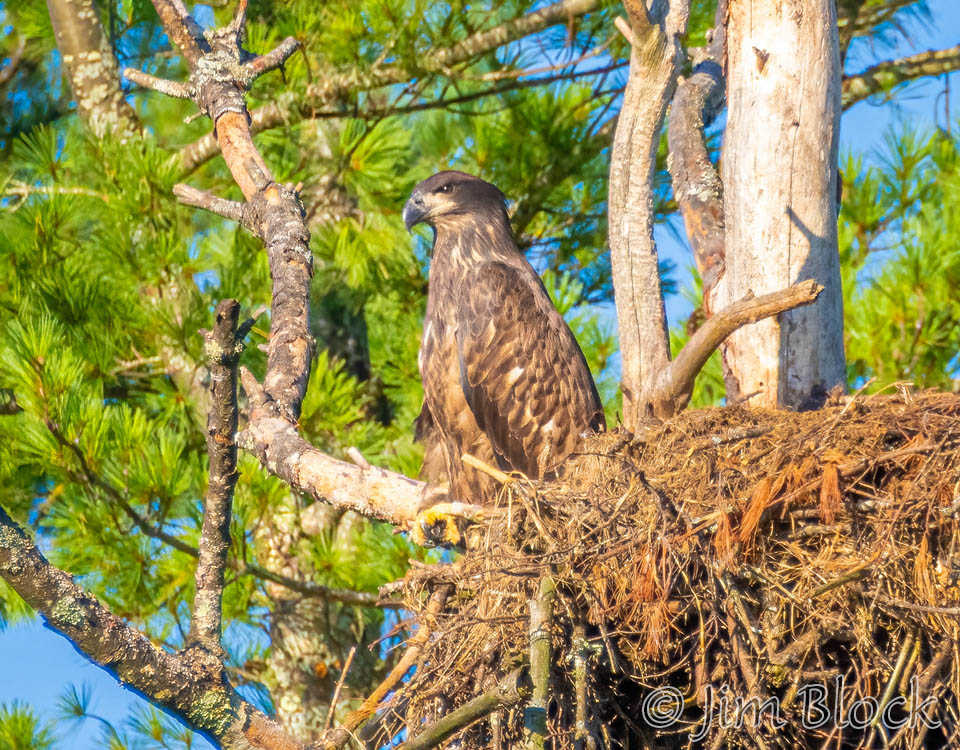
I blinked and it was in a tree nearby. It is possible it had fledged days earlier and just returned to the nest hoping to get fed.
One chick might have survived last year. But this one is clearly the first confirmed success for this young eagle pair.
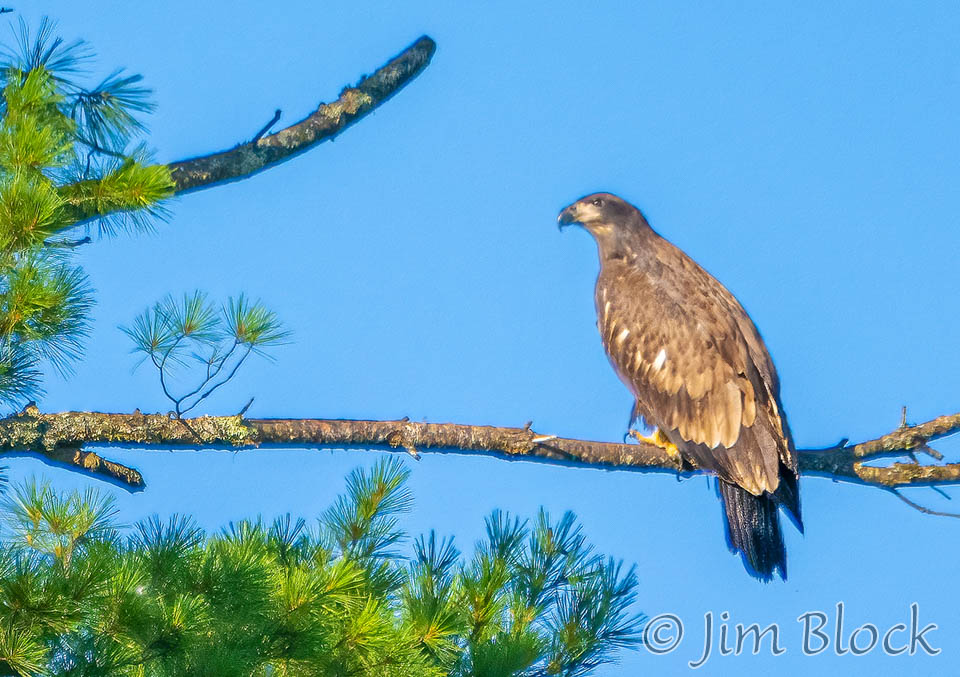
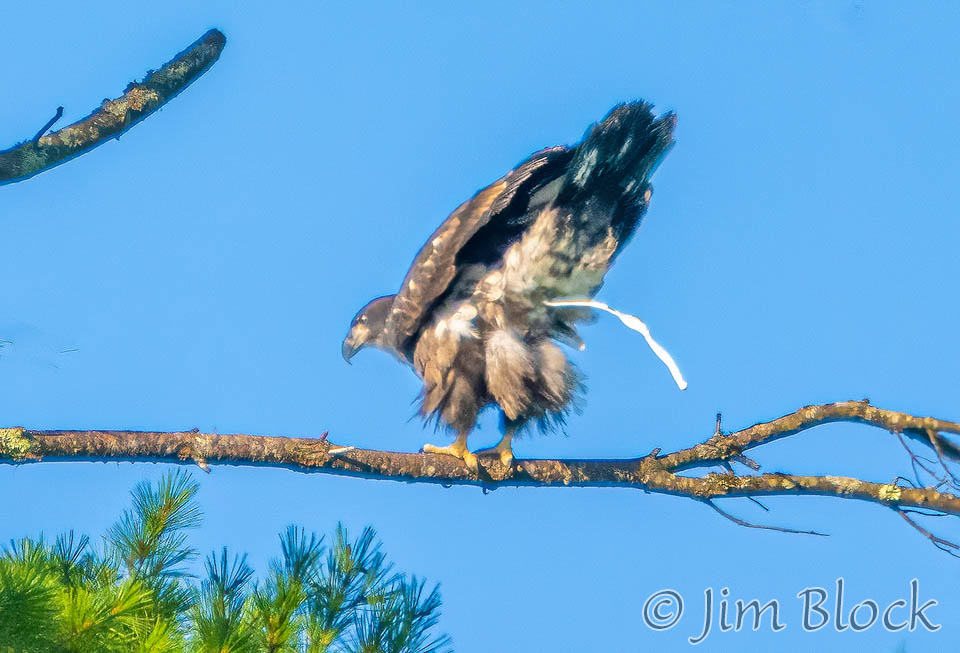
It pooped…
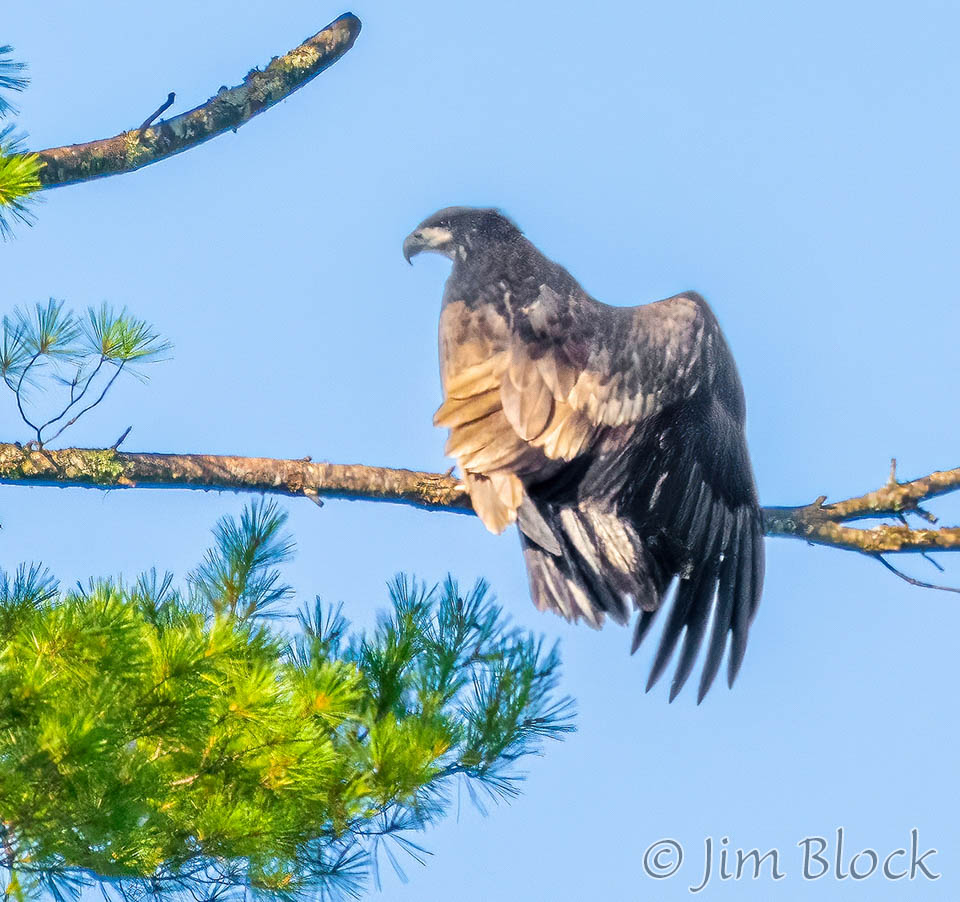
… and stretched …
… and I departed for the summer.