Bald Eagles in Lyme — Year Four
Year Four starts, surprisingly in November of Year Three. Who would have guessed some of the best action photos of the eagles were taken in the cold, drab month of November.
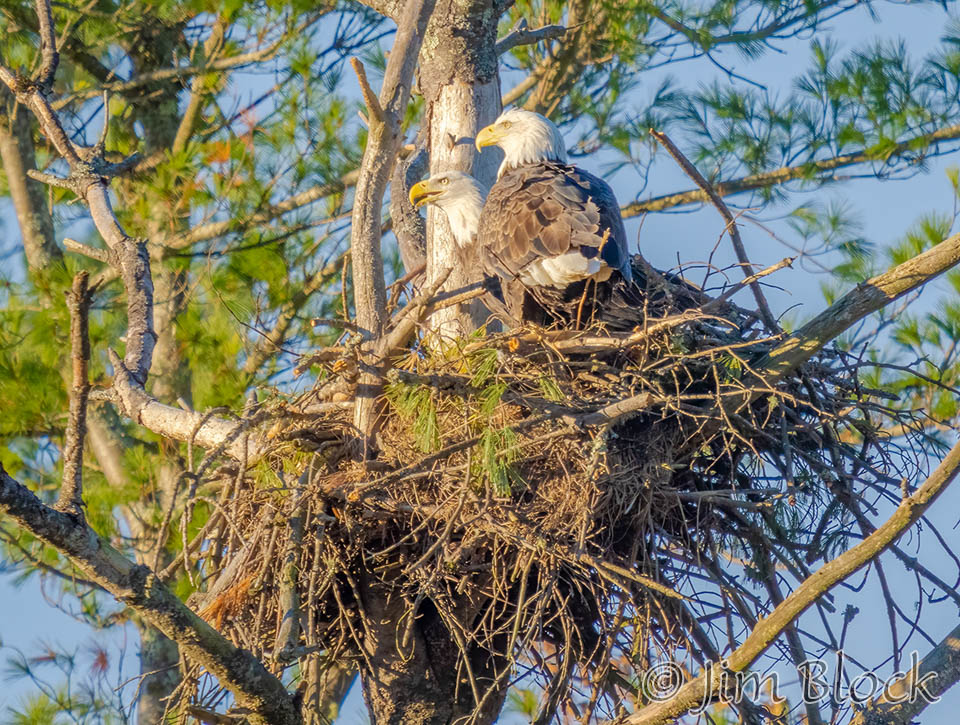
During a very short visit on November 15, I found both eagles in the nest. I was surprised. What were they doing there in November? I had not planned to visit the nest but I was in the area so I did.
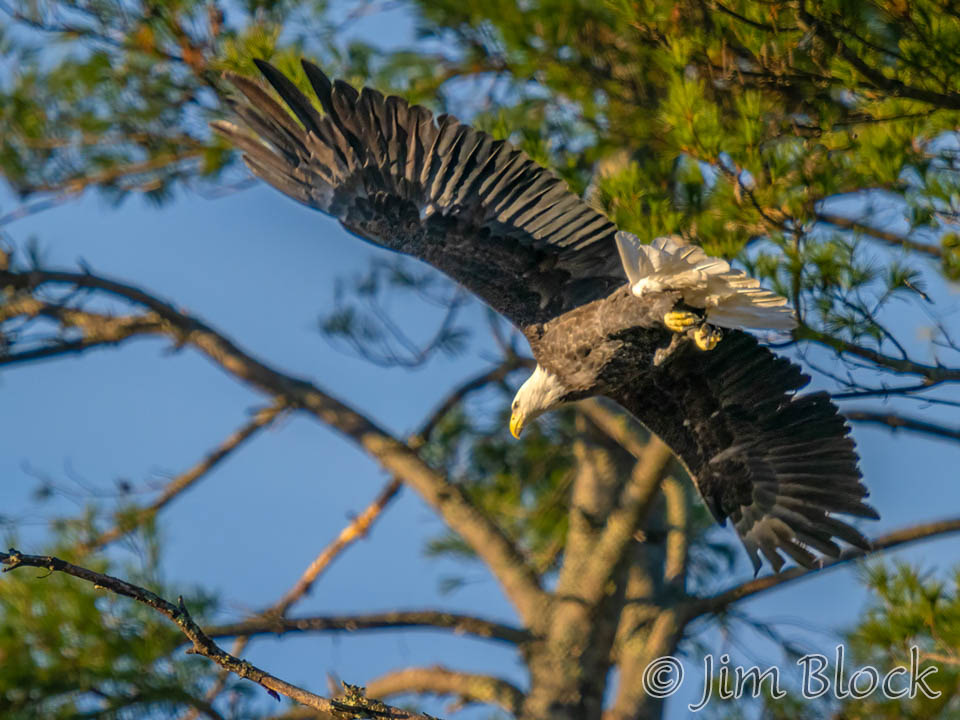
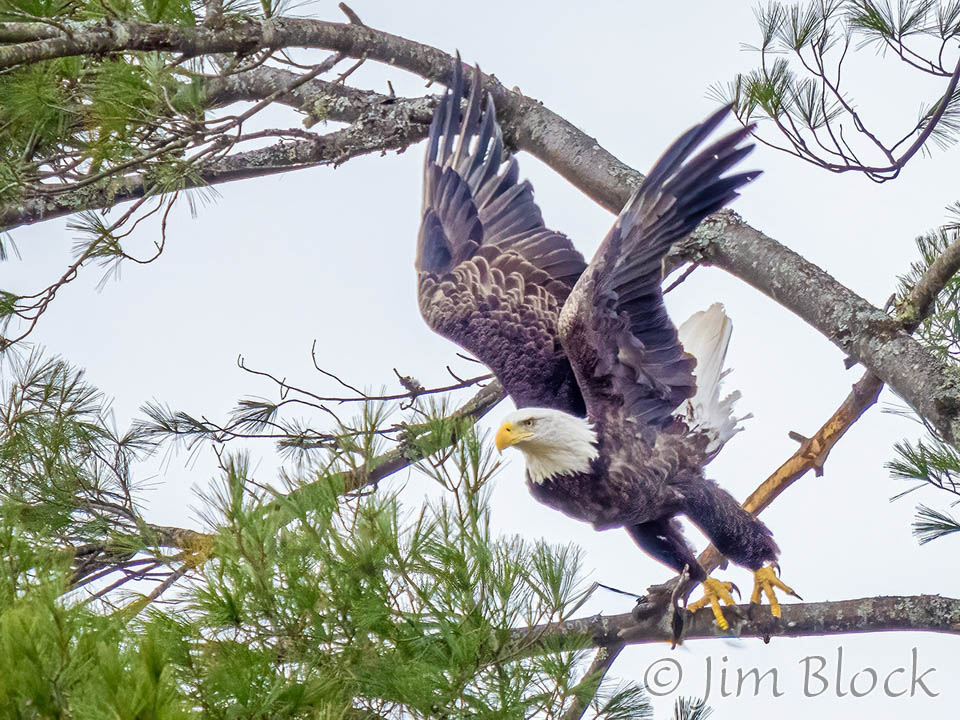
Before I left for where I planned to go, I got a photo of an eagle flying.
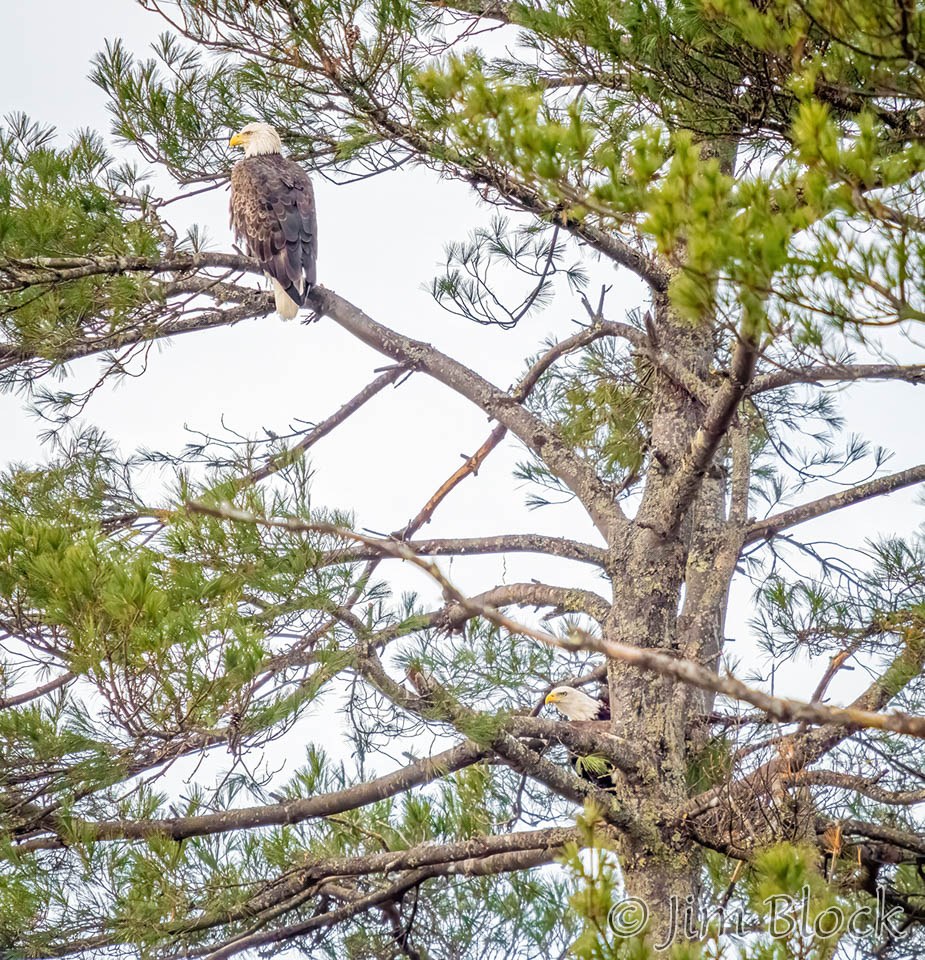
Intrigued by what I saw the previous day, I returned to the nest on November 16 and stayed for over two hours. The eagles spent a lot of time in a tree that neighbored the nest tree, and I thought they might be building a second nest. But they were also doing some housekeeping on the nest they had built and used the past three years.
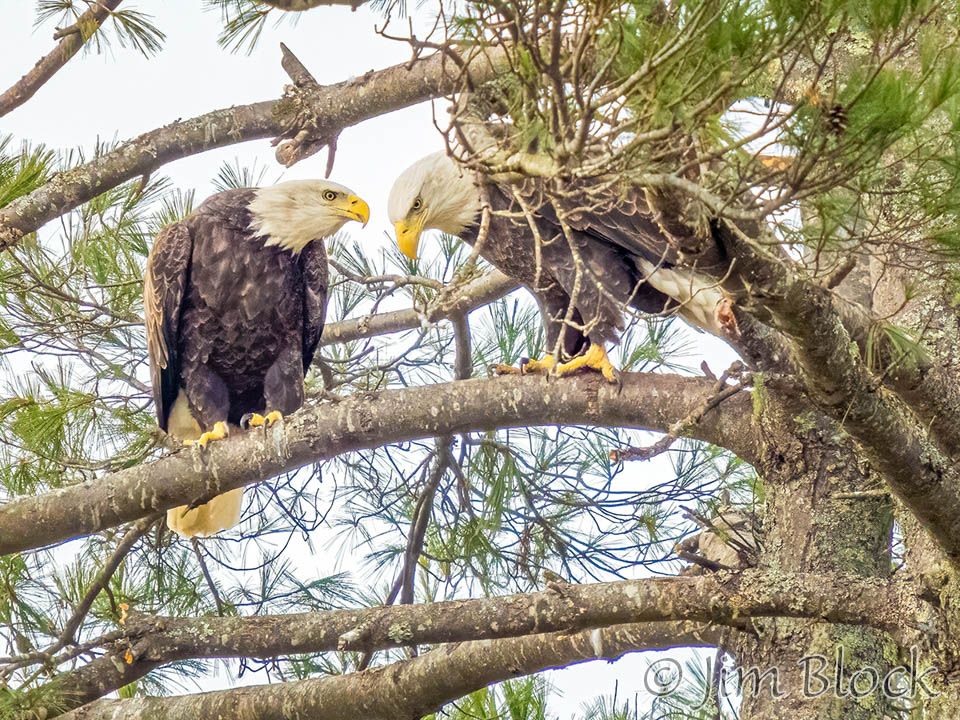
Here they are in the neighboring tree.
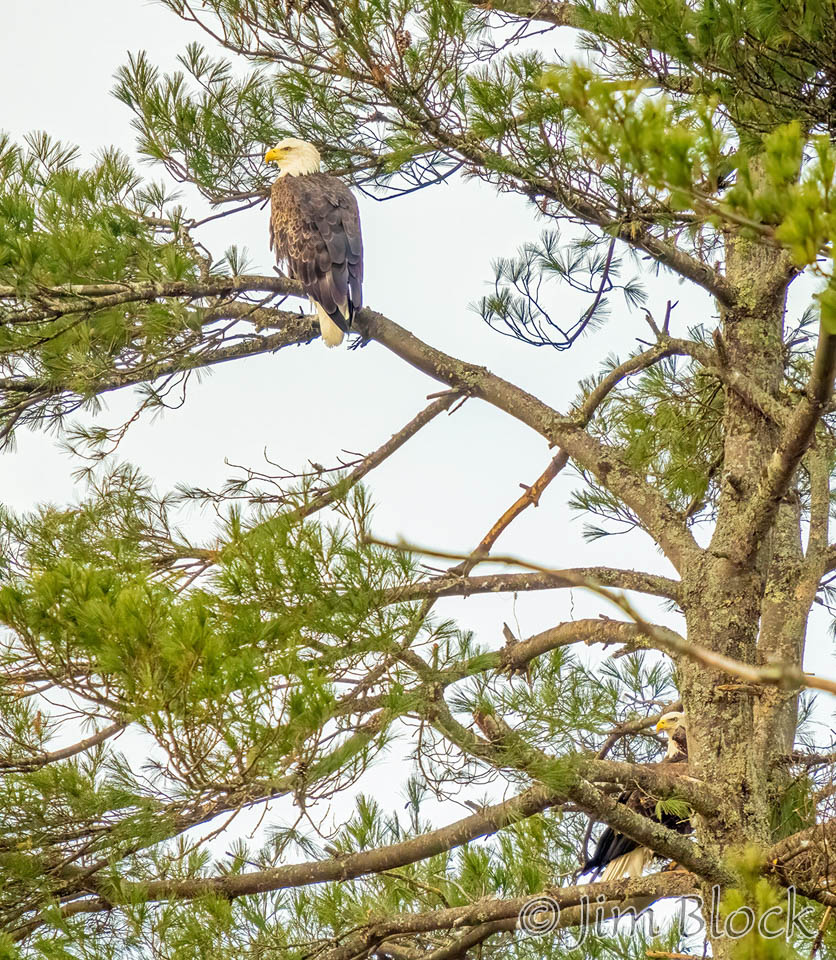
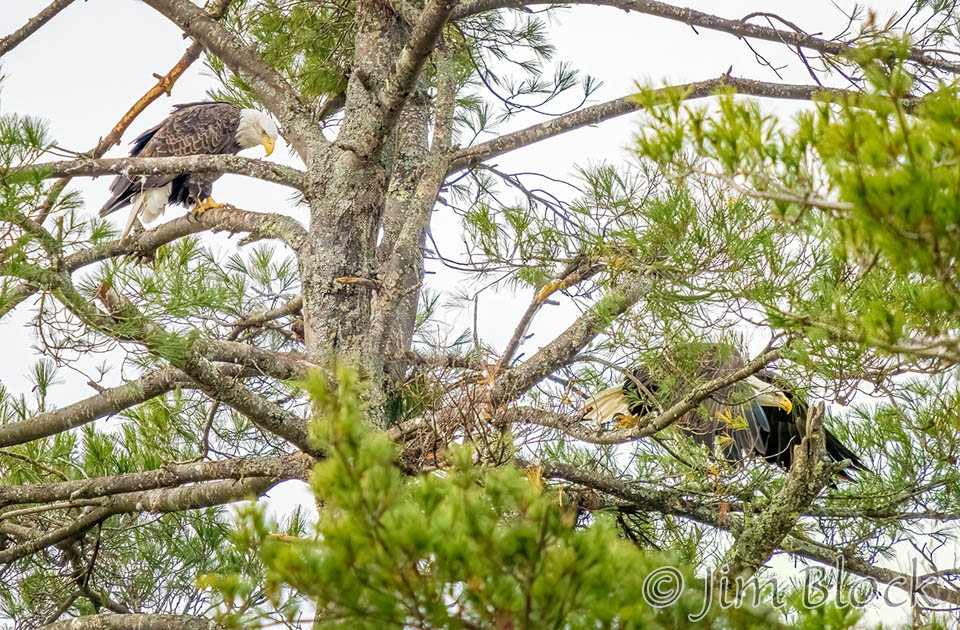
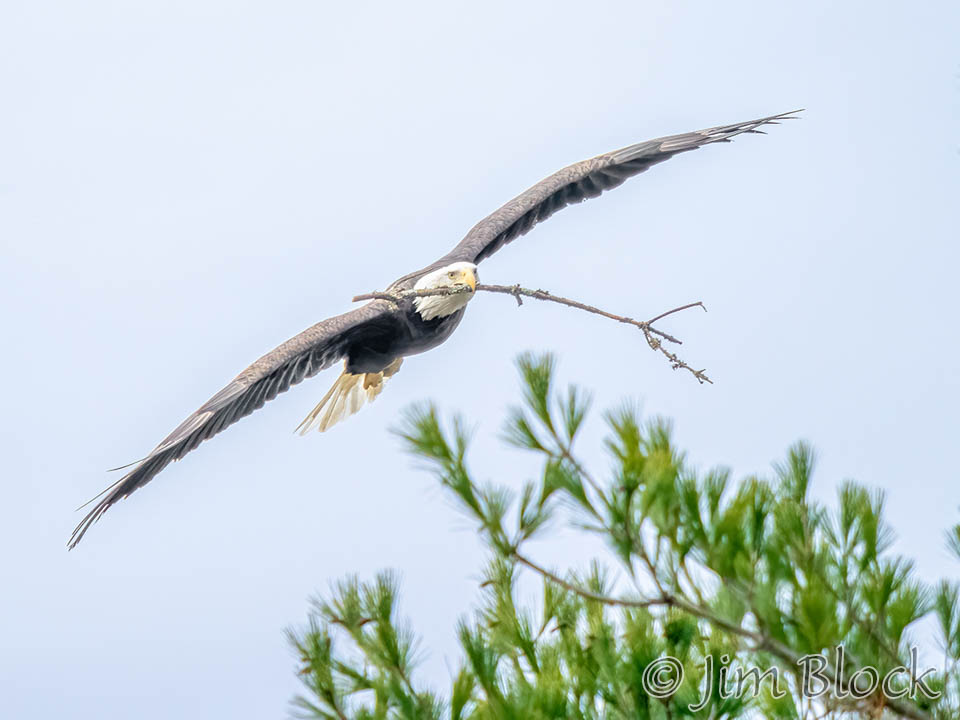
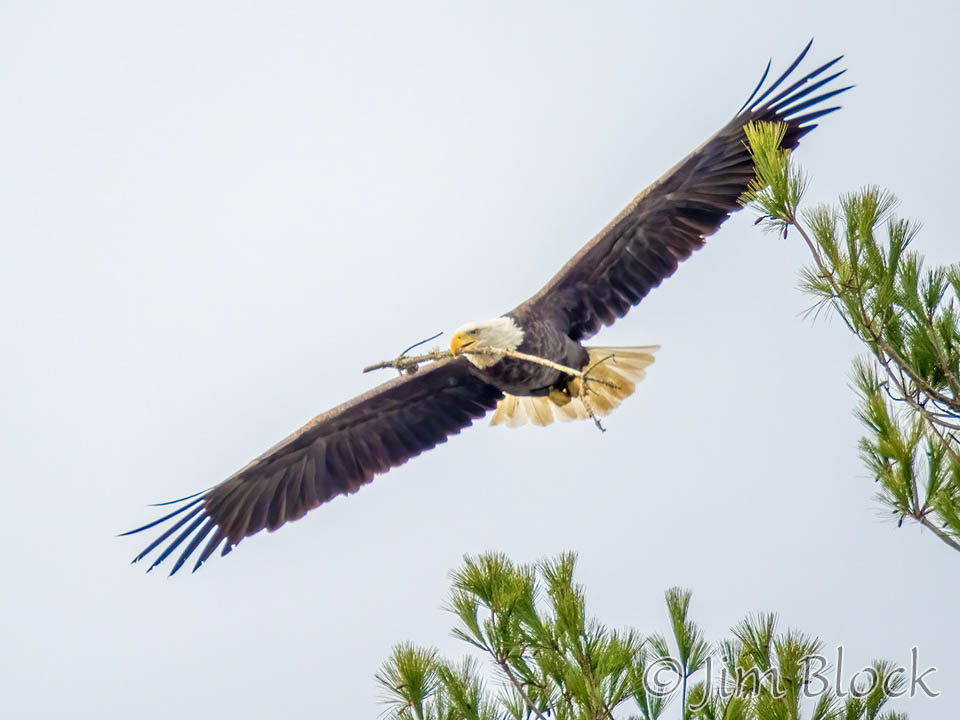
But they were clearly carrying nest material to their established nest.
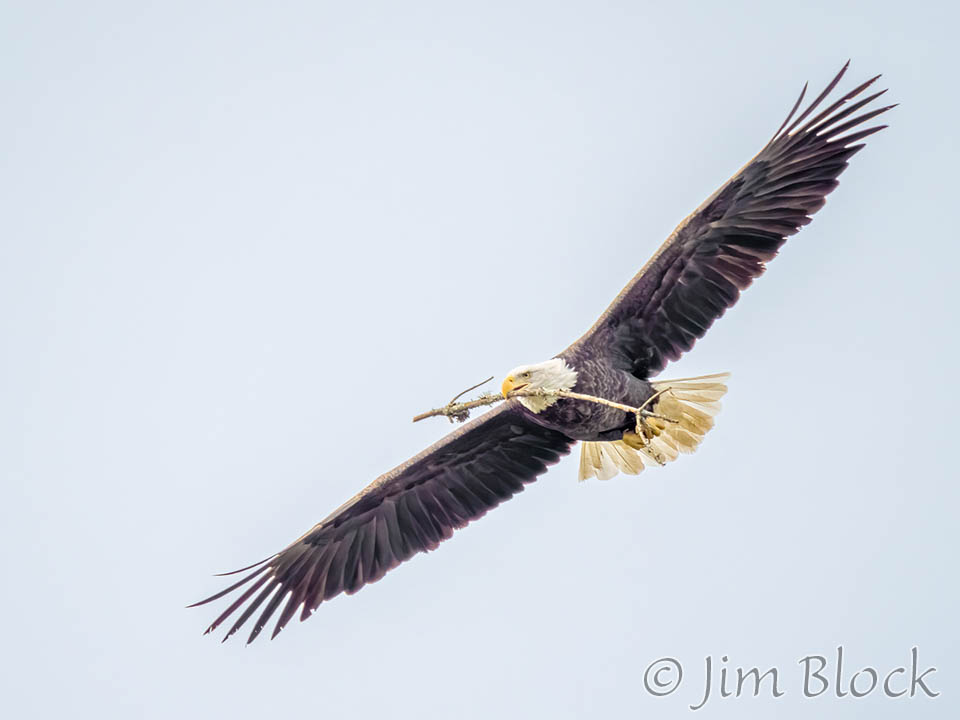
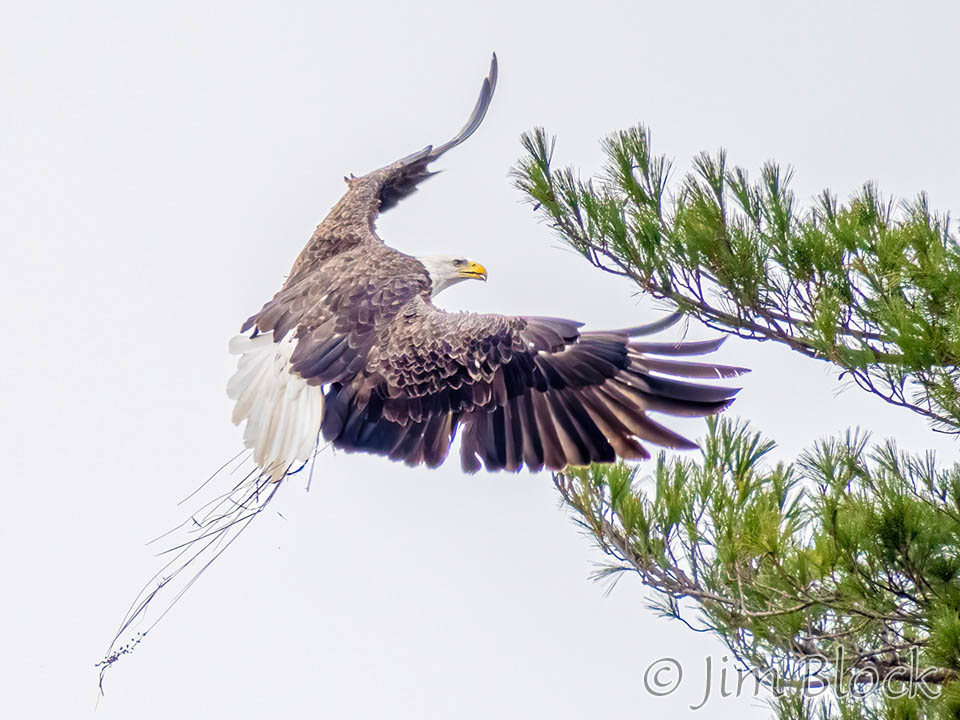
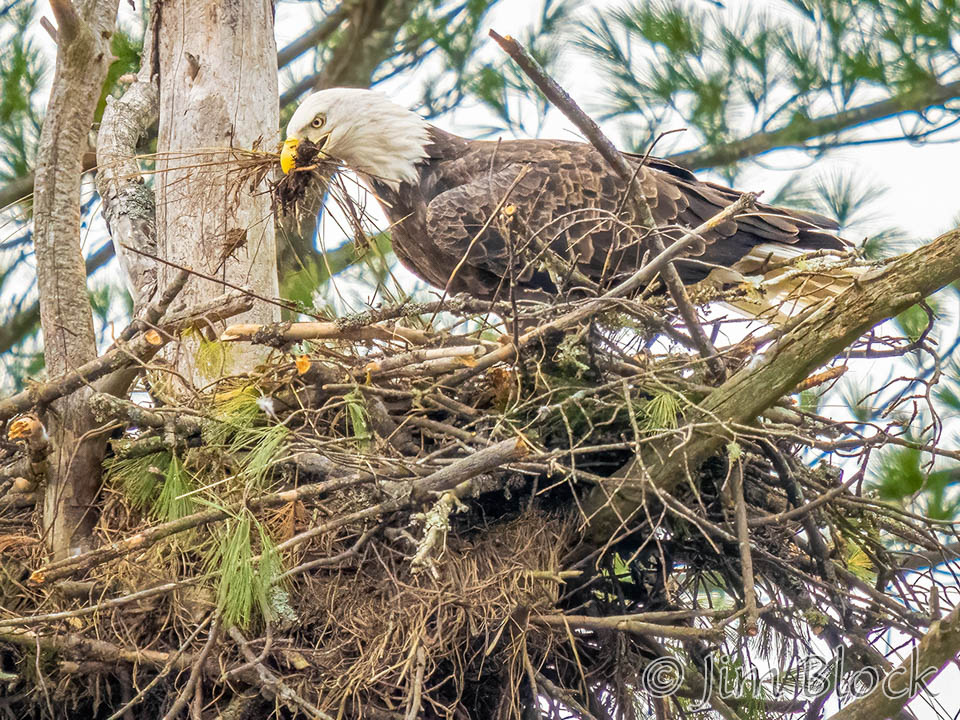
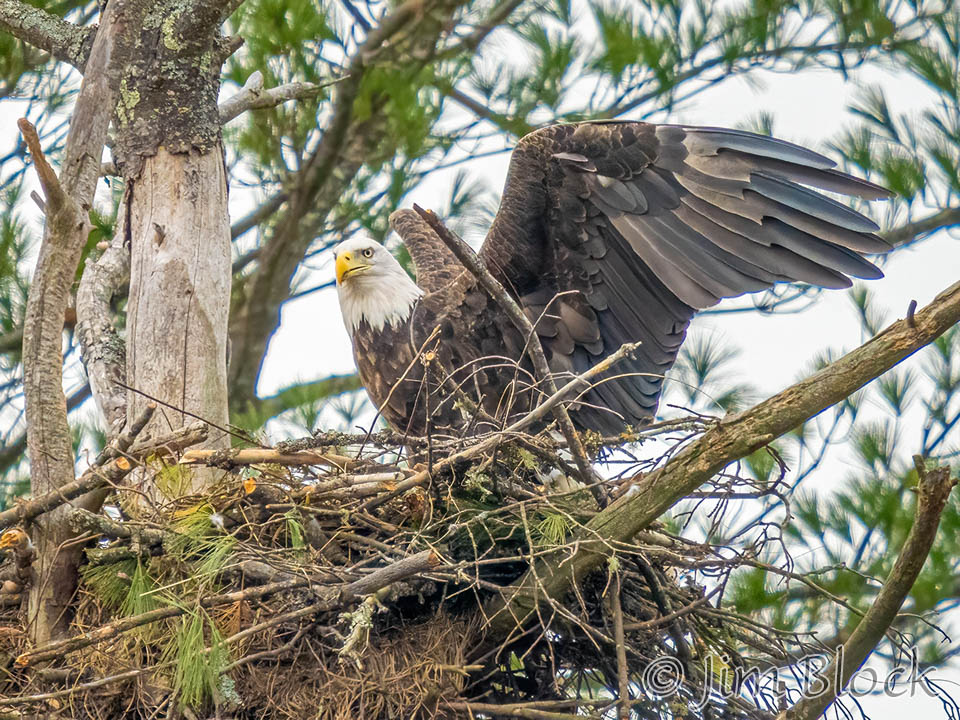
Then they were back in the neighbor tree, a spot where I don’t recall seeing them before.
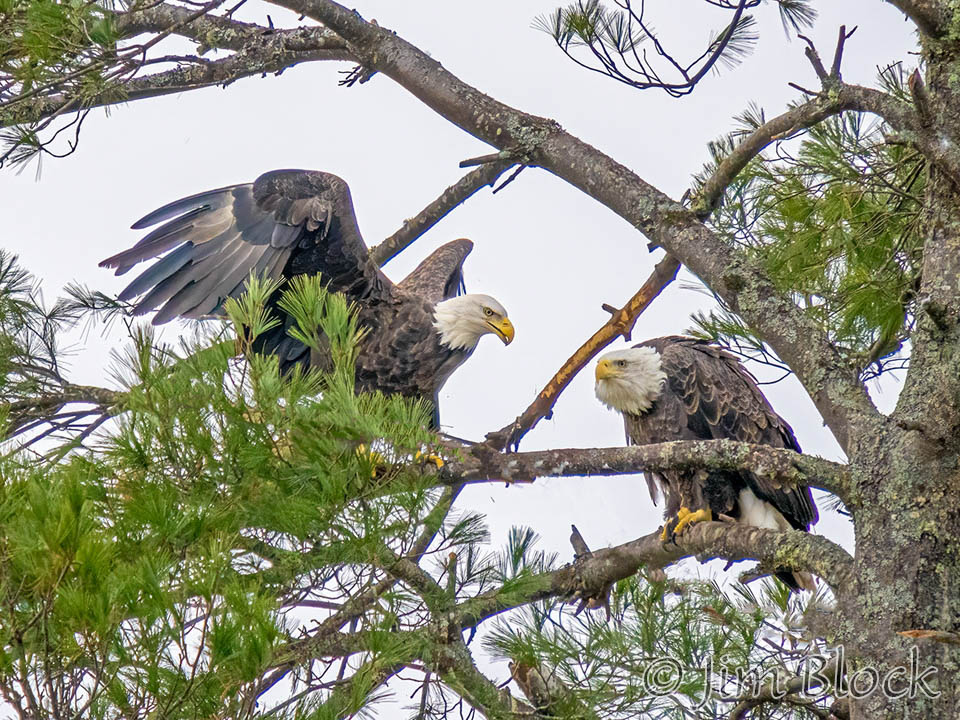
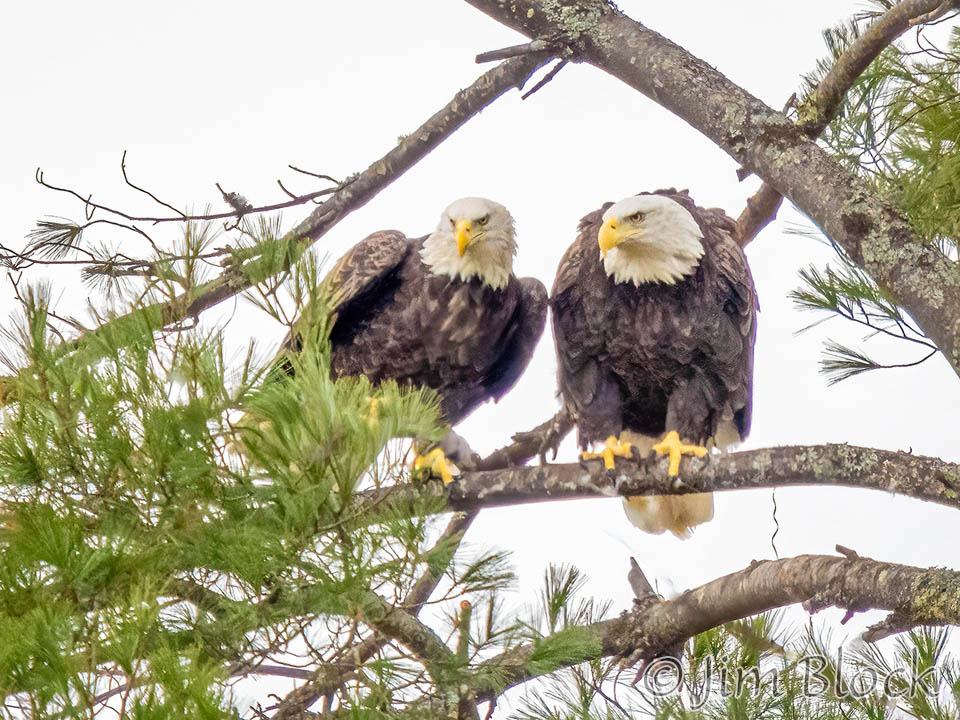
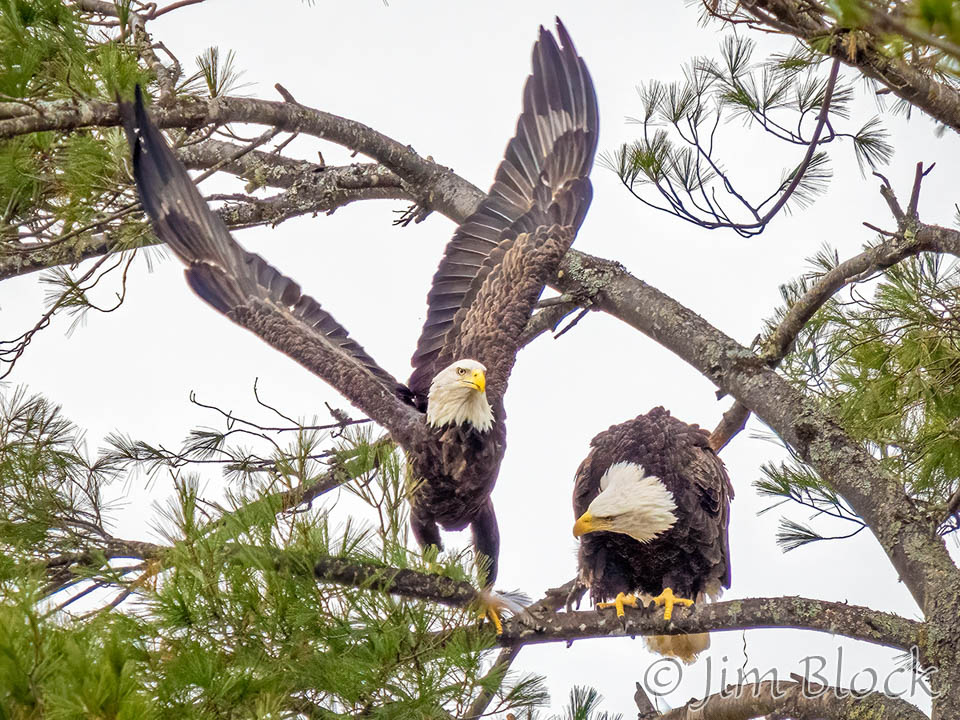
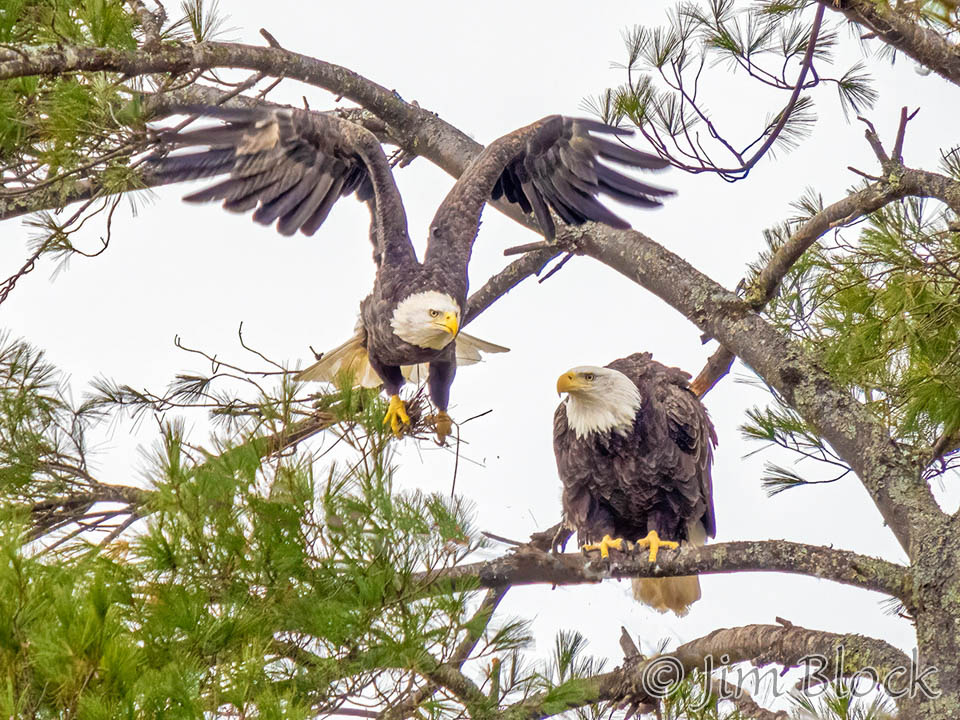
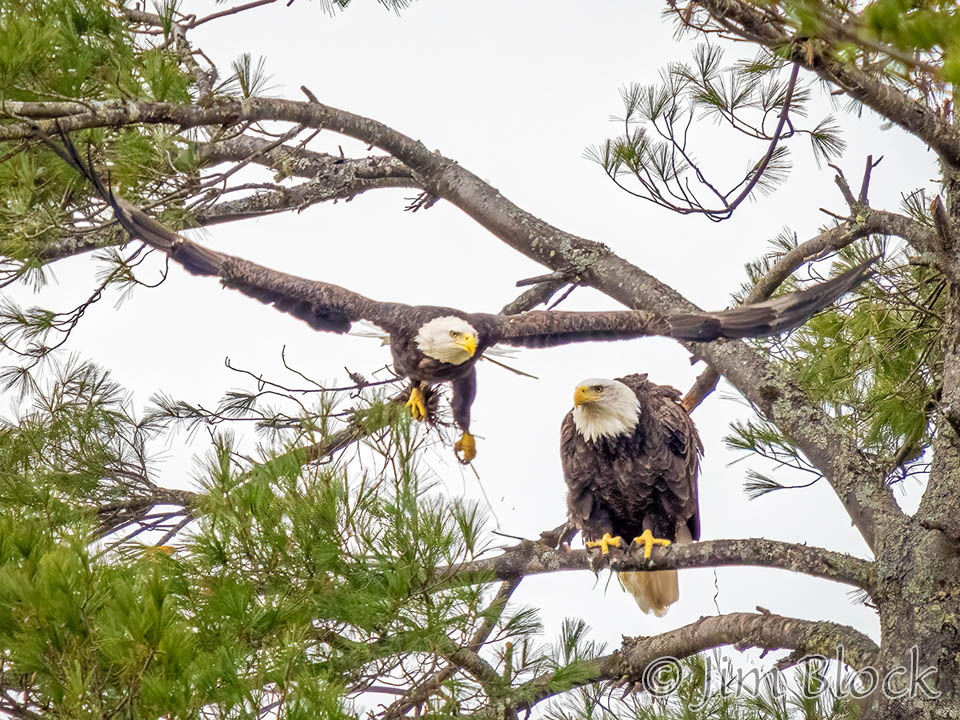
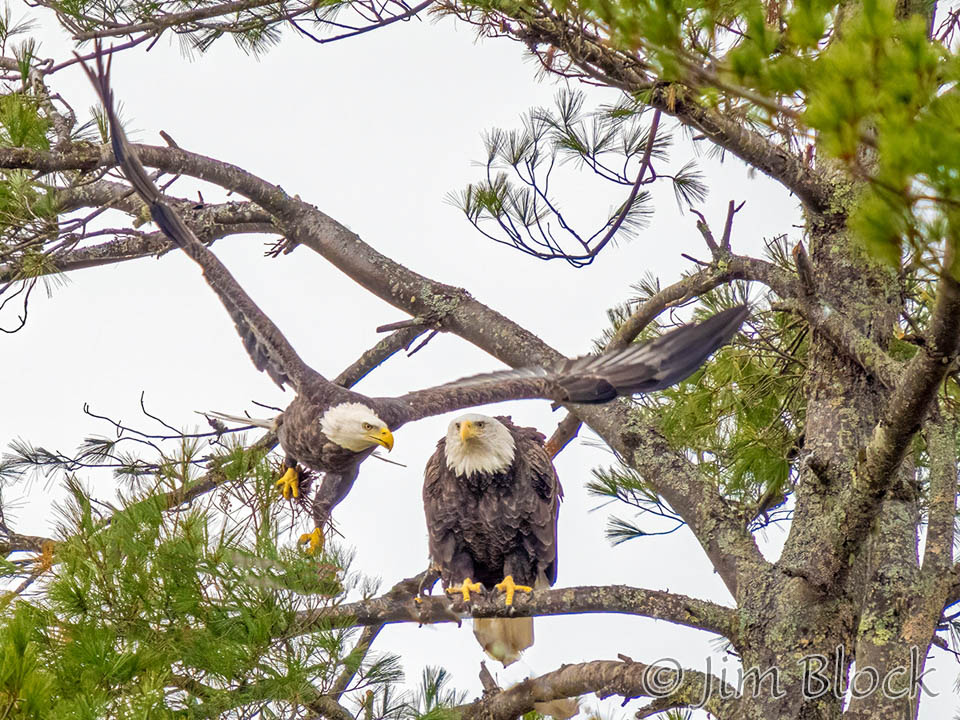
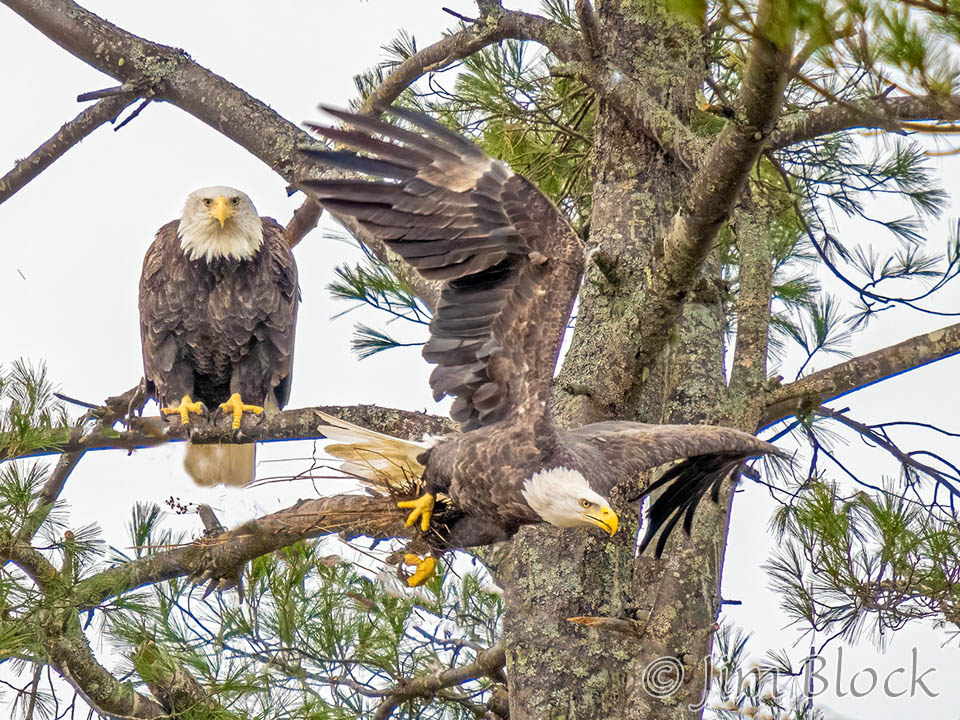
They seem to take to this tree.
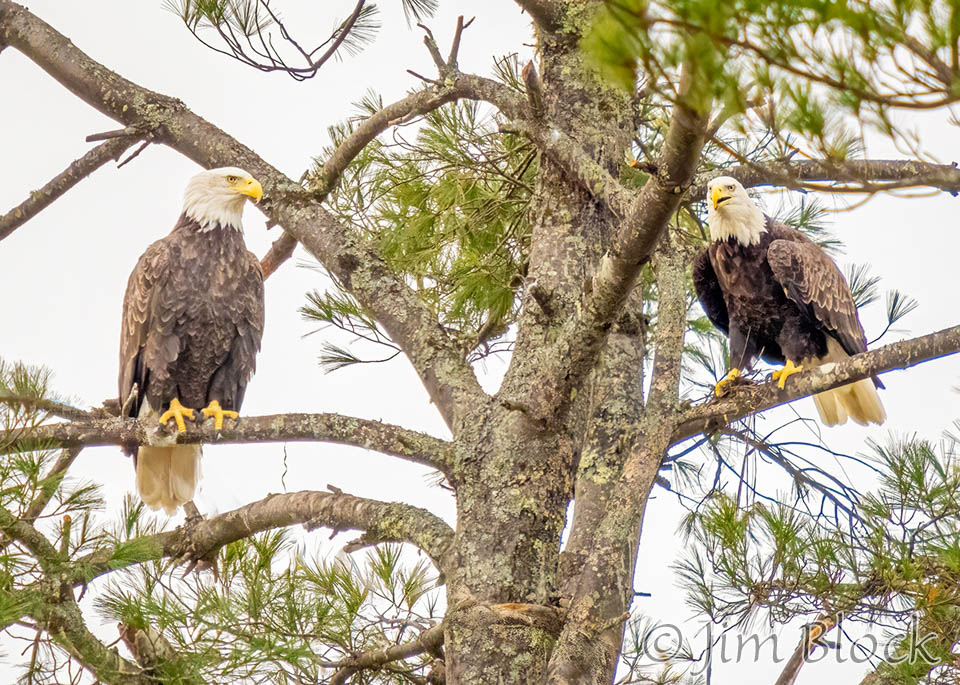
Why were they nest building in November? Do they do it all year long? Below is a comparison of the nest on July 19, November 16, and next March 6. Clearly a considerable amount of new material had been added and will be added before spring.
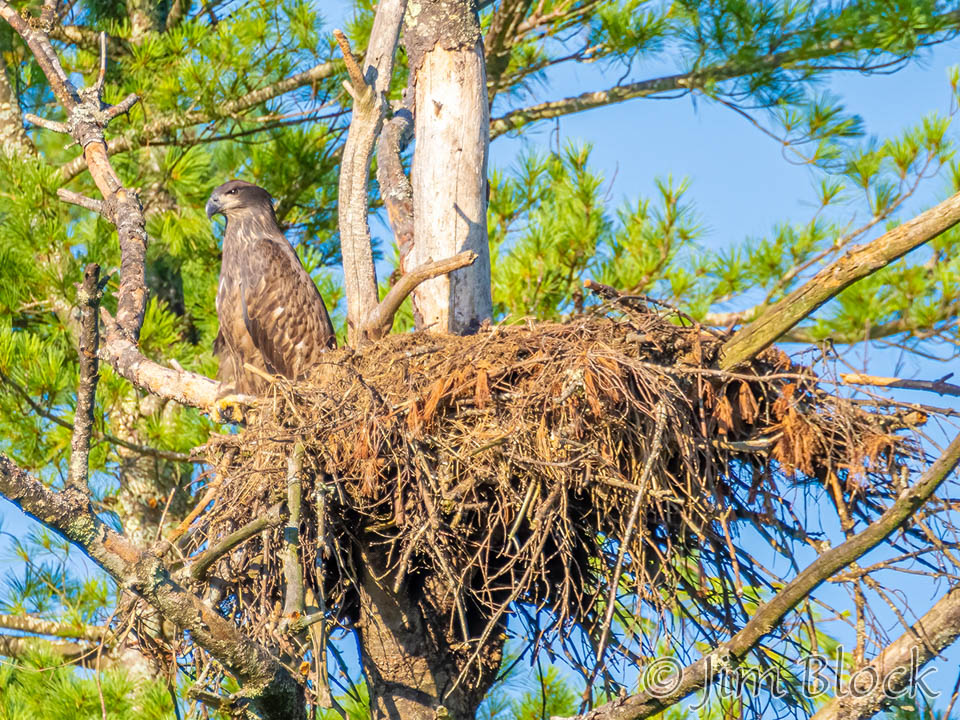
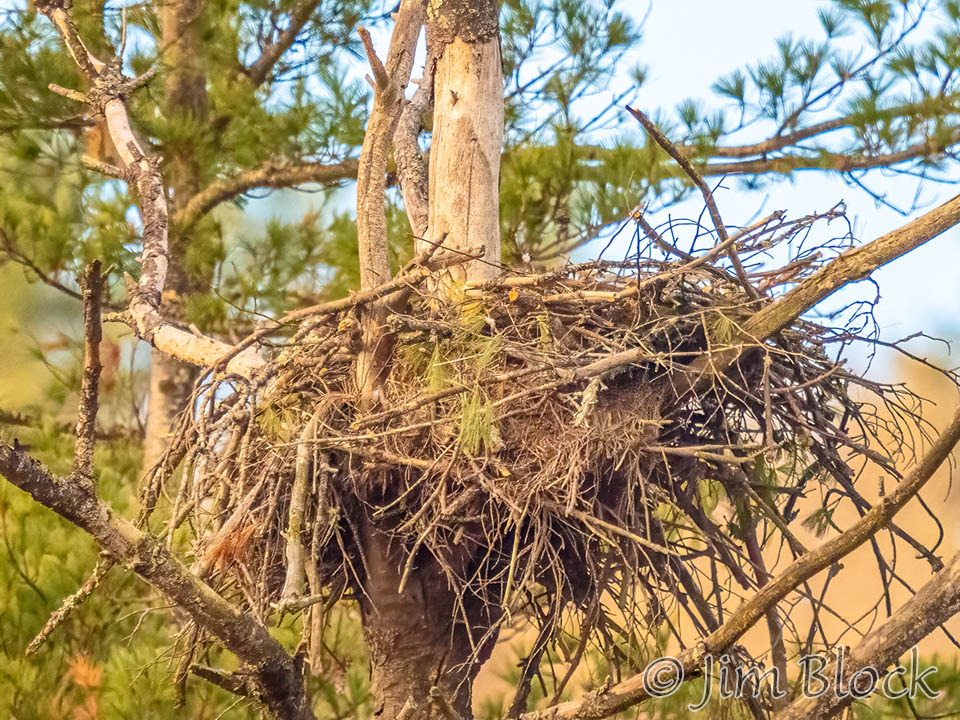
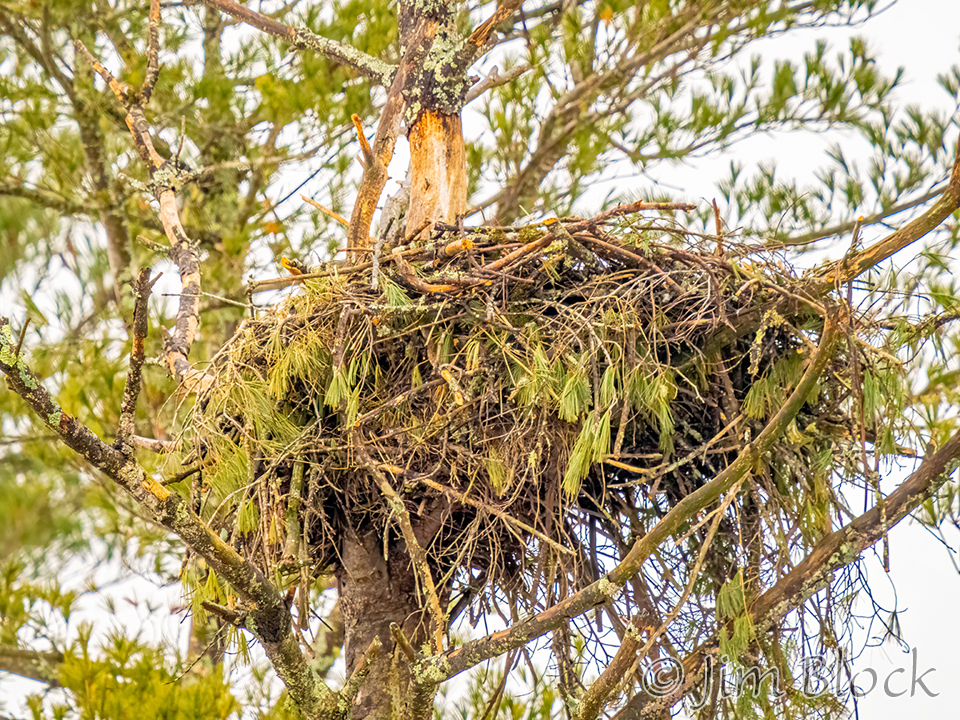
Before I left, I took a few more photos of a very active eagle.
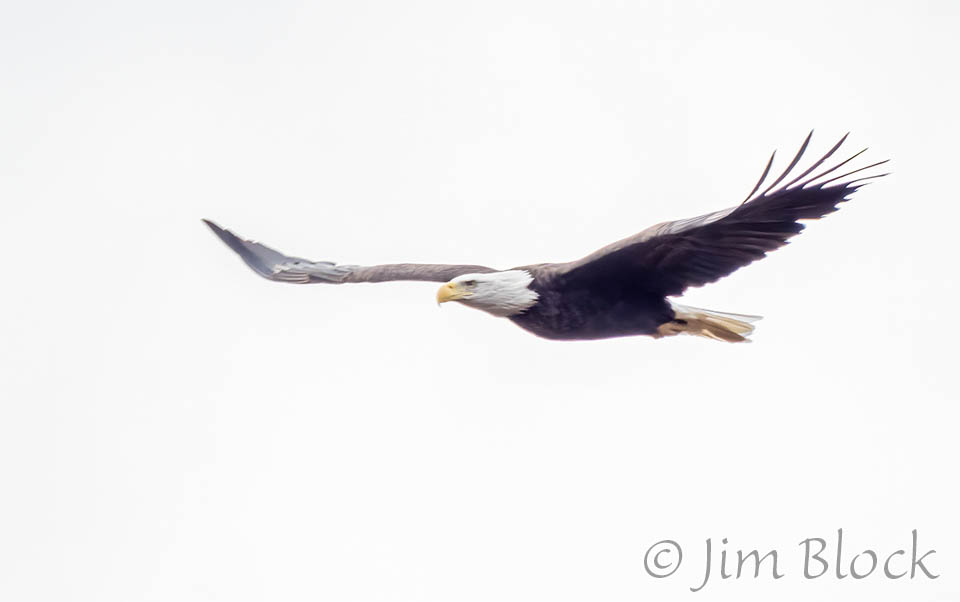
I stopped by the nest day while heading elsewhere. I took one photo in the early morning light.
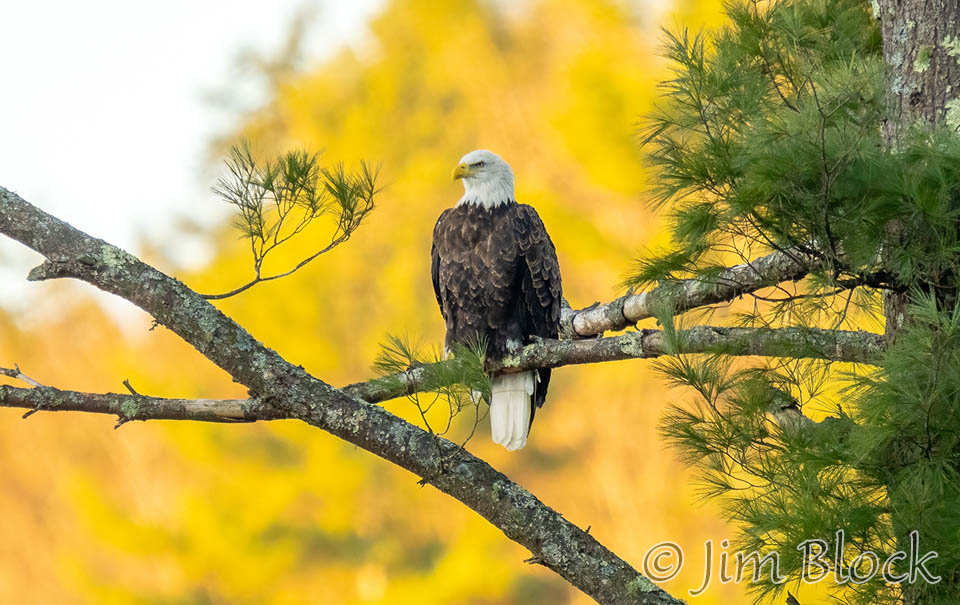
I was on a roll, and so were the eagles. I returned the next day, and what a day it was. I stayed for over three hours.
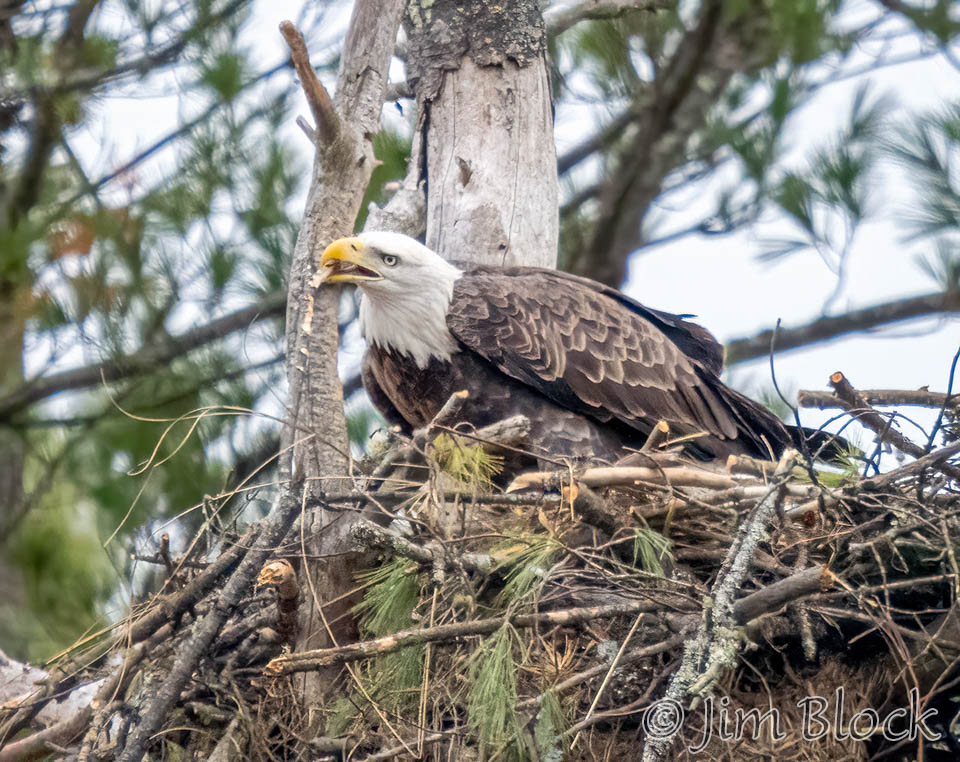
Shortly after I arrived an eagle was chewing an a piece of a large stick.
Then it flew.
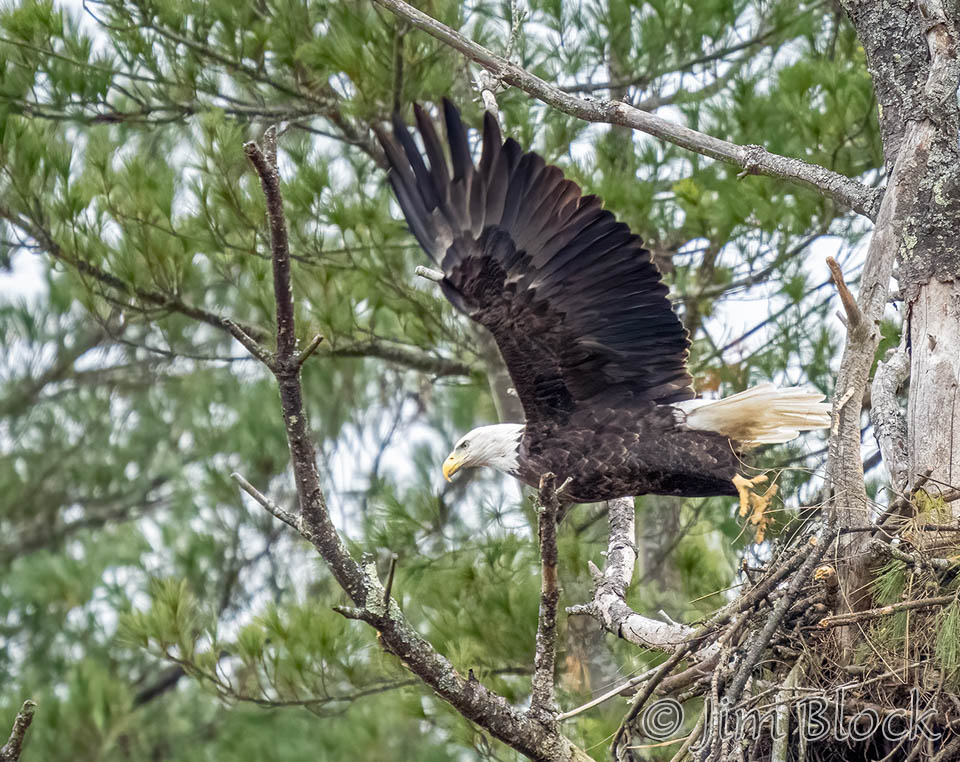
Over the next twenty minutes this in and out action was repeated over and over by this eagle or its mate.
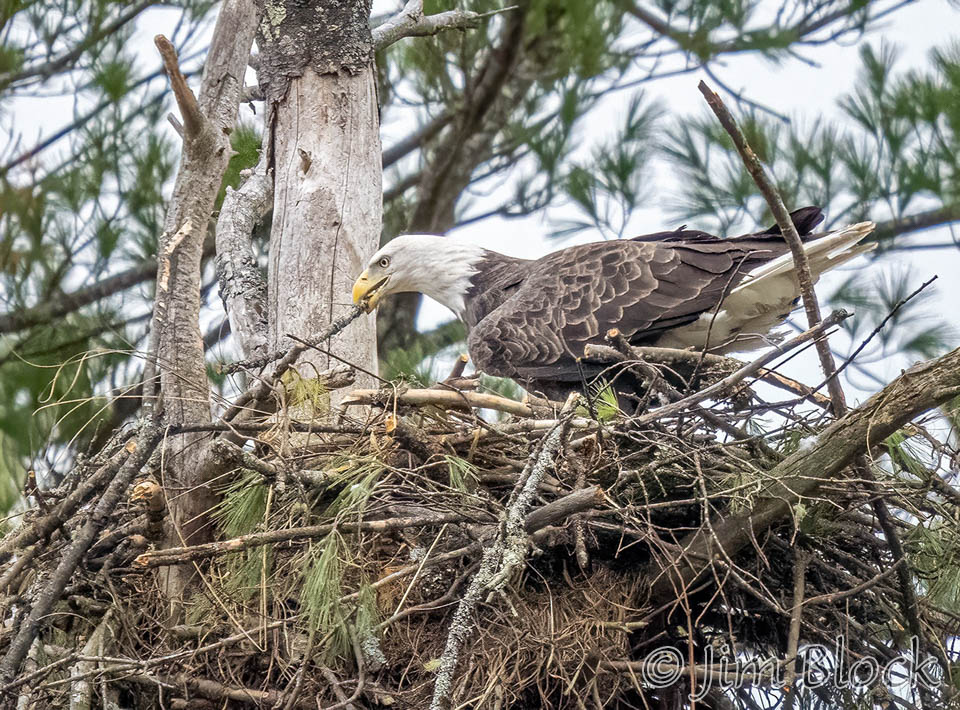
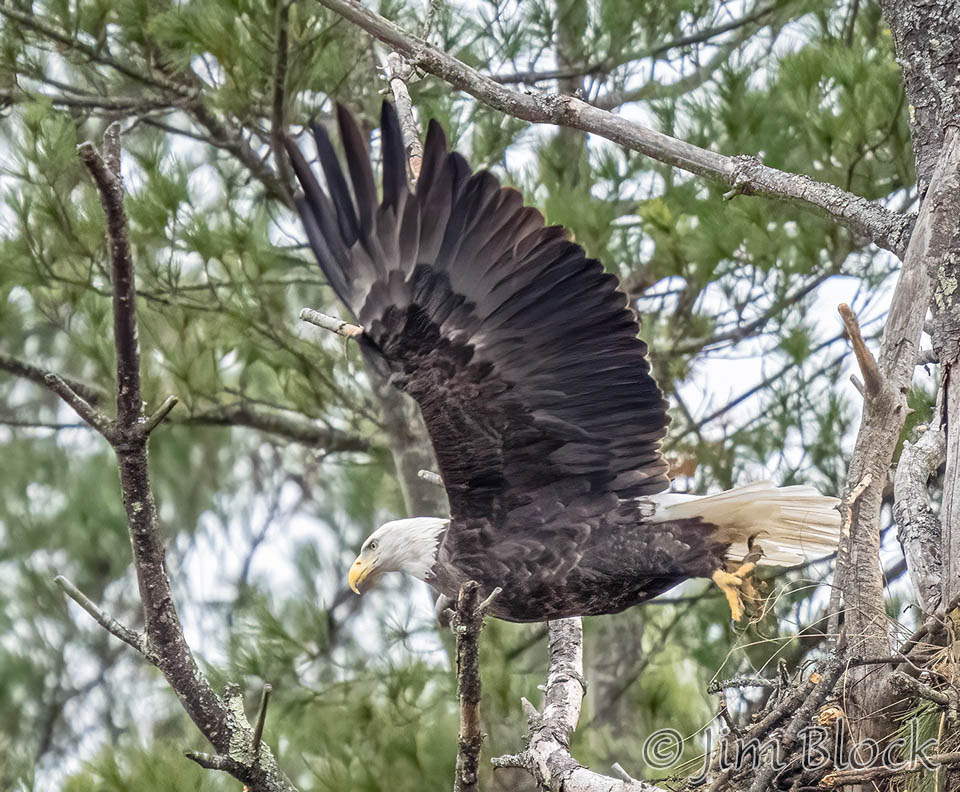
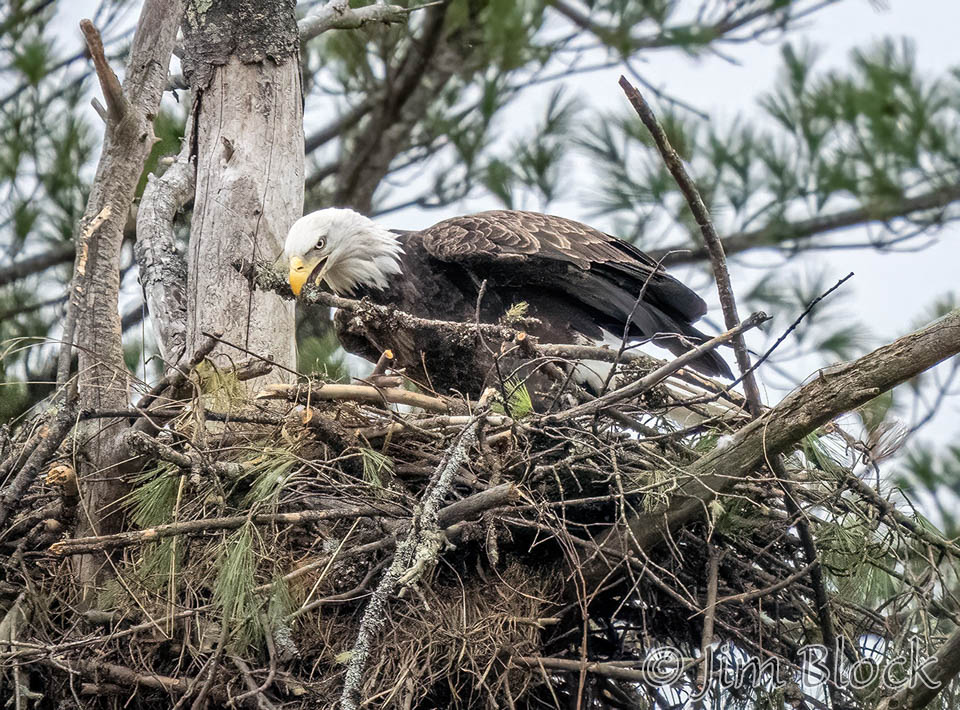
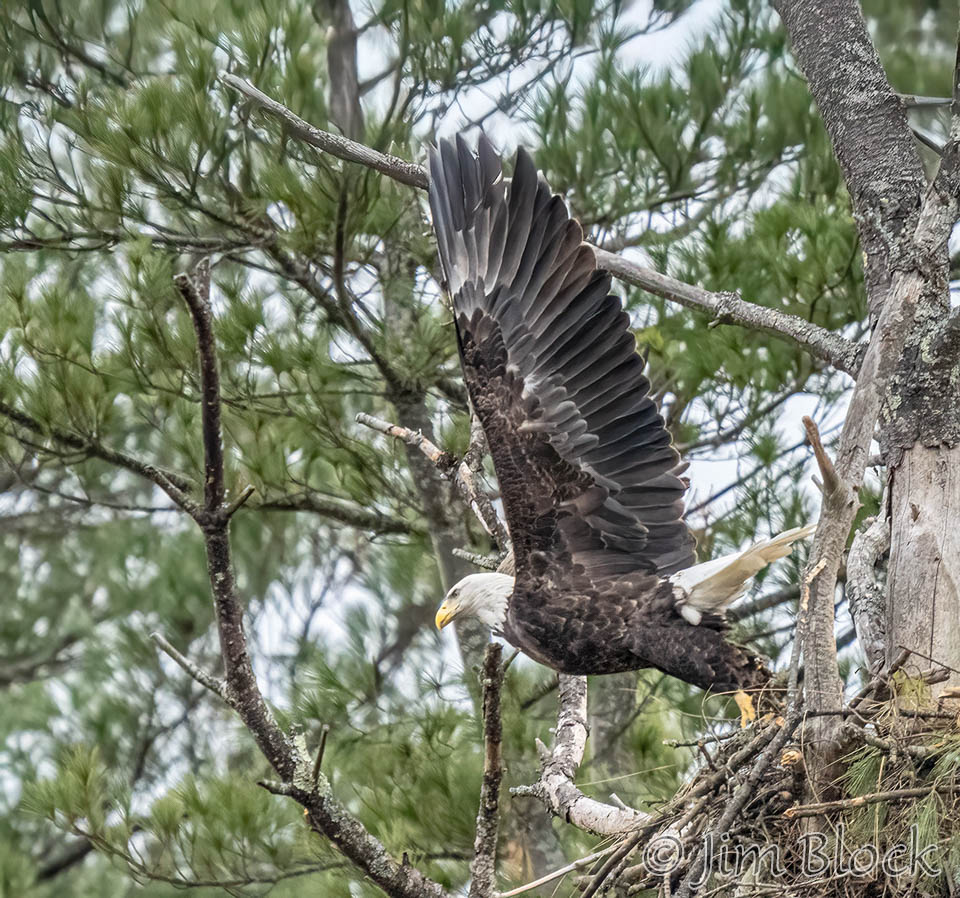
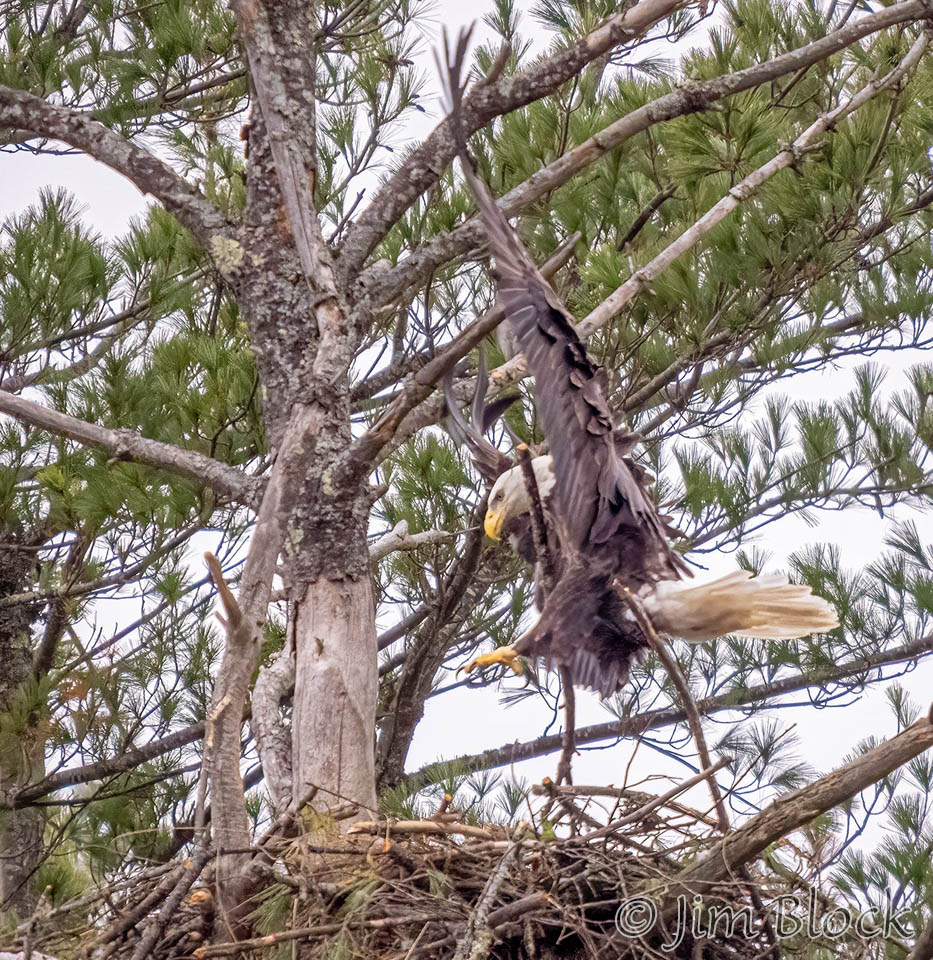
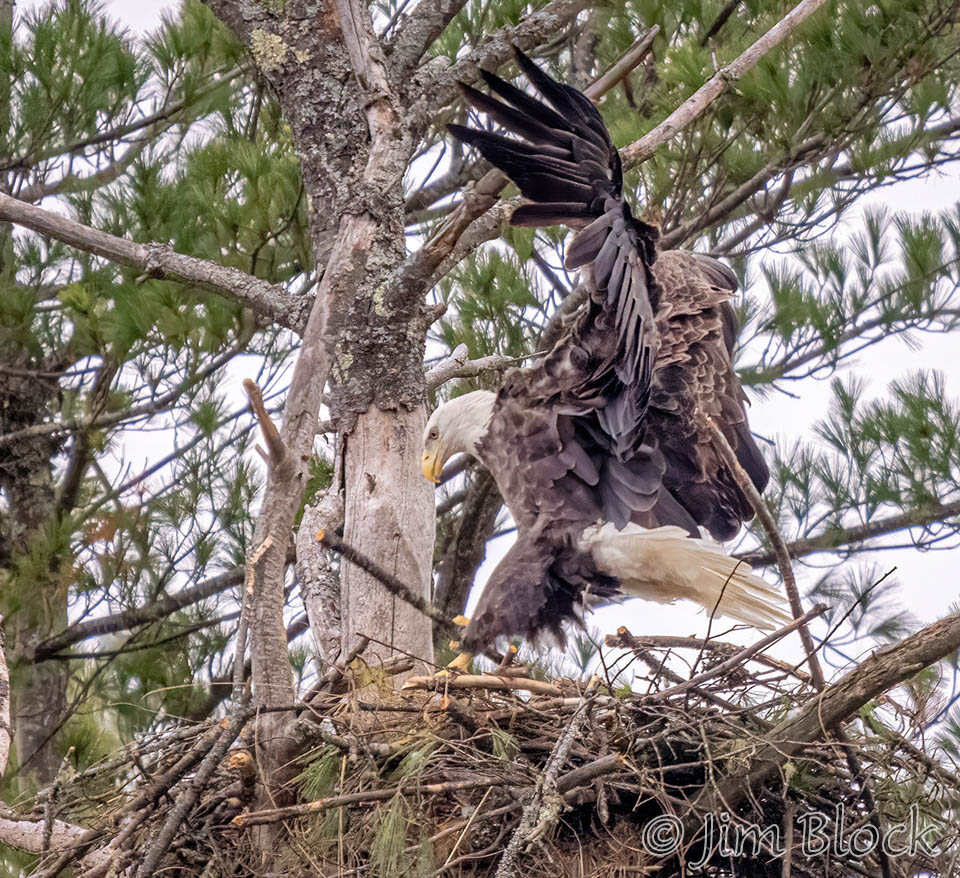
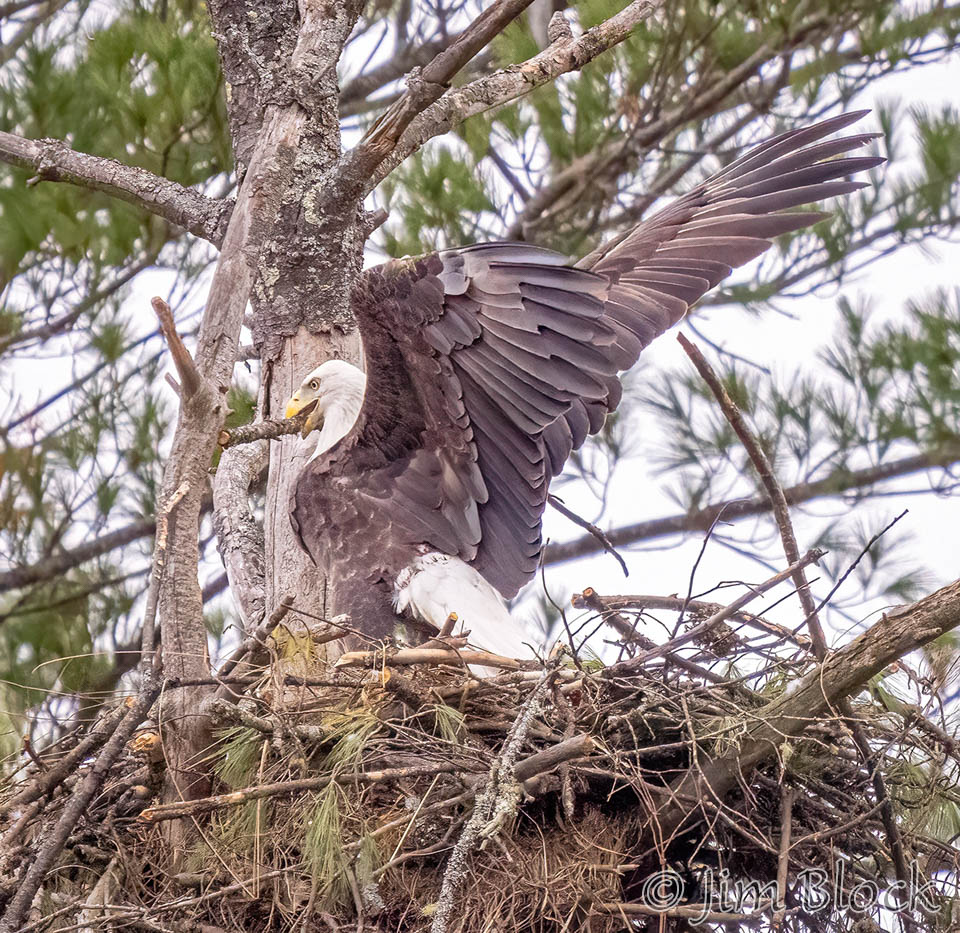
Most of the time the eagles entered the nest from the rear. There were fields through the narrow woods behind the nest where they likely scrounged for sticks.
Here is one moving a large stick around.
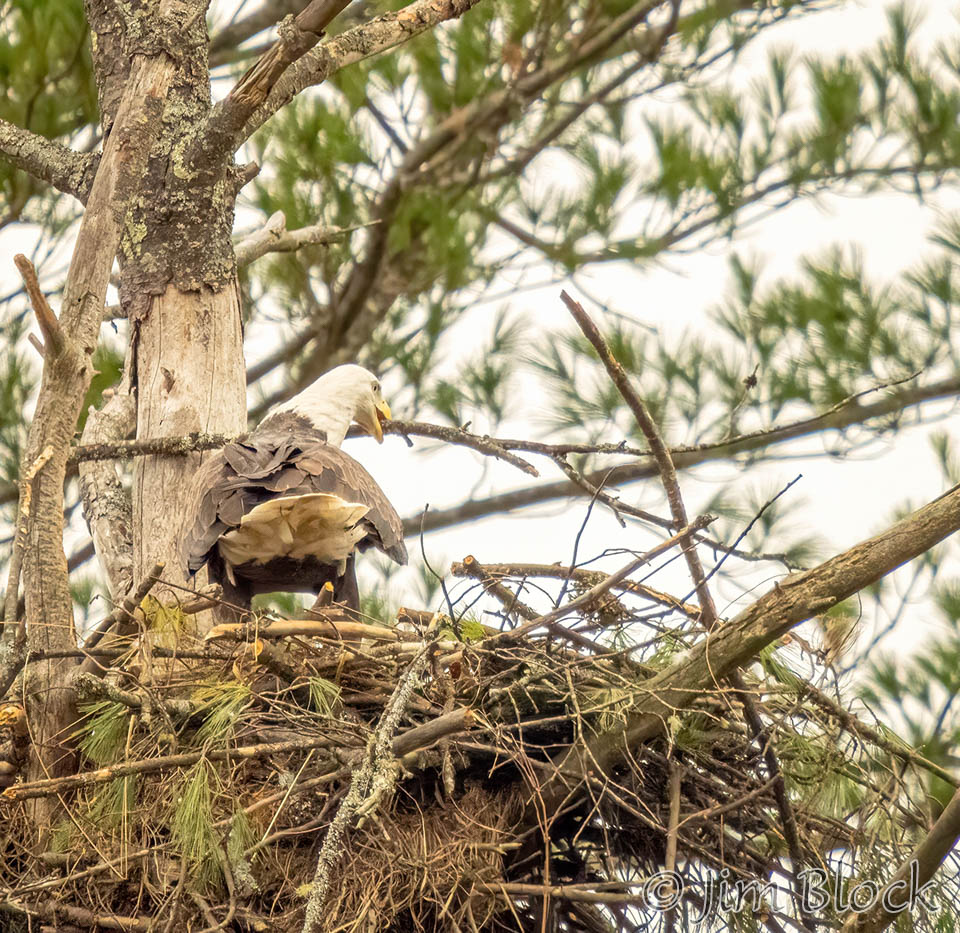
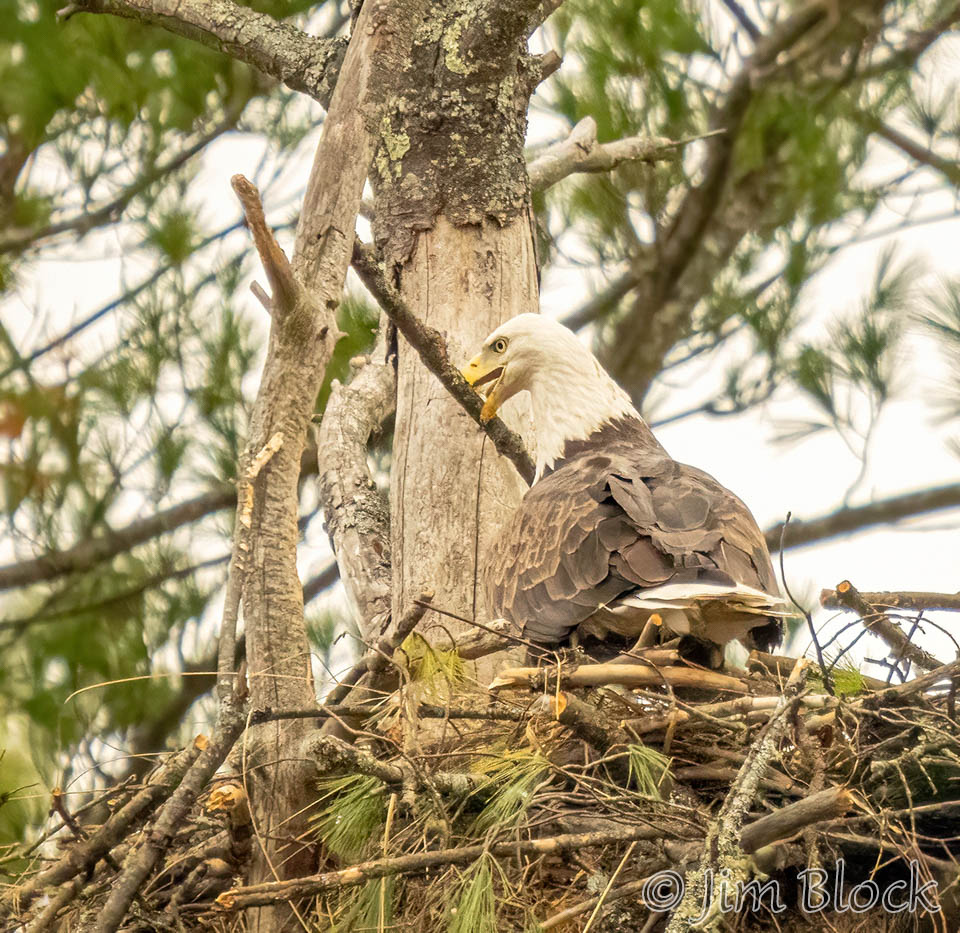
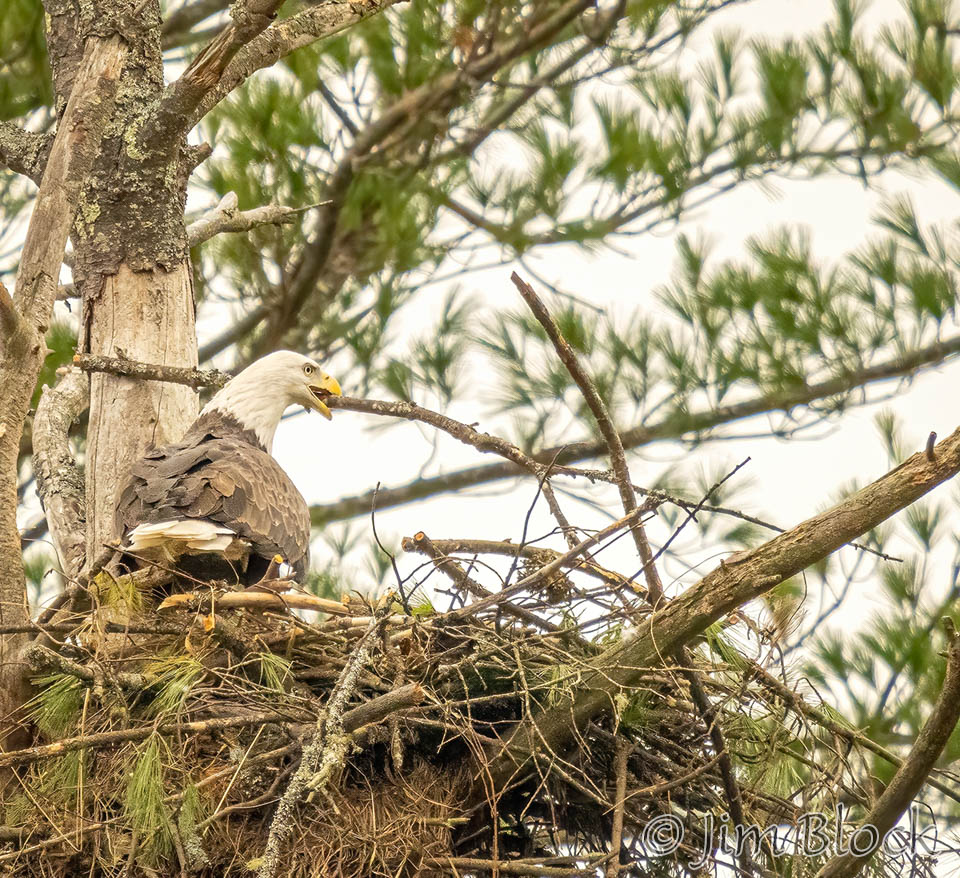
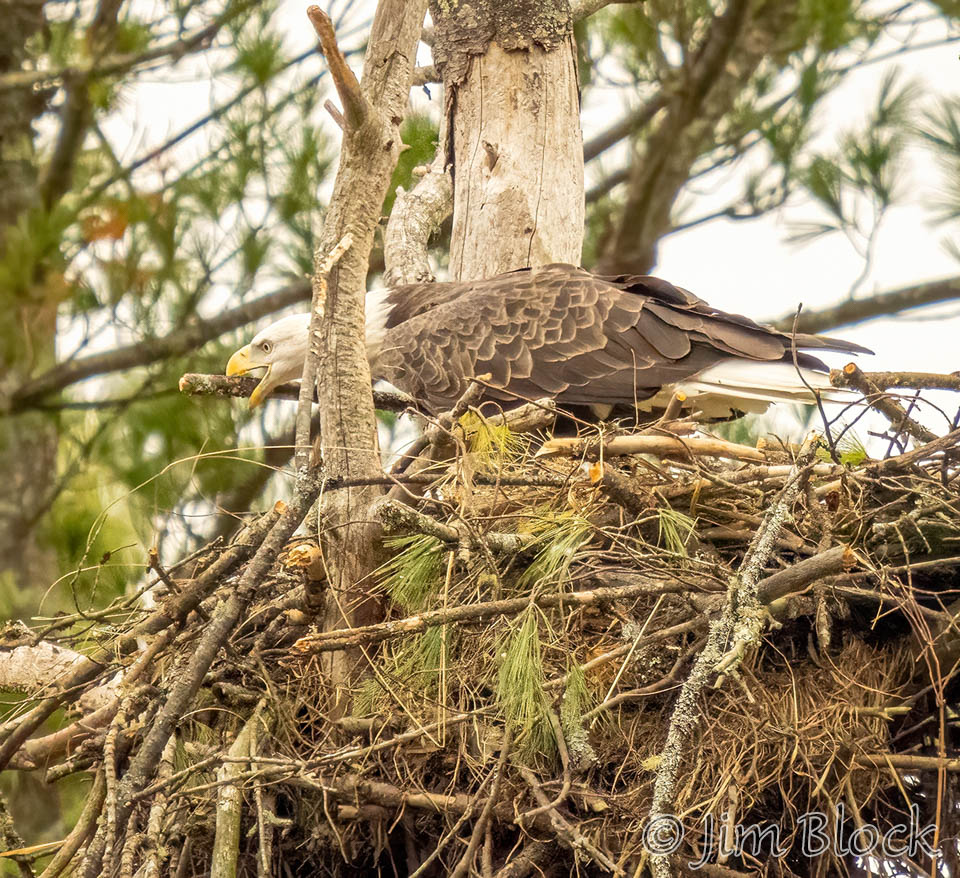
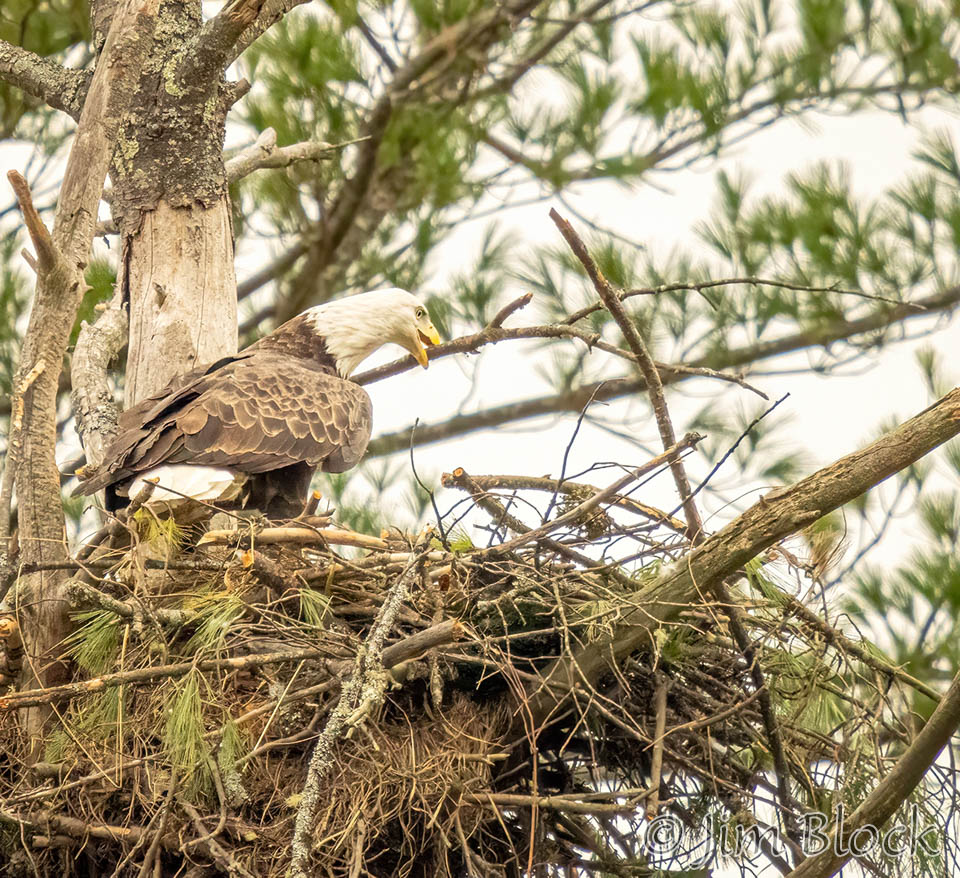
More gnawing on the large vertical post.
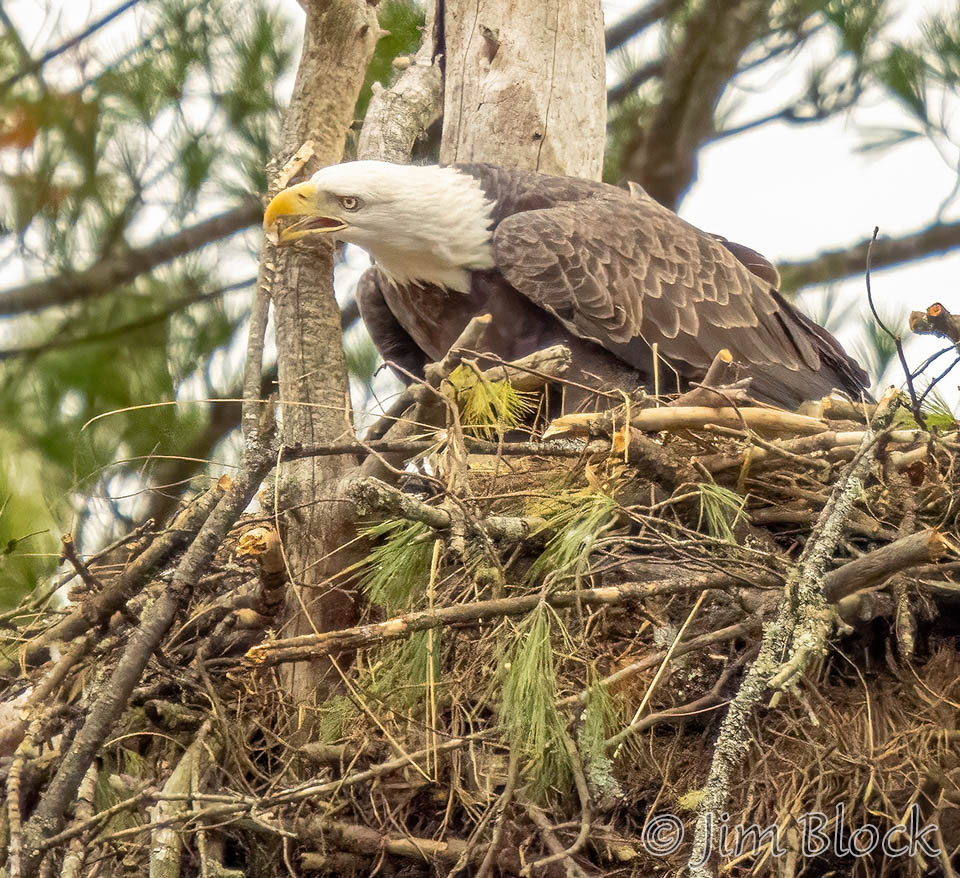
This eagle carried nest material in from the field behind and carefully arranged it in the nest.
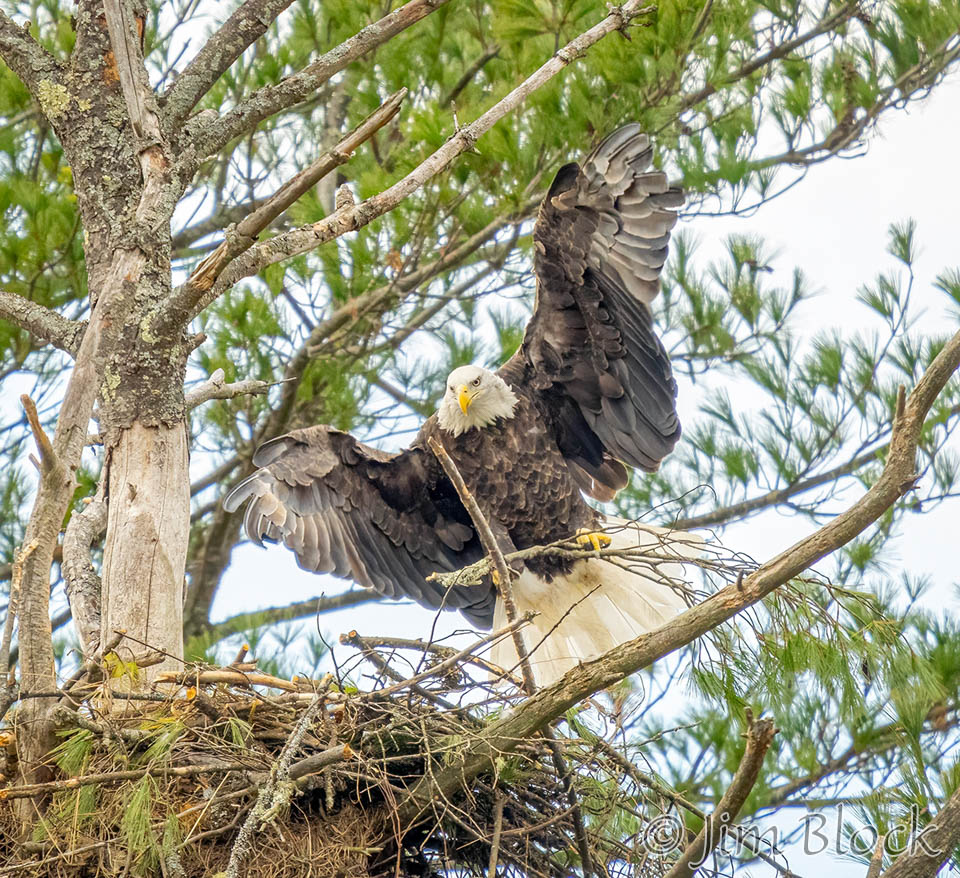
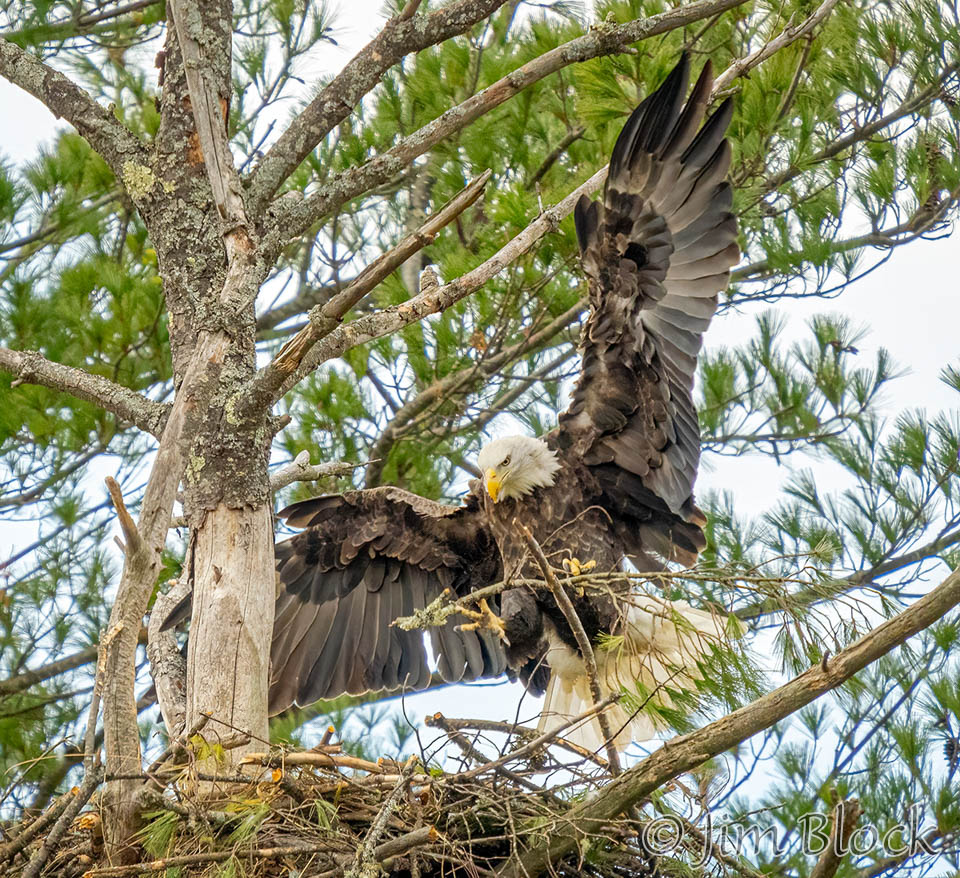
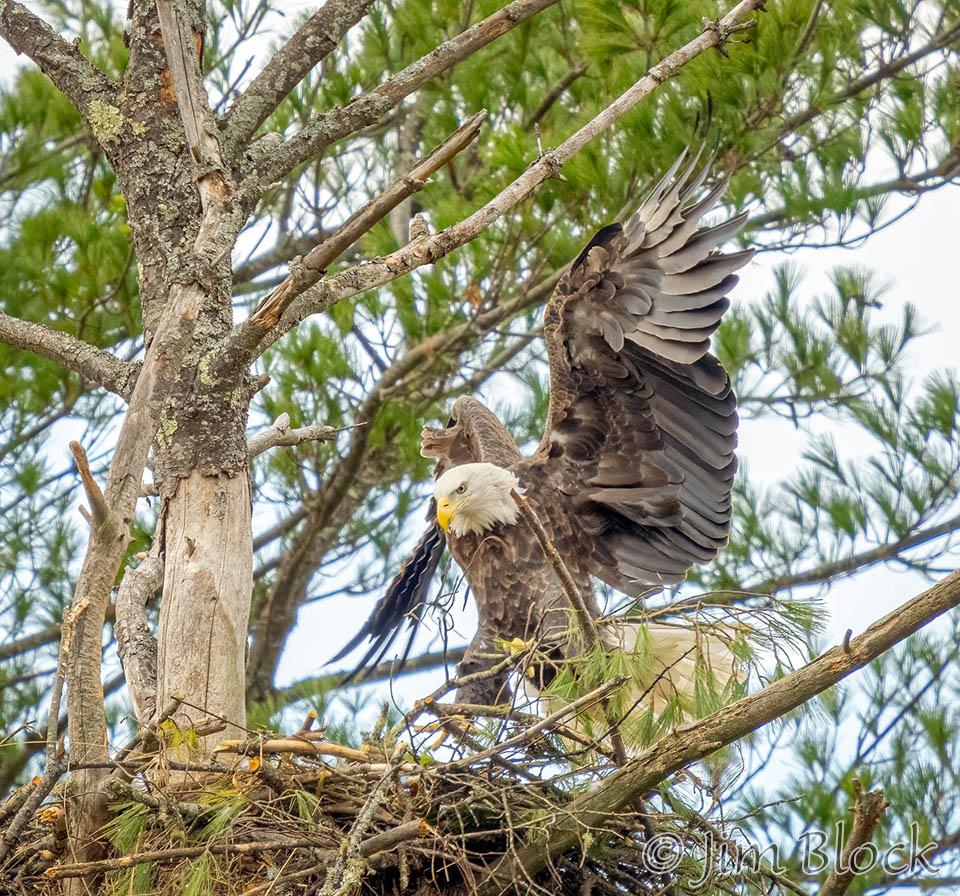
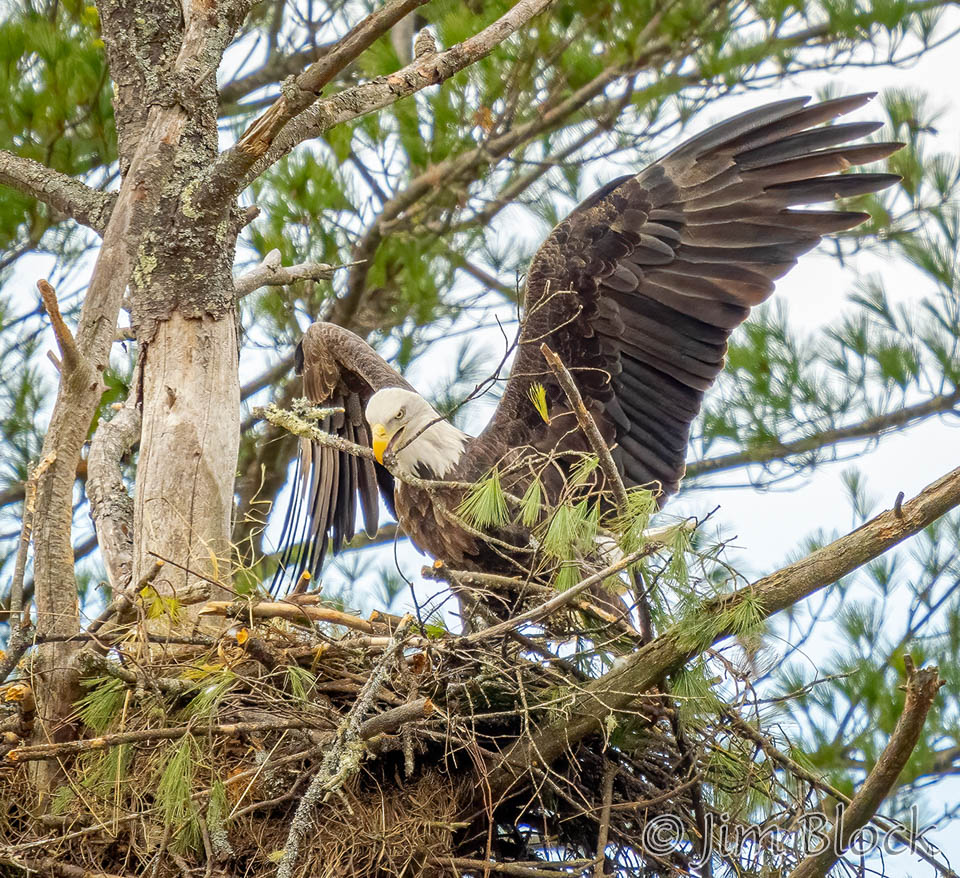
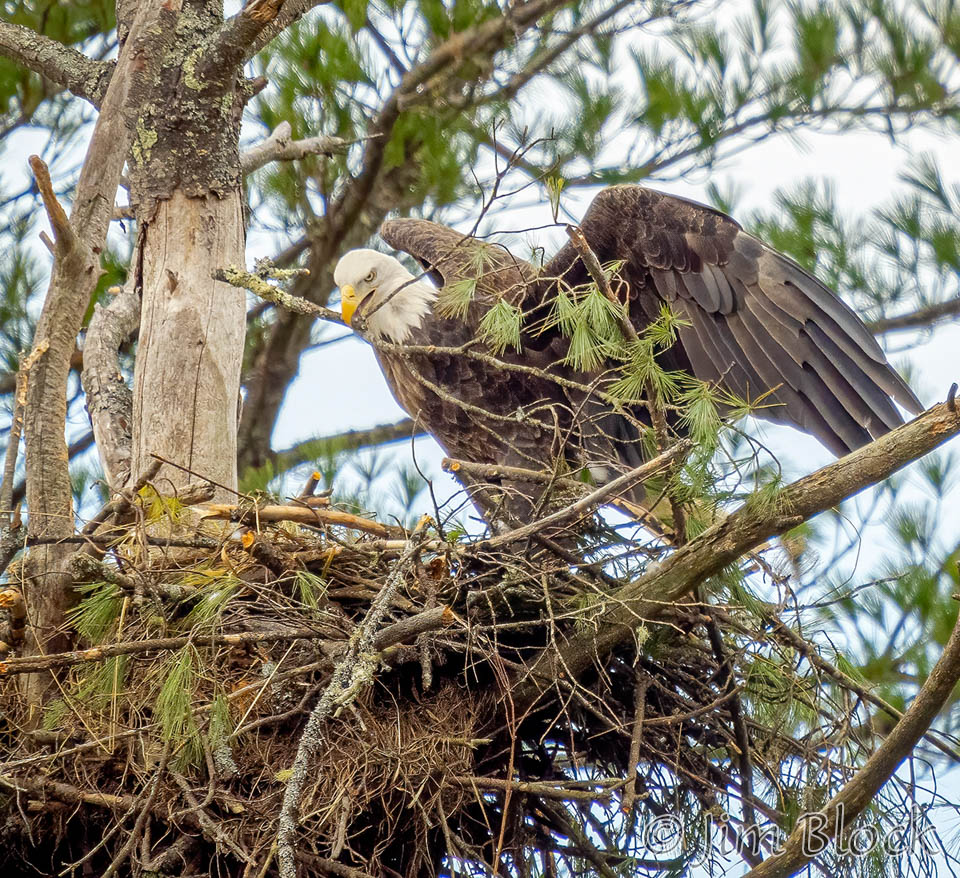
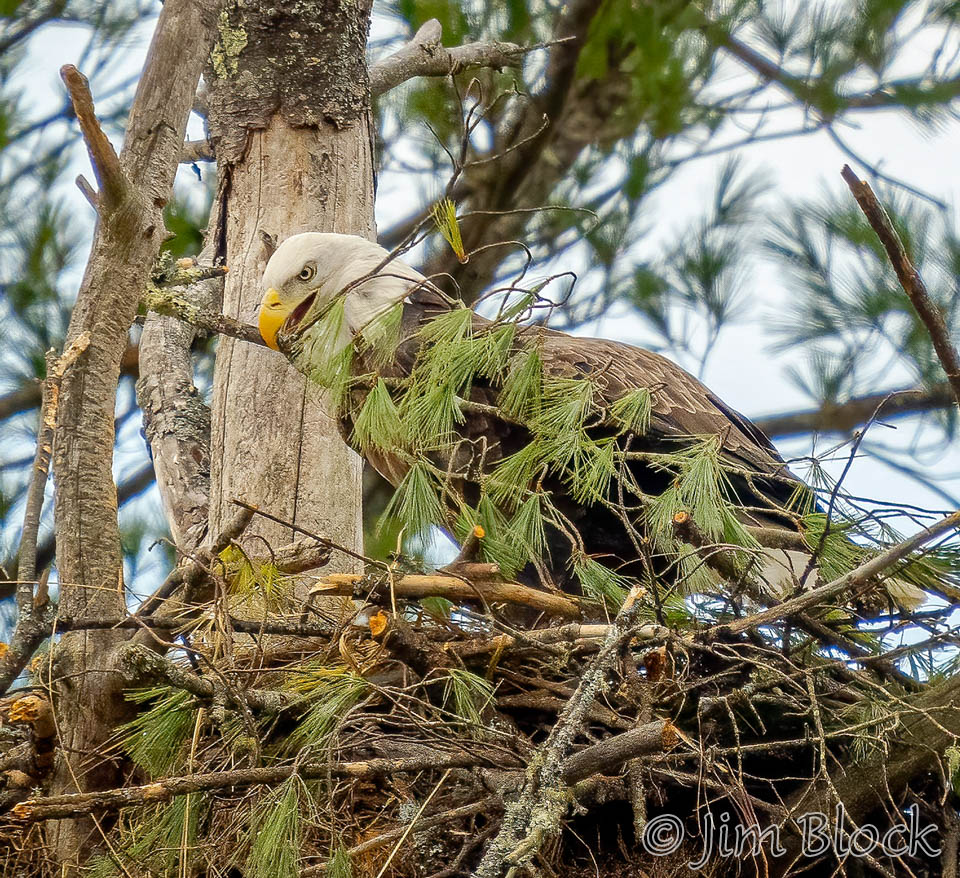
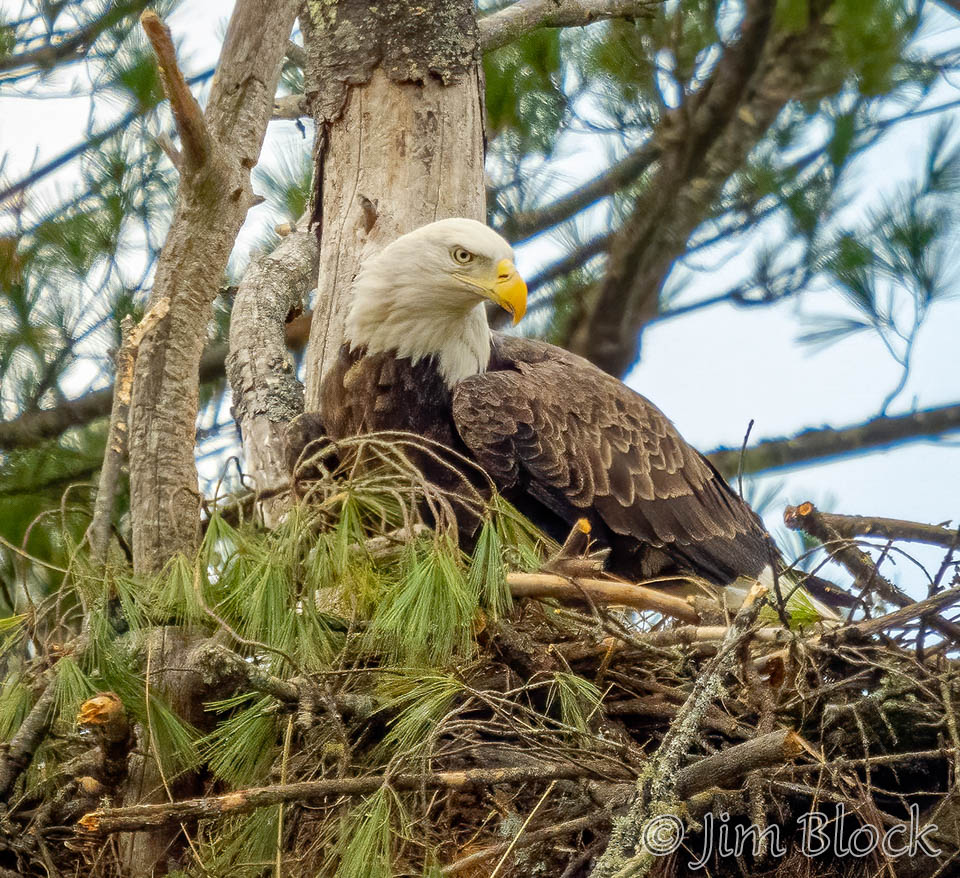
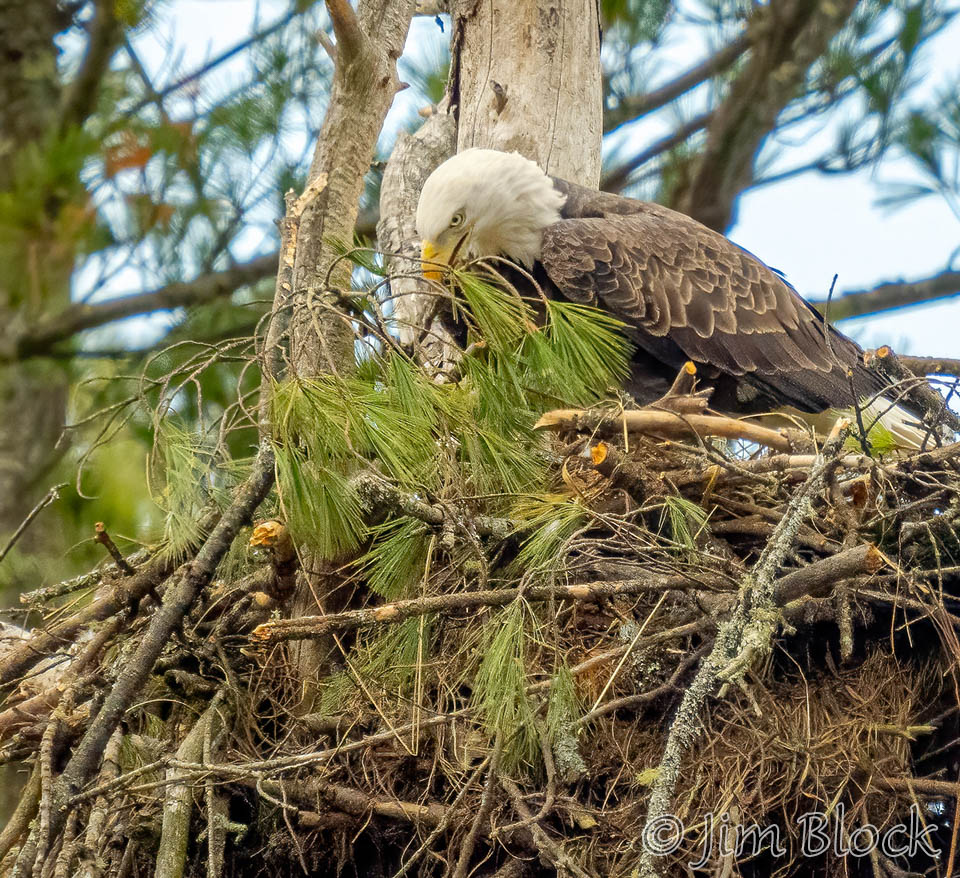
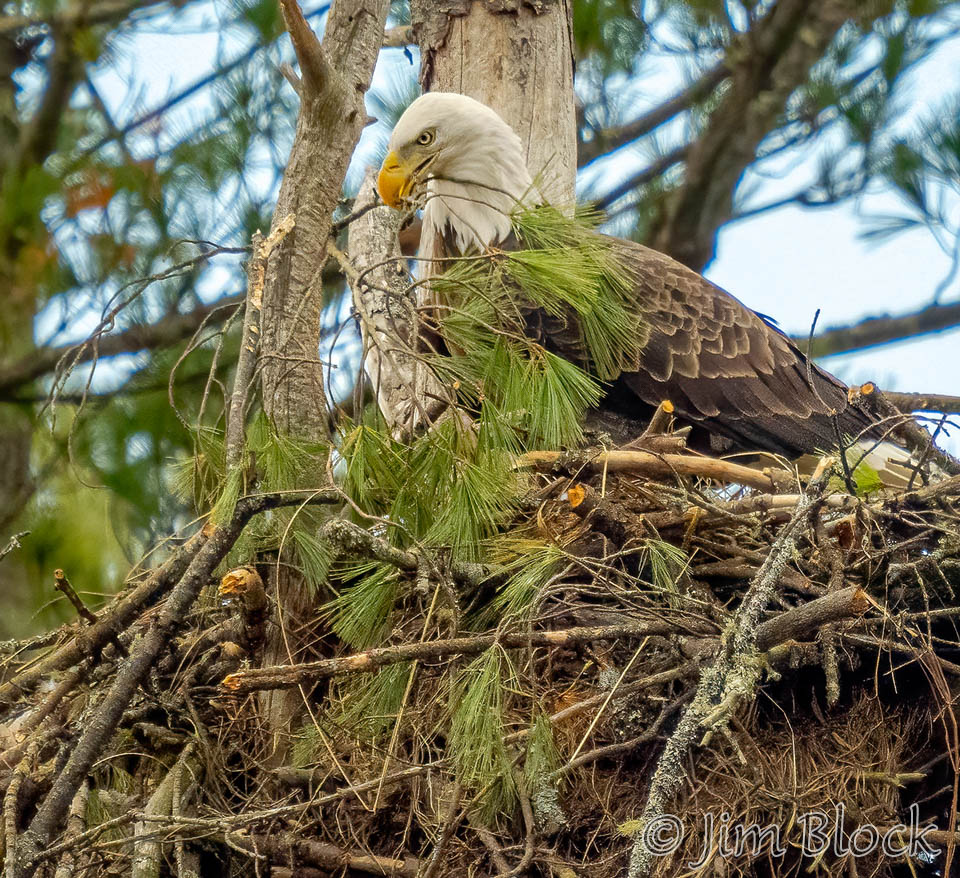
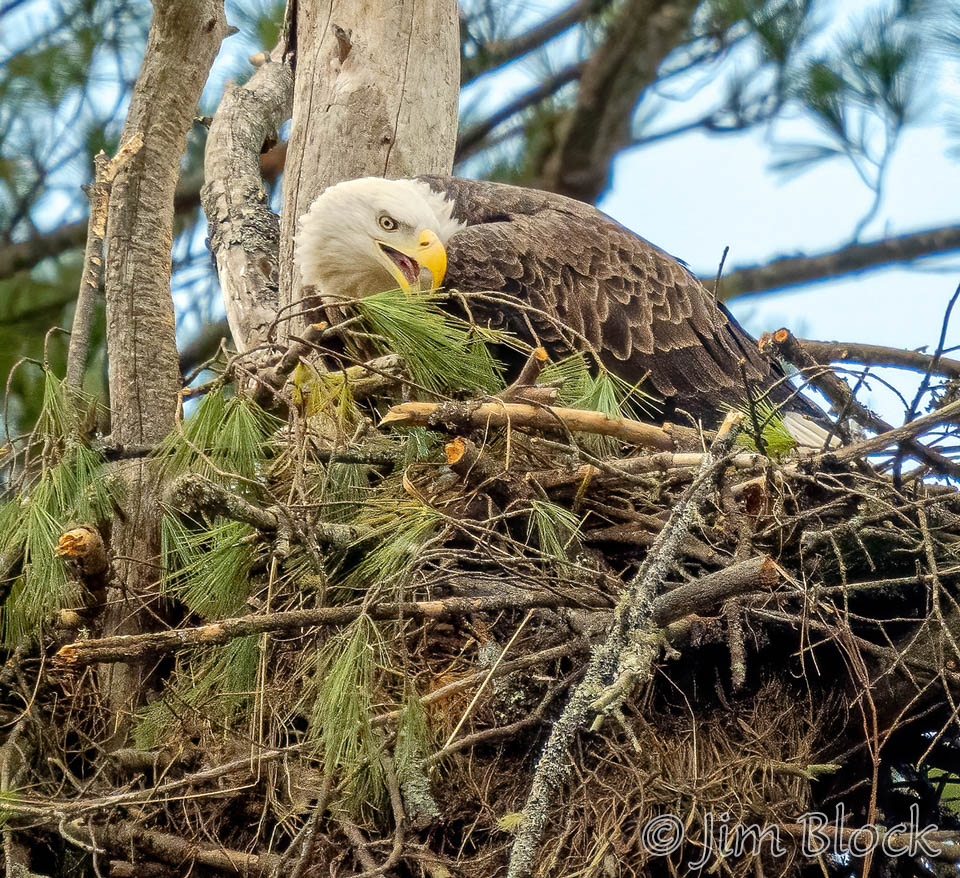
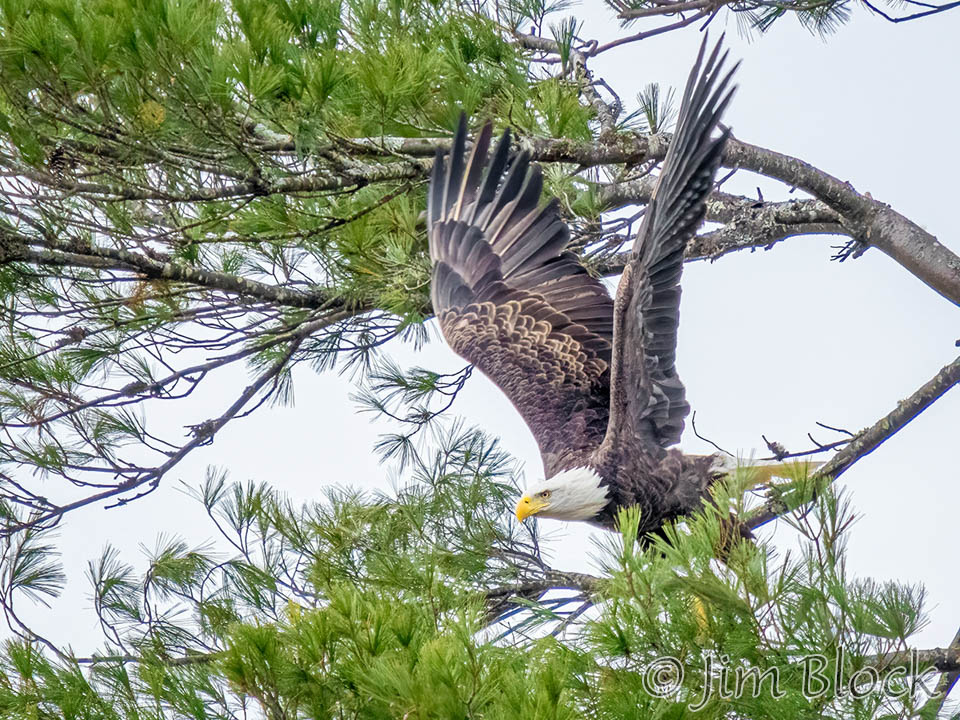
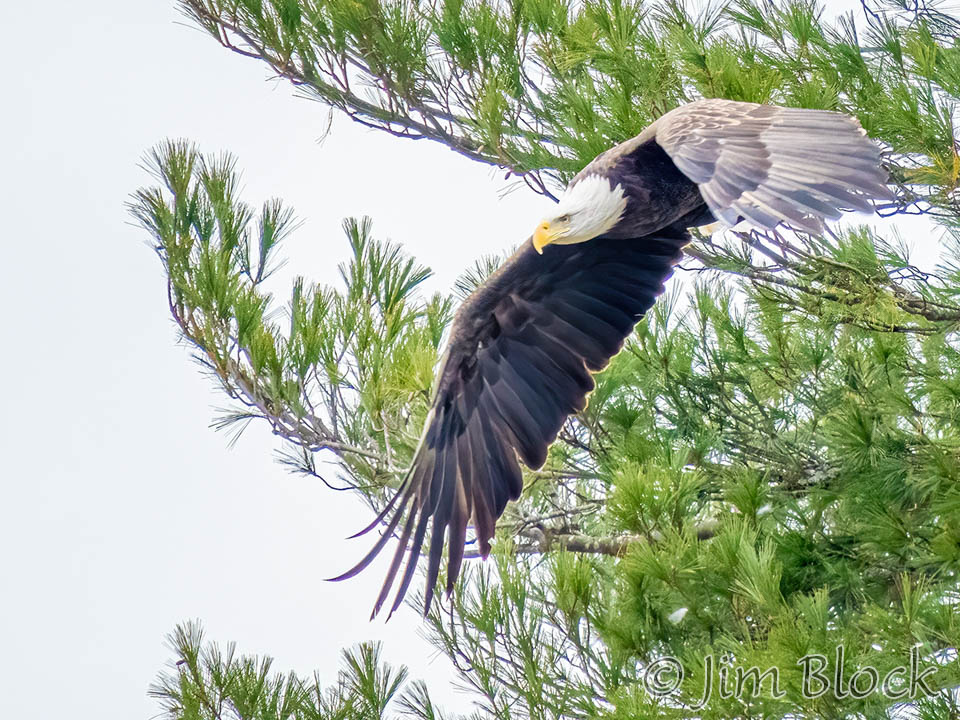
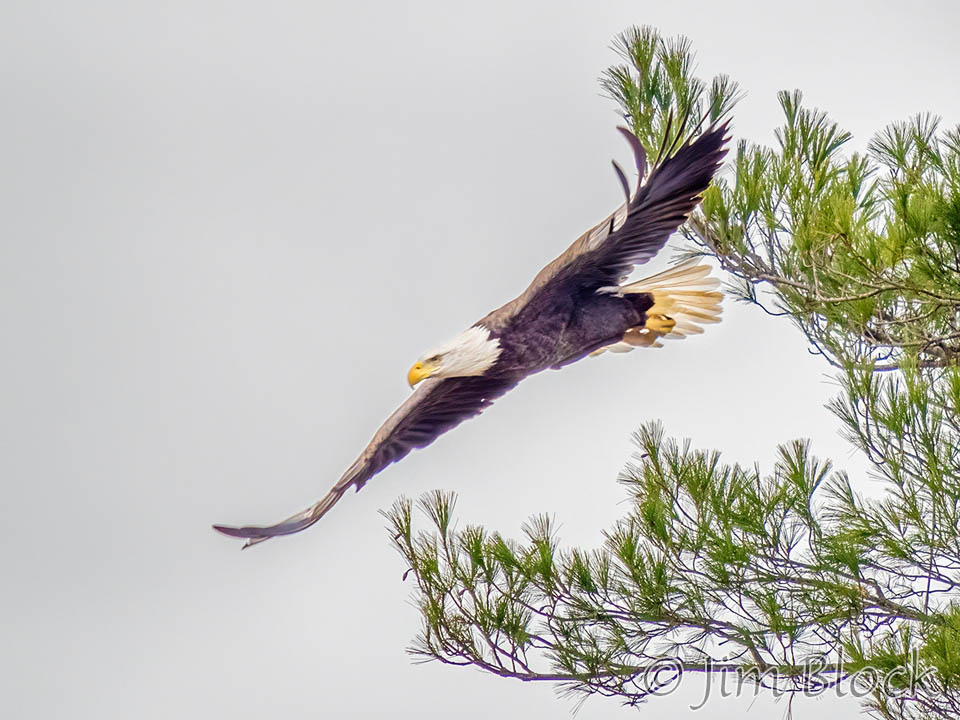
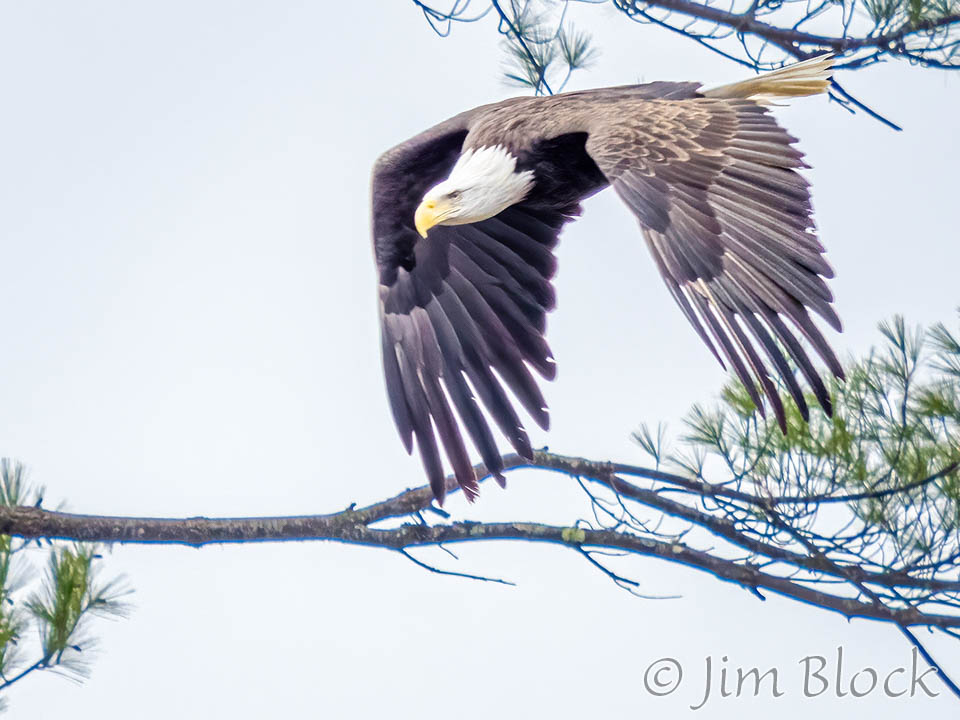
Flying to get more material for the nest.
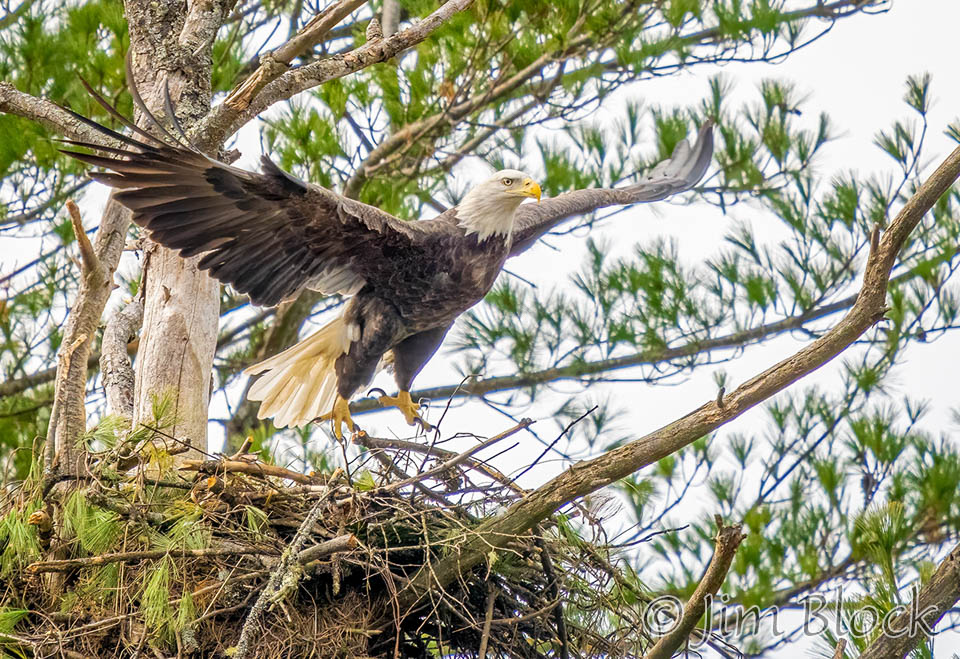
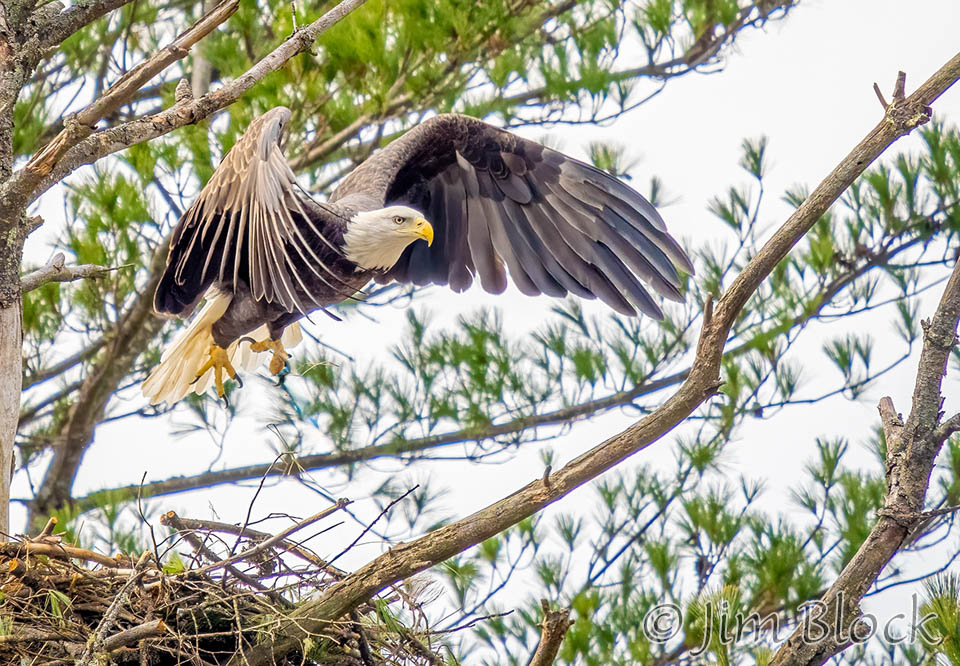
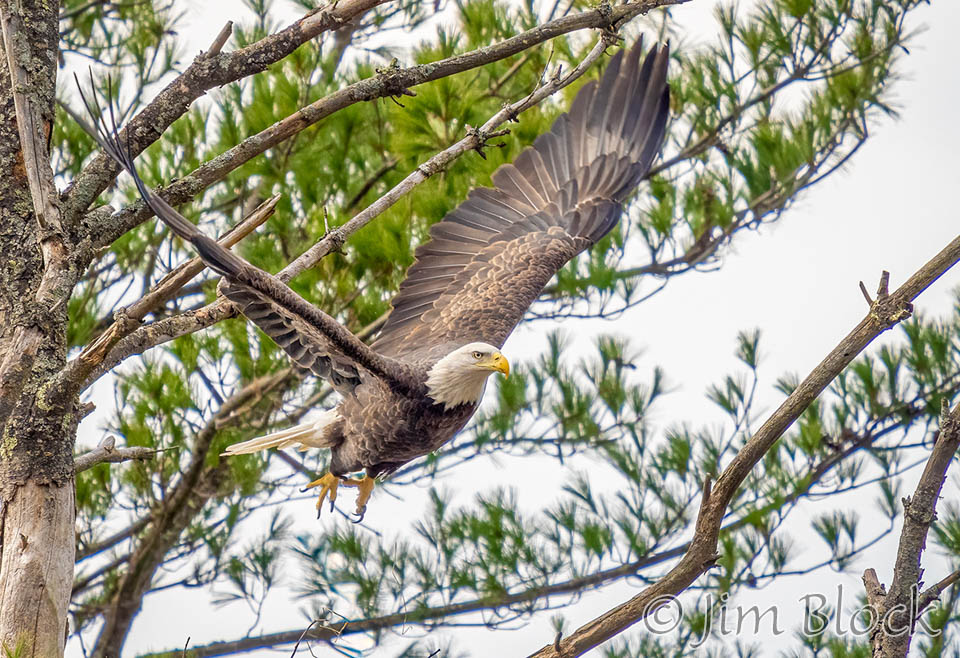
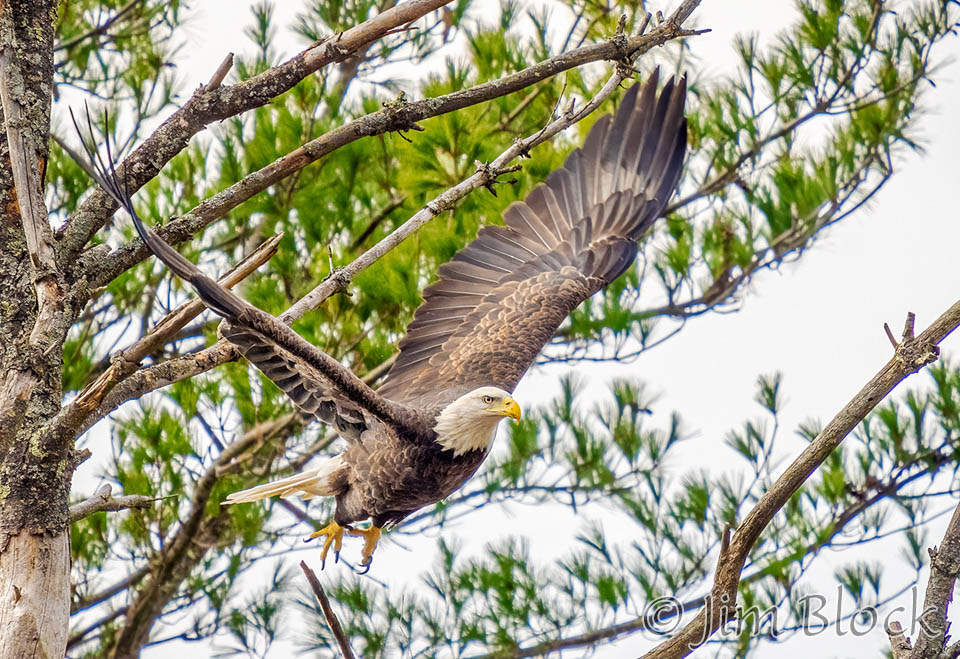
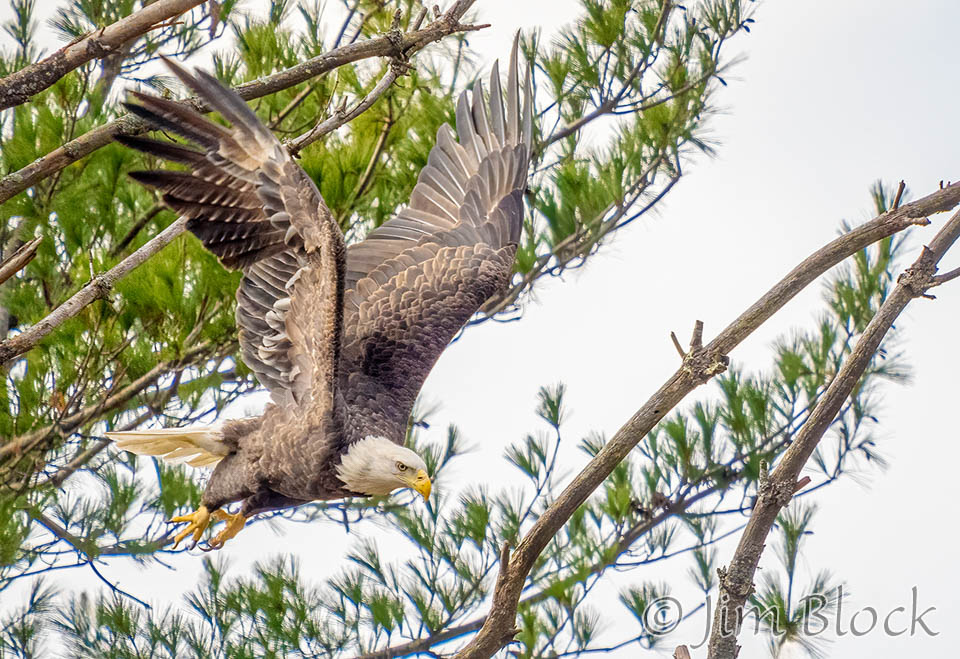
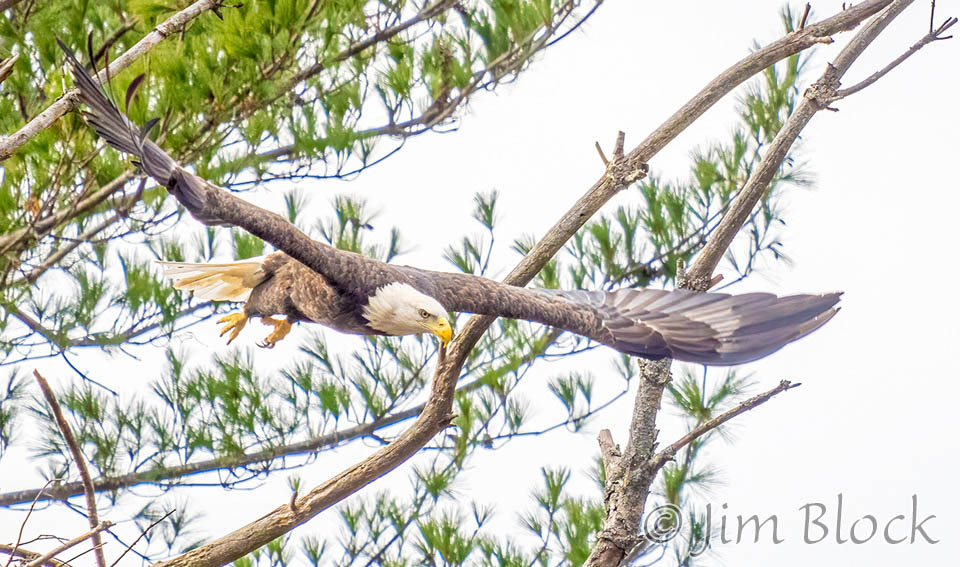
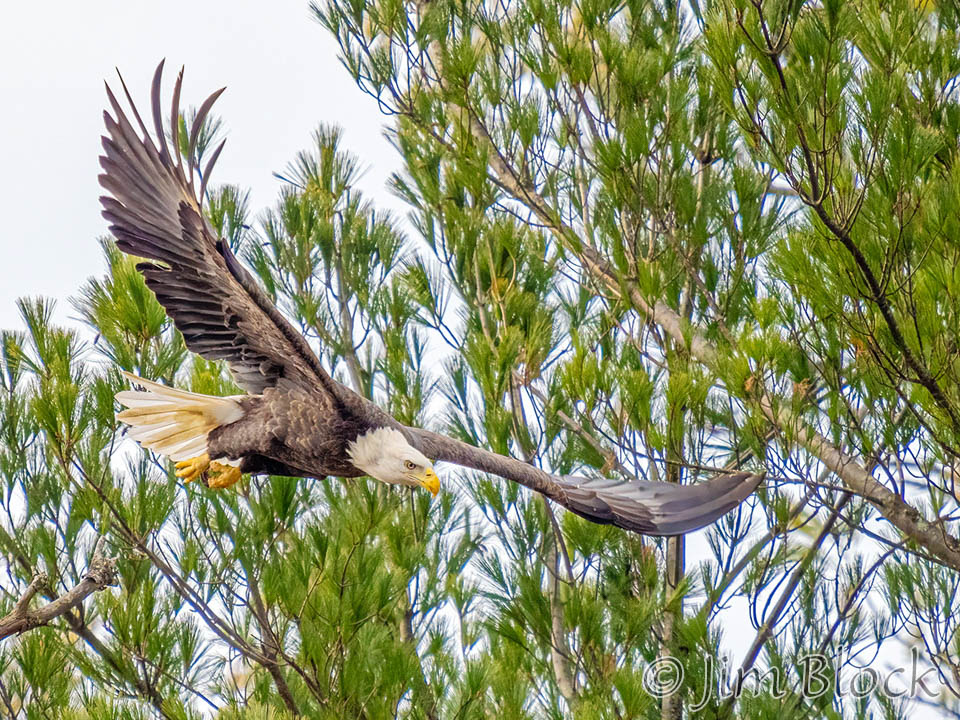
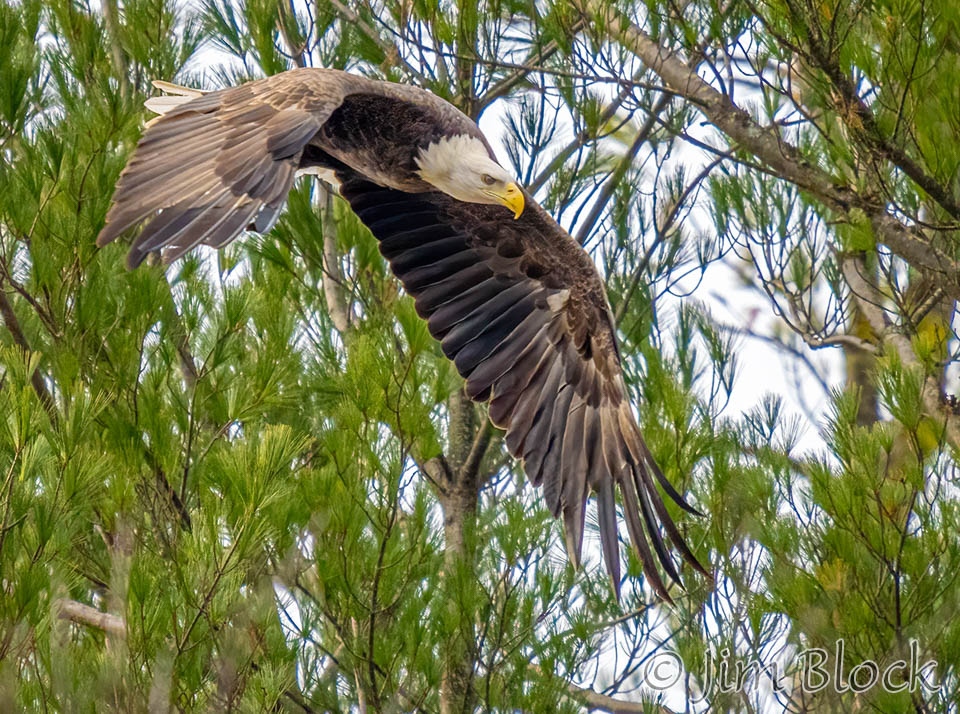
Eagles in flight are a thing of beauty. The light was mostly soft and this was the day I got my best action photos of the eagles during the four years.
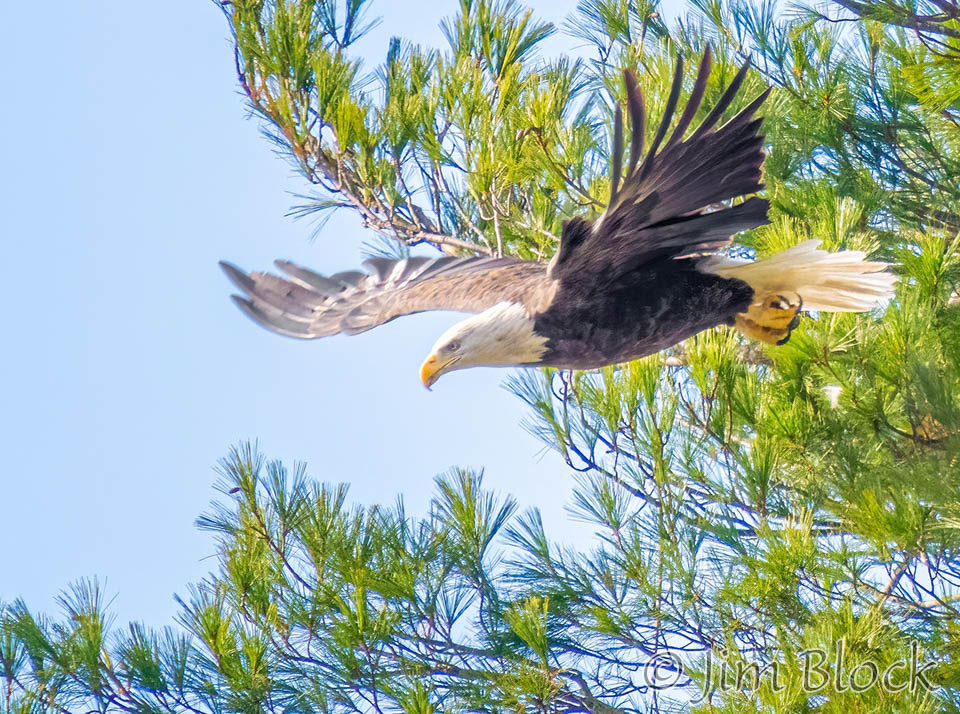
One eagle supervised while its mate worked.
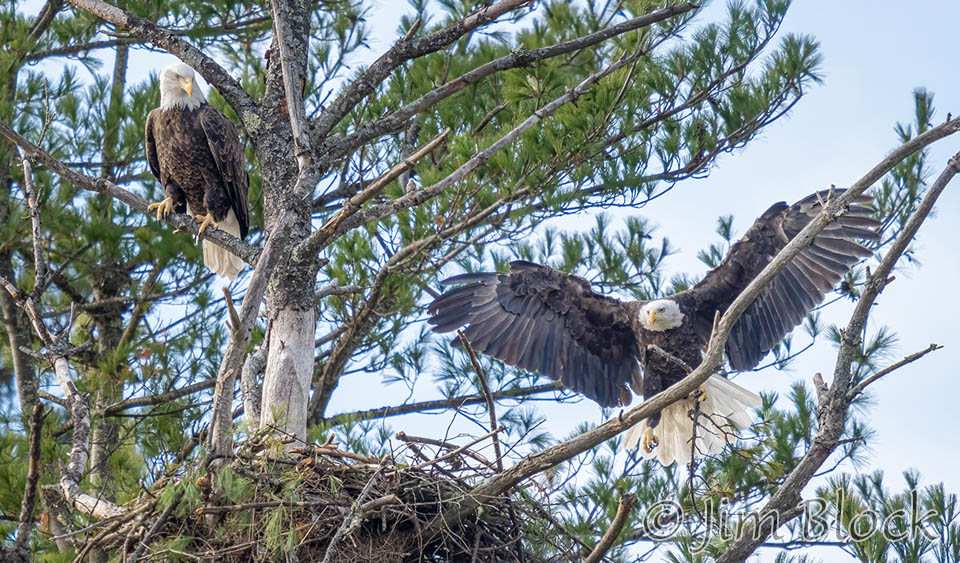
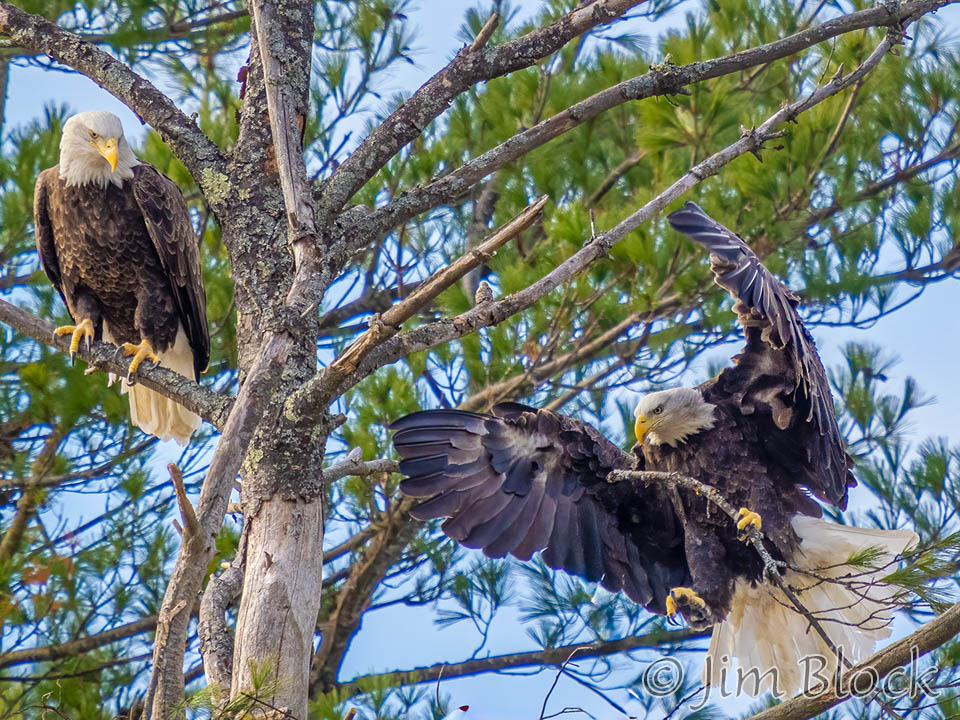
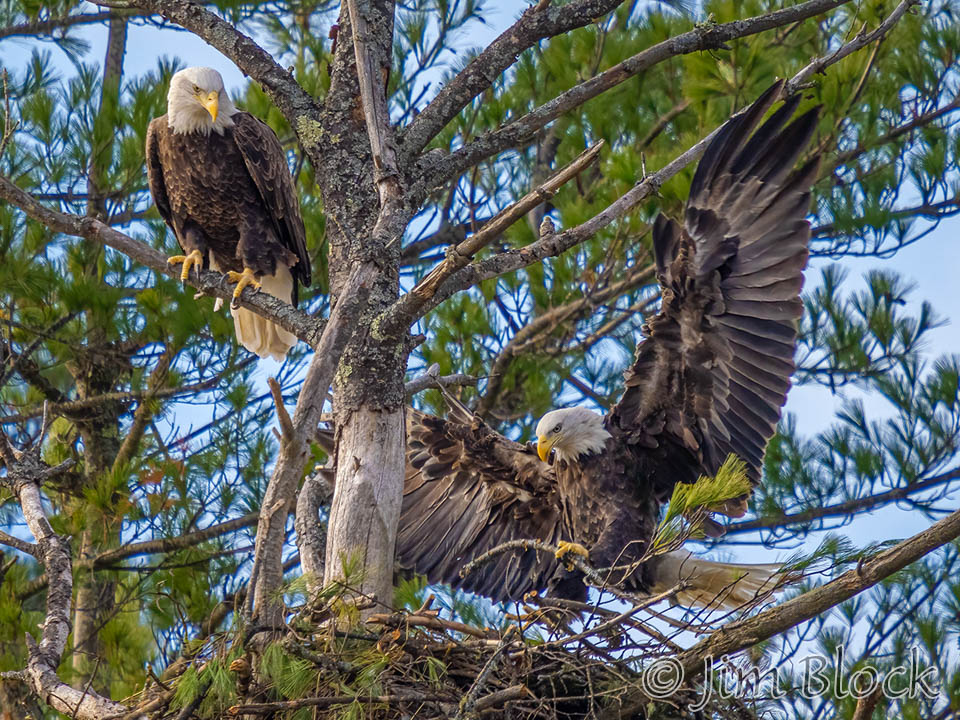
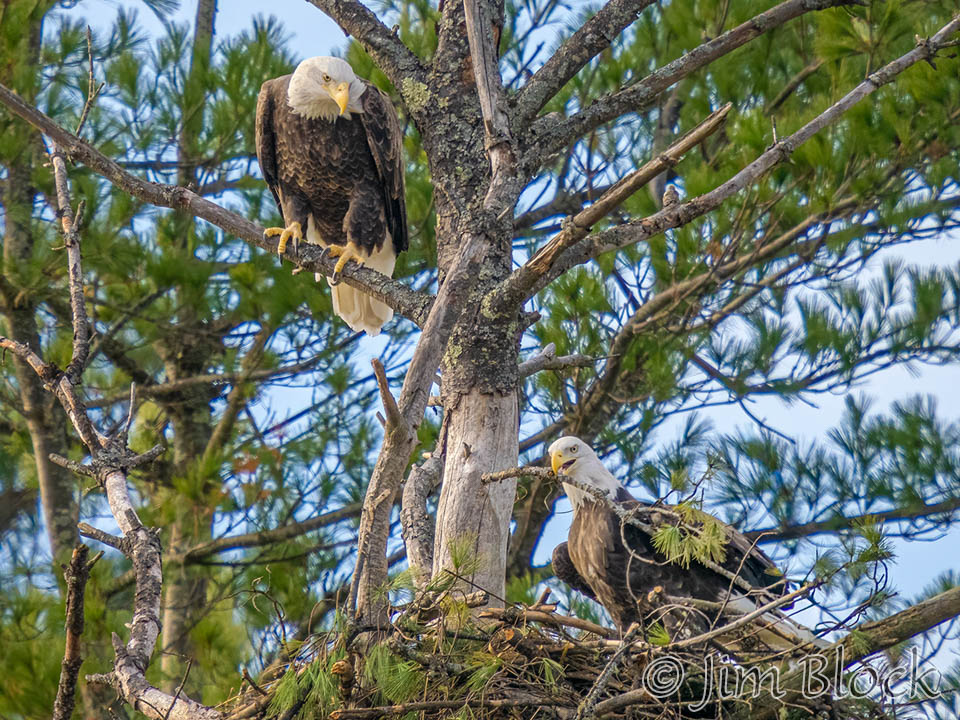
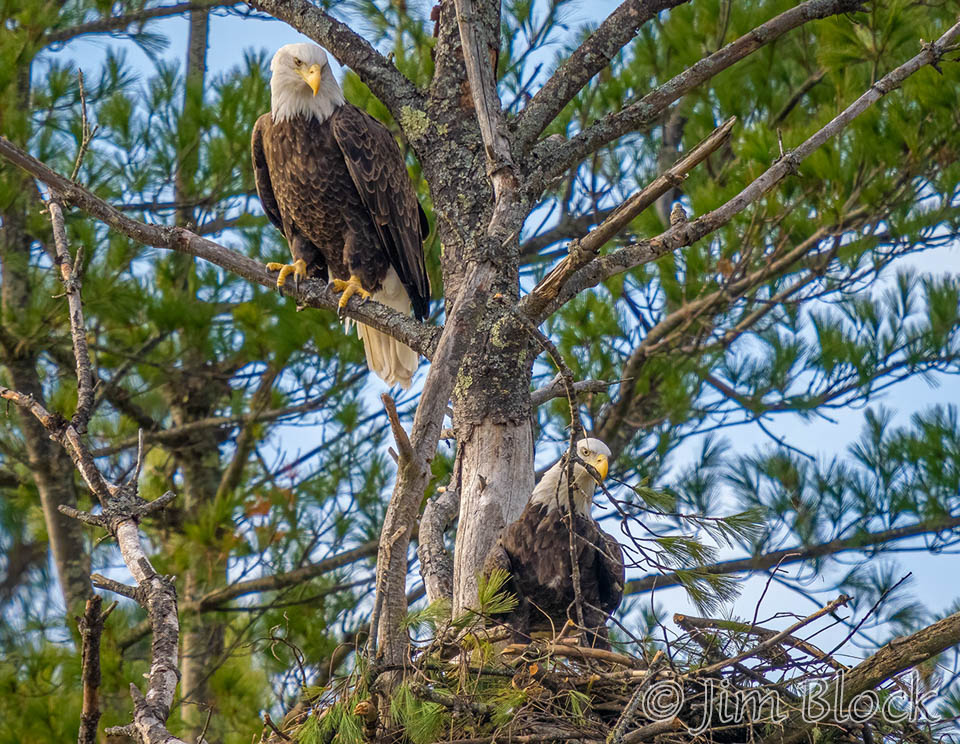
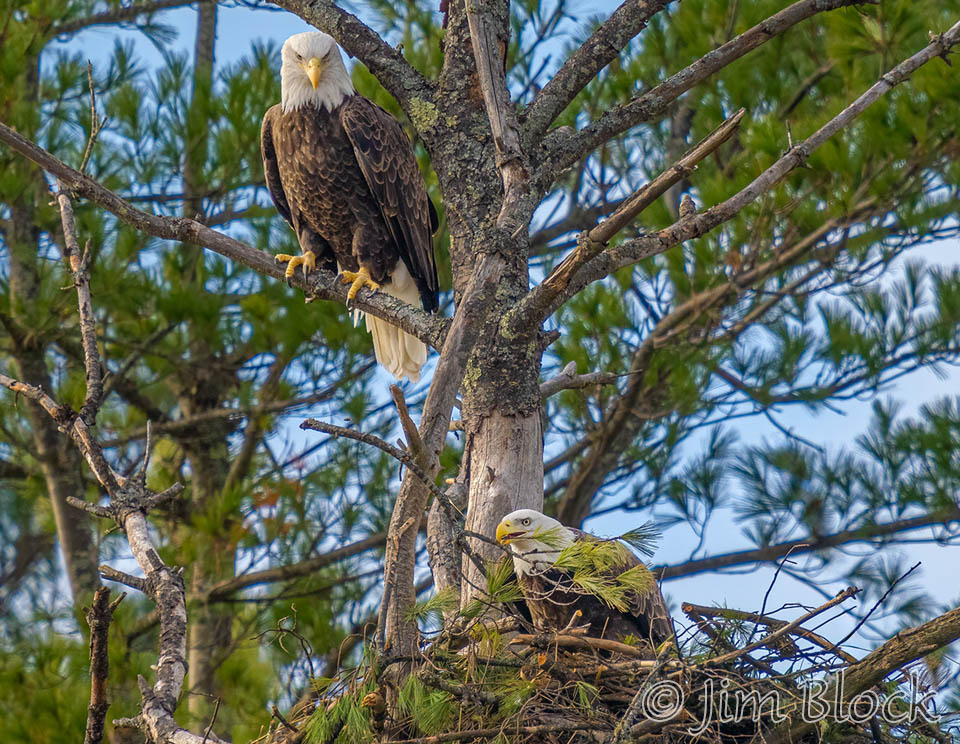
The supervising eagle left to get more branches.
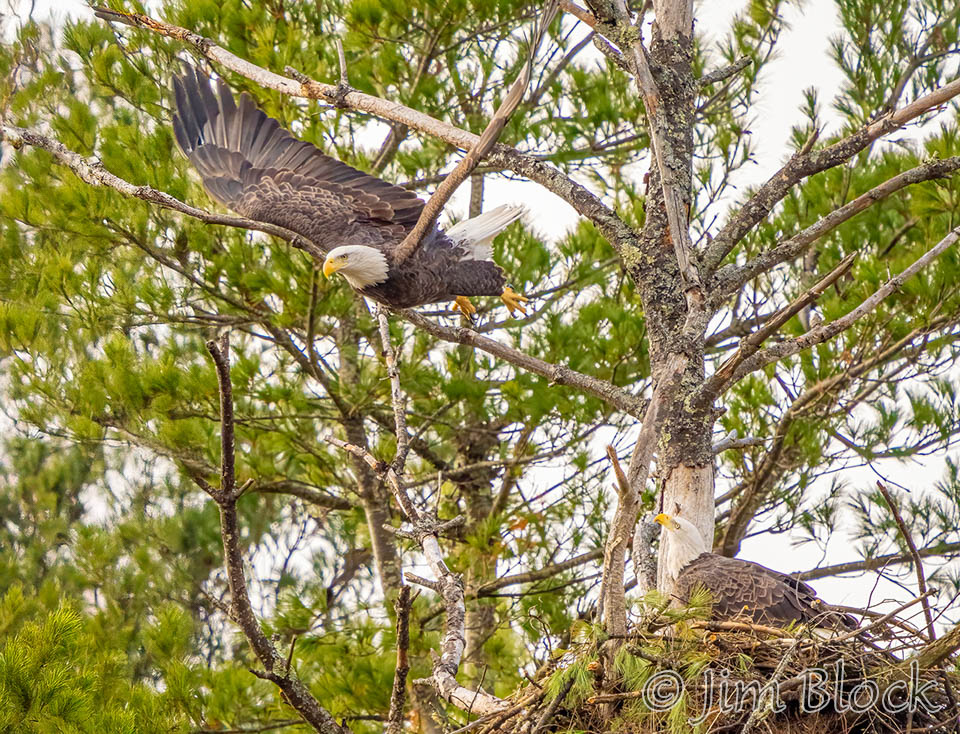
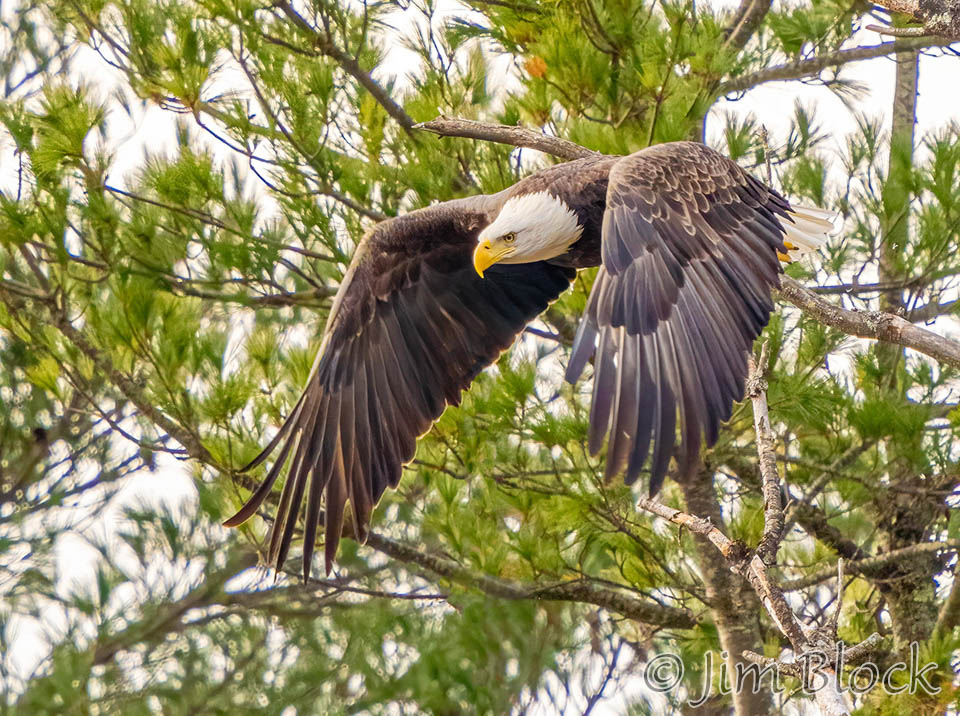
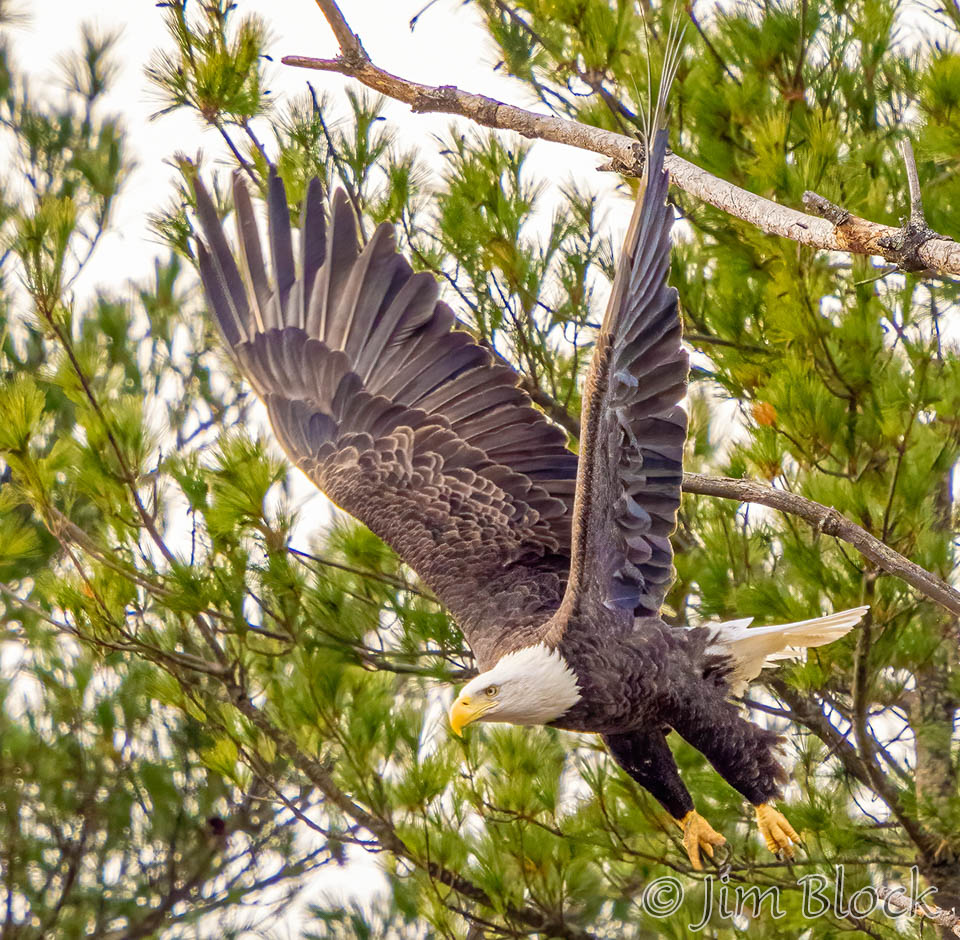
Two minutes later it was back to find the nest empty.
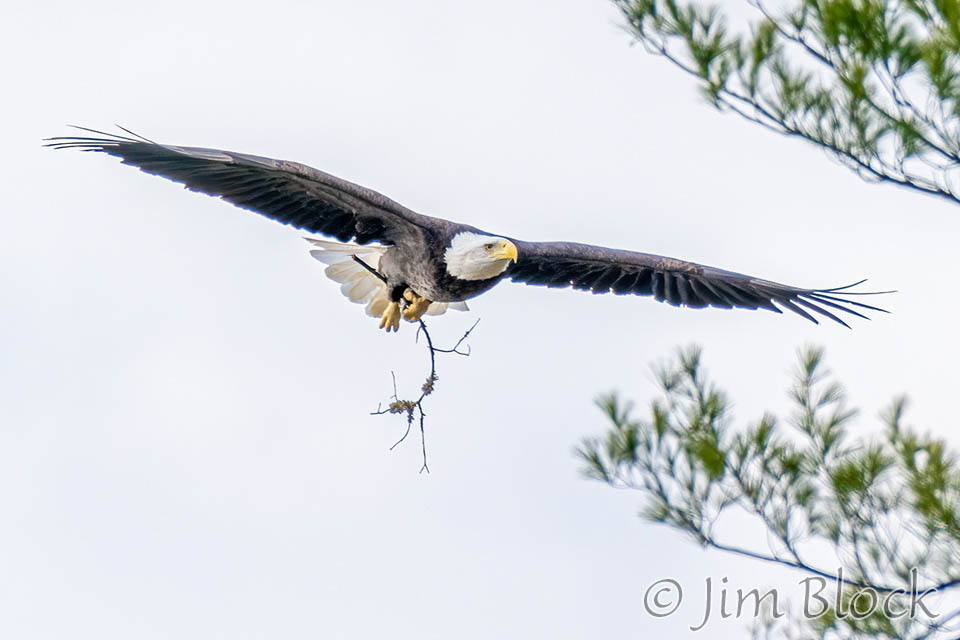
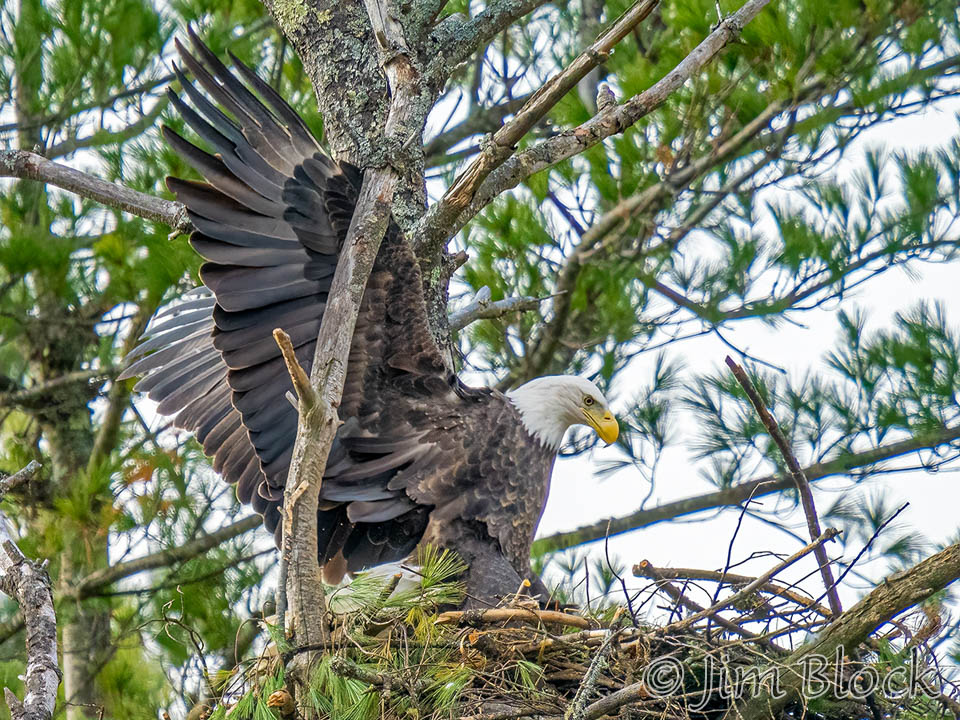
But not for long as its mate entered from the rear carrying a thick stick minutes later.
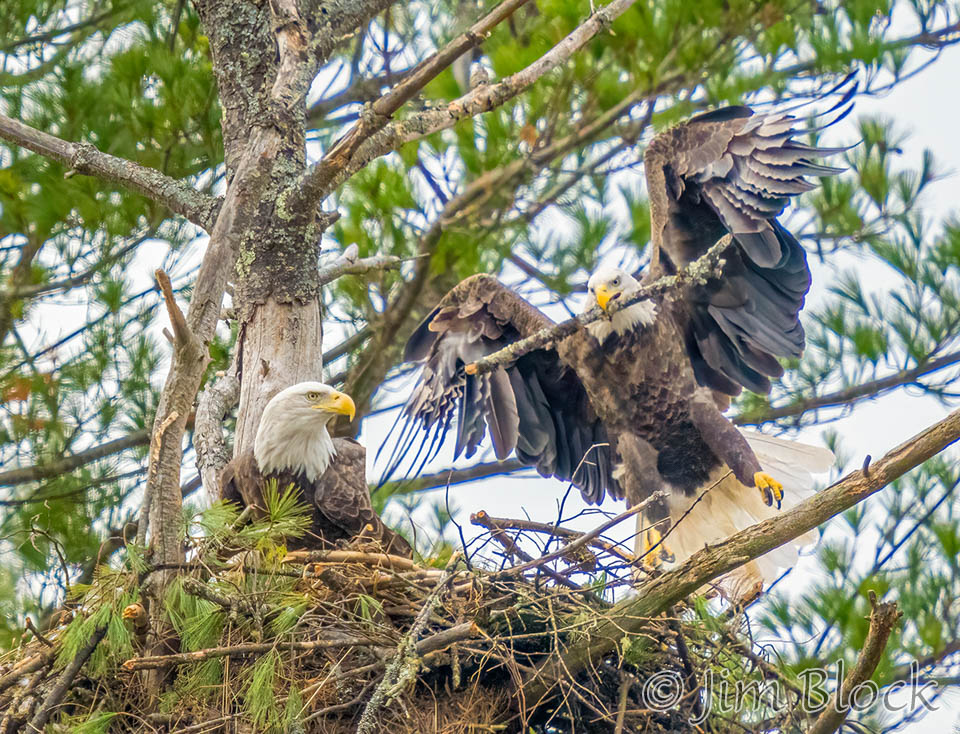
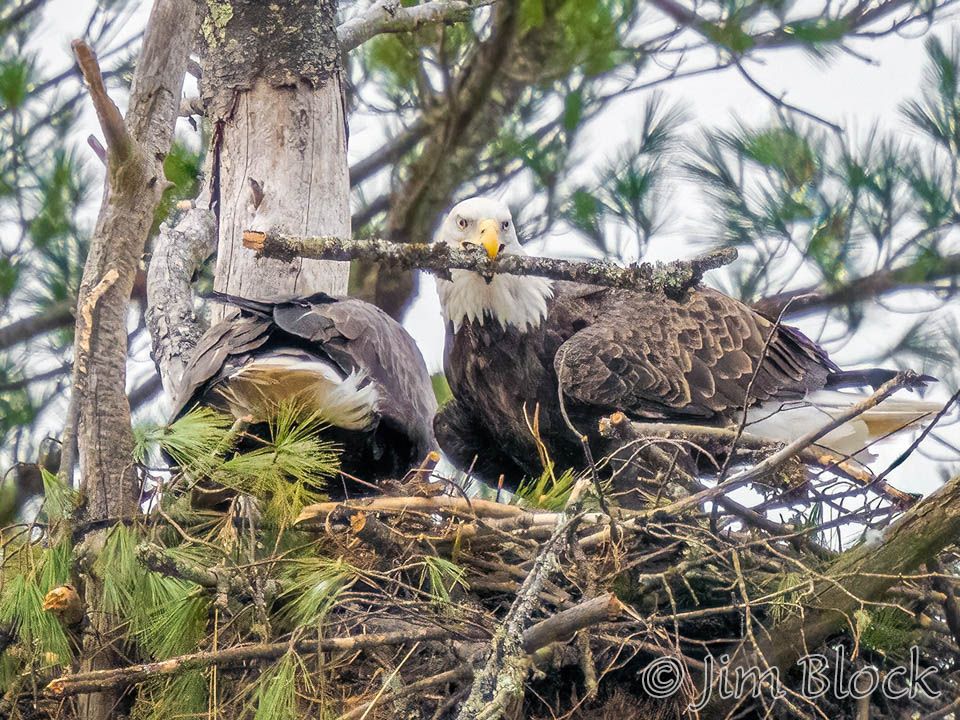
One left the nest to my left and the other to my right. The right, downstream north along Clay Brook, was the better direction for photography.
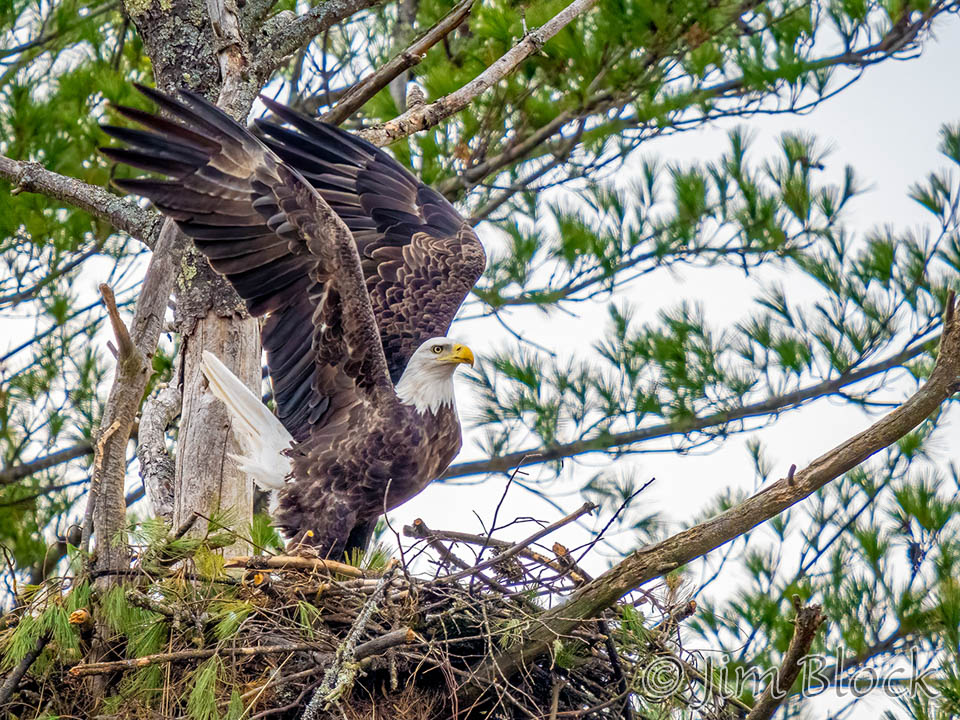
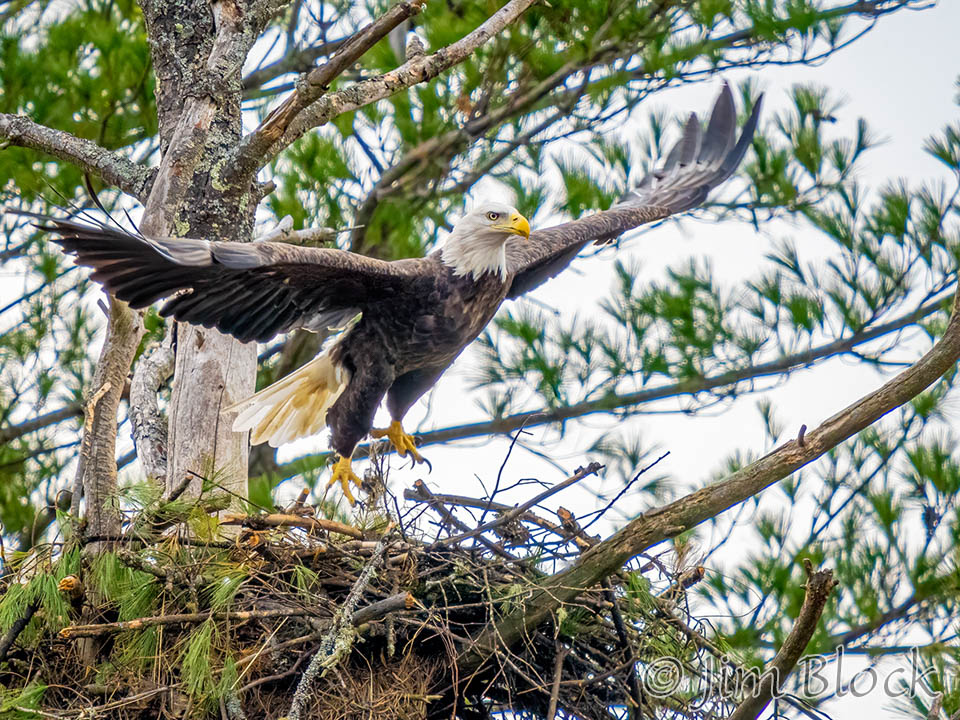
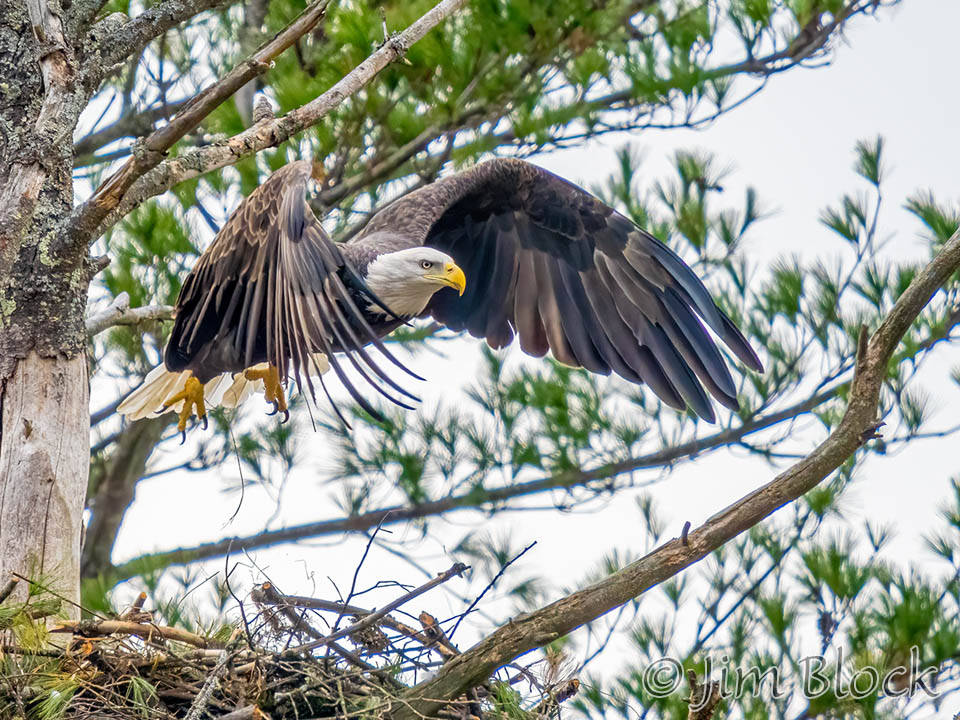
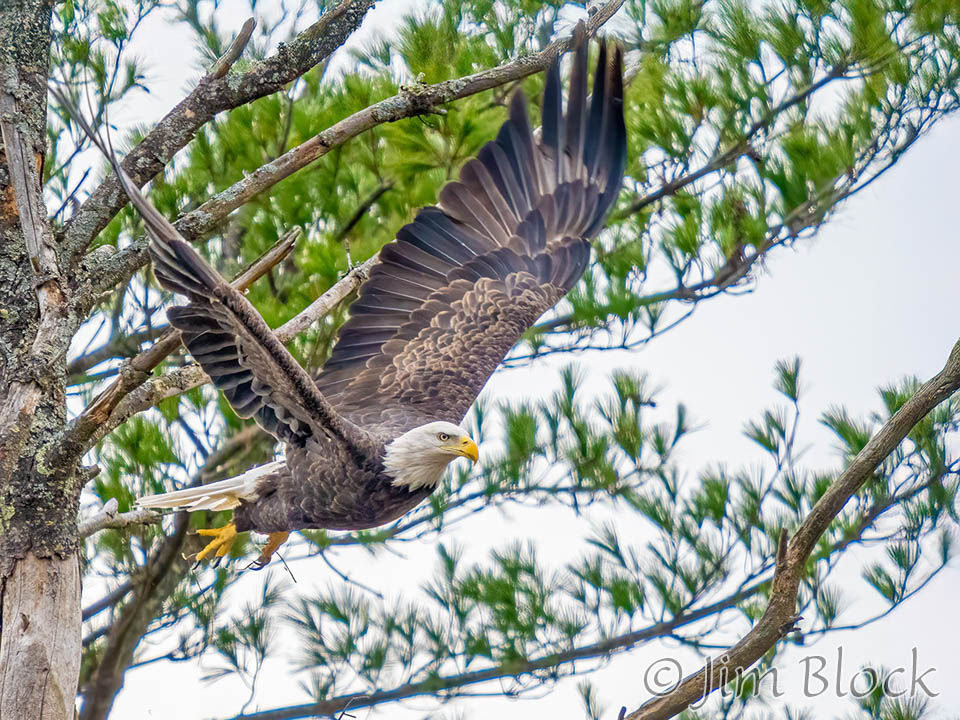
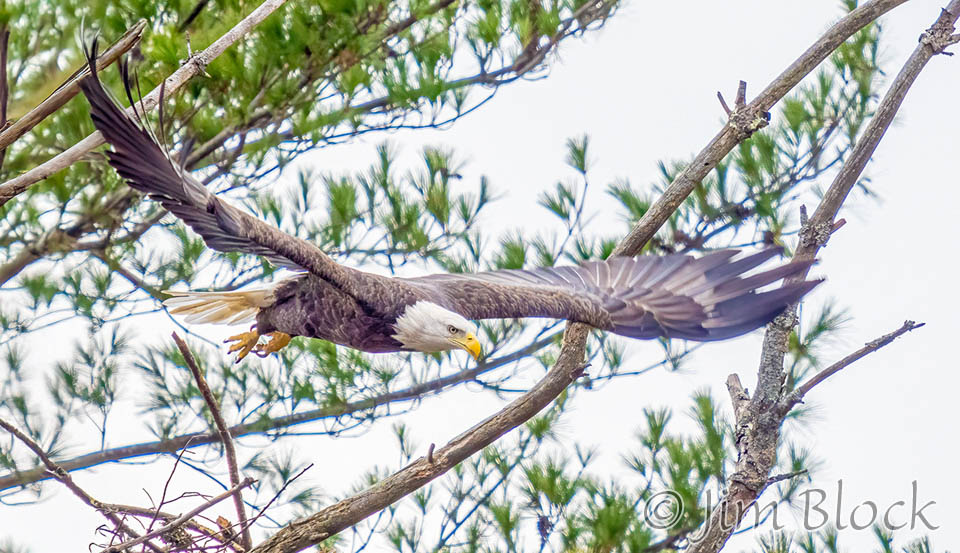
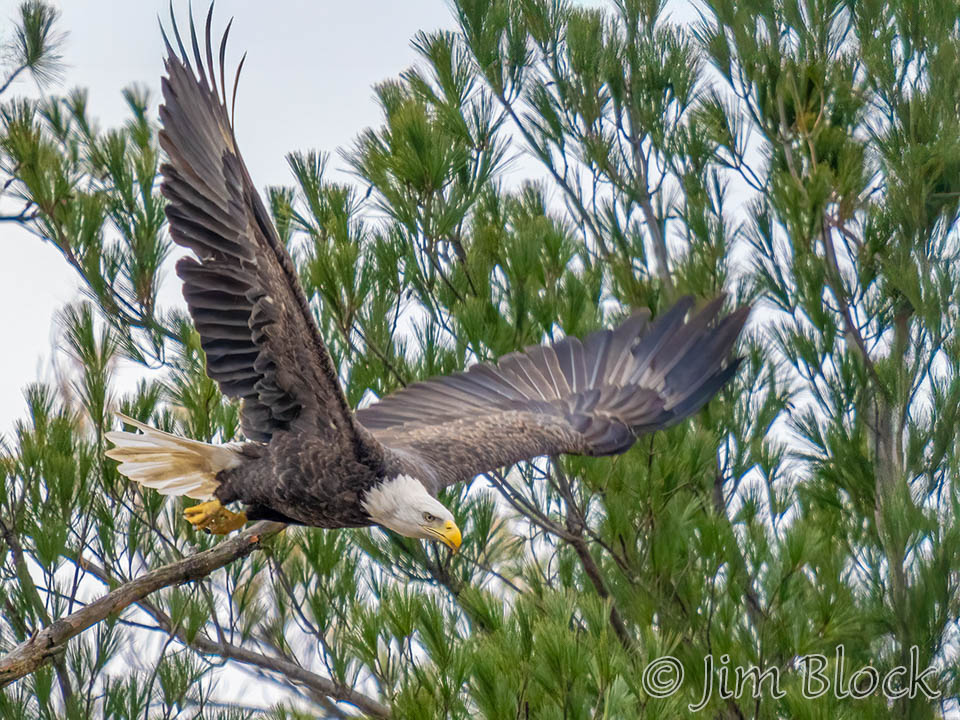
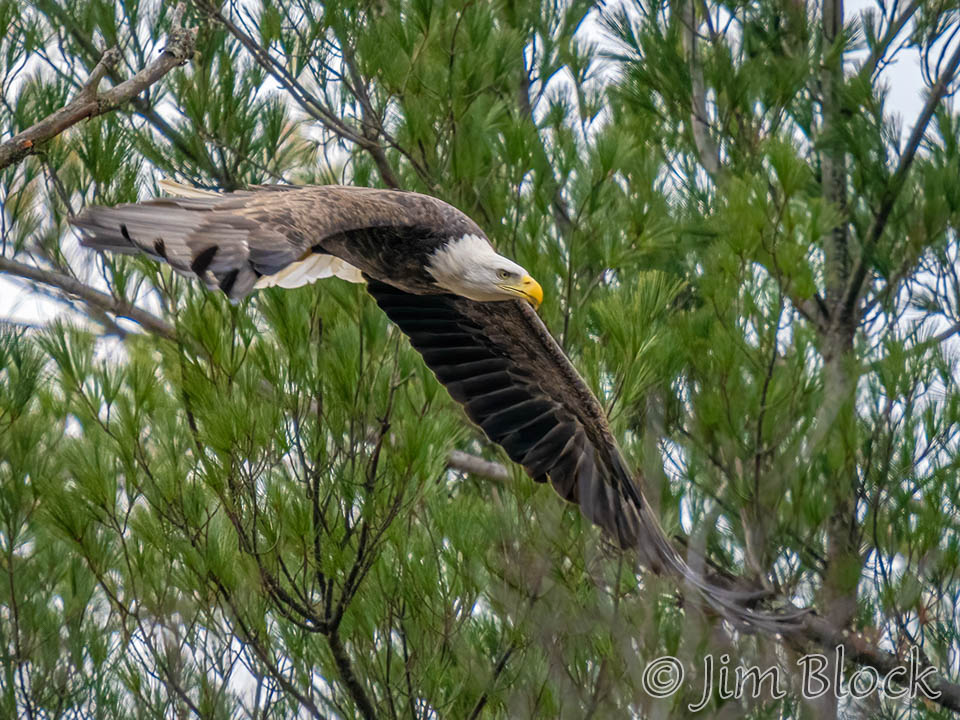
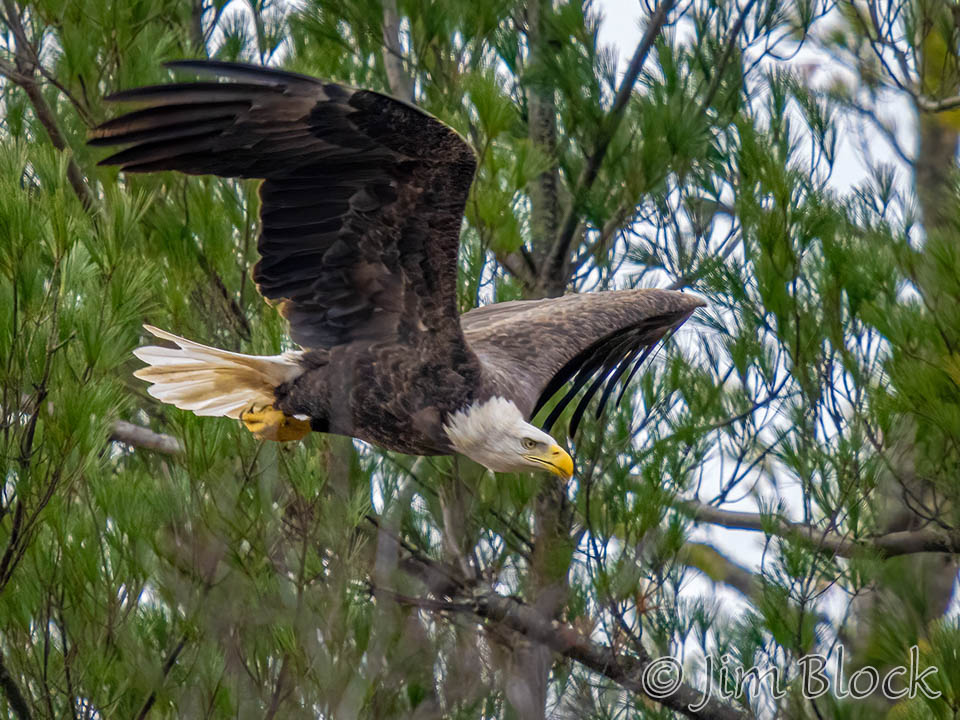
One eagle returned to the nest and the second, who headed north and looped to the field behind the nest, soon returned.
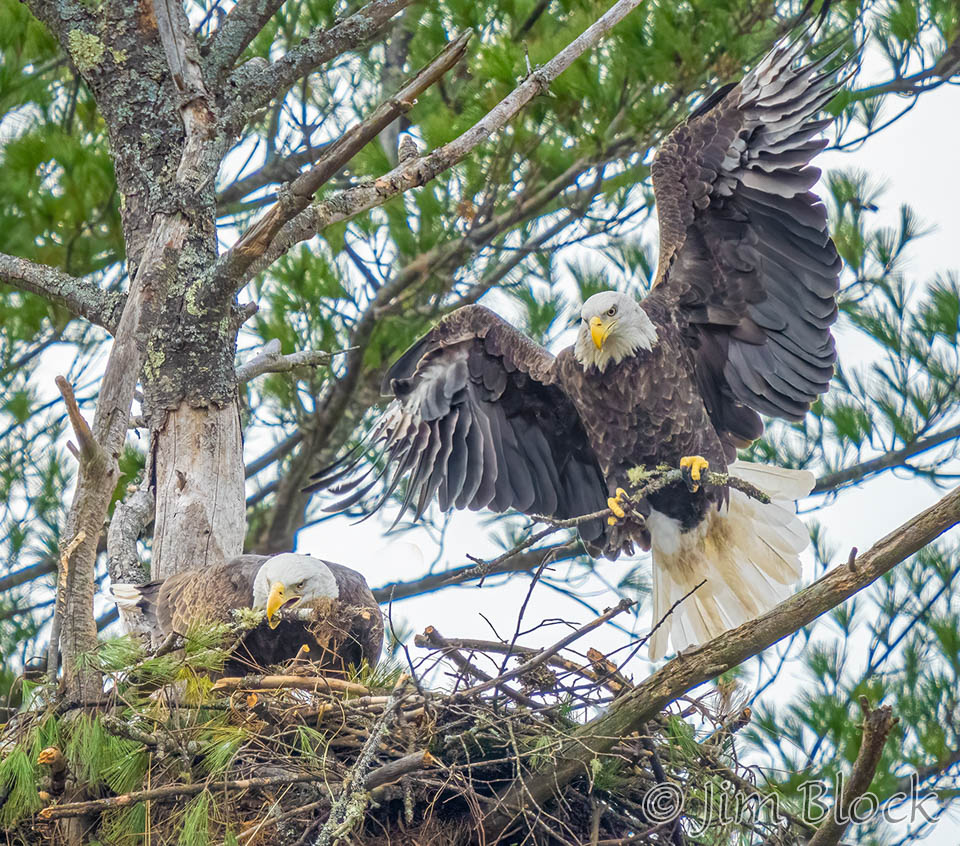
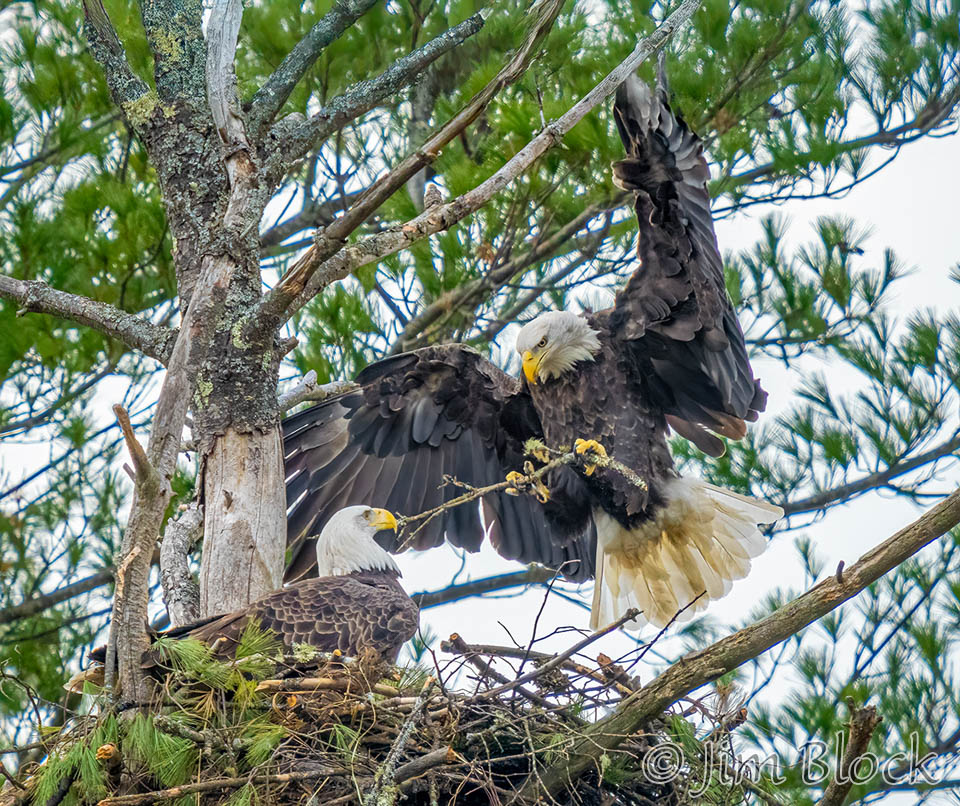
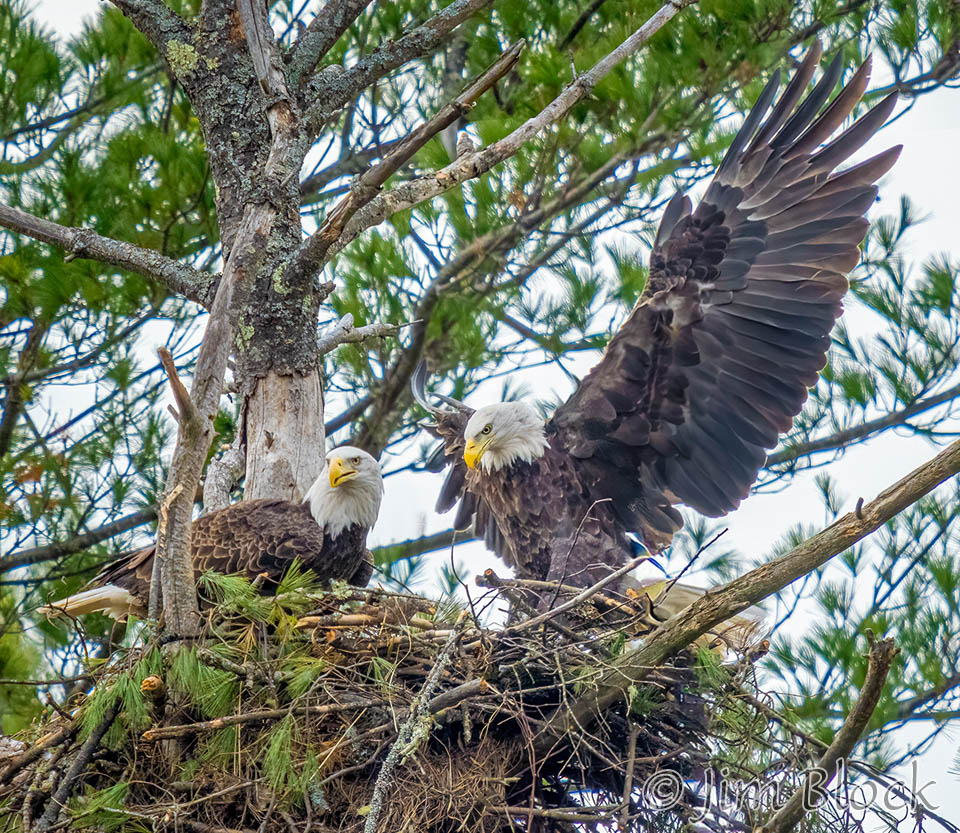
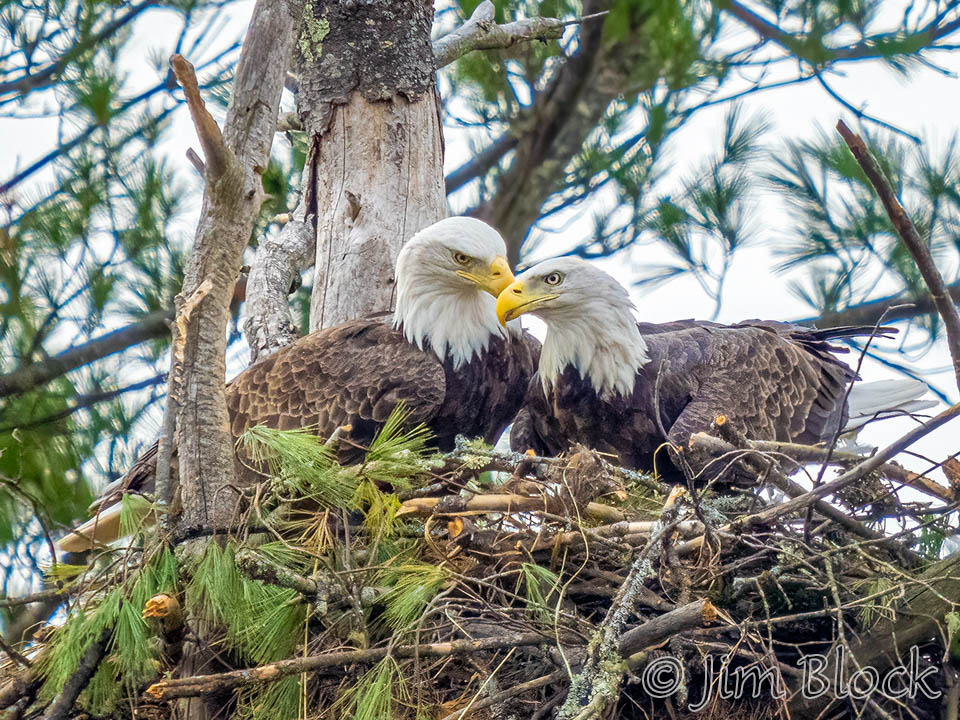
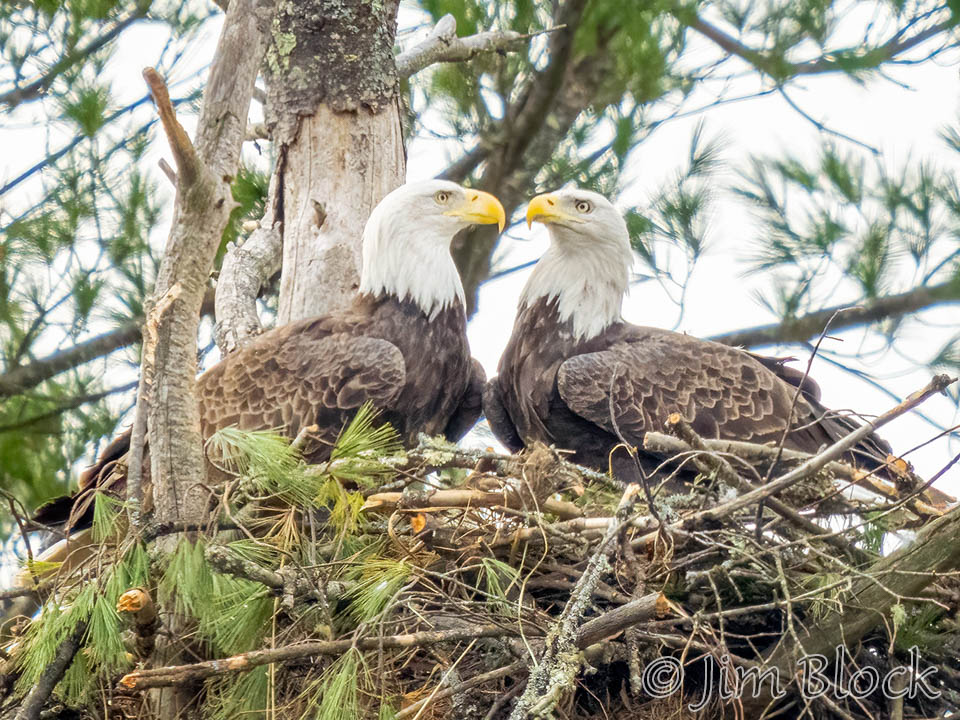
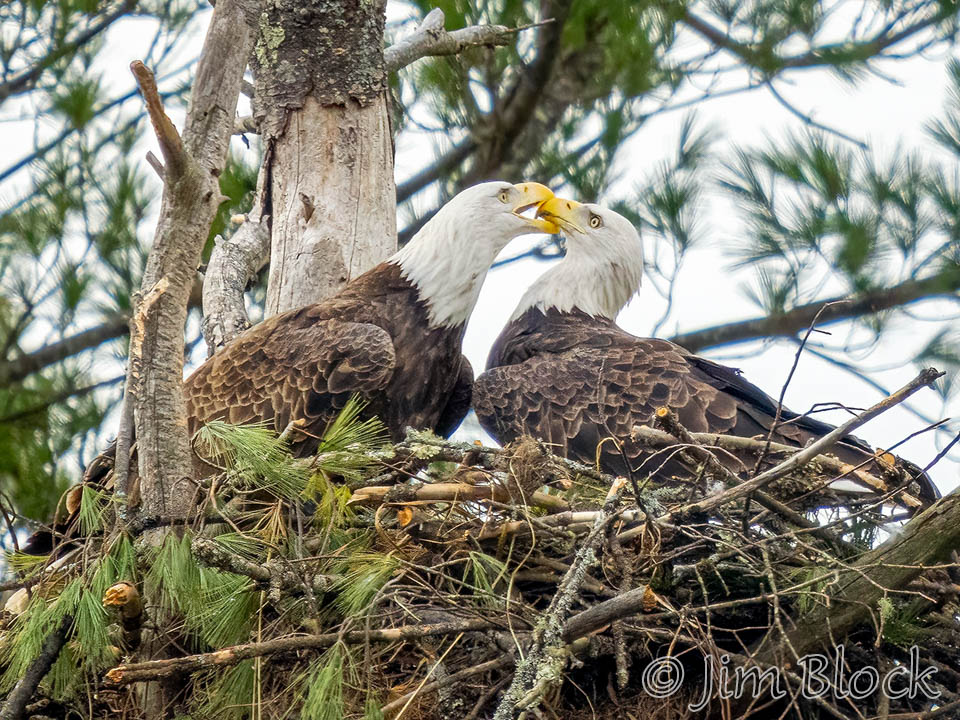
They shared an intimate few moments in the nest.
Then one flew, to get more sticks, of course.
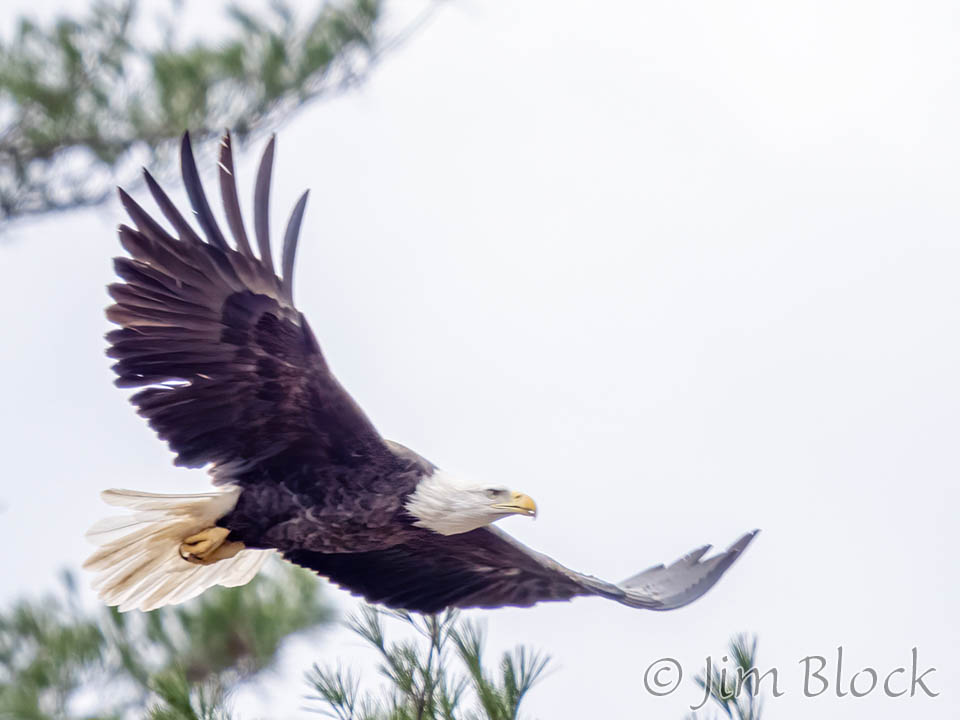
The eagle was back one minute later with another stick.
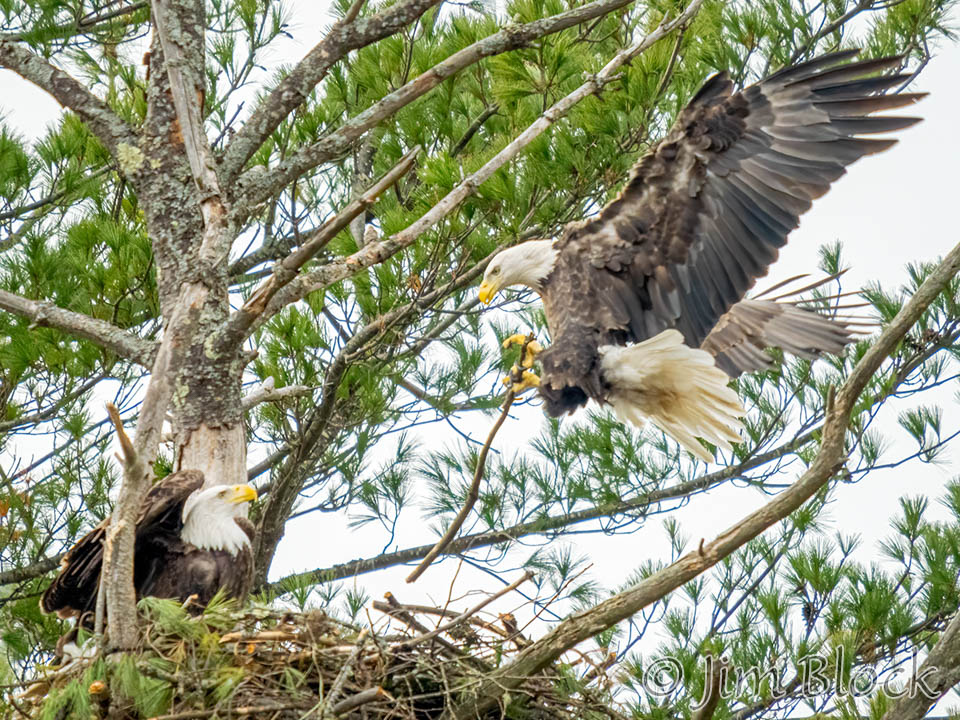
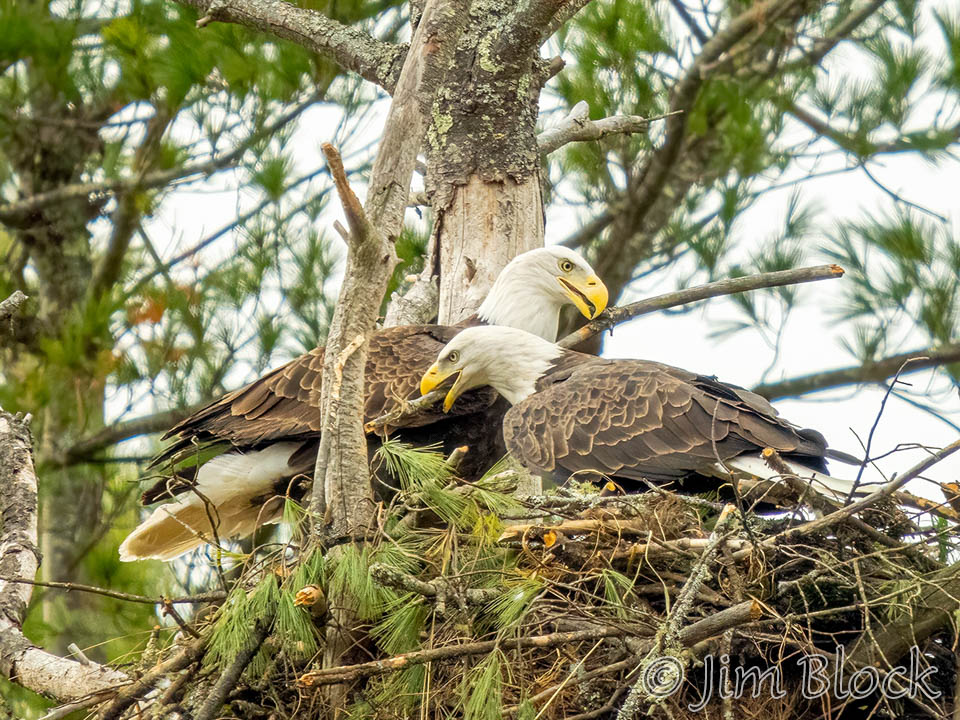
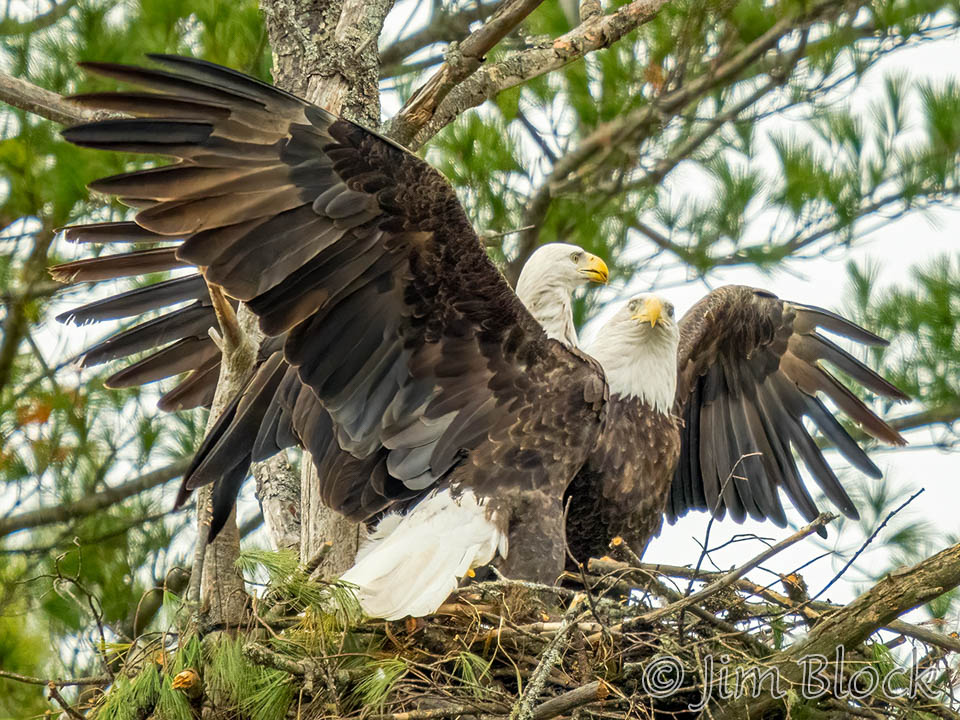
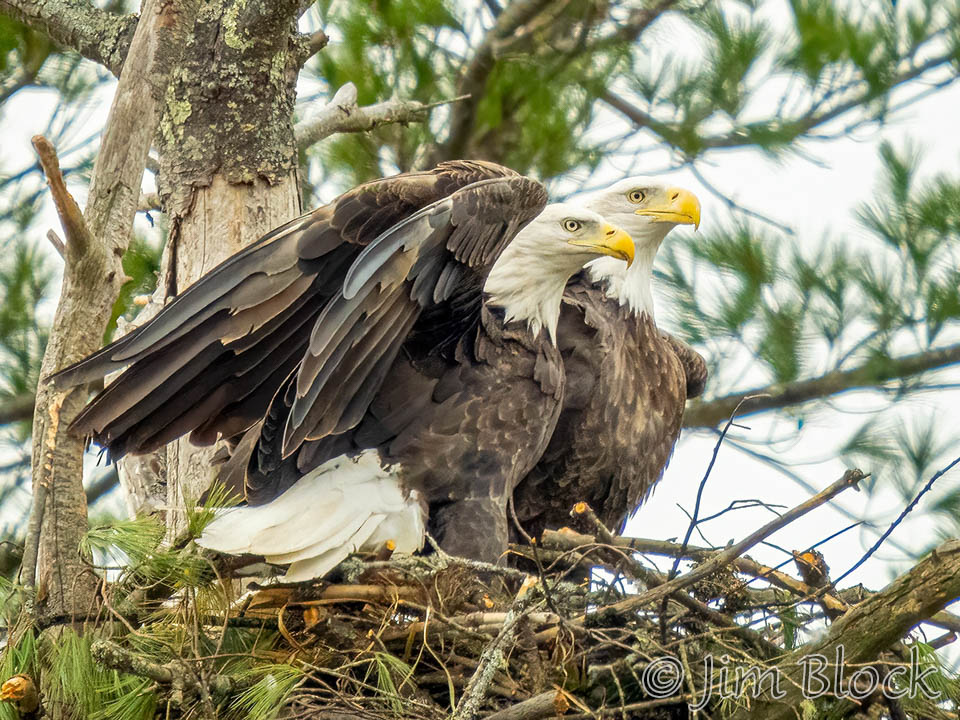
They both diligently worked on the nest.
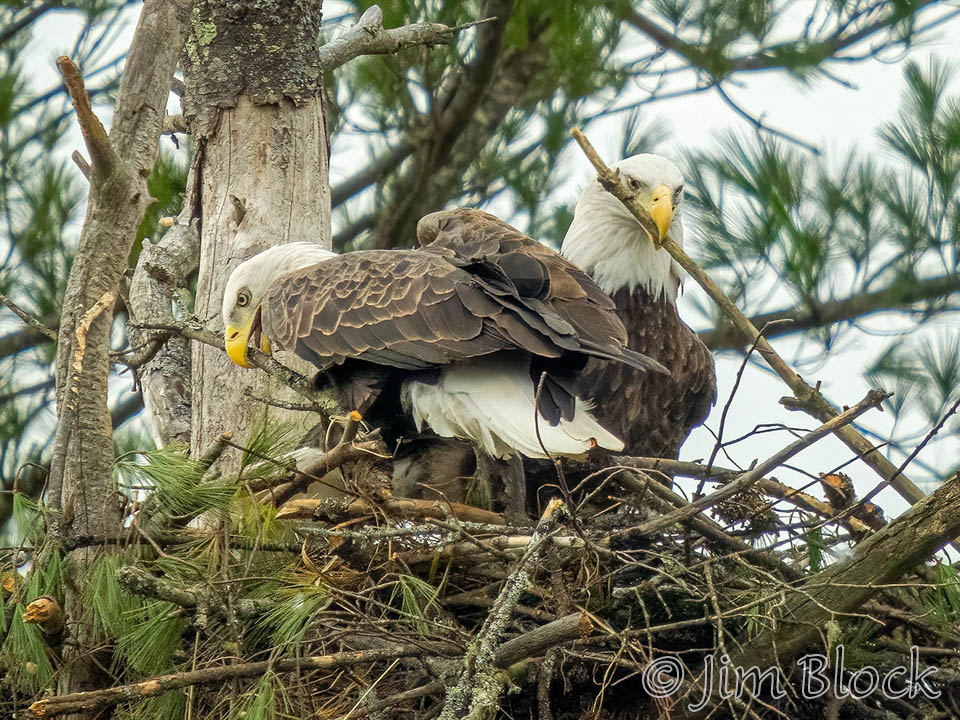
One moved to a support branch while the other maneuvered a long stick.
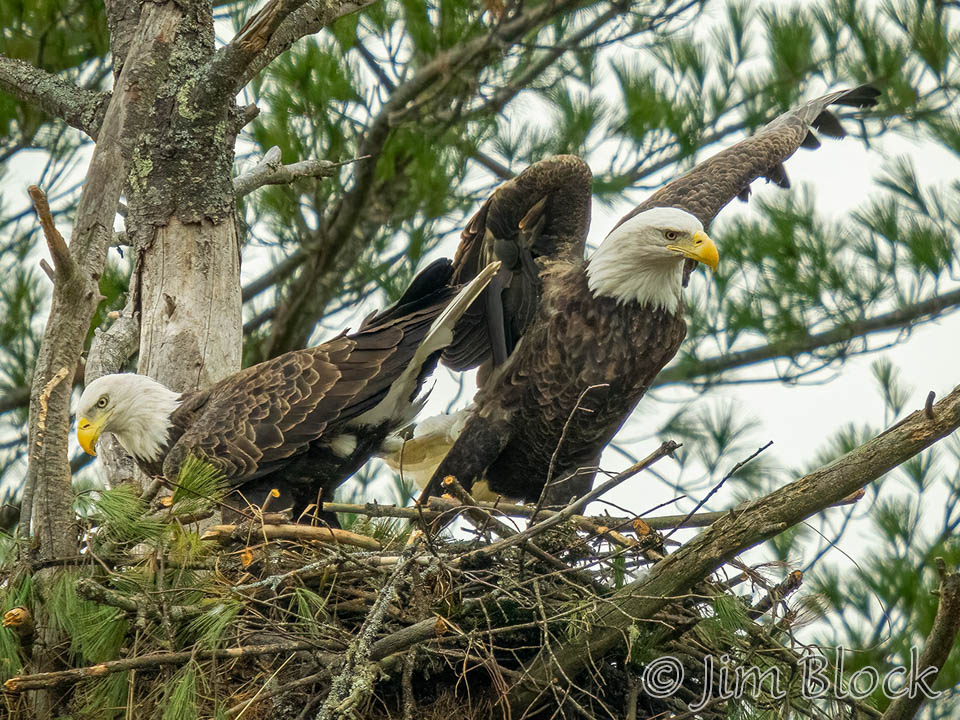
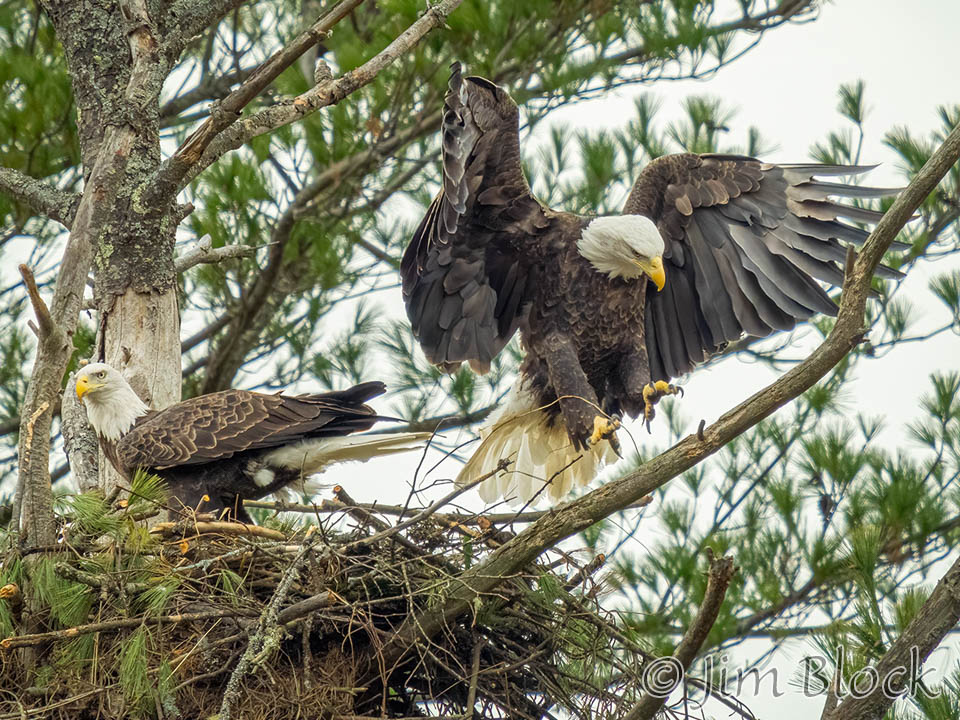
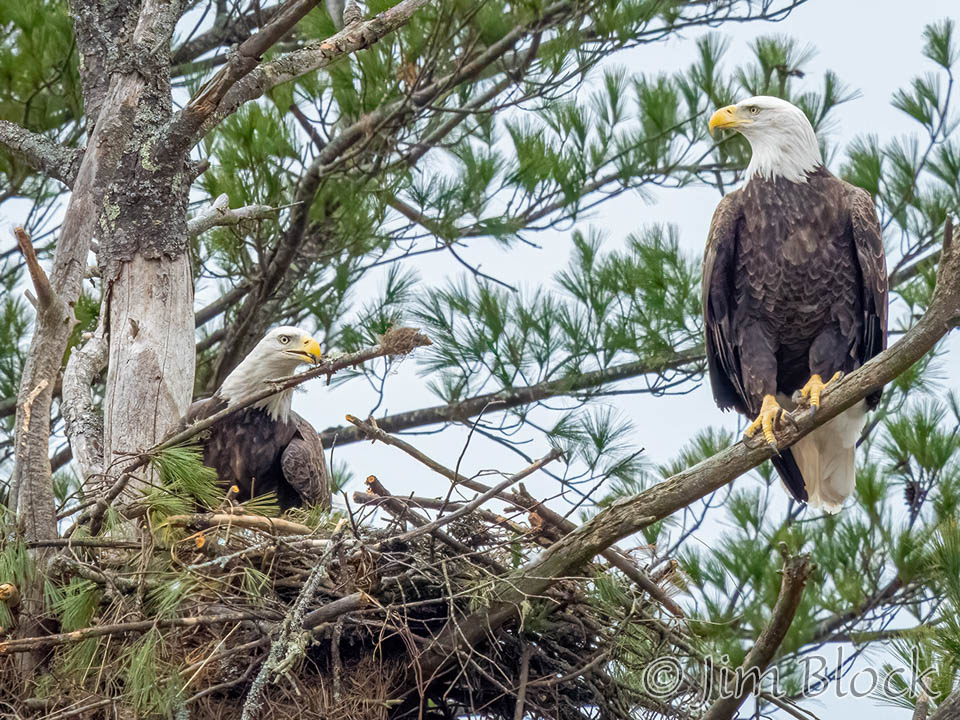
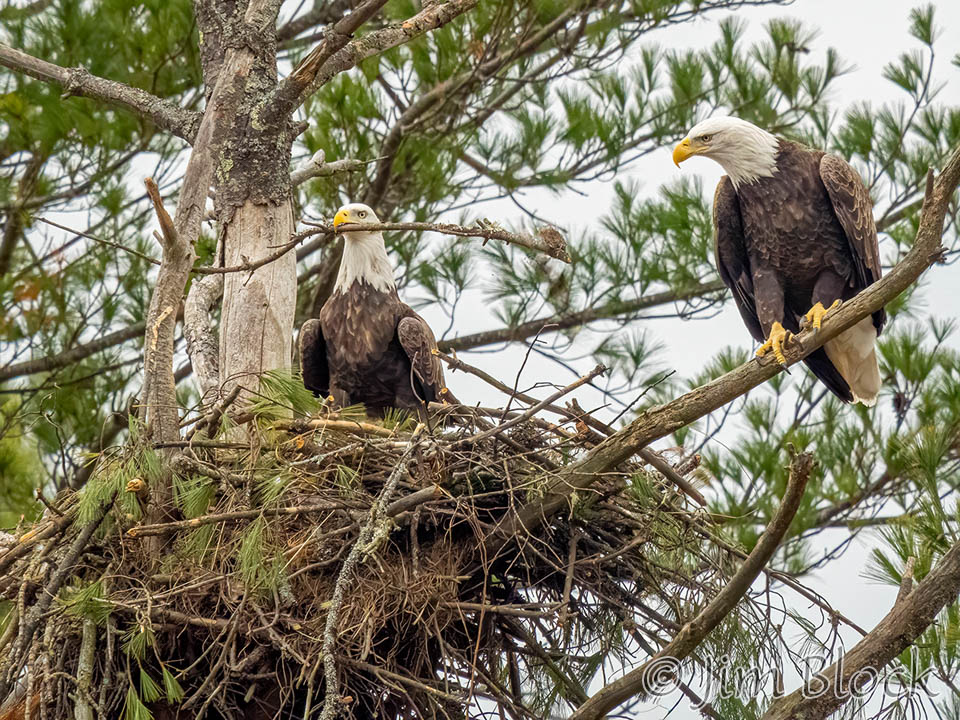
Three minutes later, this was the scene.
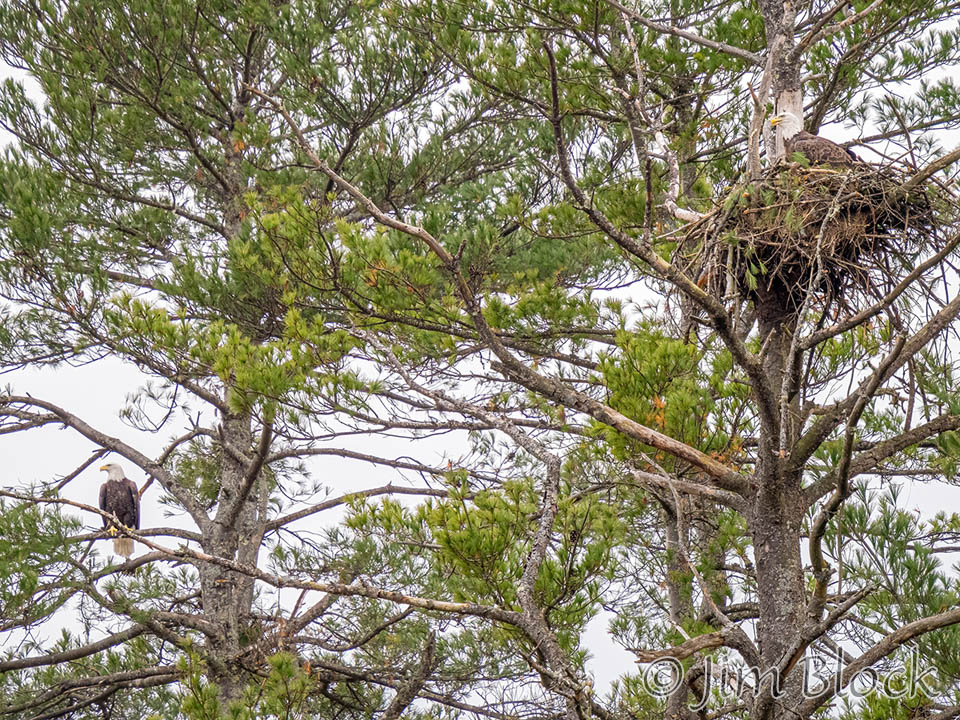
Then another three minutes passed before the eagle in the nest launched.
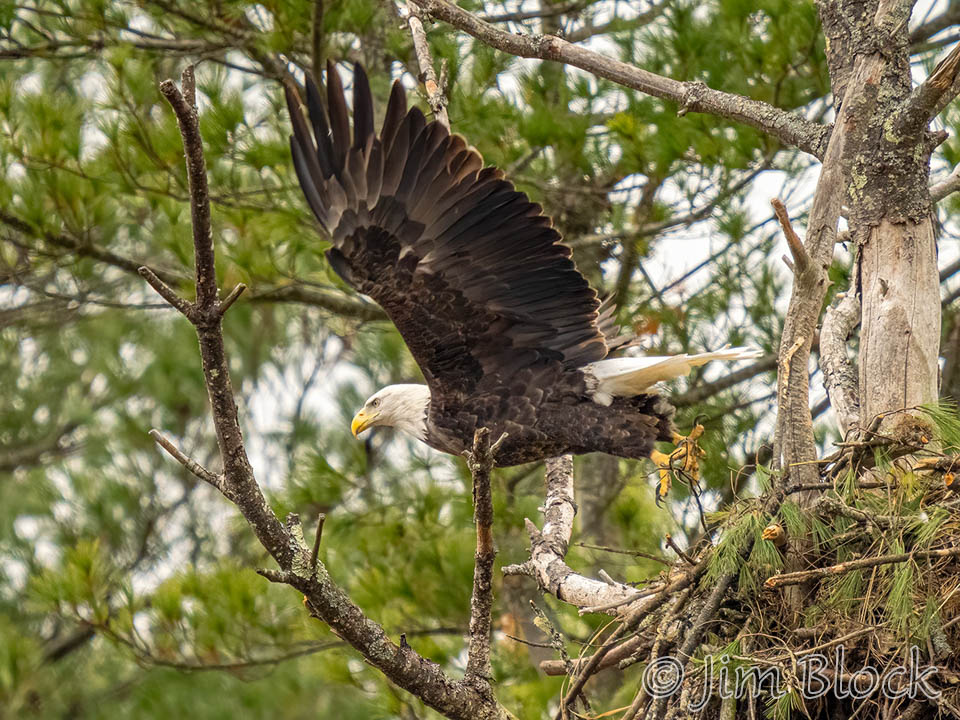
Eight minutes later they were both back in the nest.
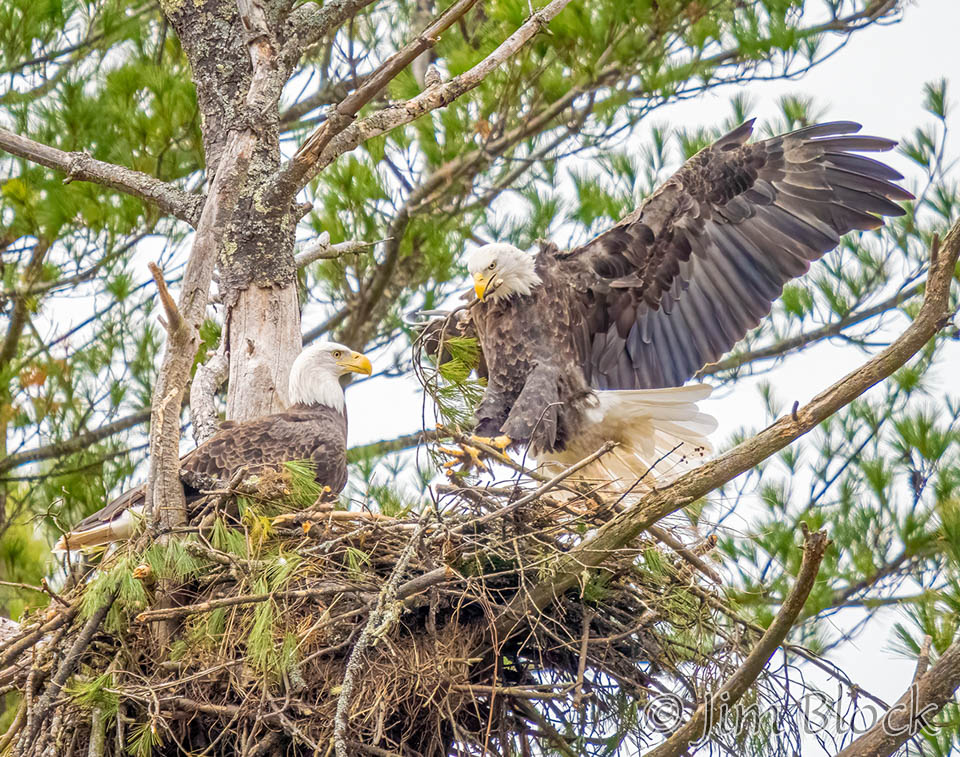
Here is a close-up look at the photo above for those reading this on their phone.
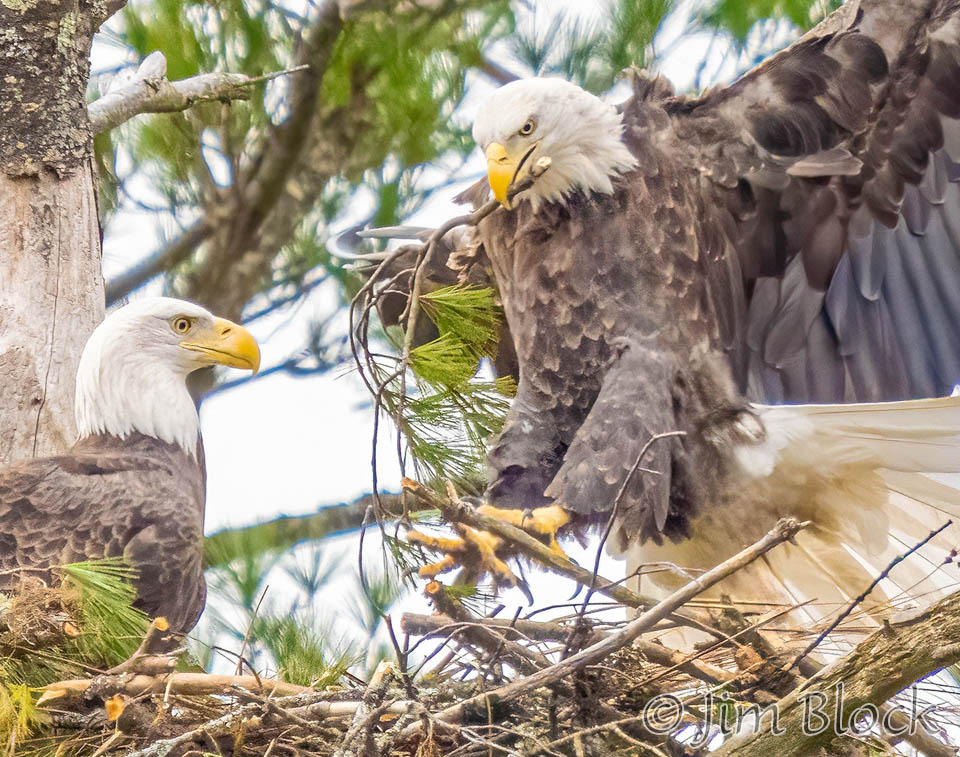
It was now 11 a.m. on a fantastic morning. Practically nonstop action. Made up for the many uneventful hours watching incubation.
An eagle jumped to the side branch then departed north down Clay Brook and likely looped back to the field behind the nest.
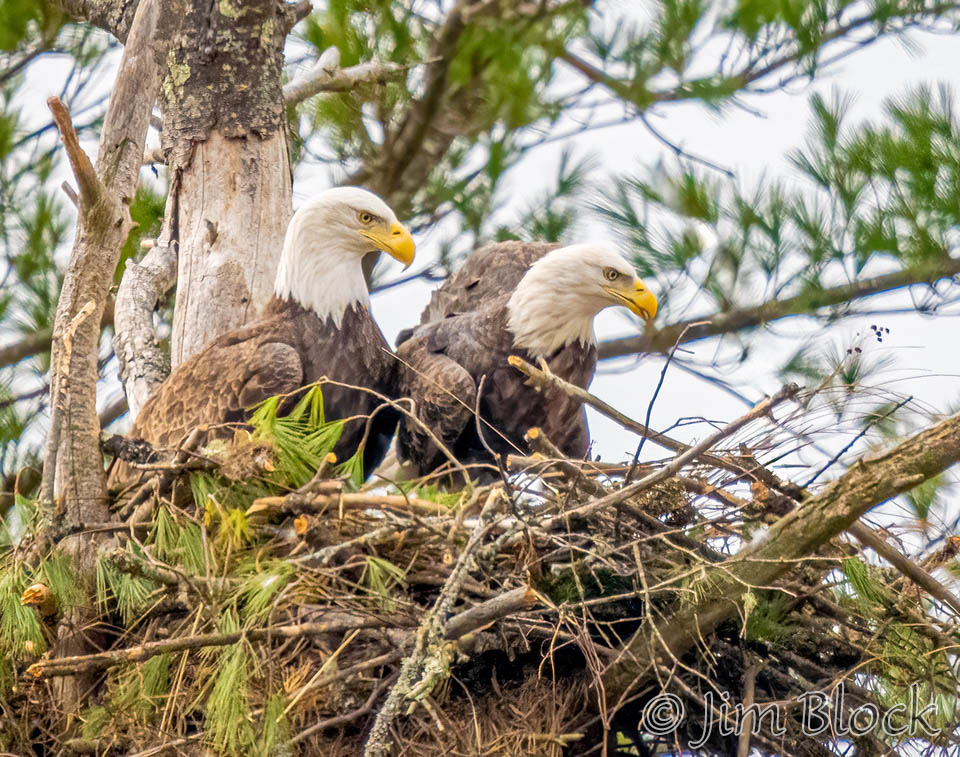
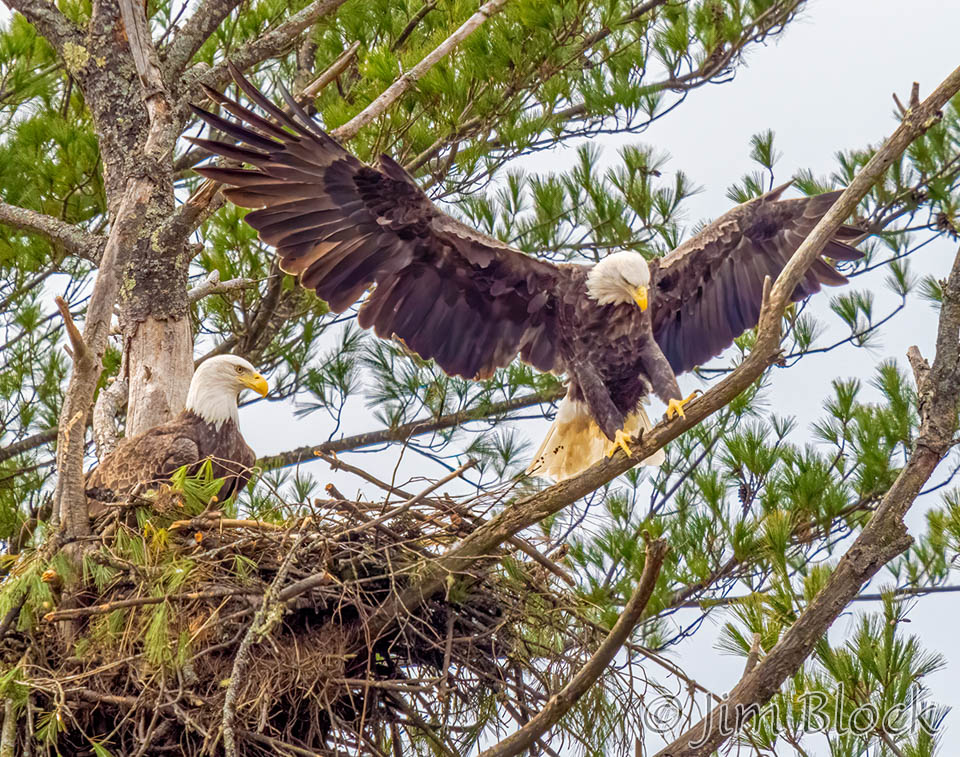
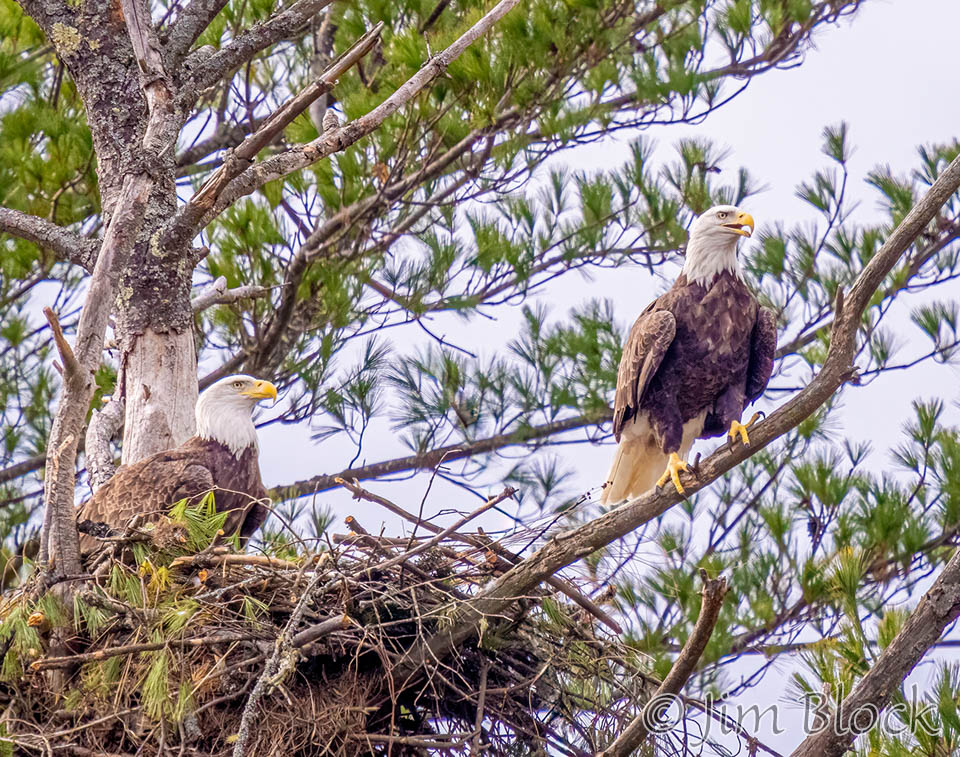
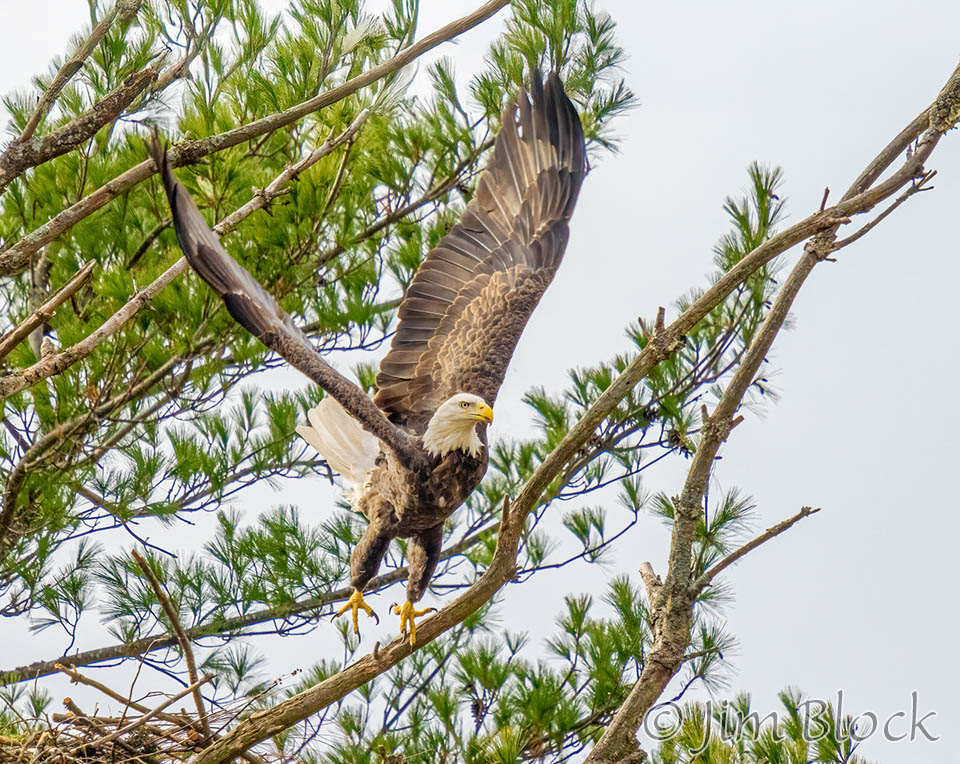
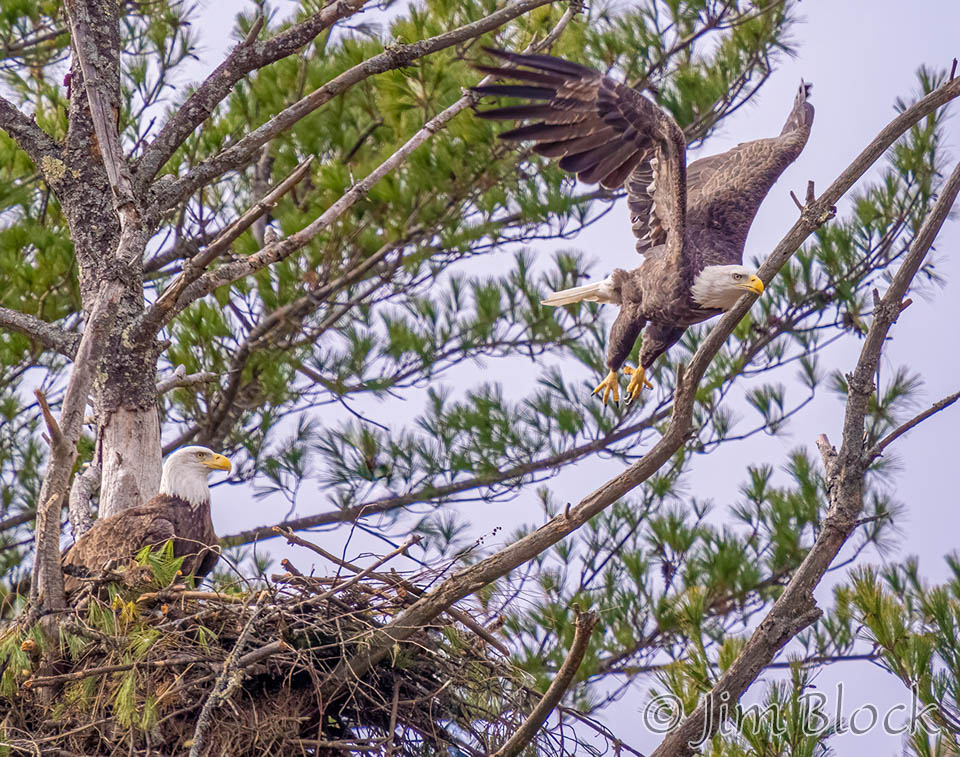
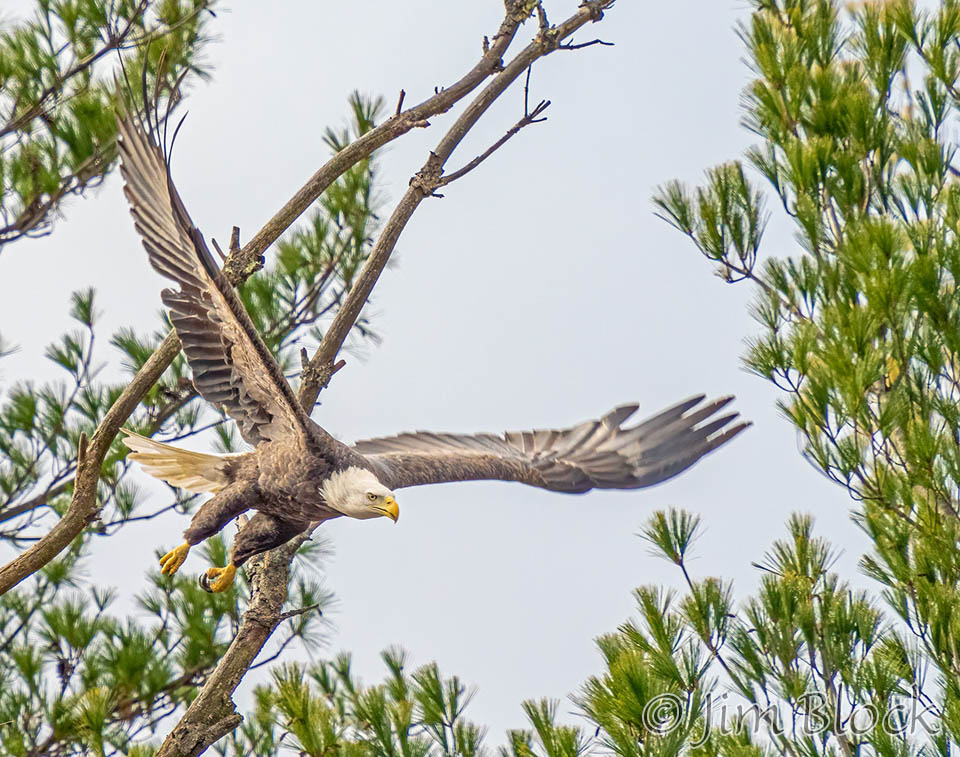
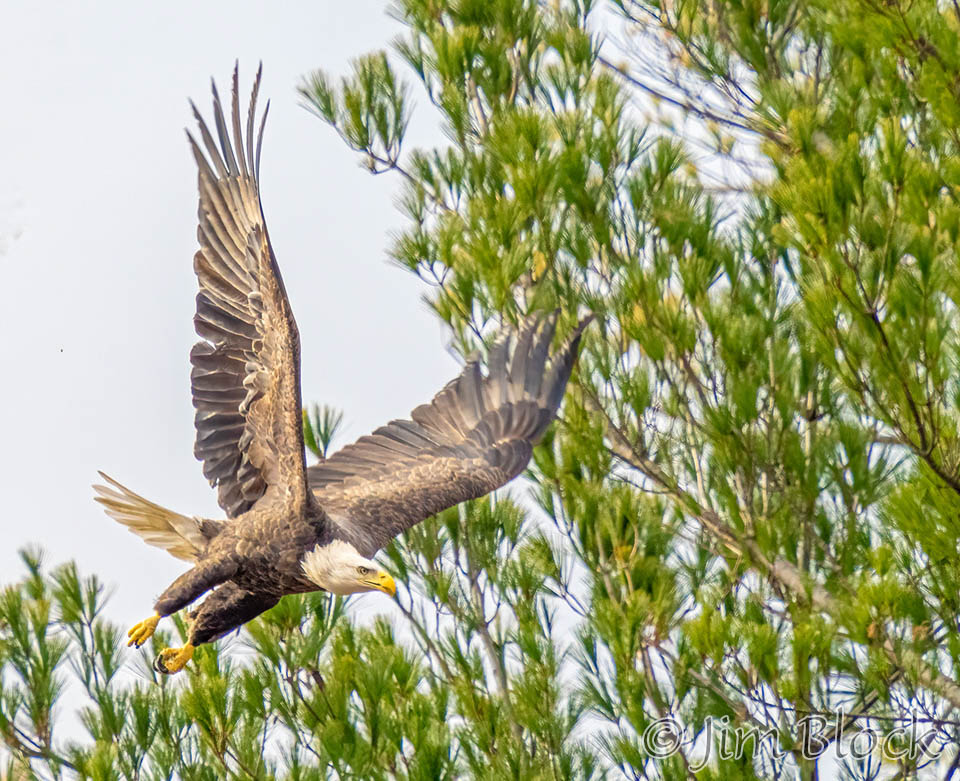
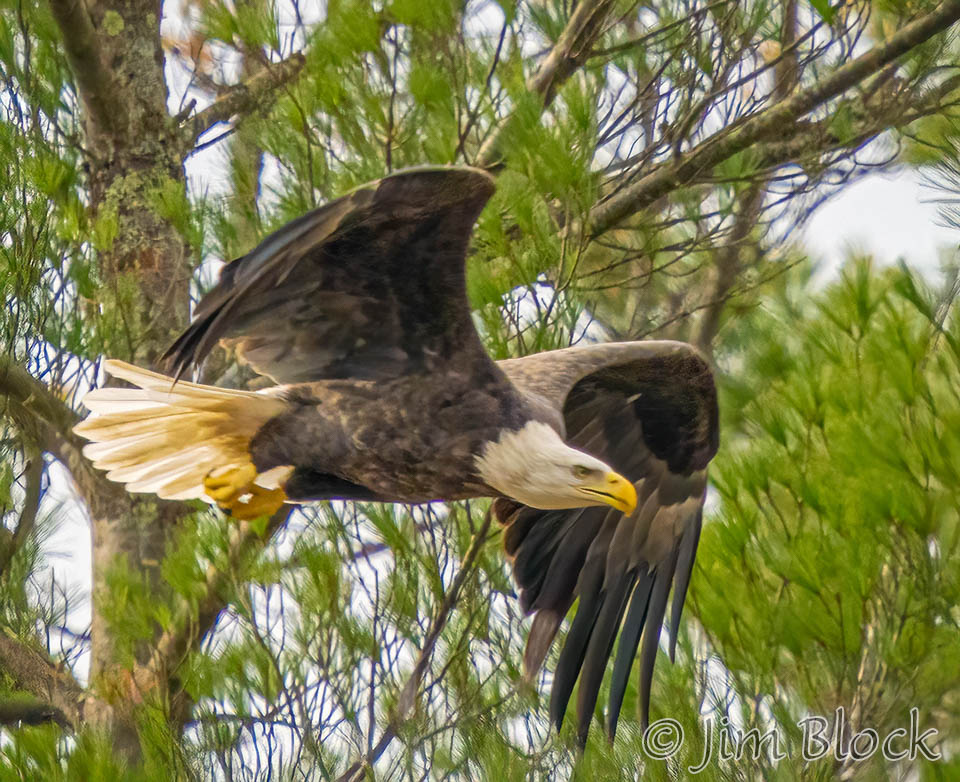
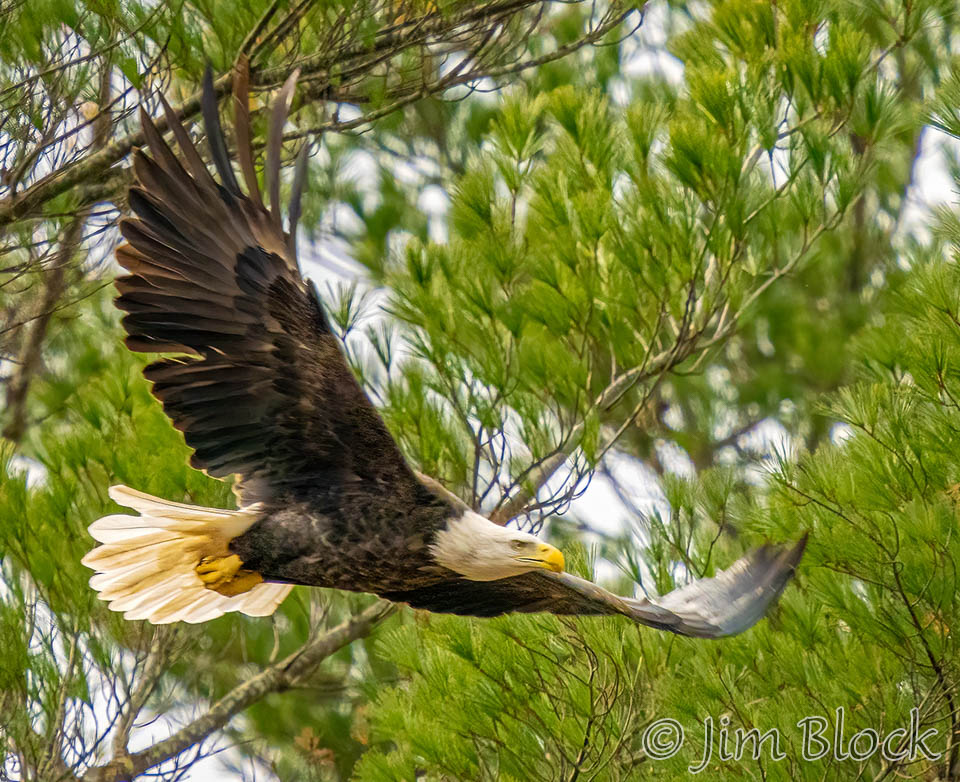
Sure enough, two minutes later it was back. I hardly had time to sip my cold coffee.
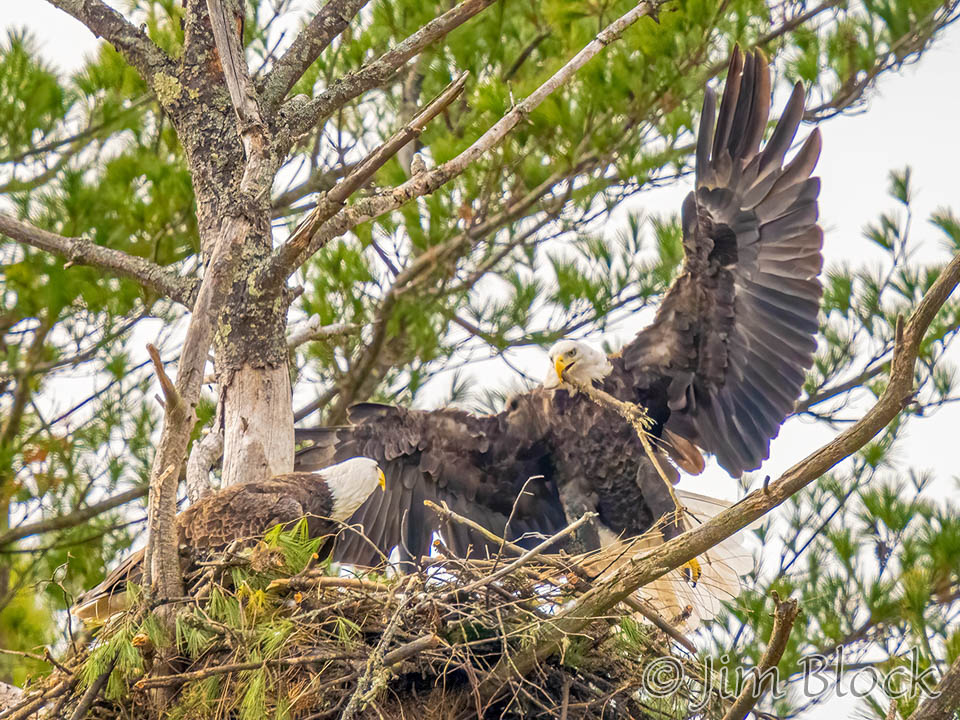
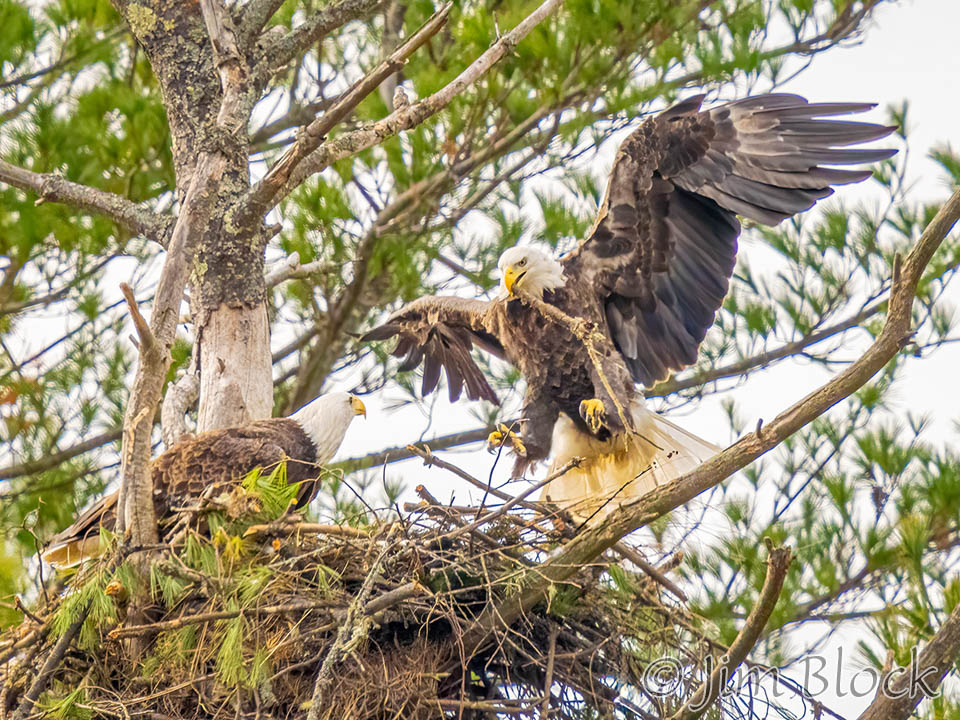
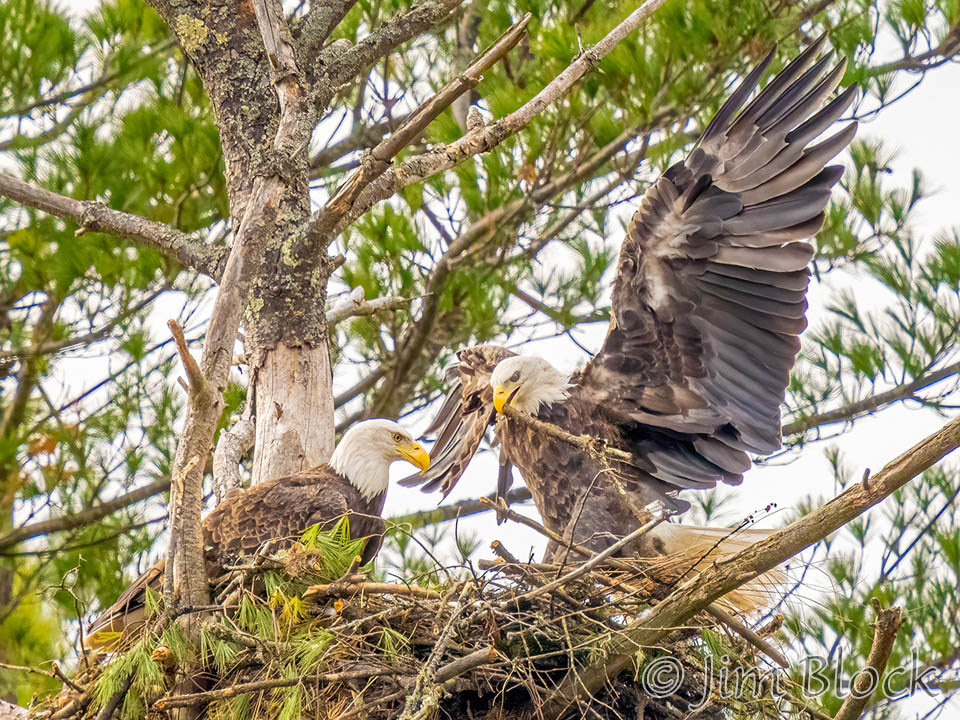
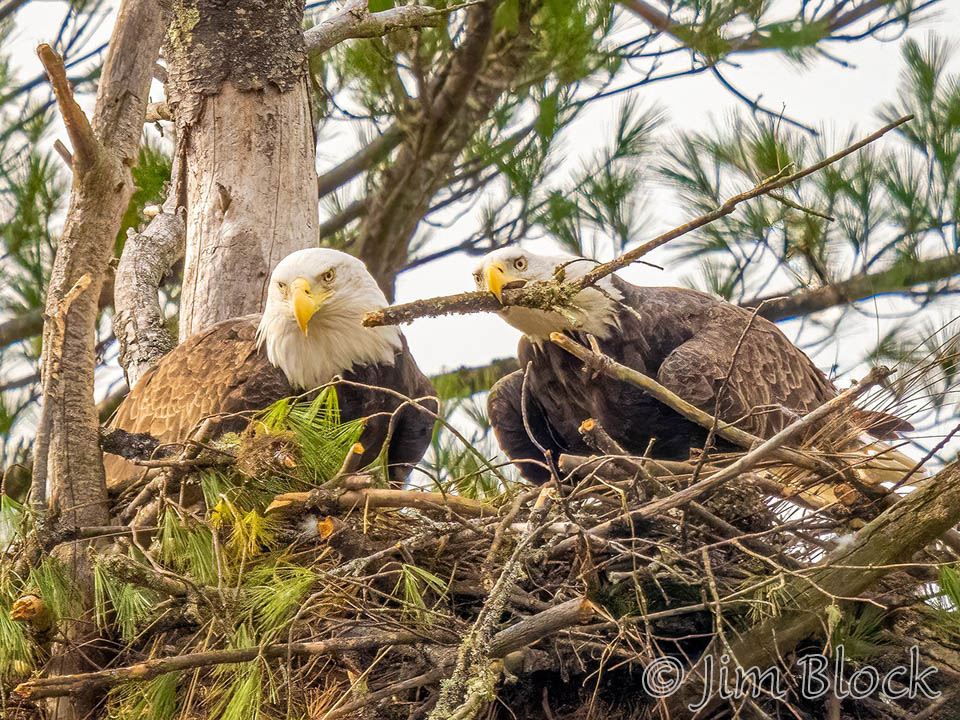
Two minutes later one left followed immediately by the second.
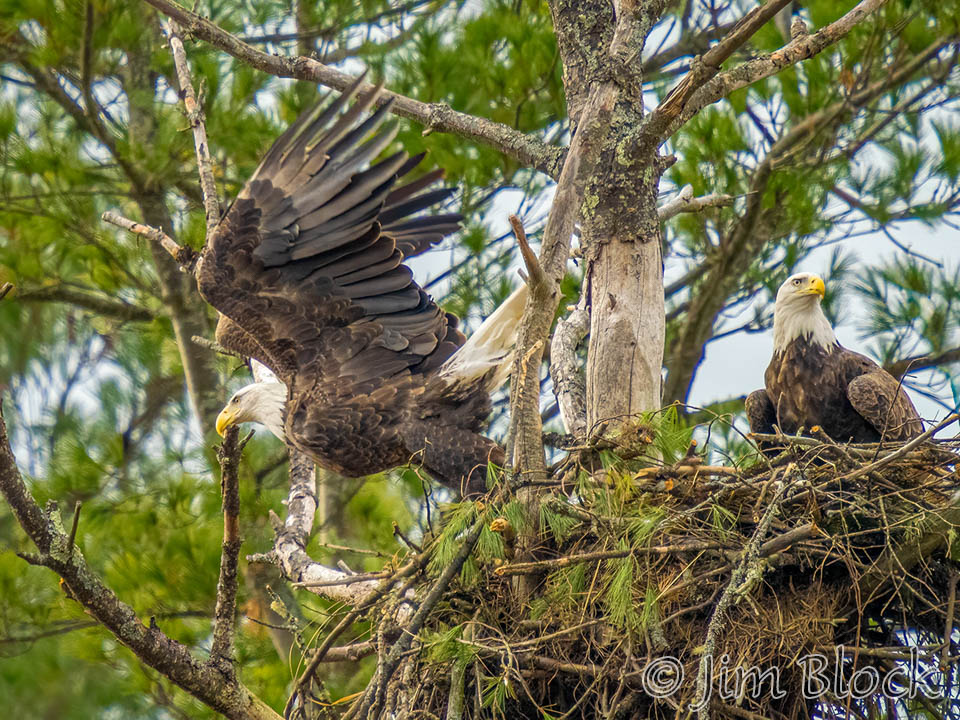
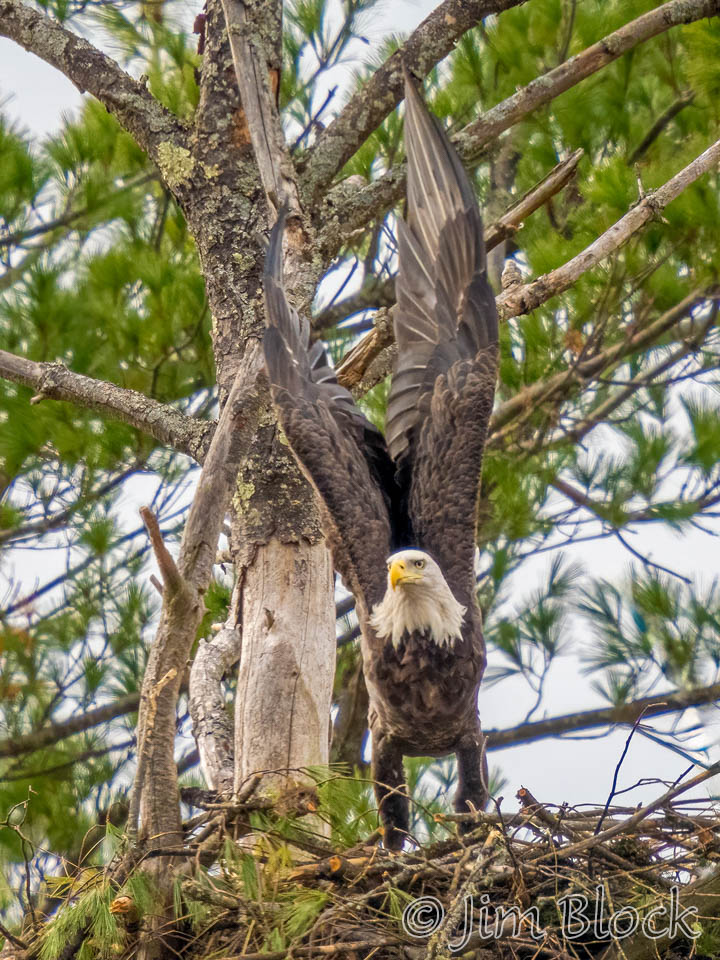
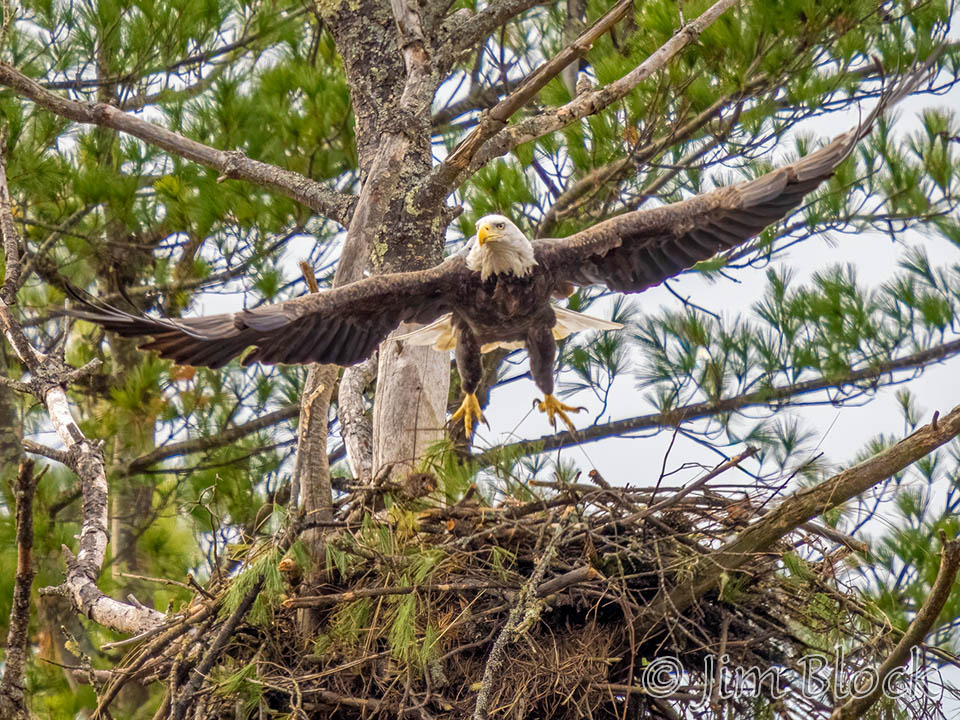
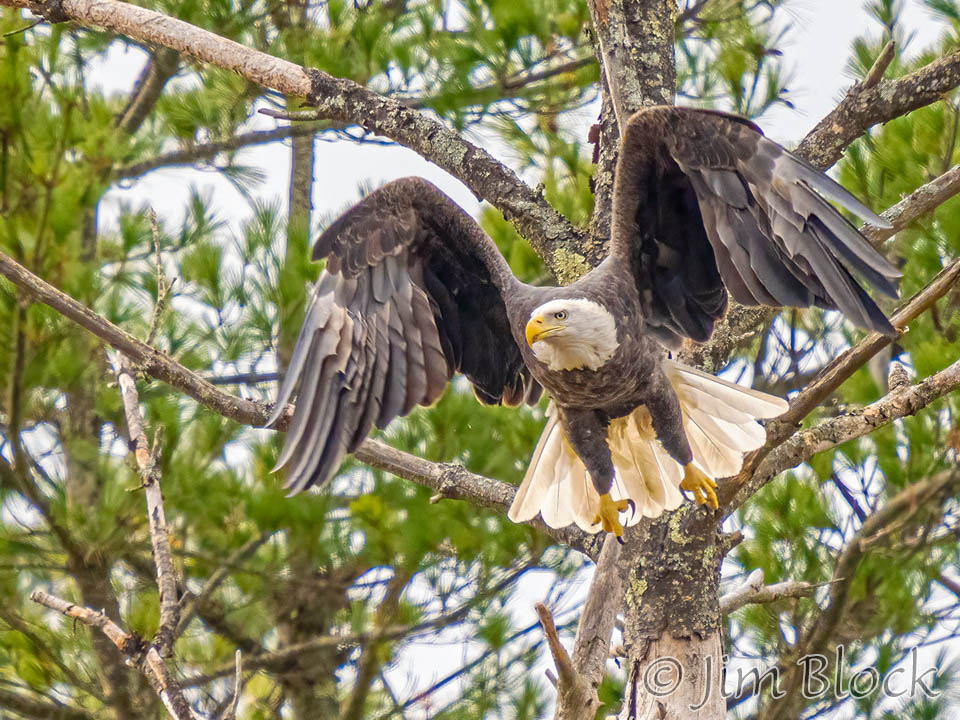
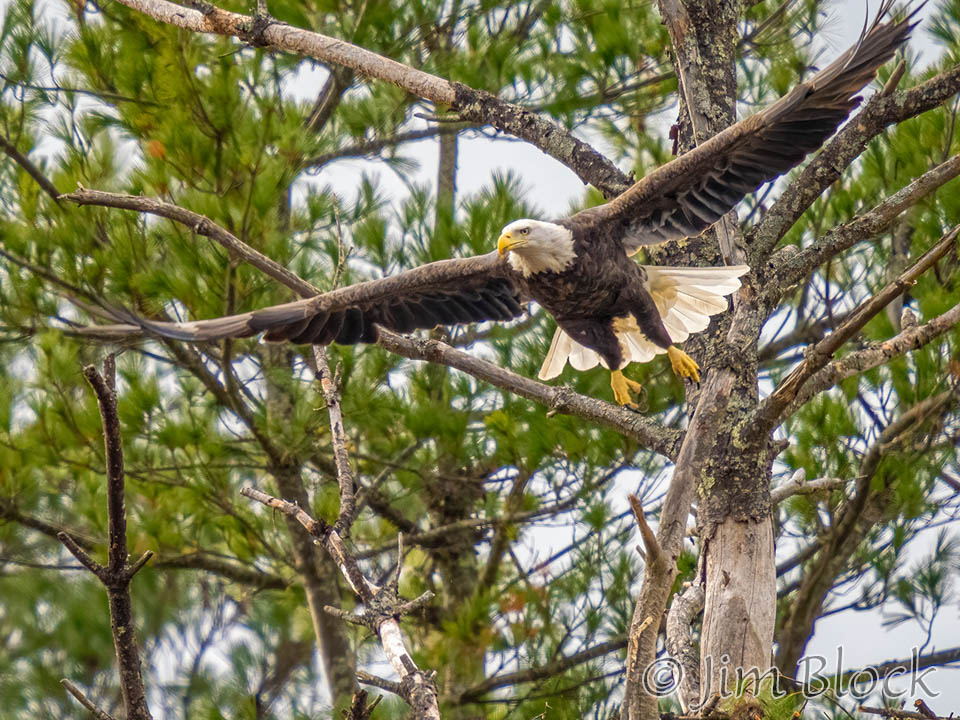
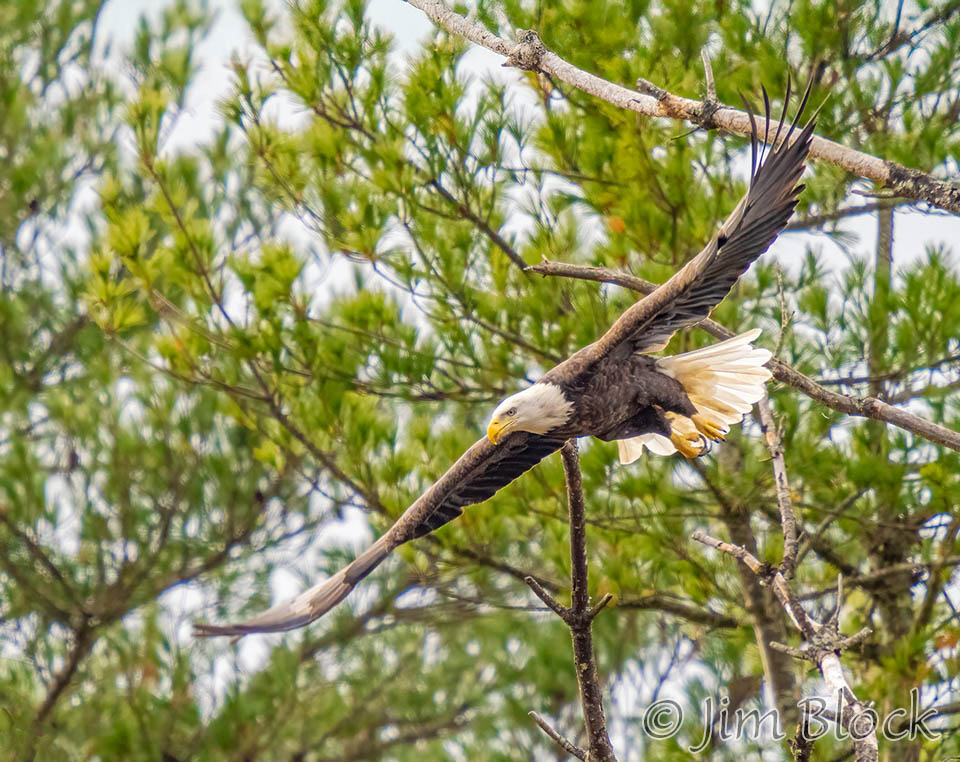
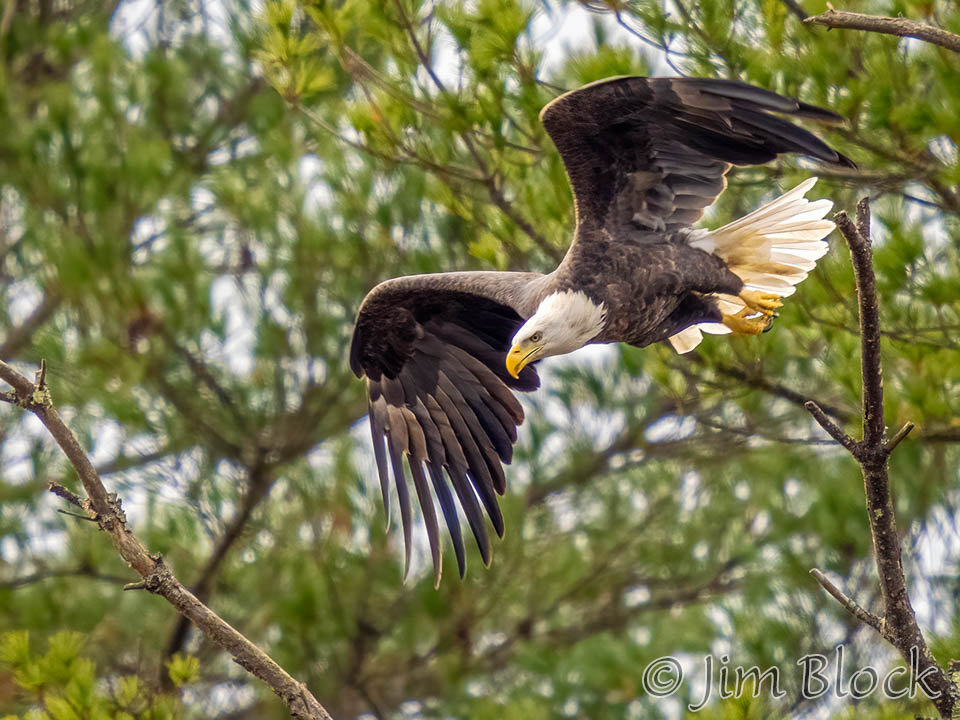
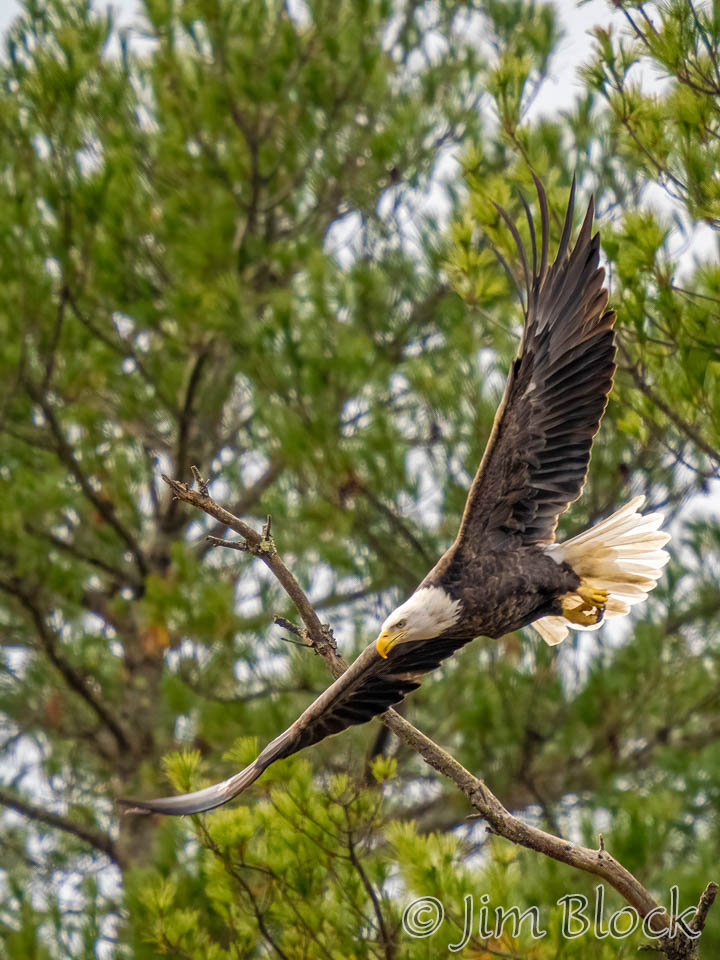
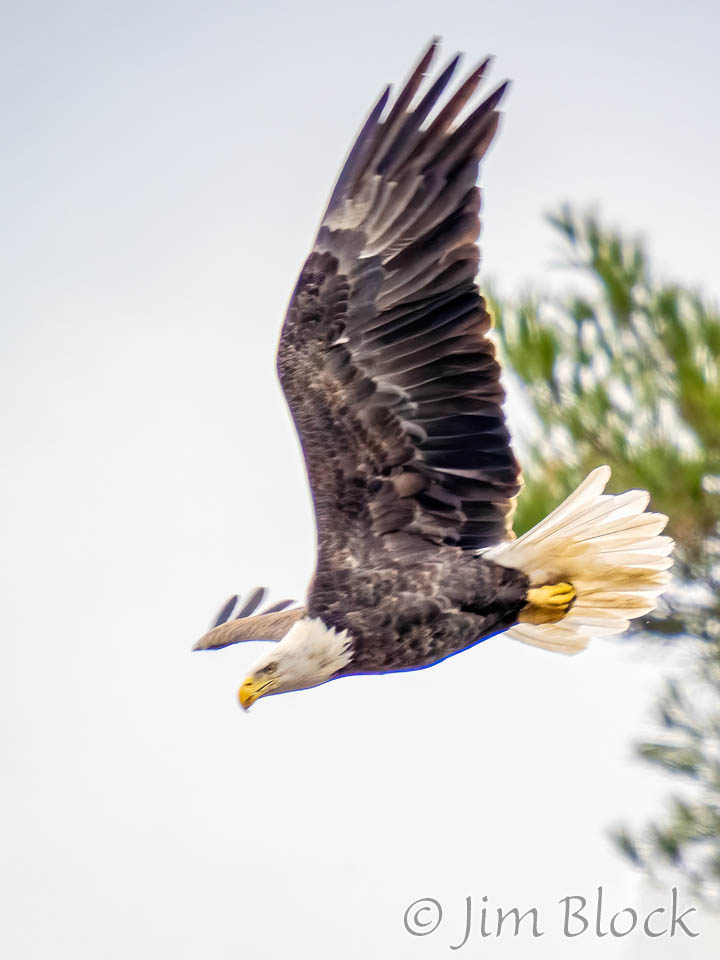
Five minutes later a large stick had been carried in and was being worked into just the right spot.
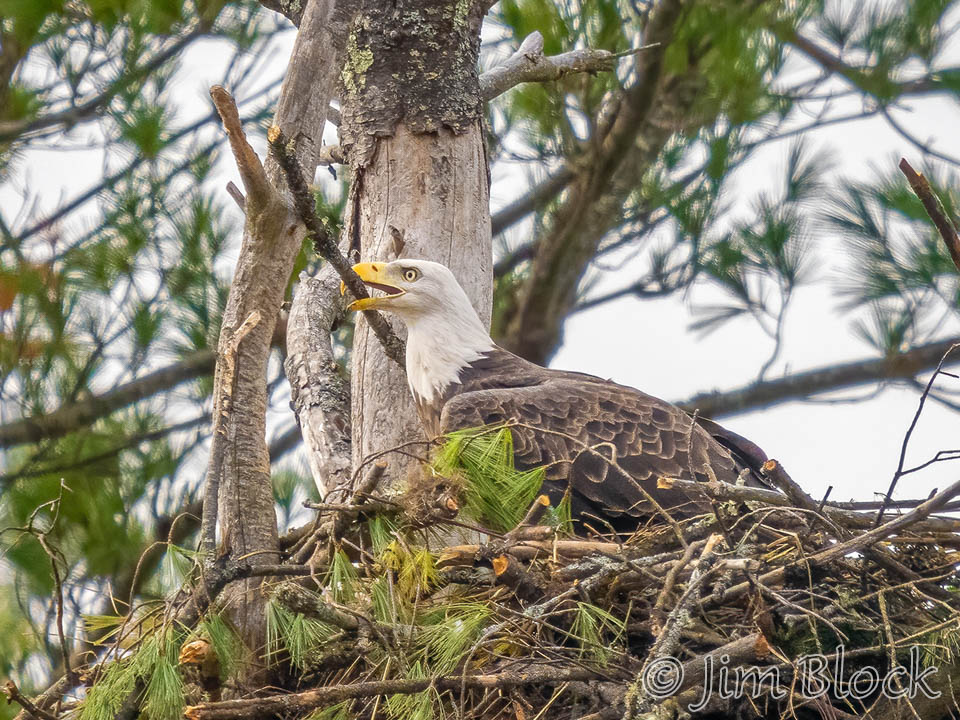
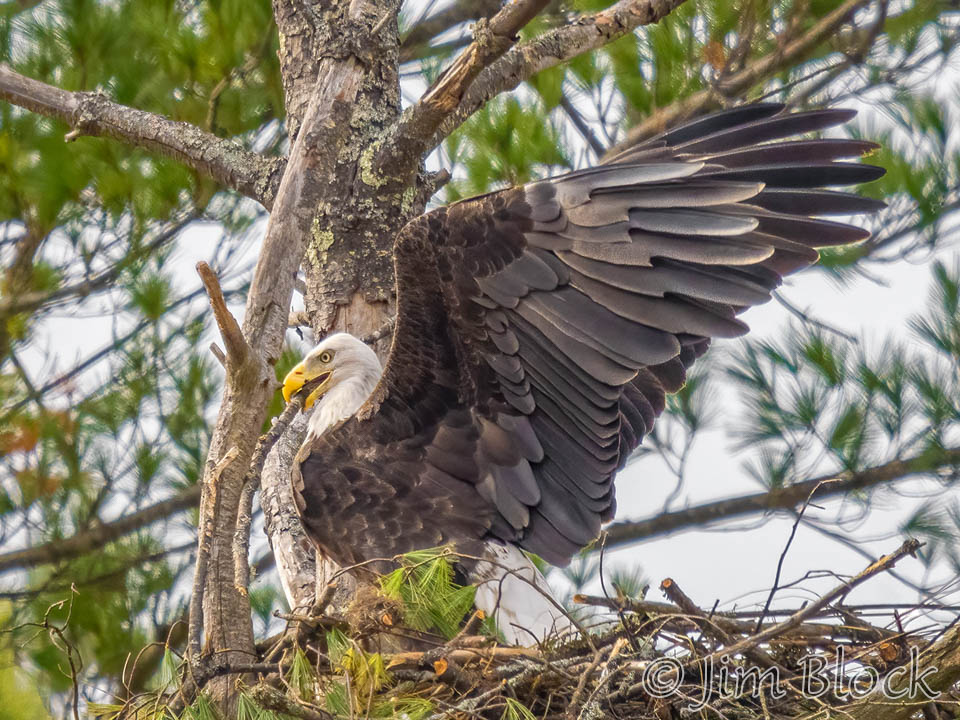
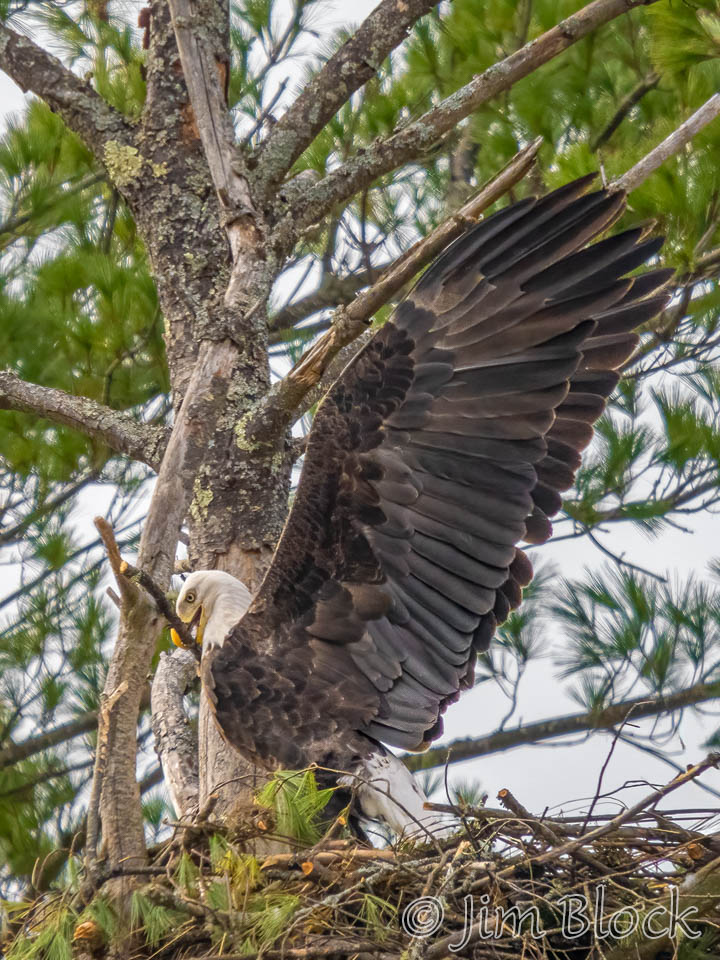
What a fantastic day of nest building and rearranging sticks! I hope they don’t make the nest too heavy; I’m not sure that old dead tree can handle too much. The nest was already very large in this marginal and very dead tree. It is getting larger each day. I sure hope the tree can support it.
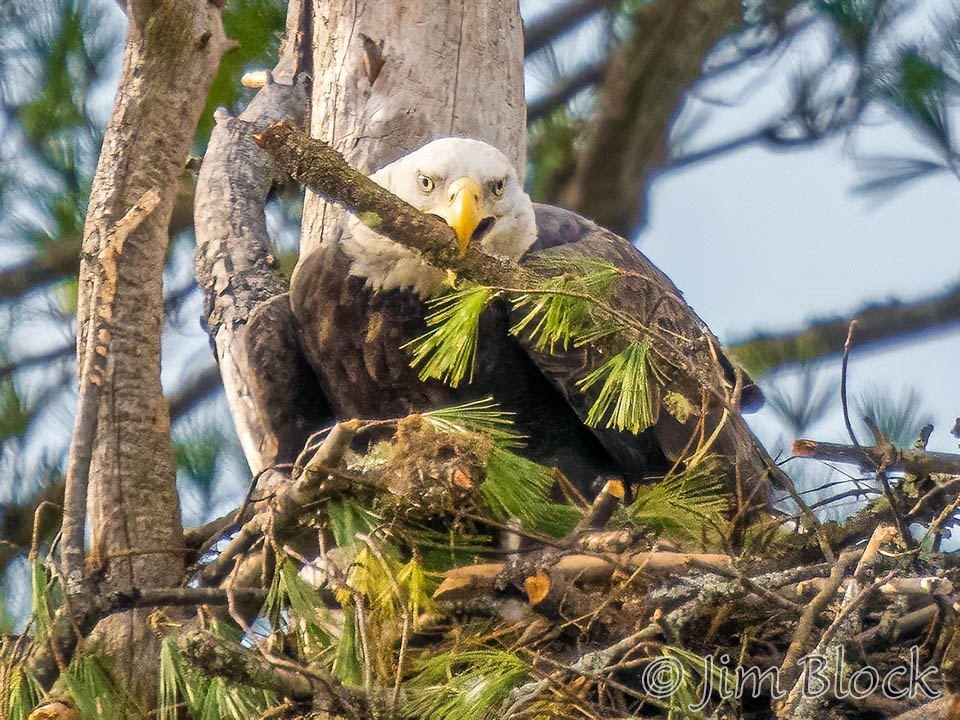
Who would’ve thought visiting the eagles in mid-November would yield the best action shots of any day during the four years. Chris Martin said that the activity was likely due to the fact that this time of year has the same daylight hours as in early spring and that stimulated them to build, repair, and enhance their nest.
I took one last photo and packed it in until early March when I knew I would certainly return. Opportunities to study nature like this are very rare indeed.
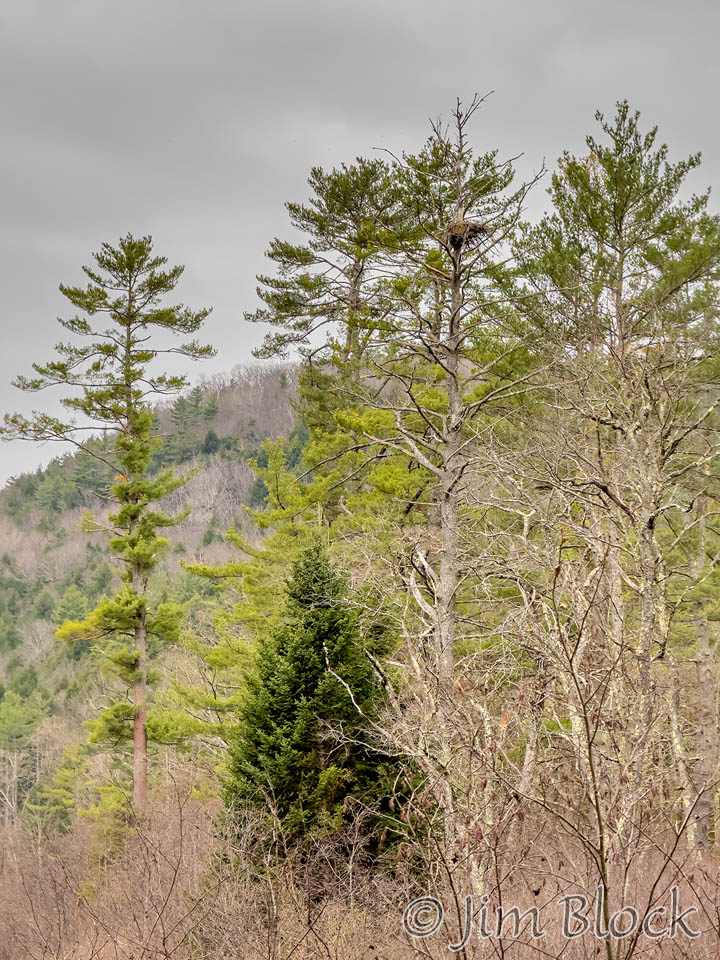
I stopped by the nest briefly March 6 and captured a photo that speaks to me. It was less than an hour after sunrise and the light was very soft. Were they just taking a break from incubating and sharing a little together time? I did not stay long enough to find out.
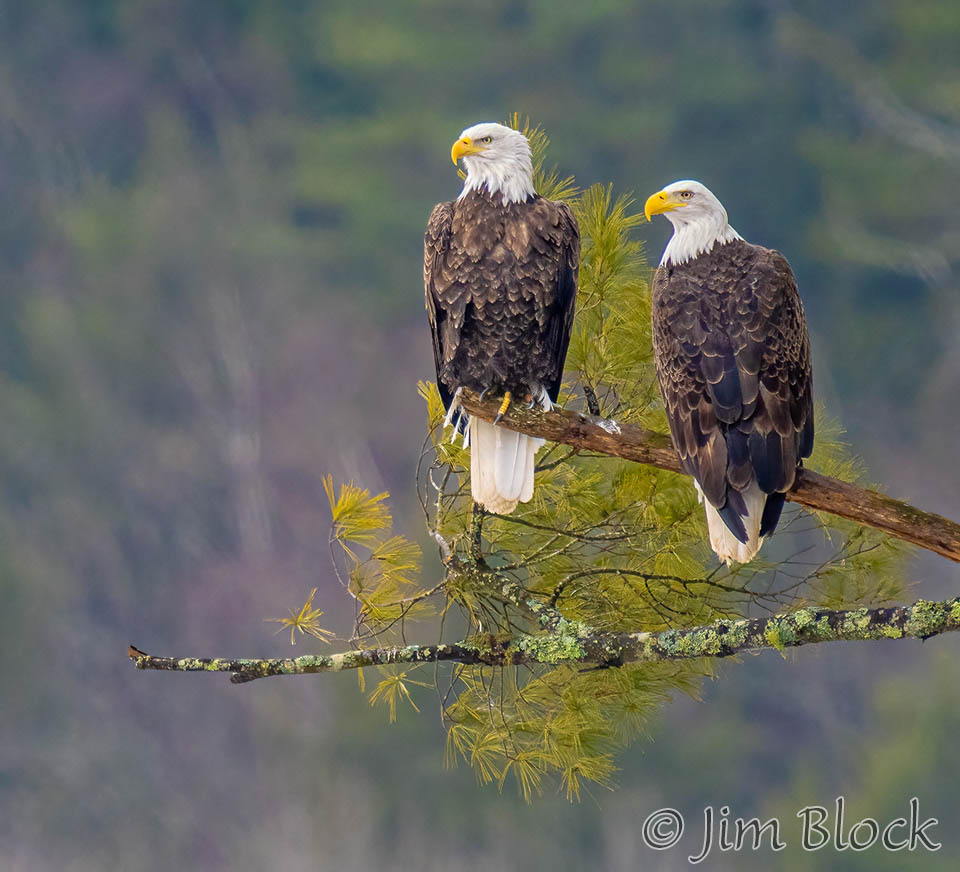
I returned on March 6. It had snow lightly overnight and they were clearly incubating.
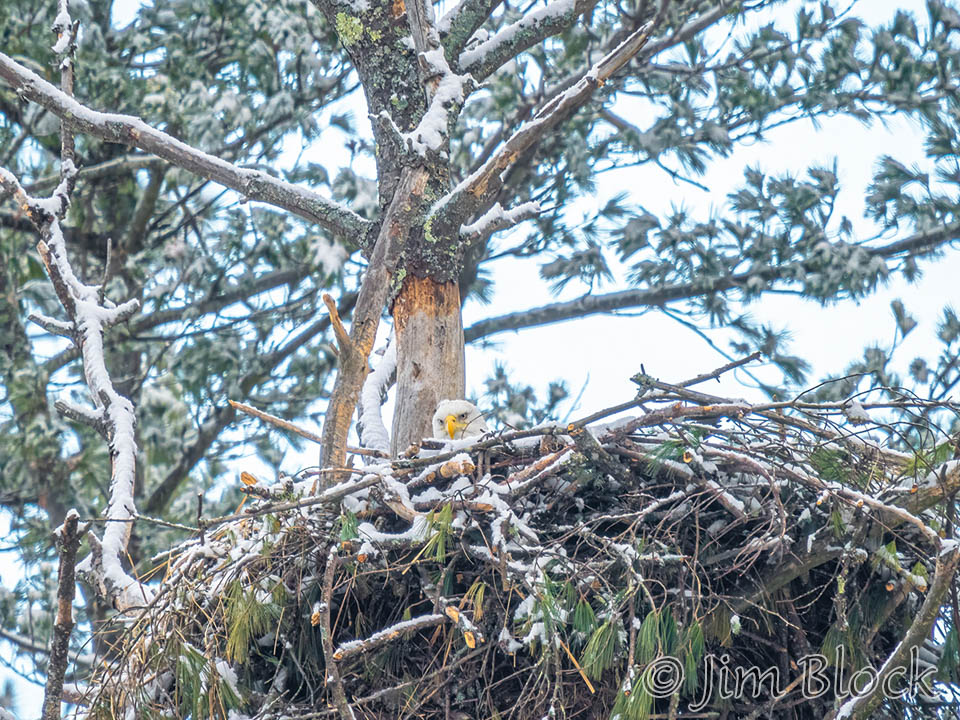
I watched nothing much for 90 monotonous minutes.
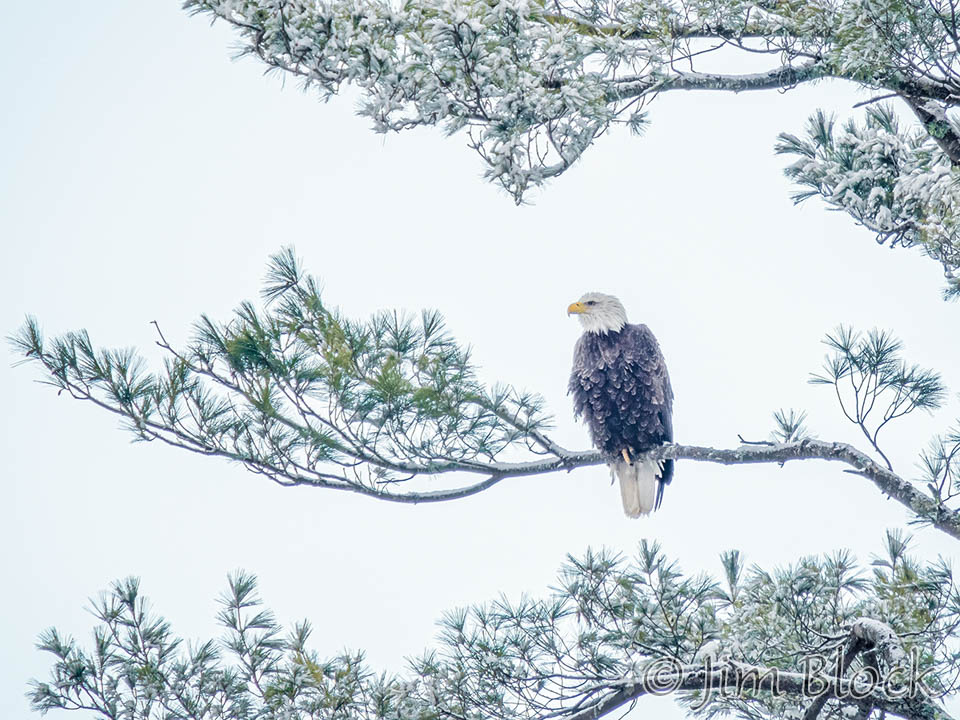
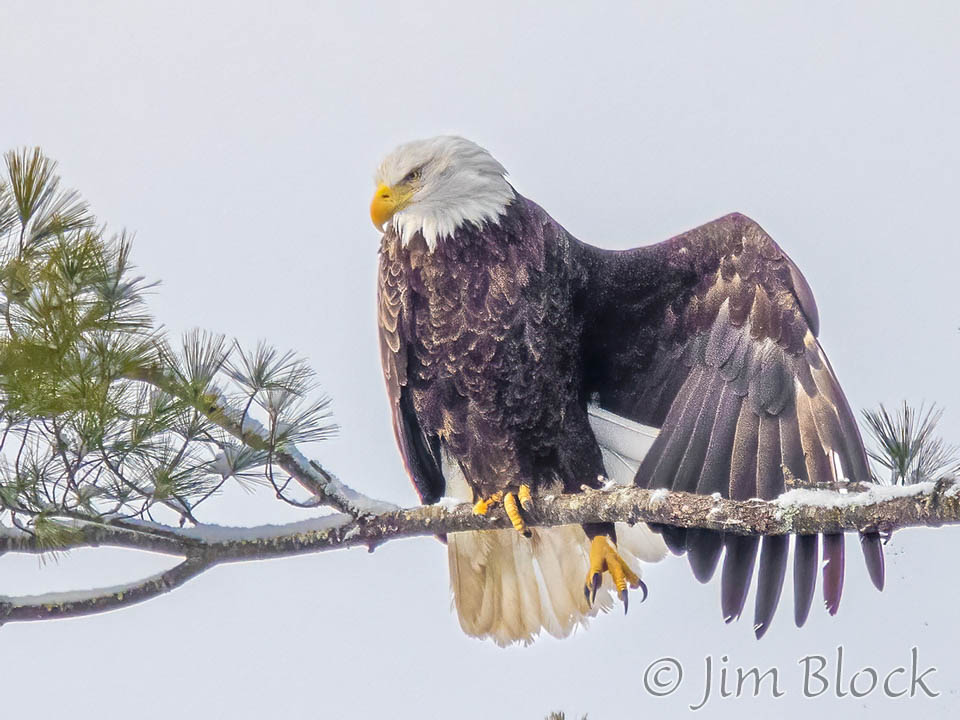
I packed up to leave with one eagle in the nest and the other on their favorite branch as they had been since I first arrived. As I headed toward my car, something made me turn around. I saw much wing flapping on “their” branch. I hurried back and photographed the eagles mating. Maybe they were shy and just waited for me to leave.
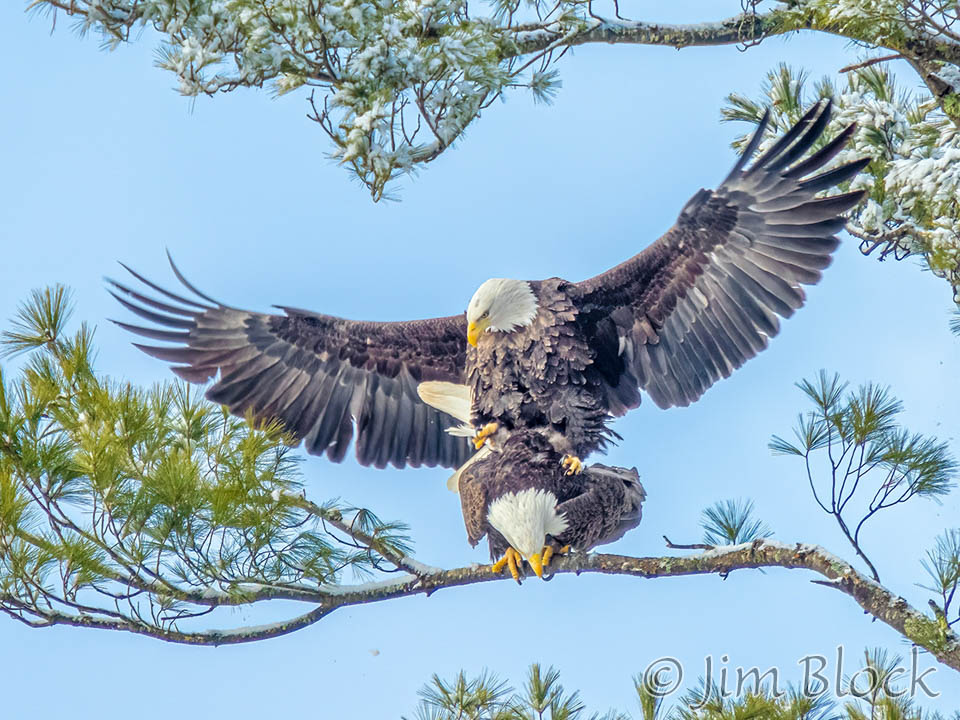
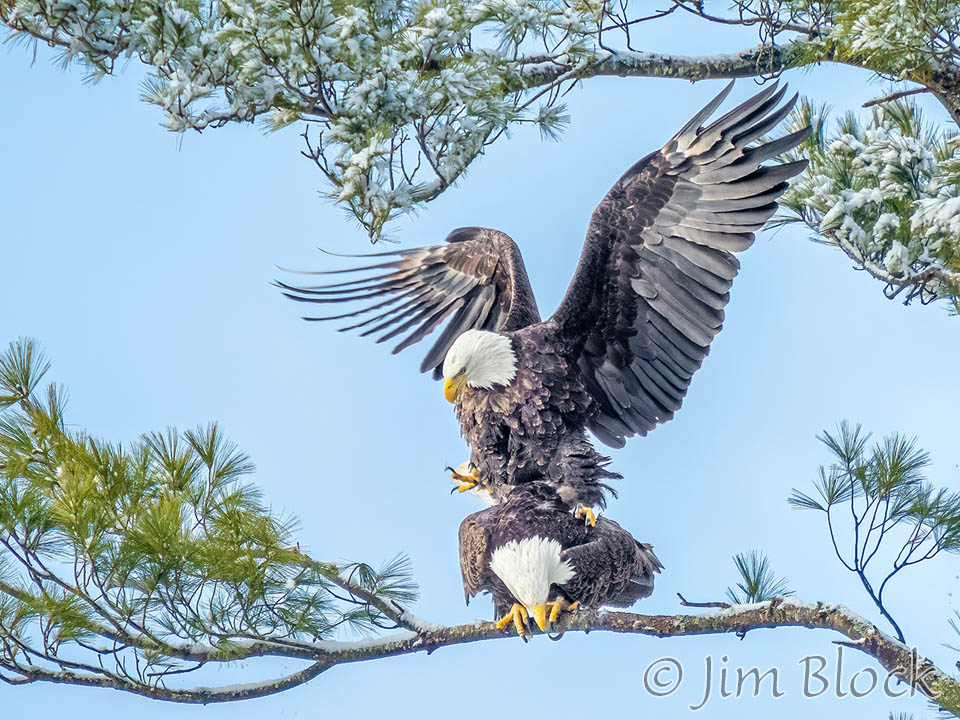
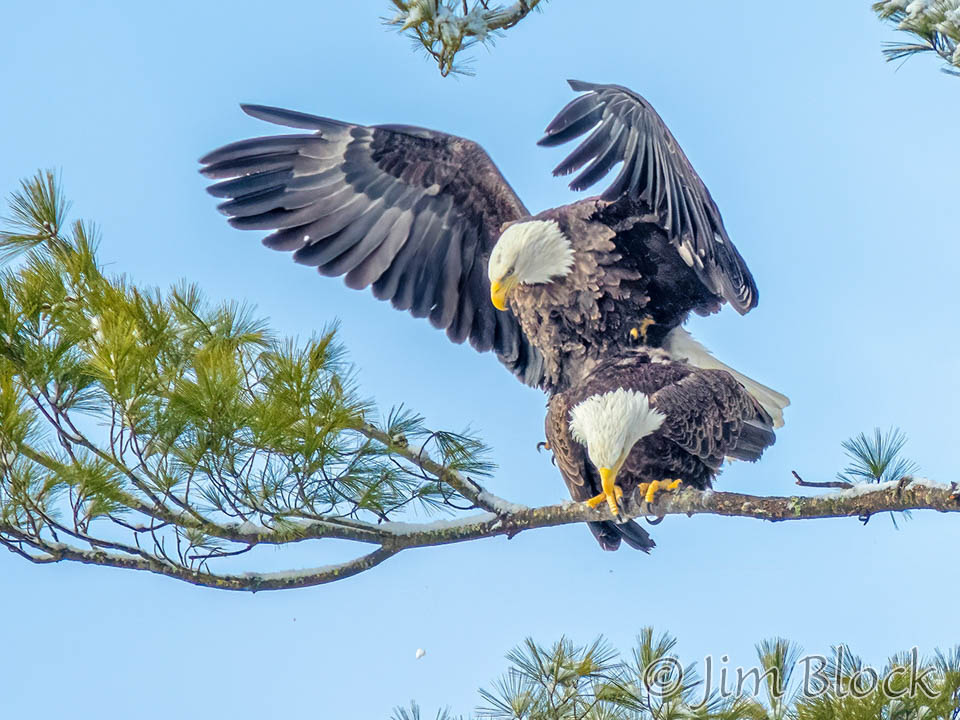
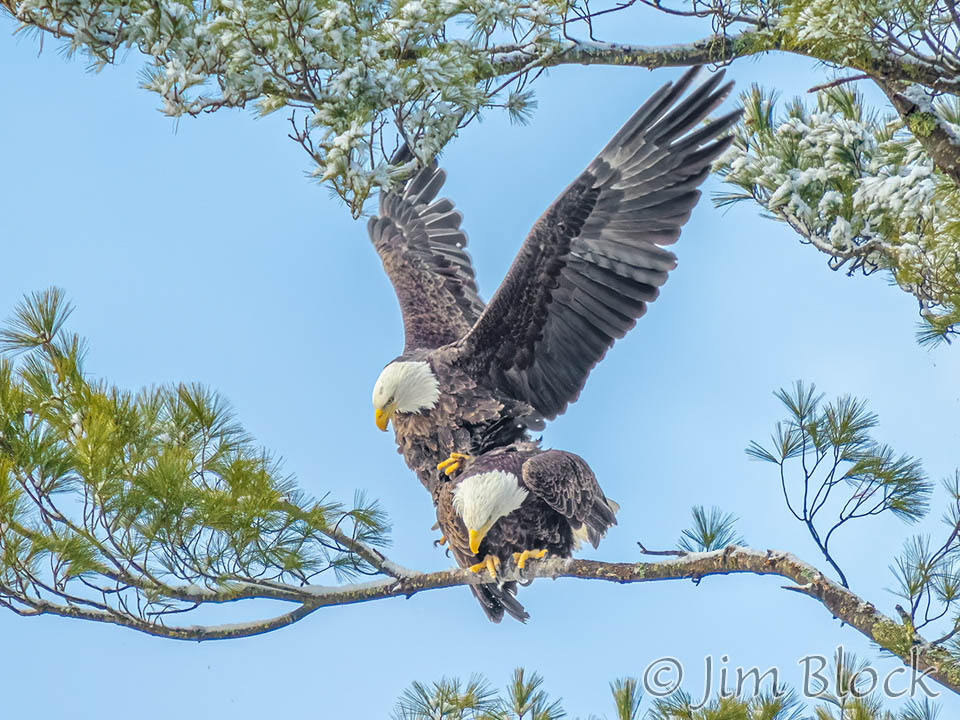
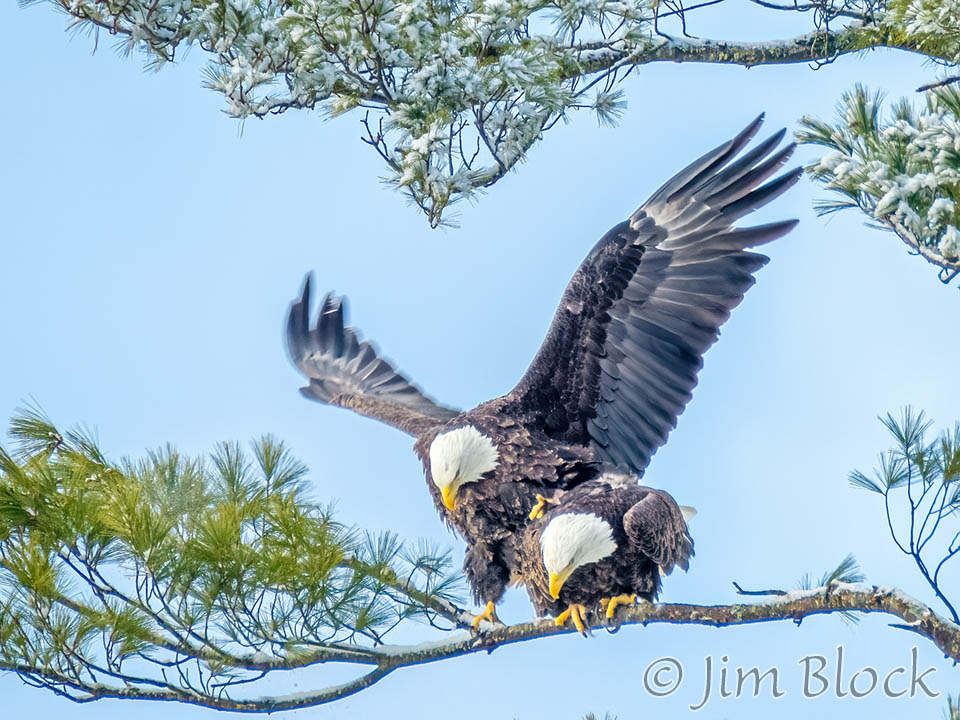
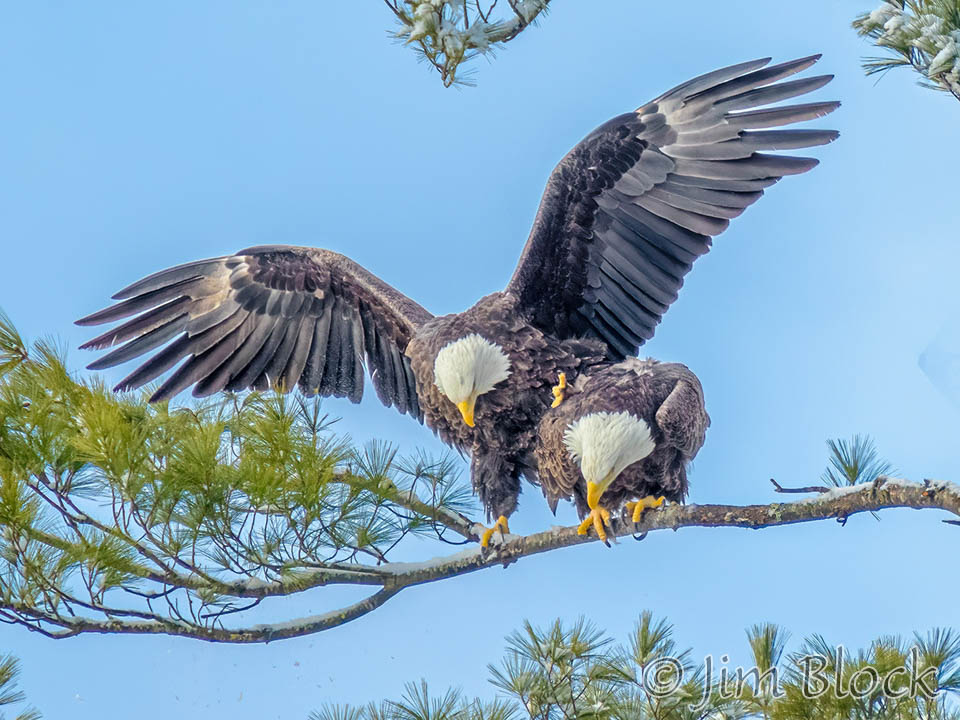
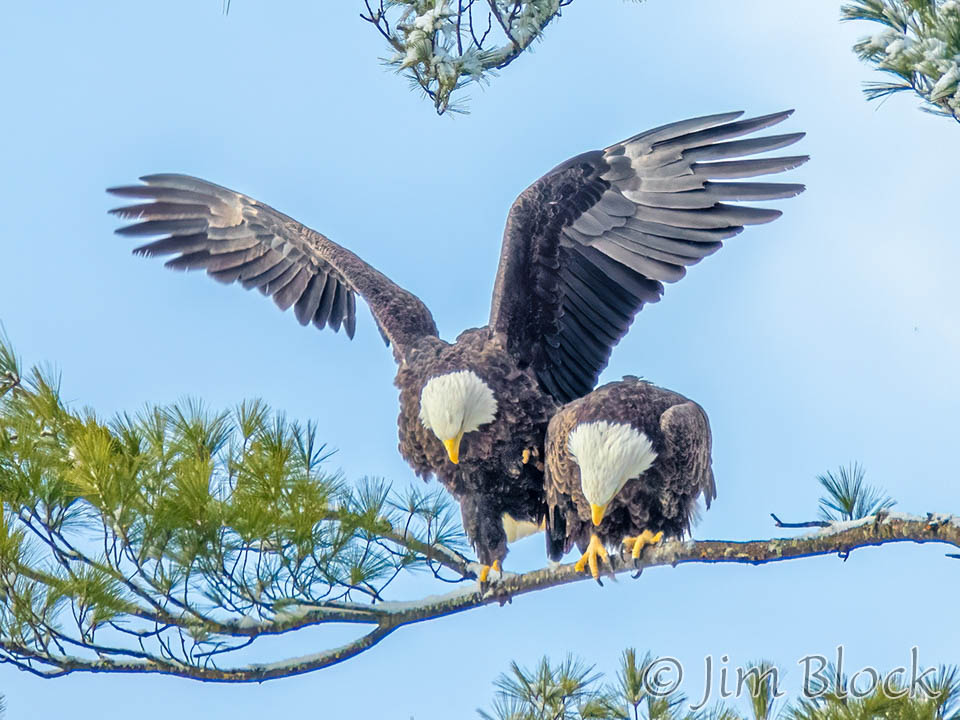
They sat side by side for about 15 seconds …
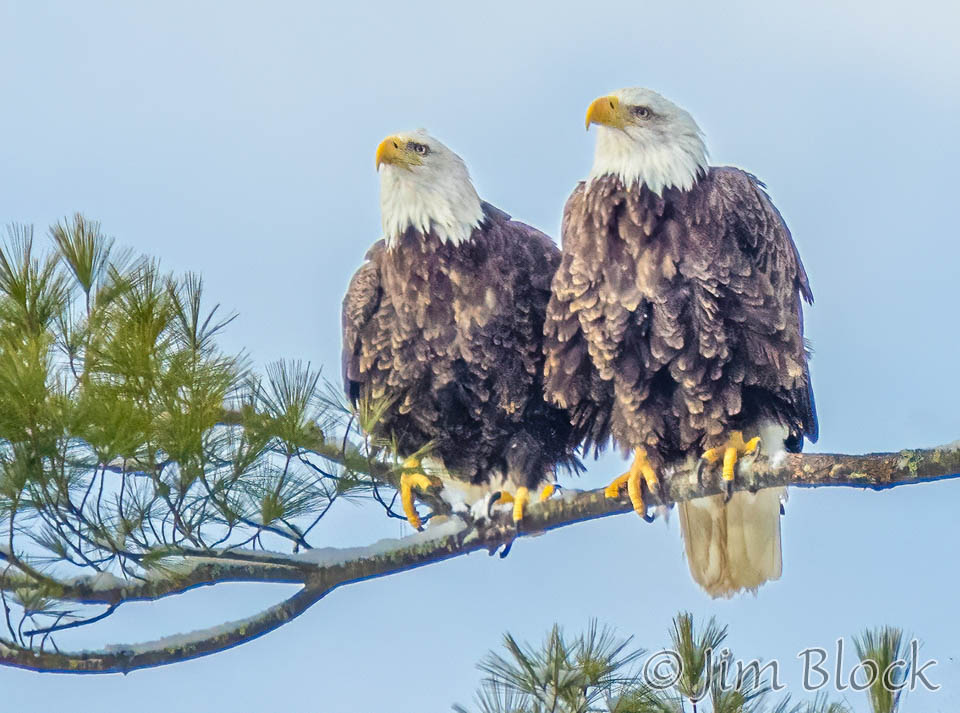
… and then the male flew to a branch in the nest tree above the nest …
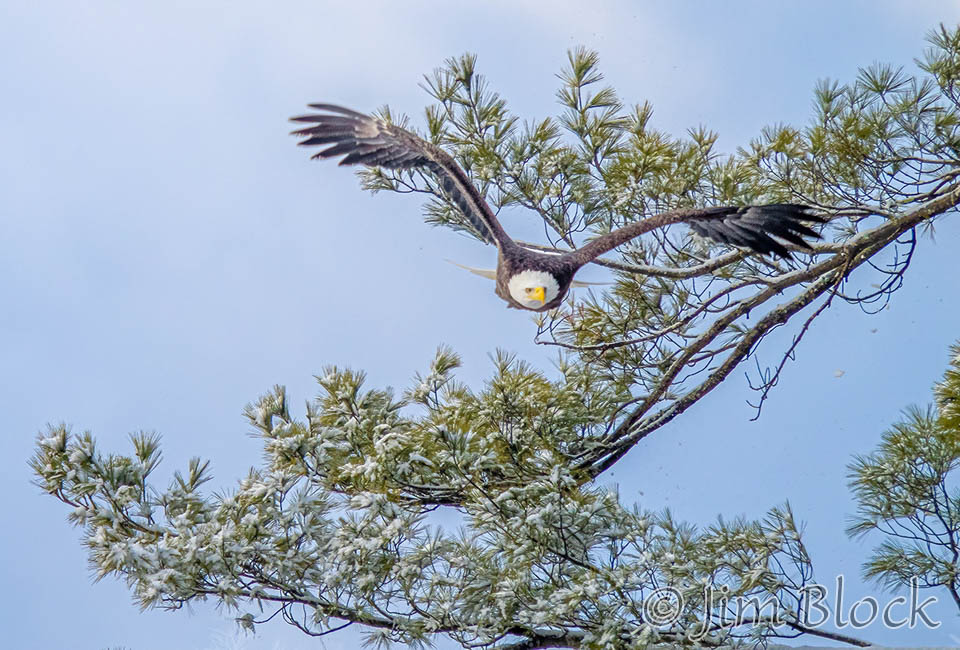
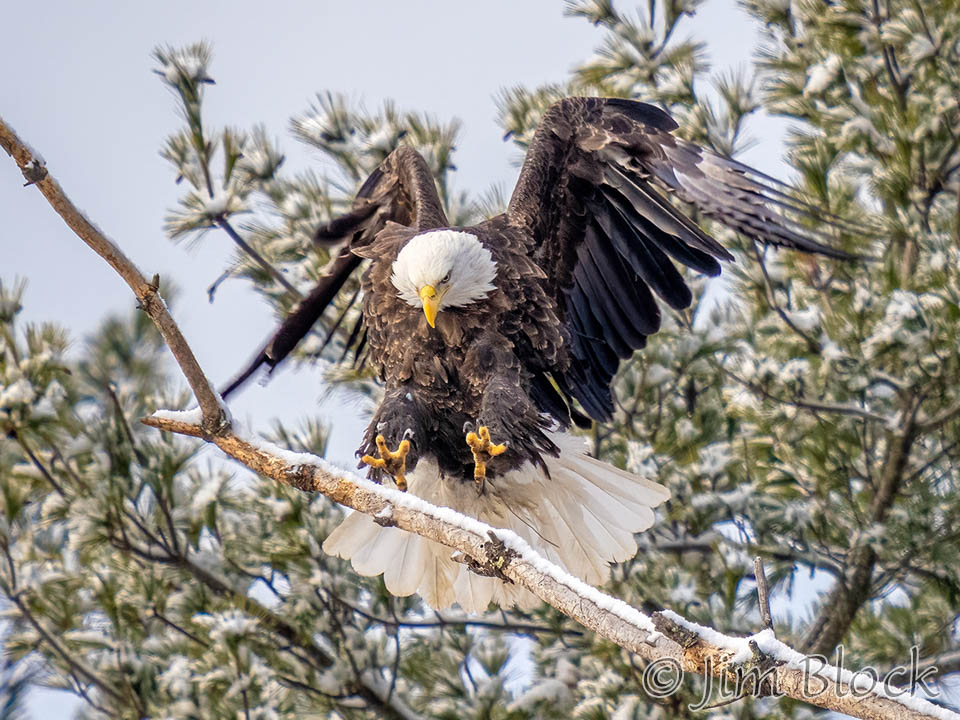
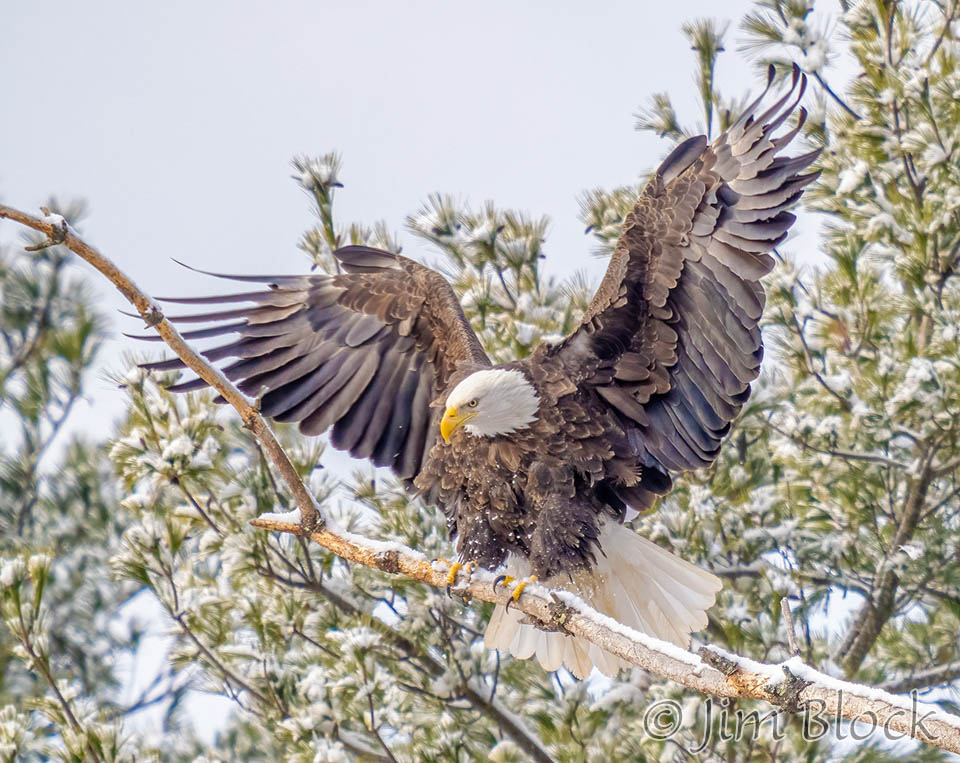
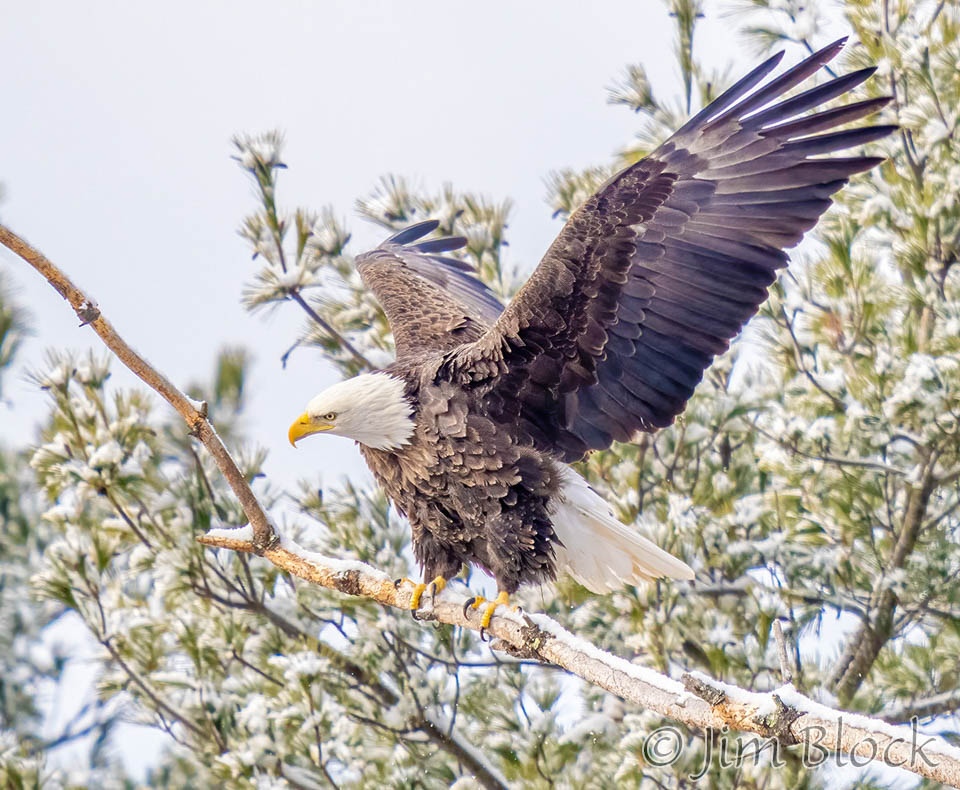
.. while the female stayed behind.
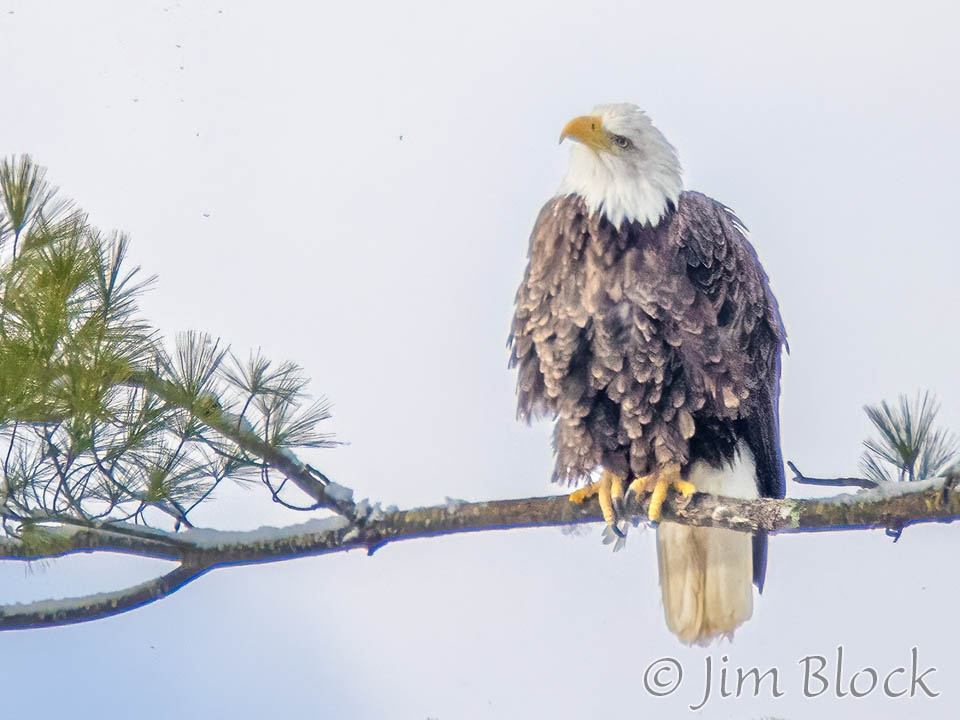
After about two minutes the male flew to the nest and took over the incubation duties for the next few hours.
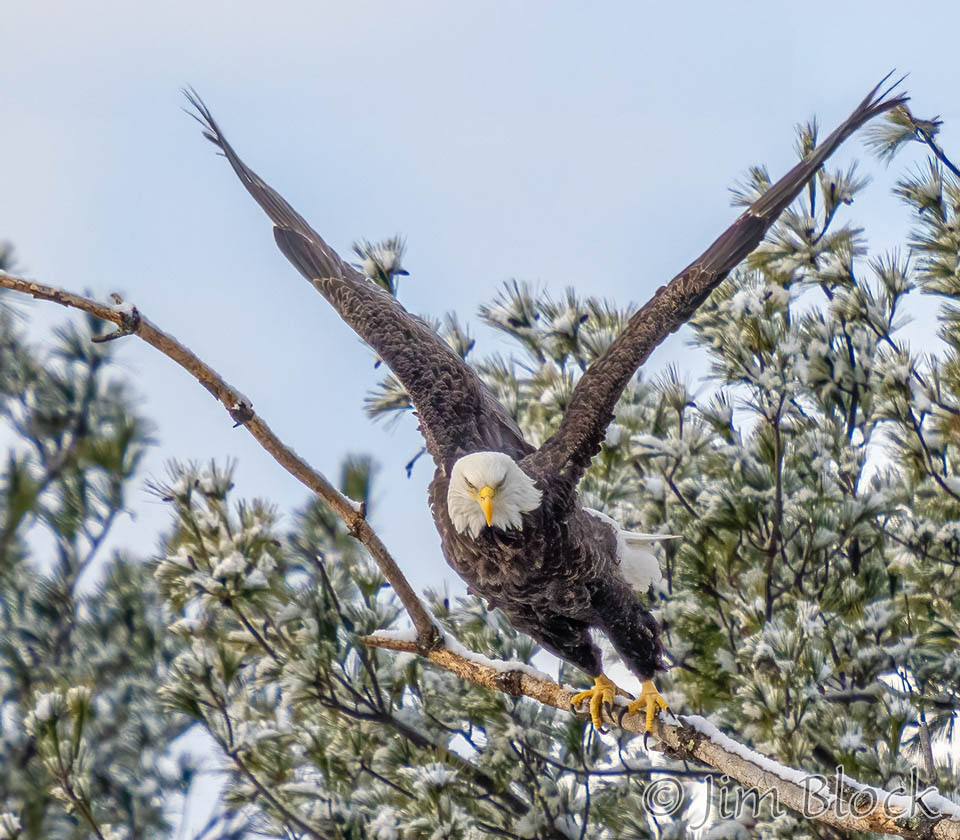
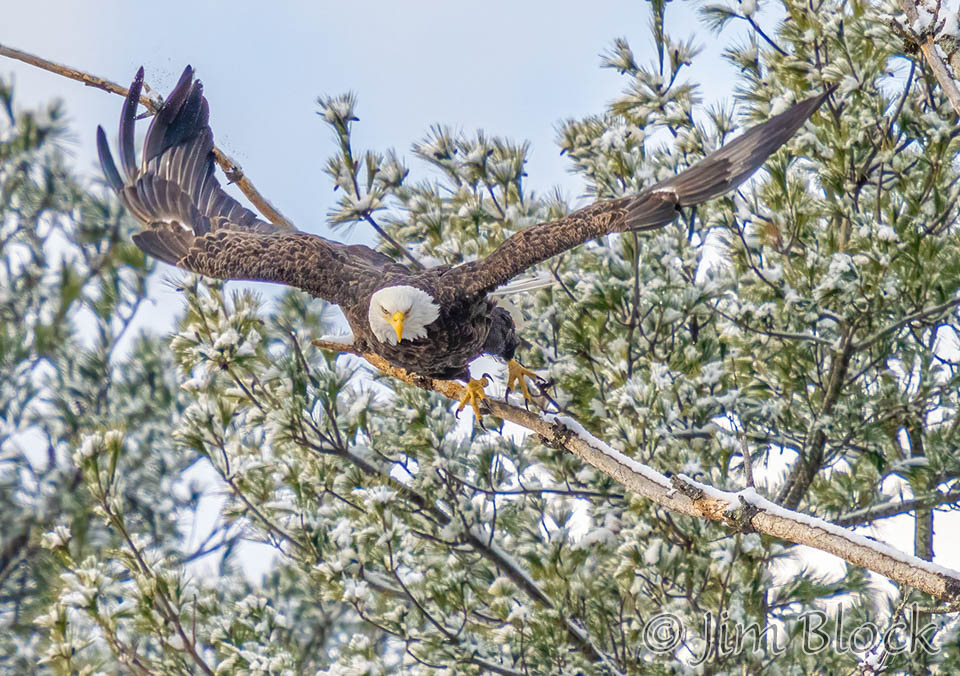
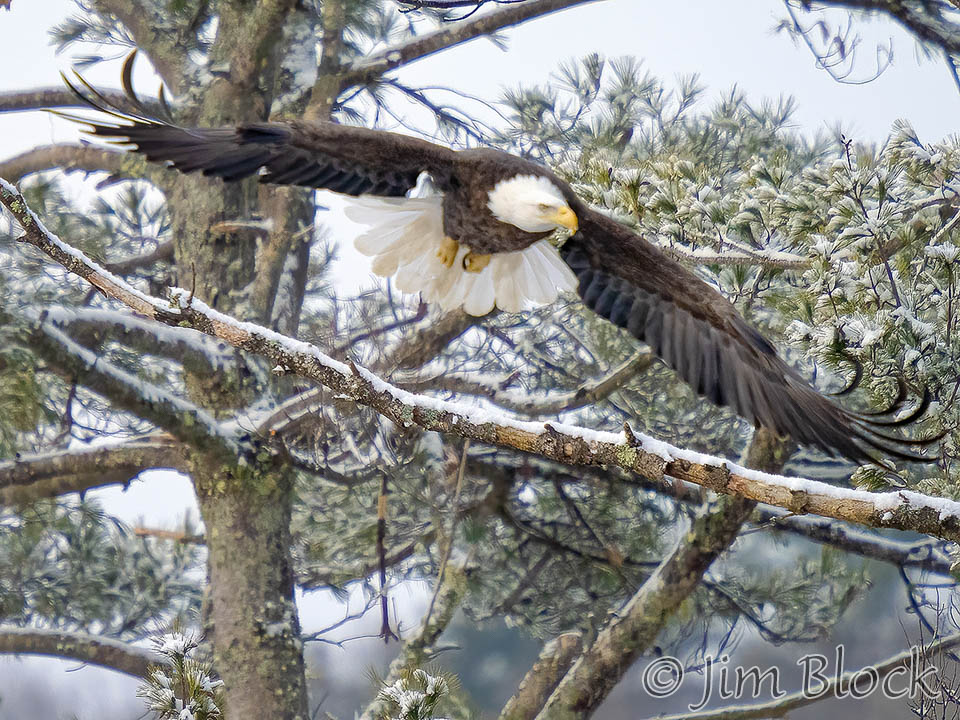
I asked Chris Martin why were they mating when they were already incubating. He replied, “Copulation continues but rapidly diminishes in frequency after incubation begins.”
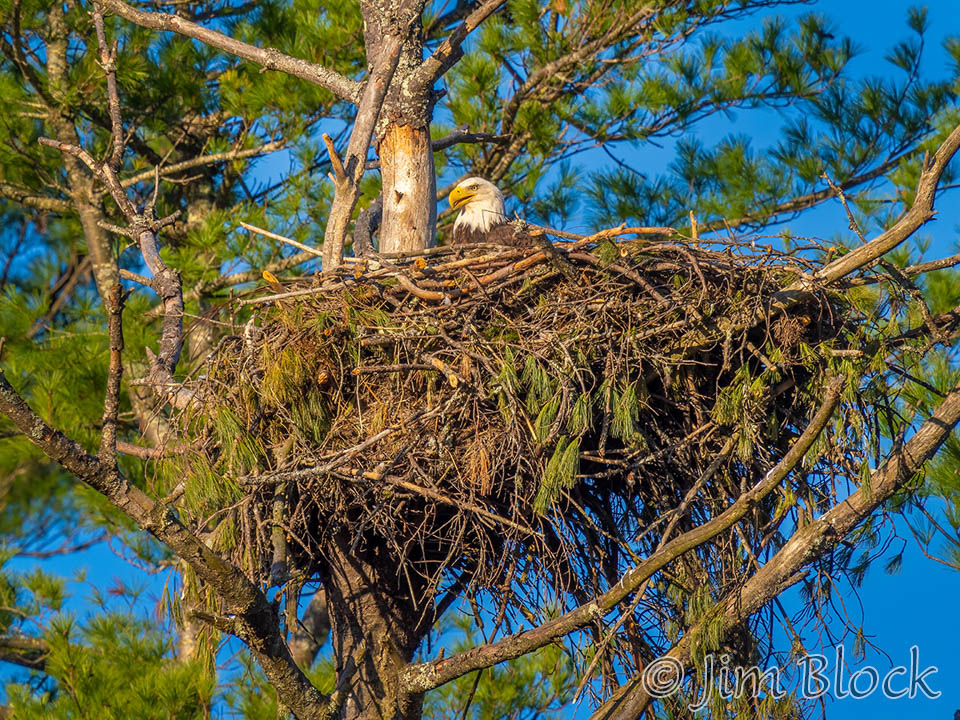
I stopped briefly at the nest site on March 15, 19, 20, and April 4 and 14. Each time I took a photo of the eagle in the nest. Boring… Here is one from April 14.
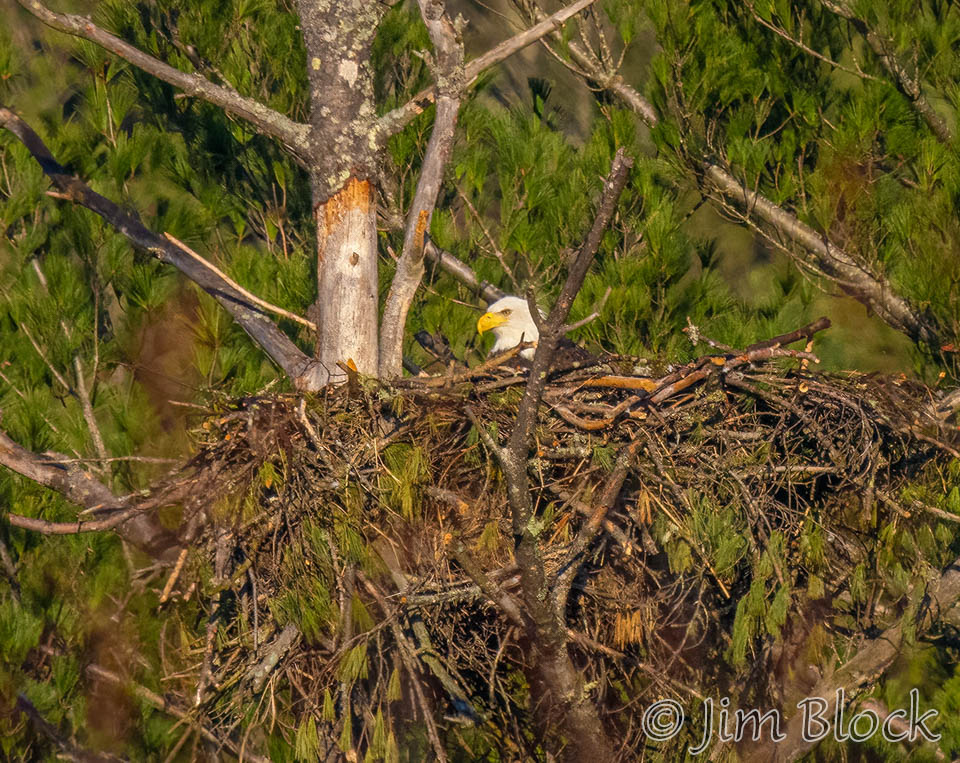
Nothing had changed when I arrived on April 23.
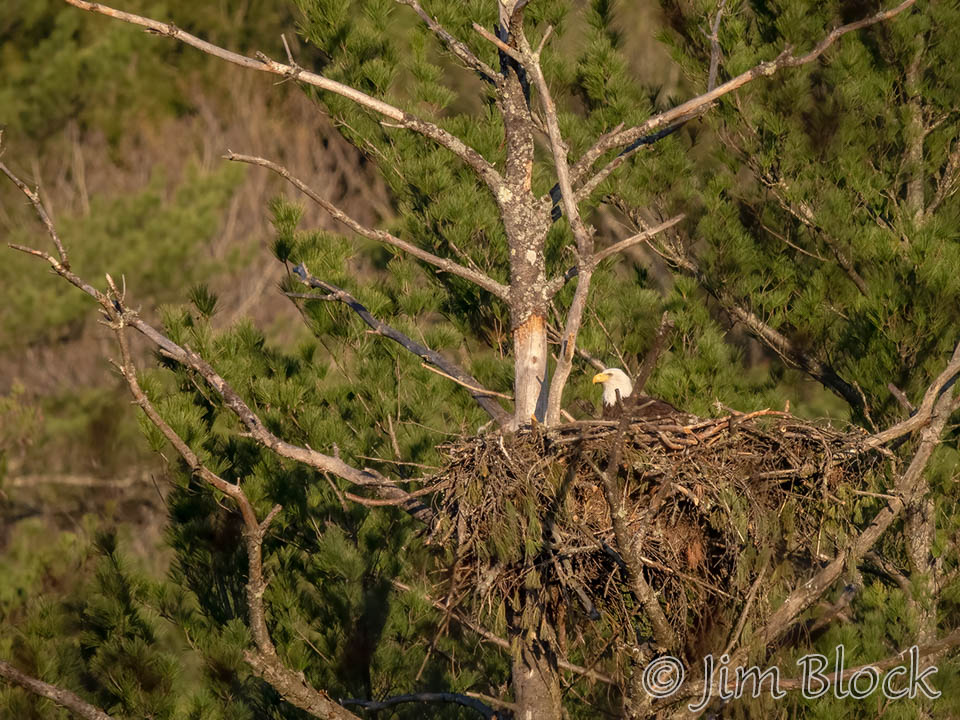
But this day I decided to stay for a while — two and a half hours it turned out.
After fifteen minute an eagle flew in with some long, soft grass for the nest.
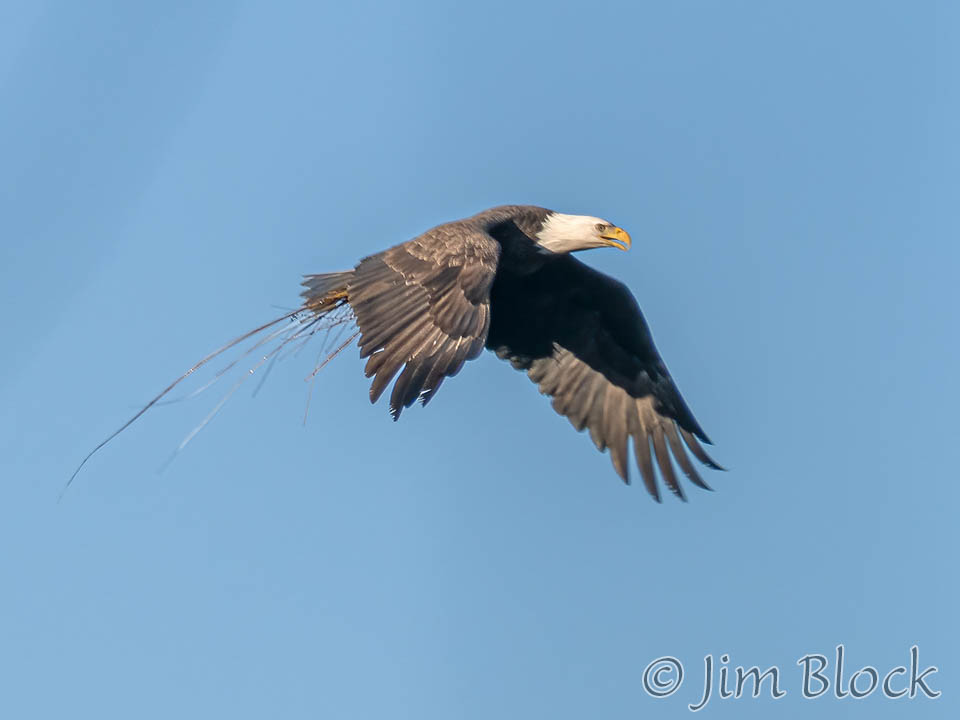
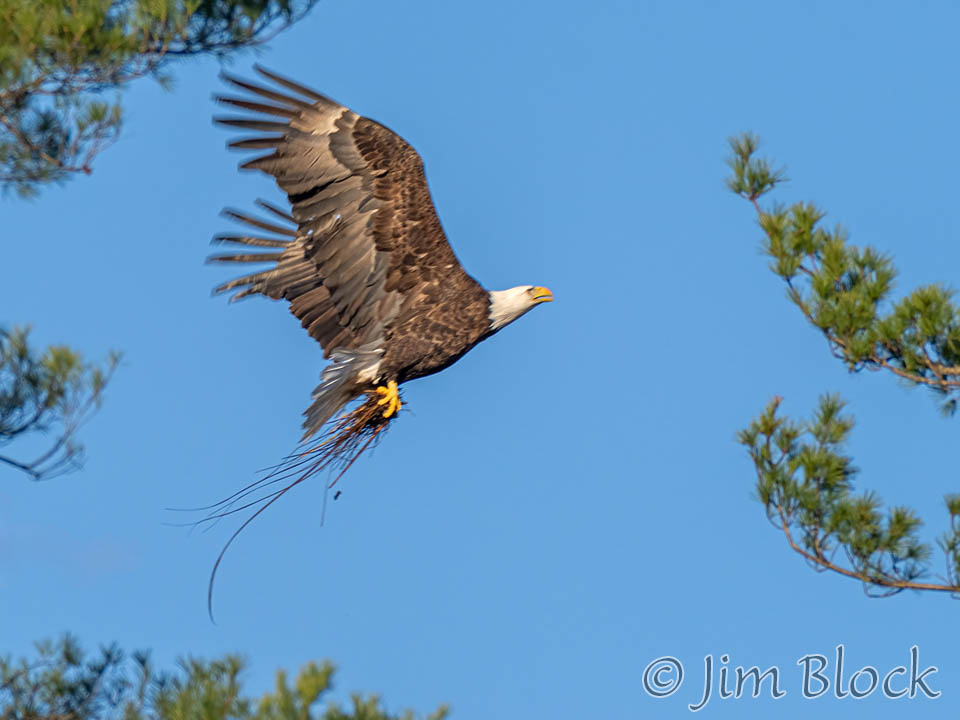
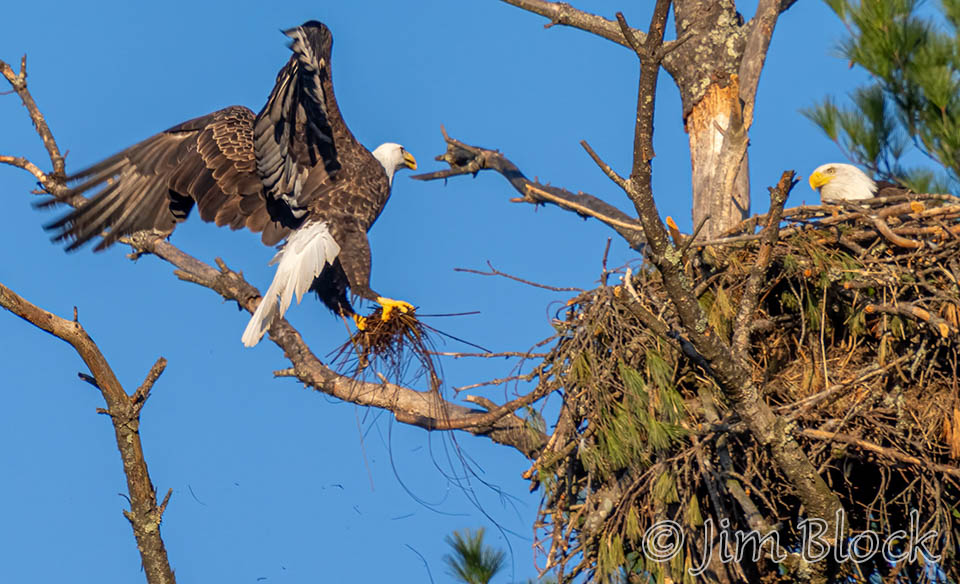
The eagle deposited the grass in the nest, hung around for three minutes, then left to get more.
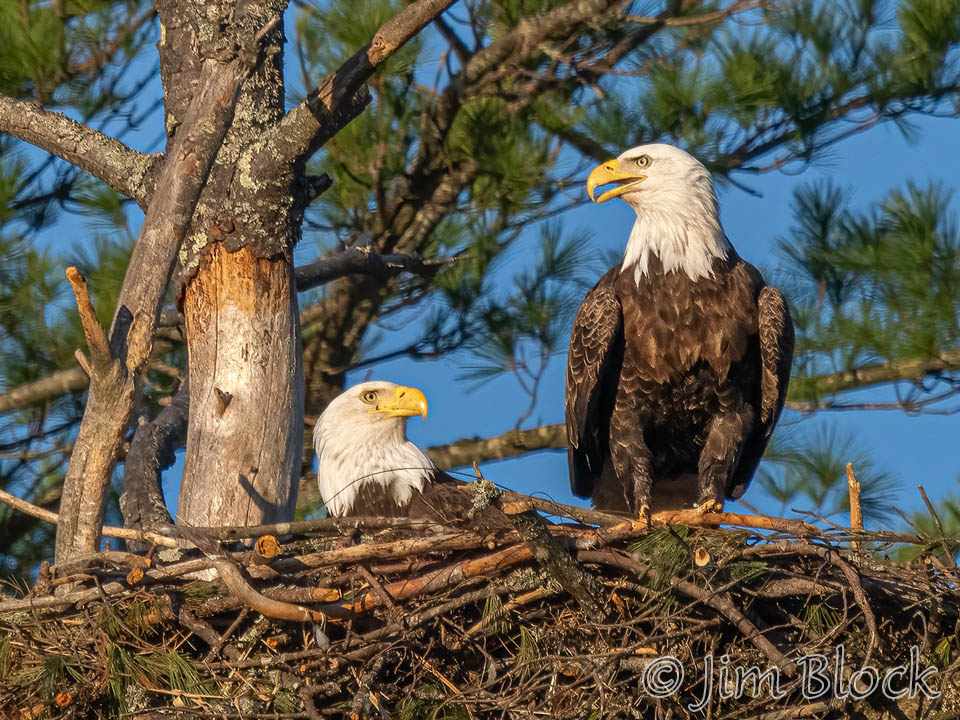
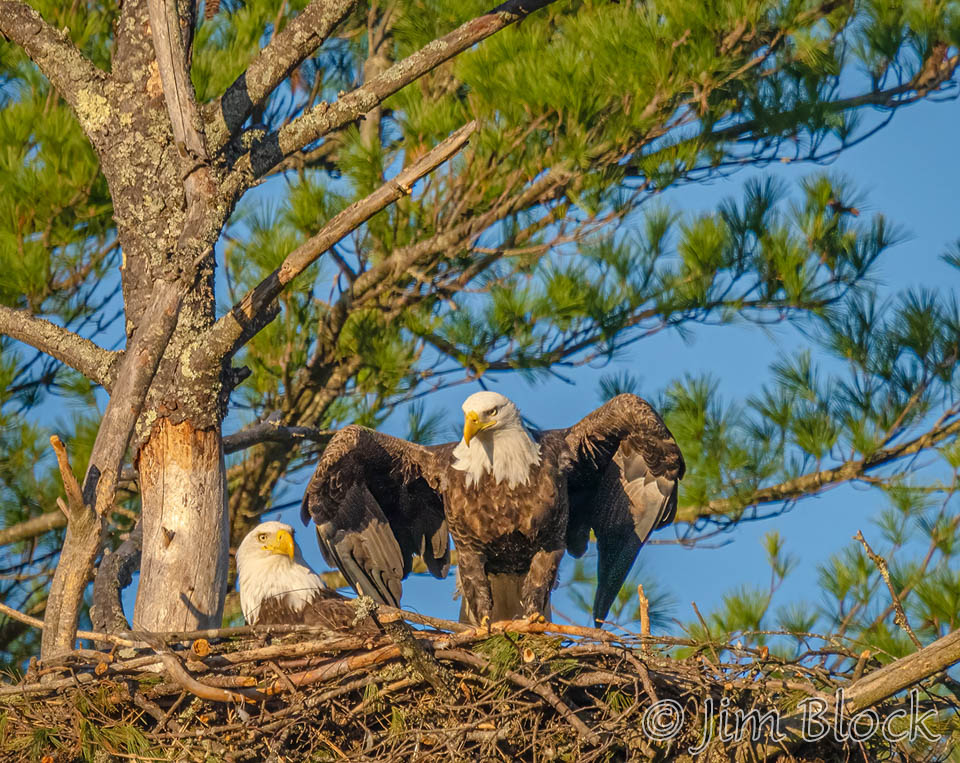
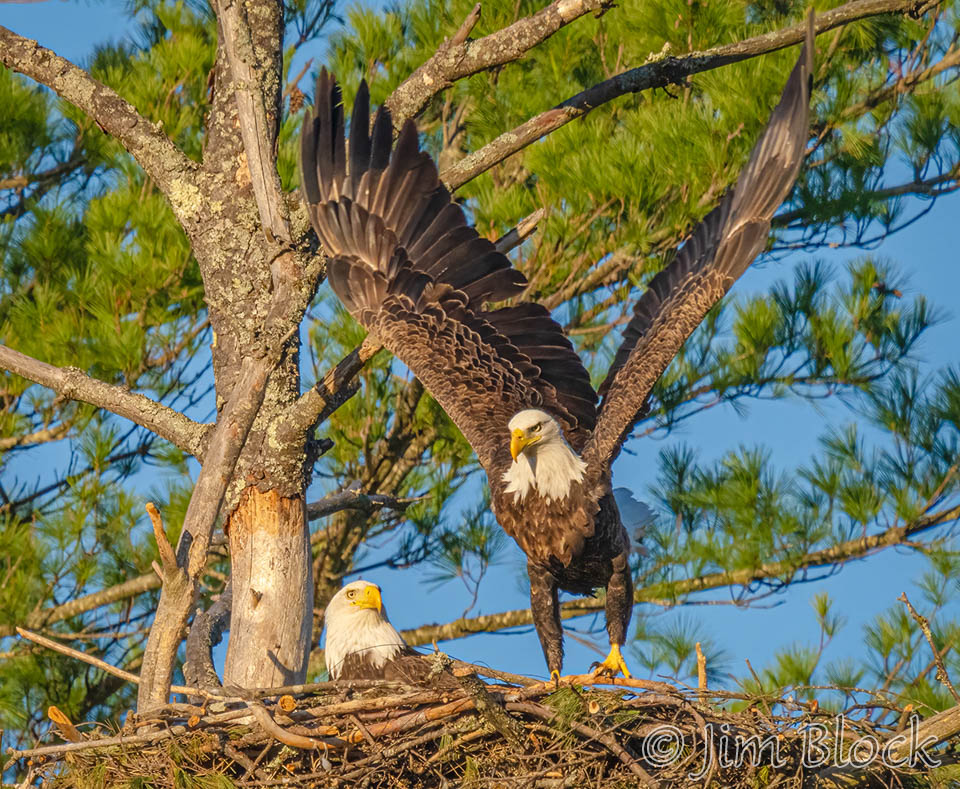
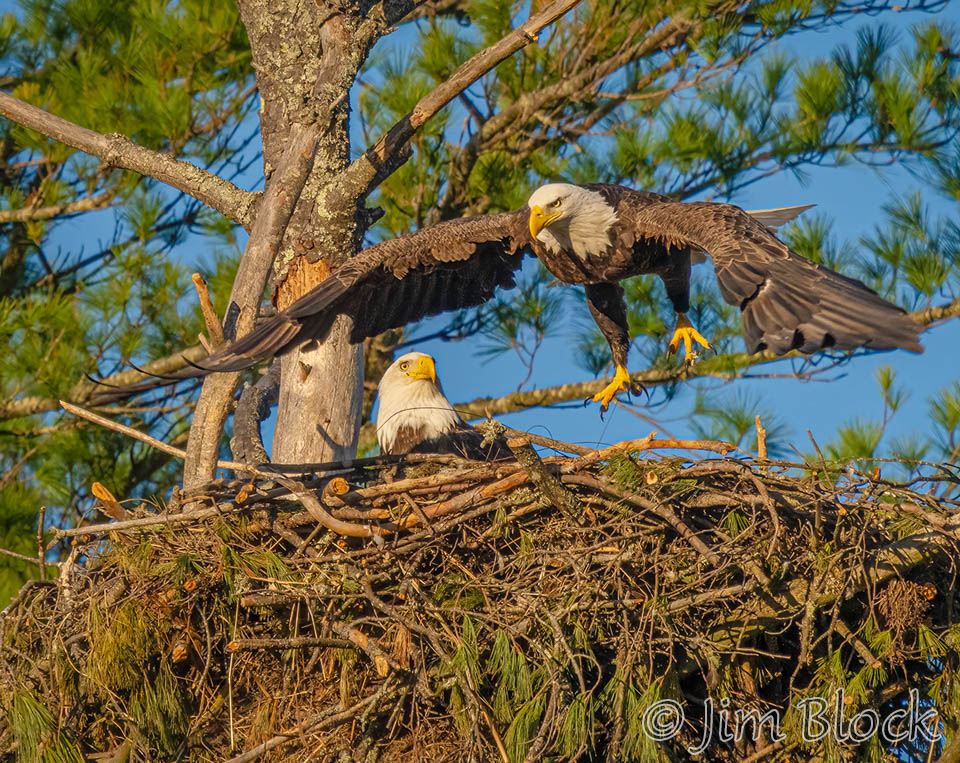
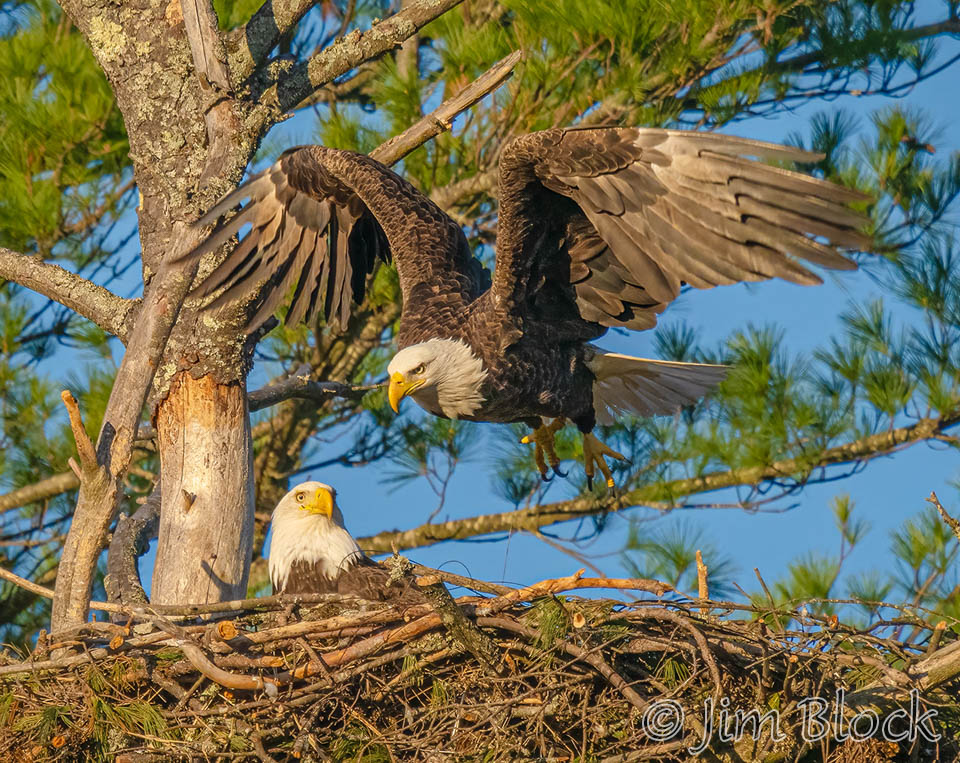
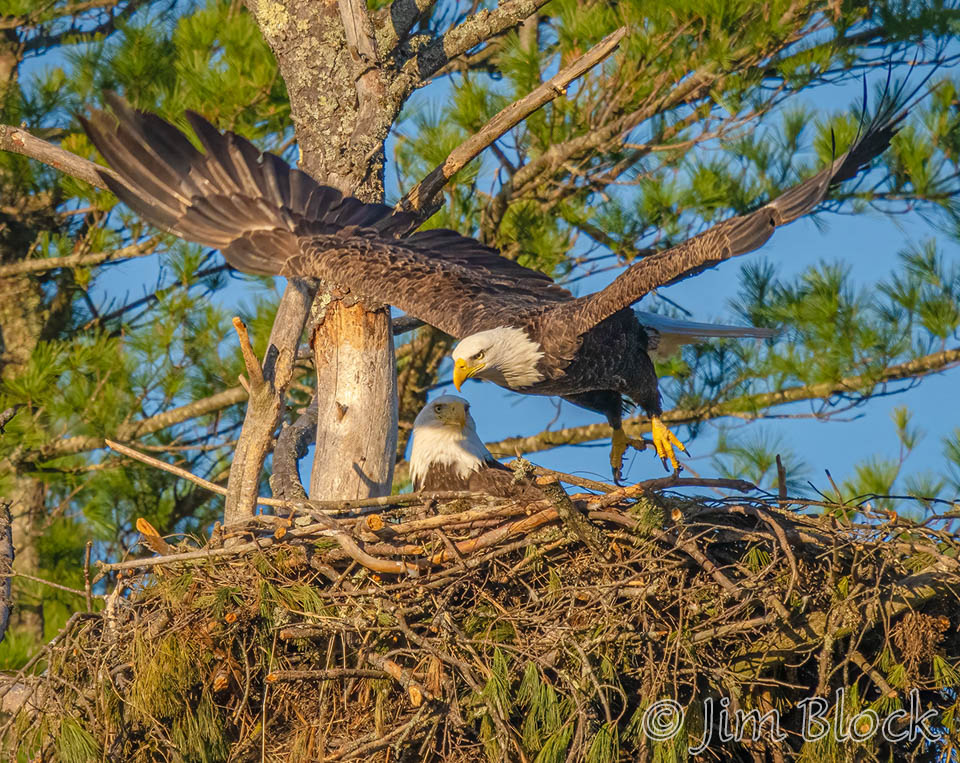
In thirty seconds (!) it was back with more grass.
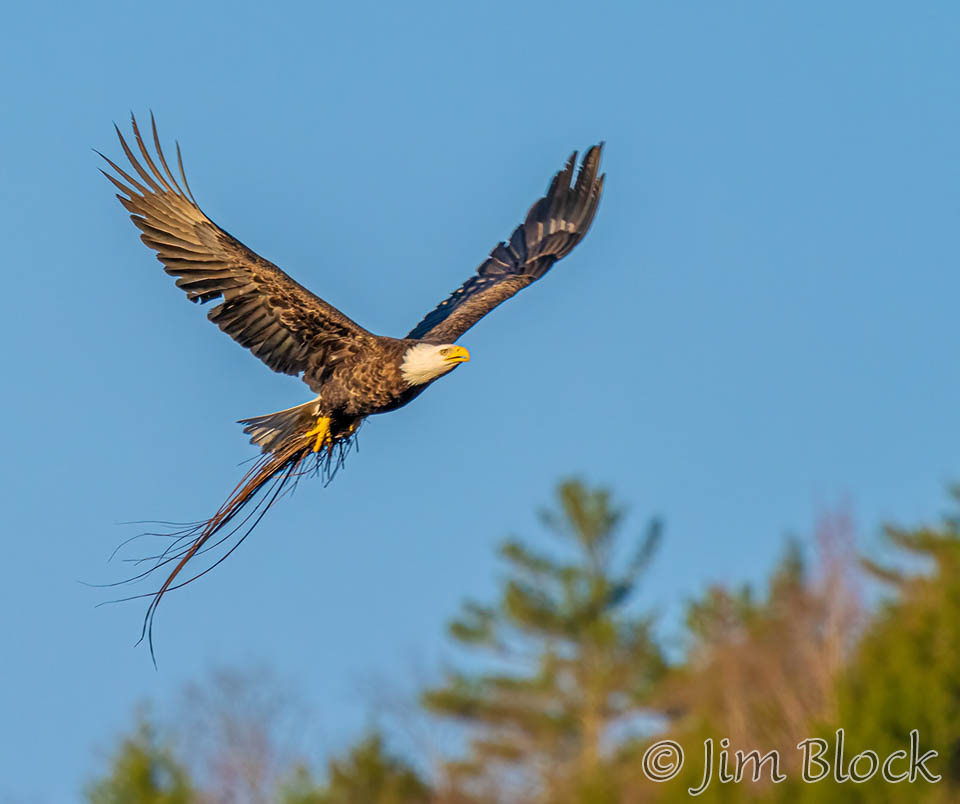
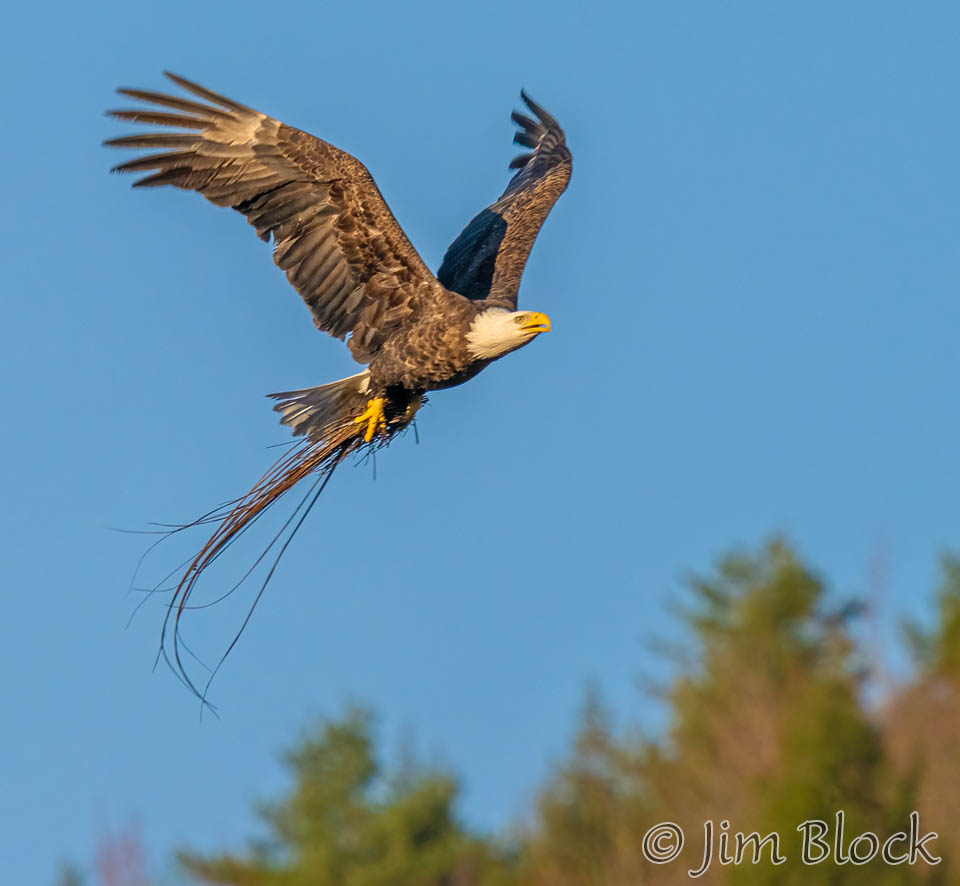
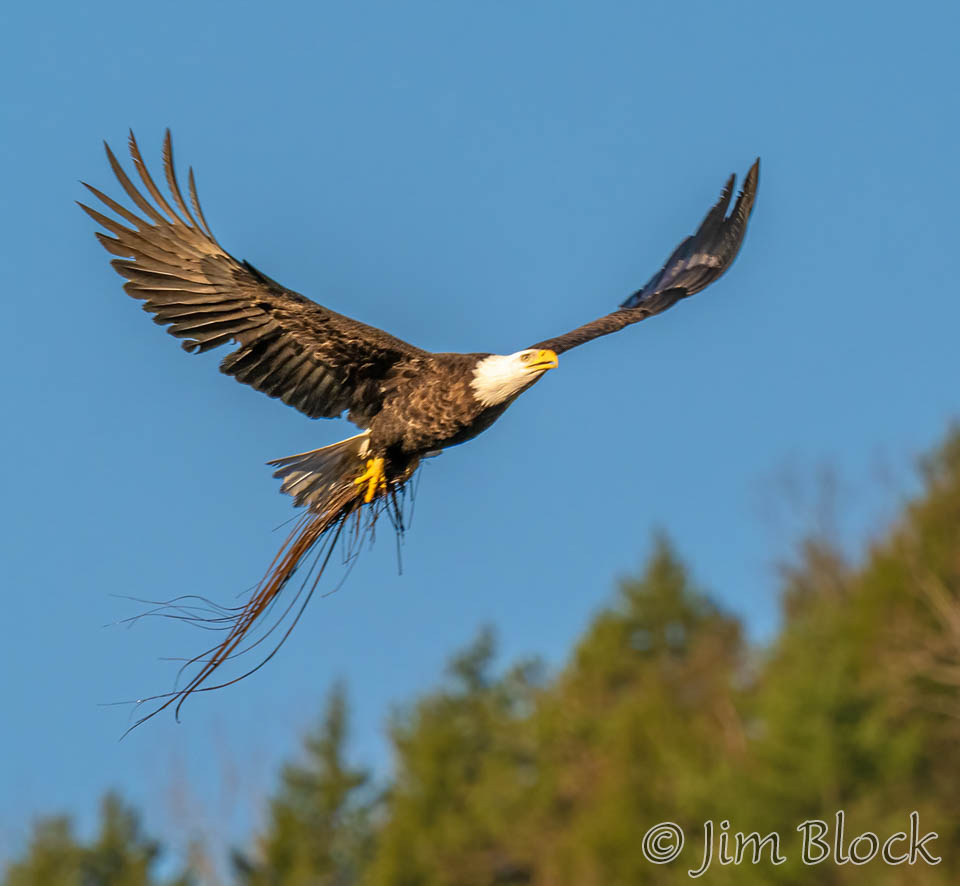
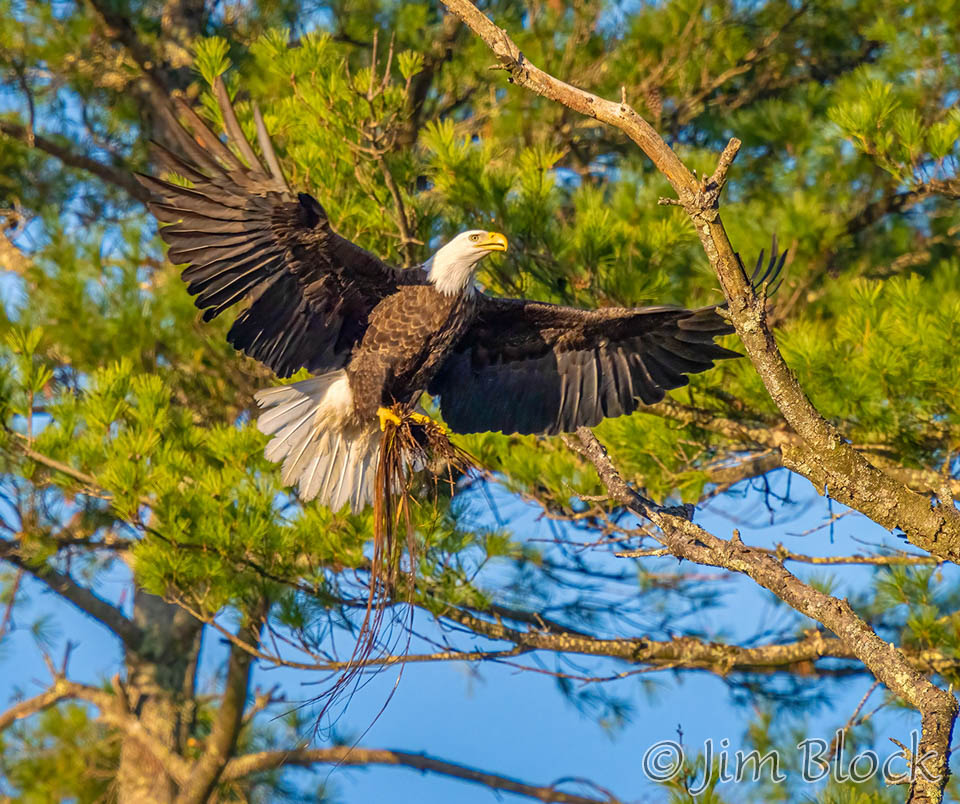
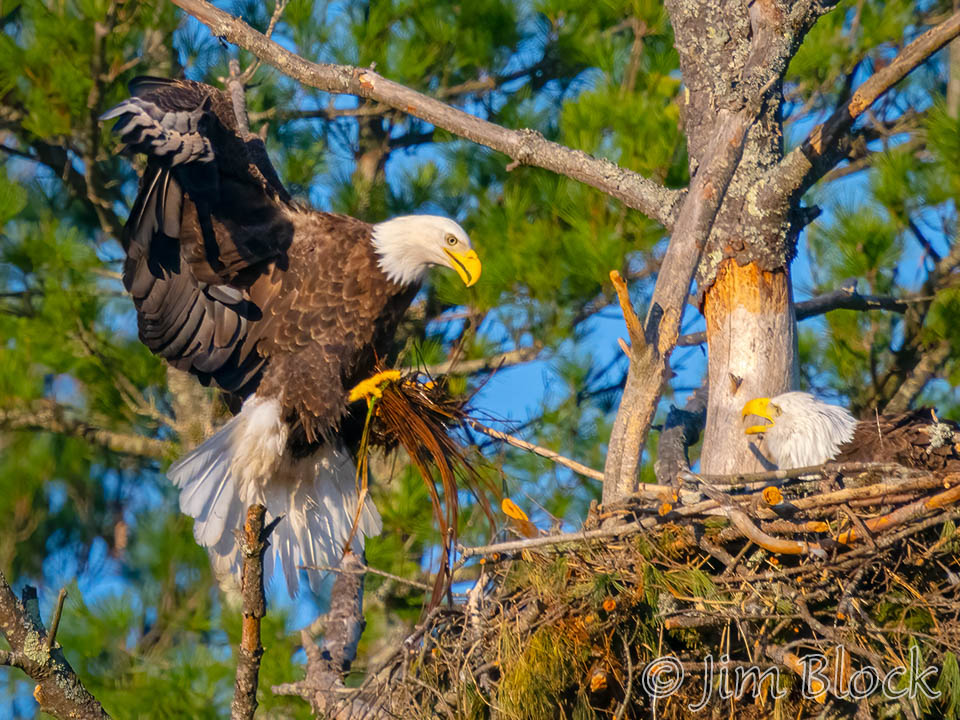
And then two tedious hours with nothing happening except unexciting incubation — for me and likely for the eagle too.
Then a HUGE fish. Certainly not for a chick because it was still locked in the egg. But for its mate.
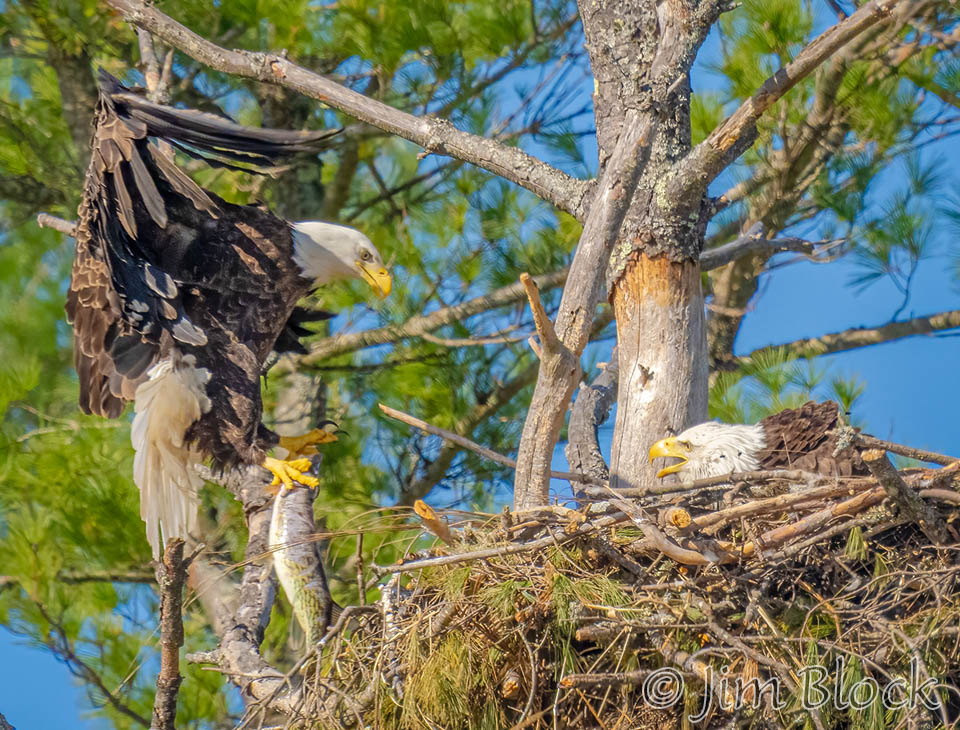
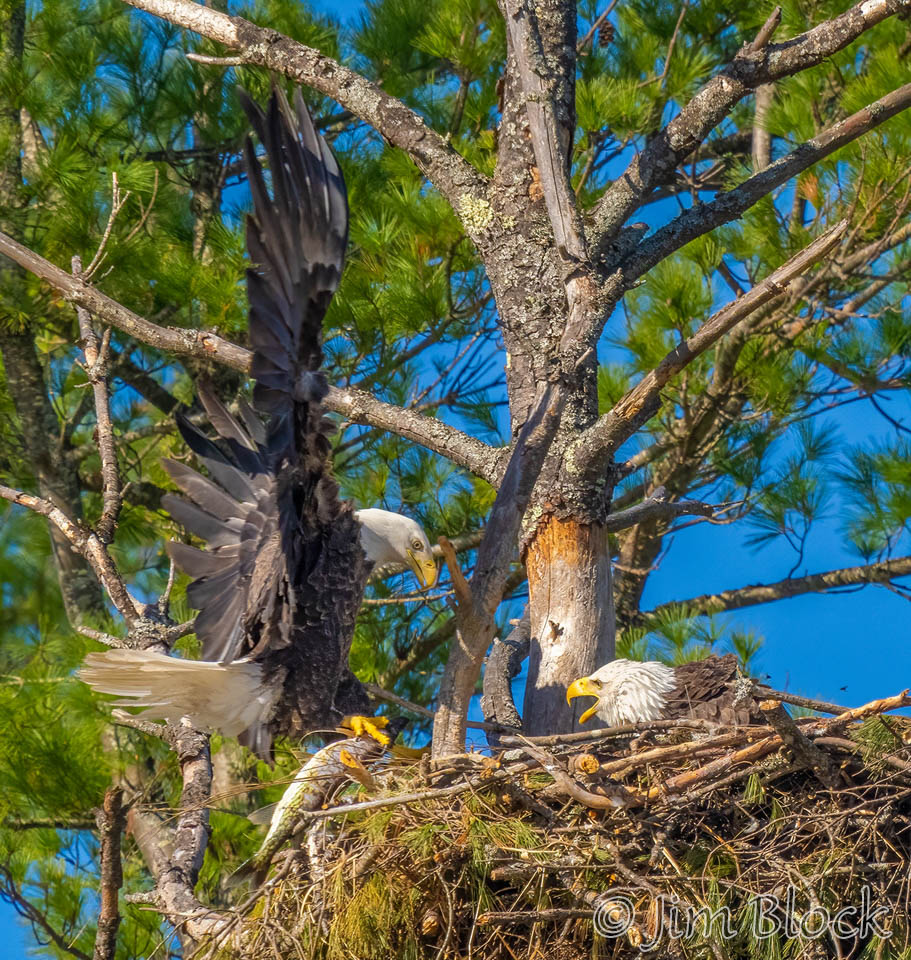
Meal delivered, the eagle departed — for more soft grass, of course.
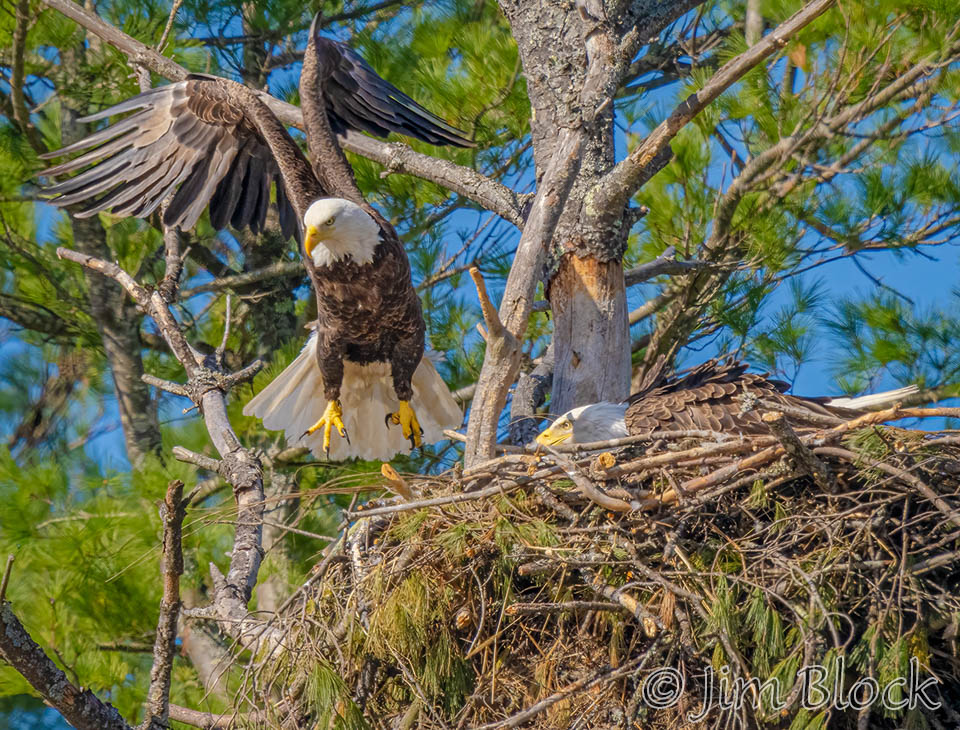
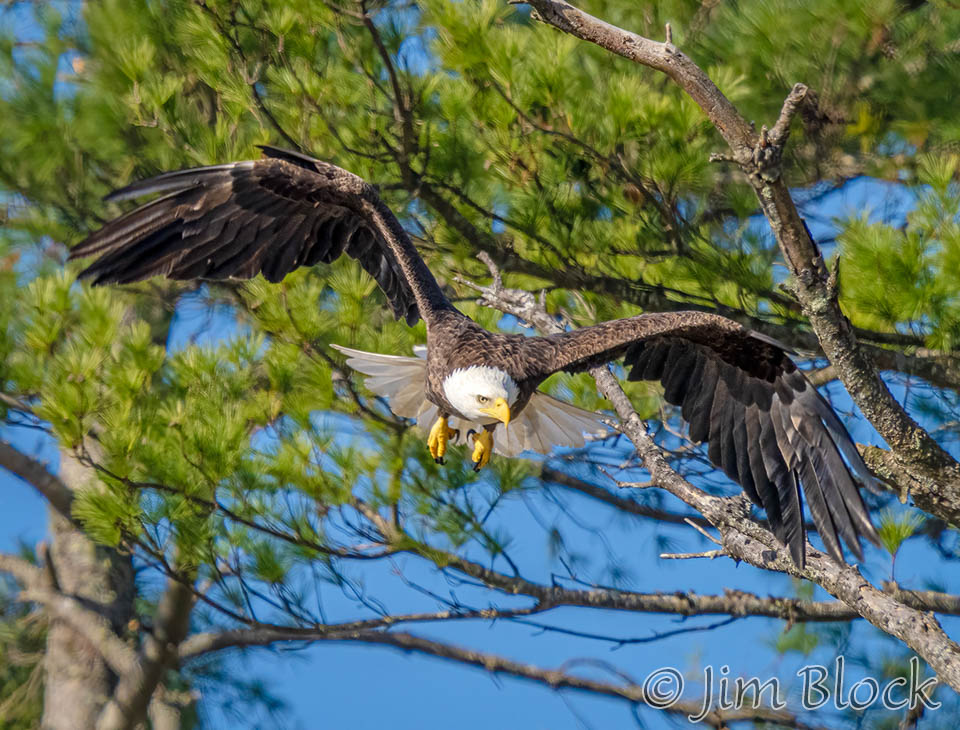
This time it took five minutes to get the grass.
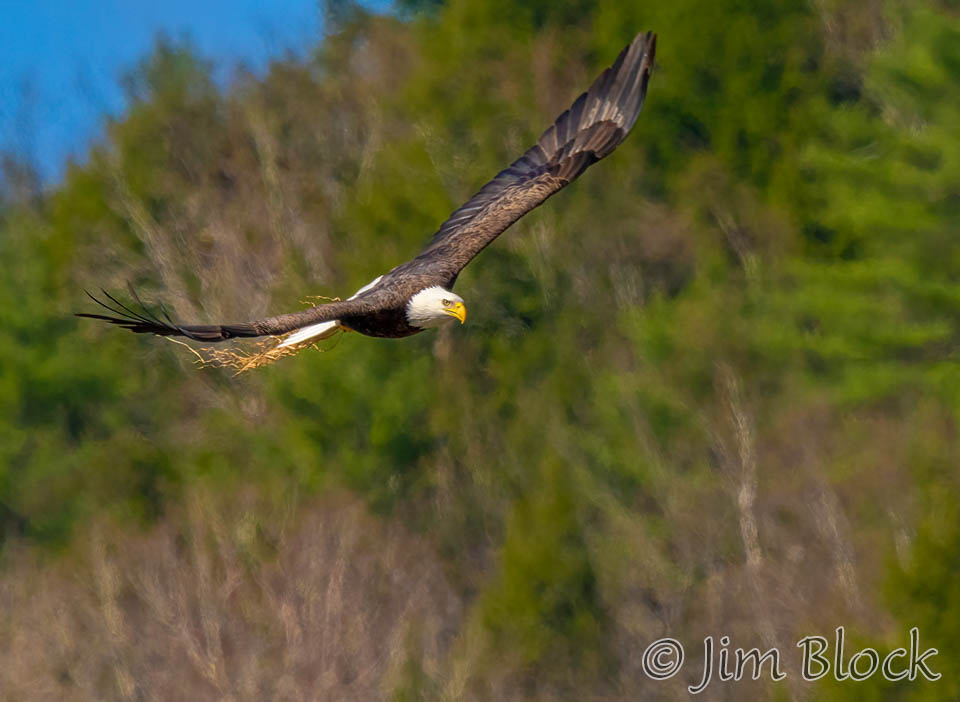
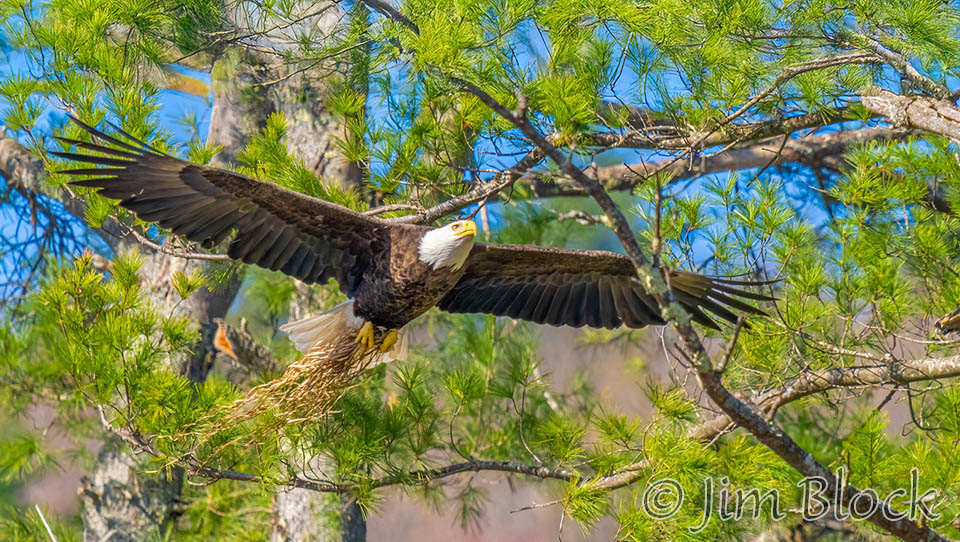
It dropped off the grass, remained in the nest, and a minute later the nest switch was completed.
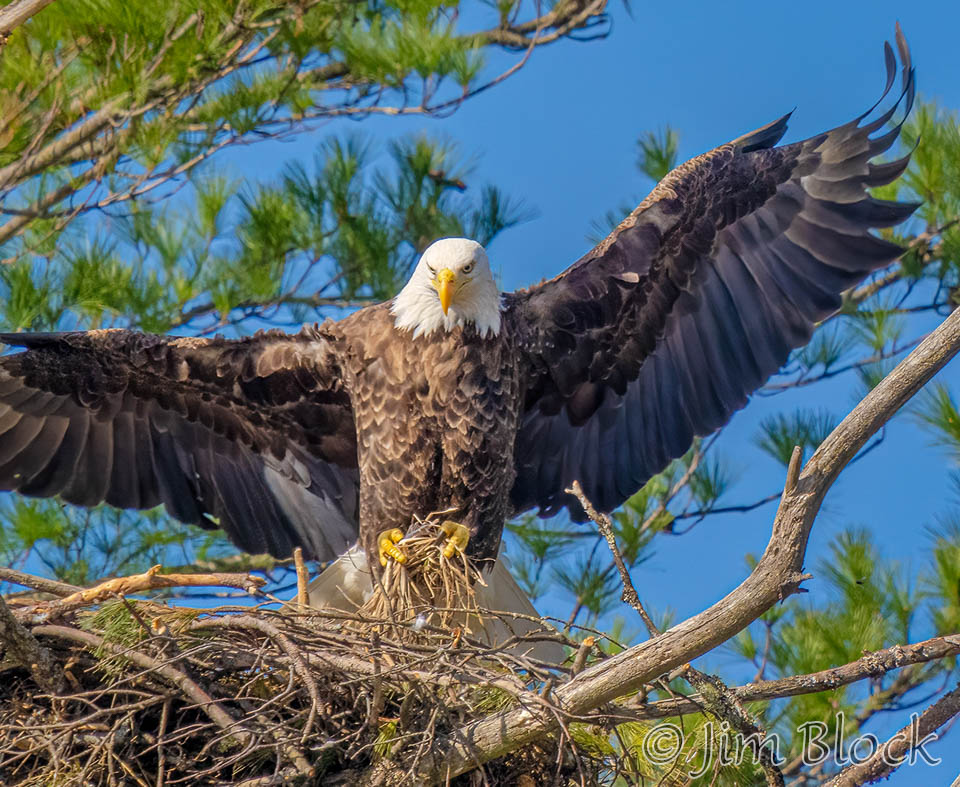
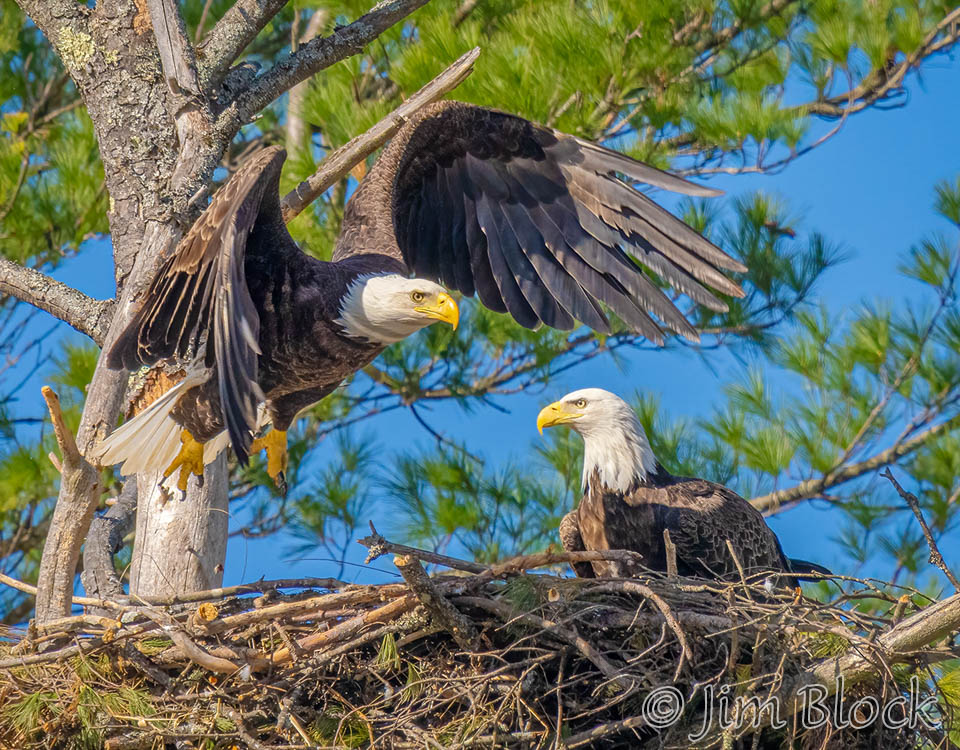
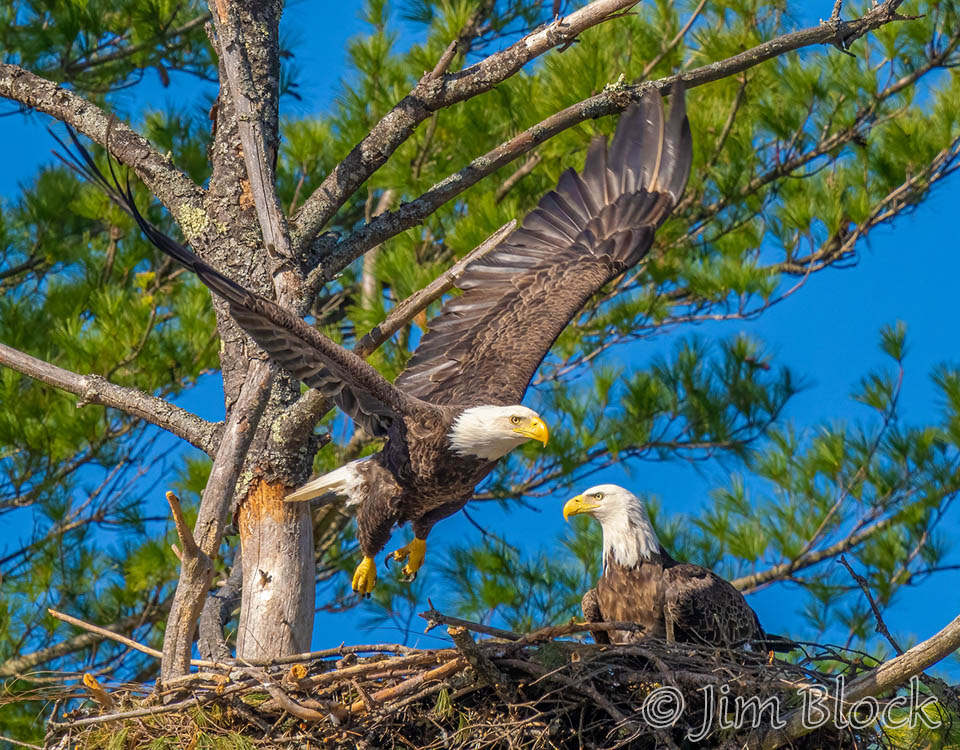
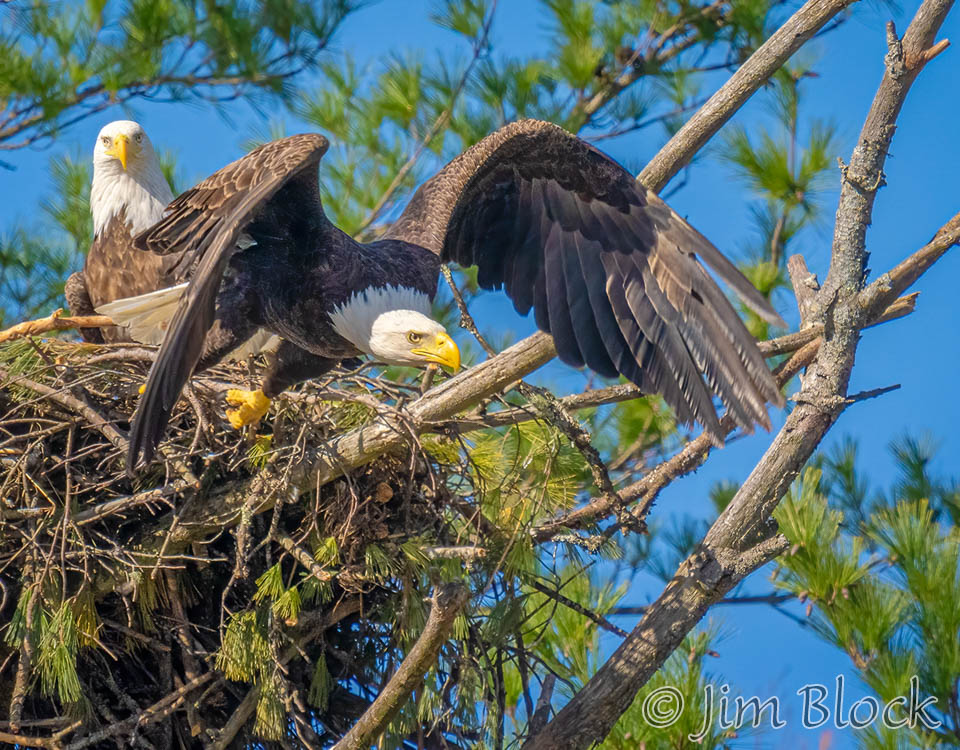
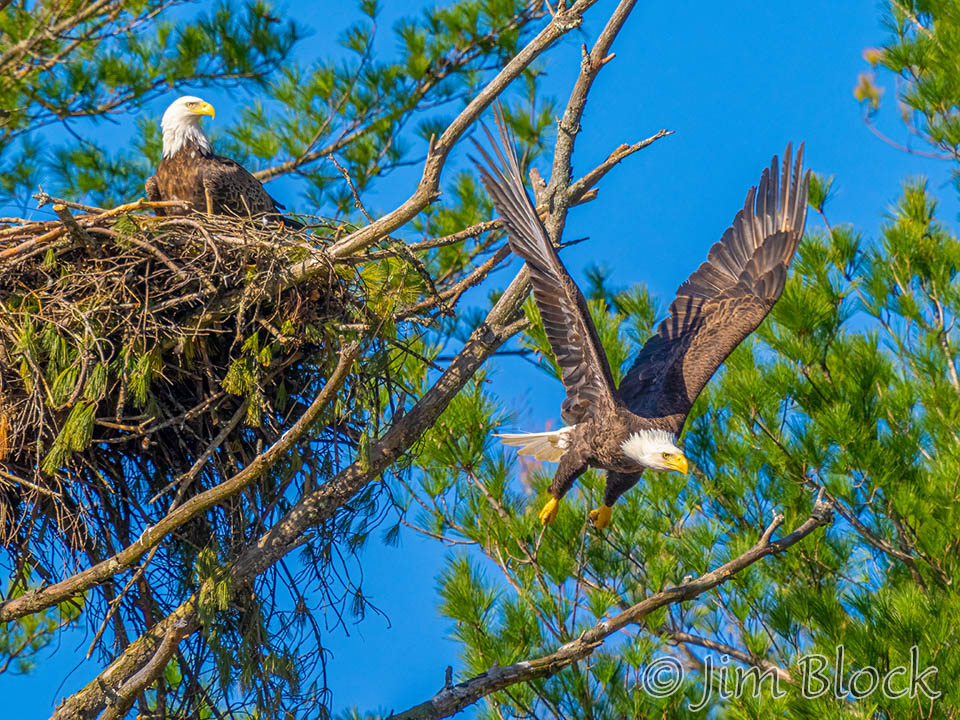
They were sure an amazing and considerate pair.
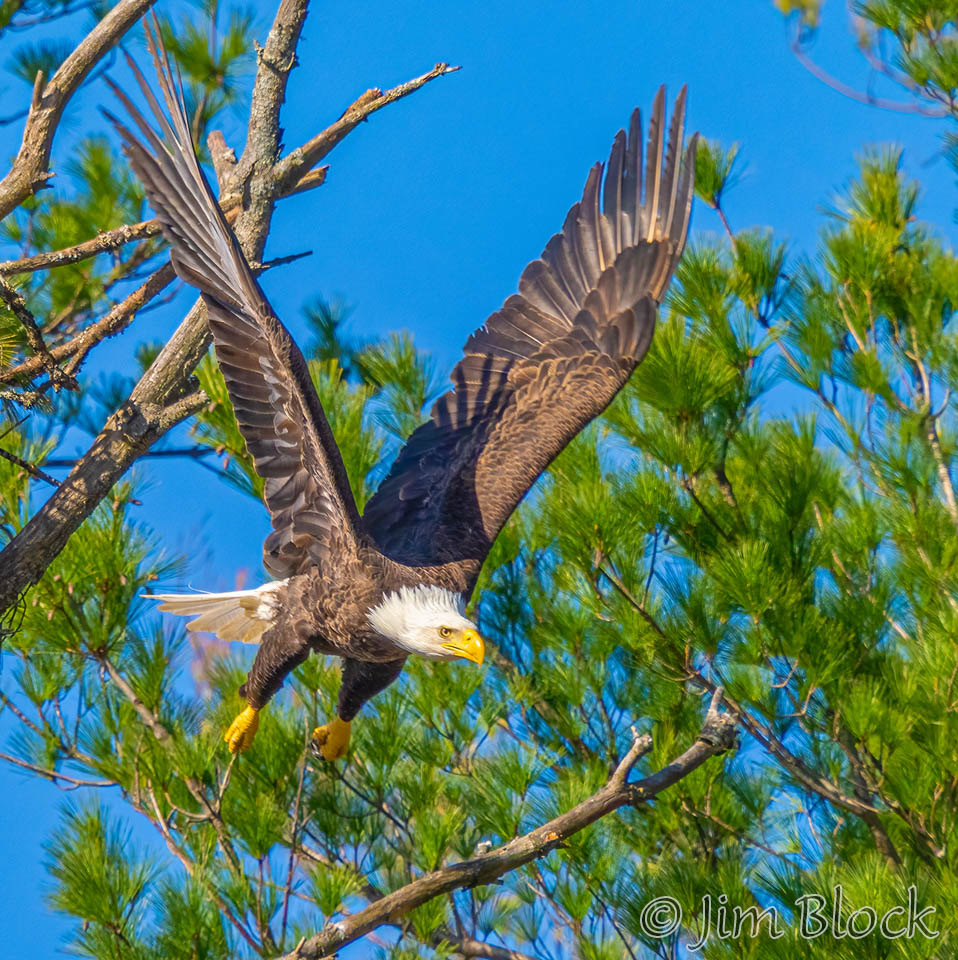
I returned the next day, April 24, at 6 a.m., nine minutes after sunrise. The eagles were in position — one in the nest and the other standing guard in “their tree”. Thirty minutes later the guard flew to the nest.
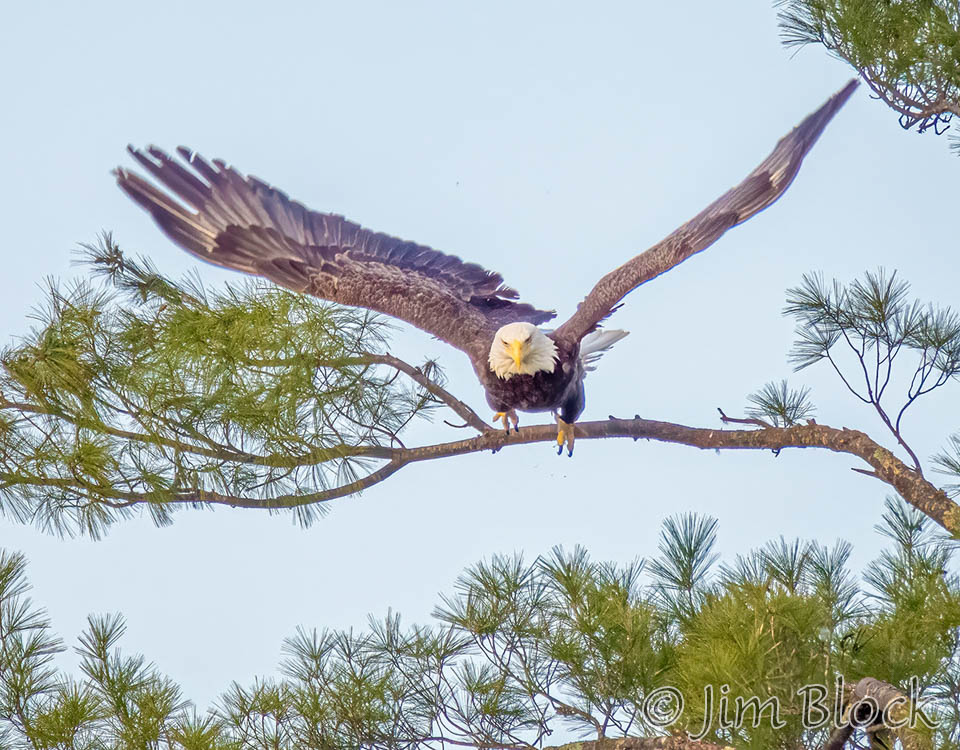
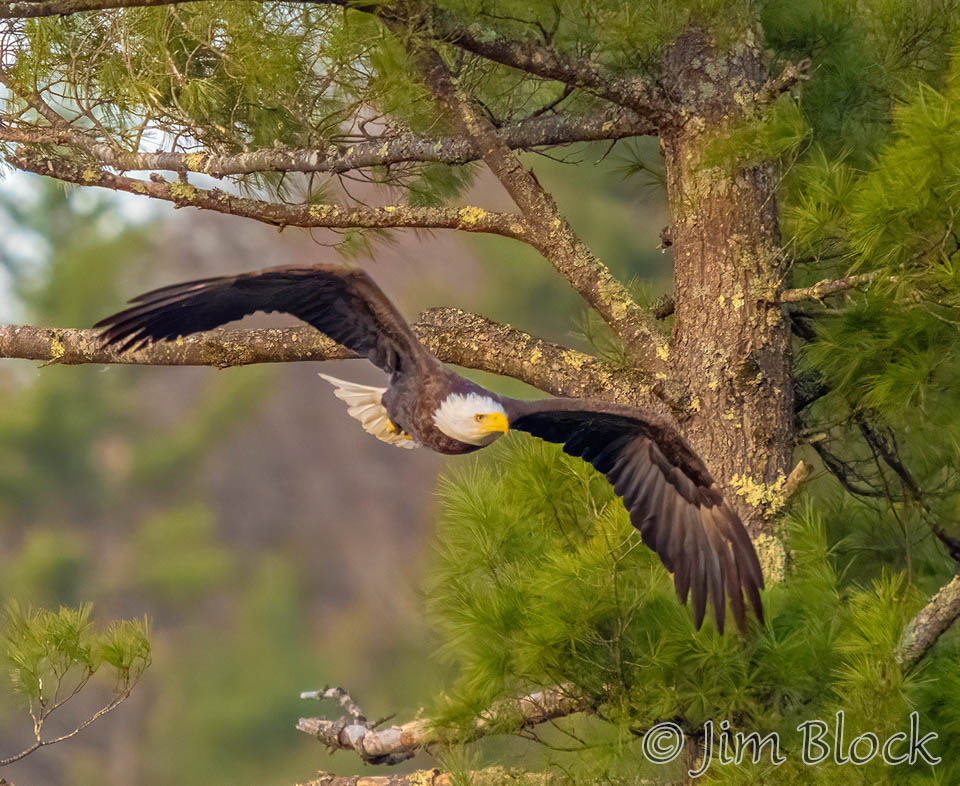
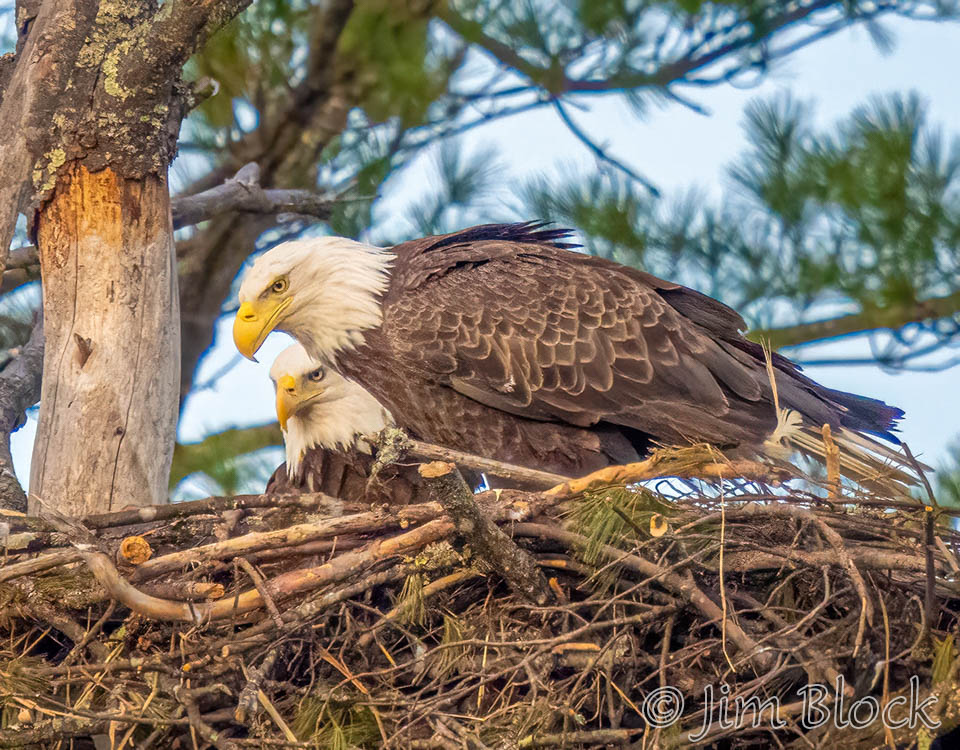
In two minutes the nest switch was accomplished.
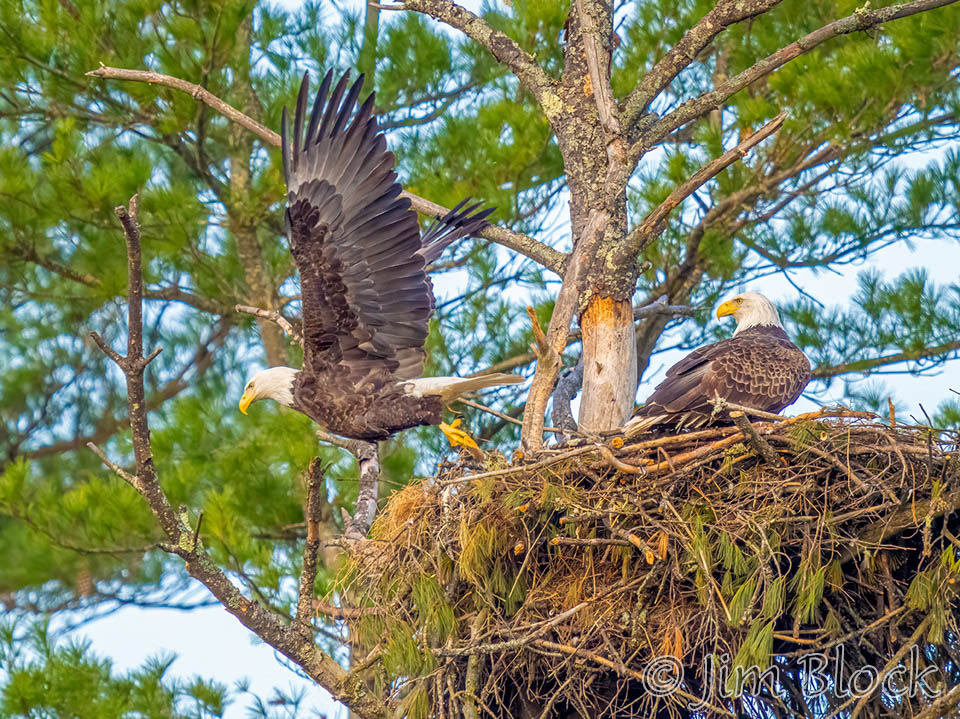
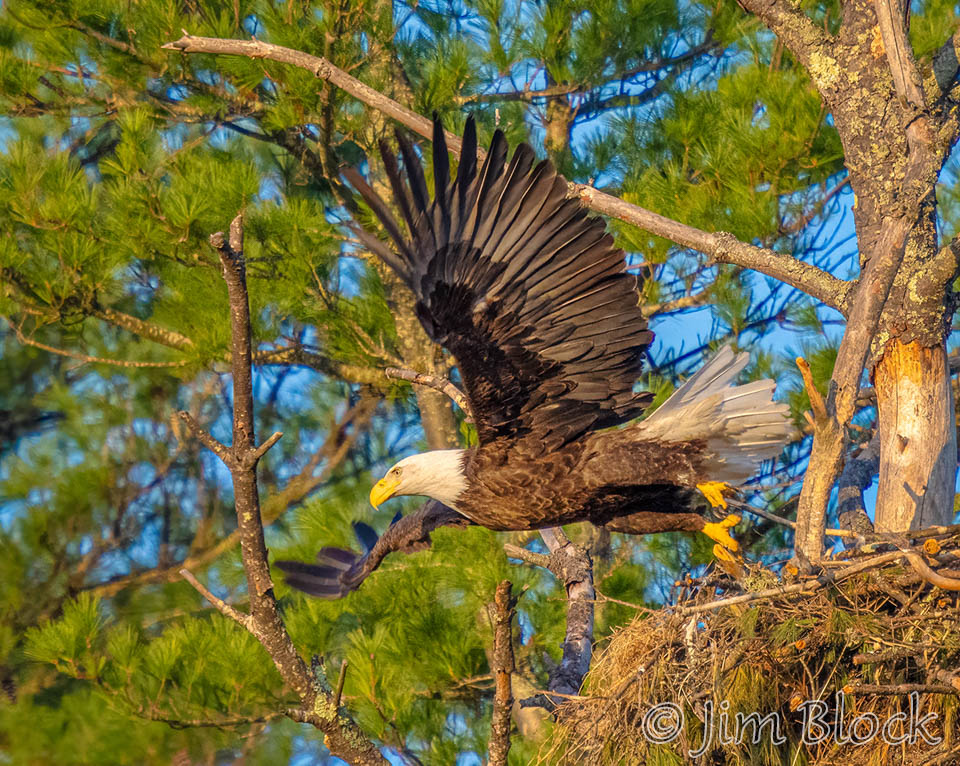
Twenty minutes later I took a series of photos of the eagle flying, but where it went I do not know. I left soon after.
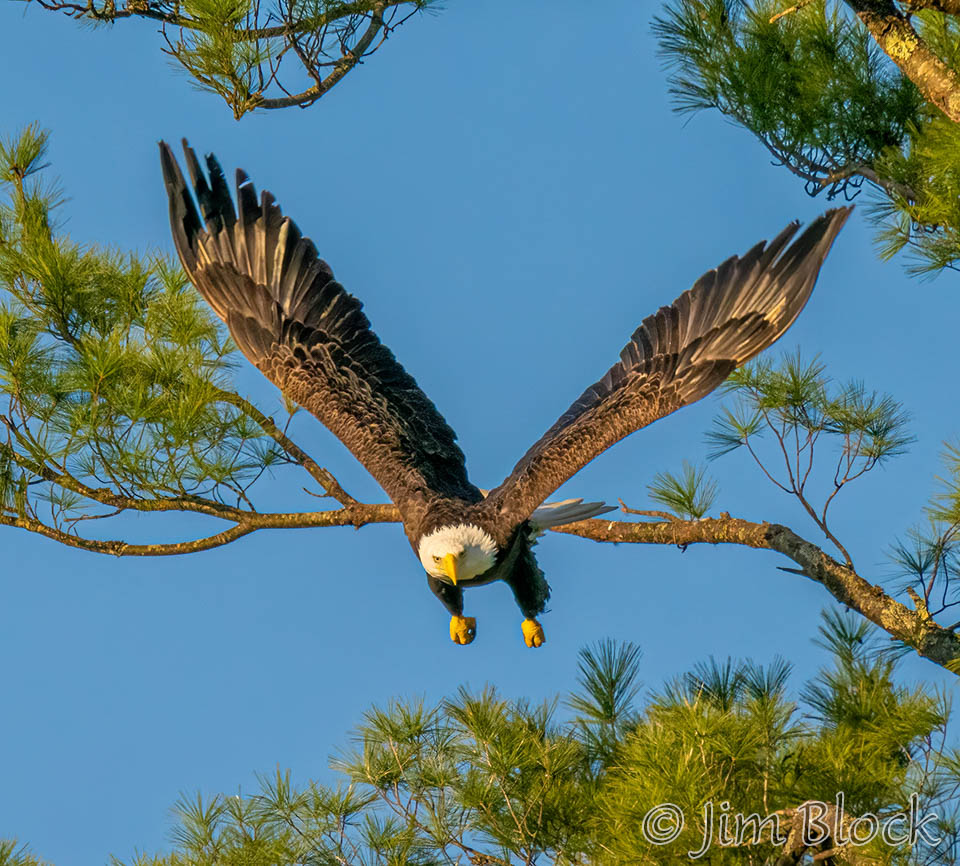
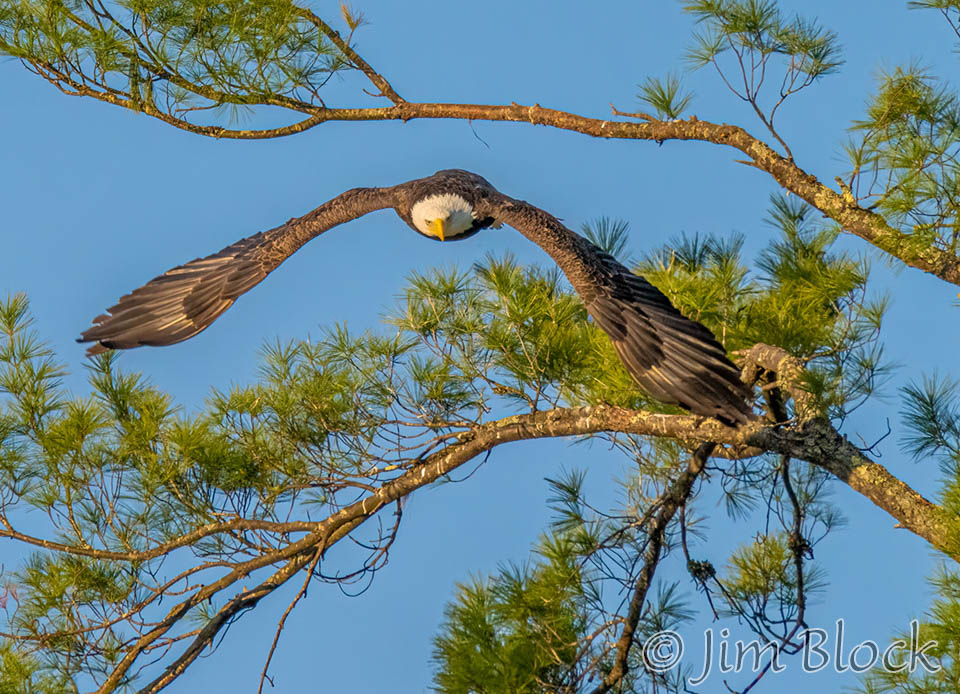
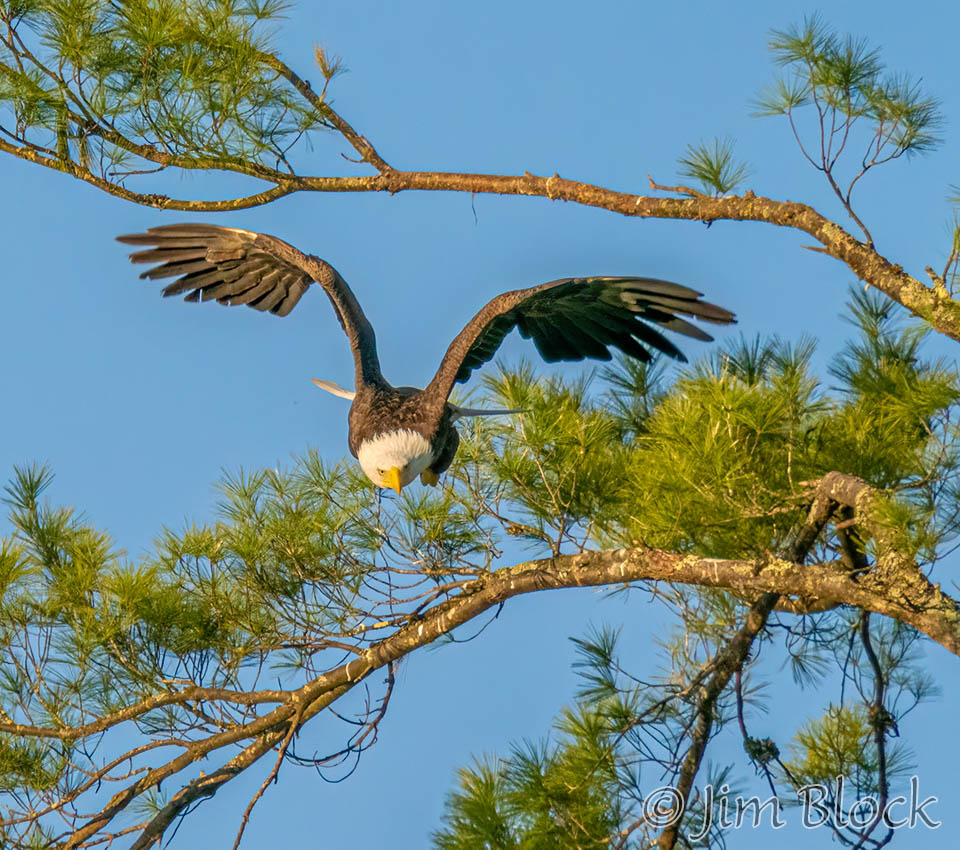
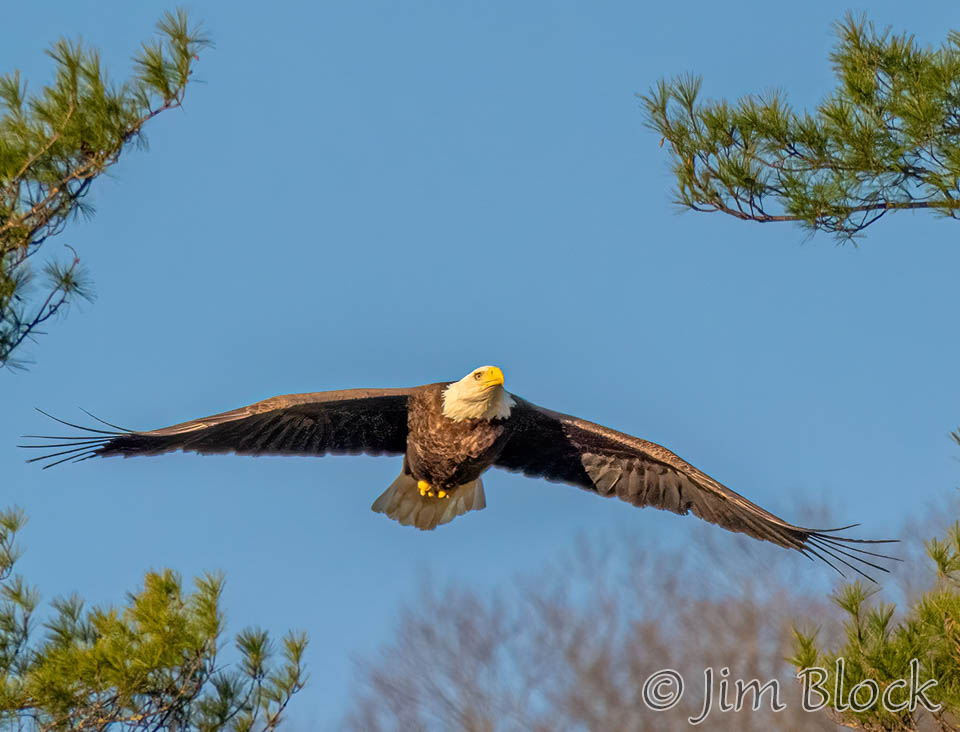
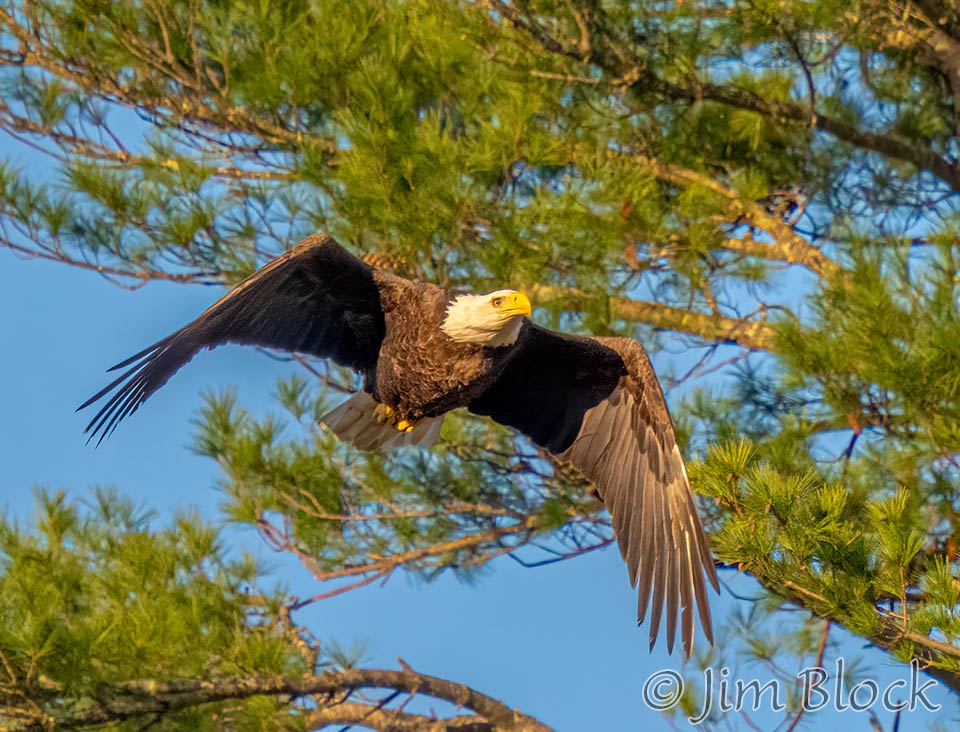
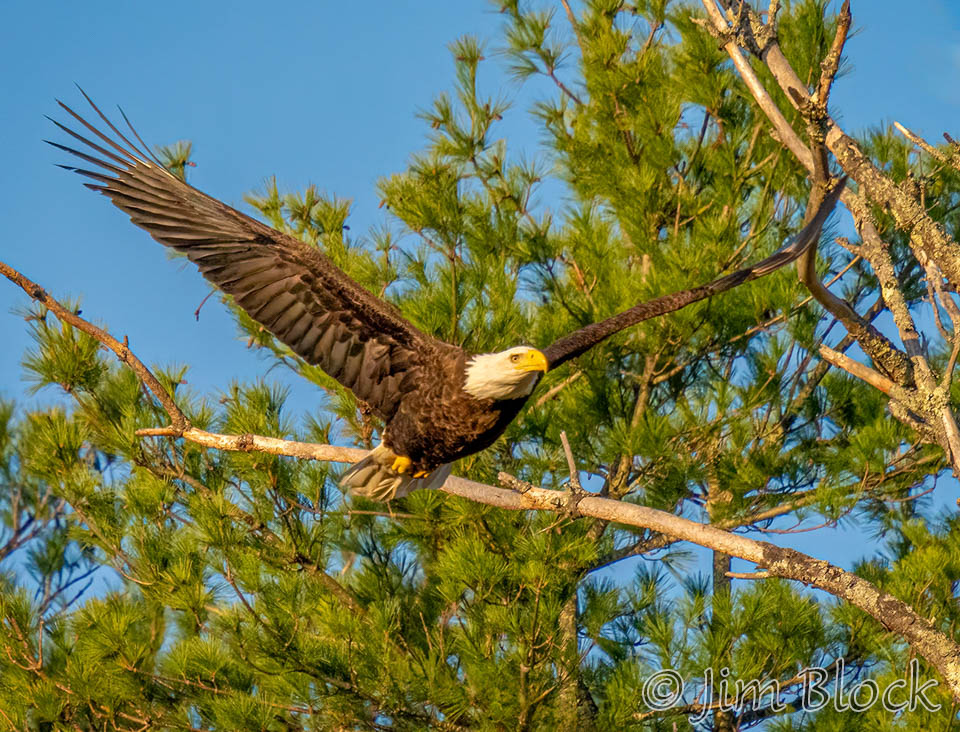
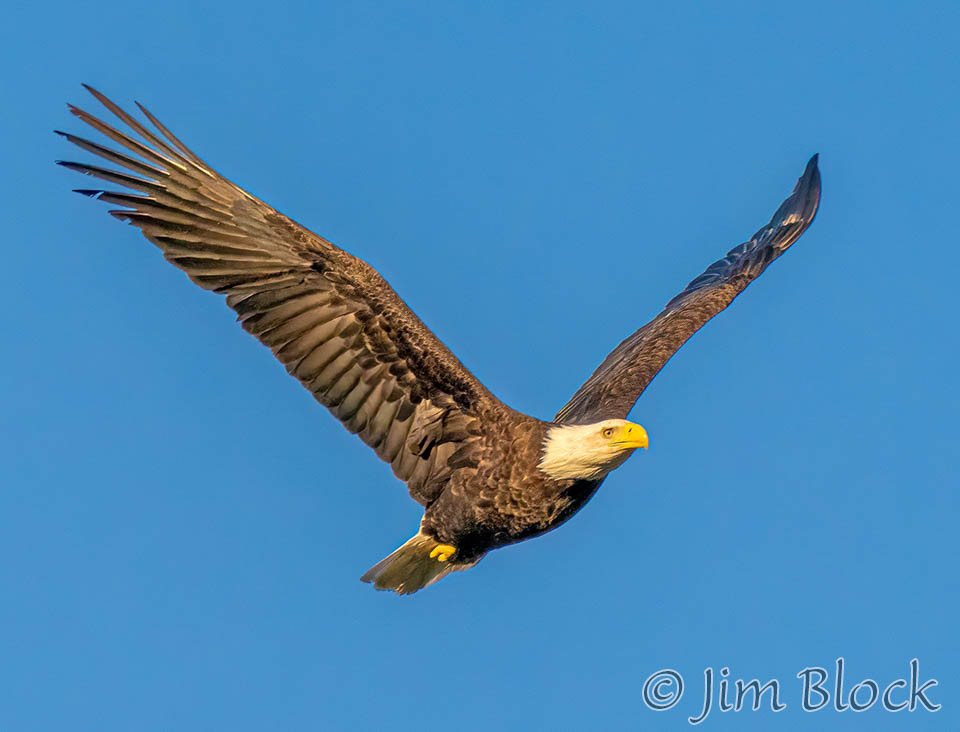
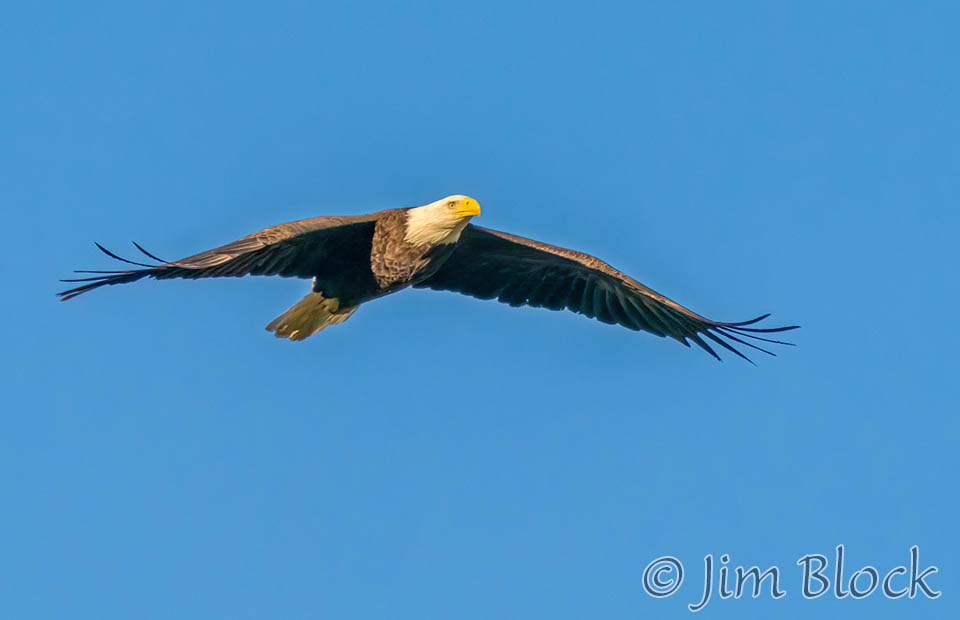
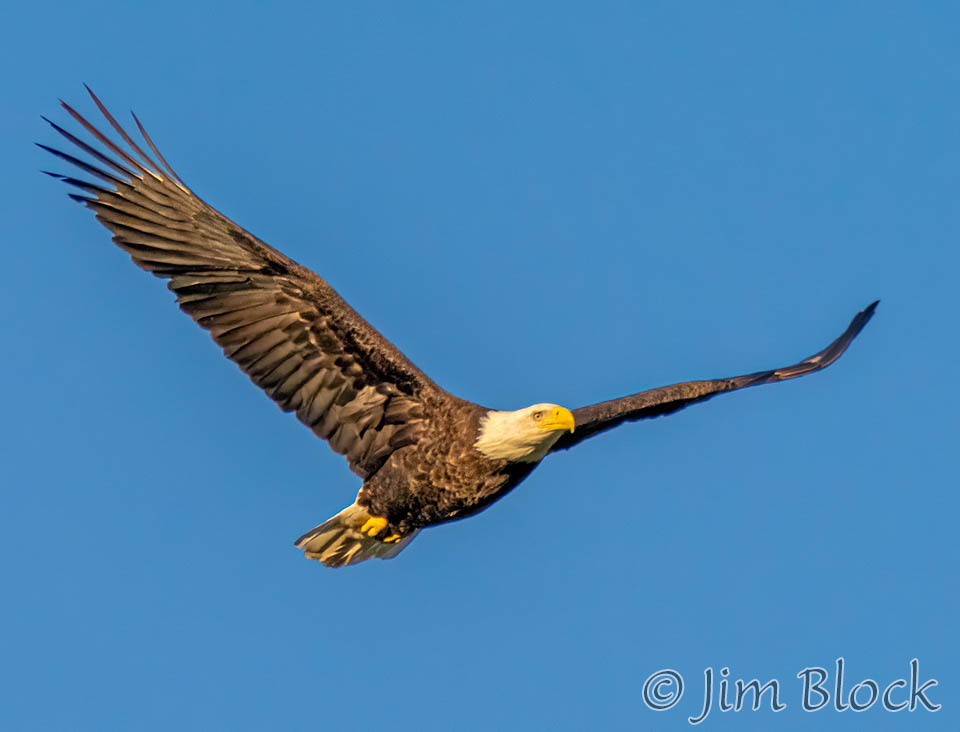
No young very eaglet photos this year. I spent the first two weeks in the marvelous country of Costa Rica with Ted Levin.
May 17th was the Twenty-fifth Annual Birding with Bill in Boltonville. On the way back from Wells River I stopped briefly to visit the eagles. I had not been at the nest for four weeks.
An adult was standing guard above the nest.
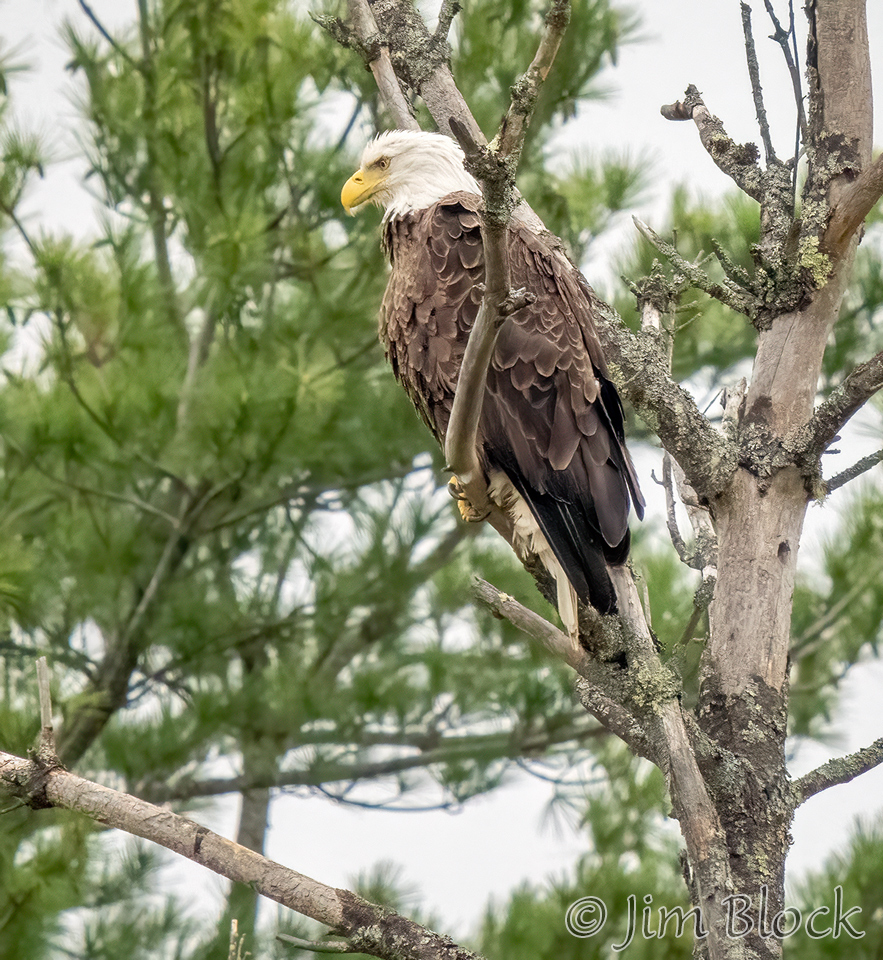
After about thirty minutes a chick appeared. Like last year only one this year.
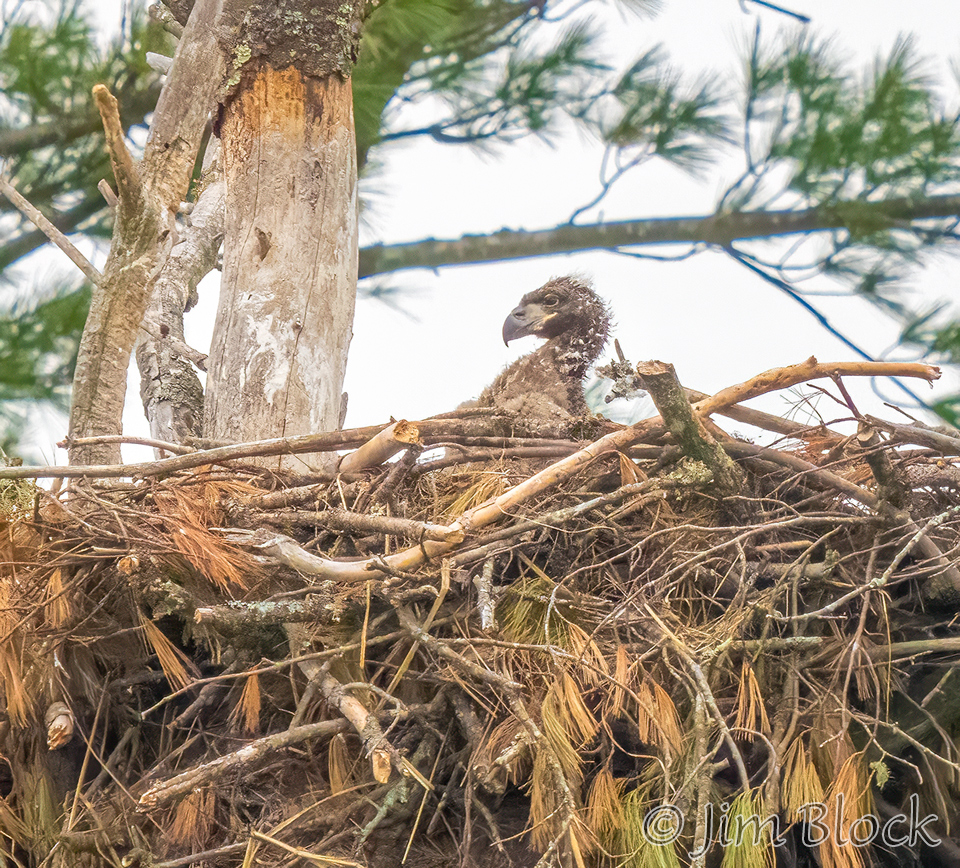
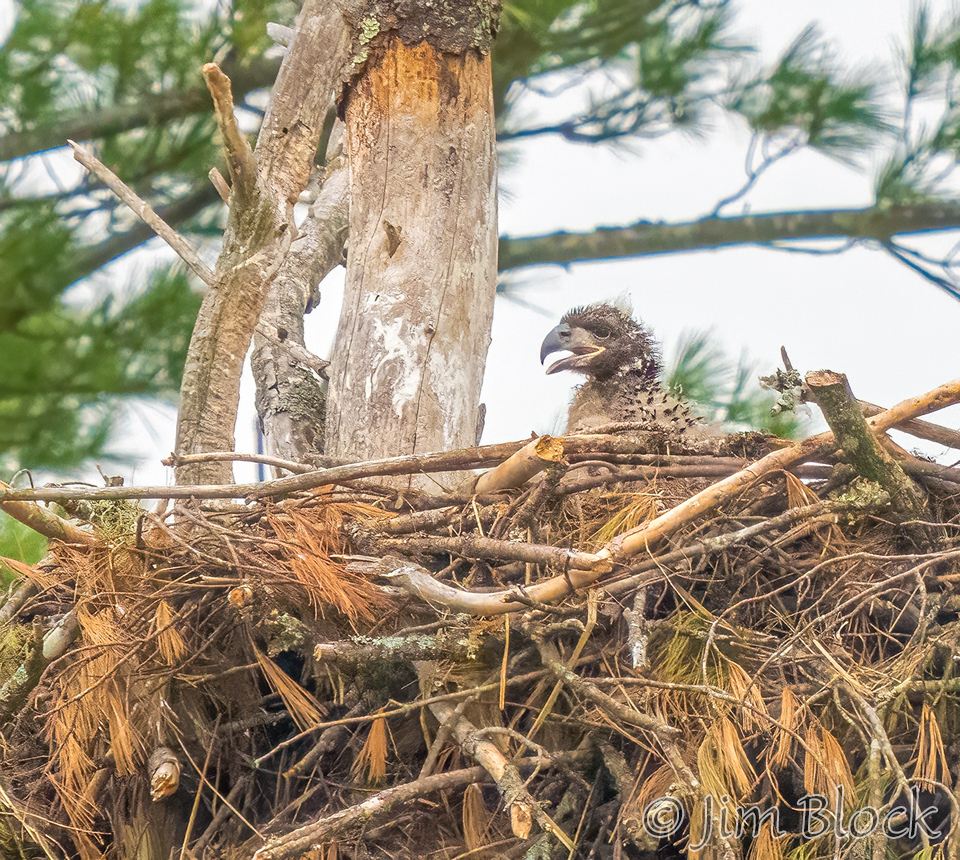
The chick exercised it wings but unfortunately when turned away from me or when it had its head down.
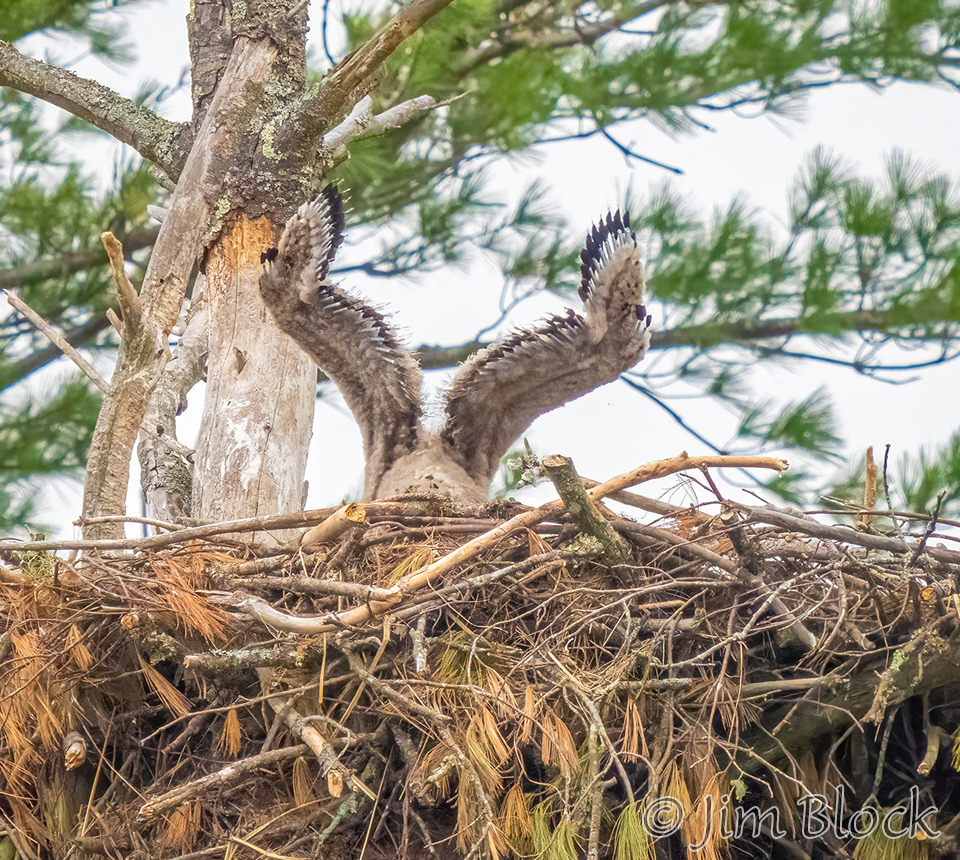
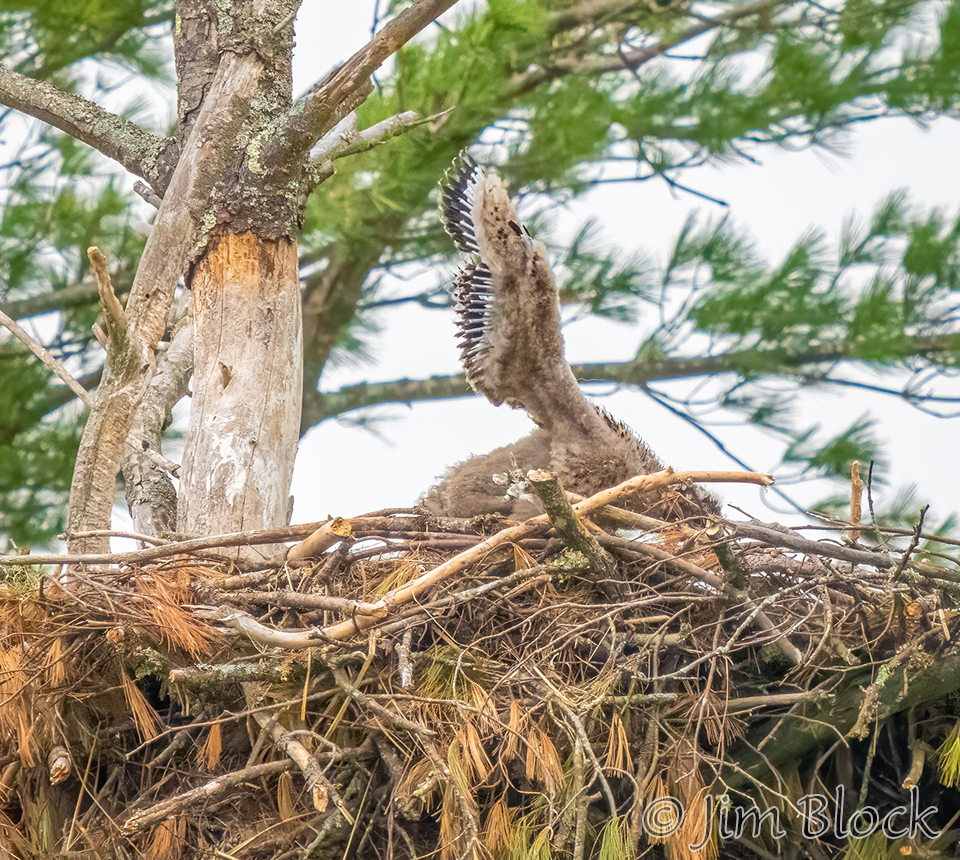
When I visited for two hours June 17, one month later, I was amazed at how big the chick was.
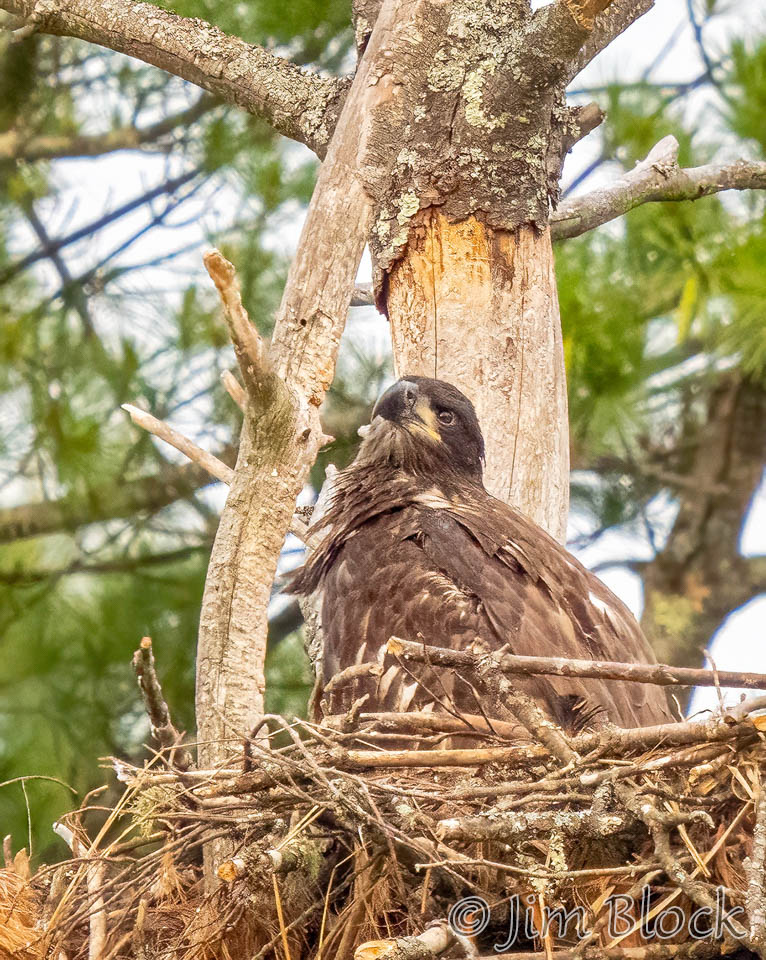
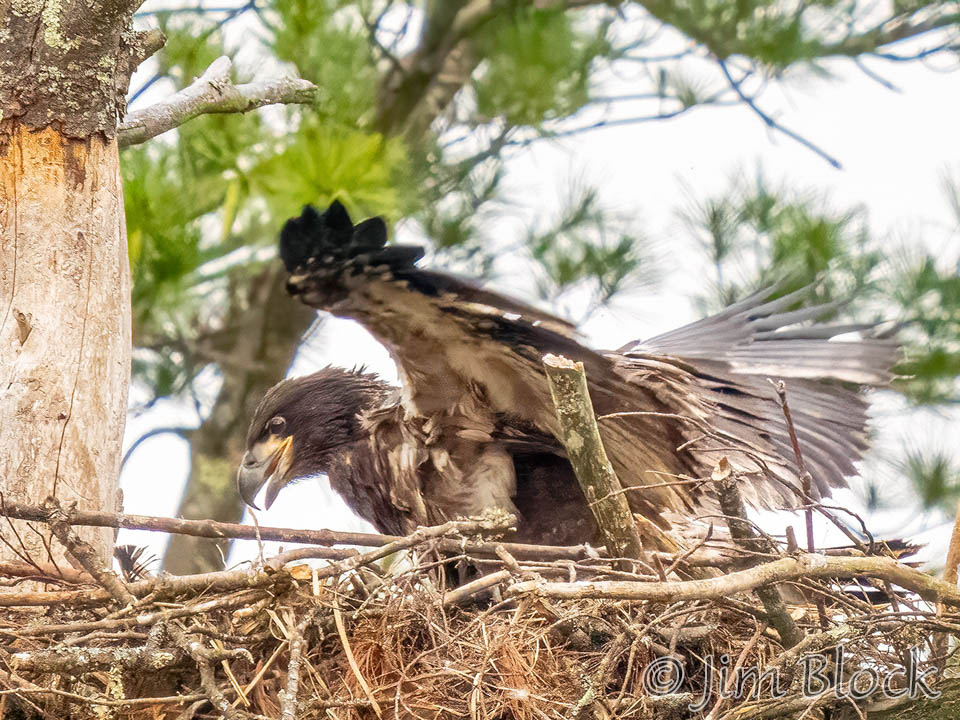
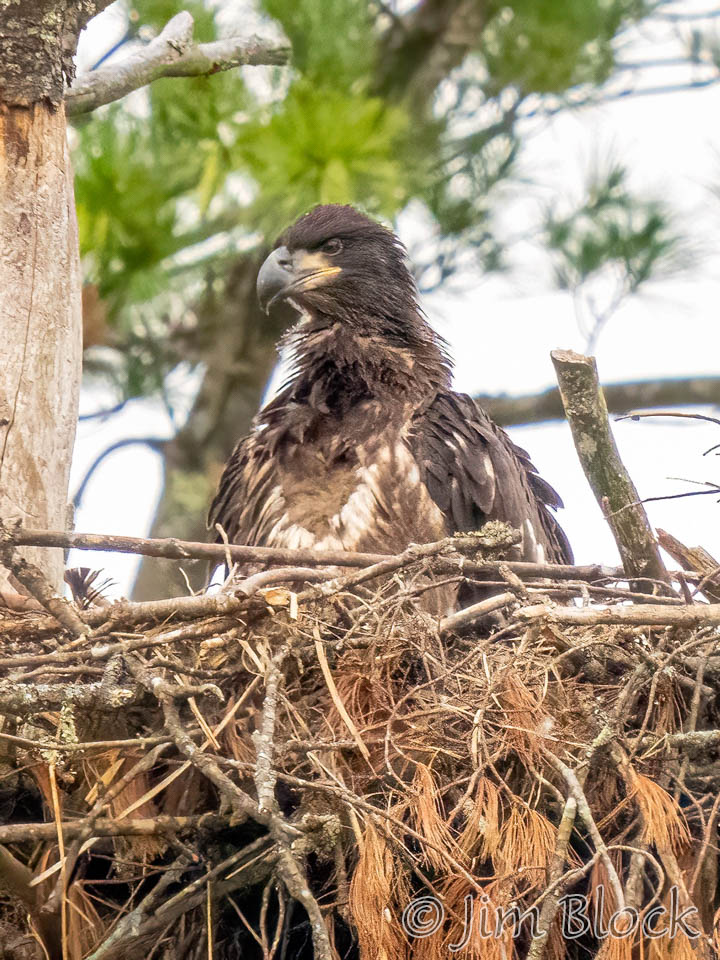
A parent stood guard in the nest tree well above the nest.
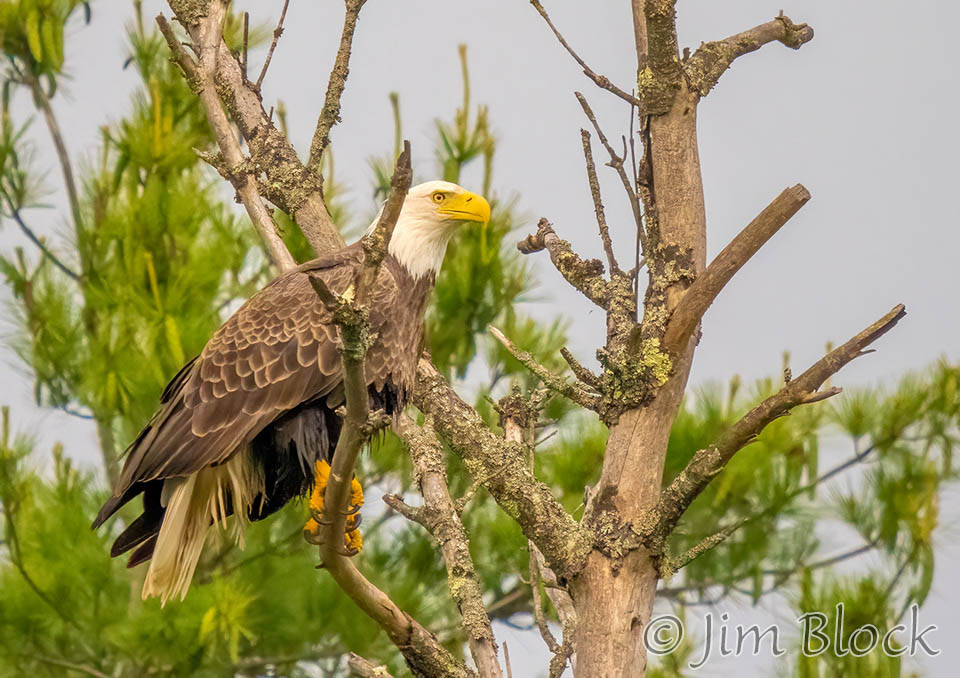
It was repeatedly harassed by a blue jay.
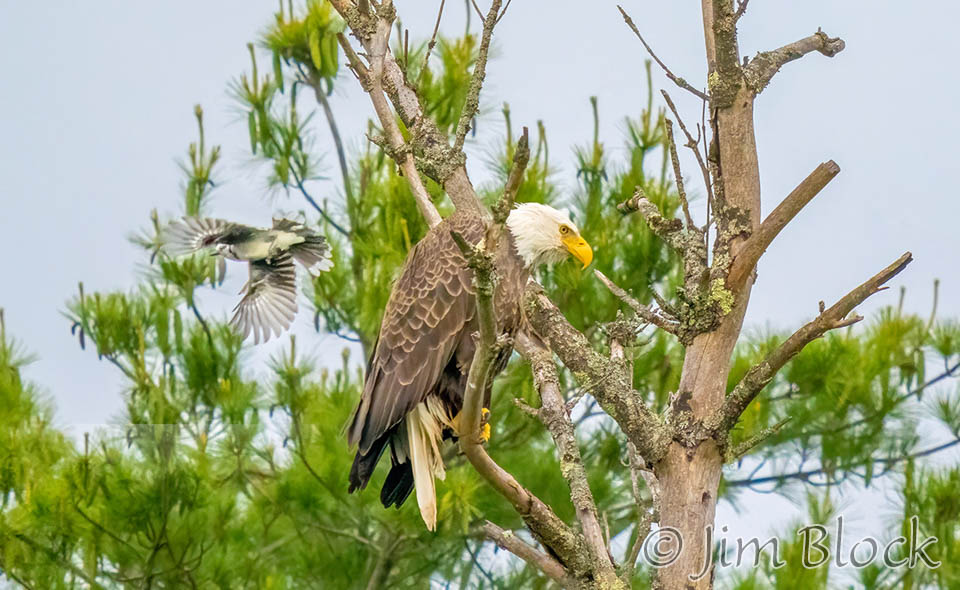
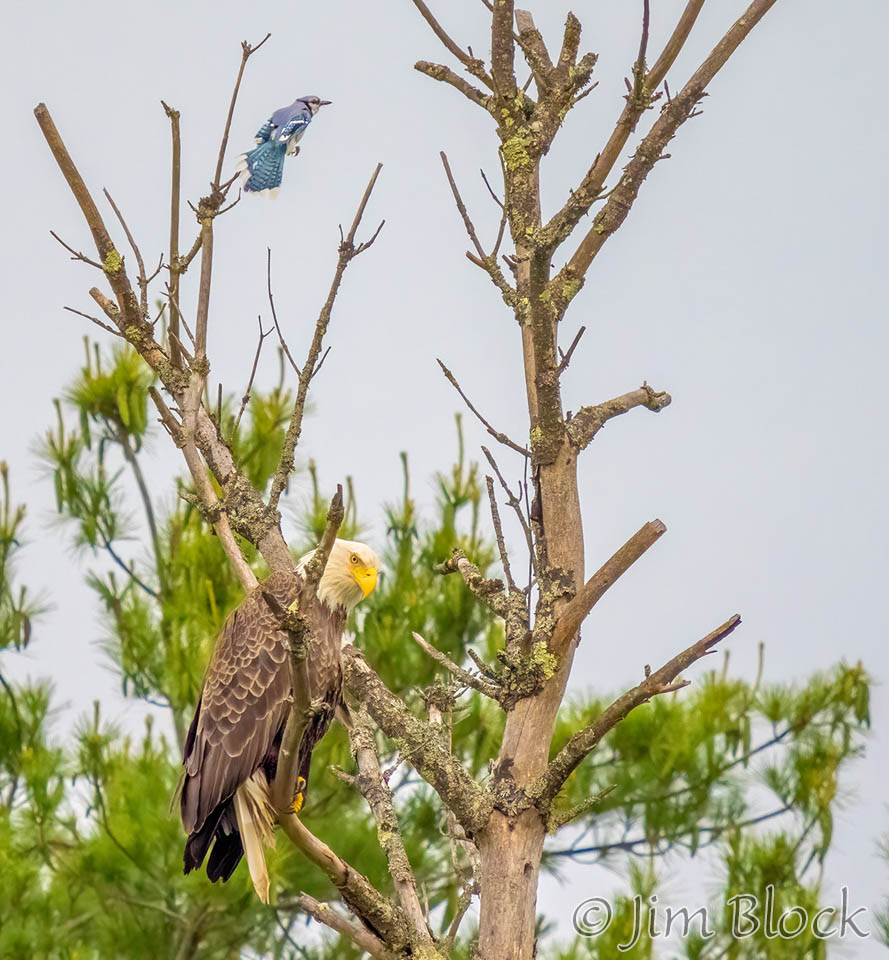
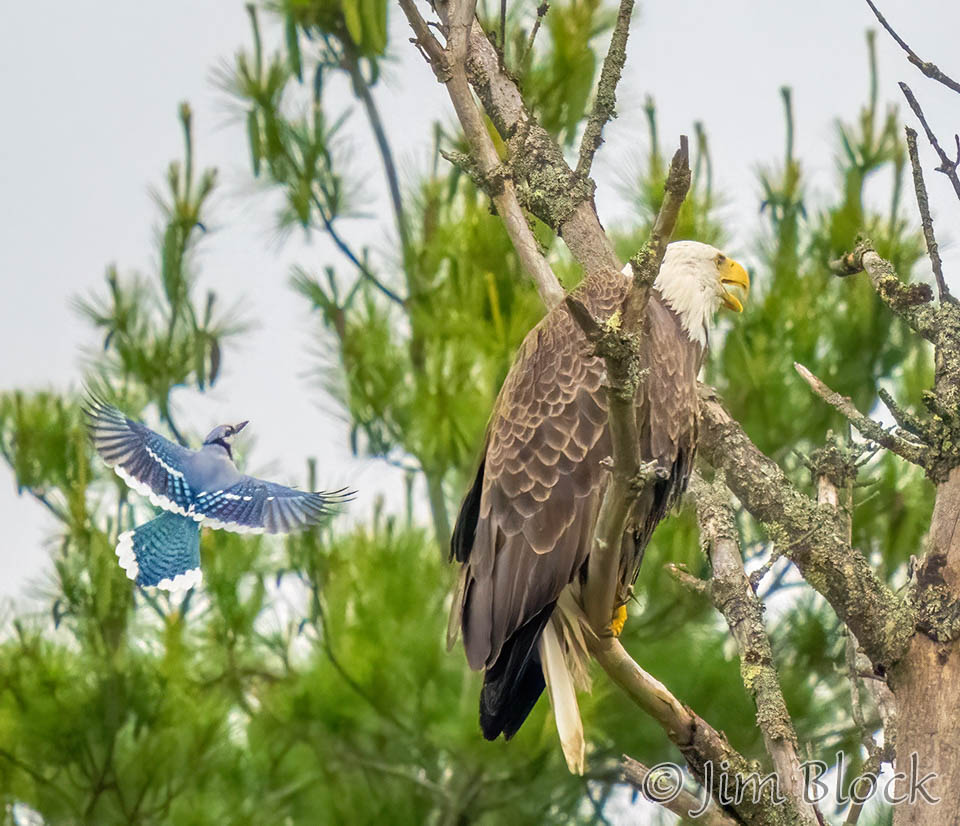
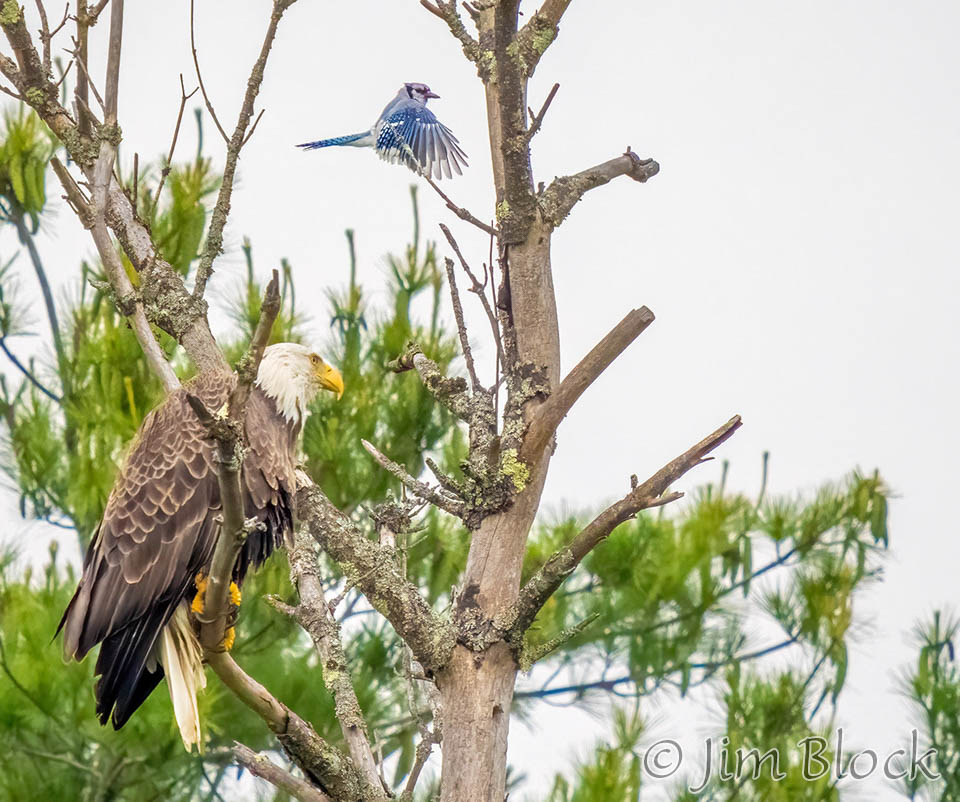
It moved a bit but stayed above the chick.
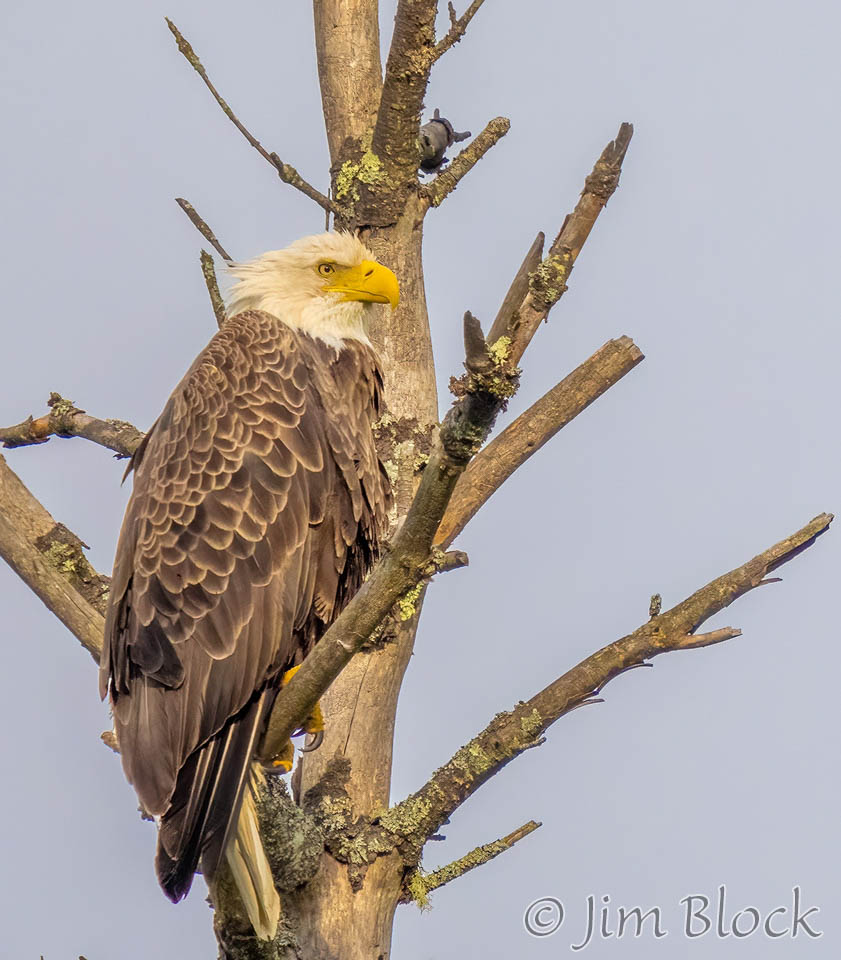
Then it moved again.
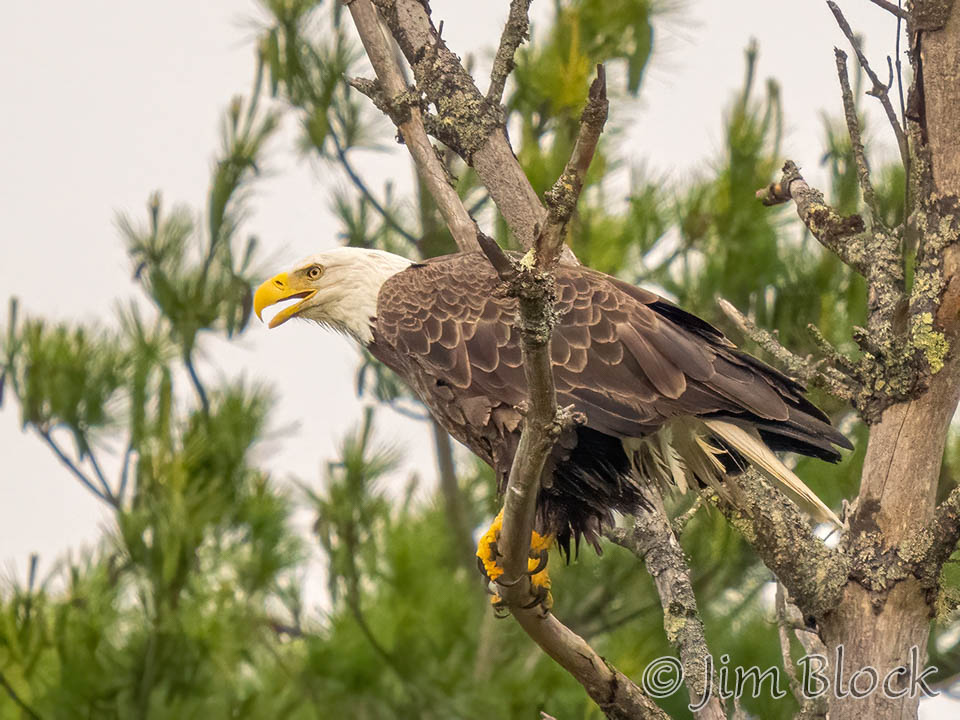
A parent brought in some prey for the chick, or perhaps it was already in the nest when the adult picked it up. I believe it was an opossum.
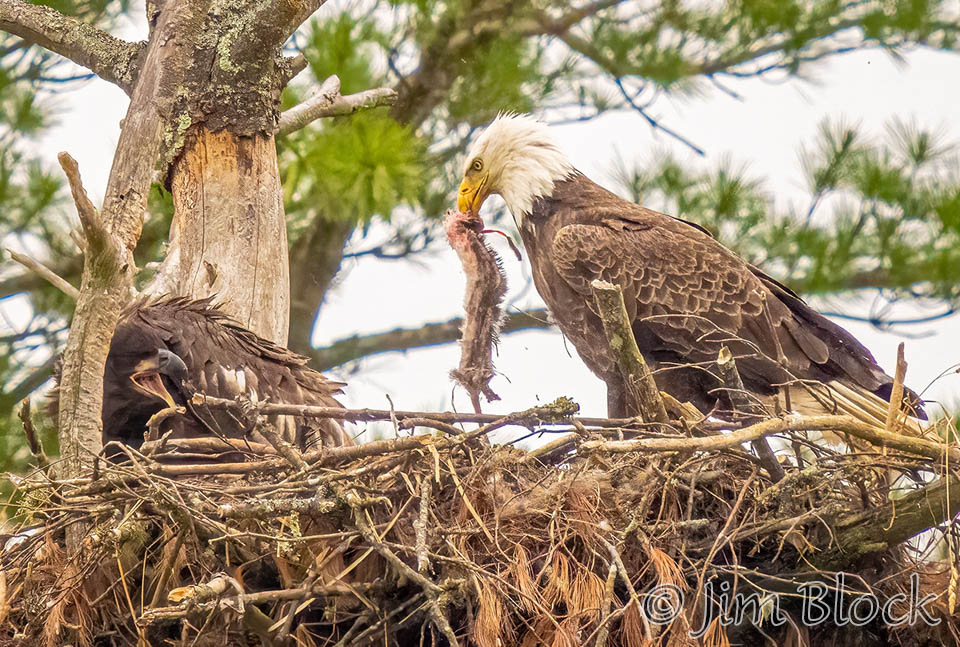
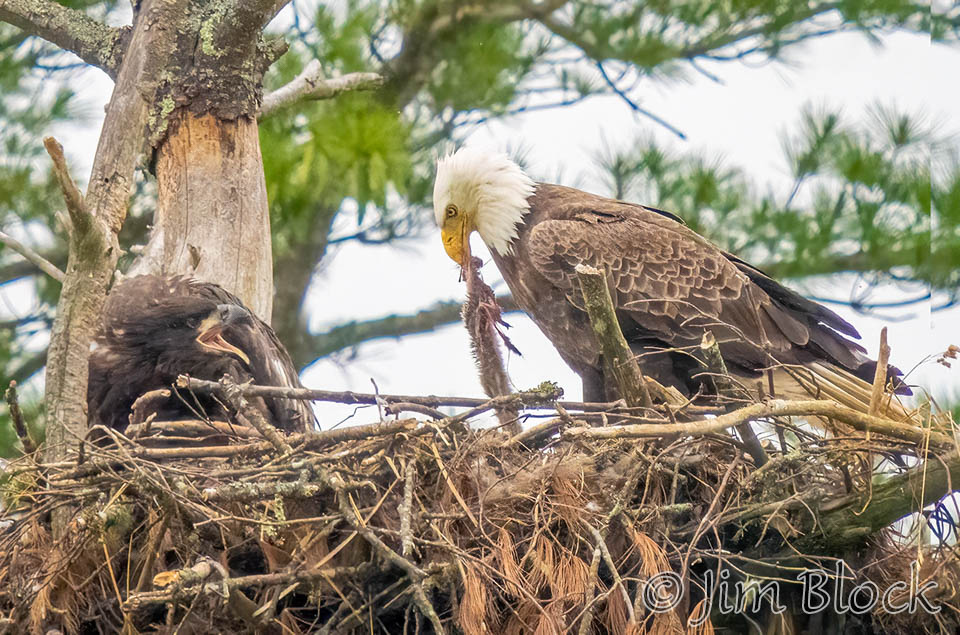
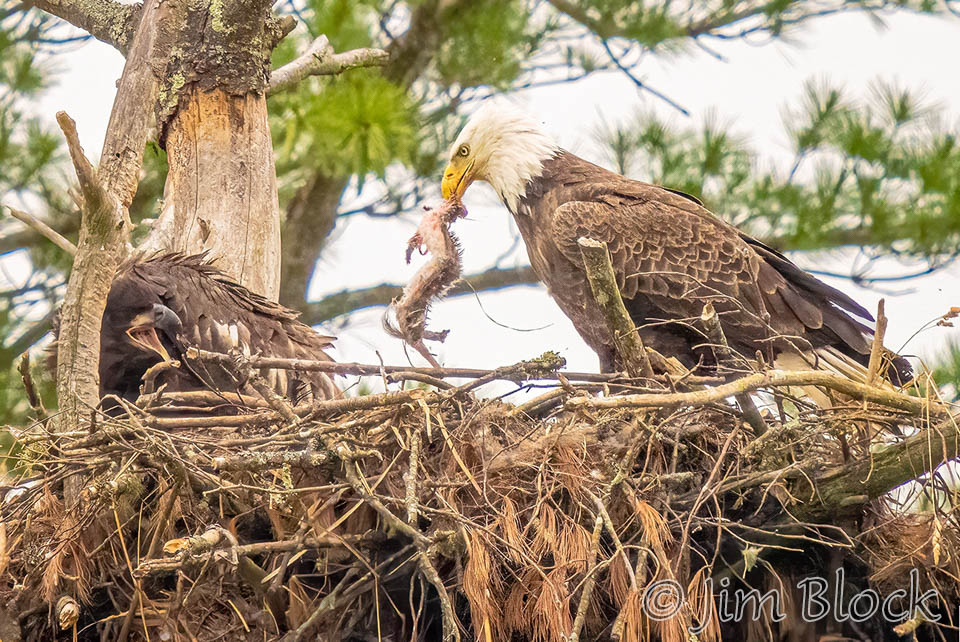
If you are squeamish, you might want to skip the next seven photos.
The adult swallowed the mammal.
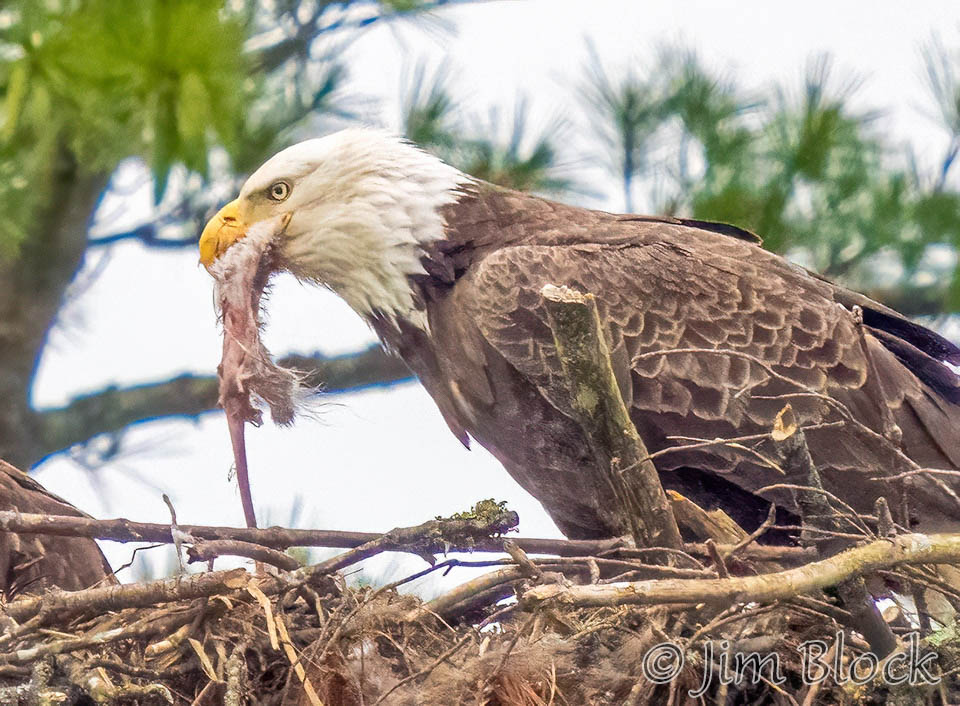
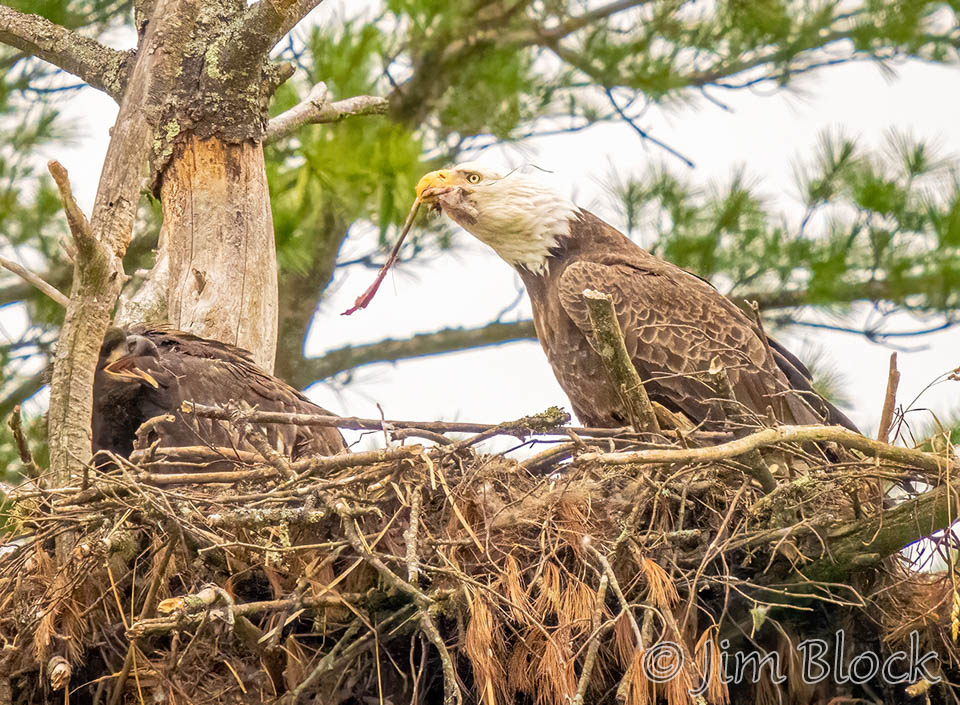
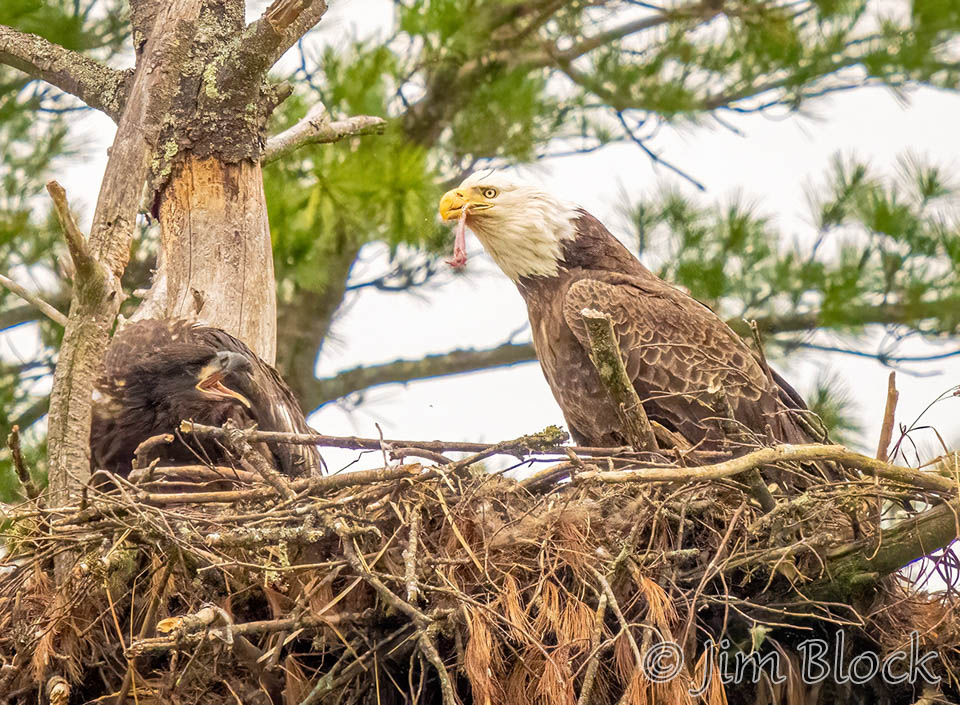
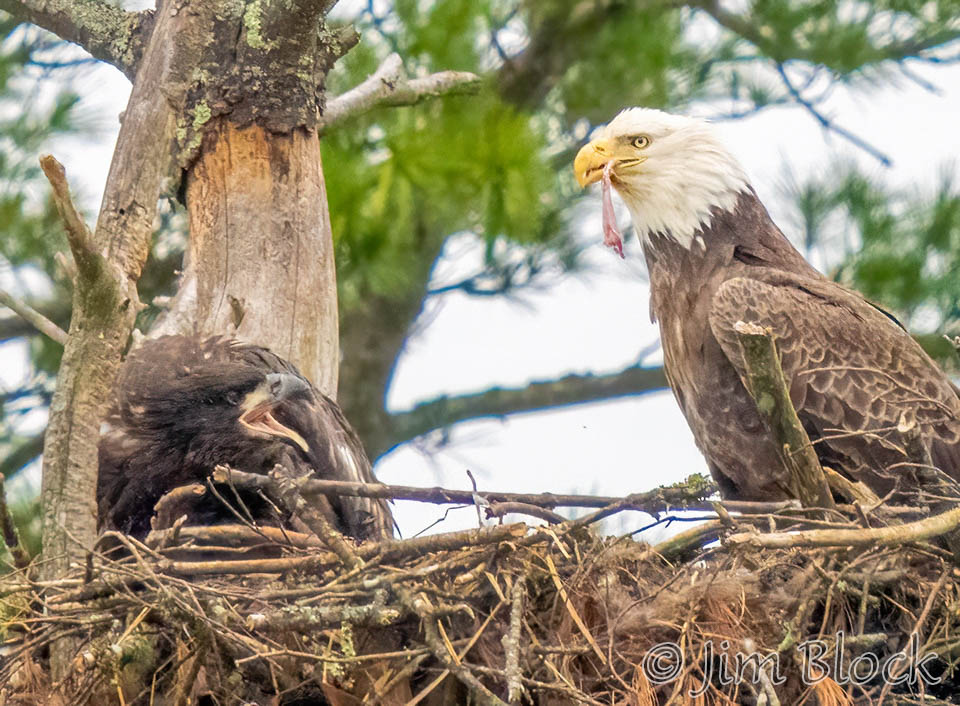
Then it bent down and the chick pulled the mammal completely out of it mouth.
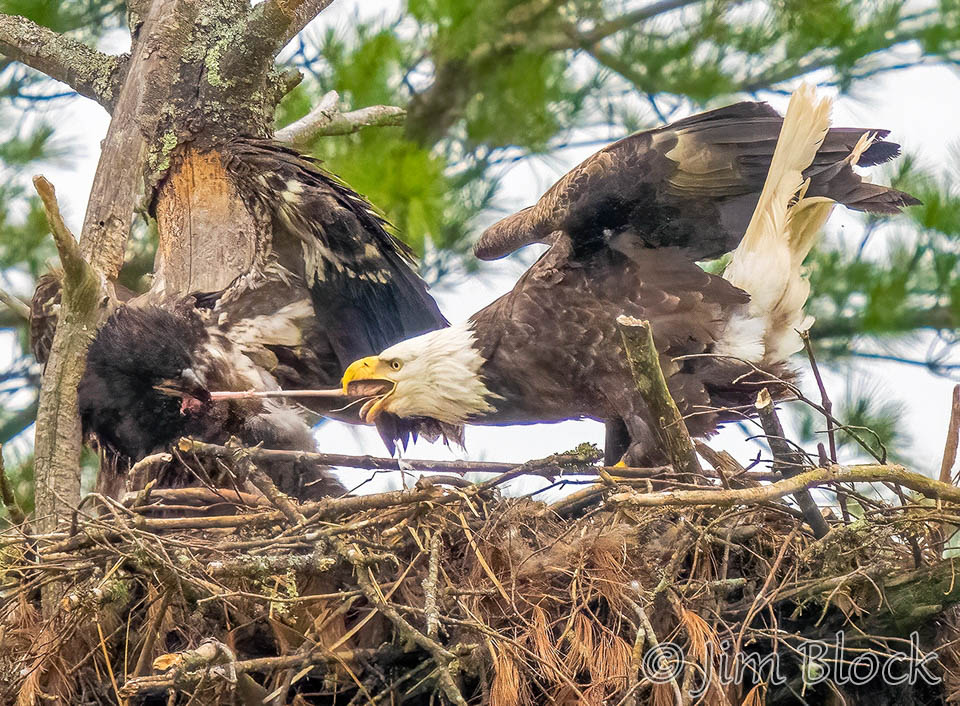
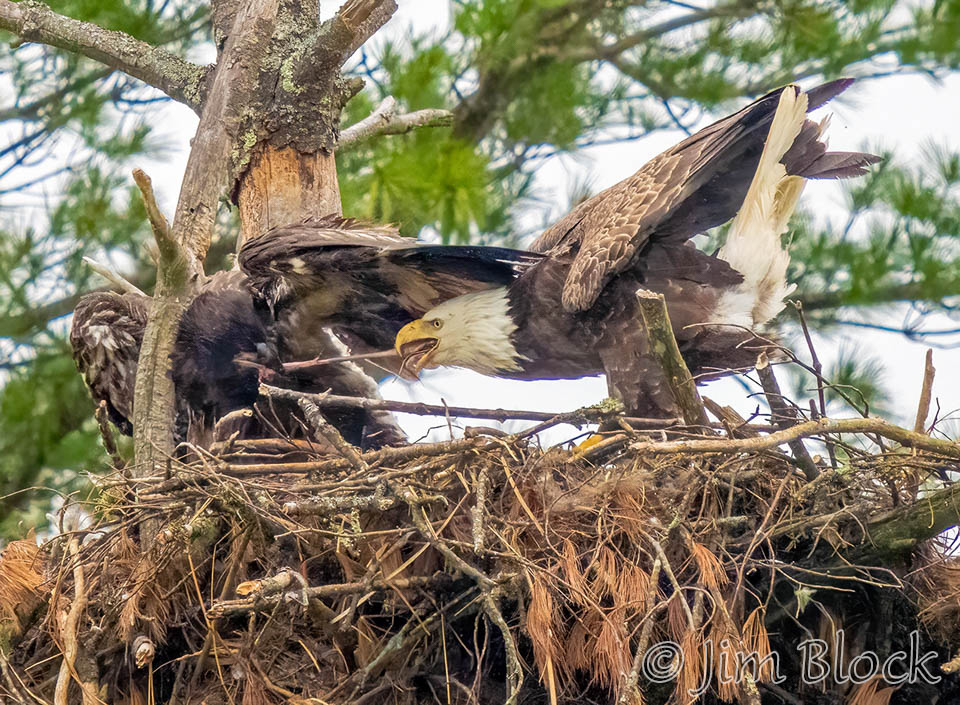
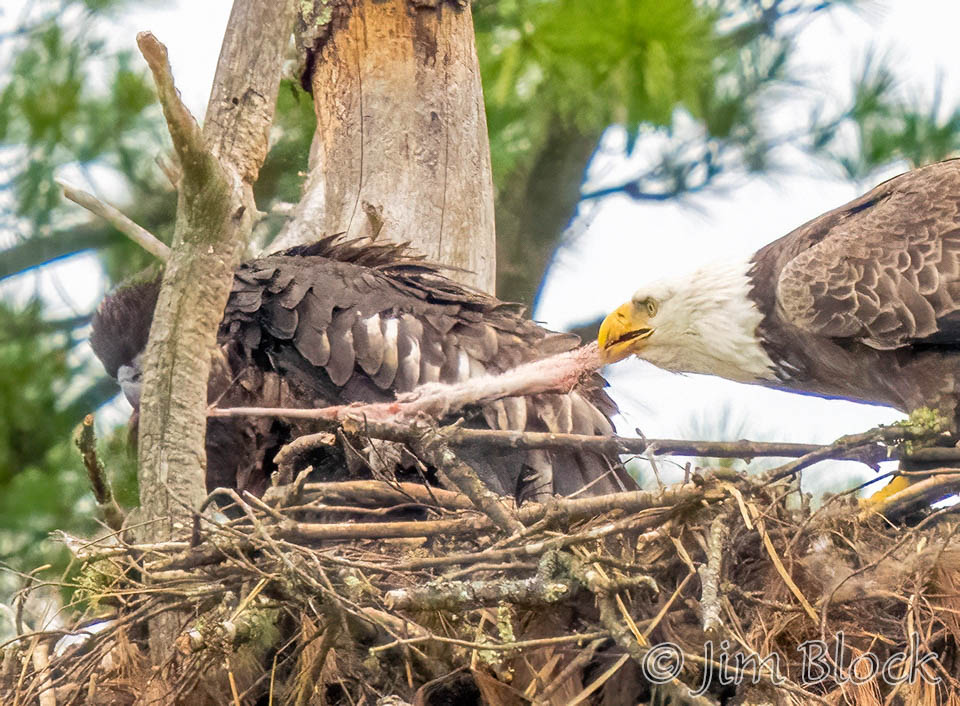
Then the prey must have been dropped into the nest.
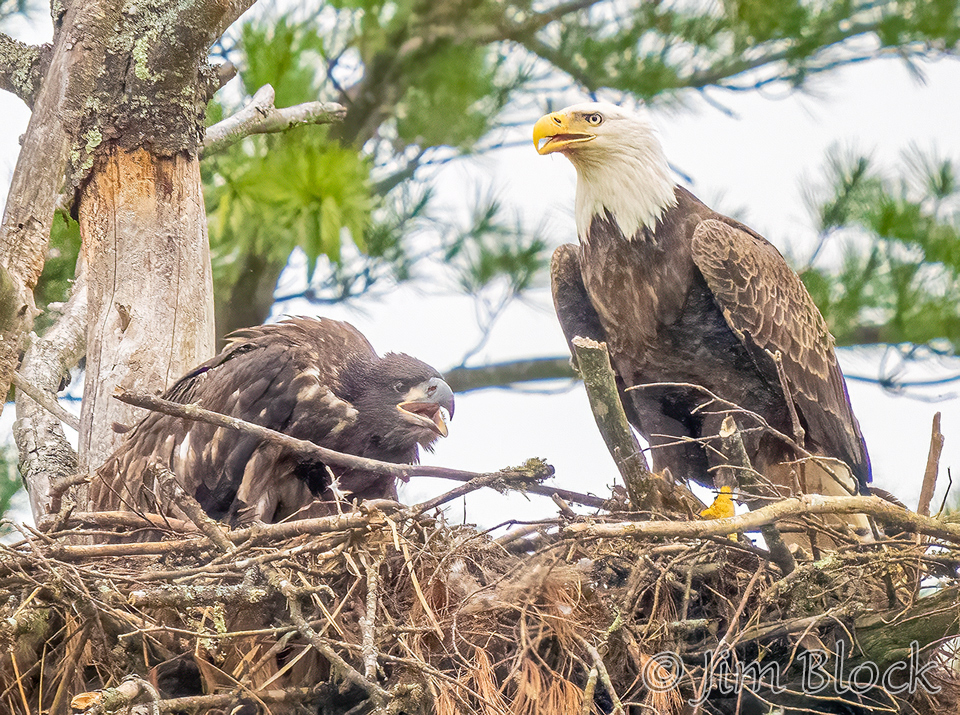
The adult departed …
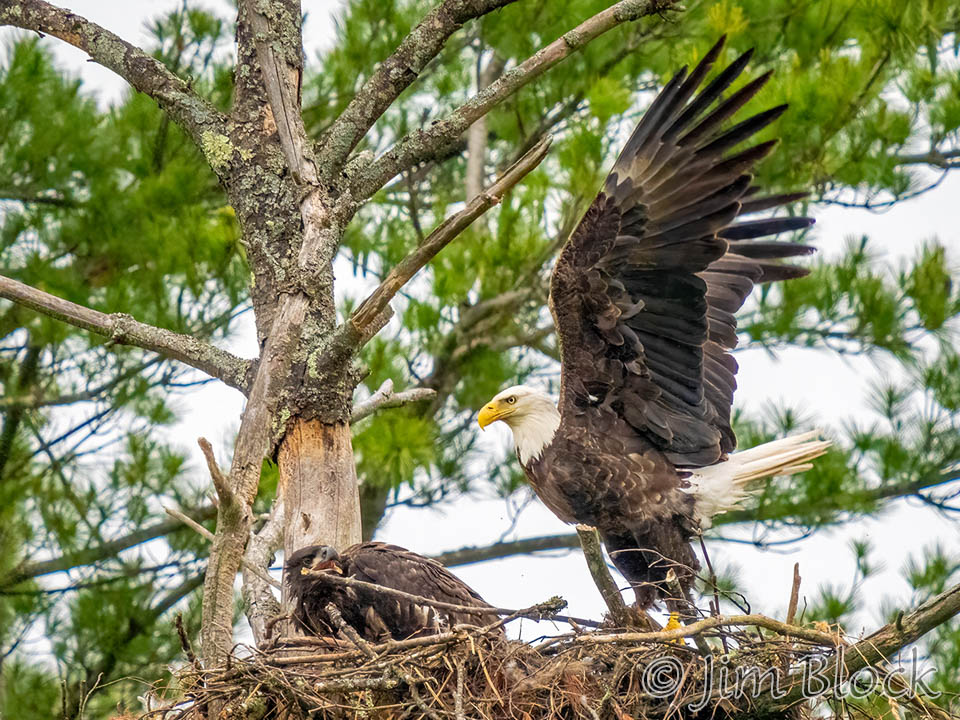
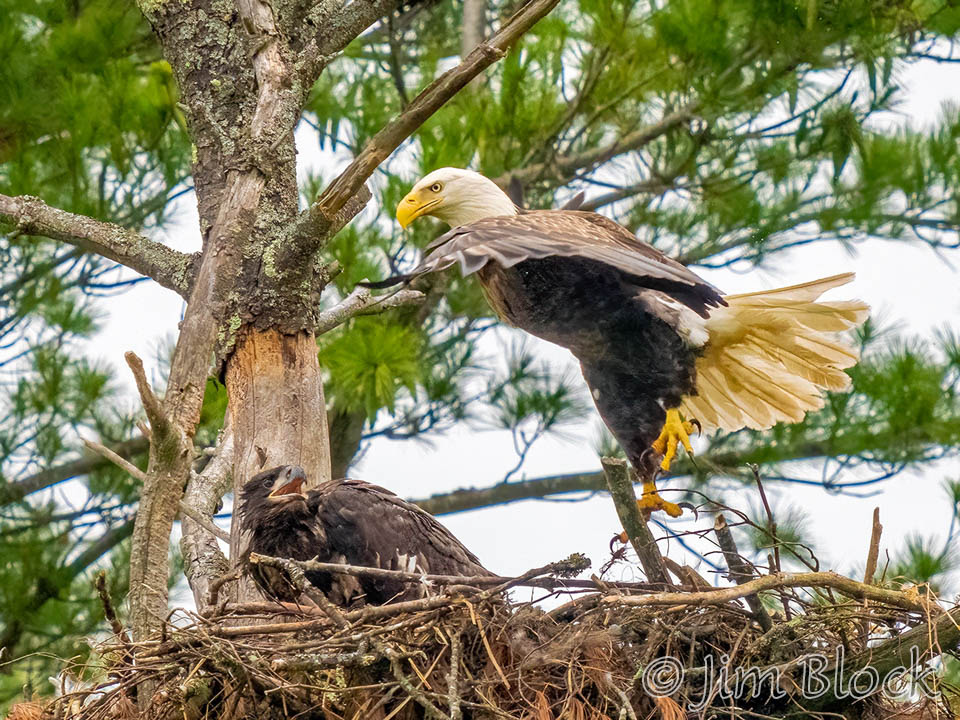
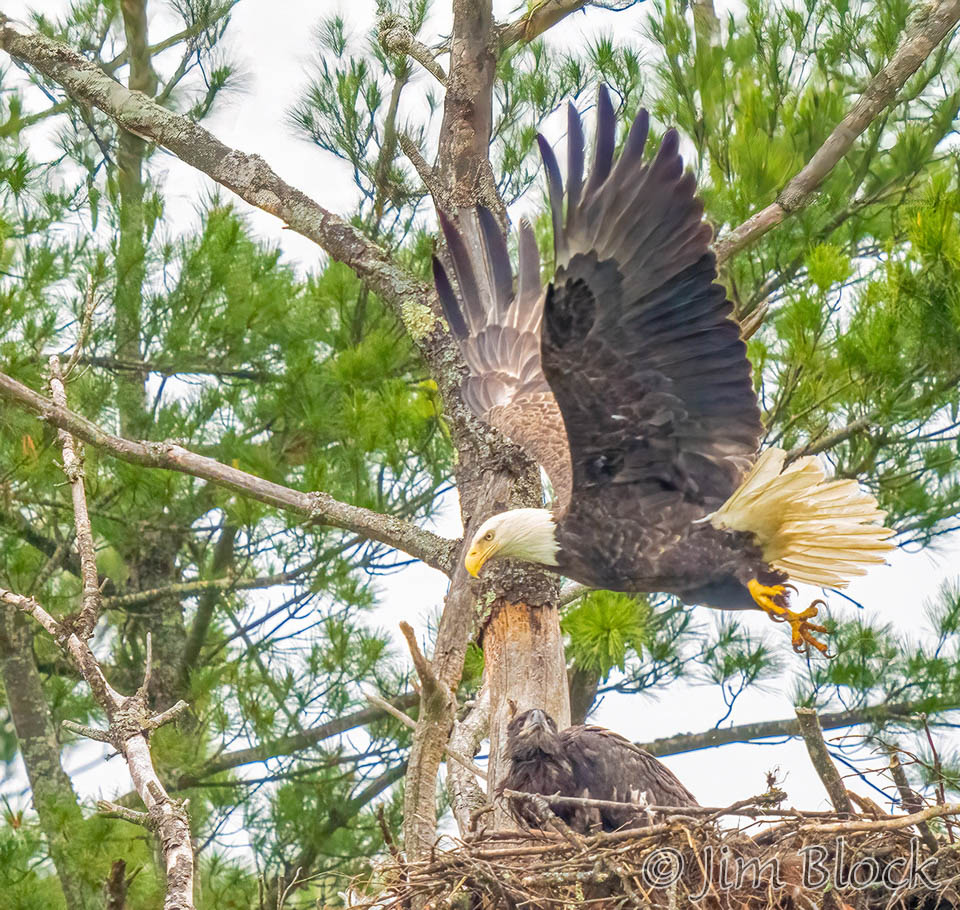
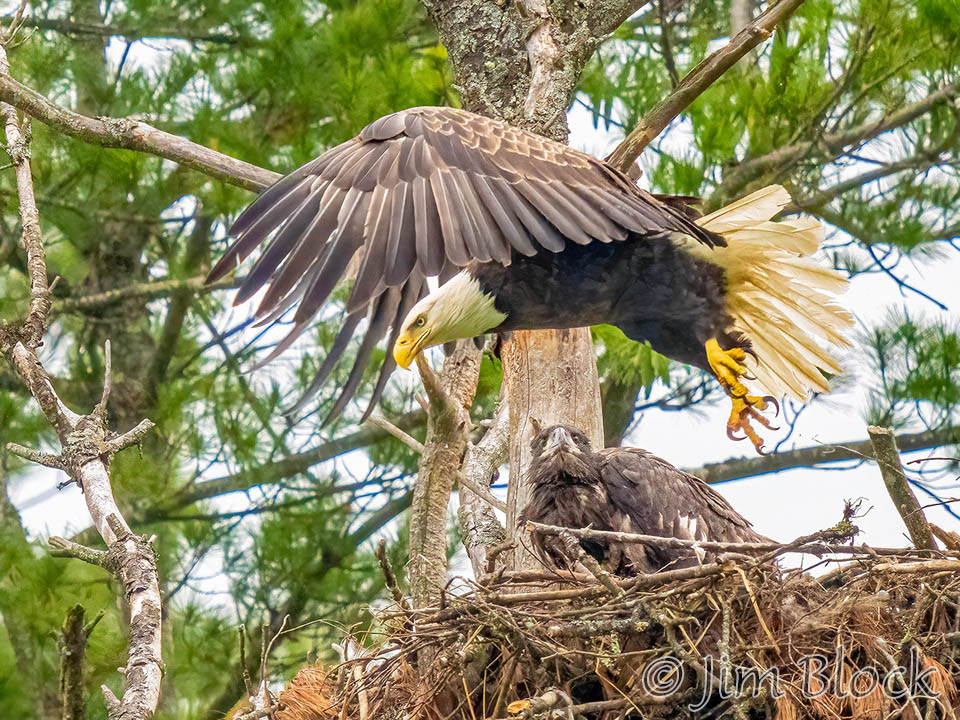
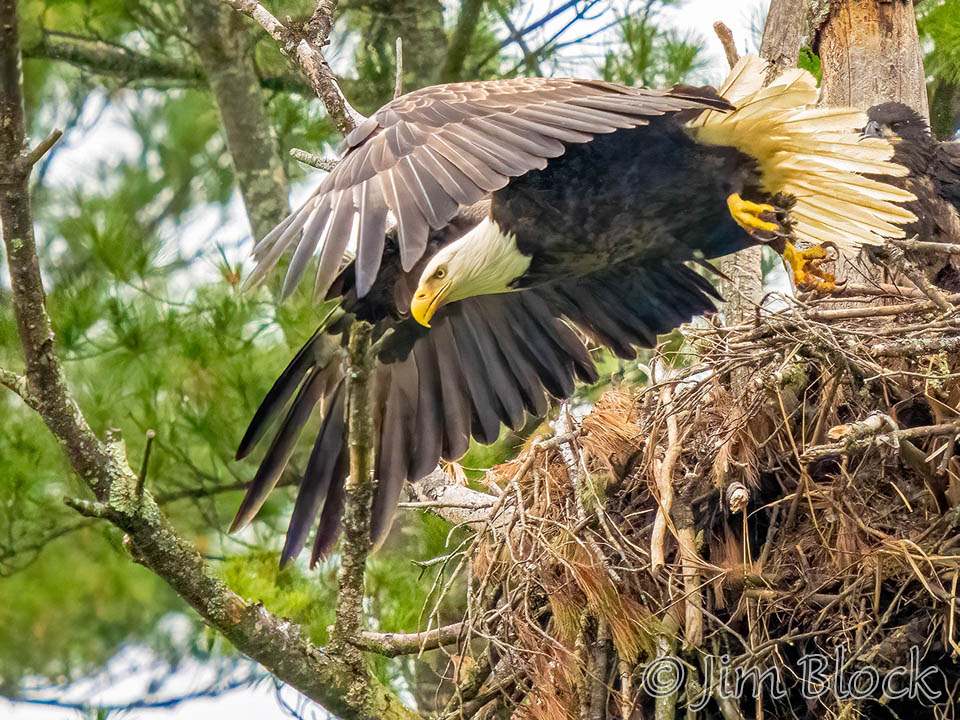
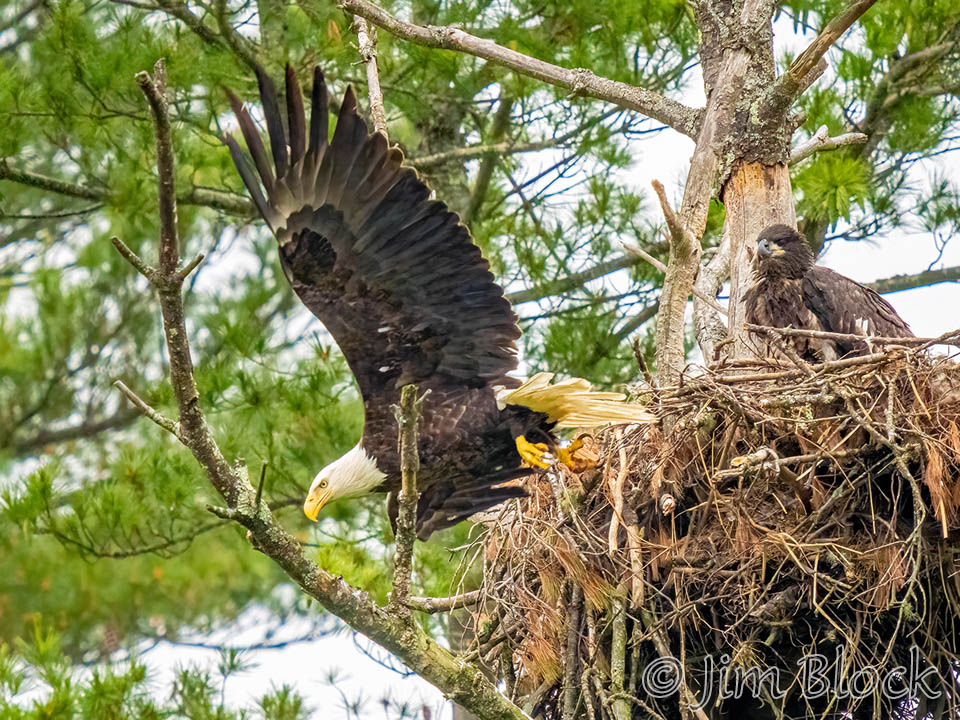
… and the chick flexed its wings. Looking like it will not be long before it fledges.
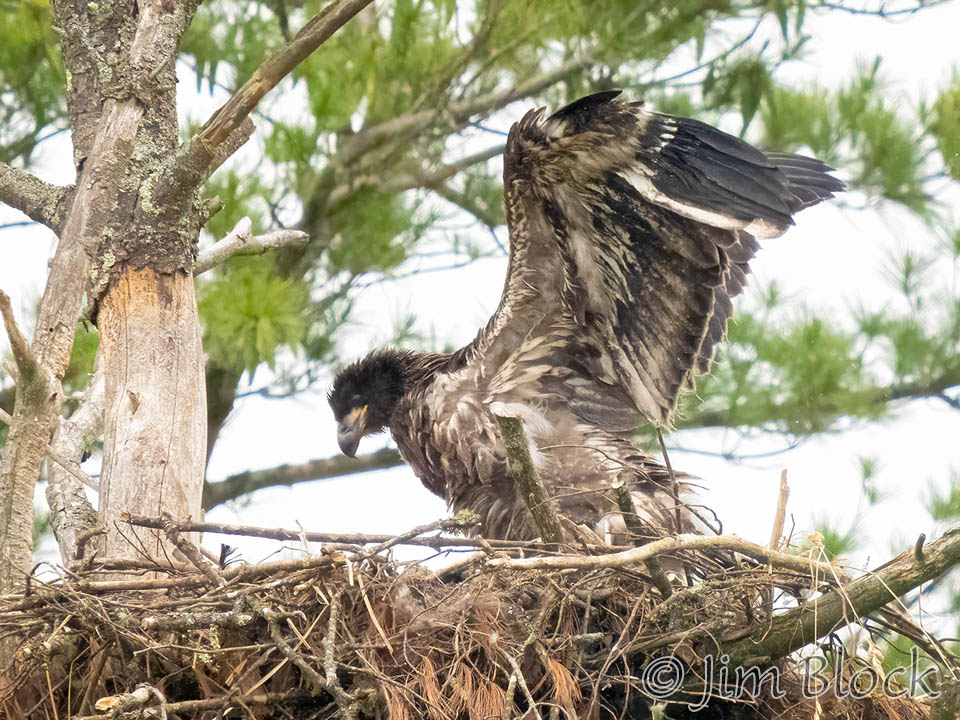
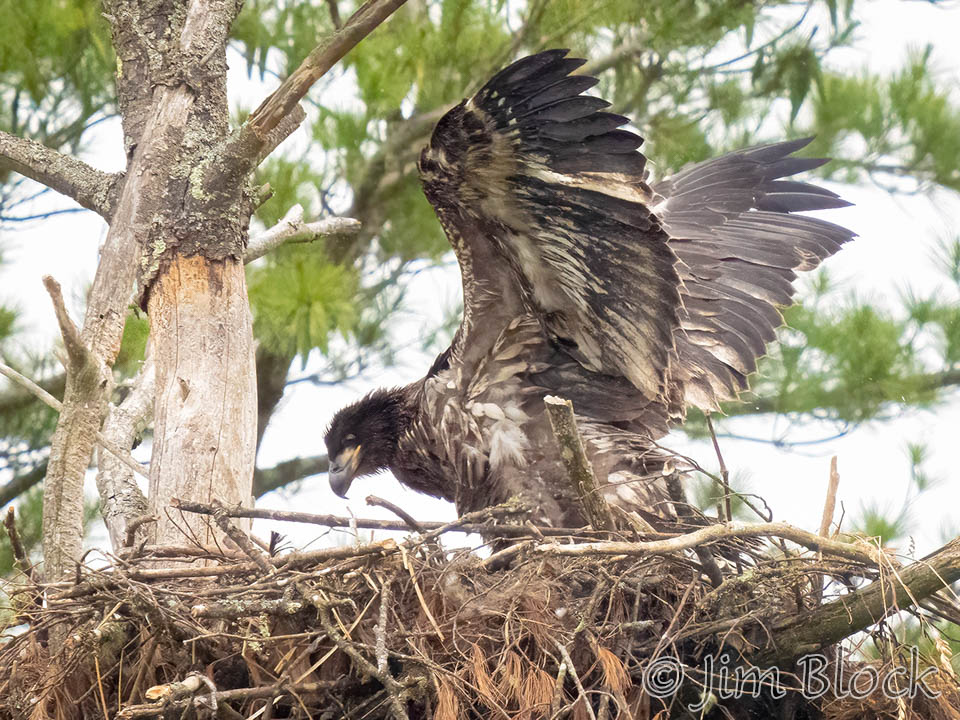
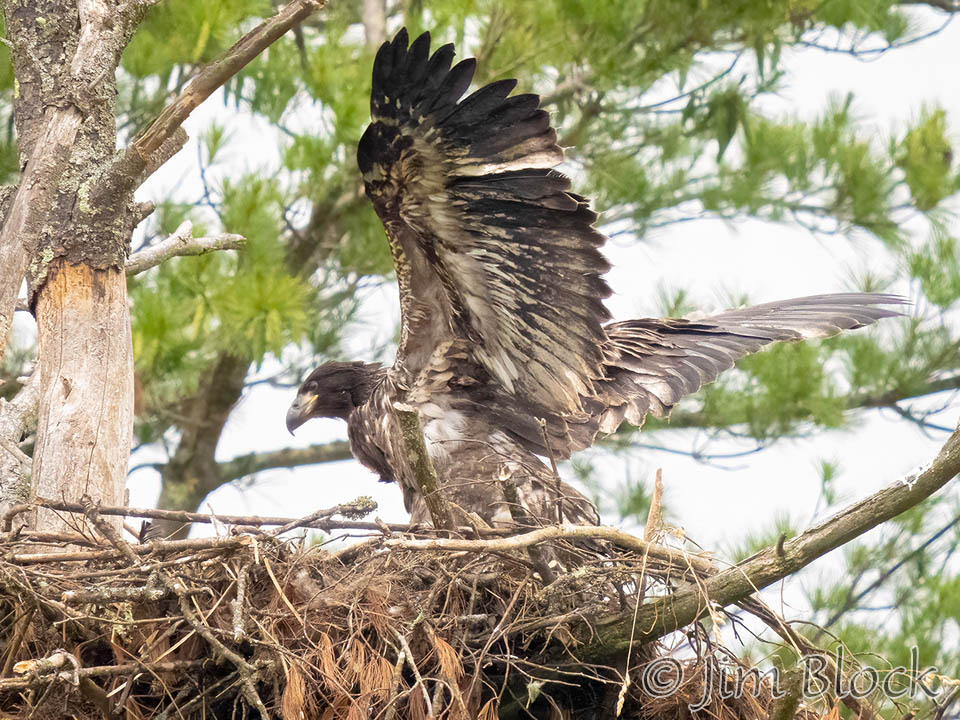
I did not have a chance to get back to the nest until July 11. I was shocked to find it partially collapsed.
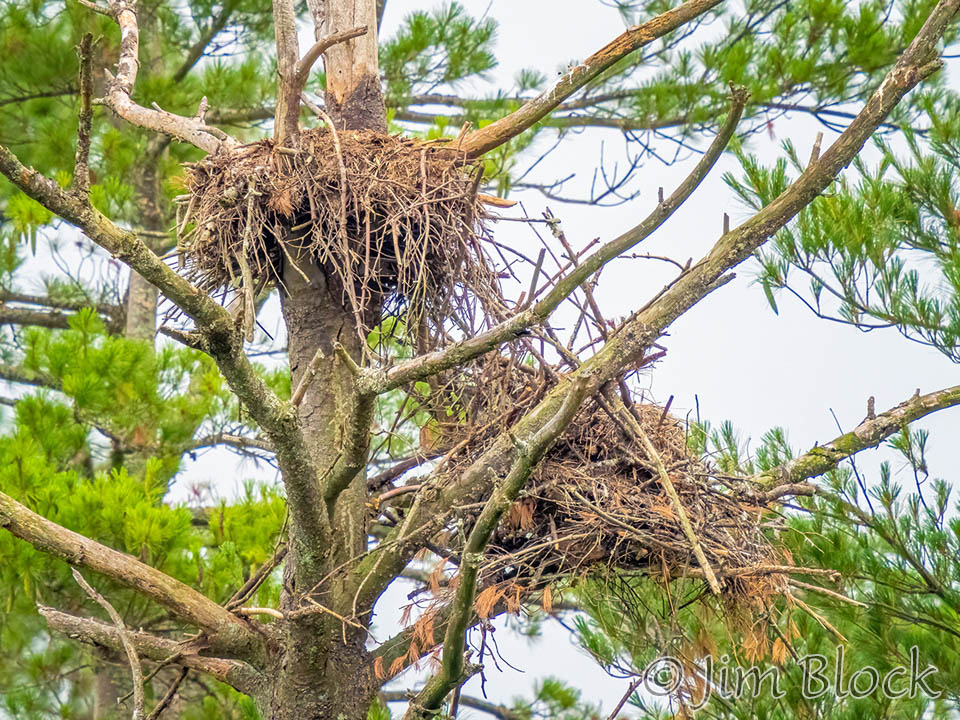
I saw no adults or the chick, although I did not stay long. Here is a comparison of the nest before collapse (top right with the part that fell circled) and the collapsed nest.
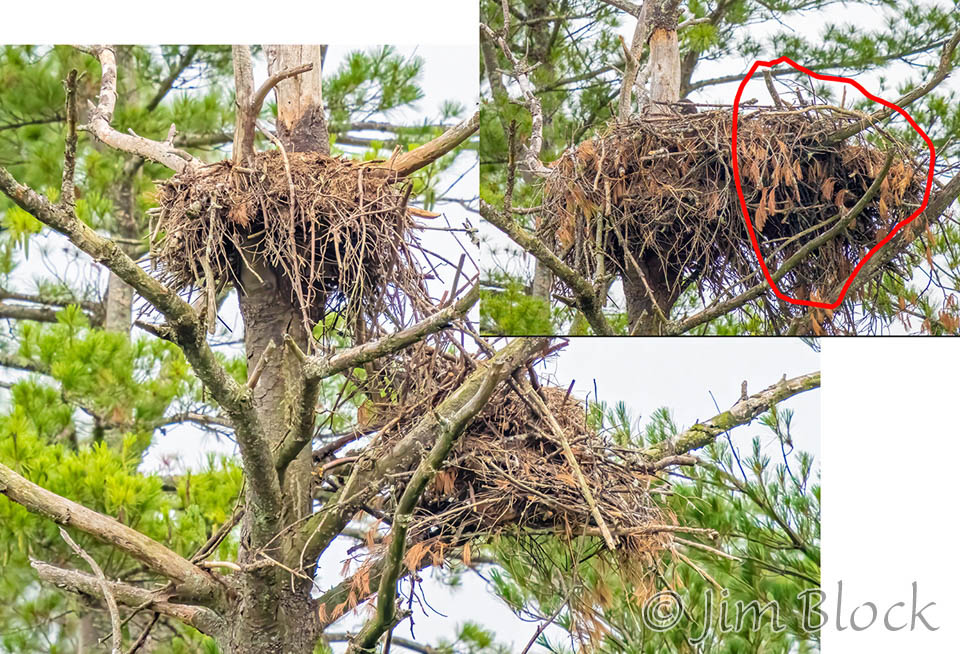
In reply to my email about the collapse, Chris Martin wrote, “I wouldn’t worry. Chick should have been old enough to perch and move around on branches. Thanks for documenting nest collapse; I don’t quite understand why they are so committed to that particular tree, which is in poor shape overall.”
So perhaps this chick was the second success for this dedicated, young eagle pair.
I again visited the nest site on August 26. I found the nest was completely gone. Perhaps a support branch had rotted or wind got the best of the weakened nest.
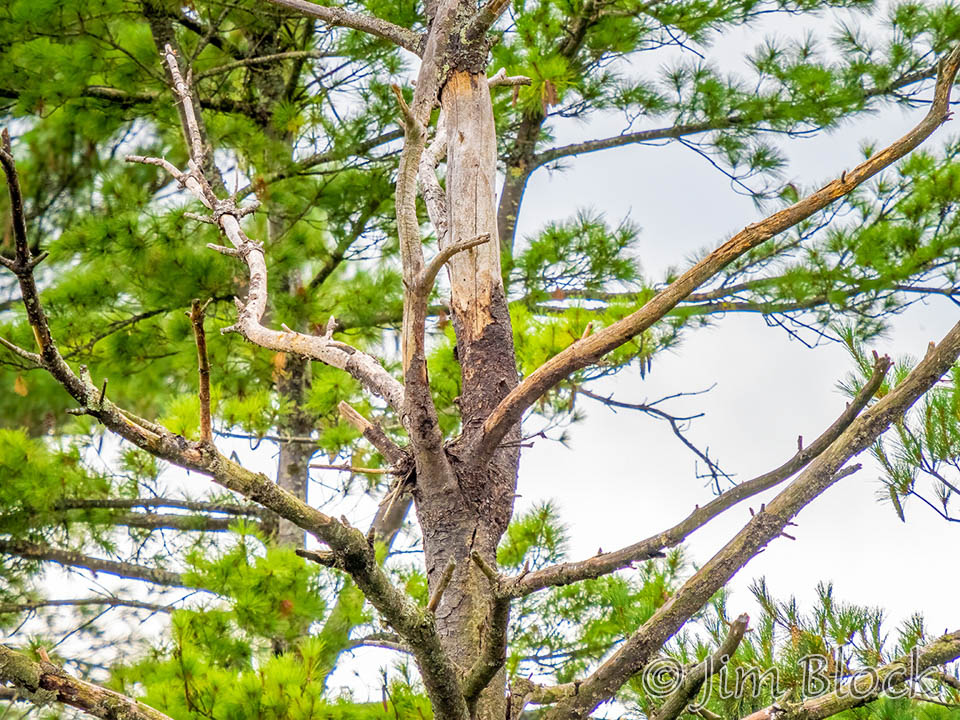
So the four-year saga ends. I’m confident the eagles will build a new nest somewhere and continue their legacy.